
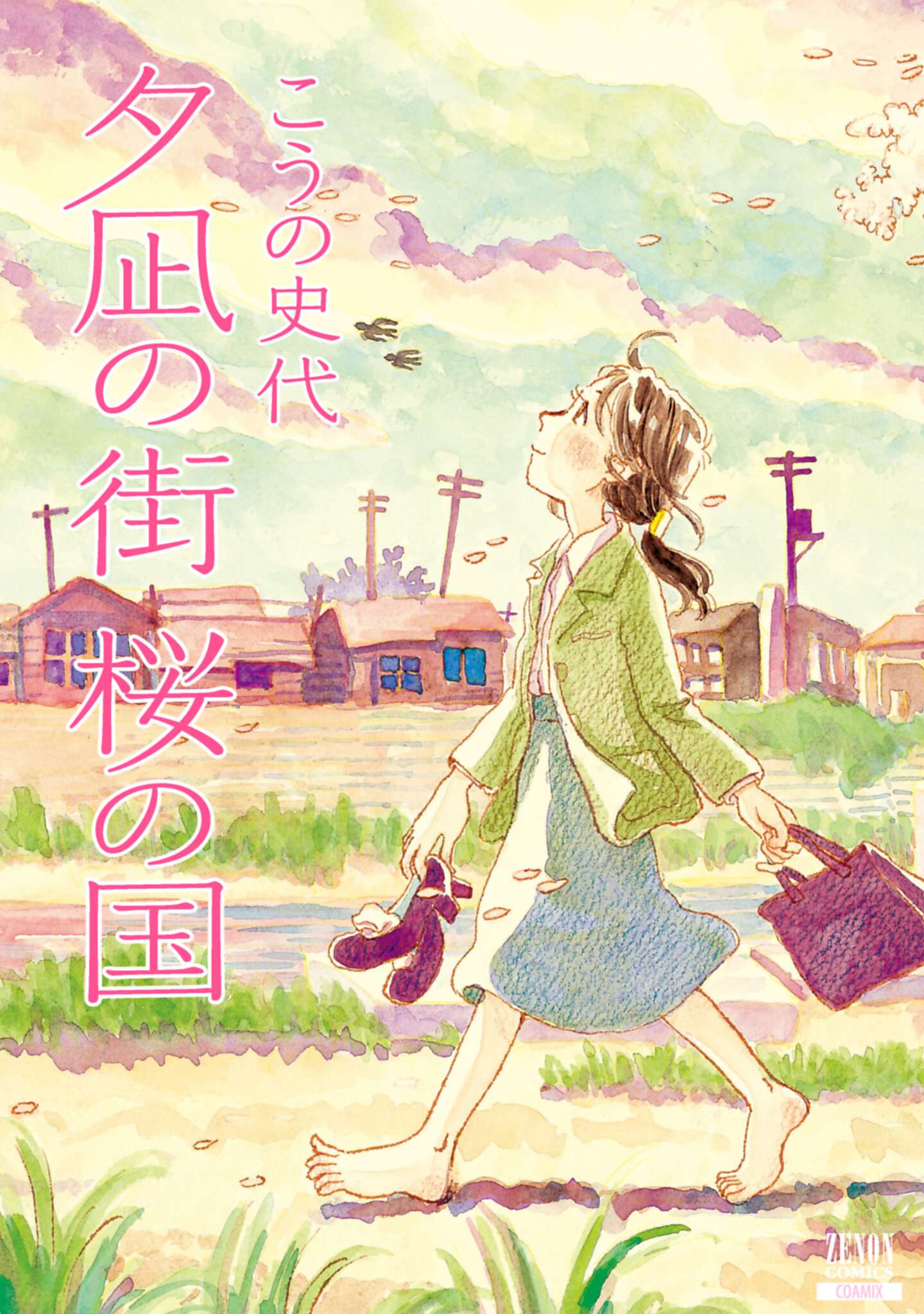
Yunagi City, Sakura Country" is a manga work published in 2004 by Fumiyo Kono. It is a trilogy consisting of "Yunagi City," "Cherry Blossom Country (1)," and "Cherry Blossom Country (2).
It has also been adapted into a number of media mixes, including a film, a novelization, and a TV drama.
The story focuses on the lives of people after the war, who were tormented by the atomic bombing, but lived happily and robustly, and has a gentle and warm atmosphere that is appealing and not just a "tragic war story.
second-generation atomic bomb survivors
A second-generation A-bomb survivor is a person who was born after the atomic bombing, but whose parents or one of the parents is an A-bomb survivor. In the film, Nanami and Nagio, whose mother is an A-bomb survivor, Kyoka, are second-generation A-bomb survivors.
Currently, it is not medically accepted that radiation from the atomic bombings affects heredity, and Nagio wrote in a letter, "I don't know if my asthma is due to my environment or if I was born with it. In reality, however, many second-generation A-bomb survivors have complained of health problems, and the city of Hiroshima offers free health checkups once a year.
In addition to these health problems, second-generation A-bomb survivors are sometimes subjected to discrimination and prejudice in marriage and childbirth. These discriminations and prejudices are said to increase with distance from Hiroshima and Nagasaki, and Nagio's parents are opposed to his relationship with Higashiko, whom he met in Tokyo.
Famous quotes, lines, scenes and scenes from "Yunagi City, Sakura Country
Yutaka Uchikoshi: "You're not going to return that handkerchief, are you?"
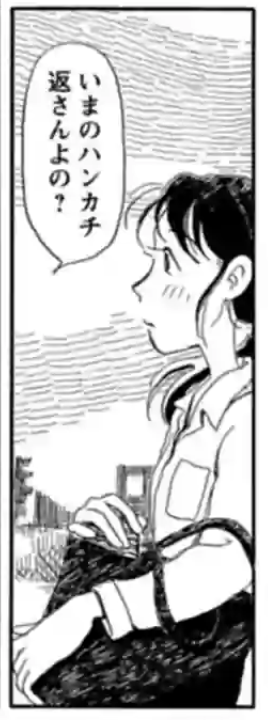
A line Uchikoshi says to Minami in the scene where Uchikoshi courts Minami. Minami had helped Uchikoshi choose a present for Minakazu, saying that she would give it to the person she likes. Minakazu, who had chosen a handkerchief, teased Uchikoshi by saying, "Even if I get rejected and give it back, I can just cry over it. However, Uchikoshi had actually bought a gift for Minami, and his line, "Will you return that handkerchief? was intended to confirm Minami's feelings. Minami responds with a smile and says, "Well...thank you," and although it is not a direct statement, it is an important line that expresses Uchikoshi's feelings for Minami.
Yutaka Uchikoshi: "Thank you for keeping me alive."
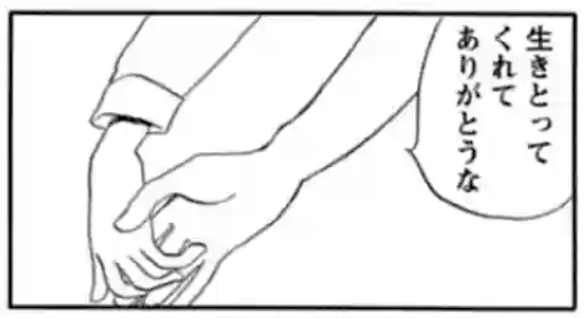
Uchikoshi's line to Minami, who feels guilty for having left so many people to die and survived the bombing. Minami accepts Uchikoshi's courtship, but a flashback to Hiroshima immediately after the atomic bombing causes her to reject Uchikoshi, who embraces her, and runs away. After some hesitation, Minami decides to tell Uchikoshi about her own experience of the atomic bombing. Minami says to Uchikoshi, "Please tell me that it is okay for me to live in this world." "If you do that, I might not feel sorry to my sister and sister and everyone else for meeting you," Minami says. Uchikoshi's line, "Thank you for being alive," indicates that he accepts Minami as a whole, even though she had thought that her experience would be "forgotten.
Nanami Ishikawa: "And sure enough, I decided to choose these two to be born."
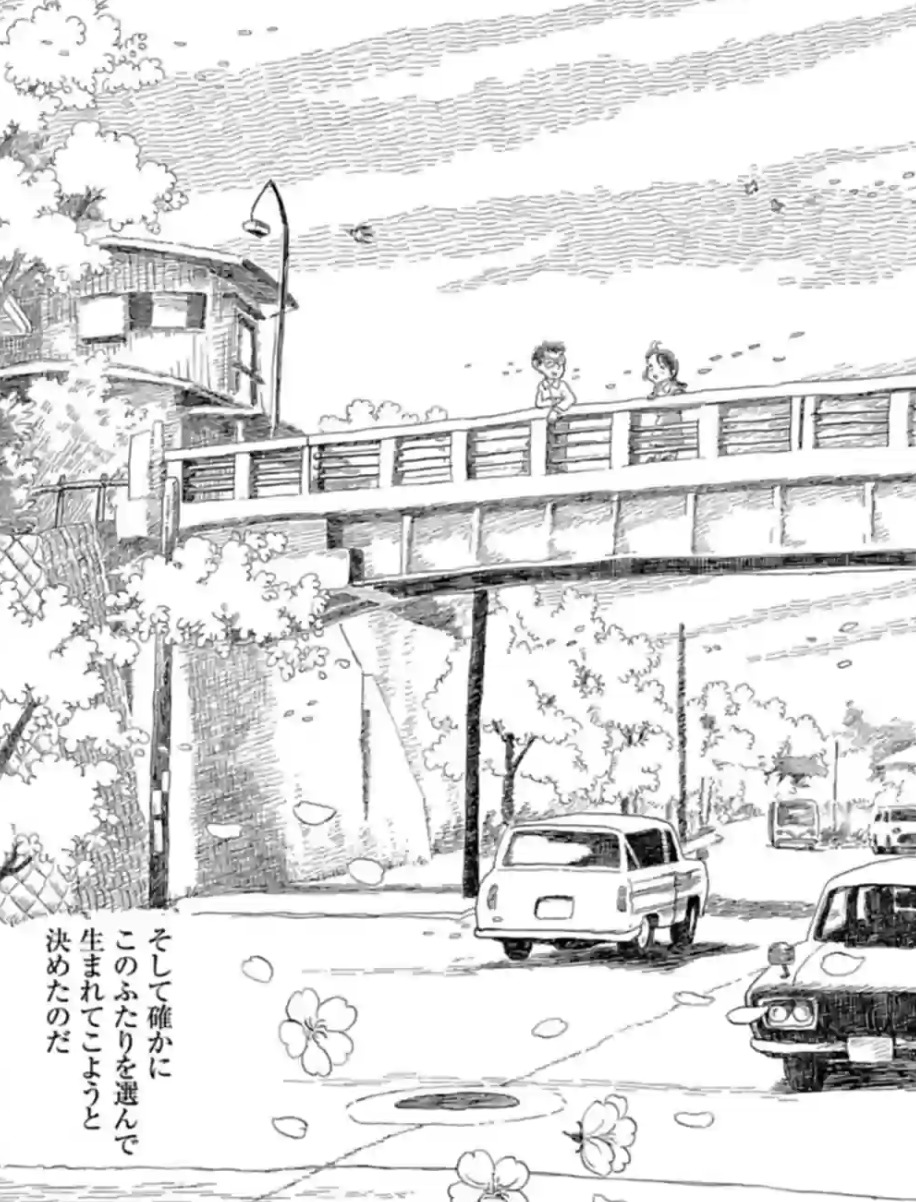
This is a line from a story in which Nanami, who has been turning away from the reality of being a second-generation A-bomb survivor, affirms and accepts her origins. Having lost her mother and grandmother in the painful past, Nanami had hoped to forget all her memories of Sakura Namiki, but she realizes that this is synonymous with imposing the negative memories of the atomic bombing on Hiroshima. When Nanami returns from Hiroshima and revisits the cherry tree-lined streets, she recalls her young parents happily nestled among the blooming cherry trees. Nanami thinks, "My mother may have told me about this one day," she says. Nanami thinks that this scene must be the image of her parents that she saw before she was born, and mutters in her mind, "And surely, I decided to choose these two to be born. This line shows Nanami's realization that what connects her to her A-bombed family is not the atomic bomb but the love of her parents, and her acceptance of the fact that she was born from an A-bombed family.
Backstory, Trivia, and Small Stories/Episodes/Anecdotes of "Yunagi City, Sakura Country" (Japanese only)
Author Fumiyo Konno is from Hiroshima
The author, Fumiyo Konno, is a Hiroshima native, and says that she was inspired to create the manga when Makoto Someya, a manga editor at Futabasha, offered her the chance to draw a manga on the theme of Hiroshima. Someya had read "Barefoot Gen" as a boy and approached Kono, with whom he had known for some time, to create a manga on the theme of "the atomic bombing for a manga artist from Hiroshima living in the modern age. Kono hesitated, saying, "It is not a theme that can be handled lightly simply because I am from Hiroshima," but after a thorough search of the literature in the library, he finally spent a year drawing "Yunagi City.
The meaning behind the title
The title "Yunagi City, Sakura Country" is based on "Yunagi City and People," a reportage-like novel about the A-bomb slum by Hiroshima-born author Yoko Ota, and her debut novel "Sakura no Kuni.
Sakura no Kuni" is a warlike novel published in 1940, in contrast to "Yunagi no Machi to Hito to" which depicts people living in the postwar period.
This led literary scholar and critic Kentaro Nakata to consider that "by quoting the title of the artist's two-sided work, the author is trying to avoid simplifying the boundary between victims and perpetrators in the war.
The names of the characters are from the names of towns in Hiroshima City.
Many of the names of the characters in "Yunagi City, Sakura Country" are derived from the names of towns in Hiroshima City. For example, "Hirano" of Hirano Minami, the main character in "Yunagi City" comes from Hirano-cho, Naka-ku, Hiroshima City, and "Minami" comes from Minami-machi, Minami-ku, Hiroshima City. Other place names in Hiroshima City include "Uchikoshi" from Uchikoshi-cho, Nishi-ku, Hiroshima City, and "Asahi" from Asahi, Minami-ku, Hiroshima City.
Song in the play "Yunagi City, Sakura Country
Song: "Otomi-san" by Hachiro Kasuga
A song by Hachiro Kasuga released in 1954. Since Minami dies in "Yunagi no Machi" in 1955, this song was released the year before that.
In the beginning of "Yunagi City," Minami sings, "Shin datte o Otomi-san-" Immediately after that, a strange girl calls out to another girl, "Wait, Midori-chan. As Minami watches the scene, she continues to sing, "Ikiteita wa ikite wa oshakasama dama shinarunaho toke no otomi-san~~. The name "Midori" is the same as that of Minami's younger sister, who disappeared immediately after the atomic bombing and never returned, implying that Minami was thinking of her dead sister.
Song: "Tsuki ga tomo ao kara" (Because the moon is very blue) by Tsujiko Sugawara

Related Articles
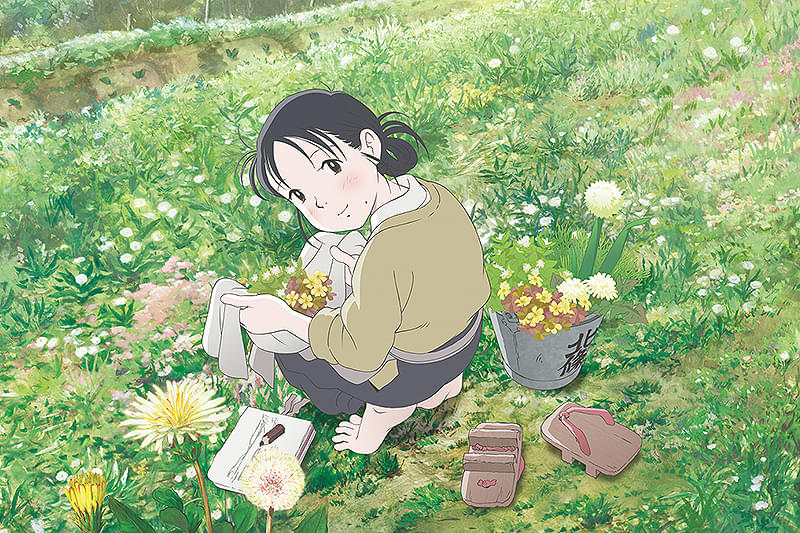
Spoiler commentary and discussion of "In This Corner of the World" (manga, anime, drama)
Kono Sekai no Katasumi ni (In a Corner of the World)" is a manga work by Fumiyo Kono, as well as a drama and anime film based on it. The manga was serialized in Futabasha's "Manga Action" from 2007 to 2009. The drama was broadcast on Nippon Television in 2011, and the movie was released nationwide in November 2016.
Read Article
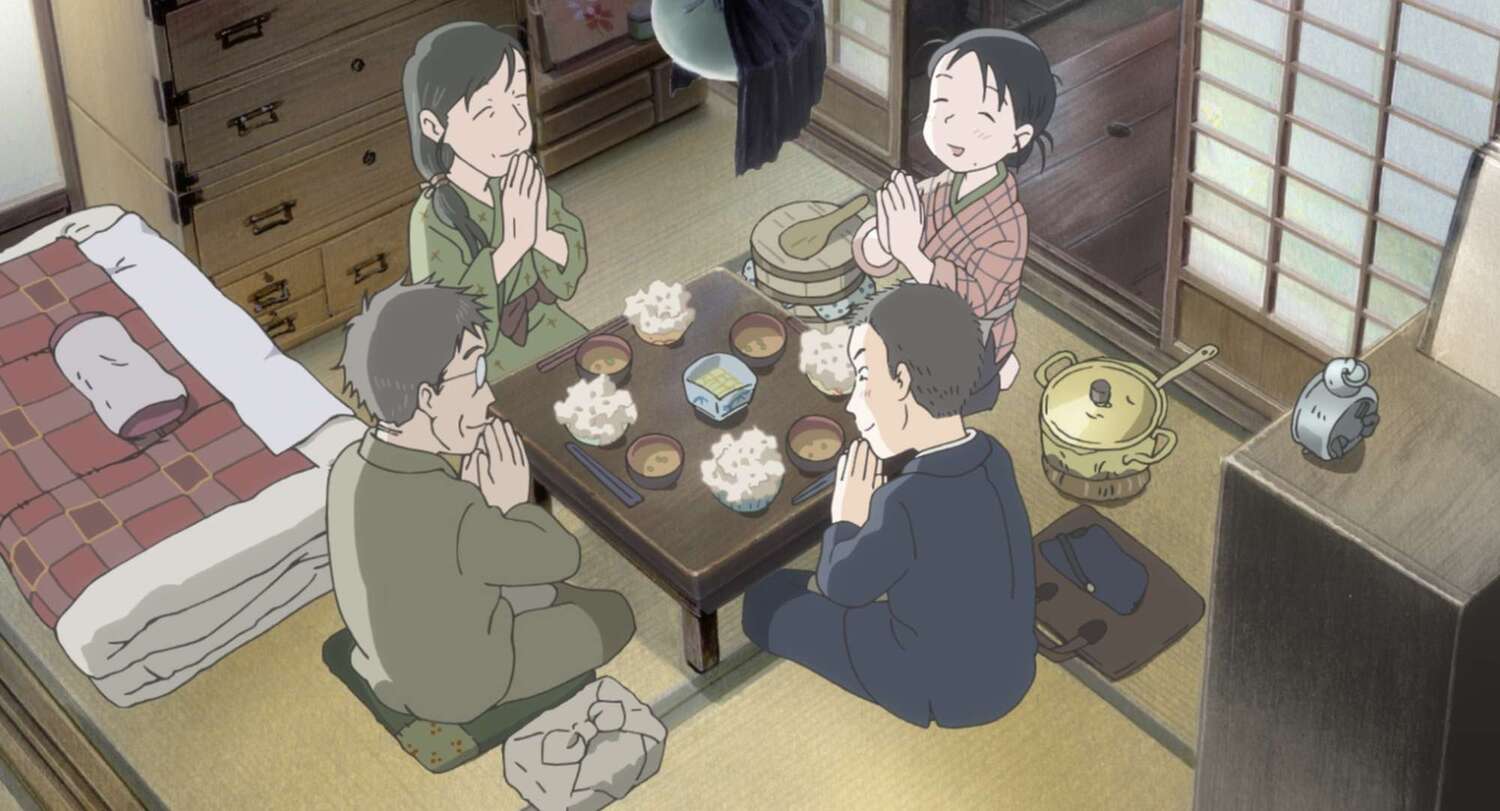
Summary of Cooking, Meals, Food, Sweets, and Drinks in This Corner of the World
Kono Sekai no Katasumi ni (In a Corner of the World)" is a manga series written by Fumiyo Kono, serialized in the manga magazine "Manga Action" since 2007, and published in book form in 2008. Many media mix works, such as TV dramas and animated movies, have also been developed. The story follows Suzu Urano/Hojo Suzu, who marries from Hiroshima to the military port town of Kure, and lives a modest life in the midst of World War II. Some of Suzu's home-cooked meals are accompanied by detailed recipes, providing a glimpse into the dietary habits of the time.
Read Article
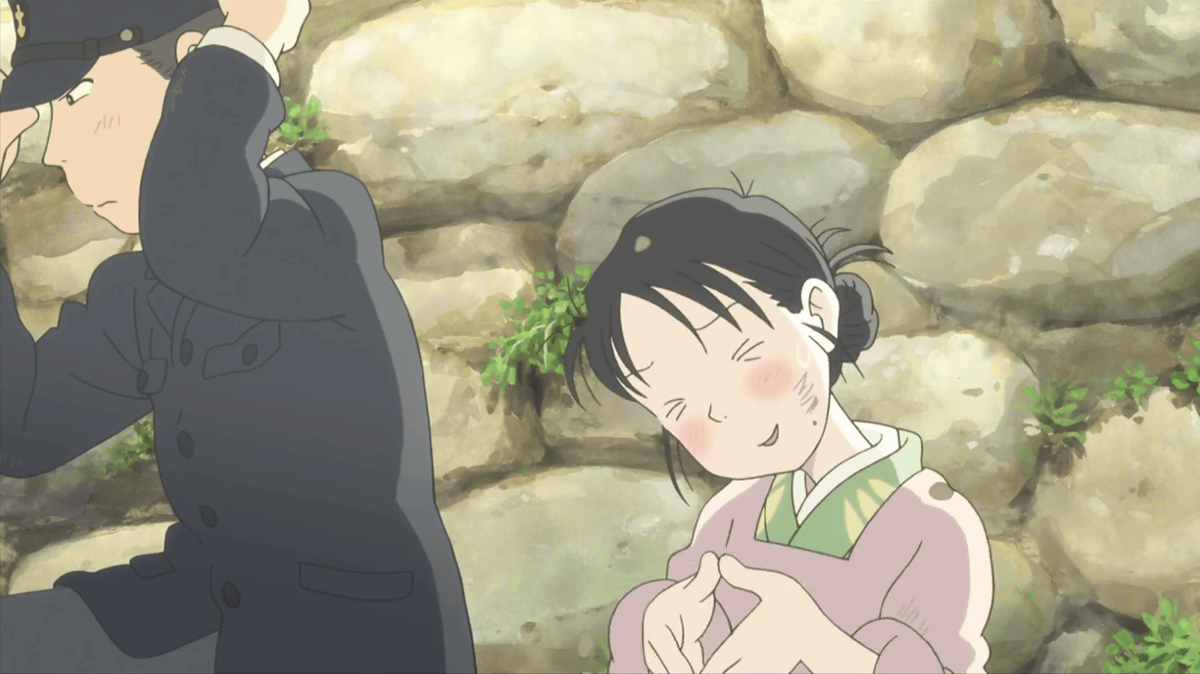
A compilation of famous quotes, lines/scenes and scenes from "In This Corner of the World
Kono Sekai no Katasumi ni (In a Corner of the World)" is a Japanese manga by Fumiyo Kono and a drama/anime film based on it. Set in Kure, Hiroshima, during World War II, the film depicts the everyday life of the main character, Suzu Urano, who is married to Shusaku Hojo, in a light-hearted, sometimes comical, sometimes cruel manner. The film's positive dialogue and its depiction of the way the protagonist, Suzu, devises ways to get by despite the difficulties of life in a war-torn country move and encourage many people, young and old alike.
Read Article
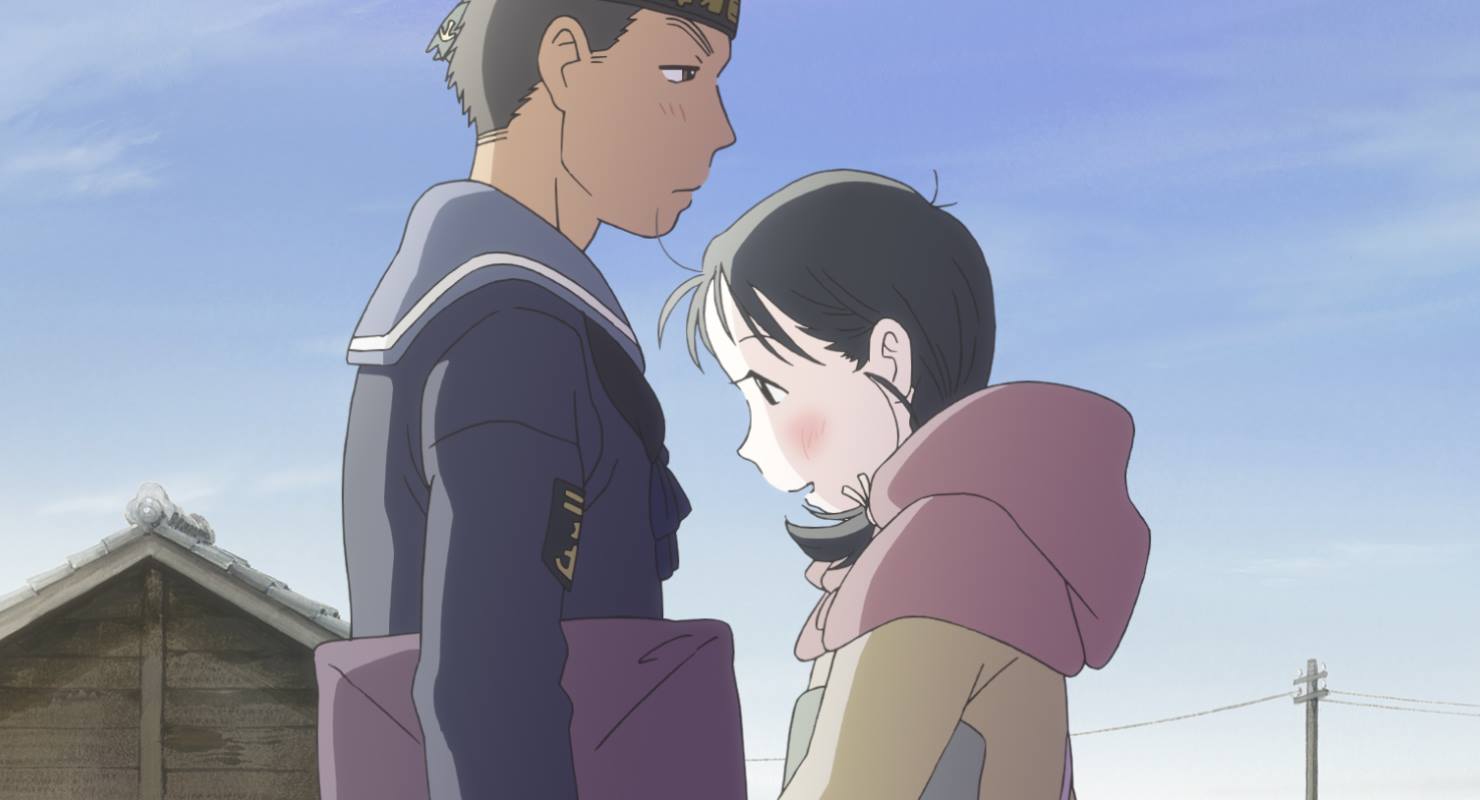
Spoilers and discussion of "In This Corner of the World"! Also explains the identity of the Zashiki-do that played an important role in the story.
This article presents a collection of spoiler explanations and discussions about the manga written by Fumiyo Kouno and the film "In a Corner of the World," directed by Sunao Katabuchi, which was based on the manga. Many yokai, including the Zashiki-do, appear in the manga, and they play a very important role in the film. The article also details the true identity of the Zashikido and the differences between the original work and the movie.
Read Article
Sunao Katabuchi, director of "In This Corner of the World" and Studio Ghibli have a deep relationship. In fact, he was supposed to shoot "The Witch's Delivery Service"!
This article presents a summary of the deep relationship between Sunao Katabuchi, director of "In This Corner of the World," a film made about the Pacific War, and Studio Ghibli. Katabuchi was originally slated to direct the Ghibli film "The Witch's Delivery Service," but due to sponsorship issues, he had been assigned to assist director Hayao Miyazaki in the past. The article also introduces the secret story behind the production of "In a Corner of the World," the points he focused on, and the reputation of the film.
Read Article
![In This Corner of the World] Tear-jerker is inevitable! A gem of an anime feature for those of you who haven't cried yet [Your Name is...].](https://renote.net/files/blobs/proxy/eyJfcmFpbHMiOnsiZGF0YSI6NzE3NTEyOCwicHVyIjoiYmxvYl9pZCJ9fQ==--3c05fbc3918e58a34246ca45644891dab9ad50f6/i-img1200x675-1583986230otekhn533374.jpg)
In This Corner of the World] Tear-jerker is inevitable! A gem of an anime feature for those of you who haven't cried yet [Your Name is...].
Have you cried lately? Many people think that crying is something to be ashamed of, but it is not true. It is rather refreshing to cry as much as you can when you want to. In this article, we have compiled a list of anime masterpieces that are sure to make your teary glands burst. If you can't cry in front of others, why don't you cry out loud once in a while at home?
Read Article
Contents
- Outline of "Yunagi City, Sakura Country
- The story of "Yunagi City, Sakura Country
- The story behind "Yunagi City."
- Minami and Fujimi, mother and daughter, living in Hiroshima 10 years after the atomic bombing
- Courtship from colleague Uchikoshi and revived memories of the past
- Minami's illness and death
- The Story of "Cherry Blossom Country (I)
- Friendship between Nanami, Toko, and Nagio
- Fujimi's death and the Ishikawa family's move
- The Story of "The Land of the Cherry Blossoms (II)
- Father Asahi's suspicious movements and reunion with Toko
- Nanami and Higashiko visit Hiroshima
- Cherry-tree-lined streets and recollections of the Ishikawa family's past
- Nanami is confident of a bright future for Nagio and Toko
- Characters in "Yunagi City, Sakura Country
- Characters in "Yunagi City"
- Minami Hirano
- Fujimi Hirano
- Asahi Ishikawa
- Yutaka Uchikoshi
- Sachiko Furuta
- Hirano Tenma
- Kasumi Hirano
- Midori Hirano
- Characters and characters in "Cherry Blossom Country
- Nanami Ishikawa
- Nagio Ishikawa
- Fujimi Hirano
- Asahi Ishikawa
- Kyoka Ishikawa
- Toko Tone
- Terms for "Yunagi City, Sakura Country
- A-bomb slum
- atomic-bomb sickness
- World Conference Against Atomic and Hydrogen Bombs
- second-generation atomic bomb survivors
- Famous quotes, lines, scenes and scenes from "Yunagi City, Sakura Country
- Yutaka Uchikoshi: "You're not going to return that handkerchief, are you?"
- Yutaka Uchikoshi: "Thank you for keeping me alive."
- Nanami Ishikawa: "And sure enough, I decided to choose these two to be born."
- Backstory, Trivia, and Small Stories/Episodes/Anecdotes of "Yunagi City, Sakura Country" (Japanese only)
- Author Fumiyo Konno is from Hiroshima
- The meaning behind the title
- The names of the characters are from the names of towns in Hiroshima City.
- Song in the play "Yunagi City, Sakura Country
- Song: "Otomi-san" by Hachiro Kasuga
- Song: "Tsuki ga tomo ao kara" (Because the moon is very blue) by Tsujiko Sugawara