
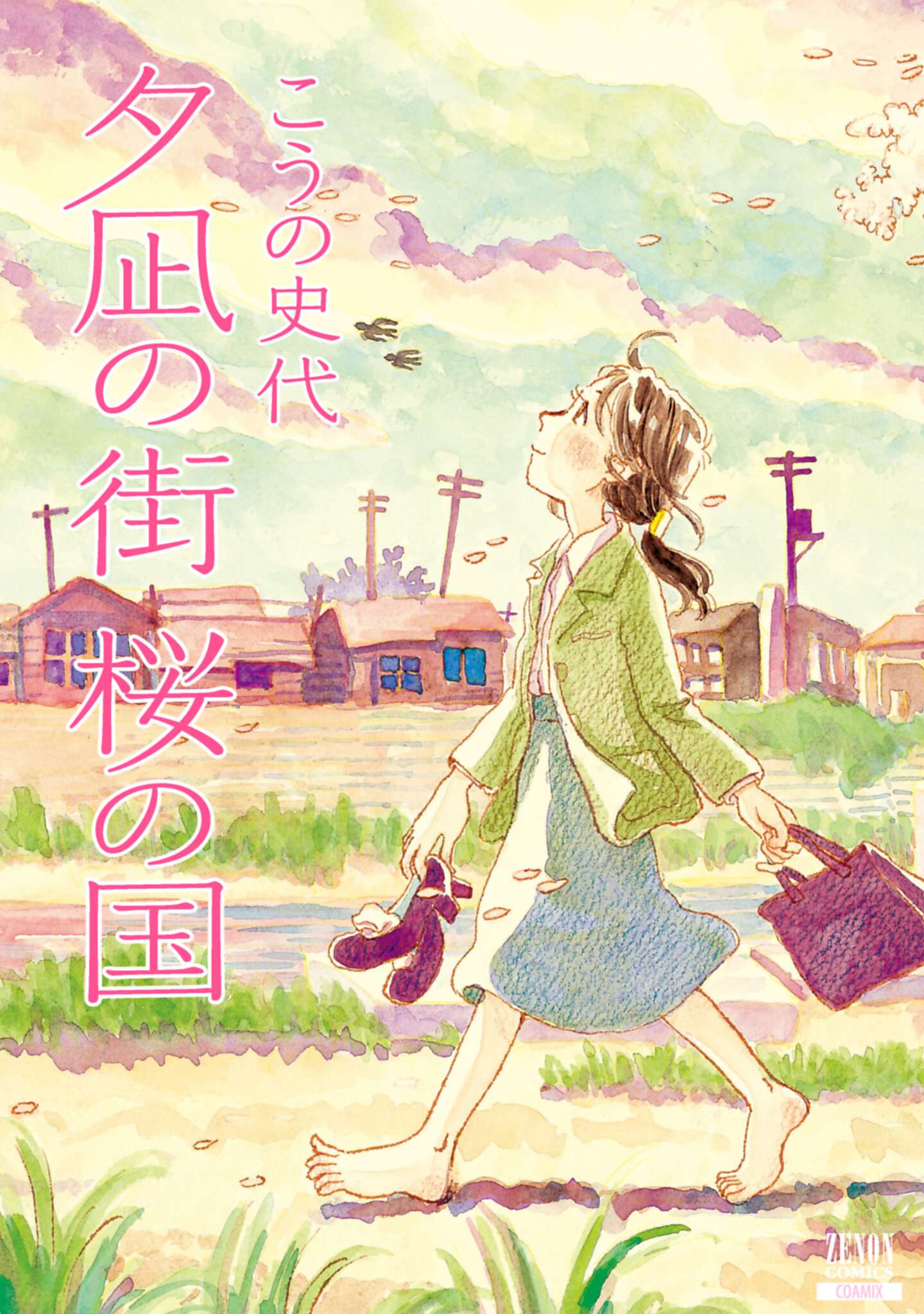
Yunagi City, Sakura Country" is a manga work published in 2004 by Fumiyo Kono. It is a trilogy consisting of "Yunagi City," "Cherry Blossom Country (1)," and "Cherry Blossom Country (2).
It has also been adapted into a number of media mixes, including a film, a novelization, and a TV drama.
The story focuses on the lives of people after the war, who were tormented by the atomic bombing, but lived happily and robustly, and has a gentle and warm atmosphere that is appealing and not just a "tragic war story.
Outline of "Yunagi City, Sakura Country
Yunagi City, Sakura Country" is a manga work published in 2004 by Fumiyo Kono. It is a trilogy consisting of "Yunagi City," "Sakura Country (1)," and "Sakura Country (2)," each depicting the city of Hiroshima 10 years, 40 years, and 60 years after the atomic bombing. Yunagi no Machi" was published in "Weekly Manga Action" in 2003, just before the magazine ceased publication, and "Sakura no Kuni (I)" was published in "Manga Action" in 2004, with "Sakura no Kuni (II)" added in 2004.
While there is a strong tendency for works with atomic bombing themes to be rejected for publication in magazines, this work was highly acclaimed from the time it was published, winning the Grand Prize in the Manga Division of the Japan Media Arts Festival in 2004 and the Tezuka Osamu Cultural Prize Shinsei Award in 2005. It has also been the subject of numerous media mixes, including a film adaptation directed by Kiyoshi Sasabe in 2007, a novelization by Yohei Makita in 2017, and a TV drama by NHK in 2018.
In "Yunagi City," set in the city of Hiroshima 10 years after the atomic bombing, the story depicts the devastation of the immediate aftermath of the bombing and the guilt of having survived that suddenly looms over the heartwarming daily life of the recovering city. On the other hand, "Cherry Blossom Country (1) (2)" focuses on the children of "Yunagi City" and depicts the second-generation A-bomb survivors who suffer from the fear of A-bomb disease and the prejudice of their surroundings that will always haunt them.
Although the trilogy depicts "the atomic bombing for ordinary people" head-on, it is characterized by the fact that there are fewer depictions of the day of the atomic bombing than in other works dealing with the atomic bombing.
The film focuses on the lives of people after the war, who suffered from the atomic bombing but lived happily and robustly, and its appeal lies in its warm atmosphere that goes beyond the "tragic war story.
The story of "Yunagi City, Sakura Country
The story behind "Yunagi City."
Minami and Fujimi, mother and daughter, living in Hiroshima 10 years after the atomic bombing
In Hiroshima in 1955, ten years after the atomic bombing, Minami Hirano and her mother Fujimi Hirano were living in a shabby house in the A-bombed slum. Minami worked for a construction company, Ozora Kenken, while Fujimi ran a dressmaking business at home, leading a modest life. The reason for saving money was to repay her aunt, who had helped pay for her school fees, and to save money for a trip to Mito to visit her younger brother, Asahi Ishikawa, who had been adopted by her aunt and her husband.
Minami spent her days walking barefoot on her way to work to keep the soles of her shoes from wearing out, cooking and eating wild plants that grew in the neighborhood, and so on.
However, even in the midst of her peaceful days, a memory of the day she was exposed to the atomic bomb ten years ago comes back to her at a moment's notice. Minami was in a public bath, looking at the backs of women who still had burn scars on their backs. No one ever mentions it. I still don't understand why.
Courtship from colleague Uchikoshi and revived memories of the past
One day, on her way home from work, Minami is asked by her colleague Yutaka Uchikoshi to help her choose a handkerchief as a gift for the person she loves. Uchikoshi follows Minami out of the store and gives her the handkerchief along with a pair of sandals that his grandmother had knitted. Minami, who has always had a liking for Uchikoshi, asks him if he will return the handkerchief. Minami, who has always had a liking for Uchikoshi, replies with a smile, "Yes...thank you. Minami is embraced by Uchikoshi, but immediately has a flashback of the city immediately after the atomic bombing. Recalling countless dead bodies floating under the same bridge where she was courted by Uchikoshi, stealing geta (wooden clogs) from beautiful corpses and putting them on, and throwing rubble at the corpses with her sister, Minami leaves Uchikoshi and runs away from the scene. Minami felt guilty that she had left so many people to die and that she had survived, and whenever she felt happy, she was tormented by the thought that she could not be happy.
Minami lost her father, Tenma, and her sister, Midori, in the atomic bombing, and her older sister, Kasumi, died of illness two months after the bombing. Fujimi was blinded by burns at the time, so she did not see the devastation of Hiroshima, and her younger brother Asahi had evacuated the area and escaped the bombing. Minami repeatedly tells herself, "It would have been better if I had just forgotten about it.
Minami's illness and death
After some hesitation, Minami decides to tell Uchikoshi about her own experience of the atomic bombing. Let me tell you what happened ten years ago. Then you might understand why we were left alive." Minami responds, "I think you're right. Uchikoshi had lost his aunt in the atomic bombing and was courting Minami, knowing that she had probably been exposed to radiation. Minami was relieved to hear Uchikoshi take Minami's hand and say, "Thank you for keeping me alive.
However, Minami's health deteriorated rapidly after that. The day after she took a day off from work, she was unable to stand up, and the next day she was unable to eat. She remembers her older sister, Kasumi, who collapsed and died two months after the bombing. After Minami's collapse, neither Minami nor Fujimi talked about Kasumi anymore.
Minami's condition continued to worsen, and she began coughing up blood and suffering intense pain, eventually losing her sight. As she dies, Minami wonders if the people who dropped the atomic bomb on her are happy to have killed another person, and laments, "I thought for sure I was the one who didn't die. Minami feels the breeze after the evening calm, and dies, still clutching the handkerchief Uchikoshi gave her. In the city, leaflets for the "World Conference Against Atomic and Hydrogen Bombs" were flying in the wind.
The Story of "Cherry Blossom Country (I)
Friendship between Nanami, Toko, and Nagio
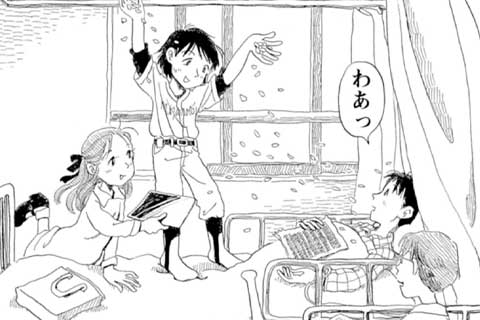
Nanami (center) sprinkles cherry petals on Nagio's (right) bed, and Touko (left) holds the sheet music.
In Tokyo in 1987, fifth grader Nanami Ishikawa lived with her family in an apartment complex in a town lined with cherry trees. Nanami's grandmother was visiting her younger brother in the hospital for asthma, and her father was away from home on business, but Nanami herself spent most of her time practicing baseball, so she did not feel lonely. Nanami also had a close friend named Tone Toko. In contrast to Nanami's manly nature, Tone was a gentle piano girl, and the two remained friends even after they were separated from their school classes.
One day, Nanami gets a nosebleed during baseball practice and is ordered to take a break by the coach. However, Nanami sneaks out of practice and decides to visit her younger brother Nagio Ishikawa in the hospital. She invites Toko, whom she happens to meet on the way, and the two of them take a train to the hospital. It was the time of year when the cherry blossoms were in full bloom.
In Nagio's hospital room, Nanami collects cherry petals and scatters them on Nagio's bed. Higashiko tore off a piece of piano sheet music and made it into a flurry of snowflakes. She was trying to cheer up Nagio, who could not go outside, but Fujimi came to her and got angry with her.
Fujimi's death and the Ishikawa family's move
In the summer of that year, Fujimi became ill and died. In fact, on the spring day when Nanami and Toko visited Nagio to visit him, Fujimi was undergoing tests in another room, and the results were not favorable.
After Fujimi's death, Nagio was discharged from the hospital, but he still needed to go to the hospital after that. In order to make Nagio's visits to the hospital easier, the Ishikawa family decided to leave the town of Sakura Namiki that fall. Nanami and Azuma were separated and never saw each other again.
At her new school, Nanami tried to become a quiet girl like Toko, but by winter, her true nature was completely exposed.
The Story of "The Land of the Cherry Blossoms (II)
Father Asahi's suspicious movements and reunion with Toko
In 2004, Nanami, now 28 years old, was suspicious of her father Asahi's recent behavior. One night, Nanami followed Asahi again after he left the house without telling her where he was going, and his phone bill was strangely high. One night, Nanami is following Asahi when he wanders out of the house again, and by chance he runs into his former best friend, Higashiko. 17 years after their first meeting, Nanami has mixed feelings as memories of the cherry tree-lined street where he lost his mother and grandmother come back to his mind.
While Nanami continues to follow Asahi with Azuma, Asahi boards an overnight bus to Hiroshima. He is hesitant to follow Asahi any further, saying that he has no money, but Higashiko persuades him to go with her, and before he knows it, they are in Hiroshima.
Nanami and Higashiko visit Hiroshima
In Hiroshima, Nanami and Azuma decided to go their separate ways. Nanami continued to follow Asahi, while Azuma decided to visit Hiroshima Peace Memorial Museum.
Nanami follows Asahi to visit the graves of the Hirano family, her father's birthplace, and to visit relatives who experienced the atomic bombing, and is reminded that she was born into a family that experienced the bombing. He also discovers that his younger brother Nagio is still tormented by this fact. In the pocket of the jacket he borrowed from Toko when they parted, he found a letter from Nagio. Nagio, now a resident doctor, and Higashiko, a nurse, work at the same hospital and are in love with each other. However, Higashiko's parents objected to their relationship because Nagio is a second-generation A-bomb survivor, and Nagio wrote a letter to Higashiko telling her he was leaving her.
Cherry-tree-lined streets and recollections of the Ishikawa family's past
The story is told in the present, as well as through the recollections of Asahi and Nanami.
After the death of her older sister Minami, Asahi returns to Hiroshima to enroll in college, where she teaches studies to Kyoka Ota, a young girl who lives in the neighborhood. Kyoka was exposed to the atomic bomb shortly after her birth, and because of that, she says, "I am not good enough. Although Kyoka is not good at studying and is a bit slow, she is good at sewing and helps Fujimi with her work, and Asahi gradually becomes attracted to Kyoka. As time goes by, at the age of 34, Kyoka decides to move to Tokyo for work. Asahi proposes marriage to Kyoka, and the three of them move to the town of Sakuraniki with Fujimi. At first, Fujimi was reluctant to marry Kyohana and Asahi because she did not want to see any more of her family members die of atomic bomb-related diseases, but when the decision to go to Tokyo was made, she agreed to the marriage, saying, "If I have to worry about Kyohana the same way, I would much rather have her by my side.
After their marriage, Kyoka gave birth to Nanami and Nagio, but at the young age of 38, she collapsed and died from vomiting blood. Fujimi also lost consciousness when she fell ill, and mistaking Nanami for a friend of her youngest daughter Midori, she asked Nanami, "Why did you survive? She then said to Nanami, "Why did you save yourself? In Nanami's mind, the town of Cherry Blossom Lane has long been associated with the memories of her mother's and grandmother's deaths, and she wants to forget the past, including her memories of Higashiko.
Nanami is confident of a bright future for Nagio and Toko

Related Articles
Spoiler commentary and discussion of "In This Corner of the World" (manga, anime, drama)
Kono Sekai no Katasumi ni (In a Corner of the World)" is a manga work by Fumiyo Kono, as well as a drama and anime film based on it. The manga was serialized in Futabasha's "Manga Action" from 2007 to 2009. The drama was broadcast on Nippon Television in 2011, and the movie was released nationwide in November 2016.
Read Article
Summary of Cooking, Meals, Food, Sweets, and Drinks in This Corner of the World
Kono Sekai no Katasumi ni (In a Corner of the World)" is a manga series written by Fumiyo Kono, serialized in the manga magazine "Manga Action" since 2007, and published in book form in 2008. Many media mix works, such as TV dramas and animated movies, have also been developed. The story follows Suzu Urano/Hojo Suzu, who marries from Hiroshima to the military port town of Kure, and lives a modest life in the midst of World War II. Some of Suzu's home-cooked meals are accompanied by detailed recipes, providing a glimpse into the dietary habits of the time.
Read Article
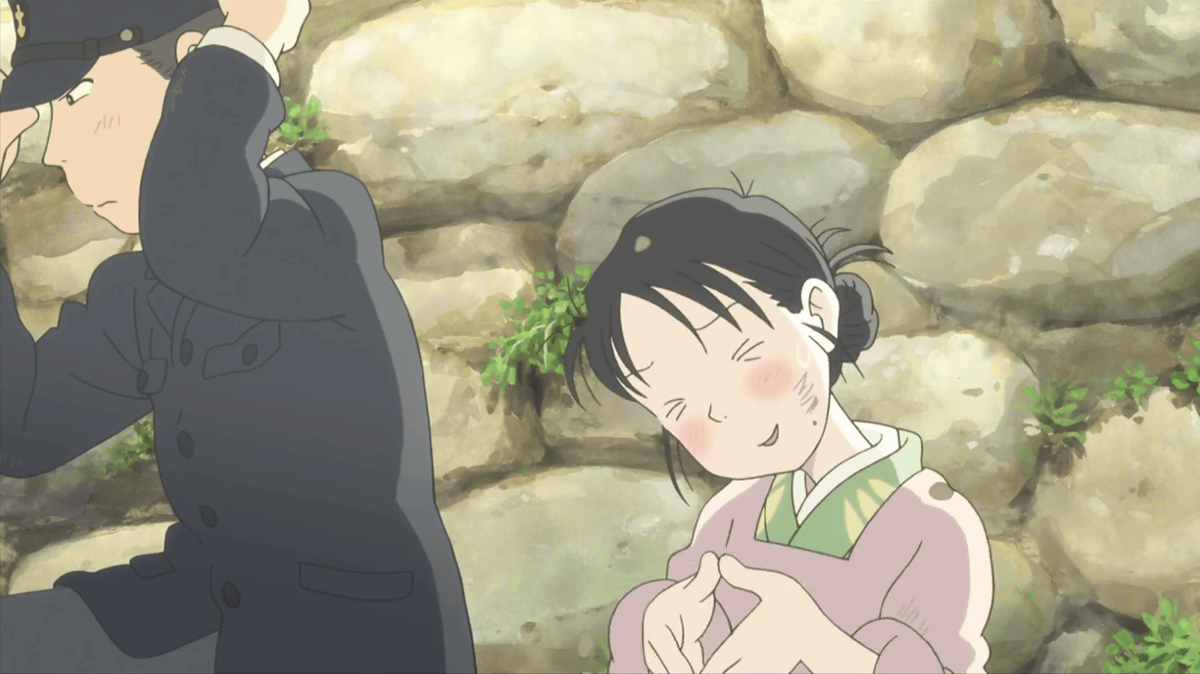
A compilation of famous quotes, lines/scenes and scenes from "In This Corner of the World
Kono Sekai no Katasumi ni (In a Corner of the World)" is a Japanese manga by Fumiyo Kono and a drama/anime film based on it. Set in Kure, Hiroshima, during World War II, the film depicts the everyday life of the main character, Suzu Urano, who is married to Shusaku Hojo, in a light-hearted, sometimes comical, sometimes cruel manner. The film's positive dialogue and its depiction of the way the protagonist, Suzu, devises ways to get by despite the difficulties of life in a war-torn country move and encourage many people, young and old alike.
Read Article
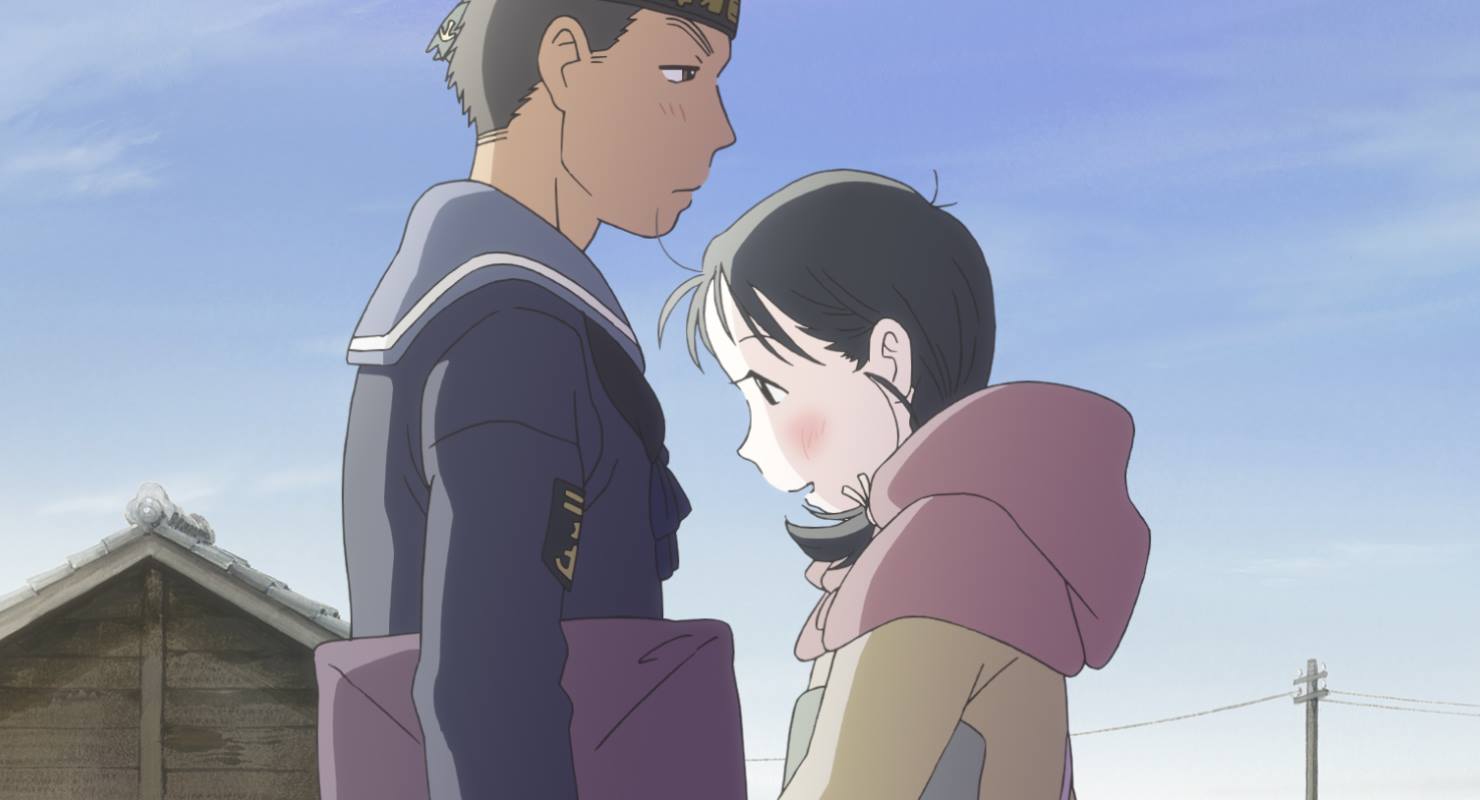
Spoilers and discussion of "In This Corner of the World"! Also explains the identity of the Zashiki-do that played an important role in the story.
This article presents a collection of spoiler explanations and discussions about the manga written by Fumiyo Kouno and the film "In a Corner of the World," directed by Sunao Katabuchi, which was based on the manga. Many yokai, including the Zashiki-do, appear in the manga, and they play a very important role in the film. The article also details the true identity of the Zashikido and the differences between the original work and the movie.
Read Article
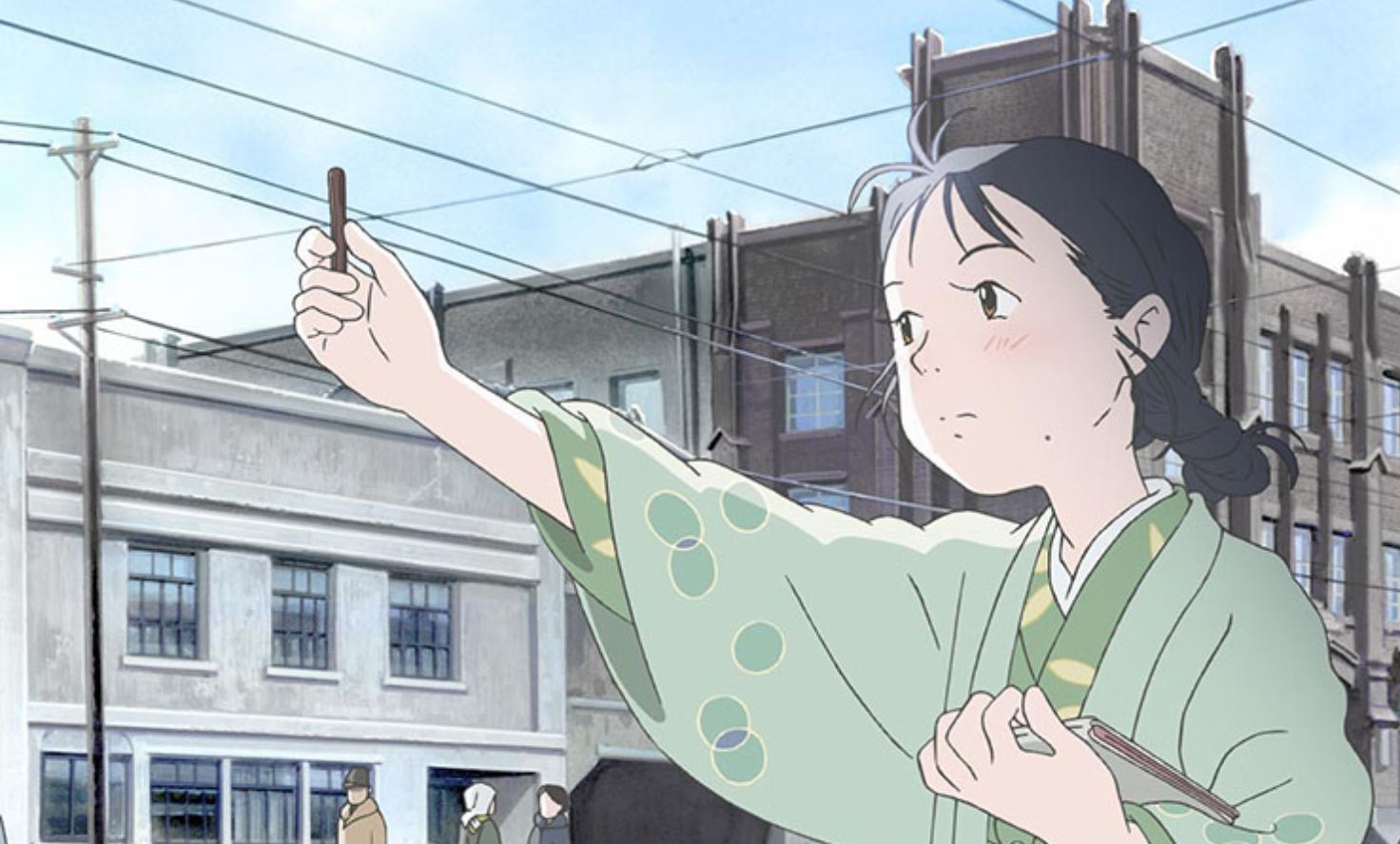
Sunao Katabuchi, director of "In This Corner of the World" and Studio Ghibli have a deep relationship. In fact, he was supposed to shoot "The Witch's Delivery Service"!
This article presents a summary of the deep relationship between Sunao Katabuchi, director of "In This Corner of the World," a film made about the Pacific War, and Studio Ghibli. Katabuchi was originally slated to direct the Ghibli film "The Witch's Delivery Service," but due to sponsorship issues, he had been assigned to assist director Hayao Miyazaki in the past. The article also introduces the secret story behind the production of "In a Corner of the World," the points he focused on, and the reputation of the film.
Read Article
![In This Corner of the World] Tear-jerker is inevitable! A gem of an anime feature for those of you who haven't cried yet [Your Name is...].](https://renote.net/files/blobs/proxy/eyJfcmFpbHMiOnsiZGF0YSI6NzE3NTEyOCwicHVyIjoiYmxvYl9pZCJ9fQ==--3c05fbc3918e58a34246ca45644891dab9ad50f6/i-img1200x675-1583986230otekhn533374.jpg)
In This Corner of the World] Tear-jerker is inevitable! A gem of an anime feature for those of you who haven't cried yet [Your Name is...].
Have you cried lately? Many people think that crying is something to be ashamed of, but it is not true. It is rather refreshing to cry as much as you can when you want to. In this article, we have compiled a list of anime masterpieces that are sure to make your teary glands burst. If you can't cry in front of others, why don't you cry out loud once in a while at home?
Read Article
Contents
- Outline of "Yunagi City, Sakura Country
- The story of "Yunagi City, Sakura Country
- The story behind "Yunagi City."
- Minami and Fujimi, mother and daughter, living in Hiroshima 10 years after the atomic bombing
- Courtship from colleague Uchikoshi and revived memories of the past
- Minami's illness and death
- The Story of "Cherry Blossom Country (I)
- Friendship between Nanami, Toko, and Nagio
- Fujimi's death and the Ishikawa family's move
- The Story of "The Land of the Cherry Blossoms (II)
- Father Asahi's suspicious movements and reunion with Toko
- Nanami and Higashiko visit Hiroshima
- Cherry-tree-lined streets and recollections of the Ishikawa family's past
- Nanami is confident of a bright future for Nagio and Toko
- Characters in "Yunagi City, Sakura Country
- Characters in "Yunagi City"
- Minami Hirano
- Fujimi Hirano
- Asahi Ishikawa
- Yutaka Uchikoshi
- Sachiko Furuta
- Hirano Tenma
- Kasumi Hirano
- Midori Hirano
- Characters and characters in "Cherry Blossom Country
- Nanami Ishikawa
- Nagio Ishikawa
- Fujimi Hirano
- Asahi Ishikawa
- Kyoka Ishikawa
- Toko Tone
- Terms for "Yunagi City, Sakura Country
- A-bomb slum
- atomic-bomb sickness
- World Conference Against Atomic and Hydrogen Bombs
- second-generation atomic bomb survivors
- Famous quotes, lines, scenes and scenes from "Yunagi City, Sakura Country
- Yutaka Uchikoshi: "You're not going to return that handkerchief, are you?"
- Yutaka Uchikoshi: "Thank you for keeping me alive."
- Nanami Ishikawa: "And sure enough, I decided to choose these two to be born."
- Backstory, Trivia, and Small Stories/Episodes/Anecdotes of "Yunagi City, Sakura Country" (Japanese only)
- Author Fumiyo Konno is from Hiroshima
- The meaning behind the title
- The names of the characters are from the names of towns in Hiroshima City.
- Song in the play "Yunagi City, Sakura Country
- Song: "Otomi-san" by Hachiro Kasuga
- Song: "Tsuki ga tomo ao kara" (Because the moon is very blue) by Tsujiko Sugawara