
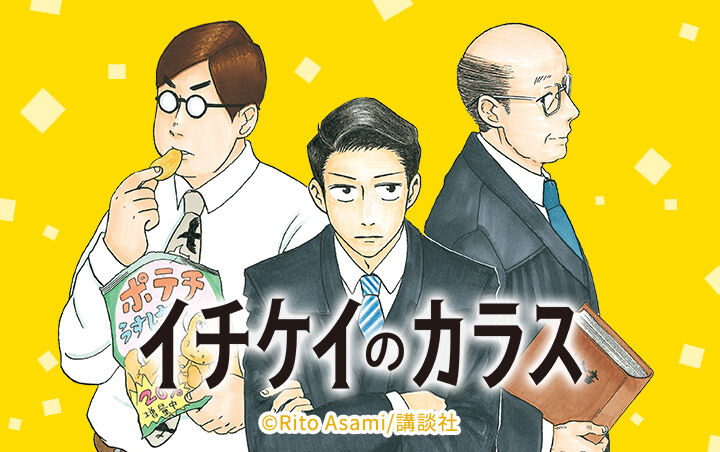
Ichikei no Karasu is a Japanese legal manga by Rito Asami featuring a judge. It was serialized in Morning from 2018. The main character, Sakama, is assigned to the First Criminal Division of the Musashino District Court, known as "Ichikei." There, he meets an unconventional judge, Michio Iruma. Unlike Sakama, who believes that judges are only supposed to issue rulings, Iruma is the type of judge who visits actual crime scenes and thoroughly examines anything that interests him. In this humanistic legal work, Sakama grows as a judge and as a person as he becomes involved with Iruma, who even considers the life of the defendant.
Komazawa wrote the book at his own expense. Each book costs 1,000 yen. The cover is a hippopotamus drawn by Komazawa. The back cover is a picture of Komazawa. It describes Komazawa's ideas as a judge and his feelings as a judge.
Iruma was asked by his younger sister to come to the Dojin-Sokubai, where he happened to meet Komazawa and this book. He decided to become a judge after hearing the contents of the book and Komazawa's words, "Mr. Iruma knows how unreasonable it is, and words from a weak position can be considered. You are suited to be a judge."
When Sakama first came to Ichikei, he heard that Komazawa had handed down acquittals in about 30 cases. He bought this book because he wanted to know Komazawa's intentions and the knack of getting an acquittal. He was embarrassed by the cover being a hippopotamus, so he made his own cover and carried it around like hiding it.
Kreptomania
In the story, Keiko was said to be suffering from a mental illness called kleptomania.
As the name suggests, it is a disease in which people steal things. There are cases in which people steal things because they don't have money or because they want them, but most of them do so because they want to experience "the tension and thrill of stealing, and the feeling of being refreshed when they succeed." It is difficult to understand the feelings of the person suffering from this disease because of the sympathy for the shops that have been damaged by the theft.
It is similar to gambling addiction and alcohol addiction, and it is difficult to overcome by the person's own power. Keiko also thought, "I have a daughter, so I have to quit," but when stress accumulated, she repeatedly committed theft. Like high blood pressure, it is also a disease that you have to live with for the rest of your life.
It is best for a person suffering from a disease to be treated by a doctor, and for a family member to listen to the stories of people suffering from the same disease and support the person.
Shaken baby syndrome
A diagnostic name that appeared in the second episode of the live-action drama.
Internal bleeding to internal bleeding or injury caused by a newborn or infant's body being shaken violently.
The accused in the second episode, Fukaze, was accused of abuse for causing irritation to Shiori, who did not stop crying, and shaking Shiori's body to injure her. However, fact, the injury was caused by a pediatrician's leg dropping Shiori from the bed. Even in actual cases, it is said to be difficult to distinguish the injury caused by falling from a sofa from the injury caused by shaken child syndrome.
Words, lines, scenes and scenes of "Ichikei no Karasu"
Michio Irima "We have to be crows."
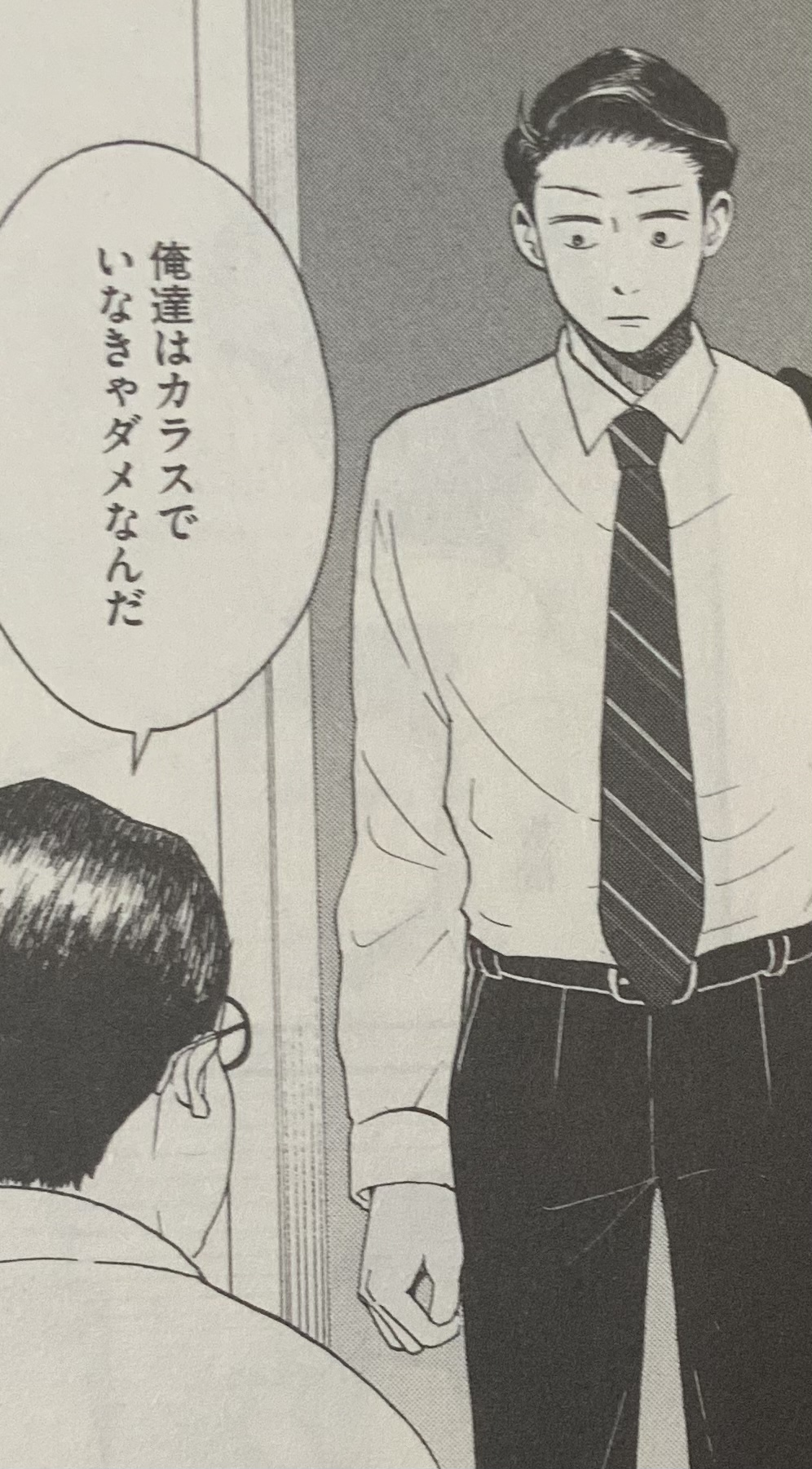
"We have to be crows," advises Sakama (in the back).
The trials he was in charge of in Sakama, Iruma, and Komazawa were the talk of the town. The trial was about a famous male writer who committed an obscene act against a woman in a toilet in a park at midnight.
As the accused man, Tabata, was a famous writer in the world, there were many opinions on social media and social media, such as, "Does such a famous person do something to damage his career?" and, "Isn't it a fabrication by the victims?" Sakama and others issued a verdict of conviction against Tabata after numerous investigations and experiments, and after listening to the stories of both the accused and the victims. Even so, there were persistent voices in the public, such as, "Isn't the prosecutor and the judge the same?" and "Isn't it a false accusation?"
Sakama felt that "public opinion would not even try to understand even if we thoroughly investigated and issued a judgment." In addition, Sakama remained indigestion about Tabata's acceptance of the conviction and refusal to appeal, saying, "Is he really convinced? Is he just giving up? Or is he really guilty?"
Iruma said to Sakama, "We have to be crows." The meaning of the word is that crows are animals that appear in myths. Crows in myths are free creatures. They are fickle and selfish, and sometimes they create a world just by feeling. But they have wisdom. They use their wisdom to give light, fire, and water to humans. They don't stand like gods or heroes, but they are unique and free.
Iruma wanted to tell Sakama that being a judge must be such a crow. Judges receive a lot of information, such as public opinion, the background of the accused, and the position of the victims. However, they must not be influenced by it. They use their wisdom to live freely. That is the attitude that is necessary as a judge. This is a famous line that tells him that "what a judge should be".
Michio Irima "Why don't you let your wife live a little longer inside you?"
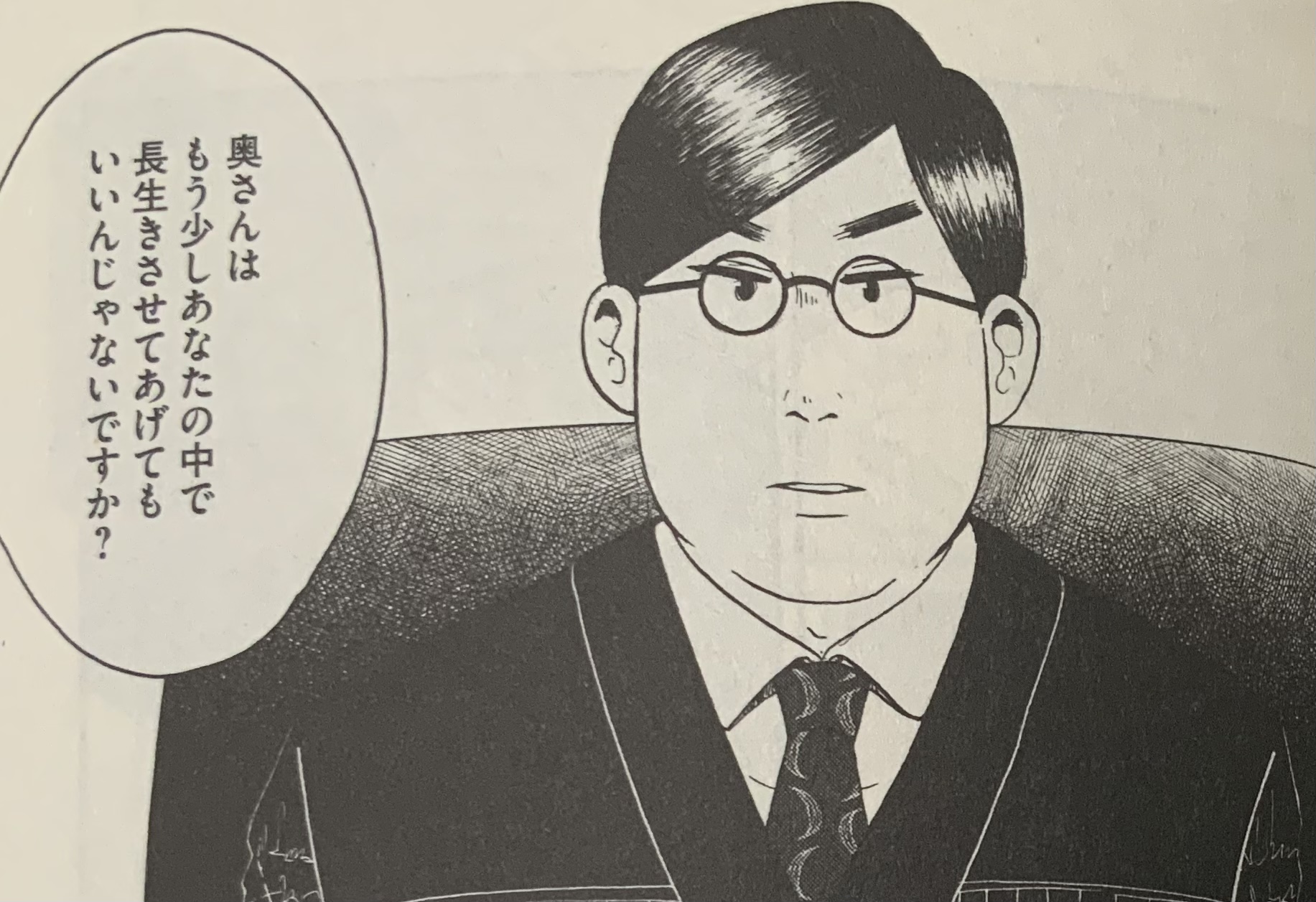
Iruma says to the defendant, Oki, "Isn't it okay for your wife to live a little longer inside you?"
It was decided that Iruma would be in charge of the trial of a case in which an elderly homeless man, Oki, went to a hospital with a knife and threatened a doctor.
The details of the incident are as follows. Oki's wife went to the hospital complaining of chest pain. The doctor examined her, but no abnormalities were found. The wife returned home with relief, but several days later, the chest pain recurred and she died. Oki shouted at the hospital with a knife, saying, "Because we are homeless, we were only examined at random." The doctor, who felt that he was in danger, called the police and arrested Oki.
When the trial began, Oki was depressed over the loss of his wife and his arrest. He agreed with the summary of the case read out by the prosecution, and Oki was half-thrown, saying, "Please give me a ruling. I don't have to take time for such an old man." Iruma said to Oki, "Isn't it okay for your wife to live a little longer in you?" Oki was shocked by the words.
His wife had indeed passed away, but as long as he lived and remembered, he was alive in his heart. Tears were in the eyes of Oki, who felt this.
Iruma did not see Oki as' homeless' or' accused,' but only as a human being' Oki who lost his beloved wife.'
Keiko 潮川: "I will never let my daughter come to court again."
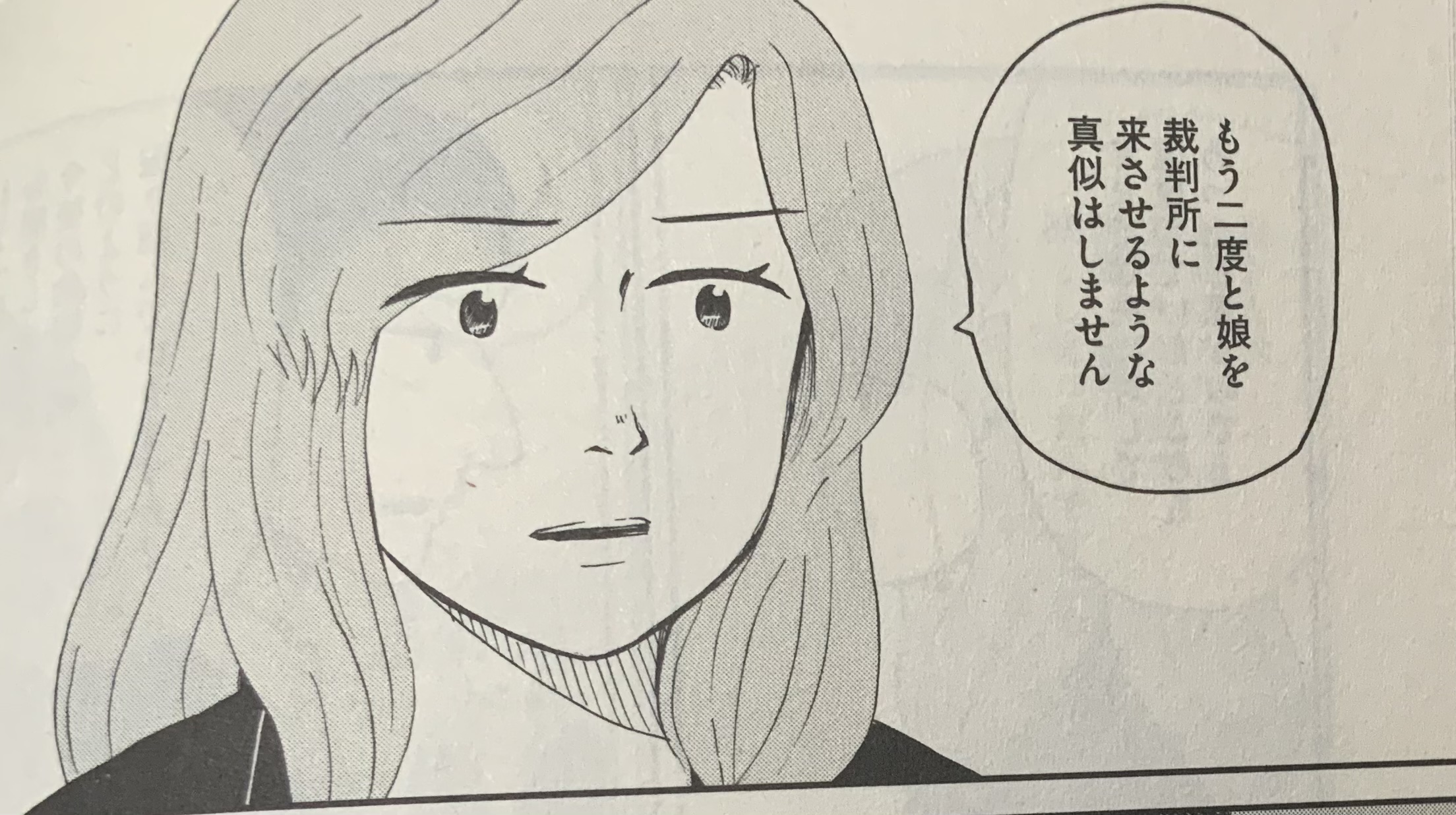
Keiko declares with a strong will,' I will never make my daughter come to court again.'
Keiko had a husband, Takuma, who was working away from home in Germany. They lived with their daughter, Hotaru, who was an elementary school student, and their mother-in-law. They took care of their mother-in-law, who was bedridden and always looked down on her. Keiko's fatigue and stress built up during those days, and she repeatedly shoplifted to get rid of it. She also had a previous criminal record in which she was arrested for shoplifting. Even though she knew that "shoplifting is a bad thing, and the family would be sad," she repeated shoplifting when she was stressed. This is also known as kleptomania or Kreptomania. She said, "I don't want the products, and I don't have the money, but I repeat shoplifting because I want to feel the thrill and tension of shoplifting." She received a diagnosis from a doctor, and was negotiating an out-of-court settlement with the store that shoplifted in the past.
Keiko also reflected and regretted her actions, but she was still abused by her mother-in-law, exhausted by having to take care of her children all by herself, and shoplifted again. One day, the shoplifter was finally found by an employee of the store, and she ran away. She was arrested for biting the arm of the employee who caught Keiko, and the case was brought to court.
When Keiko was arrested and brought to trial, she said, "I will concentrate on treating Kreptomania." The judge at that time believed her words and issued a suspended sentence. However, since Keiko committed a repeat offense in less than a year and a half, Sakama, the judge in charge of this case, was not sure about the sentence. The reason why Keiko could not concentrate on treatment was that she was taking care of her mother-in-law, who continued to abuse her after the trial, and taking care of her alone. In order not to worry Takuma, Keiko kept saying, "It's OK" even under difficult circumstances.
During the trial of Keiko, Hotaru came to the court without her father's knowledge. Hotaru said to her mother, who was at the defendant's seat, "Hotaru, I came here alone. I can work for you instead of Mom, Mom will be fine!" with tears in her eyes. Seeing her on the way home from the trial, Keiko confesses her feelings to her husband on the way home from the trial. It's hard to care for my mother-in-law and I'm exhausted with child rearing. Tell me everything. Keiko was able to talk about the SOS that she couldn't say for a long time, "I'm like this, but I still want to be with Takuma-san. I want you to help me." Takuma also reflected on the fact that she forced Keiko to take care of her and raise her, saying, "I made Keiko pretend she was okay," and promised to support her family and treat Kreptomania together.
At the next trial, Sakama asked Keiko again,' Will you never shoplift again and concentrate on your treatment?' Keiko promised that Hotaru was worried about her and came to the court, and that by supporting each other with Takuma, she would have courage in her life from now on, and that she would never make her daughter come to the court again.
Keiko, who cares about her family, swears that she will overcome her illness and face it with the help of those around her.
Komazawa: "I think. the biggest tragedy is a false accusation."
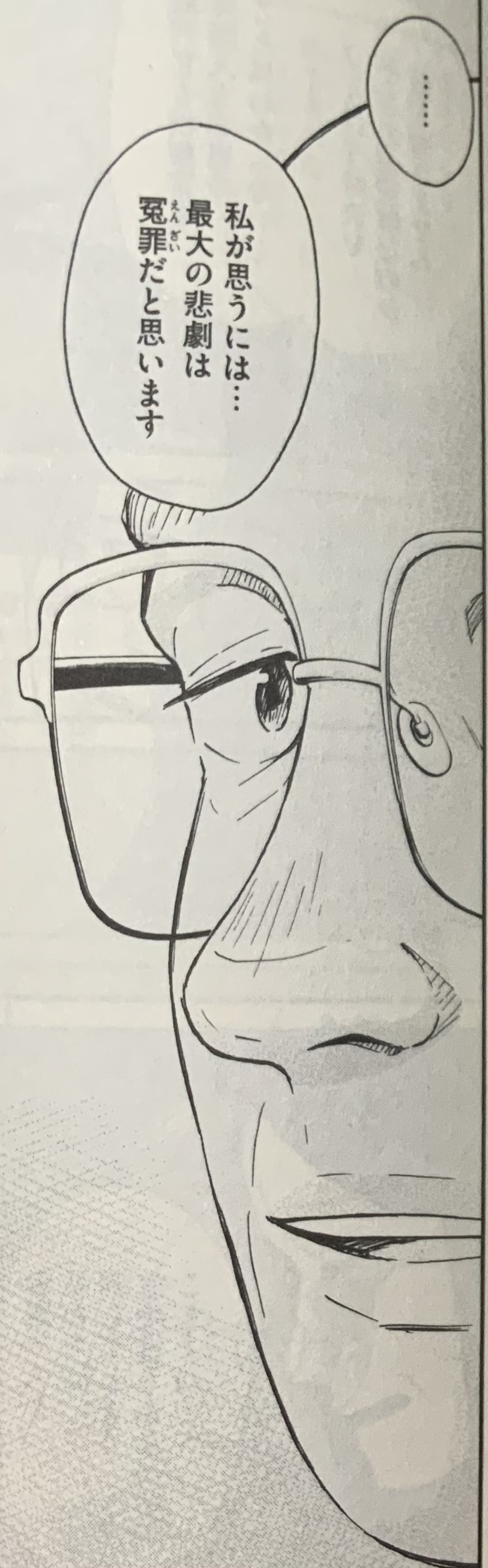
"I think. the biggest tragedy is a false accusation," Komazawa told lay judges.
A criminal trial is to be held in a jury trial. The case is as follows.
The defendant, Ogijima, left home by car to go for a walk in the park with his wife. On the way, he stopped at a convenience store where he met the victim, Dewey, who was littering cigarettes. Ogijima warned deroi about the cigarette littering, but deroi was not sorry and argued back. Ogijima leaves the convenience store, sensing that they are about to have an argument. However, just as he reaches the park, dewoi chases after him from behind. Not wanting to get his wife involved, Ogijima leaves him alone with dewy. When Hiroi said, "I came here to fight with you," Ogijima led him toward the field, saying, "Let's go that way.
There, he is hit several times by dewoi, and Ogijima hits him back. One of the blows struck Dewey in the face, and Dewey fell to the ground. Ogijima was worried, but dewai waved his hand as if to say, "Go away. Ogijima walked away from the scene, holding his eye where he had been hit by dewlap.
Kawashima, who had witnessed the situation, was worried about dewai not getting up and called an ambulance. Dewey was transported to the hospital, but he developed an acute subdural hematoma caused by the beating and died.
Dewey's family brought the case to trial, but Ogijima claimed self-defense. The judges were to decide on the verdict after hearing the details of the case and what Ogijima had to say about it.
The judges heard a summary of the case and Ogijima's testimony, but could not make up their minds on the verdict.
Ogijima is a man who has worked diligently in his life, and even after retirement, he is the type of man who participates in local volunteer activities. He also went to the park with his wife for the purpose of walking for her health, and his past history made him sound like the type of person who would not beat someone to death. Furthermore, when Dewey and Ogijima confronted each other in the park, Ogijima personally led them toward the field, saying, "Let's go that way. When the judges first heard this, they thought that Ogijima had gone to the field to fight with Rui. However, Ogijima said, "I thought that Rui was a big guy and would lose if he got into a fight. He only went to the field because he was afraid of getting hurt on the concrete." This gave the judges the impression that he had no choice but to fight. More and more, it seems that Ogijima is innocent, but considering the fact that Dewey is dead, it is hard to shake the suspicion that he may have hit her intentionally.
The trial was once adjourned before the verdict, and the judges and Komazawa, Iruma and Sakama discussed the verdict. The more they discussed whether Ogijima was innocent or guilty, the more they became unsure of the answer, and the judges grew weary and began to feel that the verdict was no longer important. At that time, Komazawa asked the judges, "What do you think is the greatest tragedy in a criminal trial? Komazawa asked the judges, "What do you think is the greatest tragedy in a criminal trial? Omae, one of the judges, answered, "To release the real criminals into society without properly handling them. Komazawa replied, "Yes, I think that is most likely. I think...the greatest tragedy is false accusation.
If false accusations are made, not only will the true culprit not be properly tried, but the lives of innocent people will all be ruined. The judges may be tired of thinking and feel that whether Ogijima is innocent or guilty is of no concern to them. However, if they make a false accusation, they will deprive Ogijima of the rest of his time and life. Sharing this thought again, the judges tightened their belts and began the discussion again.
The day may come when any person may be chosen as a judge to whom the decision is entrusted. It may be easy to pass judgment, but this famous line reminds us once again that "one person's life is at stake.
SODO Yuki: "Please. help Sensei and me."
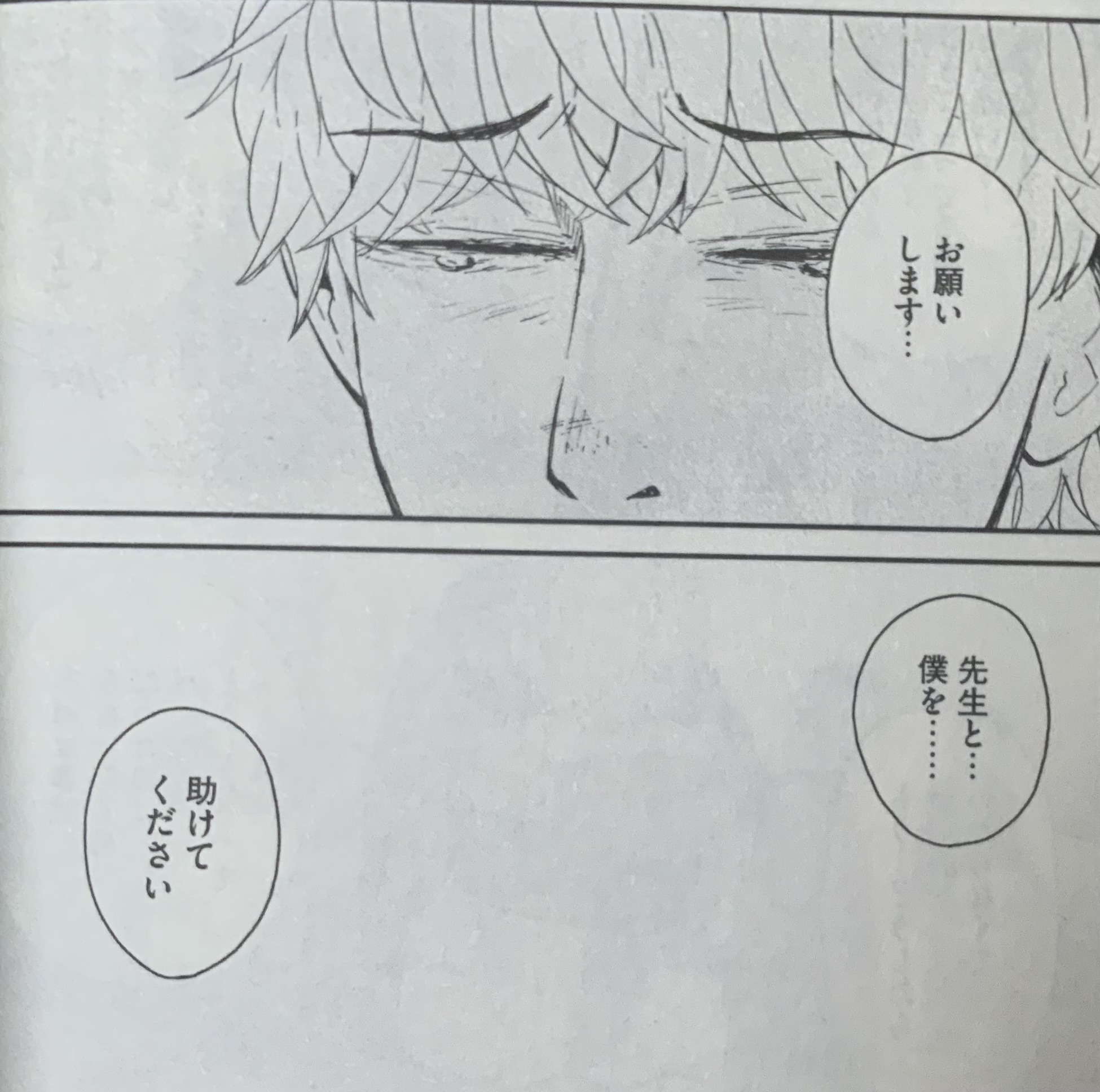
With tears in his eyes, Sudo says, "Please. help Sensei and me."
Sarashina, a teacher at Tokyo Metropolitan May Rain High School, warns a student, Soudou, who was making noise during class, to leave if he interferes with class. The student defies him, saying, "You should get out, you damn teacher. Sarashina grabs Soudou by the arm and moves him into the hallway.
Sarashina tries to take Soudou to the student guidance office, but Soudou resists and a slight struggle ensues. As Soudou was struggling to release Sarashina's grip on his arm, Sarashina suddenly let go of him and he fell down with the momentum. His hand was diagnosed with a three-week fracture. A friend of Nusudo's recorded the two of them with his smartphone, and the friend took the liberty of uploading the video to a social networking site.
When the principal heard the commotion, he questioned Sarashina. Sarashina explains that he was holding her arm and when he let go, she fell and he did not want to hurt her, but the vice principal insists, "Anyway, apologize to your parents. Furthermore, the parents of the child accused him of "doing it on purpose. Also, due to the response from social networking sites, the mass media had been pouring into the school to cover "Sarashina, the violent teacher". Sarashina is forced to leave his teaching position, and flyers are posted at his home saying that he is a "violent teacher. His wife and daughter have also moved out of the house, and he has been drinking heavily due to the heated media coverage.
On the other hand, Soudou was also impatient with the situation. He had thought that he had interfered with a class just to "annoy Sarashina a little," and that it had been an accident in which he had accidentally fallen and hurt himself. But when his friend uploaded the video without his permission, Sarashina was completely made to look bad. His parents did not listen to him and continued to denounce Sarashina when he was interviewed by the media.
At the trial that ensued, Sarashina, the accused, testified, "It is true that I grabbed her arm and put her out in the hallway, but I did not push her or anything like that with the intention of injuring her. Komazawa wanted to know what happened at the time of the incident and requested that the victim, Nsudo, appear in court.
When he was to appear in court, Soudou told his parents, "It is true that I was disrupting class, and the injury to my hand was just an accident," but he said, "It is true that I was injured. However, they stopped him from telling his parents, saying, "It is true that you were injured, but don't tell them about the disruption of class at the trial. Furthermore, his friends also ask him to "make us the heroes who caught Sarashina by giving our names as well. When Soudou said, "Why did you put the video on social media without permission?" his friends said, "What the hell, you were the one who always challenged Sarashina. I went to the trouble of giving you the video on SNS, but now it's getting cold. He also heard from a female classmate that "Sarashina's daughter has stopped working and is not attending school," and Sodo was distressed by the worsening situation. He was told not to tell anyone about the class disruption, but he was worried that he might be caught if he lied at the trial, so he went to the trial.
After the trial, Sakama and Soudou's eyes met. Sakama felt uncomfortable with the testimony he must have practiced word for word and the pressure from Soudou's parents in the audience. And when Soudou seemed to want to say something, Sakama asked, "Do you have anything you want to say to the court?" Sakama asked. Soudou began to tell the truth, saying, "Actually, no. At first, I was just trying to get Sarashina in trouble. That I had been disrupting the class. That his injuries were accidental. That his parents' reactions and social networking sites were heating up and making him anxious. Then, with tears in his eyes, Soudou uttered, "Please...save my teacher...and me .......
Although cornered, Soudou felt that Sarashina's life would be destroyed if he did not do something about it. He also felt pain at himself for being cornered by the overheating around him. A great line that led him to speak the truth and help Sarashina and Soudou himself.
Shinpei Sakama "But. it's an interesting job for me."
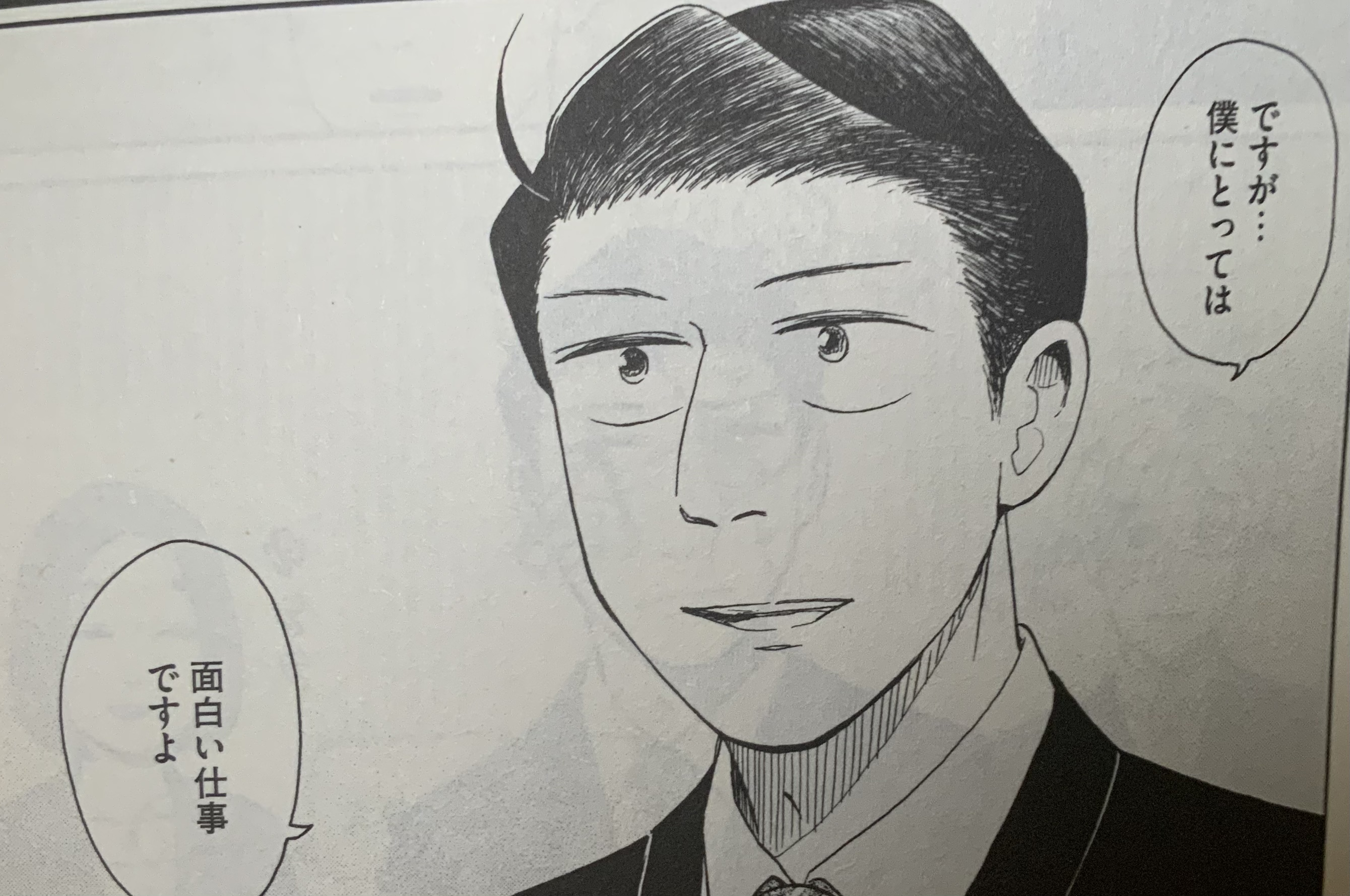
Sakama says with a smile, "But. it's an interesting job for me."
In the first episode of the first volume, after the junior high school students visited the court, they had a time to ask questions to the judge, and Sakama responded to them. When the junior high school students asked Sakama, "How much is your annual income?", Sakama replied coldly, "Please check it out by yourself."
One junior high school student asked, "What is a judge to Mr. Sakama?" Sakama answered, "It's a cool job that I can judge myself without being interfered by anyone and in accordance with the rules of the law to protect personal rights and freedoms." In response, Iruma interrupted, "A judge is a master of ceremonies and a judge. It's a judge's job to listen to the story and make a decision." Sakama thought, "A judge's job doesn't bring innovation to the world, and it's usually plain and hard to be seen by others. But sometimes it's a precious job that changes people's lives," but he thought, "A judge only makes judgments."
However, Sakama experienced many trials together with Iruma and Komazawa, and gradually changed his mind. The person on trial was one person, and although it was his job as a judge to give a judgment, he came to feel that it was his job to give a judgment considering the life of the accused.
This famous line is a scene from the final story of the fourth volume. Sakama was also responding to questions and answers from junior high school students in the same way. Then, a junior high school student asked Sakama, "Aren't you afraid of the job of a judge who decides a person's life with only one judgment?" He answered, "Of course, there is a sense of responsibility and tension. The job of a judge does not create innovation in the world, and it is plain and hard to be seen by others on a daily basis. But. it is an interesting job for me."
Through various trials, Sakama learned about "judges who face other people's lives". On top of that, this is a famous line that shows the change in the state of mind of Sakama, who felt satisfied with his work as a judge.

Tags
Contents
- Outline of "Ichikei no Karasu"
- Outline and story of "Ichikei no Karasu"
- Sakama meets Michio Irima
- Sakama's Changing Feelings as a Judge
- Yanagida, a juror in the lay judge trial
- Iruma's Past and the Trial of Violent Teachers
- Characters in "Ichikei no Karasu"
- Key person
- Shinpei Sakama (Shimpei played by Haru Kuroki)
- Michio Iruma (played by Yutaka Takenouchi)
- Work-related
- Yoshio Komazawa (played by Fumiyo Kohinata)
- Bunta ISHIKURA (played by Mackenyu NITTA)
- Itoko ICHINOSE (played by Kaho Mizutani)
- Hamatani (played by Yuki Sakurai)
- Kawasono
- Yamanouchi
- Litigants
- Ide (played by Ikusaburo Yamazaki)
- Tsutsumi (bank)
- Warabi (bracken)
- Persons involved in the case
- Tabata no Norimichi
- Yoshiharu OKI
- Keiko 潮川 (played by Marin)
- 潮川 Hotaru (played by Aigetsu TERADA)
- Takuma 潮川 (played by Ryu Morioka)
- Takuma no Haha (played by Keiko Katsukura)
- Shuji OGISHIMA
- Kiyoshi Tsuui
- Kazuaki Kawashima Takuya
- Juries in lay judge trials
- Noriichi YANAGIDA
- Ochiai (Ochiai)
- Tatehara
- Saionji
- Konaka
- Omae
- Tsuna
- Niimura
- School-related
- Yuki Sudo
- Kohei SARASHINA
- Family
- Ishikura's grandmother
- Sakama 絵真
- Younger sister of Iruma
- Other
- Matsuda
- Amamiya
- Characters from the live-action drama "Ichikei no Karasu"
- Key person
- Chizuru Sakama (played by Haru Kuroki)
- Michio Iruma (played by Yutaka Takenouchi)
- Ichikei squad
- Yoshio Komazawa (played by Fumiyo Kohinata)
- Hiroshi Kawazoe (played by Nakamura Baijaku II)
- Bunta ISHIKURA (played by Mackenyu NITTA)
- Itoko ICHINOSE (played by Kaho Mizutani)
- Mio Hamatani (played by Yuki Sakurai)
- Supreme Court
- Aki Hidaka (played by Tamiyo Kusakari)
- Kenichiro KODA (played by Kenjiro Ishimaru)
- Tokyo District Public Prosecutor's Office
- Iori Ide (played by Ikusaburo Yamazaki)
- Reji JOJIMA (played by Takeshi Masu)
- Acquaintance of Iruma
- Koji Togashi (played by Tetsunori Akira)
- Mizuki Aoyama (played by Yuka Itaya)
- People involved in the case 12 years ago.
- Sosuke Nishina (played by Shunsuke Kubozuka)
- Yuki Nishina (played by Asami Usuda)
- FUSE Motoharu (played by Tsuyoshi Nakano)
- Soichiro SHIMA (played by Yuichi Haba)
- Episode 1: "Unconventional Judge vs. Stiff Elite Judge! The Birth of a Buddy"
- Kazuyoshi Jiang Bo (played by Masanobu Katsumura)
- Nagao Makoto (played by Riku Hagiwara)
- Nagao Yoichiro (played by Kazuyuki Matsuzawa)
- Mayumi SOMA (played by Wakana Matsumoto)
- Nana Soma (played by Rin Furukawa)
- Noboru ASAI (played by Tooru Namazu)
- Masuko (played by Yuya Takayama)
- Junior High School Students on a Court Tour (played by KITAHARA Toshiaki)
- Audience mania (Bocho mania / Performance: chocolate planet)
- Episode 2: "Child Abuse! child! A Judgment on a Popular Mother on SNS"
- Fukaze Yoko (Actor: Maeda Atsuko)
- KODA Takahisa (played by Toru Baba)
- Adachi Katsumi (played by Yuta Kanai)
- Shōko ONODA (played by 智順)
- Fukaze Keisuke (played by Kento Shibuya)
- Hiroko Fukaze (played by Yoneko Matsukane)
- Shiori Fukaze (played by Iroha YAMAUCHI)
- Satomi TSUCHIYA (Satomi Tsuchiya, played by Mari Nishio)
- Audience mania (played by Milk Boy)
- CHAPTER 3: "THE LEGENDARY JUDGE RUNS AWAY, THE LOVE OF A VIOLENT CRIMINAL"
- Shogo Fujishiro (played by Yoshinori Okada)
- Nao NOGAMI (played by Aimi Satsukawa)
- NOGAMI Midori (played by WATANABE Miyu)
- Tetsuji NOGAMI (played by Osamu Narimatsu)
- Keiichi Okazaki (played by Ron Mizuma)
- SAKOTA Atsushi (played by Hiroshi Okouchi)
- Yoshinori Horiguchi (played by Tomokazu Koshimura)
- 丈弘 TSUDA (played by Koichiro KANZAKI)
- Swindler (played by Terumi)
- Branch Manager (played by Toru Morinaga)
- Audience mania (played by Onigoe Tomahawk)
- Chapter 4: "17-Year-Old Boy Robs 50 million Yen"
- MOCHIZUKI Hiroto (played by Taketo Tanaka)
- Miki Yoshizawa
- Riku Takimoto (played by Kanata Hosoda)
- Tsukasa INAGAKI (played by Yasuyuki Maekawa)
- Monden Mitsuhiko (played by Tomonori Mizuno)
- TATSUMI Hiroyuki (played by Atom Shukugawa)
- Haruyo SANO (played by Moe Edamoto)
- Inono of fraud and extortion (played by Mei Nagano)
- Accused of violating the Firearms and Swords Control Law (played by Alice Hirose)
- Accused of larceny (played by Kenichi Endo)
- Audience mania (air stairs)
- CHAPTER 5: "THE FIRST LOVE BALLERINA IS THE SUSPECT."
- Kyoko BABA (played by Erika Ikuta)
- Kaede Makibara (played by Asuka Kurosawa)
- Masaya Yaguchi (played by 研也 MATSUKI)
- Jiro MOTOKI (played by Kenji Anan)
- Mami Enokida (played by Mayumi Myosei)
- TEZUKA Daisuke (played by FURUYA Yoshiya)
- Kaho (played by Kyoka Minakami)
- Other Witnesses (Played by Yoaoi YUKI, Rina Takeda, Anju Kurosu, and Satsuki 星乃)
- Sayuri (played by 3 o'clock heroine Yumecchi)
- Yoriko (played by the heroine at 3 o'clock)
- CHAPTER 6 "Reiwa'S GREAT THIEF APPEARS IN COURT!"
- Shigeru Kishida (played by Bakarhythm)
- Manabe Shin (played by SAKAGUCHI Kazuya)
- Tomoka Manabe (played by Kinuo Yamada)
- Nakamori Masakazu (Kamori played by Ken'ichi Yajima)
- Komiyama Akinori (played by Ryushin Tei)
- HATAKEYAMA (Hatake / played by Jo Hyuga)
- Keiji Toda (played by Genki Nakamura)
- Okuyama (played by Jun'ichi Nakano)
- Ryota SHIMOYAMA (played by Ryota NAGASHIMA)
- Administrative official in charge of the Komiyama public prosecutor (played by Reina Yoshida)
- Chapter 7: "When the Judiciary vs. the Unorthodox Judge Duel"
- Kanako Iida (played by Mayumi Oka)
- Ryoichi 友坂 (played by Yasushi Fuchikami)
- Audience mania (played by Dennis)
- CHAPTER 8: "THE SHOPLIFTER VS. THE SHOPLIFTER TRUTH?"
- Keiko 潮川 (played by Marin)
- Takuma 潮川 (played by Ryu Morioka)
- 潮川 Hotaru (played by Aigetsu TERADA)
- 史絵 YAMADERA (played by Mayumi Asaka)
- Shingo YAMADERA (played by Ryosuke Otani)
- Tsutsumi (played by Shohei Abe)
- Takuma no Imoto (Daughter of Takuma) (played by 朱梨 YAMASHITA)
- Takuma no Haha (played by Keiko Katsukura)
- Michihiko (played by Sou Takei)
- Yui Isozaki (played by Aimi Natsume)
- Yukinori Maebashi (played by Yutaro Watanabe)
- Spectator mania (sketch)
- CHAPTER 9: "WHAT'S GOING TO HAPPEN? A LAY JUDGE TRIAL"
- Azusa Takami (played by Misayo Haruki)
- Yuka KIRISHIMA (played by Saori YAGI)
- KIRISHIMA Nozomi (played by Risaki Matsukaze)
- Masakazu Omae (played by Ginnojo Yamazaki)
- Ochiai Kiyomi (played by Shoko Ikezu)
- TABE Kohei (played by Shigehiro Yamaguchi)
- Katsunori SAIONJI (played by Takato Nagata)
- Risako Tatehara (played by Junko OTA)
- Kokonagisa (played by Nagi Hasegawa)
- Sanae NIIMURA (played by Aika YUKIHIRA)
- Yabushita (played by Kazuki Horike)
- Audience mania (played by Oswald)
- CHAPTER 10: "THE STORY THAT FOLLOWS THE FINAL EPISODE: THE SAD TRUTH"
- Shinichi MITARAI (played by Itsuji Itao)
- Jun Asakura (played by Akira Onodera)
- Tae (played by Ginpuncho)
- Tsuyoshi SAKAGUCHI (played by Riku Ichikawa)
- Keishi Hashimoto (played by Shota Taniguchi)
- Riko MOGAMI (played by Miyu MATSUSHITA)
- Audience mania (played by Taro Yabe and Ken Koga of Karateka)
- The final episode: "The last trial of an unconventional judge? A mastermind who tries to reverse the truth. Sayonara, Michio Irima"
- Takaomi ANZAI (played by Kuranosuke Sasaki)
- Tanokami Kozo (played by Eisuke Sasai)
- Yasuo ANZAI
- Sasaoka Yosuke (portrayed by Ken Sugawara)
- Akira HONJO (played by Yusuke ONISHI)
- Yumiko HONJO (played by Yumiko Etsuyo Mitani)
- Ayumu HONJO (played by Sanetoshi Ariyama)
- Kensaku AOYAGI (played by Masaru Okada)
- Naomichi MATOBA (played by Yoshinobu Kanai)
- Hideo Haraguchi (played by Ryotaro Yonemura)
- Mei Haraguchi (played by Ai Sakurai)
- TODA Junji (played by Gakudai Yamazaki)
- Yutaka Soneyama (played by Makoto Matsumoto)
- EBARA Satoshi (also played by Satoshi Hashimoto)
- 美知恵 YANAGISAWA (played by Miwako Kakei)
- Tominaga (played by Kazuma Nozaki)
- Saki (also played by Hashizume Kei)
- Audience mania (Actor: Miki)
- Characters from the movie "Ichikei no Karasu"
- Eiji Ujo (played by Osamu Mukai)
- Shingo Tsukimoto (also known as Takumi Saitoh)
- Jun Doi (played by Tokio Emoto)
- Kimiko Akagi (played by Nanase Nishino)
- "Ichikei no Karasu" Differences and differences between manga and dramas
- Characters different from the original
- The live-action drama version is full of original stories.
- The term "Ichikei no Karasu"
- Court language
- Saibankan (judge)
- Criminal trial
- Saiban-in trials
- Shoki (secretary)
- Public Prosecutor
- Bengoshi
- Defendant
- Higaisha (victim)
- Suspension of execution of the sentence
- False accusation case
- Kokokuso
- The right to remain silent
- Detention (koryu)
- Judgment document
- Self-defense
- Kihimo-shitate (Petition for Challenge)
- Location
- Musashino District Court, First Criminal Division (Daiichi Kei-Jibu)
- Arashigaoka Station
- Taguchi General Hospital
- CorpMart
- Tsuki no Mori Ground
- Tokyo Metropolitan Samidare High School
- Other
- The party to watch over Michio IRUMA (Irumami-chio-o Mimamori-kai)
- "Saibankan no tameno soshoshiki nyumon"
- Kreptomania
- Shaken baby syndrome
- Words, lines, scenes and scenes of "Ichikei no Karasu"
- Michio Irima "We have to be crows."
- Michio Irima "Why don't you let your wife live a little longer inside you?"
- Keiko 潮川: "I will never let my daughter come to court again."
- Komazawa: "I think. the biggest tragedy is a false accusation."
- SODO Yuki: "Please. help Sensei and me."
- Shinpei Sakama "But. it's an interesting job for me."
- Behind the Scenes, Trivia, Small Stories / Episodes and Anecdotes of "Ichikei no Karasu" (The Crow of Ichikei
- Realistic stories based on actual incidents
- Komazawa's model is two judges.
- Wagakki Band sang the theme song for the live-action version.
- The theme song and inserted song of "Ichikei no Karasu"
- Theme song: WGB (Wagakki Band) "Starlight"