
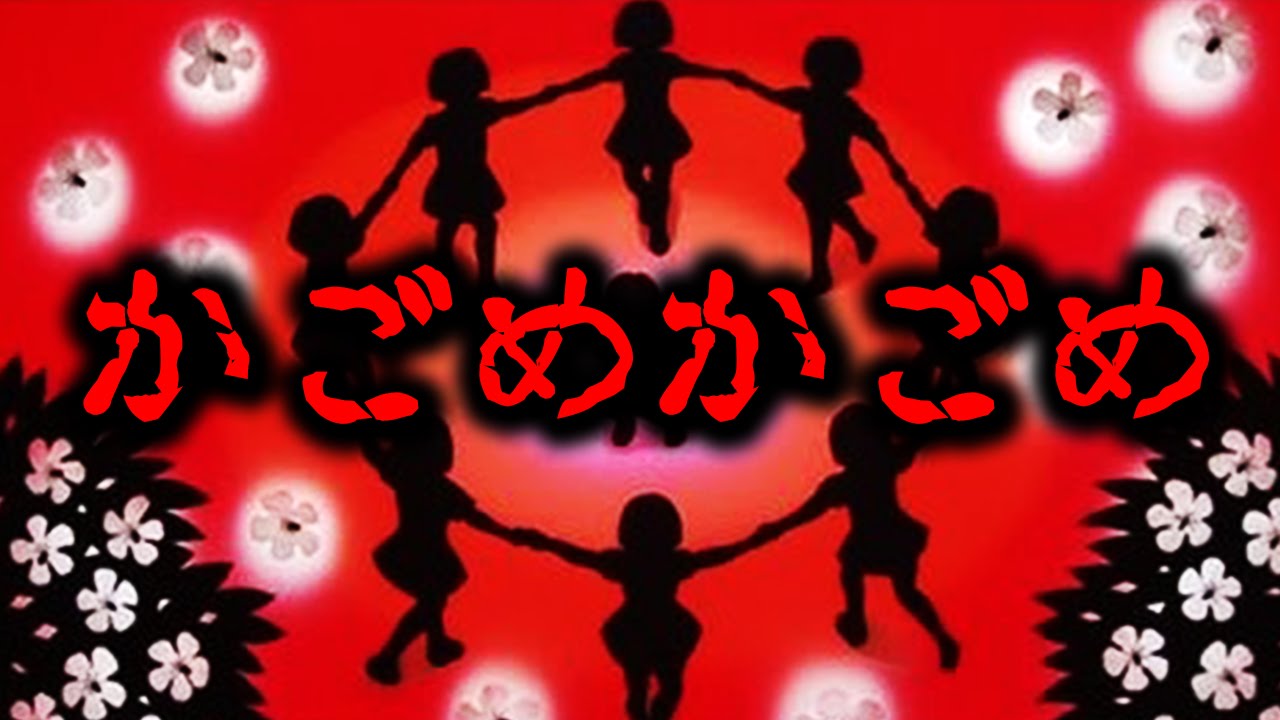
There are actually horrifying urban legends hidden in nostalgic nursery rhymes, songs, and games such as "Kagome-Kagome," which you have probably experienced at least once. This section introduces urban legends specialized in nursery rhymes, songs, and old games, including the sad backgrounds behind the lyrics and psychic phenomena.
The Seven Children
Crow, why are you crying?
THE CROW HAS SEVEN CUTE KIDS IN THE MOUNTAIN.
The crow cries cutely
YOU'RE SO CUTE!
Go to the old nest of the mountain, look, look.
He's a good kid with round eyes.
A song about a dead child
It is said that the author, Amejo Noguchi, wrote this song for his deceased child.
Although the crow is synonymous with an ominous bird, it is not depicted as such in this song, but rather as a kind parent who cares for his/her child.
The author's love for his children is evident in the way he describes them as cute and adorable.
The title of the song, "Seven Children," has not yet been determined whether it refers to seven-year-old children or seven children, and the current prevailing interpretation is that there are seven "many" children.
It is also said that the song is a song about how hard it is to work in a coal mine, since crows = miners.
red shoes
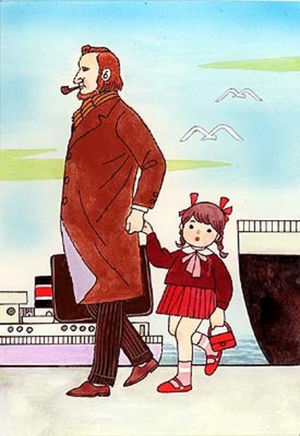
Source: mery.jp
song lyrics
Akai Shoe Store
The girl who used to wear Akai Shoe Store.
I WAS TAKEN AWAY BY A STRANGER HERE.
Take the steamer from the pier in Yokohama.
I WAS TAKEN AWAY BY A STRANGER HERE.
Now I have blue eyes.
You're in a foreign country.
Akai Shoe Store: Every time I look, I think
Meeting and thinking about foreigners
IT WAS BASED ON A TRUE STORY?
"In the middle of the lyrics, there is a passage that says '異人さん つれれ行ったちゃったちゃった,' which means kidnapped.
The song is an ironic reference to the dredging up of Japanese girls and selling them overseas."
The above is a major urban legend that is told a lot on the internet, but in fact, the lyrics are based on a true story.
There was a woman named Kayo Iwasaki who had to go to Hokkaido for work, but she had a two-year-old daughter named Kimi.
Kayo had a two-year-old daughter, Kimi, who had no father and no one to take care of her.
If she had gone to the U.S. with the missionary, the story would have ended as the lyrics say, but Kimi was diagnosed with an unknown illness, and the missionary left her in an orphanage.
In the end, Kimi never saw her mother Kayo's face again and ended her short life at the age of nine.
Based on this true story, Amejo Noguchi published "The Red Shoes" in 1922.
There's no such thing as ghosts.

Source: illust-cafe.net
song lyrics
There's no play.
I'm not a ghost. I'm not a ghost.
IT WAS A STUPID MISTAKE.
But a little, but a little.
I'm scared, too.
I'm not a ghost. I'm not a ghost.
WHAT SHOULD I DO IF I GET REALLY DIRTY?
Put it in a kitchen and make it hard.
But a little, but a little.
I'm scared, too.
I'm not a ghost. I'm not a ghost.
The rest is omitted.
A song that should not be sung
This song, with its very pop tune, catchy melody and lyrics, is very popular with children, and it is no exaggeration to say that there is no one who does not know this very famous song.
It is an upsetting nursery rhyme in which the child denies that there are no ghosts, but what if there are? The song is not to be sung when you are scared or when you are trying to test your courage.
Many people sing this song to distract themselves, but it is said that it actually has the opposite effect, and that singing this song attracts them.
Please be careful.
aye-aye (Daubentonia madagascariensis)
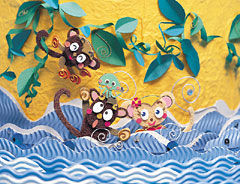
Source: www.cda.ne.jp
song lyrics
Aye-aye
I, I, I
I, I, I
Mr. Osaru.
I, I, I
I, I, I
Minami No Shima no
I, I, I
I, I, I
Longing of the tail
I, I, I
I, I, I
Mr. Osaru.
I, I, I
I, I, I
Mr. Osaru.
I, I, I
I, I, I
Konohana no Ouchi
I, I, I
I, I, I
Omeme no marui
I, I, I
I, I, I
Mr. Osaru.
"aye-aye," the Devil's Messenger
Source: niyas.xsrv.jp
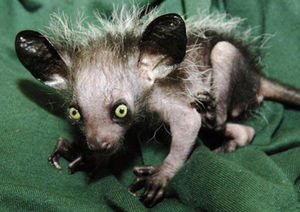
When you hear the word "aye-aye," you probably think of a cute little monkey.
In fact, that is how the song is sung in this nursery rhyme.
However, the lyricist says that he only fell in love with the name at first sight.
If you look up "aye-aye," you will find that there are actually some horrifying rumors about it.
A primate classified in the Mammalia (primate order) Aye-aye family, all monkeys of the same species as the aye-aye are now extinct.
It is distributed in the northeastern part of Madagascar and is an omnivore.
They are terrifying to look at, but the local people believe them to be omens of death or misfortune or messengers of the devil, and they are objects of awe and fear, and they will always kill them if they see them.
When I read back such a song about the aye-aye, I find that they have changed the facts to pop quite a bit, but they have not told a single lie.
Is this what you call a figure of speech...?
greenish green
song lyrics

Contents
- The deadliest nursery rhyme urban legend
- first flower of the season
- song lyrics
- It was a song about human trafficking?
- "bird-in-the-cage" children's game
- song lyrics
- Hidden Fate
- A Song to Tell the Whereabouts of Tokugawa Hidden Treasure
- Matsuo Basho, who wrote the lyrics, was Hattori Hanzo.
- iroha poem
- song lyrics
- Message left by a sinner
- Bodhidharma fell down
- song lyrics
- IT ALL STARTED WITH A RELIGIOUS CONFLICT?
- Soap bubbles flew.
- song lyrics
- The author's sad anecdotes
- making a pledge by hooking each other's little fingers
- song lyrics
- Harlot's Terrible Promise
- tossing a person into a corner and throwing him or her down
- song lyrics
- The Poor Boy's End
- Conspiracy theory of Nobunaga's assassination
- passing (along the way)
- song lyrics
- Pass-through epidemic theory
- Hidden Customs
- Where are you?
- song lyrics
- The Meiji Restoration and Temariuta
- A song based on a tale of a terrible past
- butterfly
- song lyrics
- A Song of the Edo Period
- THERE WAS A CONTINUATION OF THE LYRICS?
- (small) red dragonfly
- song lyrics
- WHAT IS Sympetrum REALLY?
- Truth of the lyrics
- Freshman year.
- song lyrics
- Contradictory lyrics
- paper doll to which children pray for fine weather (usu. white, and shaped like a Buddhist priest)
- song lyrics
- Continuation of the lyrics and the terrible curse
- Teru Teru Bozu Model
- It's nice to be a human being.
- song lyrics
- True meaning of the lyrics
- Bear cubs = U.S. military
- rainy weather
- song lyrics
- The sad background of the lyrics and the subsequent movement
- rolling around with one's acorns
- song lyrics
- The Phantom No. 3 and the Sad Message
- Forest Bears
- song lyrics
- Reason for the inconsistent lyrics
- sonny (with a nuance of suspicion)
- song lyrics
- The lyrics of No. 4 are too scary.
- Theory of Satchan's death
- The School of Killifish
- song lyrics
- Frozen in the back meaning of the lyrics
- the seven treasures (gold, silver, pearls, agate, crystal, coral, lapis lazuli)
- song lyrics
- A song about a dead child
- red shoes
- song lyrics
- IT WAS BASED ON A TRUE STORY?
- There's no such thing as ghosts.
- song lyrics
- A song that should not be sung
- aye-aye (Daubentonia madagascariensis)
- song lyrics
- "aye-aye," the Devil's Messenger
- greenish green
- song lyrics
- Unchangeable fate and son's recollections
- jingle bell
- song lyrics
- Messages Hidden in Backward Masking
- London Bridge falls
- song lyrics
- The Meaning of My Fair Lady and the Reason for Playing
- summary