
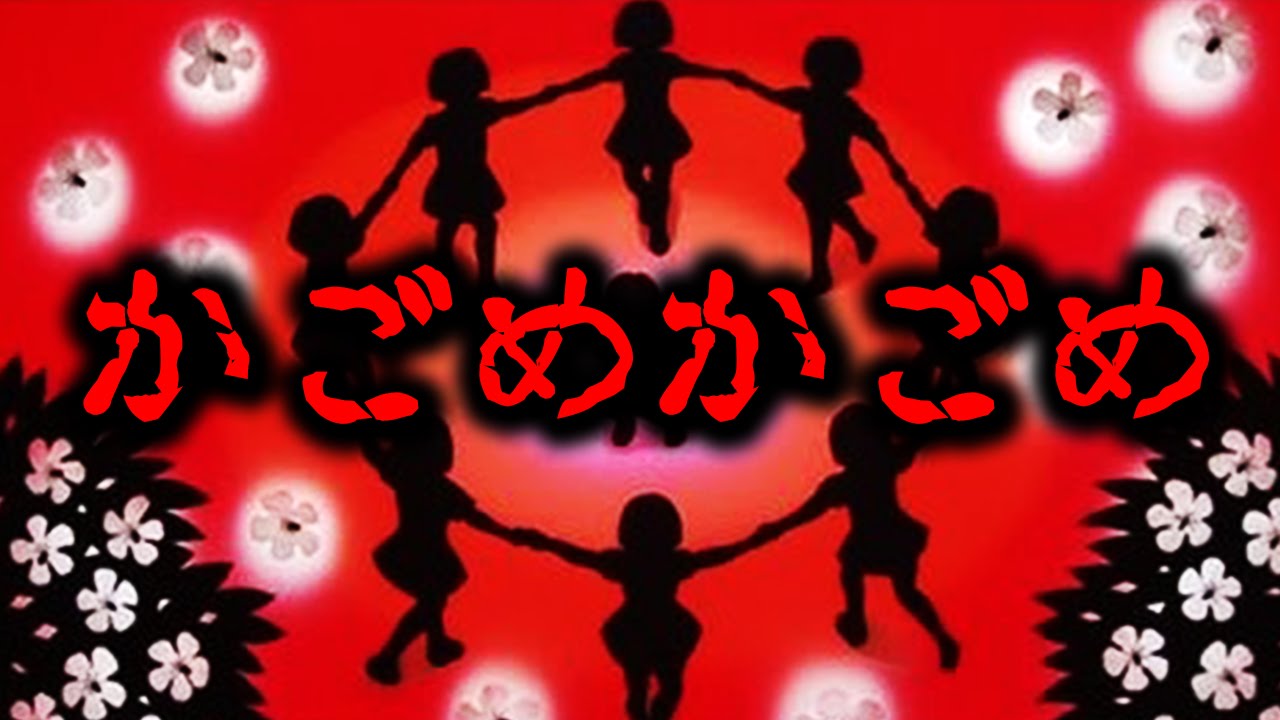
There are actually horrifying urban legends hidden in nostalgic nursery rhymes, songs, and games such as "Kagome-Kagome," which you have probably experienced at least once. This section introduces urban legends specialized in nursery rhymes, songs, and old games, including the sad backgrounds behind the lyrics and psychic phenomena.
The content of the song is very childlike and charming, but looking at the second verse of the song, the question arises: did the acorns make it back to the forest? The question arises, "Did Acorns return to the forest?
In fact, there is a third song, which was introduced in the Asahi Shimbun newspaper.
The content of this song is a happy ending.
When I was crying, I heard a happy ending.
A friendly crow flies in
I wrapped my piggyback around his tail
and took me to his parents in a hurry.
The squirrel took him back to the forest.
If you simply read the story, it ends without any sense of unease, but if you read deeper, you will see the sad background of the times.
This work was created in 1921.
The world was entering the Taisho period (1912-1926).
During the Meiji Era, Japan's rapid industrial revolution and economic development had stabilized people's lives, but the impact on children was not as great as it had been in the past.
Many children were sent to apprenticeships, and many were young factory and commercial workers.
However, for children who had just left their parents, working for hours on end in a strange place was very hard on them.
They missed their parents, of course, and often cried, much to the chagrin of their employers.
The author felt sorry for them and tried to leave a message to future generations by putting it on a cheerful song.
This is the song "Donguri korokoro" ("Donguri korokoro" means acorns in Japanese, and acorns mean children or young workers.
The acorns are the children (young laborers), the loach and squirrel are the employers, and the mountain is the parental home.
The loach is an omnivore and eats anything.
And squirrels like to eat acorns.
There was a good reason why these two animals were chosen.
When acorns grow up, they are separated from their parents and brought to a factory or apprenticeship called a "pond.
While working there, she could not forget her parents and began to cry.
Unable to comfort him, Dojo turns Acorn over to another apprentice/factory employer named Lisu, who takes care of him.
The song was a message bequeathing the fact that this was happening during the Meiji and Taisho periods.
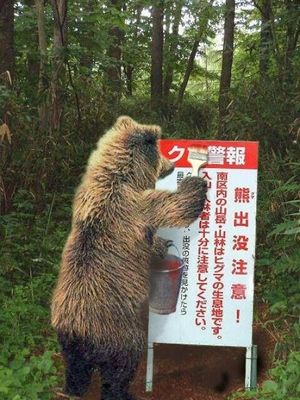
Forest Bears
Source: plaza.rakuten.co.jp
song lyrics
Mori No Kuma
One day, I met a bear in the forest.
I met a bear in a blossoming forest.
DO WHAT YOU SAY, YOUNG LADY. RUN AWAY.
Staccora sassa サノサ Staccora sassa サノサ
BUT THE BEAR FOLLOWS ME.
Tokoko トッコットッコ and Tokoko トッコットコ and
Miss, wait. Excuse me. Excuse me.
Small earrings of white shells
THANK YOU, KUMA-SAN. LET'S SING TO THANK YOU.
Lara, Raran, Lang Lang, Lara, Raran, Lang Lang, Lara.
Reason for the inconsistent lyrics
This lyric, imho, is suspicious of the bear's words and actions.
In fact, the bear actually appears only once in the lyrics.
The person who is supposed to be the bear is a hunter.
The woman met a hunter in the woods.
The hunter urges the woman to flee, saying, "It's dangerous. The hunter urged the woman to run away.
Sure enough, a bear appeared. The hunter kills it.
Then, he noticed that the woman dropped something.
When she delivers it, the woman sings in high spirits, expressing her gratitude for "handling the bear" and "delivering the lost item.
It certainly fits in nicely.
sonny (with a nuance of suspicion)

Source: www.banana.co.jp
song lyrics
Satchan
Satchan is sachiko called, IN FACT.
BUT I'M SMALL, SO I DO N'T WANT TO BE A Satchan.
That's funny, Satchan.
Satchan LOVES BANANAS, DOES N'T HE?
BUT I'M SO SMALL, I CAN ONLY EAT ENOUGH BANANAS.
Poor Satchan.
I WONDER IF IT'S TRUE THAT Satchan GOES HOME.
BUT SHE'S SO SMALL SHE'LL FORGET ABOUT ME.
I miss you, Satchan.
The lyrics of No. 4 are too scary.
It is said that there was a continuation to that lyric.
The so-called fourth lyric is this one.
Sacchan lost her leg on the tracks
That's why I'm going to get your leg
Tonight, Sacchan
The lyrics of this song were written based on an incident that really happened in Muroran City, Hokkaido, Japan.
Sachiko Kiriya, 14, was on her way home from school, and in her haste to cross a circuit breaker she got caught in a gap between the tracks, and a train unceremoniously passed by.
However, the location was Hokkaido. It was also winter, so the child, who was left with only her upper body, eventually died while searching for her lower body.
It is said that an elementary school student who learned of the song spread it throughout the school and was later found dead with only his leg severed.
Theory of Satchan's death
In fact, it is said that Sacchan may have died of illness.
This has been discussed on many websites as a theory of death from illness, but if you consider the meaning of the lyrics, it seems to make sense.
The first verse, "But I'm so tiny," could be taken to mean that she was small because she was unable to exercise as much as she wanted to due to her illness. in the second part of the sentence, "I can only eat half a banana," and in the third part of the sentence, "Is it true that I'm going far away?
If you mispronounce "far away", it becomes "far away".
The School of Killifish
song lyrics

Source: travel.rakuten.co.jp
School of Medaka
School of Medaka is in the river
LOOK CAREFULLY.
LOOK CAREFULLY.
EVERYONE'S HAVING A GOOD TIME.
School of Medaka no Medagata
Who is the student or the teacher?
Who is the student or the teacher?
WE'RE ALL HAVING A GOOD TIME.
School of Medaka looks happy.
Let's go to the water.
Let's go to the water.
WE'RE ALL TOGETHER!
Frozen in the back meaning of the lyrics
There is a theory that Medaka = Mizuko, or a theory that it is a song of a human pillar submerged in a river.
School of Medaka = The playground for the dead is in the Sanzu River.
Look at the Sanzu River.
It's a song that is called to the world over there, "Come here, I'll play".
the seven treasures (gold, silver, pearls, agate, crystal, coral, lapis lazuli)
Source: www.gallery.j-sakurai.net
song lyrics

Contents
- The deadliest nursery rhyme urban legend
- first flower of the season
- song lyrics
- It was a song about human trafficking?
- "bird-in-the-cage" children's game
- song lyrics
- Hidden Fate
- A Song to Tell the Whereabouts of Tokugawa Hidden Treasure
- Matsuo Basho, who wrote the lyrics, was Hattori Hanzo.
- iroha poem
- song lyrics
- Message left by a sinner
- Bodhidharma fell down
- song lyrics
- IT ALL STARTED WITH A RELIGIOUS CONFLICT?
- Soap bubbles flew.
- song lyrics
- The author's sad anecdotes
- making a pledge by hooking each other's little fingers
- song lyrics
- Harlot's Terrible Promise
- tossing a person into a corner and throwing him or her down
- song lyrics
- The Poor Boy's End
- Conspiracy theory of Nobunaga's assassination
- passing (along the way)
- song lyrics
- Pass-through epidemic theory
- Hidden Customs
- Where are you?
- song lyrics
- The Meiji Restoration and Temariuta
- A song based on a tale of a terrible past
- butterfly
- song lyrics
- A Song of the Edo Period
- THERE WAS A CONTINUATION OF THE LYRICS?
- (small) red dragonfly
- song lyrics
- WHAT IS Sympetrum REALLY?
- Truth of the lyrics
- Freshman year.
- song lyrics
- Contradictory lyrics
- paper doll to which children pray for fine weather (usu. white, and shaped like a Buddhist priest)
- song lyrics
- Continuation of the lyrics and the terrible curse
- Teru Teru Bozu Model
- It's nice to be a human being.
- song lyrics
- True meaning of the lyrics
- Bear cubs = U.S. military
- rainy weather
- song lyrics
- The sad background of the lyrics and the subsequent movement
- rolling around with one's acorns
- song lyrics
- The Phantom No. 3 and the Sad Message
- Forest Bears
- song lyrics
- Reason for the inconsistent lyrics
- sonny (with a nuance of suspicion)
- song lyrics
- The lyrics of No. 4 are too scary.
- Theory of Satchan's death
- The School of Killifish
- song lyrics
- Frozen in the back meaning of the lyrics
- the seven treasures (gold, silver, pearls, agate, crystal, coral, lapis lazuli)
- song lyrics
- A song about a dead child
- red shoes
- song lyrics
- IT WAS BASED ON A TRUE STORY?
- There's no such thing as ghosts.
- song lyrics
- A song that should not be sung
- aye-aye (Daubentonia madagascariensis)
- song lyrics
- "aye-aye," the Devil's Messenger
- greenish green
- song lyrics
- Unchangeable fate and son's recollections
- jingle bell
- song lyrics
- Messages Hidden in Backward Masking
- London Bridge falls
- song lyrics
- The Meaning of My Fair Lady and the Reason for Playing
- summary