
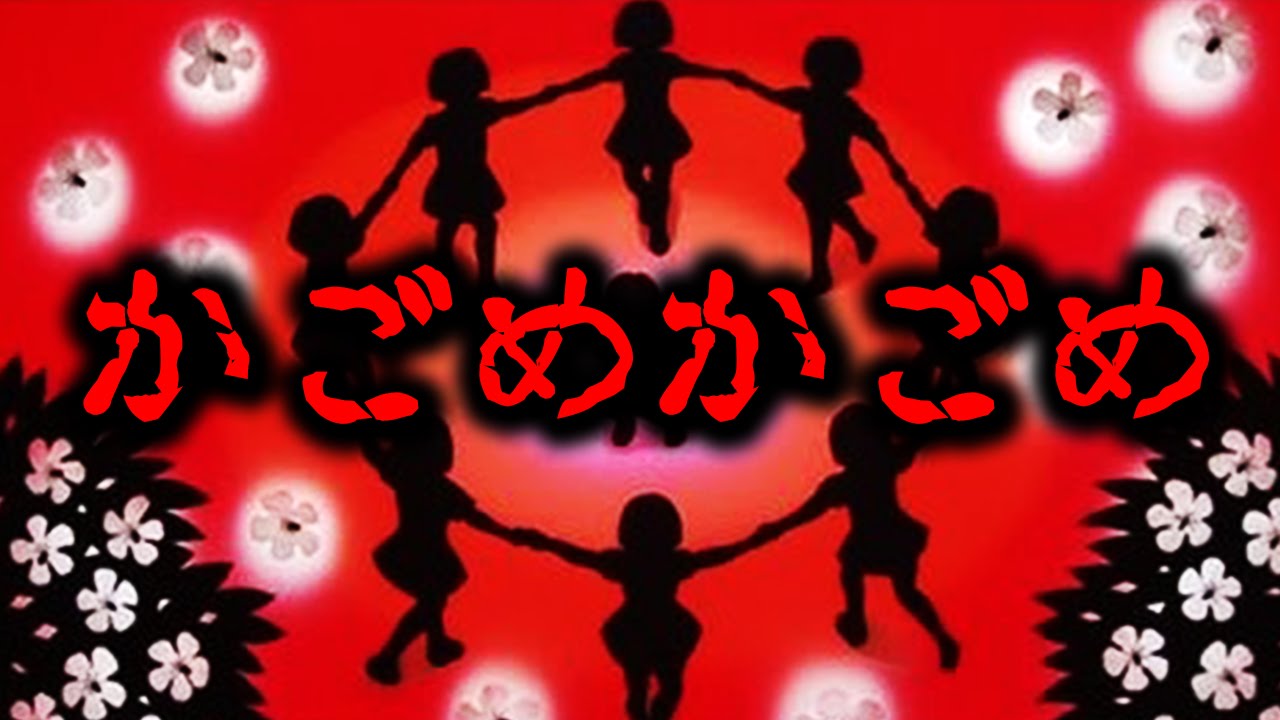
There are actually horrifying urban legends hidden in nostalgic nursery rhymes, songs, and games such as "Kagome-Kagome," which you have probably experienced at least once. This section introduces urban legends specialized in nursery rhymes, songs, and old games, including the sad backgrounds behind the lyrics and psychic phenomena.
The deadliest nursery rhyme urban legend
There are actually horrifying urban legends hidden in nostalgic nursery rhymes, songs, and games such as "Kagome-Kagome," which you have probably experienced at least once. This section introduces urban legends specialized in nursery rhymes, songs, and old games, including the sad backgrounds behind the lyrics and psychic phenomena.
first flower of the season
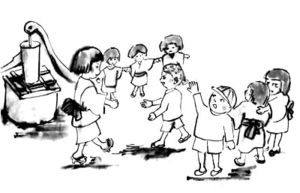
Source: www.jinen.biz
song lyrics
Hanaichi Monme
I'm glad I won, Hanaichimonme.
Defeated and Mortified Hanaichimonme
THE LADY NEXT DOOR, COME HERE FOR A MINUTE
I'm afraid of the ogre. I can't go.
PUT ON YOUR FUTON AND COME OVER FOR A WHILE.
I CAN'T LEAVE MY FUTON.
COME ON OVER HERE!
I can't go to the bottom of the pot.
I want her.
She doesn't know.
I want this girl.
She doesn't know.
Let's talk. Let's talk.
It was a song about human trafficking?
It is said to be a song about buying flowers,
Hana" means a girl in the Edo period,
The "ipponme" is a unit of money, and the amount of money to buy a single flower was defined as "ipponme".
In other words, at that time in Japan, girls were trafficked for the price of buying a single flower,
In other words, girls were trafficked in Japan at that time for the price of a single flower.
In those days, farmers sold the girls of their own families during famine,
They were so hungry that they had to sell their children.
The fact that the farmers were so hungry that they had to sell their own children suggests that they were in a difficult situation,
However, the reality was that the children who were sold were forced to work in brothels and other places.
Happy to win = Happy to buy a pretty girl at a low price
I am disappointed to lose = I am disappointed to sell my own daughter at a low price.
What I think is faithful to the story is that in the exchange, you can see that the negotiations are difficult because they don't want to give it to him, and they don't want to sell it, but in the end, they lose and end up selling it.
"bird-in-the-cage" children's game
song lyrics
Kagome Kagome
Kagome Kagome
The bird in the basket
When do you do it?
At dawn
The crane and the tortoise slipped
Back front. Huh?
Hidden Fate
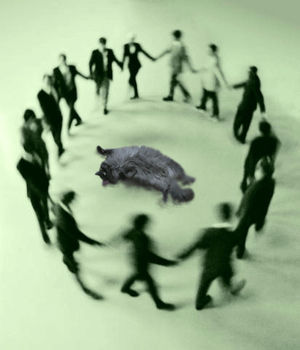
It is said to be a song sung during the Edo period when criminals were beheaded or to possess the spirits of those surrounded.
Kagome (Kagome-onna) reminds one of a pregnant woman from the way she seems to be holding a basket.
The "kago-no-no-no-Tori" refers to the fetus in the belly of the pregnant woman.
The "bird in the basket" refers to the fetus in the belly of the pregnant woman, who is waiting to see "when and when not," which means the evening of dawn = just before she sees the light = the last month of pregnancy.
The crane and the tortoise, symbols of longevity, have slipped, indicating death. From these events, we can imagine the following.
In the Edo period (1603-1867), when a woman was pregnant and waiting for her baby to be born or not yet born, she was killed by someone.
Who killed her?
A Song to Tell the Whereabouts of Tokugawa Hidden Treasure
Source: blogs.yahoo.co.jp
Source: blogs.yahoo.co.jp

Source: blogs.yahoo.co.jp
No upper part = lower part
The Tokugawa reserve is located under Ieyasu's grave.
It is often said that the Tokugawa reserves lie in Mt. Akagi, but that is actually a complete lie.
When you bury the reserves, you make two dummies.
But we also put a little bit of gold in those dummies.
Ever since the doll made of Ieyasu's gold from Mt. Akagi, we've been looking for it there, but we probably won't find anything more than that.
So where is the real place?
If you search according to the lyrics of this song, you will find a place.
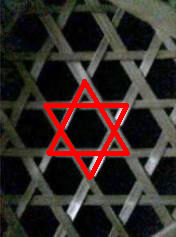
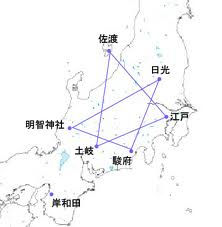
First of all, kagome refers to the eye of a basket.
It is just in the shape of a Jewish hexagram.
Kago-no-naka-no-Tori means that the shrines (torii) associated with Tokugawa in Japan are connected to draw the kagome-kagome symbol. Of these, Nikko Toshogu Shrine is the one that matches the lyrics about the crane and the tortoise slipping.
There are statues of cranes and turtles at Nikko Toshogu Shrine, and if you go to the place on the night of dawn = morning, you will see a shadow on the statues.
When you go there in the morning, you will see a shadow on the statues.
That is the tomb of Tokugawa Ieyasu.
On the back of the tomb, there is a mark like this engraved.
This is a fact that the country knows, but if silk were to be found in the buried treasure, the flow of the Silk Road would be changed.
It is said that the country did not dare to disclose this because they thought that if history was overturned, it would cause all kinds of trouble.
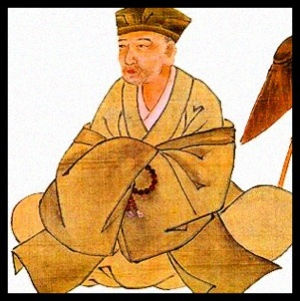
Matsuo Basho, who wrote the lyrics, was Hattori Hanzo.
Source: ameblo.jp
Matsuo Basho" is said to have spread this poem while composing haiku, and there is a theory that he is the same person as "Hattori Hanzo," the head of the ninja force created by Ieyasu.
iroha poem
song lyrics

Contents
- The deadliest nursery rhyme urban legend
- first flower of the season
- song lyrics
- It was a song about human trafficking?
- "bird-in-the-cage" children's game
- song lyrics
- Hidden Fate
- A Song to Tell the Whereabouts of Tokugawa Hidden Treasure
- Matsuo Basho, who wrote the lyrics, was Hattori Hanzo.
- iroha poem
- song lyrics
- Message left by a sinner
- Bodhidharma fell down
- song lyrics
- IT ALL STARTED WITH A RELIGIOUS CONFLICT?
- Soap bubbles flew.
- song lyrics
- The author's sad anecdotes
- making a pledge by hooking each other's little fingers
- song lyrics
- Harlot's Terrible Promise
- tossing a person into a corner and throwing him or her down
- song lyrics
- The Poor Boy's End
- Conspiracy theory of Nobunaga's assassination
- passing (along the way)
- song lyrics
- Pass-through epidemic theory
- Hidden Customs
- Where are you?
- song lyrics
- The Meiji Restoration and Temariuta
- A song based on a tale of a terrible past
- butterfly
- song lyrics
- A Song of the Edo Period
- THERE WAS A CONTINUATION OF THE LYRICS?
- (small) red dragonfly
- song lyrics
- WHAT IS Sympetrum REALLY?
- Truth of the lyrics
- Freshman year.
- song lyrics
- Contradictory lyrics
- paper doll to which children pray for fine weather (usu. white, and shaped like a Buddhist priest)
- song lyrics
- Continuation of the lyrics and the terrible curse
- Teru Teru Bozu Model
- It's nice to be a human being.
- song lyrics
- True meaning of the lyrics
- Bear cubs = U.S. military
- rainy weather
- song lyrics
- The sad background of the lyrics and the subsequent movement
- rolling around with one's acorns
- song lyrics
- The Phantom No. 3 and the Sad Message
- Forest Bears
- song lyrics
- Reason for the inconsistent lyrics
- sonny (with a nuance of suspicion)
- song lyrics
- The lyrics of No. 4 are too scary.
- Theory of Satchan's death
- The School of Killifish
- song lyrics
- Frozen in the back meaning of the lyrics
- the seven treasures (gold, silver, pearls, agate, crystal, coral, lapis lazuli)
- song lyrics
- A song about a dead child
- red shoes
- song lyrics
- IT WAS BASED ON A TRUE STORY?
- There's no such thing as ghosts.
- song lyrics
- A song that should not be sung
- aye-aye (Daubentonia madagascariensis)
- song lyrics
- "aye-aye," the Devil's Messenger
- greenish green
- song lyrics
- Unchangeable fate and son's recollections
- jingle bell
- song lyrics
- Messages Hidden in Backward Masking
- London Bridge falls
- song lyrics
- The Meaning of My Fair Lady and the Reason for Playing
- summary