
There are actually horrifying urban legends hidden in nostalgic nursery rhymes, songs, and games such as "Kagome-Kagome," which you have probably experienced at least once. This section introduces urban legends specialized in nursery rhymes, songs, and old games, including the sad backgrounds behind the lyrics and psychic phenomena.
song lyrics
Zuizuzu-zukkorobashi
Zuizuzu-zukorobashi goma-misozuo
I WAS CHASED BY A TEA POT, AND NOW I'M SPINNING
If you pull it out, don't do it.
A mouse in a straw bag eats rice.
Chu Chu
Whoa, whoa, whoa, whoa, whoa, whoa, whoa, whoa, whoa, whoa.
I can't go.
I lost my bowl around the well.
The Poor Boy's End
The song is about a small boy in the service of a lord who breaks a tea pot, and ends with the ending in which the boy eventually throws himself into a well.
As evidence of this, the lyrics suggest that pieces of the tea bowl are scattered around the well.
Conspiracy theory of Nobunaga's assassination
Oda Nobunaga was forced to commit suicide by Akechi Mitsuhide in the Honnoji Incident, but this is in fact only a popular theory, and the prevailing theory is that Akechi Mitsuhide did not originally kill Nobunaga at will.
Then, who killed him?
If we unravel the meaning of the lyrics, we will find out who it was.
The reason Nobunaga visited Honnoji was because he wanted to see the masterpiece of tea pots.
The person who was nicknamed Tawara no Nezumi = Hagi-Nezumi was the mastermind behind the murder.
In other words, the prevailing theory is that it was Toyotomi Hideyoshi.
Hideyoshi lured Nobunaga to Honnoji by telling him that the masterpiece of the tea pot was at Honnoji.
Believing his retainer, he went to Honnoji and was attacked in his sleep, but then Nobunaga realized that it was Hideyoshi who was the mastermind.
Nobunaga realized that Hideyoshi was the mastermind behind the attack.
He cannot escape.
Then, he had no choice but to commit suicide.
This lyric was sung in a song, and the song was called "Zu-zu-zu-zukorobashi" (meaning "to kill oneself").
passing (along the way)
Source: en-nichi.seesaa.net
song lyrics
Pass-through
[[PDEFINE ~ let's go!
WHERE ARE WE?
Tenjin-sama no Hosomichiya
IT'S A LITTLE BIT.
It is not said that there is no such thing
I CAN'T BELIEVE.
I'M COMING TO TAKE CARE OF YOUR FATHER.
Life is good, good, the return is scary.
I'M AFRAID, BUT LET'S GO. LET'S GO.
Pass-through epidemic theory
There is a theory that tooriyanse is a plague, and is said to represent the death of a child who is still young.
In the play, children are caught at random as soon as the song ends, which is said to express the fact that the plague infects people of all ages.
Hidden Customs
The meaning of this song is that a long time ago, there was a parent and child suffering from starvation, and the parent looked at the child and said, "I would rather kill you than suffer from starvation. So the parent kills the child.
The song is about a child who is suffering from starvation.
Iki ha yo-yoshi, kaeri ha kowaii (Iki is good, kaeri is scary)
Iki" in this lyric means "passing away" and "kaeri" means "returning from Hades.
The song is often used in traffic signals for the blind, isn't it?
This is because it means "When you cross a pedestrian crossing with a child, do not go back.
The reason is that it means "Do not go back when crossing the street with a child.
Depending on the timing of the flashing green light, this may be the case.
Iki ha yoni yoni eri ha - peepo peepo
It is said that it implies that the return is a traffic accident.
Where are you?

Source: kagatemari.com
song lyrics
Where are you?
WHERE ARE YOU, HIGO?
Higo, where are you, Kumamoto?
Kumamoto Dokusa Senba
THERE'S A BADGER IN SENBA MOUNTAIN.
The hunter shot it.
BOIL IT, FRY IT, EAT IT.
Cover it with a leaf of the tree.
The Meiji Restoration and Temariuta
Source: www.tabi2ikitai.com
Considering the events of the Meiji Restoration at the end of the Edo period, the Boshin War was a rather significant event.
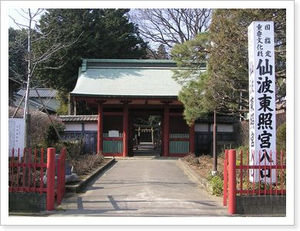
The Satcho forces moved to Kawagoe Castle in pursuit of the remnants of the Shogitai, the "Shogitai Zembutai.
They were stationed at a place called "Senba-yama" near the castle.
There, as the lyrics suggest, a child asked a soldier, "Where are you from? and a soldier from the Kumamoto domain would answer.
Higo dokokosas" means that the children from Kanto did not know where Higo was, so they asked where it was.
Senba-yama" is Senba Mountain in Kawagoe, and the raccoon is shot by a hunter with a gun, which is a dig at Ieyasu, who was called "old raccoon" because he built the Senba Toshogu Shrine there after his death and enshrined Ieyasu.
It is a song that skillfully depicts the transition from the Edo period to the Meiji period as it was in historical fact.
A song based on a tale of a terrible past
The song is said to be about people exposed to famine in the mountains who kill and eat their own children to ensure their own survival.
In other words, the hunters are the adults. The raccoon dogs can be interpreted as children.
butterfly

Contents
- The deadliest nursery rhyme urban legend
- first flower of the season
- song lyrics
- It was a song about human trafficking?
- "bird-in-the-cage" children's game
- song lyrics
- Hidden Fate
- A Song to Tell the Whereabouts of Tokugawa Hidden Treasure
- Matsuo Basho, who wrote the lyrics, was Hattori Hanzo.
- iroha poem
- song lyrics
- Message left by a sinner
- Bodhidharma fell down
- song lyrics
- IT ALL STARTED WITH A RELIGIOUS CONFLICT?
- Soap bubbles flew.
- song lyrics
- The author's sad anecdotes
- making a pledge by hooking each other's little fingers
- song lyrics
- Harlot's Terrible Promise
- tossing a person into a corner and throwing him or her down
- song lyrics
- The Poor Boy's End
- Conspiracy theory of Nobunaga's assassination
- passing (along the way)
- song lyrics
- Pass-through epidemic theory
- Hidden Customs
- Where are you?
- song lyrics
- The Meiji Restoration and Temariuta
- A song based on a tale of a terrible past
- butterfly
- song lyrics
- A Song of the Edo Period
- THERE WAS A CONTINUATION OF THE LYRICS?
- (small) red dragonfly
- song lyrics
- WHAT IS Sympetrum REALLY?
- Truth of the lyrics
- Freshman year.
- song lyrics
- Contradictory lyrics
- paper doll to which children pray for fine weather (usu. white, and shaped like a Buddhist priest)
- song lyrics
- Continuation of the lyrics and the terrible curse
- Teru Teru Bozu Model
- It's nice to be a human being.
- song lyrics
- True meaning of the lyrics
- Bear cubs = U.S. military
- rainy weather
- song lyrics
- The sad background of the lyrics and the subsequent movement
- rolling around with one's acorns
- song lyrics
- The Phantom No. 3 and the Sad Message
- Forest Bears
- song lyrics
- Reason for the inconsistent lyrics
- sonny (with a nuance of suspicion)
- song lyrics
- The lyrics of No. 4 are too scary.
- Theory of Satchan's death
- The School of Killifish
- song lyrics
- Frozen in the back meaning of the lyrics
- the seven treasures (gold, silver, pearls, agate, crystal, coral, lapis lazuli)
- song lyrics
- A song about a dead child
- red shoes
- song lyrics
- IT WAS BASED ON A TRUE STORY?
- There's no such thing as ghosts.
- song lyrics
- A song that should not be sung
- aye-aye (Daubentonia madagascariensis)
- song lyrics
- "aye-aye," the Devil's Messenger
- greenish green
- song lyrics
- Unchangeable fate and son's recollections
- jingle bell
- song lyrics
- Messages Hidden in Backward Masking
- London Bridge falls
- song lyrics
- The Meaning of My Fair Lady and the Reason for Playing
- summary