
We have compiled a collection of out-of-place artifacts, relics that were inconceivable with the technology of the time, so-called "oparts". Enjoy these interesting and mysterious urban legends that will make you lose sleep. Believe it or not, it's up to you.
Table of Contents
- Crystal Skull
・ Ashoka pillar
- Damascus steel
・ Voinich manuscript
・ Map of Piri Reis
- The Spring of the Pleistocene
・ Golden jet
・ Golden bulldozer
・ Baghdad's ancient batteries
・ Stone spheres of Costa Rica
・ The Boulder of Baalbeck
・ Rosetta Stone
The chrome-plated sword of Shi Huangdi
・ Ancient iron hammers
・ Stone coffin of Palenqué
The Steps of Saint Joseph
- Antikitira machinery
- Nebula Disk
・ Emerald Tablet
- Mickey Mouse murals
・ Dinosaur clay figures
Crystal skull
Source: www.blackvoternetwork.com
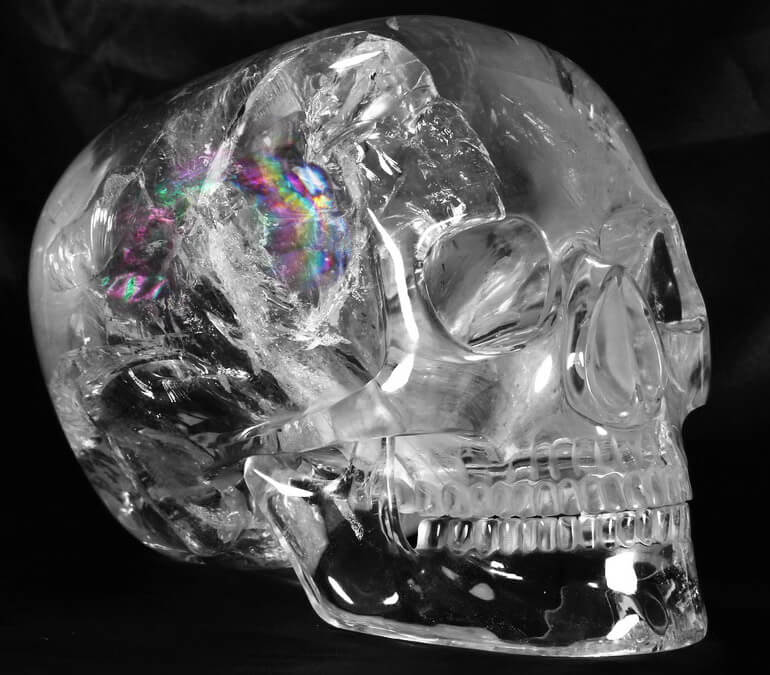
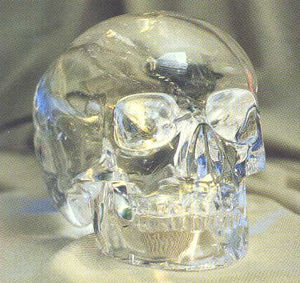
Crystal skulls are models of human skulls made of crystal, and more than a dozen have been found.
In 1927, the British explorer Mitchell Hedges discovered a crystal skull called the "Hedges skull" at the ルバントュム site in Perries, Central America. It is believed to have been made in the ancient Mayan Kingdom, and since the site was discovered about 1,000 years ago, it is thought to have been made at least since then. However, the exact date of its creation is unknown.
Quartz is the hardest mineral after diamonds, sapphires, rubies, and topaz, and the only Mayan tools found are those made from stones and animal bones, which are by all accounts difficult to process with these tools.
It is said that it will take 300 years to make this crystal skull without tools. In addition, superstitions and myths such as, "There are 13 crystal skulls in total, and when all of them are gathered in one place again, the mystery of the universe will be revealed," and "If we don't gather them in one place by 2012, the world will perish," were whispered in the flesh.
Ashoka Pillar
Source: chaichai.campur.com
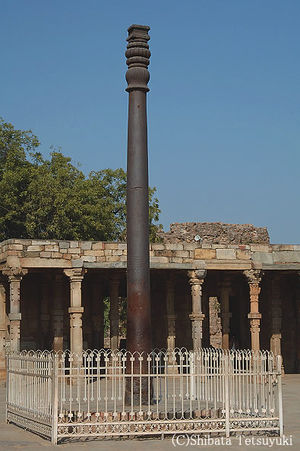
At Kutup-Minar Temple in New Delhi, the capital of India, there stands the "Ashoka King Pillar," which is about 7m high, about 2m in the middle, about 44 cm in diameter, and is estimated to weigh about 6 tons. The strange thing is that this pillar is still rust-free even after 1700 years of production.
This is thought to be due to its 99.72% composition, which is very close to pure iron. However, since the technology for refining pure iron was discovered after the 19th century, it is a complete mystery that it does not match the history of chemistry. It is also still a mystery how the ancient Indians mastered this technology.
Located in the Qutub Complex, a collection of Islamic houses of worship and other types of historical buildings in the village of Meherauli, a southern suburb of Delhi, it has become one of India's leading tourist attractions.
Damascus steel
Source: www.su-gomori.com
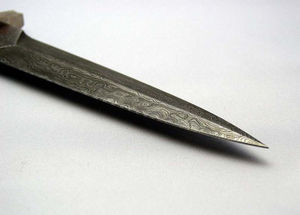
Damascus steel is the name given to the wood-grain pattern steel that was once produced. It is known as a material for strong swords, but its production stopped in the 19th century and its manufacturing method is not clearly known.
It is said to have existed in the 16th and 18th centuries and is characterized by a beautiful wood-grain stripe pattern, which is said to be a complicated stripe pattern on the surface due to folding when steel segregation is forged.
It is said to be more resilient, not to break or bend, and hard to rust than stainless steel.
Many researchers claim that it is not impossible to reproduce this Damascus steel, but in fact, it seems that the Damascus steel on the market is not a perfect reproduction of the one from that period, but merely a stripe pattern on the surface.
Incidentally, the Ashoka Pillar in Delhi, India, which has been famous for not rusting for more than 1700 years, was once thought to be made of this Damascus steel, but it is said that Damascus steel is' rust-resistant', not rust-resistant, and to be made of a different material from Damascus steel.
Voynich manuscript
Source: www.nazotoki.com
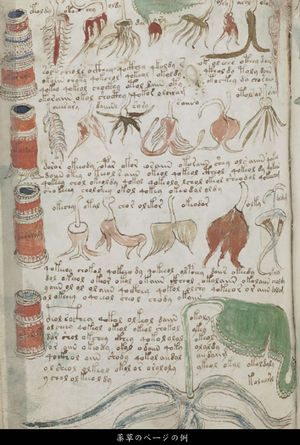
It is believed to have been written between the 14th and 16th centuries, and is about 230 pages of ancient documents written in unknown characters that are not likely to be a code and with many colored illustrations.
The manuscript is named after its discoverer, Wilfrid Woynich, a Polish-American antiquarian bookseller. He discovered it in 1912 at the Abbey of Mondragone near Rome, Italy. It is held by the Beinecke Rare Book Manuscript Library affiliated with Yale University.
At first glance, the book appears to be made of ordinary sheepskin, but the contents are written in mysterious characters that have never been seen before, and it is completely undecipherable. The book also contains strange illustrations, such as constellations, plants, human figures, and sorcery, which detail figures that would not be drawn without a microscope or telescope. Many scholars have tried to decipher these, but none have yet succeeded.

Contents
- Table of Contents
- Crystal skull
- Ashoka Pillar
- Damascus steel
- Voynich manuscript
- Map of Piri Reis
- Pleistocene springs
- Golden jet
- Golden bulldozer
- Ancient batteries of Baghdad
- Stone spheres of Costa Rica
- Boulders of Baalbeck
- Rosetta Stone
- First Emperor's chrome-plated sword
- An ancient iron hammer
- Palenqué Sarcophagus
- Steps of Saint Joseph
- Antikythera machines
- Nebula Disk
- Emerald Tablet
- Mickey Mouse Mural
- Dinosaur clay figure