
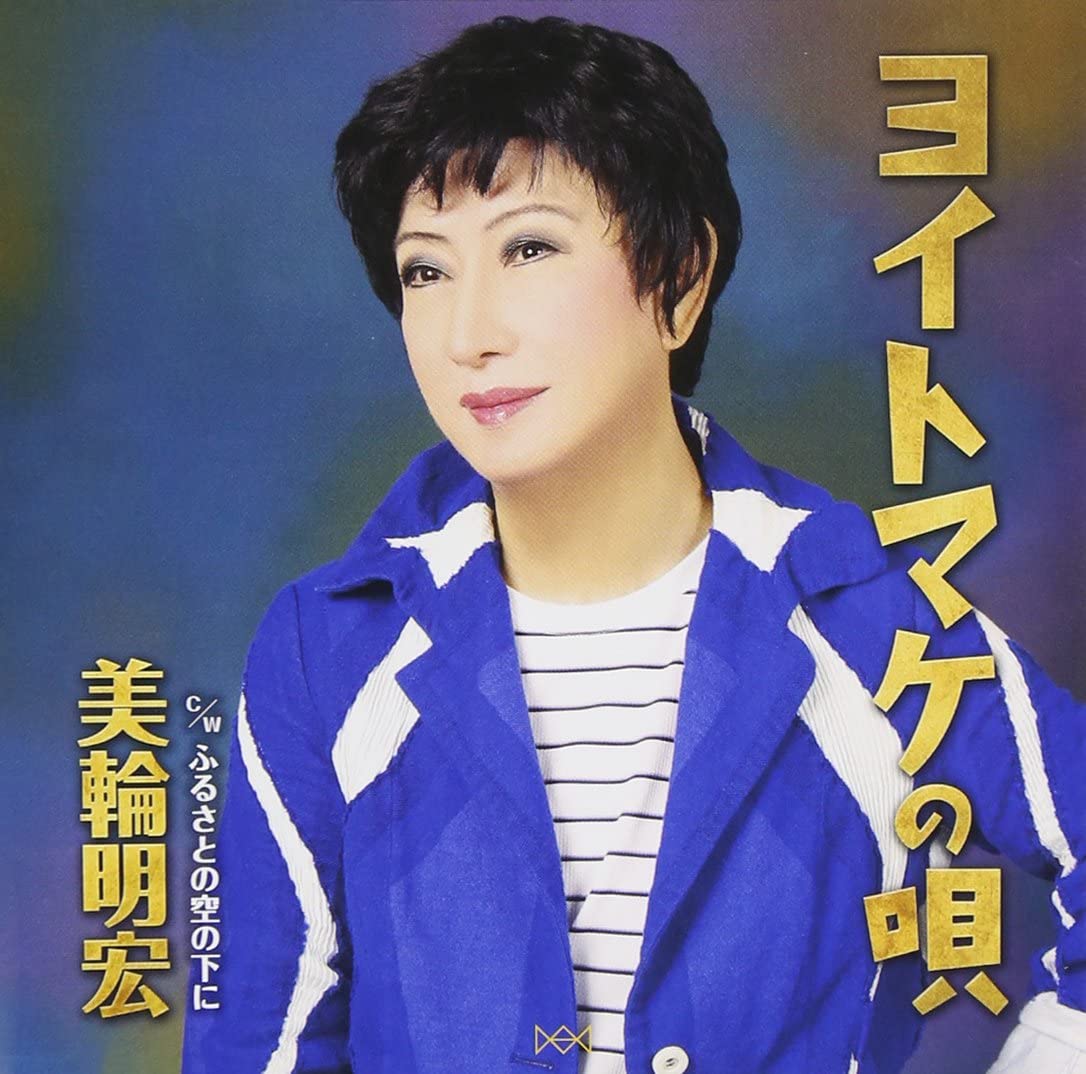
Akihiro Miwa's "Yoitomake no Uta" was impressive at the 2012 Kohaku Uta Gassen. There are songs like "Yoitmake" that have been banned from the airwaves even though they are very good songs. There are also songs that were banned in the past but are now on the public airwaves.
Here are some of these "banned" songs.
What is broadcasting prohibited in the first place?
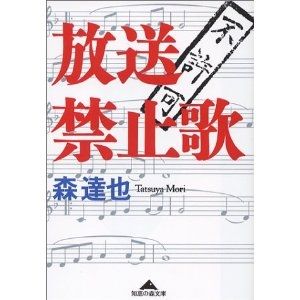
Source: www.amazon.co.jp
Broadcast-prohibited poems (Chienomori Bunko): Tatsuya MORI: books
Why did the banned songs stop being broadcast? What was the basis for the decision not to broadcast them? Who regulated them? The author has interviewed singers, TV stations, private broadcasters, and the Buraku Liberation League to find out the mystery of the banned songs that have disappeared into the darkness. An impressive book, the long-awaited paperback edition.
"Broadcast-prohibited songs" documentary by Tatsuya Mori (1/6)
In November 1999, the program was broadcast under the title of "' Broadcast-prohibited songs' - Who sings? Who regulates?" on Fuji TV's late-night program "NONFIX." The production process of the program was also summarized and published as a book.
Reason for the broadcast ban
www3.ocn.ne.jp
<Reason for broadcast ban>
The points that each song was questioned can be classified into several reasons.
(1) Sexual problems (songs and lyrics associated with sex, genitals, etc.)
(2) Discriminatory issues (discrimination in terms of poverty, buraku, the disabled, race, religion, occupation, sex, etc.)
(3) Political issues (such as anti-establishment lyrics, song titles, political interference in other countries, and content that disrupts social order)
' Yoito Make-up Song' by Akihiro Miwa (Akihiro MARUYAMA)
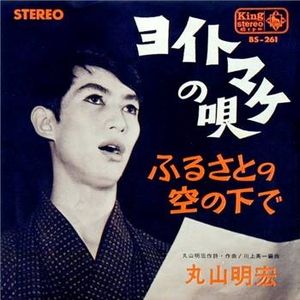
Source: zariganisan.web.fc2.com
Yoito Makeover no Uta Akihiro Miwa (then Akihiro MARUYAMA)
Soon after it was released, it was designated by the National Association of Commercial Broadcasters in Japan as a must-watch song (song banned from broadcasting) due to the fact that the lyrics included' Hijikata' and' Yoitomake,' which were treated as discriminatory terms, so it was no longer broadcast by commercial broadcasters. Around 2000, it was gradually reevaluated and began to be broadcast on television.
Yoito Makeover Song - Wikipedia
ja.wikipedia.org
Yoito Make-up no Uta is a hit song written and composed by Akihiro Miwa (then Akihiro MARUYAMA) in 1966.
Yoito Makeover no Uta Akihiro Miwa Lyric - goo Music
music.goo.ne.jp
Lyrics of Akihiro Miwa: If it's for Dad, Enya Kora.
Imjin River The Folk Crusaders
Source: homepage2.nifty.com
Imjin River The Folk Crusaders
The Chongryon demanded that the company identify the song as a North Korean song, specify the name of the songwriter, and faithfully translate it to 原詞. The record companies were reluctant to mention the name of North Korea, which they had no diplomatic relations with, and the Republic of Korea also did not want the North Korean song to become a hit in Japan, so they put pressure on the record companies, and as a result, they voluntarily stopped selling the song.
Even now, it cannot be said that the self-restraint of broadcasting has completely ended.
Imjin River - Wikipedia
ja.wikipedia.org
The Imjin River (original title: Imjin River [morning: 림진강 or 임진강]) is a song composed by Gao Zonghan (고종한) and written by Pak Se-yŏng (박세영), and was released in July 1957.
Imjin River Folk Crusaders
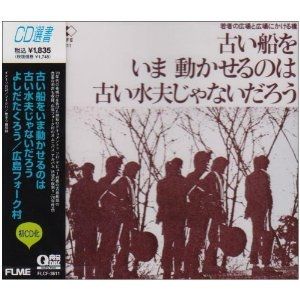
Young people at the time of "Riot Squad Blues"
Source: www.amazon.co.jp
It's not the old sailor who can move an old ship now. All right, Takuro.
The sixth song is called "Riot Squad Blues," and is written to make fun of riot police, public security officers, and plainclothes police officers.
Riot squad blues lyrics
blog.livedoor.jp
Part of the lyrics of Riot Blues
IF I SING ALL THESE SONGS 70 YEARS AGO, I'M SURE THEY'LL SING AGAIN NEXT YEAR.
He's in plain clothes, he's got a pig box, he's got blues.
mobile police blues
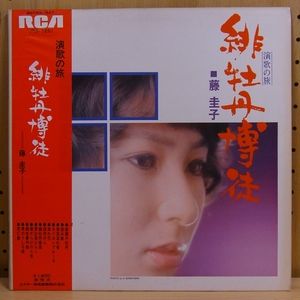
"Nerikan Blues" Keiko Fuji
Source: www.soundfinder.jp
Nerican blues
The cover of Keiko Fuji is famous, but originally it was a song of unknown authorship, and the original work was an' anti-war song' during World War II called' Kawaii Su-chan' around 1937 (1937). It has been recorded by various singers as' Nerikan Blues' since around 1960. In 1959, the Ministry of Justice requested that the production and sale of the song be stopped.
"Nerikan" stands for "Nerima Juvenile Classification Home."
Apart from the relatively soft lyrics that have been recorded, there are various lyrics called' Kore ga Genka' (This is the original song).
The content of the song is about the melancholy of the detention center.
Dictionary blues lyrics
www3.plala.or.jp
Inspector Bruce, I NEVER DREAMED OF A PLACE LIKE THIS IN A COLD PLACE LIKE THIS. IF YOU DO N'T KNOW, I'LL TELL YOU. IT CAME OUT OF ME. IT'S RUSTY, SO IT'S COVERED BY ポリコ, IT'S HANDCUFFED, IT'S HEARD, AND THEN THE COURT. DAD, MOM, FORGIVE ME. I'LL BE MORE SERIOUS FROM NOW ON. THE ONLY THING I CAN SAY IS A CUTE LITTLE GIRL. THE ONLY THING I CAN GET ON A BLUE BUS. THE ONLY THING I CAN GET ON A BLUE BUS IS
Nerikan - Wikipedia
ja.wikipedia.org
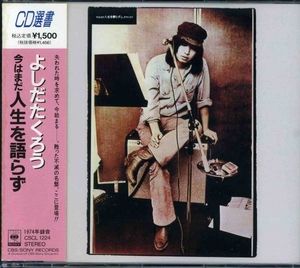
"Bourbon in Penny Lane" Takuro Yoshida
Source: blogs.yahoo.co.jp
Bourbon Takuro Yoshida in Penny Lane
The song "Penny Lane de Bourbon," the first song of the album "Ima wa Ima ga Seina wo Kataru" (Not Yet Talking about Life), contains the discriminatory term "Tsumbo Sajiki."
Not Yet Talking About Life - Wikipedia
ja.wikipedia.org
It was made into a compact disc in 1986. In 1990, it was resold in a selection of CDs, but the production of both of them was stopped because the first song,' Penny Lane de Bourbon' (Bourbon in Penny Lane), contained the discriminatory word' Sunbo Sajiki.' The paper jacket included in the CD-BOX "Takuro Premium 1971 - 1975," which was released in full production only on October 7, 2009, does not contain' Sunbo de.'
Bourbon in Penny Lane by Takuro Yoshida
* The "Sunbo Sajiki' in question has been rephrased as' always out of sight of the mosquito net'.

Tags
Contents
- What is broadcasting prohibited in the first place?
- ' Yoito Make-up Song' by Akihiro Miwa (Akihiro MARUYAMA)
- Imjin River The Folk Crusaders
- Young people at the time of "Riot Squad Blues"
- "Nerikan Blues" Keiko Fuji
- "Bourbon in Penny Lane" Takuro Yoshida
- "I'll eat you," said Gachapin
- "Love Barber" Juro Kara
- "I LOVE YOU IS A ONE PERSON THING" Yuko Hara New Half Betei
- "Repent for all your songs!" Keisuke Kuwata
- "ProstitUte Kazuko" Takajin Yashiki
- "The quays, Father," said Hibari Misora
- "Motor Show Song" by Akira Kobayashi
- "Abashiri Bangaichi" Ken Takakura
- Sweetbread Bushi' Crazy Cats (Hitoshi Ueki)
- "Letters" by Nobuyasu Okabayashi
- "Phantom Folk Singer" Kazuhiko Yamahira
- "Love Me Tender" RC. Succession Kiyoshiro Imawano
- "Nuclear Gypsy" Kato Tokiko
- "Chernobyl": The Blue Hearts
- "Neverending Song": The Blue Hearts
- "S ・ O ・ S" Pink Lady
- "Carnival" Momoe Yamaguchi
- "Playback part2" Momoe Yamaguchi
- "The Tragic Battle": Kenichi Nagira
- Fuchu Torimotsu Hikae' Alfie
- "Kinta no Daibōken" Tsuboinorio
- "Oheji Obachan" Yukadan
- "Sometimes like a." Toshio Kurosawa
- "Uguisudani Music Hall" Tsuruko Shofukutei
- "From back to front," Yoko Hatanaka
- "Bunchaka bushi" Kitajima Saburo
- "Guts!" Ulfuls
- "What shall we do?" Toshihiko Tahara
- MARI-CHAN: "THERE IS A WAY OF LIFE FOR A UGLY WOMAN."
- "Kyodai shinju" (double suicide) by Hako Yamasaki
- "Memorial Tree" Appa School Students
- "NANA" The Checkers
- "Nameless Poetry" Mr. Children
- "Tamori 3: History of Postwar Japanese Songs" by Tamori