

Luka Megurine is a character and a type of vocal sound source for voice synthesis software and desktop music (DTM) released by Crypton Future Media (commonly known as Crypton), a company that develops and sells music production software. It was created based on the voice of voice actor Yu Asakawa, and is a vocal sound source compatible with VOCALOID, a voice synthesizing system developed by Yamaha, and is the first VOCALOID software to support both Japanese and English.
Overview of Junon Luka
"Megurin-Ruka" is a kind of vocal source and character for "Desktop Music (DTM)," a voice synthesis software sold by "Krypton Future Media" (commonly known as Krypton), a company that develops and sells music production software. It is a vocal source compatible with "VOCALOID2", a voice synthesis system developed by Yamaha, a brand of musical instruments and electronic music equipment. It is a system in which melodies and lyrics are input and sung by the source. It is also the third software after "Hatsune Miku" and "Kagamine Rin/Len," voice synthesis systems produced using the same system.
It will be released on January 30, 2009. The voice is the same as that of Hatsune Miku, only female voices are recorded. The voice was produced with the aim of' moody and husky female voice,' and the voice is more mature than the voices of Hatsune Miku and Kagamine Rin/Len more mature voices than the voices of and that were sold earlier. Also, as a major feature different from other VOCALOS, it is equipped with a library that can support both Japanese and English sound sources. This is the first function of VOCALOS. After 2013, other VOCALOS' English sound source-compatible software came to be sold, but each of them was sold as a separate software, and the only VOCALOS that was sold in the form of being installed in one software at the same time was JUNONLUKA (in addition, other VOCALOS' Vydol package that includes both English sound source-compatible software and Japanese sound source-compatible software is being sold).
The plan for the Japanese-English bilingual Vocaloid had already been discussed before the release of the Hatsune Miku, but due to technical difficulties, the release was delayed compared to other Vocaloids. When the Vocaloid was first released, the English version was scheduled to be released after the Japanese version was released. However, due to various problems such as schedule disagreements, it was decided to release a version equipped with both Japanese and English versions of the Vocaloid.
On March 19, 2015, six years after its release, the Junon-Ruka V4X was finally released as a new character with sales comparable to those of Hatsune Miku and Kagamine Rin/Len due to its novel singing style and the content of its library. However, the Junon-Ruka V4X was not updated or equipped with a new sound source. The Junon-Ruka V4X is software powered by the VOCALOID4, which is the fourth VOCALOID developed by Yamaha, and the Hatsune Miku V4X and Kagamine Rin/Len V4X have been released as Vocalos equipped with this system. In contrast to the early Junon-Ruka, which was released late, the Junon-Ruka was produced as the first and first V4X.
History of Junonluka
On January 30, 2009, Junonluka was born.

This is a package of "Junonluka" released on January 30, 2009.
Released on January 30, 2009, it was based on VOCALOID2, the second Vocaloid series developed by Yamaha, and was the third Vocalosoft character after Hatsune Miku and Kagamine Rin/Len, the Vocaloid software and character created using a similar system.
Similar to the first Vocaloid Hatsune Miku based on "VOCALOID2," only female voices are recorded in the software, but unlike Hatsune Miku, whose character is set at 16 years old, the character is set at 20 years old with an image of' grown-up', and the voices are designed to give a more mature impression than Hatsune Miku. According to the information of Junonluka posted on the official site of Krypton, the production was carried out with the aim of' moody and husky female voice' based on the voice of voice actor Yu Asakawa (played by Ryder in the representative work "Fate/stay night").
The Junon-Ruka was also marketed as a Vocalo compatible with' English sound source,' which was not available in other Vocalos sold at that time. It was born as the so-called' Japanese-English bilingual Vocalo,' which can sing with English sound source in addition to Japanese sound source. Later, many Vocalo software compatible with English sound source were sold, and the Junon-Ruka was born as the first software compatible with English sound source.
According to information later revealed, the Japanese-English bilingual Vocaloid project itself had been under consideration before the Hatsune Miku was released, but technical difficulties caused the launch to be delayed compared with other Vocaloids. At the time of the launch, the English version of the software was scheduled to be released after the Japanese version of the software was released, but due to various problems such as schedule disagreements, the company finally decided to release a version equipped with both Japanese and English versions of the software.
Just as Hatsune Miku and Kagamine Rin/Len, which were released earlier, gained explosive popularity, Junon-Ruka also gained popularity from the time of information disclosure before its release. While the other Vocaloids were boys and girls, Junon-Ruka was a' grown-up,' which became a topic of conversation, and among the illustrations produced as copyrighted works, the figure of Junon-Ruka drinking alcohol and smoking was depicted. Unlike "VOCALOID2", there was an illustration of a female Vocaloid MEIKO drinking alcohol, which was created based on "VOCALOID", the first system of the "VOCALOID" series. It was released while many Vocaloid fans were looking forward to its release.
Follow-up software to Junon-Luka, which was rarely produced
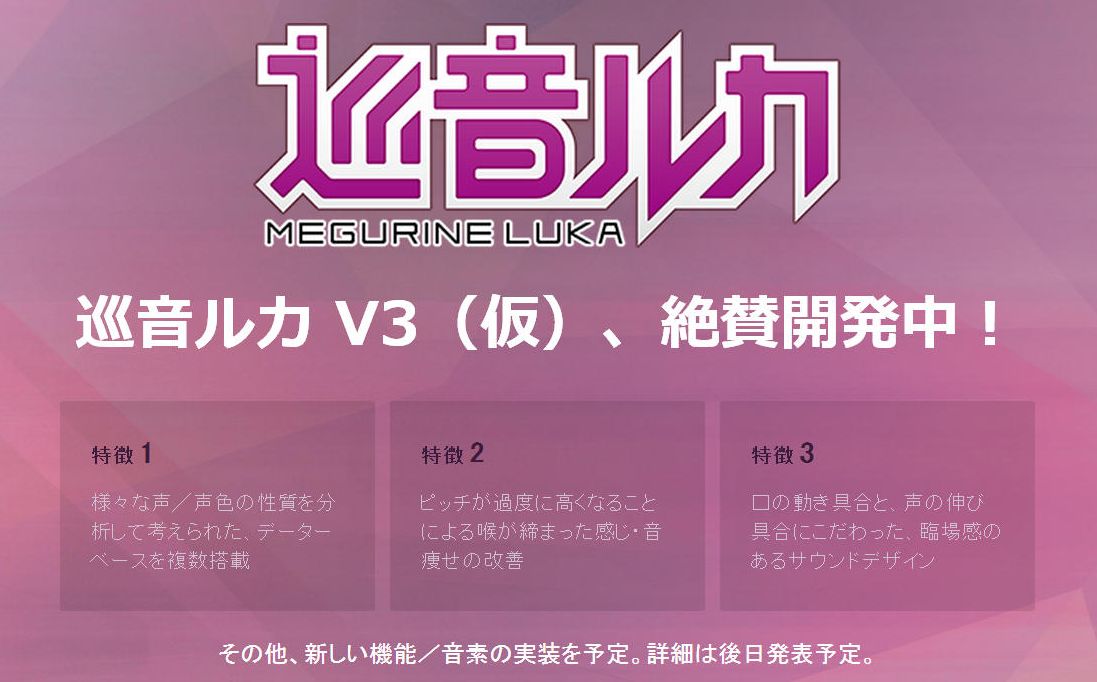
On January 30, 2014 ((Luca's birthday) announcing the development of "Junonluka V3 (tentative)."
The Junon Luca, which was released despite the fans' long-awaited release, continued to sell well after its release, and many songs were posted on video sites. Many derivative works such as illustrations and goods were produced, and it became as popular as Hatsune Miku and Kagamine Rin/Len.
In 2010, however, Hatsune Miku and Kagamine Rin/Len released a follow-up series for Append, but Append for Junon-Luka was not released. Nevertheless, the following year, in September 2011, the compilation album "VOCALOID Minzoku Chokyokushu" was released, and in January 2012, the compilation album "VOCALO APPEND feat. Hatsune Miku" was released, songs using "Junon-Luka New Append β" were recorded, which raised expectations for Append for Junon-Luka. However, this did not come true, and in 2011, Vocalo switched from VOCALOID2 to VOCALOID3, which was the successor system to VOCALOID2. Based on this system, Hatsune Miku V3, Hatsune Miku V3 English, and Kagamine Rin/Len V3 were released. But Junon-Luka was not there.
After "VOCALOID3" was switched to "VOCALOID2," new works of Vocalo in "VOCALOID2" were no longer seen, and the development of the "Append" version of Junon Luka, which would have been developed based on "VOCALOID2," became a cause of anxiety among fans. Furthermore, in 2012, wat, the leader of the production team of Vocalo, said, "The new version of Luka is facing difficulties in terms of the cost effectiveness of English," so the mystery of the new work of Junon Luka became factual.
However, the situation changed when Hiroyuki Ito, the president of Crypton, said at the "VOCALOID New Products Launch" held on March 24, 2013, that "all Crypton characters will be Mac-compatible and V3-compatible." Of course, Junon Luka was included in this "Krypton characters," and it was expected that the Junon Luka version of "V3" would be released. 07
On January 30, 2014, the fifth anniversary of Junon-Luka's birth, the teaser site for the new version of Junon-Luka was launched. On the Junon-Luka page for VOCALOID2, "Junon-Luka V3 (tentative) under development!" appears, showing that production is proceeding steadily.
The new Junon-Luka was born in 2015.
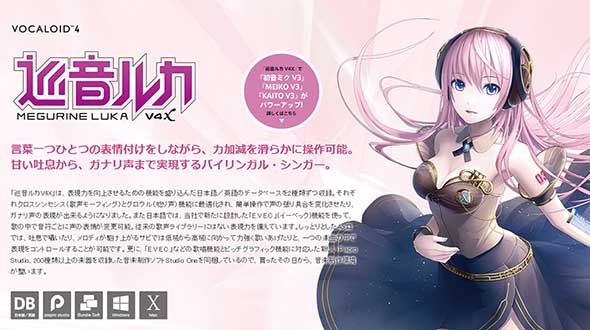
Information about the Junonluka V4X released on November 20, 2014.
On November 20, 2014, one year after the release of the V3 version, the VOCALOID New Product Launch will show more shocking news to VOCALOID users: the creation of the VOCALOID4 version of VOCALOID, which was supposed to have been developed for the V3 version, but was actually built using the new VOCALOID4 oid 4, the fourth new system in the VOCALOID series.
In addition, a demo movie was released, and the name of the new Junon Luca was announced as "Junon Luca V4X" through the movie, the visual image, and the database to be installed were announced. It was also revealed that the new Junon Luca was scheduled to be released in late February 2015, and the teaser site was updated, which confirmed that the new Junon Luca would be released as "V4X" instead of "V3" and made fans excited.
At the VOCALOID Product Launch, it was also said that the reason why the Append version of Junon Luka was not produced was due to the voice of Yu Asakawa, the voice actor who made Junon Luka's voice. However, it was not for a negative reason, but due to the fact that Yu Asakawa's voice was rich in components and intonation of breath, and the expression of her voice was diverse, it was difficult to express the attractiveness of her voice by adding various expressions (types of voice) to the singing voice like "Append," which could only produce one voice. It seems that there was no compromise in the development, so the release was shelved.
At the beginning of the year, on January 14, 2015, it was announced that the database for V4X had finally been completed. On January 30 of the same year, the sixth anniversary of V4X's birth, it was announced that the release would be postponed to March due to improved specifications, but at the same time, a new standing picture and success or failure package were shown, and a demonstration using the song "RIP = RELEASE" by VocaloP RyuseioP (the representative song is "magnet" sung by Hatsune Miku and V4X) was also shown. At that time, the functions of V4X were three: an English database, "gloul" (voices such as "dumb voice", "bad voice" and "growl", sometimes called "death voice" in Japan), and "crosssynthesis" (a function that allows two different singing voices to be used together). Vocalization was carried out by VocaloP Circus-P, who lives in the United States.
On February 8 of the same year, at the "SNOW Miku 2015" event held in Sapporo, Hokkaidō, a talk event was held to commemorate the completion of the V4X. Five days later, on February 13, it was revealed that the release date had been set for March 19, 2015.
On March 19, 2015, after a Japanese demo and a 14-day free demo, Junon-Luka V4X finally went on sale.
Various Media Developments Continue to Expand
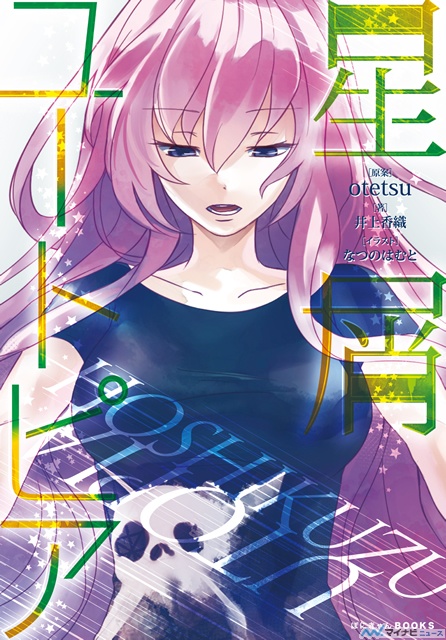
It is an illustration of the novel version of "Stardust Utopia" sung by Junon Luka (composer: otetsu).
Before the release of "Junon-Ruka V4X," Junon-Ruka caused various disturbances, but at the same time, Junon-Ruka showed various media developments as a "character." Like Hatsune Miku and Kagamine Rin/Len, Junon-Ruka was popular not only as a software but also as a "character." Therefore, Junon-Ruka not only displayed various goods such as figurines, but also appeared in many Vocal-related live performances such as "Hatsune Miku Live Party (commonly known as ミクパ)" and "Magical Mirai."
Around 2011, a genre of novel called "Bokoro-shosetsu" (Bokoro-novel) became popular. Bokoro-shosetsu is a novel based on Bokoro-music. At the beginning, most of the novels were single-volume, but gradually a longer series based on "Gakukyoku Series" (Music Series), such as "Kagero Project" (The Mayfly Project), composed of several pieces of music based on the same world view, began to be produced. Some of the series were based on the song of Junon Luka, and many pieces of songs sung by Junon Luka became novels, such as those based on the song "Hoshizu-utopia" (Stardust Utopia) by Bokoro-P otetsu, and "Just Be Friends" and "Answer" (the answer song of "Just Be Friends") composed by Bokoro-P Dixie Flatline.
The development of these Vocaloid genres continued to evolve, and not only was Vocaloid adapted as a novel but also as a comic book, an animated cartoon, a comic book, an animated cartoon, and even as a stage, so that Vocaloid attracted more and more public attention.
In addition, many singers who used to cover Bokoro-P, Bokoro-kyoku, and so on, released major CDs through Bokoro-kyoku or debuted as artists who did not use Bokoro-kyoku. By making use of the experience of producing Bokoro-kyoku, the number of people who provide music to other artists as composers in various forms such as anime OP and game insert songs, or those who develop various activities such as releasing original songs as artists apart from Bokoro-kyoku has increased, and popular artists such as Kenshi Yonezu, Keina Suda, Mafumafu and Eve have been born one after another.
As a result of this development, the recognition of Vocalo music increased, and it became known as one of the genres called Net music. The name of Junon-Luka spread along with this trend.
List of Junonluka software
Junonluka

This is the first package of "Junonluka" that was released.
The first software in the Junon Luca series, which went on sale on January 30, 2009, was based on the VOCALOID2 engine, the latest version of the VOCALOID series developed by Yamaha at the time. It was also released as the third software after Hatsune Miku and Kyoon Ren Ren, both based on VOCALOID2.
The music is based on the voice of Yu Asakawa, a voice actor, and it was created in the image of' moody and husky female voice.' The BPM is 65 to 145. His favorite music genres are Latin Jazz and Esuno pop, and House and Electronica dance songs. However, since these are only for reference, it is possible to have him sing other genres.
The character design was done by illustrator KEI, who also worked on character design for Hatsune Miku and Kagamine Rin/Len.
Junonluka V4X
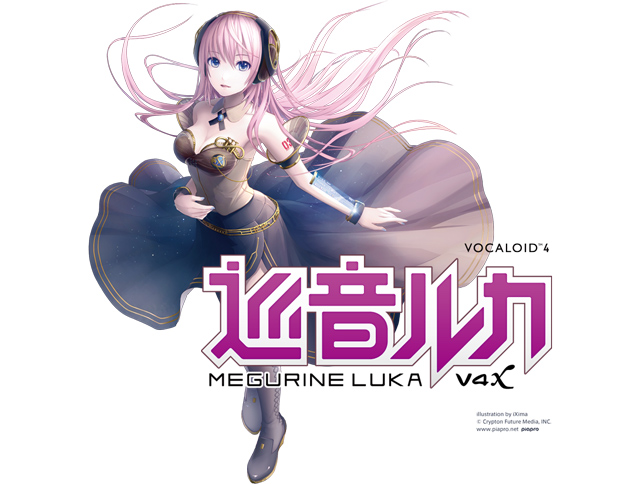
The Punica V4X version of Punica.
Based on the VOCALOID4, the fourth of Yamaha's Vocaloid series of voice synthesis systems, the software will go on sale on March 19, 2015, and is an update to the original VOCALOID2.
Hatsune Miku and Kagamine Rin/Len have also released software based on VOCALOID4, but the first release of the series was the Junonluka V4X. Unlike the other Vocalo series, which have additional sound source software called Append, no new software was released for Junonluka until this game was released. For this reason, in addition to the existing Junonluka voice, this game has added two sub-DBs for "Hard", "Soft", and "cross-synthesis" as Japanese language libraries, and sound source data for "Straight" and "Soft" as English language libraries.
As well as cross-synthesis, "VOCALOID4" features "Groul" ("Dumb", "Bad", "Growl", sometimes called "Death Voice"), "E. V. E. C" ("Evec"), which was developed by Krypton and is good at expanding singing voice, and "piapro studio", which was reformed vocal editor for "Junon Luka V4X" were recorded, making it possible to produce more various voices than ever before.
The design of Junon Luca itself has been drastically changed, and the overall decoration has been reduced. It has evolved to a refined look that combines chic and gorgeous. The person in charge of the illustrations is illustrator iXima, who also worked on "Hatsune Miku V4X" and "Kagamine Rin/Len V4X".
When the game was released, the meaning of "X" in "V4X" was also disclosed. There are three meanings: "eXpression", "eXtended", and "a name / symbol that can be given if unknown".
Monon-Luka's career
There are a variety of live and festival events in Vocalo. In addition to those listed in this section, there are many events and live events held by Vocalo P users and fans, as well as major events related to companies.

Related Articles
In-depth summary of Hatsune Miku (VOCALOID)
Hatsune Miku is a vocal sound source and character for desktop music (DTM) and voice synthesis software released by Crypton Future Media (commonly known as Crypton), a company that develops and sells music production software. The character is based on the voice of Saki Fujita, a voice actress, and is compatible with VOCALOID, a voice synthesizer developed by Yamaha. The software was the catalyst for the VOCALOID boom in Japan, and is one of the most popular VOCALOID characters.
Read Article

In-depth summary of KAITO (VOCALOID)
KAITO is a character and a type of vocal sound source for voice synthesis software and desktop music (DTM) released by Crypton Future Media (commonly known as Crypton), a company that develops and sells music production software. It was created as a vocal sound source compatible with VOCALOID (commonly known as Vocaloid), a voice synthesizing system developed by Yamaha. It is a male-voiced vocaloid created based on the voice of studio musician Naoto Fuuga, and is suitable for a variety of music genres.
Read Article
In-depth summary of Kagamine Rin/Len (VOCALOID)
Kagamine Rin/Len is a character and a type of vocal sound source for desktop music (DTM) and voice synthesis software released by Crypton Future Media, a company that develops and sells music production software. It is based on the voice of voice actress Asami Shimoda, and is a vocal sound source compatible with VOCALOID (commonly known as Vocaloid), a voice synthesis system developed by Yamaha. It was produced after Hatsune Miku, which triggered the Vocaloid boom, and sold 20,000 copies in about seven months.
Read Article

In-depth summary of MEIKO (VOCALOID)
MEIKO is a vocal sound source and character for desktop music (DTM) and voice synthesis software released by Crypton Future Media (commonly known as Crypton), a company that develops and sells music production software. It was the first vocal sound source compatible with VOCALOID (commonly known as Vocaloid), a speech synthesis system developed by Yamaha. Based on the voice of singer-songwriter Meiko Higo, the software is suitable for a variety of music genres.
Read Article
The diva that landed on the track! A look back at the successive generations of Hatsune Miku "Racing Miku" with figures!
Hatsune Miku is a symbol of pop culture that has become famous from the world of the Internet. The Miku Hatsune, who is active in a variety of scenes, has been landing on circuits as the official mascot of a racing team! This time, we would like to introduce you to the figure of "Racing Miku," who has been shining on the circuit every year since her appearance!
Read Article
In-depth summary of KAFU/KAFU (VOCALOID)
KAFU is a vocal sound source and character for desktop music (DTM) and voice synthesis software, planned by the creative label KAMITSUBAKI STUDIO and produced by CeVIO, a company consisting of several companies in Nagoya, using its own voice synthesis software "CeVIO AI". It is a type of vocal sound source and character created by "CeVIO AI," a company owned by several Nagoya companies. Its official name is "Musical Isotope KAFU," and it became a hot topic because it was created based on the voice of "Hanafu," a popular virtual YouTuber belonging to KAMITSUBAKI STUDIO.
Read Article

In-depth summary of IA (VOCALOID)
IA is a character and a type of voice synthesizer for desktop music (DTM) released by 1st PLACE, a company that plans, develops, and sells music, videos, software, etc. It is based on the voice of Lia, an artist belonging to 1st PLACE. The voice was created based on the voice of Lia, an artist belonging to 1st PLACE. In addition to being a voice synthesizer, Lia is also involved in various activities as a "virtual artist" belonging to 1st PLACE, such as being involved in the virtual space project "Virtual Planet HABINA".
Read Article

In-depth summary of GUMI (VOCALOID)
GUMI is a type and character of vocal sound source for voice synthesis software and desktop music (DTM) released by Internet, a company that develops and sells DTM and other software. It was created as a vocal sound source compatible with VOCALOID (commonly known as Vocaloid), a speech synthesis system developed by Yamaha. Its official name is "Megpoid" and GUMI is a nickname. Based on the voice of Megumi Nakajima, a voice actress and singer, GUMI was created with the aim of creating a "human-like voice.
Read Article

In-depth summary of v flower (VOCALOID)
v flower is a character and a type of vocal sound source for voice synthesis software and desktop music (DTM) released by GAINOID, a label that discovers and fosters the next generation of artists, mainly vocaloids. It was created as a vocal sound source compatible with VOCALOID (commonly known as Vocaloid), a speech synthesis system developed by Yamaha. The character's name is "flower. Her nickname is "flower-chan. It was created as a vocaloid with a powerful, neutral female voice specializing in rock. The provider of the voice is undisclosed.
Read Article

In-depth summary of Shigen Teto (VOCALOID, UTAU, Virtual Idol)
Kasane Teto is a virtual idol character that originated on "2channel," one of Japan's largest electronic bulletin boards, and a type and character of vocal sound source for voice synthesis software and desktop music (DTM) created based on the character. It is a derivative of the voice synthesizing software "VOCALOID" (commonly known as "vocaloid"), and was created as a free voice synthesizing software "UTAU" for singing. The voice is based on multi-creator Mayo Oyamano.
Read Article

In-depth summary of Kamui Gakupo (VOCALOID)
Kamui Gakupo is a type and character of vocal sound source for voice synthesis software and desktop music (DTM) released by Internet, a company that develops and sells DTM and other software. It was created as a vocal sound source compatible with VOCALOID (commonly known as Vocaloid), a speech synthesis system developed by Yamaha. Its official name is "Gakudyokido. Kamui Gakupo is the name of the character. It was created based on the voice of singer GACKT (Gakuto). It is also the first vocaloid software and character created by an Internet company.
Read Article
In-depth summary of OTOMACHI UNA (VOCALOID)
Una Otomachi is a character and a type of vocal sound source for voice synthesis software and desktop music (DTM), created by the CG and character design company "MTK" and published by "Internet" Inc. It was created as a vocal sound source compatible with Yamaha's VOCALOID (commonly known as Vocaloid) voice synthesis system. The voice was created based on the voice of voice actress Aimi Tanaka, and later software was developed for speech using "AITalk" developed by A.I. Corporation.
Read Article

In-depth summary of Yukari Yuzuki (VOCALOID)
Yukari Yuzuki is a type and character of vocal sound source for voice synthesis software and desktop music (DTM) produced and released by AH-Software, a company that develops and releases PC software planned by the VOCALOMAKETS, a VOCALOID production team comprised of vocaloid Ps. A vocal sound source and character for DTM (desktop music). The software is compatible with VOCALOID, a speech synthesis system developed by Yamaha Corporation, and AI Talk, developed by A.I. Corporation. The voice is by Chihiro Ishiguro, a voice actress.
Read Article
In-depth summary of MAYU (VOCALOID)
Mayu is a type of vocal sound source and character for the voice synthesizer software Desktop Music (DTM) released by EXIT TUNES, a music label operated by Pony Canyon Inc. It is the only vocal sound source and character released by EXIT TUNES.
Read Article

In-depth summary of Lily (VOCALOID)
Lily is a type and character of vocal sound source for voice synthesis software and desktop music (DTM) released by Internet, a company that develops and sells DTM and other software. It is a vocal sound source compatible with the VOCALOID (a.k.a. Vocaloid) voice synthesis system developed by Yamaha, and was originally created as the image character for the anime song cover album "anim.o.v.e." The voice is based on the voice of the music group "m.o.v.e.," which is a Japanese word for "animation. The voice is based on yuri, vocalist of the music group m.o.v.e.
Read Article

In-depth summary of Koharu Rokka (VOCALOID)
Koharu Rokka is a character created by "TOKYO6 ENTERTAINMENT," a joint venture company that plans and produces text-to-speech software with characters and produces and sells goods related to music, as part of its first "Character Project. The project was funded through crowdfunding. Funds were raised through crowdfunding, and the software was released as software compatible with both the speech creation software "CeVIO AI" and the singing voice synthesis software "SynthesizerV". The voice was based on the voice actor Yoshinoh Aoyama.
Read Article
How to start MMD & how to use it! Includes instructional videos and more for beginners! MikuMikuDance
MMD (MikuMikuDance) is a free 3DCG movie production tool developed by Masaru Higuchi aka "Higuchi M" and released free of charge on his website "VPVP (Vocaloid Promotion Video Project)". MMD is a free 3DCG movie production tool developed by Masaru Higuchi, a.k.a. "Higuchi M." and released for free on his website, VPVP (Vocaloid Promotion Video Project). This article is recommended for those who want to learn how to use MMD and contribute videos to Nico Nico Douga.
Read Article

Summary of how to modify MMD models! Let's make an original video! MikuMikuDance
This page summarizes how to modify MMD (MikuMikuDance) models. It includes information on how to add bones, change the color of a model, add facial expressions, and make a model glow. It also includes an explanation site for beginners.
Read Article
Summary of how to modify MMD models! A must-see for those who want to make their models look the way they want them to look! MikuMikuDance
Here is a collection of how to modify MMD models. We show you how to attach accessories, put on bunny ears, add tattoos, change clothes, and more. If you would like to customize the appearance of your models to your own liking and create your own original videos, please refer to this section.
Read Article

A compilation of recommended Vocalo Jazz songs! Includes 24 large-volume tracks! [JAZZ
There are various music genres in the world of Vocaloids, and this article introduces jazz music from among them. This article introduces 24 songs with music videos, including "Miracle Paint," "Gossip," and "Bathroom Garden," so those interested in vocaloid and jazz music should definitely check them out.
Read Article

VOCALOID Songs with Cherry Blossom Theme! 10 recommended songs that give you a sense of harmony! Cherry Blossom Season
A collection of Japanese-style VOCALOID songs with a cherry blossom theme. Listed here are 10 songs with a Japanese feel, including "Sakura no Season," a song about goodbye, and "Sakura Zensen Anomaly Nashi," a cool Japanese-style rock song. For each song, we will introduce the video of the original singer and the video link of the recommended singer.
Read Article

Have we reached the SEKAI NO OWARI of the music industry? VOCALOID "Fukase" is the real deal.
Hatsune Miku, Kagamine Rin-Rin, KAITO, and Megurine Luka...... have established themselves as "artists" in Japan and are growing in popularity, and it is said that Vocaloids will further enter the music industry through their activities as artists, including appearances in Kohaku Vocaloid has already established itself as an "artist" in Japan and is growing in popularity. In the midst of all this, that artist has become a Vocaloid. What does that mean? You may be thinking, "What does that mean?" But anyway, you will be surprised when you see the reference video.
Read Article

A compilation of inspiring Vocaloid songs [from Paprika and First Steps].
Here we have compiled a list of inspiring Vocaloid songs that will naturally bring tears to your eyes when you hear them. The songs range from covers such as "Paprika" by Yonezu Genshi and "Kimi no Shiranai Monogatari" by supercell to original songs such as "Ira" and "Hajime no Ippo kara".
Read Article

Summary of Recommended Vocaloid Songs [Hearing Impaired Boys Can't Beat It, Hibana].
This article compiles a list of recommended songs sung by Vocaloids. It focuses on songs sung by well-known characters such as Hatsune Miku, Kagamine Rin/Len, and Megurine Luka, which have been inducted into the Legendary and Hall of Fame. All are highly addictive masterpieces.
Read Article
![VOCALOID] 10 Songs for Valentine's Day - From sweet love songs to tragic love songs, we have it all! VOCALOID](https://renote.net/files/blobs/proxy/eyJfcmFpbHMiOnsiZGF0YSI6ODU1MDE5NywicHVyIjoiYmxvYl9pZCJ9fQ==--edf3fa103c7e5891b98b30a1091fe390db340f38/79466807%20(5).jpg)
VOCALOID] 10 Songs for Valentine's Day - From sweet love songs to tragic love songs, we have it all! VOCALOID
Here are 10 VOCALOID "Sing-Along Songs" recommended for Valentine's Day. These include "Chokomama☆Long," a popular song with cute lyrics and tune, "Koi Sou Enka Chokorei Horik," a rock-style Valentine's Day song, and "Jyoren Patisie," a song about a sad love story. From sweet and soothing to heartbreaking tragic love songs, there are plenty of songs to suit each mood and taste.
Read Article
Osomatsu-san x Vocaloid Movie Summary! Tear Gland Collapse & Goosebumps Can't Stop [with Story Tale Series Commentary]!
We have collected videos of the popular anime "Osomatsu-san" x Vocaloids. Including "Dokurinbo Envy," "Nakimushi Robo," "Jikkaku Mujiro," and "Yona Yona Yona," we introduce you to Vocaloid songs whose illustrations and the world of the songs are irresistible. Comments from Osomatsu-san fans are also included.
Read Article

Winter and Christmas Vocaloid Songs Summary [VOCALOID
Here we have compiled a list of winter- and Christmas-themed Vocaloid songs. Popular vocaloids such as Hatsune Miku, Megurine Luka, Kagamine Rin/Len, and Lily sing original songs and covers of famous Christmas songs. Listen to your favorite Vocaloid songs and get excited for Christmas.
Read Article
![Hatsune Miku] 10 Selected Songs! Great Vocaloid songs to listen to at Christmas! GUMI](https://renote.net/files/blobs/proxy/eyJfcmFpbHMiOnsiZGF0YSI6ODUzMjQ1MywicHVyIjoiYmxvYl9pZCJ9fQ==--aaa21f0470f96115cc2e367986afde42acdab054/205.jpg)
Hatsune Miku] 10 Selected Songs! Great Vocaloid songs to listen to at Christmas! GUMI
Merry Christmas! Whether you're feeling sad, lonely, or wistful, have a good night listening to Vocaloid Christmas songs! Let's spend a nice night listening to Vocaloid Christmas songs! We have carefully selected 10 recommended "I tried singing it" and "the original" songs to introduce. There are negative songs, sad songs, and warm songs, so we hope you find a Christmas song you can relate to.
Read Article
![VOCALOID] 10 Recommended VOCALOID Spring Songs [STEP TO YOU](https://renote.net/files/blobs/proxy/eyJfcmFpbHMiOnsiZGF0YSI6ODU2NDMzOCwicHVyIjoiYmxvYl9pZCJ9fQ==--d9b81f113fe49b3f4fe7d18f19aebf44dd61633b/12_101_l.jpg)
VOCALOID] 10 Recommended VOCALOID Spring Songs [STEP TO YOU
We have collected VOCALOID spring songs. We have compiled refreshing songs such as "STEP TO YOU," a famous song that is also available for karaoke distribution, and "Harurenochizakura," a song that makes you feel spring, which we hope you will listen to in this season of encounters and partings. We will introduce a total of 10 songs, the videos of the original singers and links to videos of recommended singers.
Read Article
![VOCALOID] 10 Recommended VOCALOID Graduation Songs [Sakura no Ame](https://renote.net/files/blobs/proxy/eyJfcmFpbHMiOnsiZGF0YSI6ODU2NDMzOSwicHVyIjoiYmxvYl9pZCJ9fQ==--75f877a97632c9b7342a22a4918081b62645f907/sg009_1376_1.jpg)
VOCALOID] 10 Recommended VOCALOID Graduation Songs [Sakura no Ame
We have compiled a list of recommended VOCALOID graduation songs. Listed here are 10 songs that you should pay attention to for their heart-wrenching lyrics, including "Sakura no Ame," which is also sung at graduation ceremonies. Here are the original videos of popular VOCALOID songs, as well as video links to recommended singers.
Read Article

Summary of tags for VOCALOID songs
We have compiled a list of unique tags that are attached to songs using VOCALOID. VOCALOID tags such as "Kira Kira Pop," "Menhera Rock," "VOCALOID Rock," "VOCALOID Metal," "VOCALOID Grunge," and "Baka Rock" are all creative and interesting.
Read Article

VOCALOID Hatsune Miku's Cute Wallpapers and Illustrations! Over 1200 pictures!
Here's a collection of Miku's cutest wallpaper and illustration images! Hatsune Miku is a vocal sound source and character for voice synthesis and desktop music released by Crypton Future Media. She is 16 years old, 158 cm tall, and weighs 42 kg.
Read Article
The transformation of the characters who have become Japanese ▶︎Chinese
Japan's most popular anime and manga are often parodied and imitated because of the attention they attract. In China, as you all know, these characters have been transformed into extraordinary-looking characters and taken down. In this article, we will take a look at some of the Chineseized Japanese characters that have undergone such a transformation.
Read Article
Sexy and beautiful cosplay images compilation
Here we have compiled images of sexy and beautiful cosplay. In addition to characters from popular works such as Hatsune Miku, "Neon Genesis Evangelion," and "Hell Girl," the site also features beautiful women in a variety of costumes, including cats, rabbits, Japanese goth, sweet lolita, and gothic lolita.
Read Article
![Hatsune Miku] Not Only "DIVA"! Summary of games featuring Hatsune Miku [Vocaloid](https://renote.net/files/blobs/proxy/eyJfcmFpbHMiOnsiZGF0YSI6Mjg4MTEsInB1ciI6ImJsb2JfaWQifX0=--6dffb3c9d98786b81ec19555a08903c95f3d026f/001.jpg)
Hatsune Miku] Not Only "DIVA"! Summary of games featuring Hatsune Miku [Vocaloid
Hatsune Miku is a well-known Vocaloid, and her popularity has led to a variety of media mixes. This summary introduces game productions based on the theme of Hatsune Miku and other vocaloid characters.
Read Article

Hatsune Miku Derivative Character + Goods Summary
Miku Hatsune, our diva of song, has recently come in a variety of forms. Her popularity has been so great that she has been adapted into goods, animated cartoons, and even made its way to overseas markets. In this issue, we have compiled a list of characters derived from Miku Hatsune, along with their cute goods. Who is your favorite Miku character?
Read Article
Tags
Contents
- Overview of Junon Luka
- History of Junonluka
- On January 30, 2009, Junonluka was born.
- Follow-up software to Junon-Luka, which was rarely produced
- The new Junon-Luka was born in 2015.
- Various Media Developments Continue to Expand
- List of Junonluka software
- Junonluka
- Junonluka V4X
- Monon-Luka's career
- THE VOC@LOiD M@STER
- Hatsune Miku Megurine Luka Birthday Party
- Junonluka 10th anniversary anniversary event
- Hatsune Miku Live Party
- Miku's Thanksgiving Day
- Magical Mirai
- HATSUNE MIKU EXPO/HATSUNE MIKU EXPO 2016 JAPAN TOUR
- Hatsune Miku Symphony
- SNOW MIKU
- Profile and personality of Junonluka
- Cirque discography
- "new; Fable"
- "Kimi no iru Fukei WhiteFlame resents feat. Junon Luka"
- "EXIT TUNES Vocalo" combination series
- "EXIT TUNES PRESENTS Vocalostar feat. Hatsune Miku"
- "EXIT TUNES PRESENTS Vocalolegend feat. Hatsune Miku"
- "EXIT TUNES PRESENTS Vocalogenesis feat. Hatsune Miku"
- "EXIT TUNES PRESENTS Vocaloanthems feat. Hatsune Miku"
- "EXIT TUNES PRESENTS Vocalonexus feat. Hatsune Miku"
- "EXIT TUNES PRESENTS Vocalonation feat. Hatsune Miku"
- "EXIT TUNES PRESENTS Vocalocluster feat. Hatsune Miku"
- "EXIT TUNES PRESENTS Vocalodream feat. Hatsune Miku"
- "EXIT TUNES PRESENTS Vocaloconnection feat. Hatsune Miku"
- "EXIT TUNES PRESENTS Vocalosensation feat. Hatsune Miku"
- "EXIT TUNES PRESENTS Vocalofuture feat. Hatsune Miku"
- "EXIT TUNES PRESENTS Vocalospace feat. Hatsune Miku"
- "EXIT TUNES PRESENTS Vocalofantasy feat. Hatsune Miku"
- "EXIT TUNES PRESENTS Vocalocreation feat. Hatsune Miku"
- "EXIT TUNES PRESENTS Vocaloseasons feat. Hatsune Miku Autumn"
- "EXIT TUNES PRESENTS Vocaloseasons feat. Hatsune Miku Winter"
- "EXIT TUNES PRESENTS Vocaloseasons feat. Hatsune Miku Spring"
- "EXIT TUNES PRESENTS Vocaloseasons feat. Hatsune Miku Summer"
- "EXIT TUNES PRESENTS Vocalostream feat. Hatsune Miku"
- "EXIT TUNES PRESENTS" Series
- "EXIT TUNES PRESENTS Megurhythm feat. JUNON Luka"
- "EXIT TUNES PRESENTS Megurinemotion feat. Junon Luka -10th ANNIVERSARY BEST -"
- Compositions by Luca Junon
- Just Be Friends
- Luka Luka ★ Night Fever
- magnet
- Music video (MV/PV) of Junon Luka
- Double lariat
- Interviewer
- And if that's your happiness
- Behind the Scenes, Trivia, and Small Stories / Episodes and Anecdotes of Junon Luka
- Disputes over belongings among fans
- The price of Junonluka is "exceptional pricing that includes a rebate factor from good sales across the series."