

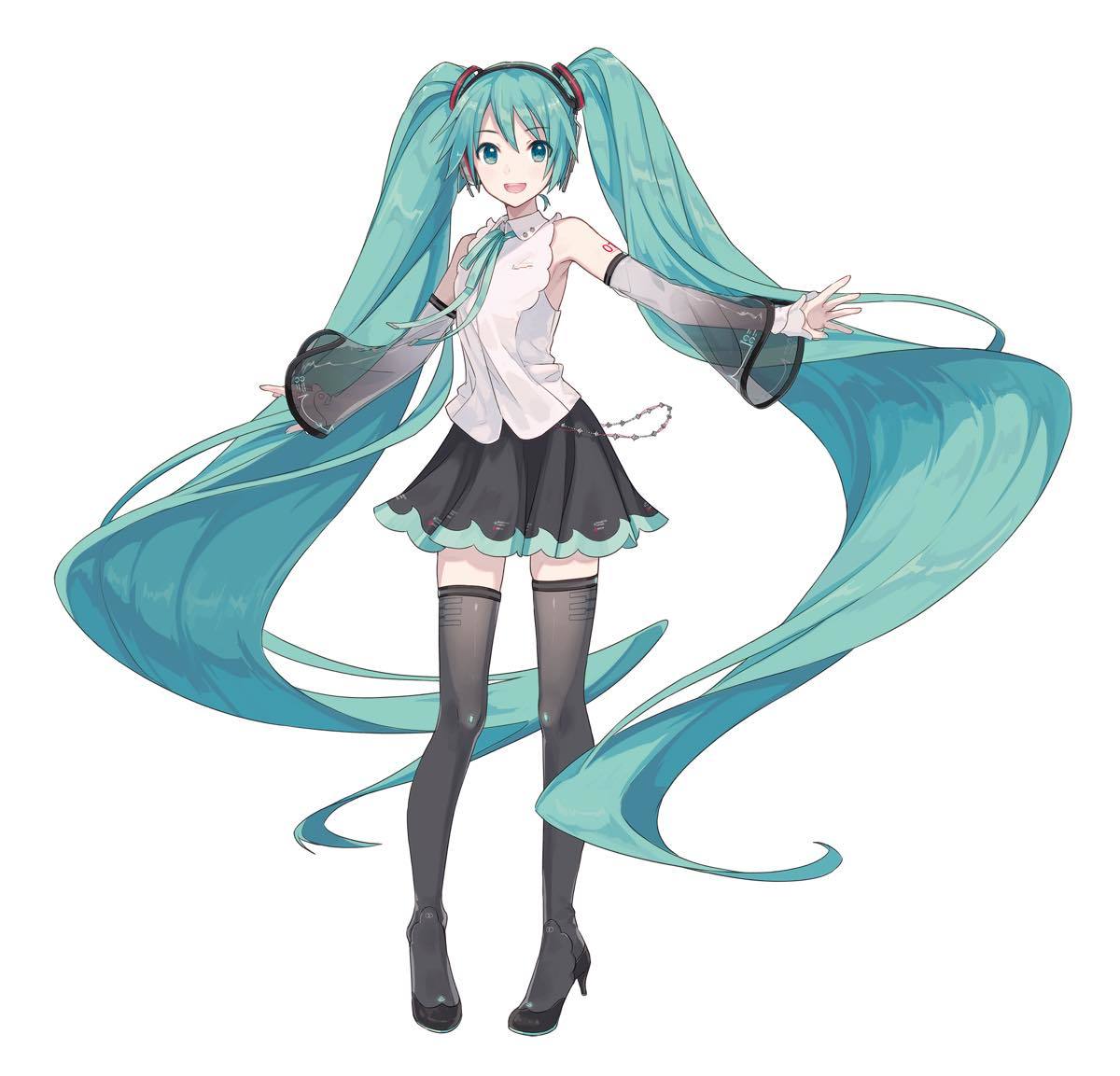
Hatsune Miku is a vocal sound source and character for desktop music (DTM) and voice synthesis software released by Crypton Future Media (commonly known as Crypton), a company that develops and sells music production software. The character is based on the voice of Saki Fujita, a voice actress, and is compatible with VOCALOID, a voice synthesizer developed by Yamaha. The software was the catalyst for the VOCALOID boom in Japan, and is one of the most popular VOCALOID characters.
Hatsune Miku Overview
Hatsune Miku is a type of vocal source and character for Desktop Music (DTM), a voice synthesis software released by Crypton Future Media (commonly known as Crypton), a company that develops and sells music production software. It was released on August 31, 2007. It is a vocal source compatible with the "VOCALOID2" voice synthesis system developed by Yamaha, one of the brands of musical instruments and electronic musical instruments. It is a system in which a melody and lyrics are input and the source is made to sing.
Even before the release of Hatsune Miku, there had been text-to-speech software with characters, but there were no character-based products with an image of' moe' like Hatsune Miku, and it was said that this product would not sell well at first because it was an unprecedented item. However, after its release, it started to sell an astounding number of over 40000 units in about a year. The initial sales target was 1000 units within 2007, which was much higher than that.
Even after the release of Hatsune Miku, new versions of its software were developed one after another under the influence of its popularity. Various versions of Hatsune Miku's software were sold, such as "Hatsune Miku Append", which was an extended sound source, and "Hatsune Miku V4X", which was the VOCALOID4 version. Basically, most of the Hatsune Miku's sound sources were Japanese, but some of them were English-language ones.
In addition to this, as if following Hatsune Miku, new VOCALOID (commonly known as Vocalo) products and characters different from Hatsune Miku were born one after another, and various music production software developers and music labels other than Krypton started to develop and sell Vocalo.
Also, because people were aware of the character nature of' Hatsune Miku' itself, many events and live festivals focusing on' Hatsune Miku' and other' characters' such as' Bokaro' started to be held. Hatsune Miku, who developed beyond the realm of voice synthesis software one after another, became a character / voice synthesis software that attracted public attention as a character that caused a new sensation in the Japanese music world.
History of Hatsune Miku
Hatsune Miku was born on August 31, 2007.

This Hatsune Miku package was released on August 31, 2007.
On August 31, 2007, Hatsune Miku went on sale. The Hatsune Miku was produced based on "VOCALOID2," the second machine in the "VOCALOID" series of voice synthesis systems developed by Yamaha. The voice data was created using the voice of voice actor Saki Fujita (Representative work "Tokimeki Memorial" Yayoi mizu 奈役) as the sound source, and was sold as voice synthesis software for DTM.
At the time, there were two other characters besides Hatsune Miku: Bokaro, KAITO, and MEIKO, both of whom had an impression of being far from "moe." Despite the fact that it was not selling well, the company started selling Krypton. In the DTM software genre, which was said to be a big hit if it sold 1,000 copies per year, the company sold more than 4000 copies in the first two weeks after its release. In addition, as a result of recording Hatsune Miku's trial version in the DTM magazine "DTM Magazine" which was released in the same year, it sold out in only three days even though it was published more than usual.
After that, the sales of Hatsune Miku continued to increase and reached about 42000 pieces per year. In the same year, BokoroP appeared one after another, which produced many Bokoro-songs on the video site Niconico Douga, which was a topic of conversation in the Internet world. These videos triggered the creation of various derivative works, and in addition to videos of' singing' Bokoro-songs, Hatsune Miku's illustrations and fan goods were produced.
After that, with the aim of further improving Hatsune Miku's technology, the company began selling Hatsune Miku using the newly upgraded "VOCALOID" voice synthesis system, as well as an expanded version packed with various types of singing voices. Not only that, but new Vocalo characters following Hatsune Miku were born one after another. As the spark of the genre of "Vocalo music," Hatsune Miku quickly spread its existence to the world.
"THE VOC @ LOiD M @ STER" and "Magical Mirai" and other Pokaro events and live shows are appearing one after another.

This is the key visual of the 2013 edition of "Magical Mirai", which is said to be the largest multi-purpose event among the events related to Hatsune Miku and Vocalo.
While Hatsune Miku's popularity is rising to the right, in November 2007, an important event in the history of Hatsune Miku was born. The name of the event is "THE VOC @ LOiD M @ STER". This event, which is abbreviated as Beaumas, is an exhibition of Vocaloid CDs and goods including Vocaloid.
At first, it was held in November 2007 as one of the "Wonderful Festival," an event that held all of the Doujin-only events of various genres at once, but as the number of participants gradually increased, it came to be held by itself. It was the first regular event related to Hatsune Miku and Vocalo, and since then it has grown into an important event that cannot be missed in the world of Vocalo.
Around this time, the number of Vocal-related events started to increase gradually. Concerts and concerts in which the Hatsune Miku himself appeared on the stage began to be held, and especially in the 2010s, they became even more popular. In August 2013, the Vocal-Complex Event "Magical Mirai" was held. In addition to live performances by Hatsune Miku, "Magical Mirai" included an exhibition booth, workshops, and a goods corner, making it one of the largest events in the history of Vocals. The event ended in a great success, and since then it has been decided to be held regularly every year. The content of the live event, which was held using a transparent board that reflects the light projected from behind by a projector called a Dilad Board, was featured in the news and received a lot of attention from the public.
Since then, the world of Vocaloid has gradually increased efforts related to Vocaloid music beyond the framework of video sites.
Moving beyond the framework of music to a music genre with various media developments

"Kagero Days" is the most popular novel series of "Bokoro-shosetsu" (Bokoro-shosetsu), which is based on Bokoro-kyoku.
Around the time "Magical Mirai" was performed, a novel based on Vocalo music, called Vocalo Novel, had begun to appear in the world. This Vocalo Novel is a novel based on Vocalo music, and many popular songs came to be made into novels. At first, many of them were single-volume works, but gradually a long series based on the "Music Series" series, such as "Mayfly Project," which consists of several pieces of music created with the same world view, began to be made. In addition to being made into a novel, Vocalo music was comicalized, animated, and even made into a stage play, and Vocalo music attracted more people's attention.
In addition, many singers who used to cover VocaloP and Vocalo songs released major CDs through Vocalo songs or made their solo debut as artists who did not use Vocalo as a medium. By making use of the experience of producing Vocalo songs, the number of people who provide music to other artists in various forms such as OP of anime and inserted songs of games as composers, and those who develop various activities such as releasing original songs as artists apart from Vocalo increased, and popular artists such as Kenshi Yonezu, Keina Suda, Mafumafu and Eve were born one after another.
As a result of this development, the popularity of Vocalo music increased, and it became known as one of the genres called Internet music. Vocalo music spread from a single character, Hatsune Miku, and became an indispensable part of the Internet music scene in the 2020s.
List of Hatsune Miku software
Hatsune Miku (VOCALOID2 version)

The Hatsune Miku of "Hatsune Miku (VOCALOID2 version)".
The first software in the Hatsune Miku series, which went on sale on August 31, 2007, was based on the VOCALOID2 engine, the latest version of the VOCALOID series of voice synthesis systems developed by Yamaha at the time. It is the first voice synthesis software based on VOCALOID2. It uses the latest engine to create a more natural singing voice than ever before.
Also, "Hatsune Miku", the first character created with "moe" as an element, became a topic of conversation, and after its release about 4000 copies of the software were sold, resulting in over 40000 sales in just one year. It is assumed that there were not only creators who actually created music, but also Hatsune Miku fans who were attracted by the character nature of "Hatsune Miku" and bought it. The character draft was made by illustrator KEI.
It is the software that triggered the current popularity of Vocalo.
Hatsune Miku APPEND (Miku APPEND)

The Hatsune Miku APPEND Miku. Hatsune Miku.
Released on April 30, 2010 as an enhanced sound source for the "VOCALOID2" version of Hatsune Miku.
Initially, Hatsune Miku had only one audio library, but with Hatsune Miku APPEND (commonly known as Miku Append), it became possible to add more types of audio to the Hatsune Miku library.
Hatsune Miku Append There are six types of audio: "Sweet", "Dark", "Soft", "Light", "Vivid", and "Solid". This makes it possible for Hatsune Miku to use all seven types of audio library, including the one that was installed from the beginning.
And thanks to the new Hatsune Miku, a new design has been created for the Hatsune Miku Append. Hatsune Miku's outfit, which used to be a miniskirt, has been transformed into something more futuristic in the Hatsune Miku Append, with a full-length suit and a machine-like waistline.
Illustrator Neko Ita created the original drawing based on the figures created by figure modeler Masaki Asai. The prototype created by Masaki Asai is called "Miku (zero vocalist ver)."
Hatsune Miku V3 ENGLISH

Hatsune Miku of "Hatsune Miku V3 ENGLISH."
English sound source software by Hatsune Miku. Release date is August 31st, 2013. This is the first Vocalo made based on "VOCALOID3" of the "VOCALOID" voice synthesis system series.
In October 2010, Krypton announced that he would release the English version if the Hatsune Miku community on Facebook had more than 39390 followers (believed to be Miku). Forty days after the announcement, the company had more than 39390 followers, and it was time to start working on it.
At the beginning of its development, it aimed to become a Hatsune Miku that speaks katakana English, but as the response to the demo sound released in July 2011 was not very good, it completely changed its direction to' for English.' After a long development period of two years, it was finally released on August 31, 2013.
"Hatsune Miku V3 Bundle," "Hatsune Miku V3 English" was added to "Hatsune Miku V3 (Japanese sound source)," which was also created based on "VOCALOID3" in September 2013, was to be sold instead. Piapro
The outfit has returned to the VOCALOID2 version of Hatsune Miku's clothing, but with a rainbow-like color gradation and a mature look on the Hatsune Miku's face, the character design gives a cool impression, unlike the "cute" Hatsune Miku of the early days. The person in charge of the illustrations was an illustrator named Zai.
Hatsune Miku V3

Hatsune Miku of "Hatsune Miku V3."

Related Articles

The diva that landed on the track! A look back at the successive generations of Hatsune Miku "Racing Miku" with figures!
Hatsune Miku is a symbol of pop culture that has become famous from the world of the Internet. The Miku Hatsune, who is active in a variety of scenes, has been landing on circuits as the official mascot of a racing team! This time, we would like to introduce you to the figure of "Racing Miku," who has been shining on the circuit every year since her appearance!
Read Article

Spoiler commentary and discussion of the Hatsune Miku -Project DIVA- series (game)
Hatsune Miku -Project DIVA-" is a music game series developed by Sega and Sega Interactive. DIVA" is the word for "diva," and the concept of the game is to play as if the electronic diva "Hatsune Miku" were singing, allowing players to enjoy an exhilarating rhythm game. Players press the designated buttons in time with the song to clear the track and achieve a high score.
Read Article

In-depth summary of KAITO (VOCALOID)
KAITO is a character and a type of vocal sound source for voice synthesis software and desktop music (DTM) released by Crypton Future Media (commonly known as Crypton), a company that develops and sells music production software. It was created as a vocal sound source compatible with VOCALOID (commonly known as Vocaloid), a voice synthesizing system developed by Yamaha. It is a male-voiced vocaloid created based on the voice of studio musician Naoto Fuuga, and is suitable for a variety of music genres.
Read Article

In-depth summary of Kagamine Rin/Len (VOCALOID)
Kagamine Rin/Len is a character and a type of vocal sound source for desktop music (DTM) and voice synthesis software released by Crypton Future Media, a company that develops and sells music production software. It is based on the voice of voice actress Asami Shimoda, and is a vocal sound source compatible with VOCALOID (commonly known as Vocaloid), a voice synthesis system developed by Yamaha. It was produced after Hatsune Miku, which triggered the Vocaloid boom, and sold 20,000 copies in about seven months.
Read Article

In-depth summary of MEIKO (VOCALOID)
MEIKO is a vocal sound source and character for desktop music (DTM) and voice synthesis software released by Crypton Future Media (commonly known as Crypton), a company that develops and sells music production software. It was the first vocal sound source compatible with VOCALOID (commonly known as Vocaloid), a speech synthesis system developed by Yamaha. Based on the voice of singer-songwriter Meiko Higo, the software is suitable for a variety of music genres.
Read Article

In-depth summary of Luka Megurine (VOCALOID)
Luka Megurine is a character and a type of vocal sound source for voice synthesis software and desktop music (DTM) released by Crypton Future Media (commonly known as Crypton), a company that develops and sells music production software. It was created based on the voice of voice actor Yu Asakawa, and is a vocal sound source compatible with VOCALOID, a voice synthesizing system developed by Yamaha, and is the first VOCALOID software to support both Japanese and English.
Read Article

In-depth summary of KAFU/KAFU (VOCALOID)
KAFU is a vocal sound source and character for desktop music (DTM) and voice synthesis software, planned by the creative label KAMITSUBAKI STUDIO and produced by CeVIO, a company consisting of several companies in Nagoya, using its own voice synthesis software "CeVIO AI". It is a type of vocal sound source and character created by "CeVIO AI," a company owned by several Nagoya companies. Its official name is "Musical Isotope KAFU," and it became a hot topic because it was created based on the voice of "Hanafu," a popular virtual YouTuber belonging to KAMITSUBAKI STUDIO.
Read Article

In-depth summary of IA (VOCALOID)
IA is a character and a type of voice synthesizer for desktop music (DTM) released by 1st PLACE, a company that plans, develops, and sells music, videos, software, etc. It is based on the voice of Lia, an artist belonging to 1st PLACE. The voice was created based on the voice of Lia, an artist belonging to 1st PLACE. In addition to being a voice synthesizer, Lia is also involved in various activities as a "virtual artist" belonging to 1st PLACE, such as being involved in the virtual space project "Virtual Planet HABINA".
Read Article

In-depth summary of GUMI (VOCALOID)
GUMI is a type and character of vocal sound source for voice synthesis software and desktop music (DTM) released by Internet, a company that develops and sells DTM and other software. It was created as a vocal sound source compatible with VOCALOID (commonly known as Vocaloid), a speech synthesis system developed by Yamaha. Its official name is "Megpoid" and GUMI is a nickname. Based on the voice of Megumi Nakajima, a voice actress and singer, GUMI was created with the aim of creating a "human-like voice.
Read Article

In-depth summary of v flower (VOCALOID)
v flower is a character and a type of vocal sound source for voice synthesis software and desktop music (DTM) released by GAINOID, a label that discovers and fosters the next generation of artists, mainly vocaloids. It was created as a vocal sound source compatible with VOCALOID (commonly known as Vocaloid), a speech synthesis system developed by Yamaha. The character's name is "flower. Her nickname is "flower-chan. It was created as a vocaloid with a powerful, neutral female voice specializing in rock. The provider of the voice is undisclosed.
Read Article

In-depth summary of Shigen Teto (VOCALOID, UTAU, Virtual Idol)
Kasane Teto is a virtual idol character that originated on "2channel," one of Japan's largest electronic bulletin boards, and a type and character of vocal sound source for voice synthesis software and desktop music (DTM) created based on the character. It is a derivative of the voice synthesizing software "VOCALOID" (commonly known as "vocaloid"), and was created as a free voice synthesizing software "UTAU" for singing. The voice is based on multi-creator Mayo Oyamano.
Read Article

In-depth summary of Kamui Gakupo (VOCALOID)
Kamui Gakupo is a type and character of vocal sound source for voice synthesis software and desktop music (DTM) released by Internet, a company that develops and sells DTM and other software. It was created as a vocal sound source compatible with VOCALOID (commonly known as Vocaloid), a speech synthesis system developed by Yamaha. Its official name is "Gakudyokido. Kamui Gakupo is the name of the character. It was created based on the voice of singer GACKT (Gakuto). It is also the first vocaloid software and character created by an Internet company.
Read Article

In-depth summary of OTOMACHI UNA (VOCALOID)
Una Otomachi is a character and a type of vocal sound source for voice synthesis software and desktop music (DTM), created by the CG and character design company "MTK" and published by "Internet" Inc. It was created as a vocal sound source compatible with Yamaha's VOCALOID (commonly known as Vocaloid) voice synthesis system. The voice was created based on the voice of voice actress Aimi Tanaka, and later software was developed for speech using "AITalk" developed by A.I. Corporation.
Read Article

In-depth summary of Yukari Yuzuki (VOCALOID)
Yukari Yuzuki is a type and character of vocal sound source for voice synthesis software and desktop music (DTM) produced and released by AH-Software, a company that develops and releases PC software planned by the VOCALOMAKETS, a VOCALOID production team comprised of vocaloid Ps. A vocal sound source and character for DTM (desktop music). The software is compatible with VOCALOID, a speech synthesis system developed by Yamaha Corporation, and AI Talk, developed by A.I. Corporation. The voice is by Chihiro Ishiguro, a voice actress.
Read Article

In-depth summary of MAYU (VOCALOID)
Mayu is a type of vocal sound source and character for the voice synthesizer software Desktop Music (DTM) released by EXIT TUNES, a music label operated by Pony Canyon Inc. It is the only vocal sound source and character released by EXIT TUNES.
Read Article

In-depth summary of Lily (VOCALOID)
Lily is a type and character of vocal sound source for voice synthesis software and desktop music (DTM) released by Internet, a company that develops and sells DTM and other software. It is a vocal sound source compatible with the VOCALOID (a.k.a. Vocaloid) voice synthesis system developed by Yamaha, and was originally created as the image character for the anime song cover album "anim.o.v.e." The voice is based on the voice of the music group "m.o.v.e.," which is a Japanese word for "animation. The voice is based on yuri, vocalist of the music group m.o.v.e.
Read Article

In-depth summary of Koharu Rokka (VOCALOID)
Koharu Rokka is a character created by "TOKYO6 ENTERTAINMENT," a joint venture company that plans and produces text-to-speech software with characters and produces and sells goods related to music, as part of its first "Character Project. The project was funded through crowdfunding. Funds were raised through crowdfunding, and the software was released as software compatible with both the speech creation software "CeVIO AI" and the singing voice synthesis software "SynthesizerV". The voice was based on the voice actor Yoshinoh Aoyama.
Read Article

VOCALOID Hatsune Miku's Cute Wallpapers and Illustrations! Over 1200 pictures!
Here's a collection of Miku's cutest wallpaper and illustration images! Hatsune Miku is a vocal sound source and character for voice synthesis and desktop music released by Crypton Future Media. She is 16 years old, 158 cm tall, and weighs 42 kg.
Read Article

The transformation of the characters who have become Japanese ▶︎Chinese
Japan's most popular anime and manga are often parodied and imitated because of the attention they attract. In China, as you all know, these characters have been transformed into extraordinary-looking characters and taken down. In this article, we will take a look at some of the Chineseized Japanese characters that have undergone such a transformation.
Read Article

Sexy and beautiful cosplay images compilation
Here we have compiled images of sexy and beautiful cosplay. In addition to characters from popular works such as Hatsune Miku, "Neon Genesis Evangelion," and "Hell Girl," the site also features beautiful women in a variety of costumes, including cats, rabbits, Japanese goth, sweet lolita, and gothic lolita.
Read Article
![Hatsune Miku] Not Only "DIVA"! Summary of games featuring Hatsune Miku [Vocaloid](https://renote.net/files/blobs/proxy/eyJfcmFpbHMiOnsiZGF0YSI6Mjg4MTEsInB1ciI6ImJsb2JfaWQifX0=--6dffb3c9d98786b81ec19555a08903c95f3d026f/001.jpg)
Hatsune Miku] Not Only "DIVA"! Summary of games featuring Hatsune Miku [Vocaloid
Hatsune Miku is a well-known Vocaloid, and her popularity has led to a variety of media mixes. This summary introduces game productions based on the theme of Hatsune Miku and other vocaloid characters.
Read Article

VOCALOID Songs with Cherry Blossom Theme! 10 recommended songs that give you a sense of harmony! Cherry Blossom Season
A collection of Japanese-style VOCALOID songs with a cherry blossom theme. Listed here are 10 songs with a Japanese feel, including "Sakura no Season," a song about goodbye, and "Sakura Zensen Anomaly Nashi," a cool Japanese-style rock song. For each song, we will introduce the video of the original singer and the video link of the recommended singer.
Read Article

Hatsune Miku Derivative Character + Goods Summary
Miku Hatsune, our diva of song, has recently come in a variety of forms. Her popularity has been so great that she has been adapted into goods, animated cartoons, and even made its way to overseas markets. In this issue, we have compiled a list of characters derived from Miku Hatsune, along with their cute goods. Who is your favorite Miku character?
Read Article

Collaboration with various characters! Nanoblock Products
Nanoblocks are very miniature blocks with a single projection of 4 mm. (4 x 4 x 5 mm minimum). The smaller size of the blocks makes them more realistic and smaller than ever before. Here, we would like to introduce some of the works of nanoblocs that have been created in collaboration with various artworks, taking advantage of their characteristics.
Read Article
Urban Legend Summary of Hatsune Miku
Urban legends about Hatsune Miku are compiled here. We focus on news about Hatsune Miku's appearances on the music program "Music Station" and her collaborations with superstars such as Namie Amuro and Lady Gaga. We will introduce a lot of interesting rumors about Hatsune Miku that you won't be able to stop reading.
Read Article

Hatsune Miku cosplay image compilation! A lot of super cute pictures!
We have collected Hatsune Miku cosplay images. Not only Japanese but also international cosplayers have dressed up as Miku Hatsune in these pictures. All of them are high quality, perfect reproductions of Hatsune Miku! We will introduce plenty of cute cosplay images that will make you feel relaxed just by looking at them.
Read Article

Summary of Hatsune Miku's activities [Vocaloid].
Hatsune Miku is a Vocaloid character that helped popularize the term "vocaloid" in the world. This page summarizes not only Hatsune Miku's music, but also her past activities and topics related to Hatsune Miku.
Read Article

Japanese Vocaloid Song Videos! Pop, Rock, and more! Including "Senbonzakura" and more!
Here we have compiled videos of Japanese-style Vocaloid songs. There are various genres of music such as pop and rock. The videos include "Senbonzakura," which has been sung in "Kohaku Uta Gassen," and "Yonde Kaikaiite Rasetsu to Kareta," created by Genshi Yonezu, who used to be a Vocaloid P "Hachi.
Read Article

Too high level! Cosplay Image Summary
We have compiled a collection of cosplay images that are of such a high level that they make you feel as if you have jumped straight out of a work of art. From cute to sexy, here are images of a variety of cosplayers!
Read Article
![VOCALOID] 10 Recommended VOCALOID Spring Songs [STEP TO YOU](https://renote.net/files/blobs/proxy/eyJfcmFpbHMiOnsiZGF0YSI6ODU2NDMzOCwicHVyIjoiYmxvYl9pZCJ9fQ==--d9b81f113fe49b3f4fe7d18f19aebf44dd61633b/12_101_l.jpg)
VOCALOID] 10 Recommended VOCALOID Spring Songs [STEP TO YOU
We have collected VOCALOID spring songs. We have compiled refreshing songs such as "STEP TO YOU," a famous song that is also available for karaoke distribution, and "Harurenochizakura," a song that makes you feel spring, which we hope you will listen to in this season of encounters and partings. We will introduce a total of 10 songs, the videos of the original singers and links to videos of recommended singers.
Read Article

A compilation of cool videos of Vocaloid songs "sung in English"! It comes with lyrics, so it's recommended for studying English!
Here we have compiled a collection of videos of cool covers in English of songs originally sung using Vocaloid (virtual singer software). Some of the songs featured here are covers of "Romeo and Cinderella" by music producer "doriko (Kiritan P)" and others sung in English based on "Melt" by the creator group "supercell.
Read Article
![VOCALOID] 10 Recommended VOCALOID Graduation Songs [Sakura no Ame](https://renote.net/files/blobs/proxy/eyJfcmFpbHMiOnsiZGF0YSI6ODU2NDMzOSwicHVyIjoiYmxvYl9pZCJ9fQ==--75f877a97632c9b7342a22a4918081b62645f907/sg009_1376_1.jpg)
VOCALOID] 10 Recommended VOCALOID Graduation Songs [Sakura no Ame
We have compiled a list of recommended VOCALOID graduation songs. Listed here are 10 songs that you should pay attention to for their heart-wrenching lyrics, including "Sakura no Ame," which is also sung at graduation ceremonies. Here are the original videos of popular VOCALOID songs, as well as video links to recommended singers.
Read Article

Summary of recommended Vocaloid songs #1-20 in 2017! All good songs to sing at karaoke!
Here are the songs that ranked 1 to 20 in the Vocaloid song ranking on the JOYSOUND communication karaoke service in 2017, with video clips. Vocaloid songs are a generic term for songs produced using software based on the "VOCALOID" voice technology developed by Yamaha. The software is represented by "Hatsune Miku," which is said to be the driving force behind the creation of the "Vocaloid" genre in the music scene. Some of the songs introduced here include "Senbonzakura WhiteFlame feat. Hatsune Miku," which was written, composed, and arranged by Kuro Usa P in 2011.
Read Article

How to start MMD & how to use it! Includes instructional videos and more for beginners! MikuMikuDance
MMD (MikuMikuDance) is a free 3DCG movie production tool developed by Masaru Higuchi aka "Higuchi M" and released free of charge on his website "VPVP (Vocaloid Promotion Video Project)". MMD is a free 3DCG movie production tool developed by Masaru Higuchi, a.k.a. "Higuchi M." and released for free on his website, VPVP (Vocaloid Promotion Video Project). This article is recommended for those who want to learn how to use MMD and contribute videos to Nico Nico Douga.
Read Article

Summary of how to modify MMD models! Let's make an original video! MikuMikuDance
This page summarizes how to modify MMD (MikuMikuDance) models. It includes information on how to add bones, change the color of a model, add facial expressions, and make a model glow. It also includes an explanation site for beginners.
Read Article

Summary of how to modify MMD models! A must-see for those who want to make their models look the way they want them to look! MikuMikuDance
Here is a collection of how to modify MMD models. We show you how to attach accessories, put on bunny ears, add tattoos, change clothes, and more. If you would like to customize the appearance of your models to your own liking and create your own original videos, please refer to this section.
Read Article
Tags
Contents
- Hatsune Miku Overview
- History of Hatsune Miku
- Hatsune Miku was born on August 31, 2007.
- "THE VOC @ LOiD M @ STER" and "Magical Mirai" and other Pokaro events and live shows are appearing one after another.
- Moving beyond the framework of music to a music genre with various media developments
- List of Hatsune Miku software
- Hatsune Miku (VOCALOID2 version)
- Hatsune Miku APPEND (Miku APPEND)
- Hatsune Miku V3 ENGLISH
- Hatsune Miku V3
- Hatsune Miku V4X
- Hatsune Miku NT
- Hatsune Miku activity history
- THE VOC@LOiD M@STER
- PlayStation Home "Hatsune Miku Special Live Event"
- Miki-no-Hi Thanksgiving 39's Giving Day Project DIVA presents Hatsune Miku Solo Concert - Konbanwa, Hatsune Miku desu. -
- Hatsune Miku Live Party
- Miku's Thanksgiving Day
- Magical Mirai
- HATSUNE MIKU EXPO/HATSUNE MIKU EXPO 2016 JAPAN TOUR
- Hatsune Miku Symphony
- SNOW MIKU
- Super Kabuki
- Hatsune Miku's profile and personality
- Hatsune Miku discography
- "CV Series VOCAL CD Volume 01 Hatsune Miku Hoshi no Kakera"
- Re:package
- "EXIT TUNES Vocalic Combination" series
- "EXIT TUNES PRESENTS Vocarhythm feat. Hatsune Miku"
- "EXIT TUNES PRESENTS Vocalostar feat. Hatsune Miku"
- "EXIT TUNES PRESENTS Vocalolegend feat. Hatsune Miku"
- "EXIT TUNES PRESENTS Vocalogenesis feat. Hatsune Miku"
- "EXIT TUNES PRESENTS Vocaloanthems feat. Hatsune Miku"
- "EXIT TUNES PRESENTS Vocalonexus feat. Hatsune Miku"
- "EXIT TUNES PRESENTS Vocalonation feat. Hatsune Miku"
- "EXIT TUNES PRESENTS Vocalocluster feat. Hatsune Miku"
- "EXIT TUNES PRESENTS Vocalodream feat. Hatsune Miku"
- "EXIT TUNES PRESENTS Vocaloconnection feat. Hatsune Miku"
- "EXIT TUNES PRESENTS Vocalosensation feat. Hatsune Miku"
- "EXIT TUNES PRESENTS Vocalofuture feat. Hatsune Miku"
- "EXIT TUNES PRESENTS Vocalospace feat. Hatsune Miku"
- "EXIT TUNES PRESENTS Vocalofantasy feat. Hatsune Miku"
- "EXIT TUNES PRESENTS Vocalocreation feat. Hatsune Miku"
- "EXIT TUNES PRESENTS Vocalohistory feat. Hatsune Miku"
- "EXIT TUNES PRESENTS Vocaloseasons feat. Hatsune Miku Autumn"
- "EXIT TUNES PRESENTS Vocaloseasons feat. Hatsune Miku Winter"
- "EXIT TUNES PRESENTS Vocaloseasons feat. Hatsune Miku Spring"
- "EXIT TUNES PRESENTS Vocaloseasons feat. Hatsune Miku Summer"
- "EXIT TUNES PRESENTS Vocalostream feat. Hatsune Miku"
- "Hatsune Miku Best" series
- "Hatsune Miku Best ~ memories ~"
- "Hatsune Miku Best ~ impacts ~"
- "Hatsune Miku -Project DIVA - Original Song Collection" series
- "Hatsune Miku -Project DIVA - Original Song Collection"
- "Hatsune Miku -Project DIVA Arcade - Original Song Collection"
- "Hatsune Miku -Project DIVA Arcade - Original Song Collection Vol. 2"
- "Hatsune Miku -Project DIVA Arcade - Original Song Collection Vol. 3"
- "Hatsune Miku -Project DIVA - 2nd NONSTOP MIX COLLECTION"
- Hatsune Miku -Project DIVA-extend Complete Collection
- "VOCAROCK collection feat. Hatsune Miku" series
- "VOCAROCK collection feat. Hatsune Miku"
- "VOCAROCK collection 2 feat. Hatsune Miku"
- "VOCAROCK collection 3 feat. Hatsune Miku"
- "VOCAROCK collection 4 feat. Hatsune Miku"
- "VOCAROCK collection 5 feat. Hatsune Miku"
- Representative song by Hatsune Miku
- Thousand Cherry Trees
- Melt
- I'll give you a Mikuni.
- "Tell Your World"
- Hatsune Miku music video (MV/PV)
- 39 Squeeze!
- Star Night Snow
- Sekai feat. Hatsune Miku
- Hatsune Miku's Inside Stories, Trivia, and Small Stories / Episodes and Anecdotes
- Hatsune Miku's voice was chosen from about 500 voice actors.
- The number of works posted on the illustration communication service "pixiv"