
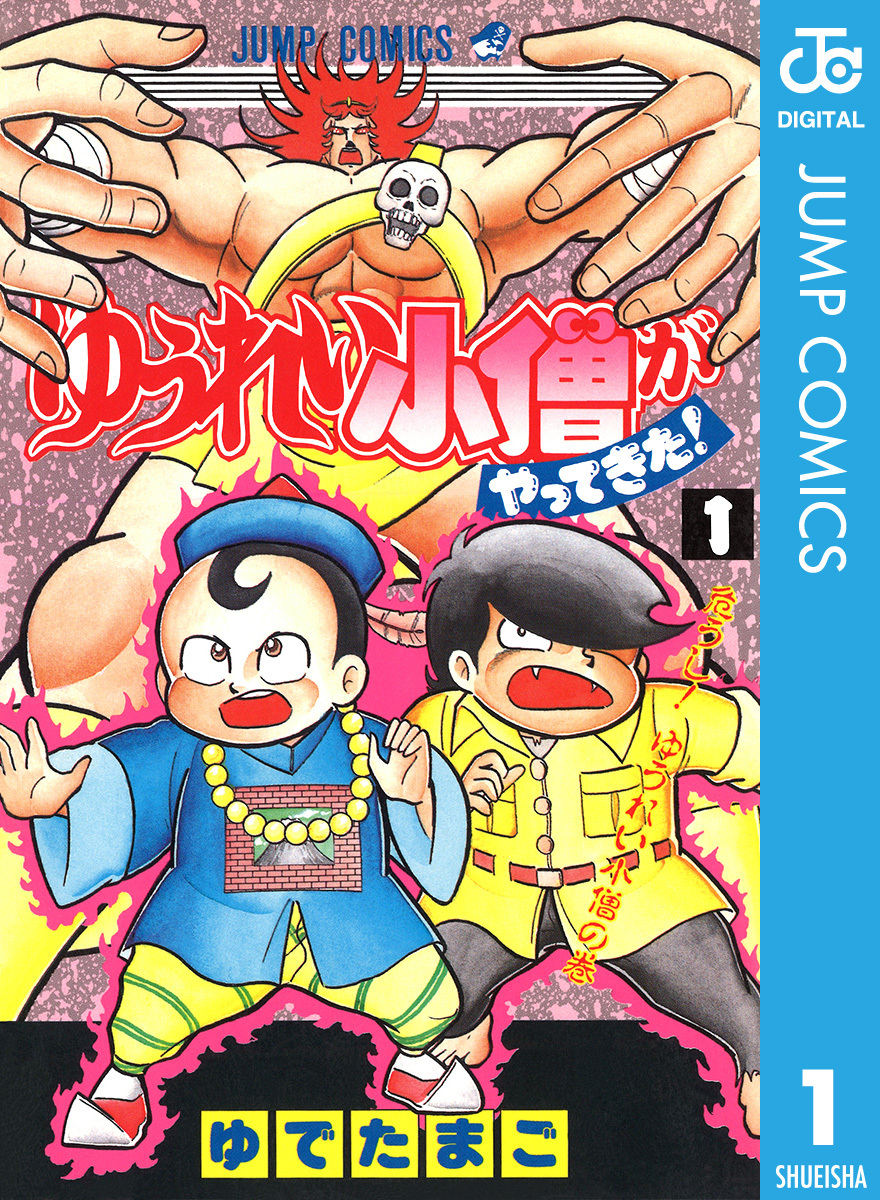
Yurei kobo ga kitaeru! is a manga work by Yudetamago about defeating ghosts. It was serialized in Weekly Shonen Jump from 1987 to 1988 with a total of 42 episodes. There were 5 volumes in the series.
The story takes place in the Edo period (1603-1868), and the brothers Osoreyama Hyakutaro and Kototaro combine to transform themselves into the yokai Ajia Doji and exterminate the yokai. This work was a promising follow-up to "Kinnikuman," but it was cancelled early, and Yudetamago's period of limbo began from this point. Like "Kinnikuman," Yudetamago planned to have characters who were solicited from readers appear in this work.
Overview of "Yurei Kozo ga Ikimatta!"
"Yurei Kozo ga Itsukita!" is a comic book based on the theme of Yurei-Kozo's subjugation of ghosts by the author, Yudei-Tamago (Boiled Egg). It was published at the end of the series of "KINNIKUMAN," the smash hit of Yudei-Tamago (Boiled Egg). Based on this, a total of 42 episodes were serialized in Shueisha's "Weekly Shonen Jump" from 1987 to 1988. The Jump Comics is a five volume book.
Once upon a time, in the Edo period, there were 108 yokai (ghosts, spirits, spooks, spooks, spooks, spooks, spooks, spooks, spooks, spooks, spooks, spooks, spooks, spooks, spooks, spooks, spooks, spooks, spooks, spooks, spooks, spooks, spooks, spooks, spooks, spooks, spooks, spooks, spooks, spooks, spooks, spooks, spooks, spooks, spooks, spooks, spooks, spooks, spooks, spooks, spooks, spooks, spooks, spooks, spooks, spooks, spooks, spooks, spooks, spooks, spooks, spooks, spooks, spooks, spooks, spooks, spooks, spooks, spooks, spooks, spooks, spooks, spooks, spooks, spooks, spooks, spooks, spooks, spooks, spooks, spooks, spooks, spooks, spooks, spooks, spooks, spooks, spooks, spooks, spooks, spooks, spooks, spooks, spooks, spooks, spooks, spooks, spooks, spooks, spooks, spooks, spooks, spooks, spooks, spooks, spooks, spooks, spooks, spooks, spooks, spooks, spooks, spooks, spooks, spooks, spooks, spooks, spooks, spooks, spooks, spooks, spooks, spooks, spooks, spooks, spooks, spooks, spooks, spooks, spooks, spooks, spooks, spooks, spooks, spooks, spooks, spooks, spooks, spooks, spooks, spooks, spooks, spooks, spooks, spooks, spo 108 1986 108 108 Ameyama Sai-no-Kawara
Most of the yokai characters in this novel, as in "KINNIKUMAN," a boiled egg, and later works, were created by the author himself or were characters for which readers were invited. In the first half of the series, the story was that a mischievous yokai caused a bizarre incident in a modern junior high school, and the two main characters and Chikatsu-Adoji subjugated it. However, it did not grow in popularity as expected, and from the middle part of the series, a team battle between Japanese yokai and Western yokai became the usual way of jumping. In the new series of "Weekly Shonen Jump," he received a special treatment of color at the beginning of the series for three consecutive issues, but it did not increase in popularity after that, and in 1988, it was discontinued without being completed, and at the end of the series, his assistant's drawing became noticeable.
The plot and story of "Yurei Kozo ga Itsukatta!"
Revival of Subchain Boy
It was the Edo period. In Japan, many mischievous monsters were causing trouble to humans. Unable to see them, the ruler of the heavens ordered the righteous Zengyo Yokai Subchain Boy to subjugate them. Under orders from God, the Subchain Boy decided to come up with a plan. On Oujima Island, the northernmost part of the Isan Islands surrounding the Japanese Islands, he invited 108 mischievous monsters to a banquet and served them with sake. All of them were trapped in the soil where the mischievous monsters had caused them to get drunk. The soil was a special type of soil with a lot of talismans to seal off the monsters. The monsters that had been successfully tricked were buried alive and sealed as they were, leaving only the word that they would be resurrected after hundreds of years and would torment humans. The subchain Boy then set up his own stone statue as a guardian to watch over them. As time passed, the wooded land came to be called the "Hide the Evil" forest by people.
In 1986, 200 years after the seals of these evil-doers were sealed, people had already forgotten about the 妖隠 forest. However, one day, a massive eruption of the demon Ameyama on Io Island caused the volcanic bomb to directly hit the stone statue of the Subchain Boy and split it in two. This caused the long-standing seal to be broken, and at the same time, the 108 monsters that had been contained in the Youkakushi were resurrected one after another from the earth and scattered again in the Japanese society. Fearing that the evil-doers would again commit evil in the human world, God gave life to the stone statue of the Subchain Boy, which had been split in two, and revived it, and ordered the extermination of the 108 monsters that were scattered again throughout the country. Thus, the Subchain Boy who revived and descended to the human world fought against the evil-doers while hiding himself in a Japanese junior high school with the twin figure of Osorezan Hyakutaro and Osorezan Kototaro as a temporary figure.
Appearance of Hyakumyo-kai
Two years ago, at the camp school of Sai-no-Kawara Junior High School, there was a tragic incident in which a bus carrying students suddenly stopped braking and fell off a cliff, killing many students. One year later, the only survivor of this incident, Yotsuya Miko, returned to the class of Hyakutaro and his classmates, Ibiri I, returned to the class of Hyakutaro and his classmates, Yotsuya Miko, returned to the class of Hyakutaro and his classmates, Yotsuya Miko, returned to the class of Hyakutaro and his classmates, Yotsuya Miko, returned to the class of Hyakutaro and his classmates, Yotsuya Miko, returned to the class of Hyakutaro and his classmates, Ibiri I, returned to the class of Hyakutaro and his classmates, Yotsuya Miko, returned to the class of Hyakutaro and his classmates, Ibiri I, returned to the class of Hyakutaro and his classmates, Ibiri I, returned to the class of Hyakutaro and his classmates, Ibiri I, returned to the class of Hyakutaro and his classmates, Ibiri I, returned to the class of Hyakutaro and his classmates, Ibiri I, and Hyakutaro I, accompanied by their homeroom teacher, took Yotsuya to the nurse's office because she was not yet in good health and felt sick. Then, a monster called Hyakune-yokai, a collection of more than 100 cats, appeared and demanded that Yotsuya be handed over to them. In fact, this Hyakune-yokai is the 100 cats that lived in a rough temple that was loved by the villagers 200 years ago. However, one day, the village headman and the villagers killed all the cats because he mistook the children who were having a party night after night in this temple for a monster cat. The villagers immediately realized this misconception and made a stone monument to console the spirits of the cats. However, this did not clear up the regrets of the cats and the 100 spirits combined into a monster. Then, it was a monster that ate and killed the villagers one by one every night. The villagers naturally died at that time, and the Hyakune-yokai, which should have cleared their minds, jumped into the stone monument by itself. The stone monument came to be called "Nekozui-iwa" because a drop of tears fell from there. After being confined to the "Nekozui-iwa", the Hyaku 200 妖霊 Sai-no-Kawara
At that time, it was this Hyakune-yokai that killed the students by pushing their buses down a cliff. In order to kill kill the only miraculous survivor, Yotsuya, the Hyakunen-Yokai was relentlessly pursued until Sai-no-Kawara Junior High School. Facing the Hyakunen-Yokai for the first time in 200 years, the Wakaku-Adoji fights against the Hyakunen-Yokai to protect Yotsuya. The Hyakunen-Yokai, which sees that the weakness of the Wakaku-Adoji is a triangle, binds the Hyakunen-Yokai with triangular restraints and torments the Hyakunen-Yokai with magic that turns the Hyakunen-Yokai into a tree. The Hyakunen-Yokai, which lost its place due to the destruction of' Neko-naki-iwa' by humans, returns to' Neko-naki-iwa' once it kills the survivor, Yotsuya. The fact that everything is due to humans becoming the demon of revenge gives the Wakaku-Adoji the desire to not bury the Hyakunen-Yokai. However, in the end, the Wakaku-Adoji seals it in the Juchu Tenshin Makebi-iwa to protect Yotsuya.
The Advent of Dorobera
There was a third year junior high school girl named 齷田 Monro at Sai-no-Kawara Junior High School. She wanted to be an actress and loved to play on the stage, so much so that she captivated everything she saw in the play. She was a bright and energetic student who unfortunately lost her life due to an accident on the stage while she was playing Peter Pan in a school play. However, she did not realize that she was dead, so she became a floating spirit and was trapped in the old lecture hall. She was a sad ghost who continued to play in the new lecture hall even after the lecture hall was rebuilt, and she wanted to be spotlighted on the stage again.
On the other hand, there was one of the 108 escaping monsters, Dorobera, which lives in a marsh in Shiga. It is a liquid monster whose flesh and skin can separate and turn the body into mud, and it can dive into any narrow place. It is a scary monster that usually hides in a marsh and eats the moment a human stepped in. He is a friend of Onmyo-nyudo, who was killed by a subchain child, and when he came to the old lecture hall of Sai-no-Kawara Junior High School to avenge him, he came across 齷田 Yoru, who was possessed by the lecture hall.
So 齷田 asks for help from the Torora-bori, who wants to be spotlighted again and live a new life. The droids use their 齷田 to plot to defeat the subchain Asoji, and 齷田 is tricked into giving him the power of evil. The subchain Asoji chain Asoji confronts the droids. They become mushy liquid, and they have a hard time with the droids, who are not hit or killed at all. They are also attacked by 齷田, who has handed over their souls to the droids, putting them at a disadvantage. However, the subchain Asoji knows that if one part of his body is hit, he will suffer damage. 齷田, who sells his soul to a monster and starts to attack regardless of friend or foe, finally starts to attack the drosera as well. With the assistance of this 齷田, he finally pulls out the back 妖葬 of the droids with a crutch for the spirit of the spine and kills them. In this way, 齷田's agony, which had been wandering in the lecture hall for a long time, was successfully brought to Buddhahood.
Japanese Yokai vs. Western Yokai
Hyakutaro VSMr. Halloween
In a Japanese place, there was a baby called Mari 理男. Mari 理男 was actually a baby who had become unable to cry for the rest of his life. His parents felt sorry for him and wanted to make him cry by showing him the scary figures of Japanese monsters. One day, however, Mari 理男 was found and kidnapped by Western monsters who had come to Japan to conquer the country. In order to save Mari 理男, who had been used as a hostage to lure Japanese monsters out, Hyakutaro and other Japanese monsters stood up. In this way, a battle tournament was held to compete for fear between Japanese monsters and Western monsters. The rule was that the one who made Mari 理男 cry would win.
The seven selected Japanese yokai members who won the preliminaries, Hyakutaro, Kototaro, 摩亜 Shodoji, Suzaku Oni, Sanmen Jigoku, Seido Mado, and Hotchkiss, challenge the seven Western yokai corps, Unryu Yokai Elshiri, 食屍 Kubi デオドーラ, Gorgoda St Hitsugi (Ark), Mr. Halloween, Totem Kid Commando Zombies, and Crab Otoko at a specially built Shichikae-yashiki on Mt. Osore. In the first match, the Japanese national team was Hyakutaro and the opponent was the Western yokai Mr. Halloween. Instead of a mat, they fought in a ring called "Ghost Square," which had rollers with spines. Mr. Halloween is a 3m13cm, 236 kg, American yokai. It has the motif of the Jack-O-Lantern of Halloween, and its head is shaped like a pumpkin. In fact, it is the descendant of the pumpkin carriage that carried Cinderella to the palace in the children's story Cinderella. Hyakutaro attacks Cinderella by throwing pumpkin seeds from his face with a trick or treat spell, and also changes his figure into the shape of a pumpkin carriage as in the children's story, and attacks Hyakutaro to run him over with a circular saw wheel and fights hard. However, like in the children's story, Hyakutaro saw that the magic of Mr. Halloween can be solved by the bell that announces midnight. Then, in order to make a chicken crow instead of the bell of time, they cooperate to make a chicken crow and finally the magic can be solved. In the end, Hyakutaro, who looked like an ogre, burned Mr. Halloween black with the technique of making a lightning fall from a hostile enemy by wearing Kaminari Daiko (Thunder Drum), a tool for killing yokai, and narrowly won the match.
Kyoryu Yokai: Battle against El-Syria
The fight to death between the Japanese yokai and the Western yokai reached its final phase, and it became a battle in which the Japanese yokai and the Western yokai fought for a spirit doll to revive their emotions in the Mari 理男. The leader of the Western yokai, the Unlucky Dragon Yokai El-Sili, is a German-born, proud, dragon-like yokai. In the ring of tornadoes, 摩亜 Sho-Doji, the representative of Japan, was the opponent. 摩亜 Sho-Doji struggled against the sharp axe of El-Sili. At last, when El-Sili was driven into a corner and was about to stab the todome with his steel claw, a subchain Asoji suddenly jumped into the ring and appeared to rescue 摩亜 Sho-Doji. El-Sili continued to attack the subchain Asoji mercilessly. In response, the subchain Asoji bravely challenged El-Sili to seize the remaining spirit doll of El-Sili.
El Syria and subchain Adoji, who fight with their legs extended with special abilities, are tormented by the length of their legs and the power of western monsters. However, subchain Adoji, who is superior in belief, cries out,' Japanese monsters are superior in spiritual power!' and exchanges the techniques of El Syria with the power of vengeance, tears the staff of spirit tools and spirit bindings into two and changes it to a takeuma, and overcomes the handicap of being the same height as El Syria with long legs. Then, when El Syria, who came to clear his legs, was exchanged with El Syria by jumping, at the moment when El Syria lost her balance, she was stabbed through with the secret technique, Mafu Takeuma Sashi, and buried outside the ring.
In this way, the Japanese yokai that won the last battle against the Western yokai, the remaining spirit dolls were collected, and the figure of Mari 理男 was reflected in the eyes of the Asiatic Youth, the battle between the Japanese yokai and the Western yokai came to an end, and the series ended with this.
Characters from "Yurei Kozo ga Itsukatta!"
Zengyo Yokai
Momotaro OSOREYAMA
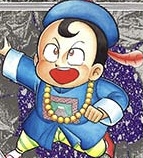
The hero is a zengyo yokai (good-luck monster) and is the twin brother of Kyotaro Osorezan. He was sent to the human world to get rid of evil yokai by the order of the god of heaven. He then transferred to Sai-no-Kawara Junior High School in the first grade class B. With a shout, he combines with Kototaro and becomes a subchain child. Although he looks young at the age of 12, he has a theoretical and intellectual personality and is trusted by those around him. Momotaro has a memory of when the subchain child was young, and from the memory that he was confined in a triangular cage for 3 years and 3 months by his master, Hyakume Sennin, as a punishment for playing a prank in the world of yokai, 1500 years ago, he has a deltophobia that makes him scared when he sees a triangular object, and he often gets a triangular attack and falls into a pinch in the battle with the enemy after transforming into a subchain child. His favorite food is kimchi.
Kintaro OSOREYAMA
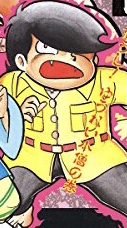
He is the twin younger brother of Osorezan Hyakutaro, and also transferred to Sai-no-Kawara Junior High School's first grade Class B in order to get rid of evil monsters. By combining with Hyakutaro and becoming a subchain child, he can gain invincible power. Unlike Hyakutaro, he is restless and timid, and has a lot of unnecessary chatter. One eye is hidden by his hair. He has a trigonophobia in which he is frightened when he sees a triangular object due to the trauma of having been punished before. He loves kimchi like Hyakutaro.
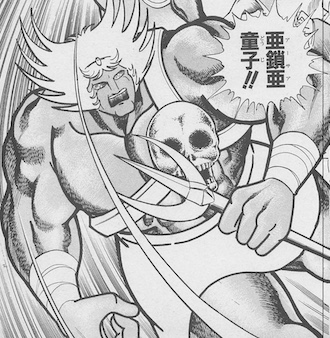
Arthur Adoji

Related Articles
Fighting General! Ramen Man (たたかえ!!!! Ramen Man) Spoiler Commentary and Discussion Summary
Tatakae! Ramen Man" (たたかえ!!! Ramen Man) is a Japanese manga series serialized in Shueisha's Fresh Jump magazine from 1982 to 1988. Ramen Man" is a Japanese manga series published in Shueisha's "Fresh Jump" magazine from 1982 to 1988, written by Yudetamago. It is a spin-off work featuring Ramenman, a character from another work by the same author, "Kinnikuman", as the sole protagonist. Set in China, the story follows the training and battle journey of Ramenman, the heir to superhuman kung-fu, and was adapted into an anime and theater series in 1988, as well as a video game and other popular media.
Read Article
Kinnikuman (manga and anime) spoiler commentary and discussion
Manga and anime by Yudetamago, serialized in Weekly Shonen Jump from 1979 to 1987. A sequel, the first in 24 years, has been serialized in Weekly Playboy Web comic since 2011. It is a fighting gag manga in which Kinnikuman fights with various superheroes in a superhero wrestling match. The first season (137 episodes) aired from 1983 to 1986, and the second season (46 episodes) from 1991 to 1992.
Read Article
Kinnikuman: Perfect Choujin Hajime Hen (Perfect Origin) Spoiler Commentary and Discussion Summary
Kinnikuman: Perfect Choujin Hajime Hen" is a feature-length episode of the manga "Kinnikuman" by Yudetamago, which depicts the three-way battle between superhero wrestlers and the secret about their origins. It was serialized for six years starting in 2011, and will be adapted into an anime in 2024. After the Justice Choujin, Demon Choujin, and Perfect Choujin conclude a non-aggression pact at the end of a long battle, those who call themselves the "Main Squad of Perfect Choujin" intrude. They declare the extermination of all superhumans except themselves, and engage in mortal combat with the righteous superhumans led by Kinnikuman and the demon superhumans led by the Demon Shogun.
Read Article
Spoiler commentary and discussion of Mamoru the Kicker (Yudetamago)
Kickboxer Mamoru" is a martial arts manga series written by Yudetamago and serialized in Shueisha's "Weekly Shonen Jump" from 1990 to 1991. It was published in four volumes. The story is about a junior high school student high jumper, Mamoru Kakeda, who begins training with a Muay Thai champion, Paison, in order to avenge his brother's death. The series began with the goal of promoting Muay Thai to Japanese children, but was discontinued after five months; an e-book version was announced for the summer of 2014.
Read Article
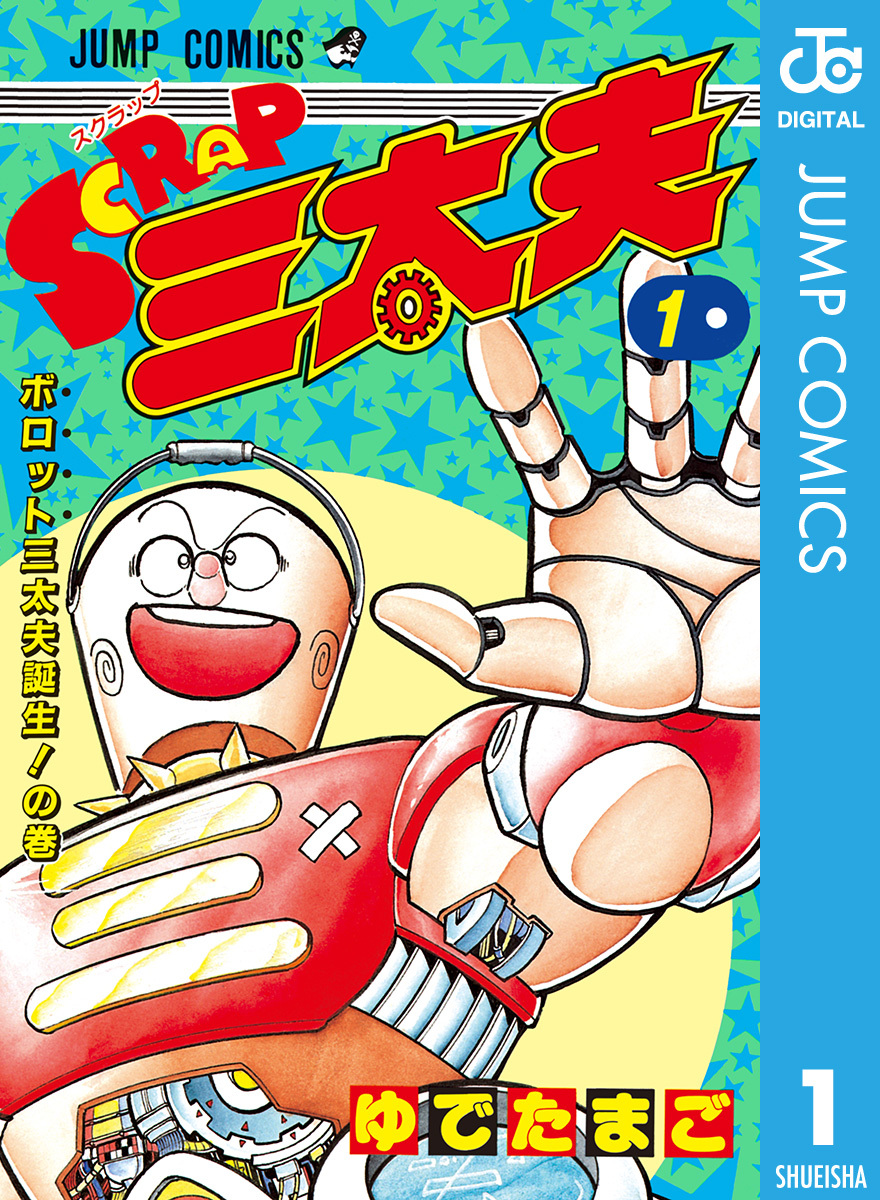
Spoiler commentary and discussion of SCRAP Santayu (boiled egg)
SCRAP Sandayu" is a gag manga by Yudetamago that was serialized in Shueisha's "Weekly Shonen Jump" from issue #24 to #40 in 1989. It was serialized after two read-throughs before being serialized. Set in the future in the year 20XX A.D., the story is about a no-good robot police officer named Santayu who defeats evil. In the first episode, the manga won second place in a popularity poll conducted by a reader survey, but its popularity declined rapidly from the second episode onward, and the serialization was terminated. As a guest character, the superhero Wordsman from Yudetamago's popular "Kinnikuman" appeared in the series.
Read Article
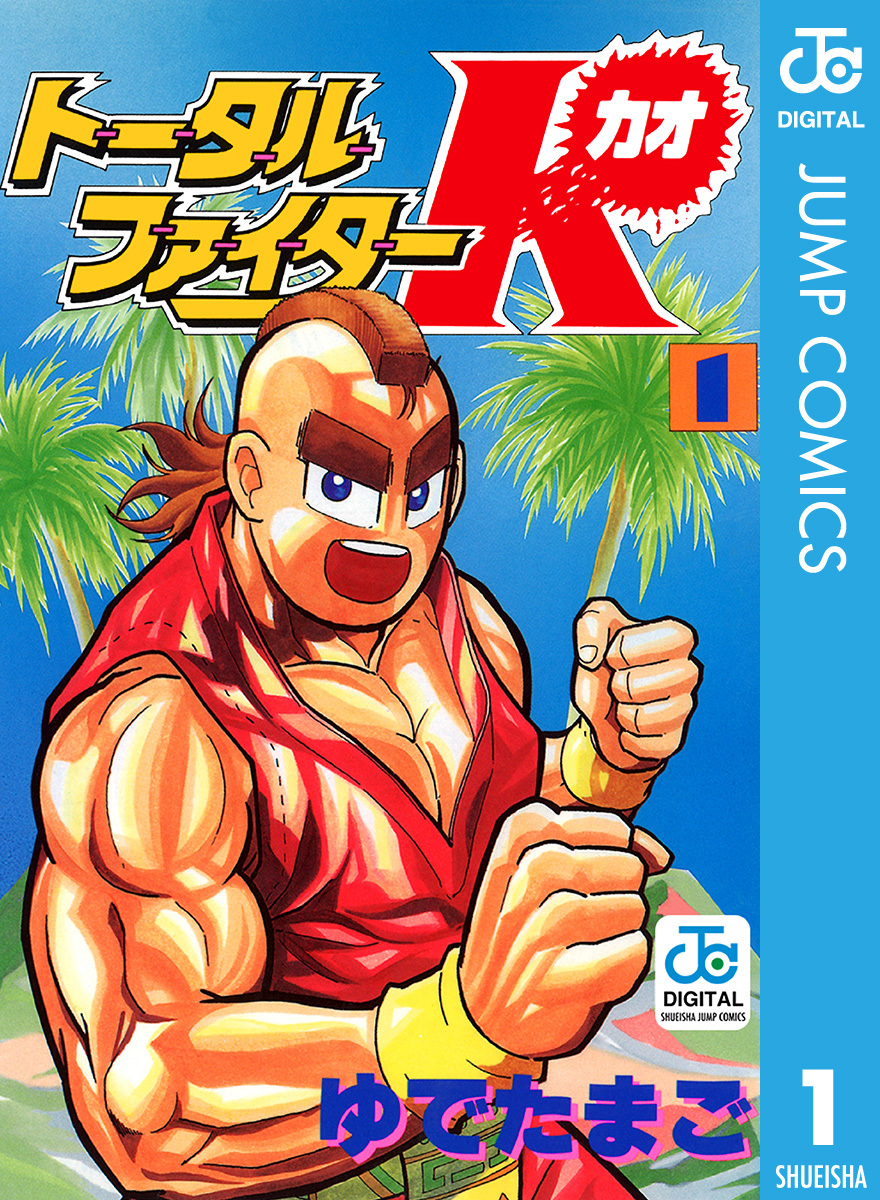
Total Fighter K (Yudetamago) Spoiler Commentary and Discussion Summary
Total Fighter K (Kao)" is a gag manga about martial arts by Yudetamago, the original author. It was serialized in Kodansha's "Deluxe Bonbon" from 1993 to 1995. Born as the fifth generation of the Muteki Kenka Tatejutsu (Invincible Fighting Body Art), a fantastic martial art that has been passed down on a fighting island somewhere in Japan, Kao, a catcher, spent all his childhood training. He began to fight other martial arts schools, putting the honor and prestige of the dojo on the line, starting with a different kind of martial arts tournament when he was 16 years old. The first half of the serialization takes place on Kenka-jima island, and the second half in Tokyo, but the serialization ended halfway through when the magazine ceased publication.
Read Article
Introducing Muscle Shot, a smartphone game by Kinnikuman!
Did you know that there is a smartphone game of the manga "Kinnikuman" that everyone knows? The game, called "Kinnikuman Muscle Shot," started in 2015 and has been improved frequently with additional characters and new features announced every so often. We would like to introduce this smartphone game.
Read Article
Summary of Kinnikuman's Special Moves, Favourites and Special Holds
Kinnikuman" is a manga series published in Weekly Shonen Jump by Yudetamago, the author of the original manga, and an anime series based on the manga. Kinniku Suguru, aka Kinnikuman, a superhero living in Japan, along with his fellow righteous superheroes, fights in the ring against a series of powerful enemies. The work is based on professional wrestling, and the flashy special moves used in the fights are one of the charms of the work. The characters use original finishing holds in their fights.
Read Article
Summary of Kinnikuman's Perfect Superhuman, Muhojin Muhojin Gundan, and Perfect Superhuman Hajimeji.
Kinnikuman" is a manga and anime work by Yudetamago, the author of the original manga, which was serialized in Weekly Shonen Jump from 1979 to 1987. It is a fighting gag manga in which the main character, Kinnikuman, fights a number of superhumans. The perfect superhuman is a category of superhuman that appears in "Kinnikuman," a superhuman who has acquired a strength that transcends all emotions and is usually in training in the heavenly realm. Later, in the new series, the true perfect superhuman army, called the Muteki Taisen Gundan, and the 11 superhumans who became the first perfect superhumans, called the Perfect Superhuman Founder, have been introduced.
Read Article
Summary of Kinnikuman's Justice Superheroes
Kinnikuman" is a manga and anime work by Yudetamago, the author of the original manga, which was serialized in Weekly Shonen Jump from 1979 to 1987. It is a fighting gag manga in which the main character, Kinnikuman, fights a number of superheroes. The "righteous superheroes" are a category of superheroes who fight monsters and demon superheroes to protect the peace of the earth. Kinnikuman and other righteous superheroes value friendship and join forces with their friends to fight their enemies. Influenced by their friendship, some of them, such as Ashraman and Neptune Man, have turned from demon superheroes and perfect superheroes to righteous superheroes.
Read Article
Kinnikuman's Demon Superhuman Summary
Kinnikuman" is a manga and anime work by Yudetamago, the author of the original manga, which was serialized in Weekly Shonen Jump from 1979 to 1987. It is a fighting gag manga in which the main character, Kinnikuman, fights a number of superheroes. Demon superheroes are a category of superheroes who develop a demonic, cold-blooded, ruthless, and cool-headed fighting style and pledge allegiance to Goldman, the Demon Shogun. In some cases, influenced by the friendship of a righteous superhero, they turn from demon superheroes to righteous superheroes, as in the case of Ashraman and Buffalo Man.
Read Article
Summary of Jump's past heroines
Weekly Shonen Jump, the most widely circulated manga magazine in Japan, is at the pinnacle of manga culture in terms of popularity and name recognition, and has produced many masterpieces. As a shōnen manga magazine, most of the main characters are male, but the heroines who support them are also fascinating characters. Some are adults, some are children, some are just protectors, some are sidekicks who fight alongside the hero, some are heroines who have kicked out the regular heroines and are united with the hero, and some are heroines and female protagonists that go beyond the norm of "shōnen manga. Here we introduce some of the heroines who have graced the pages of JUMP.
Read Article
July 2024 Summer Anime (this season's anime) Summary
Summer anime to be broadcast in the July 2024 season are listed in alphabetical order.The July 2024 summer anime lineup includes many sequels to popular series. Information on anime broadcast and distribution information, voice actors and staff, and synopsis is compiled in an easy-to-understand format.
Read Article
Manga that were outrageously fictionalized and eventually censored.
Have you ever had the experience that "my favorite work suddenly lost its direction and was censored? In this issue, we focus on the censored works.
Read Article
Kinnikuman: Lost Scenes in Famous Scenes? A compilation of tsukkomi spots
Kinnikuman" is a well-known fighting manga. Kinnikuman, or Kinniku Suguru, is the main character in this work, which is also famous for the song "Gyudon Ippsuji 300 nen. There are many famous scenes in this work. This article will discuss some of the most famous scenes in the film, and how to avoid them. In this article, we have compiled a list of such points to be pointed out. How many did you know?
Read Article
![Kinnikuman] How to Resemble "Muscle Shot", Summary of Recommended Characters](https://renote.net/files/blobs/proxy/eyJfcmFpbHMiOnsiZGF0YSI6NjYzNzczNCwicHVyIjoiYmxvYl9pZCJ9fQ==--ccbe5c171c95becb3538525d3a0d8cd94d5a02dc/FLmaJSIVcAQsr5D.jpg)
Kinnikuman] How to Resemble "Muscle Shot", Summary of Recommended Characters
Have you ever heard of a smartphone game called "Kinnikuman Muscle Shot"? It is a simple fighting game in which players battle using familiar characters. In this article, we summarize the app's resemara method and recommended characters. It also includes a strategy wiki, so if you are playing, please read on.
Read Article
A compilation of short-lived and shitty manga from Weekly Shonen Jump [in chronological order] [first published 1968-1999].
Shonen Jump" has been giving boys dreams and hopes since its first issue in 1968. However, some of them have ended after only a short time in serialization because they did not gain much popularity. Although not necessarily limited to "crap manga," due to the author's reasons and short-run serialization, here is a list of manga that were short-lived in the history of the magazine from its first issue to 1999.
Read Article
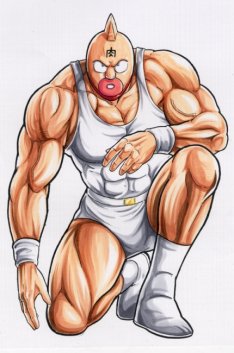
A funny collection of "Kinnikuman" stories!
The famous "Kinnikuman" captured the hearts of boys in the 80s. After "Kinnikuman II," which depicts the activities of his son's generation, the original Kinnikuman is now being serialized on the Web. Fans are enjoying the series again and again, but there have been many "unbelievable developments" in the Kinnikuman series. In the course of reading Kinnikuman, however, there have been many "outrageous developments." In this issue, we have compiled what fans consider to be the stories of the series!
Read Article
Summary of jump characters that weakened as soon as they became allies.
Characters that are weakened as soon as they become allies are, of course, a common story. Even in anime, manga, and video games, behind-the-scenes adjustments often result in the character being sidelined as a member of the main team, and if he or she is not good enough, he or she may become a standby or recovery character forever. With this fact in mind, we have decided to focus on Jump characters and summarize their sad reality with illustrations.
Read Article
Cartoons with a lot to go into.
While most people think of manga as easy to read and easy to understand, the manga we present here are 120 minutes of fun and insightful manga! Let's give them a good poke at the manga that are both enjoyable and poke-able. The compositions are funny, the characters are funny, and the things they do are funny.
Read Article
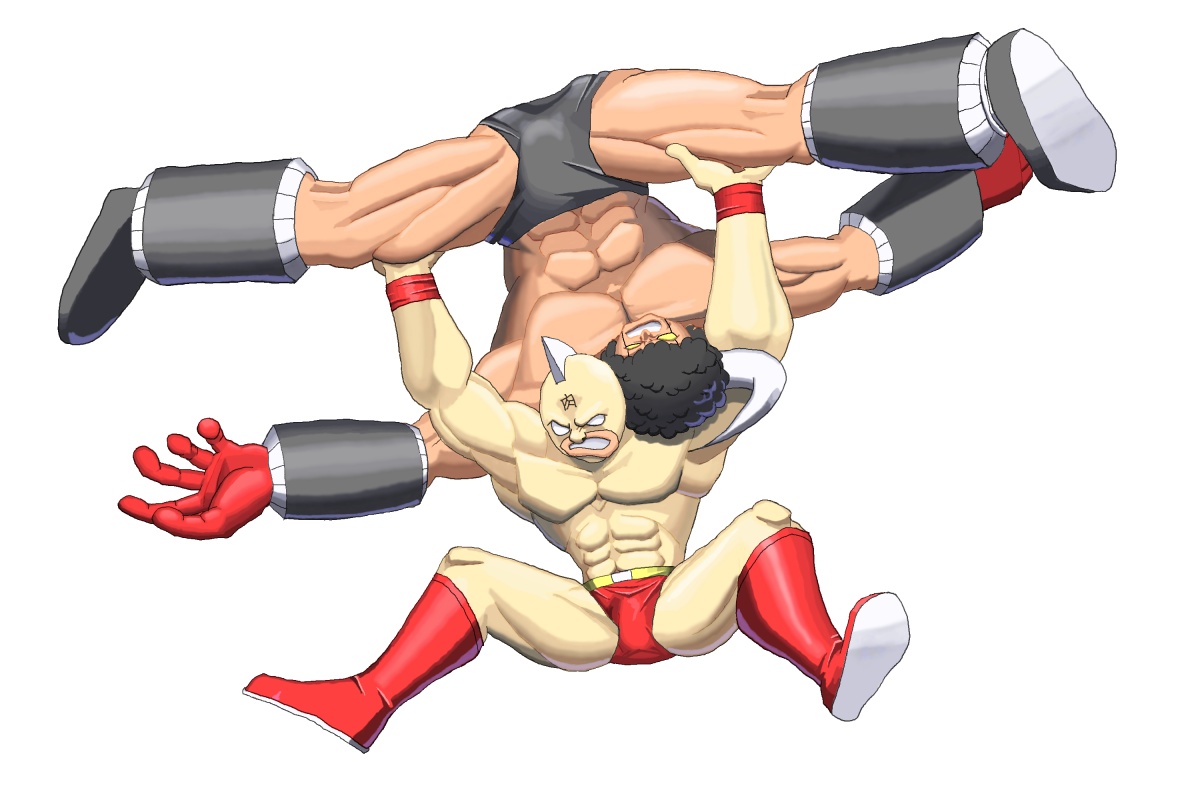
GO GO MUSCLE! A compilation of games based on the popular manga "Kinnikuman" & "Kinnikuman II
A compilation of video games based on the popular "Kinnikuman" works. Muscle Tag Match," which pioneered the competitive fighting action, and its sequel, "The Road to Justice Superhero," starring Kinnikuman II, are also compiled.
Read Article
A compilation of cartoonists working in duos! Surprisingly unknown, even among popular authors!
Manga works are the result of a great deal of hard work and effort in creating a story, creating characters that fit the worldview, and finishing the manuscript. The effort is even more immeasurable when the work is published in a weekly manga magazine. On the other hand, there are manga artists who share the same pen name and work together, dividing their work into drafting and drawing. This article introduces information on cartoonists who are actually working as a duo.
Read Article
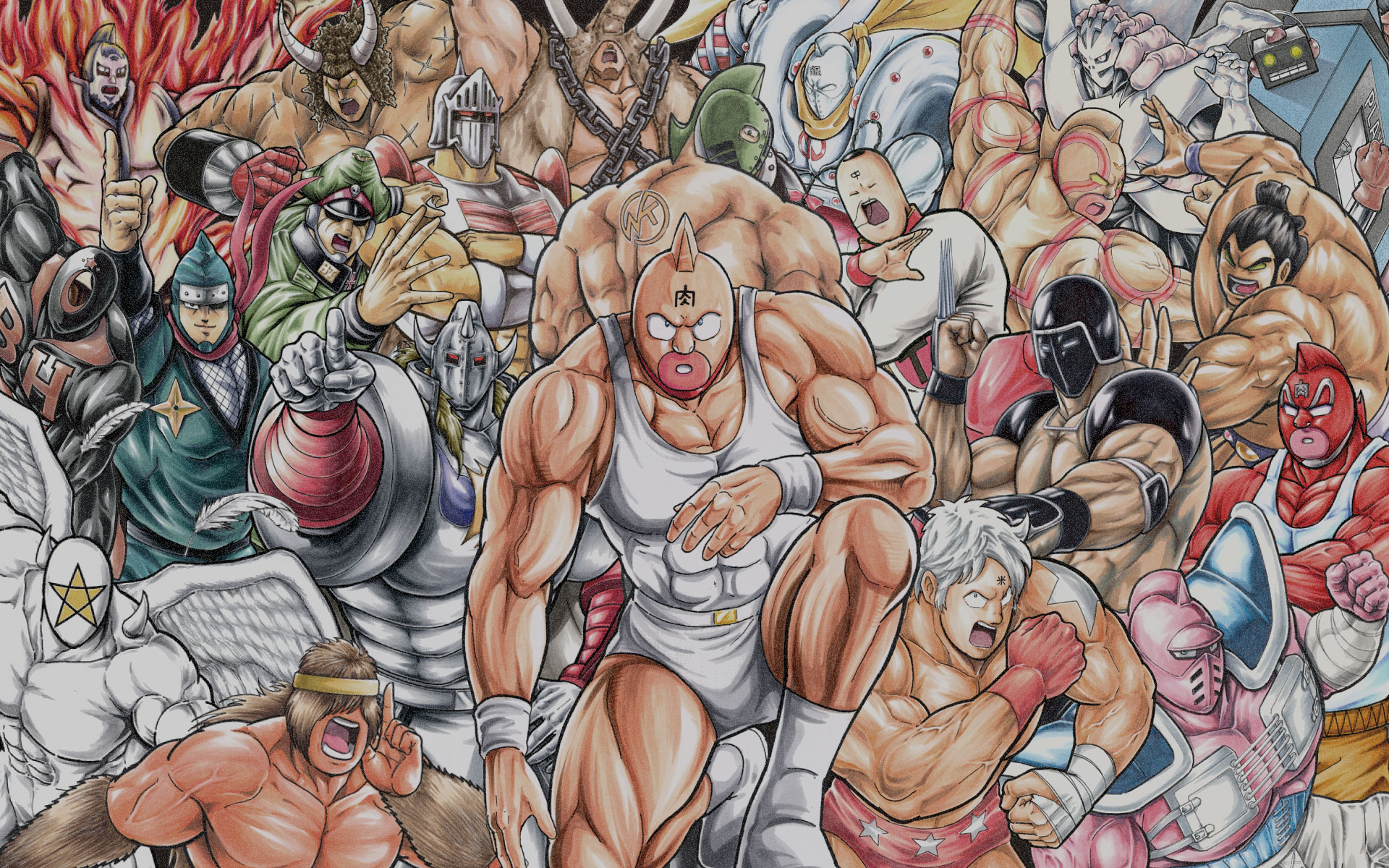
Kinnikuman superhuman strength ranking! The strongest superhuman is 100 million power!
In Yudetamago's manga "Kinnikuman," which began serialization in 1979, and its sequel "Kinnikuman II," fictional creatures called "choujin," who are said to transcend human existence, appear. Here we have compiled a list of the characters based on "superhuman strength," a numerical value that expresses the strength possessed by the superhumans!
Read Article
(2) 《Vol.16〜30》Summary of 《Anime and Manga》Story Performers by DVD of "AMETTOKU
This is a compilation of "Ametalk" DVDs from vol.16 to vol.30. All the DVDs are 2-disc sets, and they also come with special bonus videos that have not been broadcast on TV.
Read Article
Now you're out! Summary of problematic depictions of national cartoons [such as "Doraemon"].
Doraemon," "Kochikame," and other classic manga have been loved for a long time and transcended time. We have compiled a list of expressions that are out of place in today's world. We will explain what kind of expressions are problematic, including Nazi-inspired poses in "Kinnikuman" and discriminatory expressions and depictions of corporal punishment in "Kochikame," with images of the relevant sections.
Read Article
The Unknown Production, Birth, and Behind-the-Scenes Stories of Manga and Anime
This article introduces the creation, birth, and backstory of that manga/anime that is rarely known to the public, the industry, and even among fans.
Read Article
![Dragon Ball] Summary of works that the popular manga ONE PIECE seems to have influenced [Kinnikuman].](https://renote.net/files/blobs/proxy/eyJfcmFpbHMiOnsiZGF0YSI6ODM1MjM2NCwicHVyIjoiYmxvYl9pZCJ9fQ==--1395178e9a28c552bc68076e0bfae4e0cec2ef46/topic-04615-5.jpg)
Dragon Ball] Summary of works that the popular manga ONE PIECE seems to have influenced [Kinnikuman].
The manga "ONE PIECE" is now highly popular not only in Japan but also overseas. Looking at its style, it is clear that it has been influenced by various works. In this article, we have compiled a list of works that are believed to have influenced author Eiichiro Oda's manga creation. It makes sense that "Dragon Ball" and "Kinnikuman" would be among them!
Read Article
A tour de force of superhuman recruiting, which is a shame that only JC is introduced.
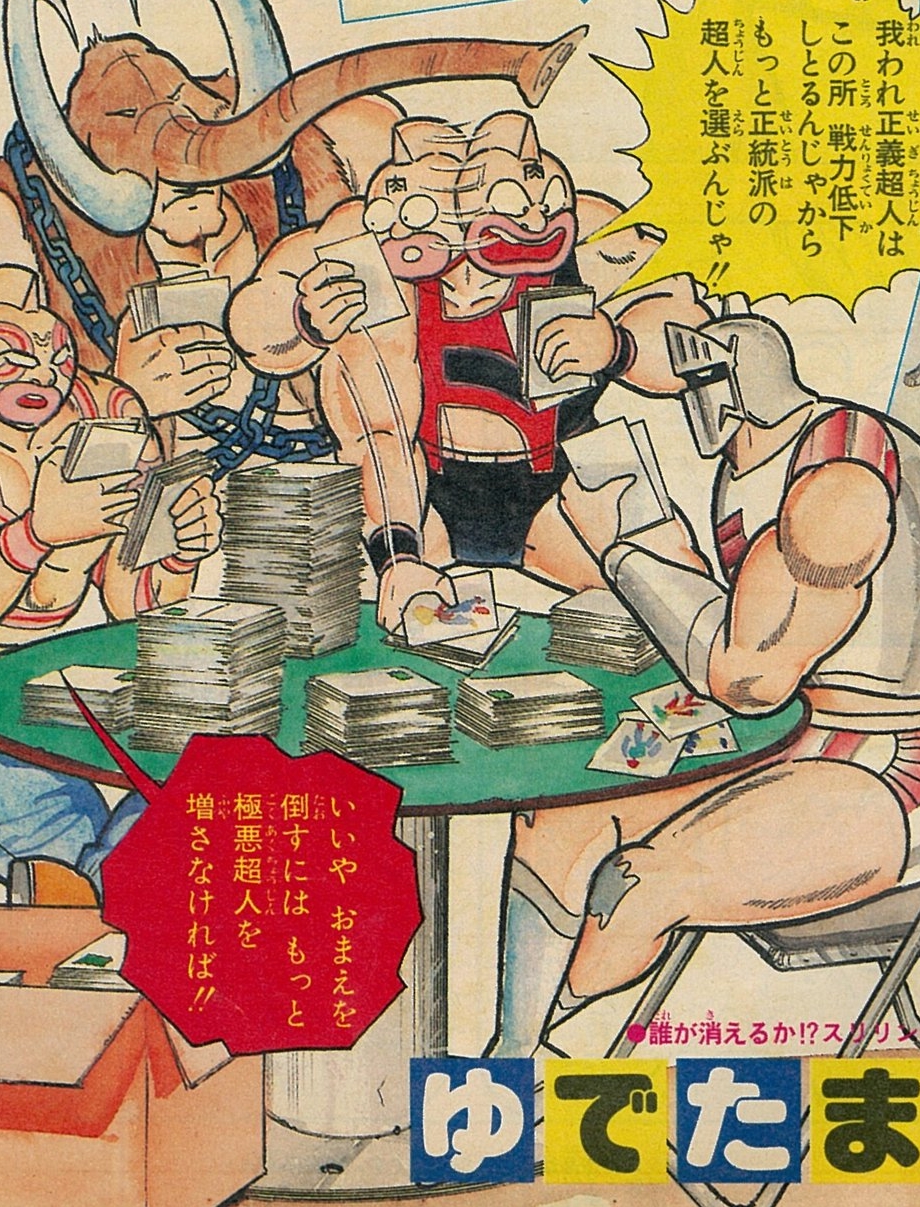
The works featured in the door picture of Weekly Shonen Jump's 1986 issue No. 50, episode 93 "The Secret of Big Tusk! (a story that explains why Big Tusk, the mammoth man, began to grow and chase prey regardless of his will). The award-winning works were originally scheduled to be announced around this time, but as you can see from the picture, the screening process took a long time due to the sheer volume of postcards submitted, and the award was carried over to the following year's issue No. 10 ("Ironic Master-Disciple Showdown!"). The award-winning work was originally scheduled to be announced around this time.
Read Article
Tags
Contents
- Overview of "Yurei Kozo ga Ikimatta!"
- The plot and story of "Yurei Kozo ga Itsukatta!"
- Revival of Subchain Boy
- Appearance of Hyakumyo-kai
- The Advent of Dorobera
- Japanese Yokai vs. Western Yokai
- Hyakutaro VSMr. Halloween
- Kyoryu Yokai: Battle against El-Syria
- Characters from "Yurei Kozo ga Itsukatta!"
- Zengyo Yokai
- Momotaro OSOREYAMA
- Kintaro OSOREYAMA
- Arthur Adoji
- Hyakume-Sennin
- Misbehavior monster
- Onmyo Nyudo (priest of Onmyo)
- Dorobera
- Aya Gama (Aya Gama)
- Hyakumyo-kai (a hundred cat monster)
- 摩亜 Doji
- Other Japanese Yokai
- Kirin Danshaku
- Jabami Nyudo
- Yoroi bee (Yoroi bachi)
- Japanese yokai in the Western yokai series
- Suzakuki (Vermilion Demon)
- Sanmenjigoku (Hell with three sides)
- Seidōma
- Hotchkiss
- Ayakashi no Mikoto
- Western yokai
- Kyoryu Yokai Elushiri
- 食屍 kubi デオドーラ
- Golgoda, St. Hitsugi
- Mr. Halloween
- Totem Kid
- Commando zombie
- Kani-otoko
- Dracula
- Franken
- People from Sai-no-Kawara Junior High School
- Non-shadow wolf
- (iii) 途霊 Reiko
- 呪井
- 齷田 Monro
- Niyake-sensei
- Nazoko 介明
- Yotsuya Miko
- Ibiri
- Other
- Mari 理男
- The term "Yurei Kozo ga Kitatta!"
- Yokai taiji goods
- Makiuzan (demon Ameyama)
- Neko naki-iwa (Cat crying rock)
- Mafutake Mazashi (Mafutake sashimi)
- Words, lines, scenes, and scenes from "Yurei Kozo ga Itsukatta!"
- Hyakutaro and Kototaro:' Gattai! Subchain Andoji!'
- Hyakutaro: "Rei-gami Boomerang!"
- Hyakutaro and Kototaro: "ギャアアッ Sankaku da!"
- Behind the Scenes, Trivia, and Small Stories / Episodes and Anecdotes of "Yurei Kozo ga Itsatta!"
- The end of the series destroyed the media mix
- The series ended in about a year.
- Works in which the assistant's drawing stands out