
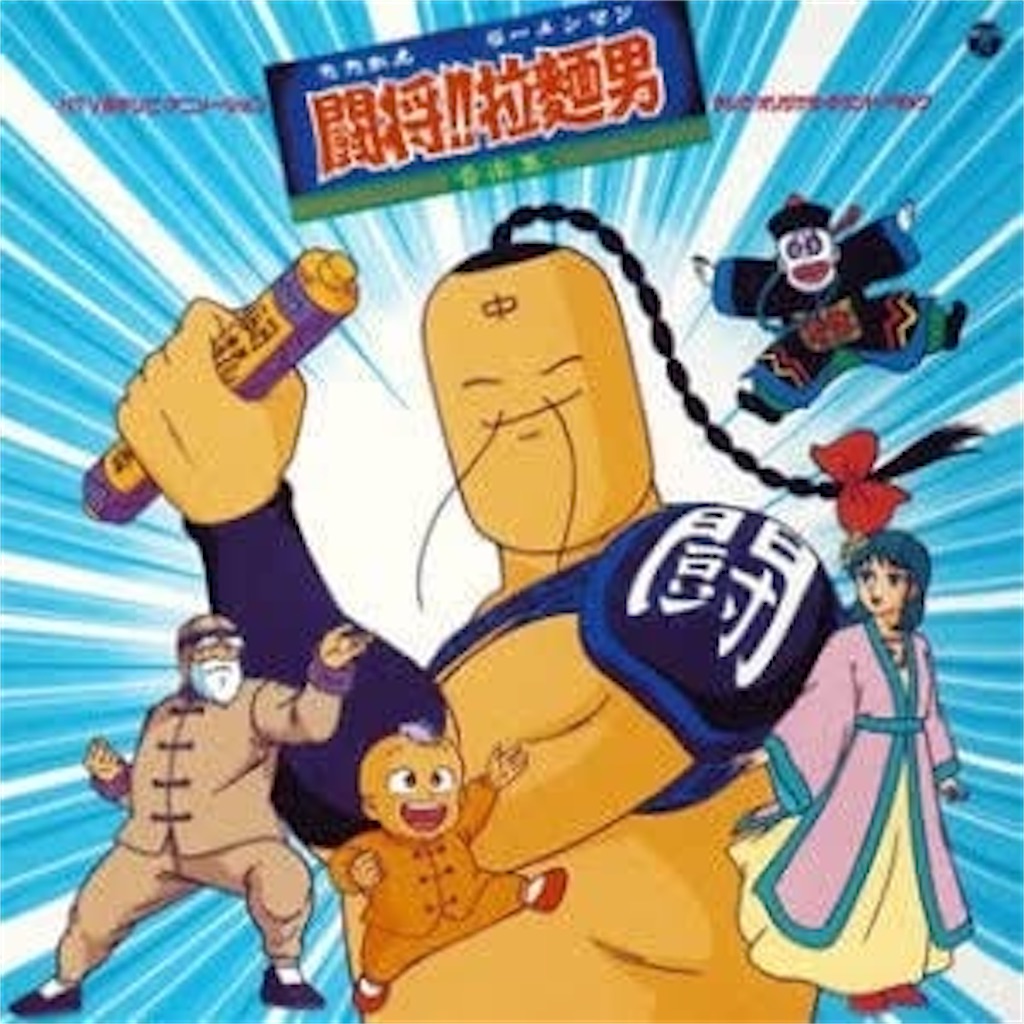
Tatakae! Ramen Man" (たたかえ!!! Ramen Man) is a Japanese manga series serialized in Shueisha's Fresh Jump magazine from 1982 to 1988. Ramen Man" is a Japanese manga series published in Shueisha's "Fresh Jump" magazine from 1982 to 1988, written by Yudetamago. It is a spin-off work featuring Ramenman, a character from another work by the same author, "Kinnikuman", as the sole protagonist. Set in China, the story follows the training and battle journey of Ramenman, the heir to superhuman kung-fu, and was adapted into an anime and theater series in 1988, as well as a video game and other popular media.
Outline of "Tosho! Ramenotoko"
"Tatakae! Ramenman" is a manga based on the manga artist Hitotamago. It was serialized in "Fresh Jump" published by Shueisha from 1982 to 1988. In 1982, Hitotamago serialized the popular manga "KINNIKUMAN" in "Weekly Shonen Jump" published by Shueisha. It was a spin-off work featuring Ramenman, a popular character appearing in "KINNIKUMAN," and was written as an entry for "Weekly Shonen Jump's 10th Favorite Reader Award." Tosho! Ramenman "was published in the 15th issue in 1982. Partly because Ramenman, a popular character from" KINNIKUMAN, "was the main character in this story, this story won second place in the readers' vote. This manga was originally intended as a sequel to the series of" KINNIKUMAN, "but it started as the only serial of the first issue of" Fresh Jump, "a sister magazine of" Weekly Shonen Jump, "which was first published at that time. After that, Hitotamago continued to be serialized in parallel with" KINNIKUMAN "and" Yurei Kozo ga Itsukatta! "of" Weekly Shonen Jump "with a one and-a-half-year hiatus in the middle of the series, but the series ended without the story being completed when the publication of" Fresh Jump "was suspended in 1989. In 1988, it was made into a TV animation and a theater, and further developed into media such as the release of games.
The film is set in China and depicts a Ramenman whose father was killed by a villain and who was himself dropped on the cliff. After 12 years of training, the Ramenman inherits a fictional Chinese martial art called "Chonin Kenpo" and continues his journey of training and fighting. The first half of the series consists of one or two short stories, in which he fights against evil mystics who oppress villagers and enemies who seek the secret teachings of Chonin Kenpo, while the second half focuses on team battles and tournament style battles, which are often seen in "Weekly Shonen Jump." Along with the depiction of combat, there is also the depiction of extreme cruelty, in which scenes of children and characters being massacred are depicted. In addition, it is common for characters who have died to come back to life for no reason in the following episodes, and many of the enemies who have come back to life become allies without being depicted as being especially reformed. The historical background is not strictly set and the society is not civilized, but modern tools such as movie projectors and remote controls also appear. The 12 volumes of the book are published as Jump Comics.
Outline and story of "Tosho! Ramenotoko"
Ramen Man, whose father was killed by the Poisonous Snake Party of bandits who attacked the village in front of him when he was young, was himself dropped to the bottom of the valley by the Poisonous Snake Party, but he was caught in a tree and survived. After that, he met and studied under Chen Shuming, the master and successor of "Super Human Kenpo," and became a young man. He was given the name "Beautiful 来斗 利偉 Ramenman" (Victory Ramen Man) after 12 years of hard training under Chen Shihan, and was given the secret book of Super Human Kenpo "Toryu Gokuisho" as proof of his full license and his legitimate successor. At that time, the character "chu" (middle), which was the trademark of Ramen Man, was engraved on his forehead. After that, Ramen Man avenges his father's enemy, the Poisonous Snake Party, with Super Human Kenpo, but during the battle he realizes his immaturity and decides to start training again. As Shumai, a boy whose parents had been killed by the Poisonous Snake Party as well as himself, became his disciple, the two of them continued their training journey, fighting in various places they visited to save the villagers who were oppressed by evil people, and fighting against other schools of kenpo artists who wanted to learn the secret of Super Human Kenpo, while Ramen Man grew up.
Revenge on the Snake Party
After 12 years of training by the master of Chinese martial arts, Chen Zong-ming, the Ramen Man was granted a license to practice superhuman martial arts. When he reached a village looking for his father's enemy, the Poisonous Snake Party, he met a child who, like himself, had his father killed by the Poisonous Snake Party and was crying. The child's name was Shumai. In fact, this child became a disciple of the Ramen Man and continued his journey together.
In the village, the ramen man confronts his father's enemy, the three brothers Ja-Wu, Ja-Roku, and Ja-Ku, who are the leaders of the Poisonous Snake Party. The second son, Ja-Roku, recalls killing his father, Somen-Man, 12 years ago and dropping his child to the bottom of the valley, and realizes that the ramen man in front of him is trying to take revenge against them. Ja-Roku makes the third son, the big man, Ja-Ku, block his opponent's view and throw a kick from his blind spot. This technique was also used to kill the ramen man's father, Somen-Man. However, the ramen man, who has mastered the superman kenpo, calmly sees this movement and kills Ja-Ku and Ja-Ku by splitting them in two with "Hyakubu-Jinken," one of the superman's 102 arts. When the ramen man sees Ja-Roku and Ja-Ku being killed by the ramen man, the eldest brother, Ja-Go, asks the ramen man for his life. In response, the ramen man forgives Ja-Go and shows his back, but Ja-Go tries to slash him from behind, taking advantage of his carelessness. However, the ramen man, who is aware of this, kicks Ja-Go with a rear windmill and kills him. In this way, the ramen man destroys his father's enemy, the Poisonous Snake Party, and takes revenge. Shumai volunteered to become an apprentice to the ramen man who was about to leave. The ramen man accepted it and went on a trip with the tengai solitude of Shumai.
Confrontation with Jade King
Ramen Man was a master of Chinese martial arts and taught martial arts to his disciples. A villager named Mapo came to ask for help. According to the story, in the village of Mapo, there is an epidemic of a strange disease in which one's body becomes a stone when one drinks river water. Furthermore, there are villains who monopolize remedies for strange diseases. Ramen Man told his master, Chen Zong-ming, that he would travel again to save the village, and he left for the village with Shumai.
In fact, the village was Onikobe village, the hometown of Ramenmen. Onikobe village had a unique disease called Sekibutsu-byo, which turned an infected person's body into a stone, and a group of mystics whose stronghold was Dairin Temple in Mt. Kimenzan near Onikobe village had a monopoly on Akago-take, which was a specific medicine and a source of stamina to maintain a superhuman body. In fact, the unique disease was prevalent because the group of mystics had lured and defeated Ramenmen and had been releasing the poison that caused Sekibutsu-byo in the river in order to take away the Toryu Gokuisho.
The group of mystics was the Seven Ogres of Shogi (Japanese Chess) led by a man called Butcher Oni Tama-o (Butcher Oni Tama-o), each of whom was named after Shogi as Tama-o, Aru-ki, Ko-ki, Katsura-ki, Kaku-ei, Hiryu, and Kin-ki. They were once the 拳士 who were excommunicated from Shorinji Temple due to their extreme cruelty, and each of them was not only talented, but also strong in collaborative techniques such as' Shichi-oni Shujin Kabe' (Seven Ogre Shujin Kabe), in which the members make walls like in group gymnastics. When the Ramenman party reached the village, they had to deal with these villains. Tama-o had a hard time attacking' Tama-o Nigoro-fu' (Tama-o Nigoro-fu), in which he jumped from the top of the Hito-kabe and slammed a knee drop into the opponent, and' Shogi-ban-ken' (Shogi Board Fist), in which Master Chen So-ming was said to have almost died from his techniques, but the Ramenman calmly defeated the man who was the top of the Hito-kabe, Kin-ki, and smashed Tama-o by breaking the Hito-kabe. When the Tama-o was defeated, the rest of the members were destroyed. Thus, the Ramenman killed Tama-o and the Seven Og
Reunion with the Butchering Ogre King and the Dogu Man
The Butcher Ogre King, who had once been defeated by the Ramen Man and was no longer able to do martial arts, used his genius brain to create a machine 拳士 clay figure modeled after the 憖 榭紗 King, who was said to be the strongest Chinese martial art, and established a training school to defeat the Ramen Man. On the other hand, there were frequent cases of famous martial artists being kidnapped by unknown persons throughout China at that time.
These include the Chinese fukubao Kenou, Mahei Luo Kaei-Ba 颶鑼, who uses the' Tiananmen Shuraku-ken' (Tiananmen Burst Fist) to shoot the opponent up with a powerful upper and hit him with a straight face to stop him when he falls; the Poisonous 蠍拳 Zanma, who uses the' Taibaroshiku 蠍拳' (Bodily Pressure Poison Horse) to jump on the opponent when he raises his sword and kill him by putting his weight on it; the sumo wrestler Ma Weishan, who boasts of his supernatural strength in Hebei Province; and Kuzu-Jizai Ken (Jackie Li), who is known throughout the country for his martial art skills. In fact, the kidnappers were clay figures, and the fighters brought to the Ramenman Overthrow Training School were brainwashed by Jade King and attacked the Ramenman one after another as assassins.
The Ramen Man fought hard against the brainwashed strong opponents, but he defeated the Mahei Luu Resurrected and Ba 颶鑼 with the skull-and-drill 揉脚, the poisonous 蠍拳 killing horse with the life-destroying fist, and the Mauei Yama with the back drop, using the superman 102 art. Finally, in the final battle between the Tama King and the Dogu Man. The Dogu Man, who kidnapped Shumai, who knew all about the techniques of the Ramen Man, made her sleep, and put her in her body to extract the data, uses all the techniques of the Ramen Man to make her fight hard. When Shumai wakes up and becomes out of control due to the apple thrown by the Ramen Man entering her body from her mouth, Shumai shoots the only technique she does not know,' Ochiyokuremo' (falling sun red legs), and defeats the Tama King. The Tama King, who was crushed under the blown Dogu Man, died, and the Shumai was released from the broken Dogu Man's chest.
The Gozen Bout and the Three Striking Bells Brothers
Lu shaobing, the Chinese emperor who once gave a medal to the Ramen Man who had won the Kenpo Gozen Competition, died of a brain infarction while eating. Instead, his son Lu 烙餅, who was enthroned as the Chinese emperor at a young age, was only five years old in the traditional Japanese age system, so the Gozen Competition was held to select a good luck charm who also served as a kenpo instructor. In order to participate in the Gozen Competition, a large number of Kenpo practitioners from all over the Asian region gathered. Among them, three men named' Three Bell Brothers' - a Buddhist invocation man from Burma, Yiping Gong from Arabia, and ガルルーダ from Balinese - were conspiring to use their position as kenpo instructors to hold real power instead of a young emperor and live a life of luxury. Lu 烙餅, who sensed the Three Bell Brothers' plot, asked the Ramen Man for help, but the Three Bell Brothers, who learned that the Emperor and the Ramen Man had been in contact with each other, aimed at the Fighting Dragon of the Ramen Man and mistakenly abducted a Shumai who looked exactly like the Emperor. In order to rescue the Shumai who had been taken hostage, the Ramen Man joined the Gozen Competition along with the 拳聖 Gokasen.
The Gozen Tournament consists of eight players who compete in the final tournament after the qualifying match. Nenbutsu Otoko, one of the Three Striking Bell Brothers, beats the Ryusei Gun Iwa in the preliminary round, and in the first round of the final tournament, he easily beats Dog Misao and shows his strength. In addition, since the opponent of the semifinal round, Moth, Snake, and Kamagiri are both fighting, it was decided early to advance to the final. In the final tournament, Isi Heiko attacked 懢蝱, who was supposed to be the opponent of the first round, before the game and injured him seriously, and advanced to the second round. In the first round of the tournament, Ramenman played against ガルルーダ, who was also one of the Three Striking Bell Brothers, and although he was hurt by techniques such as Kuroho-ma-tsume, which cuts the opponent apart with his sharp nails, and Hane-ma-oni-u, which thrusts Hakazari like a shuriken and thrusts it into him, he won the game with the Ramenman 暴酷. The story ended just before the confrontation with Isi Heiko in the second round.
Characters from "Tosho! Ramenotoko"
Ramen Man and Allies
来斗 利偉 Ramenman
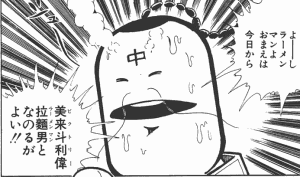
CV: Katsuji Mori / Hiroko Emori (Boyhood)
Born in the Chinese province of Henan, he is 208 cm tall and weighs 130 kg. He has long hair and a loach beard. He has the word "medium" written on his forehead. He is a master of Chinese martial arts and a legitimate successor to the martial arts that he was given the Book of Fighting Dragons. According to the author, Yudetamago, he is not directly related to the Ramen Man who appears in "KINNIKUMAN," but is a character from a parallel world. His father's name is Somen man. He was killed by three brothers of venomous snakes who attacked the village when he was young. His mother's name is Sonya, his grandfather is ニュウメン, his grandmother is Rona, his uncle is Hiyamugi, and he also has a younger sister named 拉娘, but they broke up when he was a kid. Raised by Master Chen when he was a child, the Ramen Man learned how to defeat tens of thousands of troops by himself and fought against the evil mystic who tormented people. His real name is "Mi 来斗 利偉 Ramen Man," which was given to him by Master Chen at the graduation examination after 12 years of training under him who saved his life. Later, he was dressed as the legendary martial artist Mongolian Tiger to rescue his benefactor, Old Carter.
Shumai dumplings
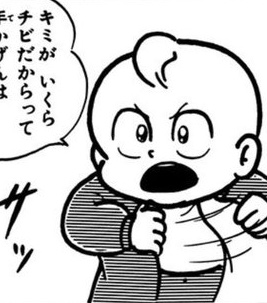
CV: Minori Matsushima
A boy whose parents were killed by a poisonous snake party, just like the Ramen Man, in a position similar to Meet Kun in "KINNIKUMAN." He meets the Ramen Man, volunteers to become his apprentice, and continues to travel with him. He sometimes troubles the Ramen Man with his childish selfishness, but he has a strong sense of justice and insight, and he is also a good partner of the Ramen Man who gives useful advice in battle. He knows the peculiarities of the techniques of the Ramen Man thoroughly, and during his training, he became able to use some of the techniques of the Super Man 102, such as Hien Whirlwind Leg and Life Seizing Collapse Fist, although they are imperfect.
Chen So-mei
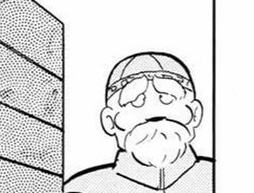
CV: Ichiro Nagai
He is the master of the Ramen Man who saved the young Ramen Man and accepted him as his disciple. He is also the 102nd successor of Chonin Kenpo. Although he is over 100 years old, he is a master called "拳聖" who wears a shoulder mask with the word "I" written on it. After having him fight with his senior pupil, the Char Siu Man, he gave the Ramen Man a "Book of Fighting Dragons" as his successor along with a graduation ceremony called "Carrying a Huge Heated Kama."
拉娘

Related Articles
Kinnikuman (manga and anime) spoiler commentary and discussion
Manga and anime by Yudetamago, serialized in Weekly Shonen Jump from 1979 to 1987. A sequel, the first in 24 years, has been serialized in Weekly Playboy Web comic since 2011. It is a fighting gag manga in which Kinnikuman fights with various superheroes in a superhero wrestling match. The first season (137 episodes) aired from 1983 to 1986, and the second season (46 episodes) from 1991 to 1992.
Read Article
Kinnikuman: Perfect Choujin Hajime Hen (Perfect Origin) Spoiler Commentary and Discussion Summary
Kinnikuman: Perfect Choujin Hajime Hen" is a feature-length episode of the manga "Kinnikuman" by Yudetamago, which depicts the three-way battle between superhero wrestlers and the secret about their origins. It was serialized for six years starting in 2011, and will be adapted into an anime in 2024. After the Justice Choujin, Demon Choujin, and Perfect Choujin conclude a non-aggression pact at the end of a long battle, those who call themselves the "Main Squad of Perfect Choujin" intrude. They declare the extermination of all superhumans except themselves, and engage in mortal combat with the righteous superhumans led by Kinnikuman and the demon superhumans led by the Demon Shogun.
Read Article
Introducing Muscle Shot, a smartphone game by Kinnikuman!
Did you know that there is a smartphone game of the manga "Kinnikuman" that everyone knows? The game, called "Kinnikuman Muscle Shot," started in 2015 and has been improved frequently with additional characters and new features announced every so often. We would like to introduce this smartphone game.
Read Article
Summary of Kinnikuman's Special Moves, Favourites and Special Holds
Kinnikuman" is a manga series published in Weekly Shonen Jump by Yudetamago, the author of the original manga, and an anime series based on the manga. Kinniku Suguru, aka Kinnikuman, a superhero living in Japan, along with his fellow righteous superheroes, fights in the ring against a series of powerful enemies. The work is based on professional wrestling, and the flashy special moves used in the fights are one of the charms of the work. The characters use original finishing holds in their fights.
Read Article
Summary of Kinnikuman's Perfect Superhuman, Muhojin Muhojin Gundan, and Perfect Superhuman Hajimeji.
Kinnikuman" is a manga and anime work by Yudetamago, the author of the original manga, which was serialized in Weekly Shonen Jump from 1979 to 1987. It is a fighting gag manga in which the main character, Kinnikuman, fights a number of superhumans. The perfect superhuman is a category of superhuman that appears in "Kinnikuman," a superhuman who has acquired a strength that transcends all emotions and is usually in training in the heavenly realm. Later, in the new series, the true perfect superhuman army, called the Muteki Taisen Gundan, and the 11 superhumans who became the first perfect superhumans, called the Perfect Superhuman Founder, have been introduced.
Read Article
Summary of Kinnikuman's Justice Superheroes
Kinnikuman" is a manga and anime work by Yudetamago, the author of the original manga, which was serialized in Weekly Shonen Jump from 1979 to 1987. It is a fighting gag manga in which the main character, Kinnikuman, fights a number of superheroes. The "righteous superheroes" are a category of superheroes who fight monsters and demon superheroes to protect the peace of the earth. Kinnikuman and other righteous superheroes value friendship and join forces with their friends to fight their enemies. Influenced by their friendship, some of them, such as Ashraman and Neptune Man, have turned from demon superheroes and perfect superheroes to righteous superheroes.
Read Article
Kinnikuman's Demon Superhuman Summary
Kinnikuman" is a manga and anime work by Yudetamago, the author of the original manga, which was serialized in Weekly Shonen Jump from 1979 to 1987. It is a fighting gag manga in which the main character, Kinnikuman, fights a number of superheroes. Demon superheroes are a category of superheroes who develop a demonic, cold-blooded, ruthless, and cool-headed fighting style and pledge allegiance to Goldman, the Demon Shogun. In some cases, influenced by the friendship of a righteous superhero, they turn from demon superheroes to righteous superheroes, as in the case of Ashraman and Buffalo Man.
Read Article
Summary of Jump's past heroines
Weekly Shonen Jump, the most widely circulated manga magazine in Japan, is at the pinnacle of manga culture in terms of popularity and name recognition, and has produced many masterpieces. As a shōnen manga magazine, most of the main characters are male, but the heroines who support them are also fascinating characters. Some are adults, some are children, some are just protectors, some are sidekicks who fight alongside the hero, some are heroines who have kicked out the regular heroines and are united with the hero, and some are heroines and female protagonists that go beyond the norm of "shōnen manga. Here we introduce some of the heroines who have graced the pages of JUMP.
Read Article
July 2024 Summer Anime (this season's anime) Summary
Summer anime to be broadcast in the July 2024 season are listed in alphabetical order.The July 2024 summer anime lineup includes many sequels to popular series. Information on anime broadcast and distribution information, voice actors and staff, and synopsis is compiled in an easy-to-understand format.
Read Article
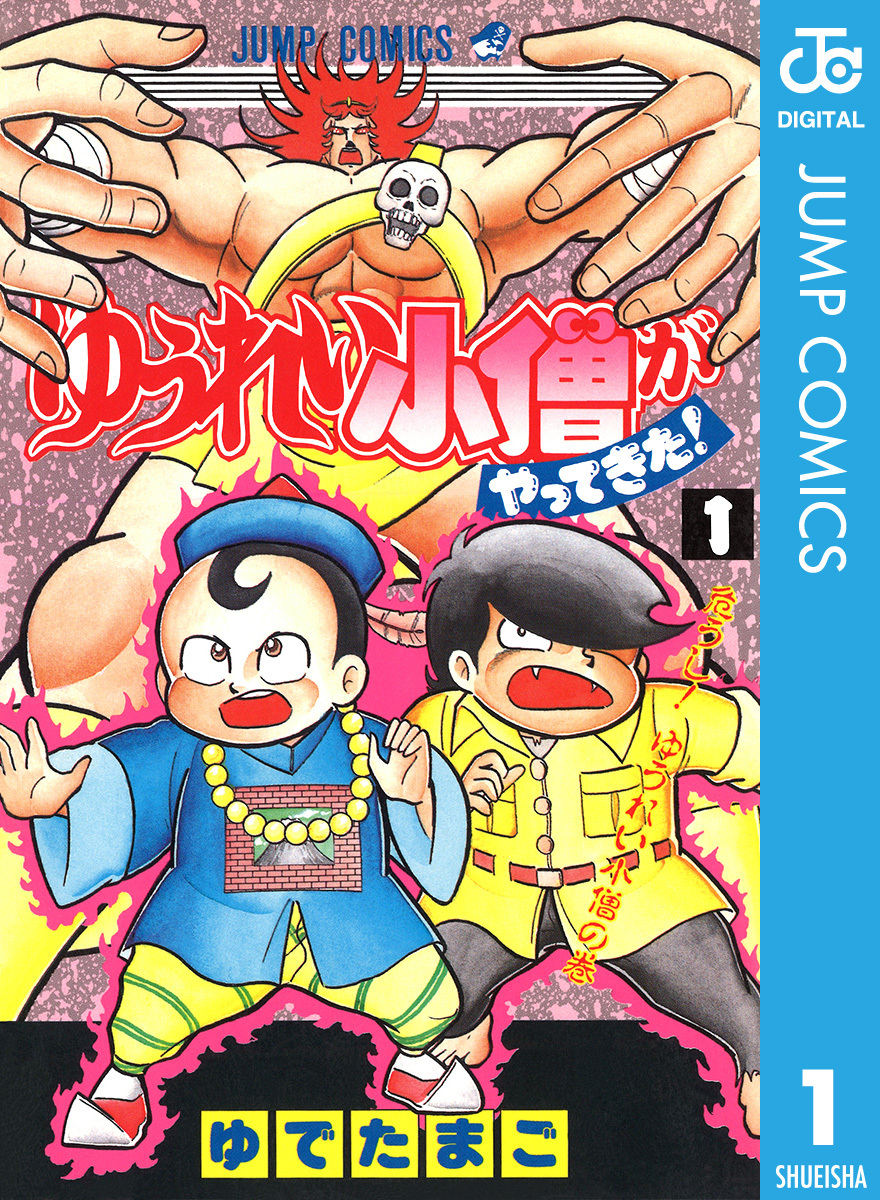
Yurei kobo ga kita! (Yudetamago) Spoilers and Discussion Summary
Yurei kobo ga kitaeru! is a manga work by Yudetamago about defeating ghosts. It was serialized in Weekly Shonen Jump from 1987 to 1988 with a total of 42 episodes. There were 5 volumes in the series. The story takes place in the Edo period (1603-1868), and the brothers Osoreyama Hyakutaro and Kototaro combine to transform themselves into the yokai Ajia Doji and exterminate the yokai. This work was a promising follow-up to "Kinnikuman," but it was cancelled early, and Yudetamago's period of limbo began from this point. Like "Kinnikuman," Yudetamago planned to have characters who were solicited from readers appear in this work.
Read Article
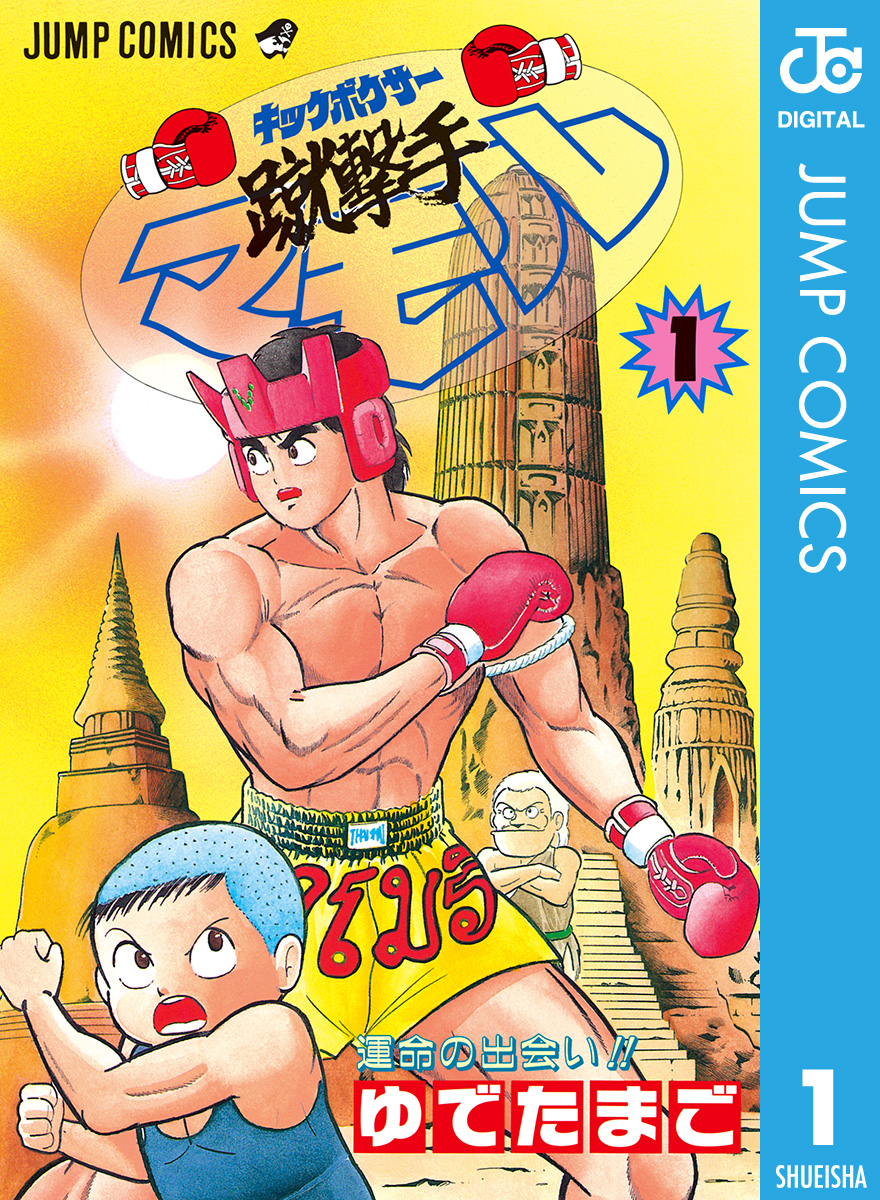
Spoiler commentary and discussion of Mamoru the Kicker (Yudetamago)
Kickboxer Mamoru" is a martial arts manga series written by Yudetamago and serialized in Shueisha's "Weekly Shonen Jump" from 1990 to 1991. It was published in four volumes. The story is about a junior high school student high jumper, Mamoru Kakeda, who begins training with a Muay Thai champion, Paison, in order to avenge his brother's death. The series began with the goal of promoting Muay Thai to Japanese children, but was discontinued after five months; an e-book version was announced for the summer of 2014.
Read Article
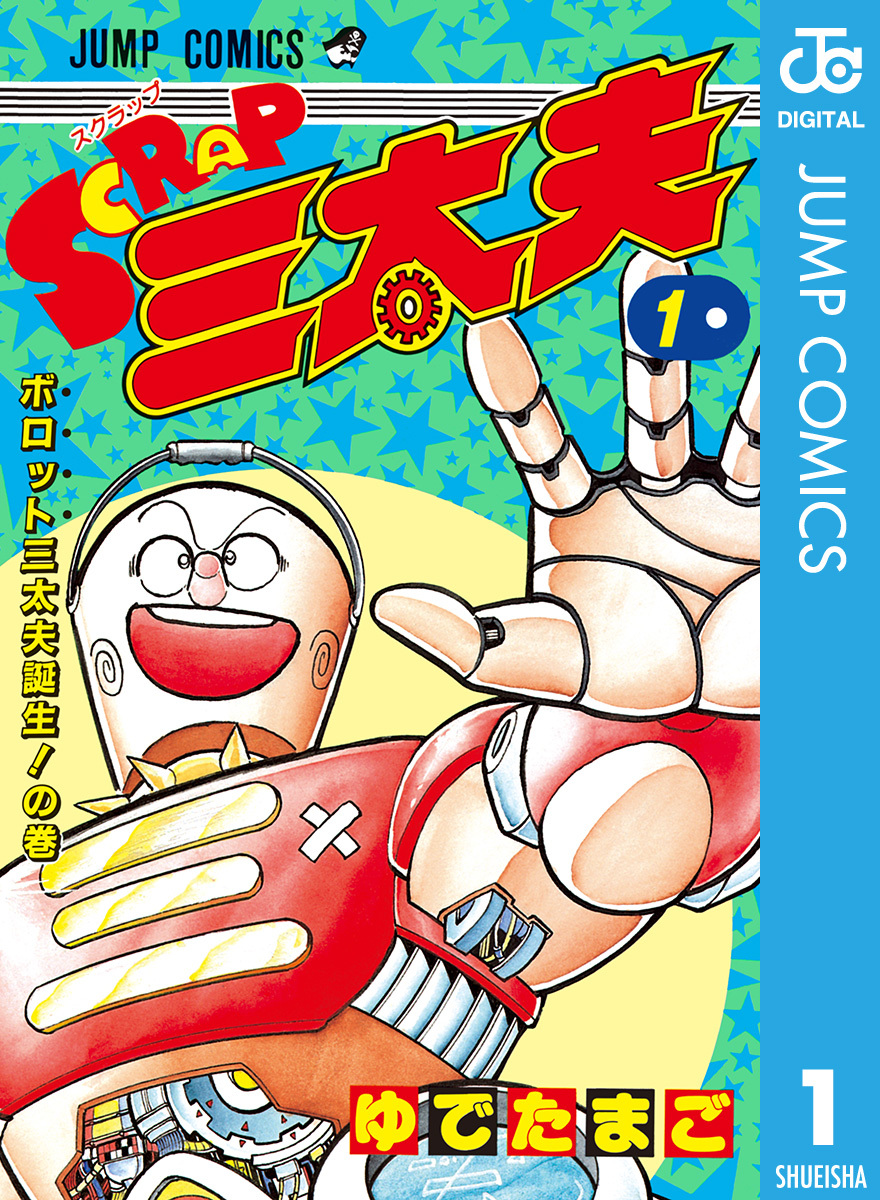
Spoiler commentary and discussion of SCRAP Santayu (boiled egg)
SCRAP Sandayu" is a gag manga by Yudetamago that was serialized in Shueisha's "Weekly Shonen Jump" from issue #24 to #40 in 1989. It was serialized after two read-throughs before being serialized. Set in the future in the year 20XX A.D., the story is about a no-good robot police officer named Santayu who defeats evil. In the first episode, the manga won second place in a popularity poll conducted by a reader survey, but its popularity declined rapidly from the second episode onward, and the serialization was terminated. As a guest character, the superhero Wordsman from Yudetamago's popular "Kinnikuman" appeared in the series.
Read Article
Total Fighter K (Yudetamago) Spoiler Commentary and Discussion Summary
Total Fighter K (Kao)" is a gag manga about martial arts by Yudetamago, the original author. It was serialized in Kodansha's "Deluxe Bonbon" from 1993 to 1995. Born as the fifth generation of the Muteki Kenka Tatejutsu (Invincible Fighting Body Art), a fantastic martial art that has been passed down on a fighting island somewhere in Japan, Kao, a catcher, spent all his childhood training. He began to fight other martial arts schools, putting the honor and prestige of the dojo on the line, starting with a different kind of martial arts tournament when he was 16 years old. The first half of the serialization takes place on Kenka-jima island, and the second half in Tokyo, but the serialization ended halfway through when the magazine ceased publication.
Read Article
Kinnikuman: Lost Scenes in Famous Scenes? A compilation of tsukkomi spots
Kinnikuman" is a well-known fighting manga. Kinnikuman, or Kinniku Suguru, is the main character in this work, which is also famous for the song "Gyudon Ippsuji 300 nen. There are many famous scenes in this work. This article will discuss some of the most famous scenes in the film, and how to avoid them. In this article, we have compiled a list of such points to be pointed out. How many did you know?
Read Article
![Kinnikuman] How to Resemble "Muscle Shot", Summary of Recommended Characters](https://renote.net/files/blobs/proxy/eyJfcmFpbHMiOnsiZGF0YSI6NjYzNzczNCwicHVyIjoiYmxvYl9pZCJ9fQ==--ccbe5c171c95becb3538525d3a0d8cd94d5a02dc/FLmaJSIVcAQsr5D.jpg)
Kinnikuman] How to Resemble "Muscle Shot", Summary of Recommended Characters
Have you ever heard of a smartphone game called "Kinnikuman Muscle Shot"? It is a simple fighting game in which players battle using familiar characters. In this article, we summarize the app's resemara method and recommended characters. It also includes a strategy wiki, so if you are playing, please read on.
Read Article
A funny collection of "Kinnikuman" stories!
The famous "Kinnikuman" captured the hearts of boys in the 80s. After "Kinnikuman II," which depicts the activities of his son's generation, the original Kinnikuman is now being serialized on the Web. Fans are enjoying the series again and again, but there have been many "unbelievable developments" in the Kinnikuman series. In the course of reading Kinnikuman, however, there have been many "outrageous developments." In this issue, we have compiled what fans consider to be the stories of the series!
Read Article
Summary of jump characters that weakened as soon as they became allies.
Characters that are weakened as soon as they become allies are, of course, a common story. Even in anime, manga, and video games, behind-the-scenes adjustments often result in the character being sidelined as a member of the main team, and if he or she is not good enough, he or she may become a standby or recovery character forever. With this fact in mind, we have decided to focus on Jump characters and summarize their sad reality with illustrations.
Read Article
Cartoons with a lot to go into.
While most people think of manga as easy to read and easy to understand, the manga we present here are 120 minutes of fun and insightful manga! Let's give them a good poke at the manga that are both enjoyable and poke-able. The compositions are funny, the characters are funny, and the things they do are funny.
Read Article
GO GO MUSCLE! A compilation of games based on the popular manga "Kinnikuman" & "Kinnikuman II
A compilation of video games based on the popular "Kinnikuman" works. Muscle Tag Match," which pioneered the competitive fighting action, and its sequel, "The Road to Justice Superhero," starring Kinnikuman II, are also compiled.
Read Article
A compilation of cartoonists working in duos! Surprisingly unknown, even among popular authors!
Manga works are the result of a great deal of hard work and effort in creating a story, creating characters that fit the worldview, and finishing the manuscript. The effort is even more immeasurable when the work is published in a weekly manga magazine. On the other hand, there are manga artists who share the same pen name and work together, dividing their work into drafting and drawing. This article introduces information on cartoonists who are actually working as a duo.
Read Article
Kinnikuman superhuman strength ranking! The strongest superhuman is 100 million power!
In Yudetamago's manga "Kinnikuman," which began serialization in 1979, and its sequel "Kinnikuman II," fictional creatures called "choujin," who are said to transcend human existence, appear. Here we have compiled a list of the characters based on "superhuman strength," a numerical value that expresses the strength possessed by the superhumans!
Read Article
(2) 《Vol.16〜30》Summary of 《Anime and Manga》Story Performers by DVD of "AMETTOKU
This is a compilation of "Ametalk" DVDs from vol.16 to vol.30. All the DVDs are 2-disc sets, and they also come with special bonus videos that have not been broadcast on TV.
Read Article
Now you're out! Summary of problematic depictions of national cartoons [such as "Doraemon"].
Doraemon," "Kochikame," and other classic manga have been loved for a long time and transcended time. We have compiled a list of expressions that are out of place in today's world. We will explain what kind of expressions are problematic, including Nazi-inspired poses in "Kinnikuman" and discriminatory expressions and depictions of corporal punishment in "Kochikame," with images of the relevant sections.
Read Article
The Unknown Production, Birth, and Behind-the-Scenes Stories of Manga and Anime
This article introduces the creation, birth, and backstory of that manga/anime that is rarely known to the public, the industry, and even among fans.
Read Article
![Dragon Ball] Summary of works that the popular manga ONE PIECE seems to have influenced [Kinnikuman].](https://renote.net/files/blobs/proxy/eyJfcmFpbHMiOnsiZGF0YSI6ODM1MjM2NCwicHVyIjoiYmxvYl9pZCJ9fQ==--1395178e9a28c552bc68076e0bfae4e0cec2ef46/topic-04615-5.jpg)
Dragon Ball] Summary of works that the popular manga ONE PIECE seems to have influenced [Kinnikuman].
The manga "ONE PIECE" is now highly popular not only in Japan but also overseas. Looking at its style, it is clear that it has been influenced by various works. In this article, we have compiled a list of works that are believed to have influenced author Eiichiro Oda's manga creation. It makes sense that "Dragon Ball" and "Kinnikuman" would be among them!
Read Article
A tour de force of superhuman recruiting, which is a shame that only JC is introduced.
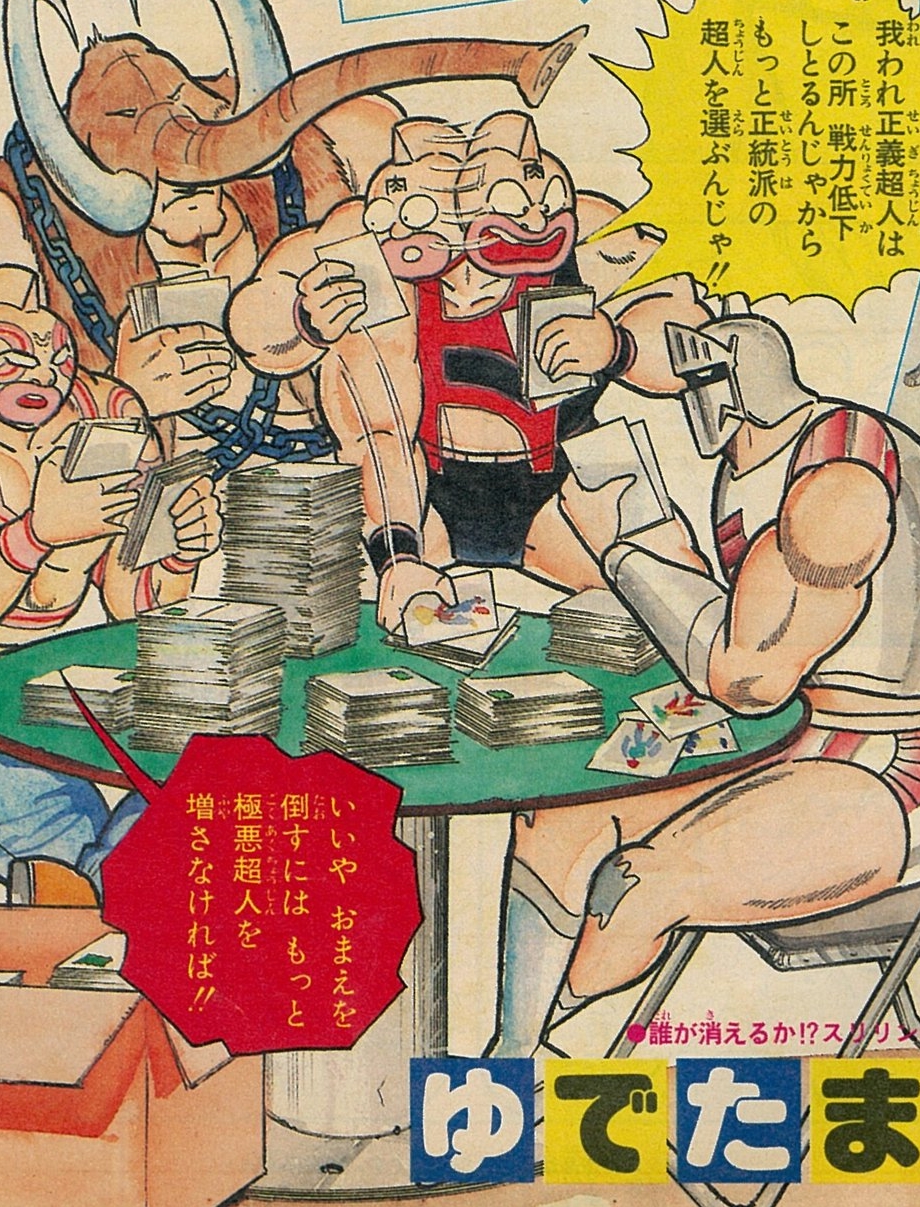
The works featured in the door picture of Weekly Shonen Jump's 1986 issue No. 50, episode 93 "The Secret of Big Tusk! (a story that explains why Big Tusk, the mammoth man, began to grow and chase prey regardless of his will). The award-winning works were originally scheduled to be announced around this time, but as you can see from the picture, the screening process took a long time due to the sheer volume of postcards submitted, and the award was carried over to the following year's issue No. 10 ("Ironic Master-Disciple Showdown!"). The award-winning work was originally scheduled to be announced around this time.
Read Article
Manga that were outrageously fictionalized and eventually censored.
Have you ever had the experience that "my favorite work suddenly lost its direction and was censored? In this issue, we focus on the censored works.
Read Article
A compilation of short-lived and shitty manga from Weekly Shonen Jump [in chronological order] [first published 1968-1999].
Shonen Jump" has been giving boys dreams and hopes since its first issue in 1968. However, some of them have ended after only a short time in serialization because they did not gain much popularity. Although not necessarily limited to "crap manga," due to the author's reasons and short-run serialization, here is a list of manga that were short-lived in the history of the magazine from its first issue to 1999.
Read Article
Tags
Contents
- Outline of "Tosho! Ramenotoko"
- Outline and story of "Tosho! Ramenotoko"
- Revenge on the Snake Party
- Confrontation with Jade King
- Reunion with the Butchering Ogre King and the Dogu Man
- The Gozen Bout and the Three Striking Bells Brothers
- Characters from "Tosho! Ramenotoko"
- Ramen Man and Allies
- 来斗 利偉 Ramenman
- Shumai dumplings
- Chen So-mei
- 拉娘
- 拳聖 Gokasen (Five Best Poets of Kyoto)
- Poison Wolf Fist, Moth, Snake and Worm
- Ryuseiken Hogan (Ryuseiken gungan)
- Muay Thai Chu Chai
- Shokokuro Kenso
- Jade King and Enemy Characters
- Tosatsuki-gyoku-o
- Shadow
- Doguman (clay figure)
- Ramenman / Kirai 鑼悪
- Fighting machine snow crab
- Ramenman 懢蝱
- Seven Ogres of Shogi
- Fuki
- Koki Incense Demon)
- Keiki
- Kakuei
- Hiryu (Hiryu)
- Kinki
- Five point dark star
- Gomuken 跳竜
- Nihito-kouou (two swords, yellow bush warbler)
- Guren Qian Liu (Red Lotus and Flame Liu)
- Enrinken (also called Menki)
- Gorikisho (or Kongo)
- Chikinmon Sanakunin and his men
- Kinjishi Ken (Kinryu): Kinryu
- Fujimi do Hakuryu
- Jujiken Kokuryu (Cross Fist Koryu)
- Cross
- Boogeyman
- Triangle Brothers
- Nembutsu-man
- ガルルーダ
- Yiping Gong (Ipecho)
- Three Brothers of Poisonous Snakes
- Django
- Jaroku (jam)
- Junk
- Other Characters
- Magi Yurii: Char Siu Otoko (Mercury Char Siu Men)
- Kinkaku (gold square)
- Ginkaku (silver square)
- Brace bracket: KING KONG Brody
- Kuro Maou (Black Devil King)
- Wang Kotei
- André
- Jinken 蛮暴 Okami (Kinnikken, Bamburgh)
- Min Sung-Cho
- Shiranui Tameemon
- Raiden, Miedeyama
- 咀怒 Daio
- 蜈喪 鑼大 O
- Ryu Ga Ken, Ma 颶拏 Keisaku (Ryuga Ken, Magnum)
- 闘誅 ken or Unryu
- The Bangasa Three Brothers
- Iron Kannon
- Longjing
- Pu-erh
- Somenman
- Harumaki
- Gyoza
- Tanmen
- Petan
- Reira
- Marvelous Hagullah: The Resurrection of the Devil 颶鑼
- Dokka 蠍拳 Zanba
- Mt. Mauei
- Kassatsu Jizai Ken: Jackie Li (Jacky Lee)
- Karasugunkenpo Harusame (Karasu Kenpo, Harusame)
- Bifun noodles
- Mongolian Tiger
- Ka 錏埵 錏 Jiisan
- Geppei (moon cake)
- リンピョウ
- ヤンピョウ
- Toff
- Feather rose (barbara)
- Lo Rao 烙餅
- Terms of "Tosho! Ramenotoko"
- Chōjin 102
- Hyakusen-hyakusho-kyaku (literally, "legs one hundred battles and one hundred wins)
- Keya 滅留 Kuorekketsu (Camel Clutch)
- Toryu Gokuisho
- Fresh Jump
- Words, lines, scenes, and scenes from "Tosho! Ramenotoko"
- Chen Shu-ming: "You should call yourself Mi 来斗 利偉 pulled noodle Otoko!"
- Ramen Man: Calling himself 拳聖 Gokasen!
- Ramen Man: "These people fought with the Righteous Hall and died. It is the courtesy of the same martial artist to bury them generously."
- Ramen Man: "I am prepared to be excommunicated!"
- The Secret Story, Trivia, Small Story / Episode and Anecdote of "Tosho! Ramenotoko"
- "Tosho! Ramenman" is heavily influenced by Bruce Lee's film
- AT THE TIME OF THE SERIES, THE BOILED EGG WAS DRAWN IN THE LEGENDARY WRITING ROOM.
- Jackie Chan once approached me about making it into a movie.
- THERE IS NO DIRECT CONNECTION BETWEEN "FIGHTING GENERAL! THE RAMENMAN" AND "KINNIKUMAN".
- Theme song and inserted song of "Tosho! Ramenotoko"
- OP (opening): Jun'ichiro Oda "Kagayaki! Ramenman"
- ED (ending): "Journey to Hope" by Jun'ichiro Oda