

Maison book girl is a Japanese idol group formed on November 5, 2014. The group was born around composer and music producer Kenta Sakurai and former BiS member Megumi Koshoj. The group developed from a performance in which Megumi Koshoj recites lyrics to a backdrop of Kenta Sakurai's "Gensoundo Pop" music, which makes heavy use of irregular time signatures. On May 30, 2021, it was announced that the group would end its activities.
Below is an excerpt from a review by Real Sound.
Maison Book Girl, who made his debut as a somewhat unique person, has built up his career and released many works.
Music media has also shown a certain level of understanding and adaptability to Maison Book Girl.
This Real Sound review follows that understanding and adaptability with a fairly analytical and composed review.
Maison book girl (hereafter Bukuga) is a four-member idol group consisting of Aoi Yagawa, Yui Inoue, Ring Wada, and Megumi Koshoji. Produced by Kenta Sakurai, who has produced Izukoneko, worked with Yasuko Omori, and recently produced Kumari Department Store. The group's appeal lies in its songs, which dizzyingly jump from odd time signatures and irregular rhythms to poetry readings, and in the expression of the four members through singing and dancing.
Bukuga's musicality is often described as "contemporary pop" (=contemporary music + pops). Specifically, the aforementioned distinctive rhythmic structure and instrumentation, as well as the composition of songs that mainly consist of repetition of short riffs, are clearly influenced by minimalism and other forms of contemporary music. In fact, Sakurai has openly stated that he is a fan of Steve Reich.
On the other hand, the fast-paced drumming based on an eight-beat groove has the dynamism of punk and hardcore music, and the melody line is catchy, although it has its own quirks. The melody line is catchy despite its quirkiness, and the music has the fluidity of post-rock/math-rock and the friendliness of pop-punk.
Above all, the four singers' voices penetrate the irregular beats and intricate riffs, and the whole thing suddenly starts to sound pop. The group's unique chemistry is the most appealing aspect of Bukga's music.
In the five years since their launch in 2015, Bukuga has released four albums, both indie and major, as well as numerous singles and EPs. The music has established its uniqueness from the beginning (odd time signatures, "modern music" style compositions, etc. ......), but the singing is rather simple at first, and at times it seems poor and dangerous. It is also true that such singing matched exquisitely with the cool music in which riffs were elaborately woven together.
To begin with, it is quite difficult to sing Bukuga's songs due to the aforementioned characteristics. The four members share the responsibility of singing the songs with many irregular developments and breaks, which are accompanied by intense choreography on the live stage. The difficulty is probably greater than listeners can imagine.
However, the more recent works have shown a more assured vocal performance and expressive power. In addition to the technical changes that have occurred over time and through training, it seems that both Sacrai and the members of Bukuga share a high level of vision of what they want to express and what they should express.
In terms of the soundtrack, the previous album "yume" boasted a high degree of perfection as a total work of expression that could only be achieved by Bukuga, including the level of craftsmanship of the songs and the quality of the performances. Based on the clear concept of "dreaming," the piece was a total work of art that interweaves skit-like tracks and field sounds (including the sound of an MRI machine operating (!) to measure the state of the brain while dreaming). ), and the way it is composed to be listened to as a single album is astonishing.
In contrast, their latest work, "Umi to Uchu no Kodomo-tachi (Children of the Sea and Space)," is an album of songs featuring songs, with the exception of the instrumental "Kaze no Keg" at the beginning of the album and the sound collage + poetry reading "Memories-kun" that closes the album. The songs are lined with songs that make the most of the members' singing and expressive abilities. Furthermore, the odd time signature of Bukuga is suppressed, and most of the songs are in orthodox 4/4 time. Even so, it is interesting to note that Bukga's unique style is evident in the somewhat irregular rhythmic patterns and melody lines.
In the past, I have the impression that the bass and other low frequencies in Bukga's music have been restrained from pulling and driving the music. To be more precise, the ensemble from the mid to high frequency range, where the melody of the song and the melody of the accompaniment run side by side and intertwine with each other, has been the main point of interest for the listener.
In this album, the focus is more on the low frequency range in the arrangement. For example, the bass line in "At the Seashore" resonates as if it fills the measure, as well as the fatness of the beat. The bass and kick provide the foundation for the irregular hi-hats and tricky melody of the song, and the slow BPM and minimal rhythmic ticks are equally impressive in "Silhouette," where the drama of the song is pulled together by the movement of the bass. The presence of the electric bass in the A- and B-melodies of "Laundry" also creates an R&B feel that is a bit unusual for Bukuga.
In this sense, this album is a new frontier. The music and performance are as high quality as ever, and the sound is even catchier than before.
Source: realsound.jp
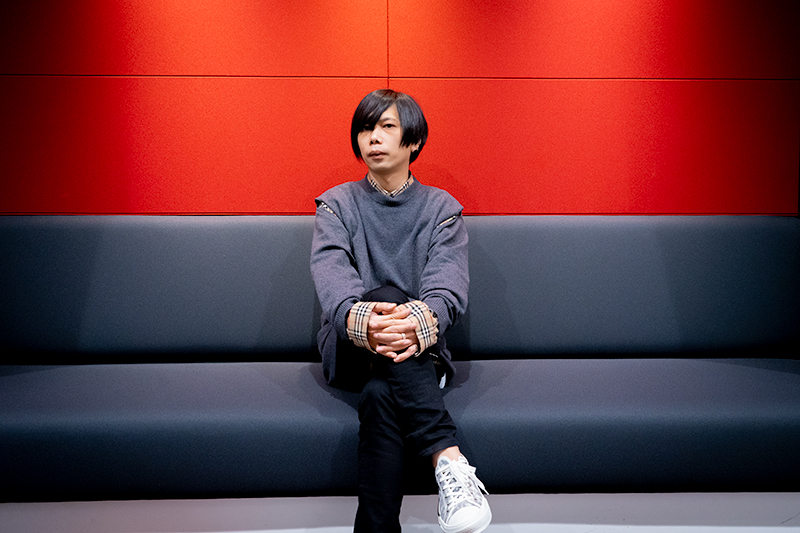
Kenta Sakurai
Below is an interview with Kenta Sakurai from e-onkyo music.
Not only the composition and sound make-up, but also the contents of the lyrics are very detailed.
And since it's an interview on a sound-related site, it also includes an interesting discussion about sound effects.
◆I want more people to listen to my latest album "Children of the Sea and the Universe
-:Congratulations on the release of your new album "Children of the Sea and the Universe", about a year after your last album "yume". Looking back over the past year, how do you feel?
Thank you very much. My last album "yume" was quite a conceptual album. This year, we released two singles, "SOUP" and "umbla," and from that time on, we were thinking about the theme of this album first. I had an image of "the sea and the universe," with "SOUP" more like the sea and "Umbla" the universe. I made the album with the image of "the children of the world" in mind. In a sense, "yume" was heavy and challenging to listen to, but I had the impression that it might be a little difficult to get into, so I wanted people who are not yet familiar with Maison book girl to listen to this album. While "yume" is an album that requires a bit of "let's listen to it," I think you can enjoy "Children of the Sea and the Universe" as if you were listening to it outside with earphones.
Of course, even if you listen to the album in high-resolution format, you will be able to enjoy the entire album.
-:I listened to the high-resolution version of the album beforehand, and when I listened to each song carefully, I wondered if they were really idol songs, but when I listened to the album as a whole, I was left with the impression that it was a very easy album to listen to. I was left with the impression that "yume" is a very easy album to listen to.
In fact, "yume" featured the theme of "dreams" in a very conceptual way, but this time it is a bit more open and outward-looking.
-:While it is not as aggressive as "yume," the sound of this album is still quite aggressive...
(Laughs) While I see Maison book girl as a group of four girls, I also want the music to stand on its own as pop music. That's why I made the previous two singles as well, thinking that the melodies and lyrics of the songs should be understandable, and that the songs should be something that people can sing along to.
-:You have preserved a lot of the subtle nuances of the vocals. You can hear the lips lip-synching, and the sound image is very close and raw. In the idol format, it seems like you tend to do a lot of elaborate editing.
Yes, usually those bands are cut off during the mixing stage. We always have the same mix engineer, but since the last single or so, we talked about leaving the rawness of the song as a song.
◆Make sure that every note has a meaning.
-:The orchestra is very organized without a lot of notes, and it sounds more like alternative music than J-Pop.
The number of notes in the track is actually very small, and I try to include only what is necessary. The fourth track, "Children of Sadness," which is particularly unusual, is almost entirely a rhythm track, with only a piano and acoustic guitar as chords. I imagine a space where there is a piano, an acoustic guitar, and about five rhythm players.
-:The arrangement of "Children of Sadness" has a contemporary jazz feel to it, and there are some piano phrases that sound a bit gypsy-like, so I wanted to hear it with an acoustic arrangement as well.
For a long time, Maison book girl has always tried not to include sounds that are not necessary. I value the space between sounds, and if there are too many sounds overlapping with the song, they get buried, so I try not to play them all at the same time. I try to make sure that all the sounds in each song are meaningful.
-:There is a sense of massiness that is well calculated in the bandwidth, which is the opposite of a sound that is pushed by sound pressure. It's a very audio-like, high-resolution sound.
The low end of the whole piece is very low in high res, and it's also a low end with a decent sense of pitch. The kick is also quite loud, which I don't think can be reproduced with the earphones that come with a smartphone. I think a mix is like a box, and if you put out too much of the upper end, it becomes relatively difficult to hear the lower end. The highs are audible to the ear, so I tried to suppress them and improve the low end's visibility.
-:The range is very wide, and I hope that people who don't normally listen to this kind of music will enjoy it from an audio perspective. The tones of the instruments as well as the vocals are impressive. For example, the piano in the first track "Legs of the Wind" seems to symbolize the album, with a massy sound with a low attack that reminds me of Johan Johansson.
The piano is not live this time, but a software sound source, but the default sound is very good, and in a sense, it is more raw than live.
The touch noise can also be controlled, so it is possible to emphasize not only the sound of the keystrokes but also the sound of the fingers leaving the keys, which would not be possible with a live piano due to miking.
-:These are areas that are only possible with a software sound source, as they would be physically difficult to achieve with a live piano. Is this an area that is strongly influenced by your own contemporary music?
I guess you could say so. The sense of organizing sounds, for example, is strongly influenced by classical and contemporary music. I consider the relationship between tonal development and melodic development very carefully.
-:On the other hand, I think you need to land on a place that maintains the popular appeal of J-Pop, but how do you balance that?
Well, speaking of elements of this album that are not contemporary music, for example, the usual electric bass, drums, and electric guitar, in contemporary music, the clean tones are usually used to reinforce the melody and chords, but in my case, I add distortion in key elements to create a pop-like balance. In my case, I add distortion to key elements to create a pop-like balance. Of course, the same is true of the songs. The chord progressions and melodic development are different from those of contemporary music, and I think that is what makes this music work as pop music.
Source: www.e-onkyo.com
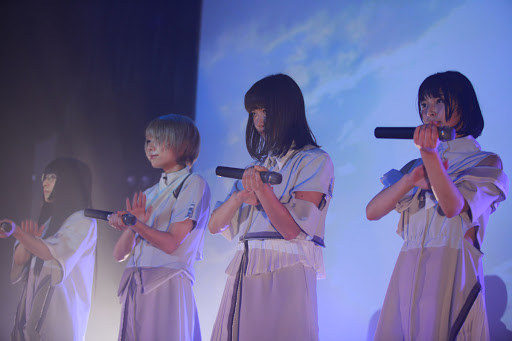
From left: Rin Wada, Megumi Koshoji, Yui Inoue, and Aoi Yagawa.
◆Sound that conveys the creator's thoughts
-:It seems that in the recent idol scene, there is a strong movement to compete with music. How do you see Maison book girl in the current scene?
I think J-POP itself can be divided into two categories. J-pop itself can be divided into two categories: the highly commercial, copy-and-paste type, and the type where everyone can tell that the creator has put a lot of effort into making it. So, although Maison book girl is an idol group with four girls, I would like to present a stance that conveys that the creators are making music with a strong sense of commitment.
-:Listening to "Children of the Sea and Space," I felt that idol music may be the most free in today's J-POP. In the past, it was difficult for music lovers to openly declare that they listen to idols, but the trend has changed considerably since, for example, Perfume showed high-quality electro music. How do you feel about it?
Well, I don't know if this is something I should talk about here on e-onkyo (laughs), but before I started working in the idol industry, I used to do only instrumental music. Eventually, I started writing songs for solo idols...so that was about 7 or 8 years ago. Somehow, there was a movement in the idol industry to focus more on making music. There was a time when the idol culture was revitalized with the idea of making proper songs, and there was a huge increase in the number of idol groups. At the same time, there was a situation where there was no one to write songs. While there were people who wrote very good songs in this situation, there were also groups that were not very successful, and the only people who wrote songs were their friends who were in bands and who could do DTM. I don't think that in itself is a bad thing, but there was a lack of creators, so a lot of people were writing songs. I think idol music may have evolved through such a situation.
-:E-onkyo music has also seen an increase in the number of idols ranked in the charts. How do you feel about the situation where more and more people are listening to idols on high-resolution music?
This is a continuation of what I said earlier, but as more and more people outside the idol industry write songs for idols, there are more groups with solid music, which inevitably leads to a stronger focus on sound quality itself. The pursuit of sound quality not only in sound sources but also in live performances is also progressing, and the number of groups that used to use 2-channel stereo karaoke sound sources but now bring in ProTools and send them to the mixer's console in parallel is also increasing. There is a growing interest in sound conditioning onsite. In many cases, they have brought in their own microphones for vocals as well, which they are very particular about. I guess it means that more and more people, both producers and customers, know a lot about sound.
-:I see.
Speaking of Maison book girl in particular, I think they create and mix sounds that there are not many others that can be used as references. I have never prepared a reference for composition, arrangement, or even the mixing stage. The placement of the sounds and the way the low end is expressed, which I mentioned earlier, are things that you can't find anywhere else.
◆We want to have a lot of people listen to the music with less irregularity
-:I think Maison book girl has a lot of songs that are difficult to sing, such as interpreting the measures.
I usually give them a sound file with tentative songs in advance. In the past, they used to sing without knowing how many beats they were singing, but in the past two years, they have started to ask me questions like, "Is this seven beats interpreted as 4 and 3 or 3 and 4?
-:It sounds like a progressive music scene.
Yes, it is (laughs). As a singer, the feel of the song changes as well. How to put accents on the lyrics.
-:Did you have any particular recording or production methodologies or environments this time around?
Going back to what I said a while ago, most of the songs on this album are in 4/4 time. The new songs for the album are "At the Beach," "No Wonderland," "LandmarK," "Children of Sorrow," and "Laundry," but only "Children of Sorrow" is in odd time. This song is the only one in odd time, but it is surprisingly difficult to get used to in terms of listening to it comfortably. I myself am the type of person who thinks all songs are in 1/1 time (laughs).
(Laughs) - 1/1 time!
(Laughs) -: 1/1 time! Actually, there is no such thing, but it's the interpretation of the bar that says, "The development changes here. However, when I look at the feedback from the audience, it seems that this is not the case. So this time, I made a conscious effort to make the music in 4/4 time, using dotted notes and shifting the notes between instruments within the 4/4 time frame to create a groove by placing accents. One beat is also strictly two eighth notes, so I always emphasize the back part of the beat without being conscious of it.
-: It's a trademark trickiness.
I made the music as tricky as I could without going outside of that frame, which I hope many people will listen to.
-:The lyrics as well as the sound are very original.
I had the album title "Children of the Sea and Space" in mind when I wrote "SOUP," and I had an image of a "fake world in the sea" in my mind. I had an image of a "fake world in the sea. It was like a meta-world where someone was making the previous album "yume". On top of that, there was the single "SOUP" and then "umbla". I wrote the lyrics while imagining where I was in this multi-layered hierarchy.
-:You had a clear scene of that world, didn't you?
Yes, I did. Maybe I am the type of person who projects such scenes strongly.
-:Isn't this already in the realm of a concept album?
No, you can listen to the album without worrying about the worldview (laughs). It is not a story for the whole album; you can listen to any one song over and over again, and there is a story within that one song. If you want to read it in depth, I think you will enjoy it as well.
-:That also ties in with what you said at the beginning about "creating a sound where the lyrics can be heard.
Yes, it does.
-:I feel once again that the album has a beautiful shape because of the theme that plays like a bass line at the time of the two existing singles. Lastly, please give a listen or a message to the listeners of e-onkyo music.
Recently, more and more light music fans are using earphones and headphones with good sound as a sense of fashion. I would like such people to listen to the sound production and mixing...the shape of the sound, and at the same time, it is something that can be enjoyed with a proper audio system, so I would like people who have such an environment to listen to this work. I hope everyone will give it a listen.
Source: www.e-onkyo.com
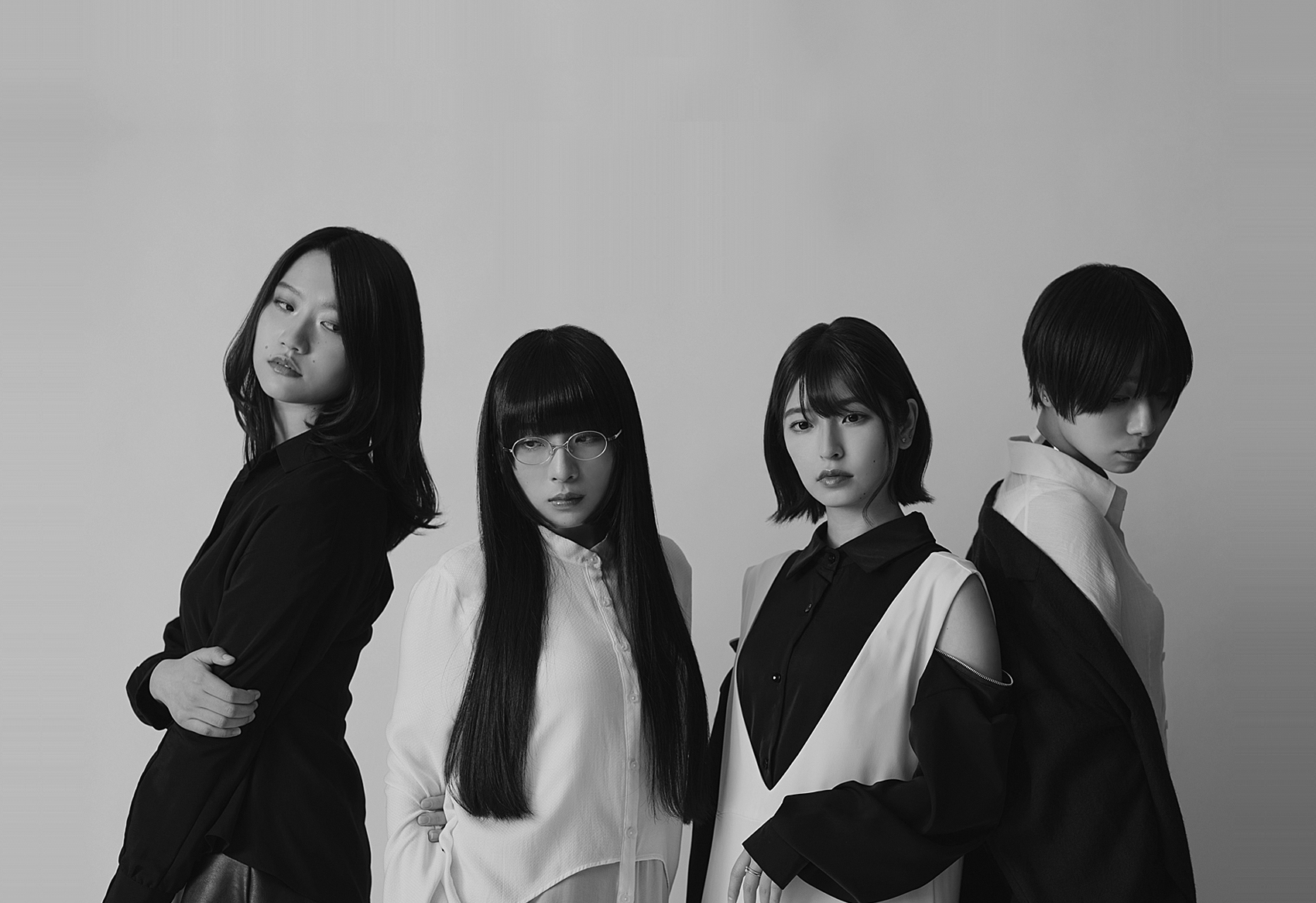
From left: Yui Inoue, Rin Wada, Aoi Yagawa, and Megumi Koshoji.
Below is an interview from the official site.
Each member's thoughts about the album right after its completion are told.
Koshozy - This interview is to be conducted after the completion of the album, but we have interviewed you twice before that for the EXCLUSIVE BOOK that comes with the limited first edition B of the album "Children of the Sea and Space", and each time we have asked you about the progress of the album production.
Koshozy - Indeed. In that sense, you are a witness to the completion of the album.
When we last talked to you, it was on the day of recording the last song, wasn't it?
Yagawa - Oh, yes!
Wada - It's "Laundry," isn't it?
Yagawa - It's finished (laughs).
Wada: No, I'm really surprised that it turned out better than I had imagined.
All of you. - Thank you!
All of you - I think you have already listened to the completed album. I know it's hard to be objective, but frankly speaking, how do you feel about the response?
Yagawa - Hmmm... (laughs). (laughs) I thought the last album "yume" was "amazing" through the whole CD. but this time, I think the intensity of each song is amazing. I think that every song is a symbol of this album, not just one song, so I think it is good that I can imagine the whole image of the album no matter where I listen to the songs.
I think "yume" and "image" before that were works that had meaning when listened to from the beginning, and I think the totality of Maison book girl as a group was a strong point of the album.
Inoue - That's right. Especially this time, every time we recorded a song, I thought, "The tone of this song is different from the previous one," but when I listened to the album as a whole, it blended well with the songs that had been released as singles in the past. I felt that the album was a single package.
A: The range of the songs is the widest ever. And yet, there is a sense of unity as an album. Why is that?
Inoue - Is it because Maison book girl sings?
Koshoji - Oh.
Wada - Maybe that's part of it.
Inoue - Like ...... a buckwheat noodle shop made curry?
Yagawa - Hmm? (laughs)
Wada - Oh, because they use the same soup stock, like a katsudon (pork cutlet served on top of rice) at a soba noodle restaurant?
Inoue - Noodles and rice are served in the same broth.
I understand what you mean (laughs). Because the dashi is the same, even if the ingredients or cooking method changes, the core taste remains the same. Normally, it would not be surprising if the contents were so scattered, but the tone and texture are strangely unified.
Wada - Indeed. When we were recording, Mr. Sakurai's direction on how to sing was completely different for each song, but it's strange that the album has such a unified feel.
I thought that this sense of unity is actually the right trend for artists who will break out from this point on.
Wada: What do you mean by that?
Many artists complete the foundation of their activities by accomplishing what they wanted to do in their first three or so albums. That is exactly why many of the songs that have become the core of their live performances since then are songs from this period, isn't it?
Koshoji - Ah, I see.
Inoue - I see.
So, from the fourth album or so, we started to look outward and rework the style we had built up up to that point in a more refined form. In the case of Maison book girl, "Umi to Uchu no Kodomotachi (Children of the Sea and Space)" is their fourth album, including their indie days. I think that with this album, you have started to take on a new challenge to the outside world. ......
Wada: Yes, I understand. Up until now, I think we, including Mr. Sakurai, have had the mindset that if we don't sell what we want to do best, it will be meaningless. But now that we have a ground on which we can say, "This is Maison book girl," I think we are now able to create something like this for the outside world.
Q: In fact, the songs released in the past year or so have a unique strength in their live performances as well. The first half of the show was to create the atmosphere of the live performance, and the second half, starting with "Yamiiro no Asa" and ending with two songs from the new album ("At the Beach" and "No Wonderland"), was to present the current Maison book girl. The composition of the second half was really wonderful, and I was impressed by the "Wow, the current Bukuga is amazing! I was so impressed.
Koshozy: I'm glad to hear that.
Q: I felt more confident about singing and expressing myself after seeing your recent live performances, didn't you?
Koshozy - Indeed. Until now, I didn't have a model or a guide to follow, but I was struggling in the dark. But recently, we have been able to show what we want to show and do what we want to do by touring a lot in the form of one-man shows.
Inoue: When we play opposite bands, we have to show ourselves in a way that is easy to understand for the other band and the audience in a short period of time.
Koshogee: It's a good experience to be in a group with other groups, but there are a lot of things you can't realize or find out just by doing that. Therefore, I think that being able to perform songs from the past year or so on a one-man tour has led to our own growth and confidence in many ways. In addition, having a voice trainer and a dance instructor with us has helped me to resolve some of the issues I had inside. I was able to say, "Well, let's try this for the next live performance" in a very good way this year, so I think that also directly contributed to my confidence.
Wada: Another important thing is that the lyrics of recent songs are more open. In the past, we would have felt like we were being told what to do, but recently we have all developed a sense of self. Now that we have a clear idea of what we want to do, we are able to express ourselves in our own words and expressions, and I think we can sing this song with confidence now.
Source: www.maisonbookgirl.com
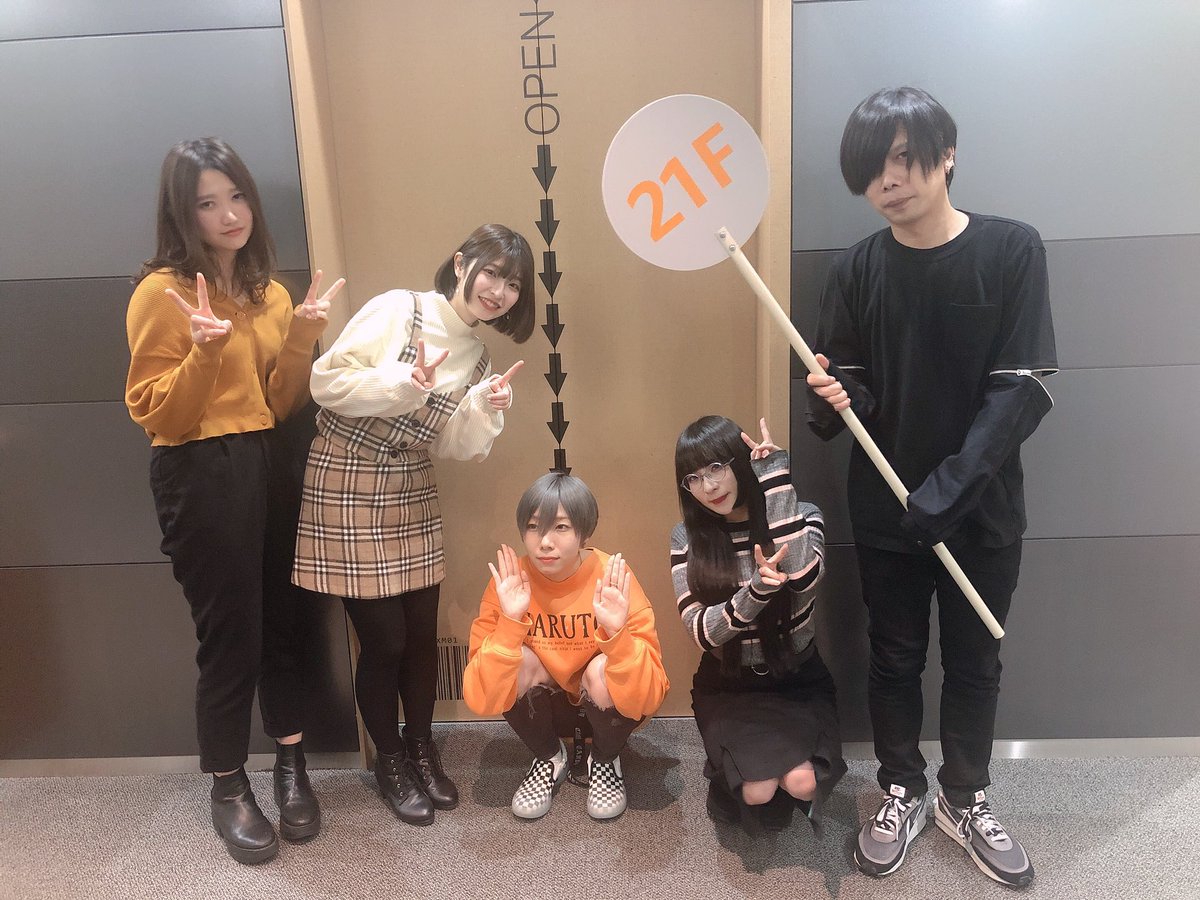
From left: Yui Inoue, Aoi Yagawa, Megumi Koshoji, Rin Wada, and Kenta Sakurai.
Q: In addition to that, the distance between what Mr. Sakurai is expressing and what you want to sing or express has become closer. This may be the strength of the songs now that they can be conveyed in the best possible way without diverging from each other. In that sense, I feel that this album is a work that is closer to the listener. In the album commentary interview, Koshoj-san said, "Poetry's 'Memories-kun' was written with the listener in mind," and perhaps because the other songs have the same awareness, the album makes me feel very tender when I listen to it.
Inoue - Gentle feelings or .......
Koshoji - It's ......Chara, isn't it?
All of you - (laughs).
Koshoji - (starts singing Chara's "Yasashii kanke")
Inoue - I see (laughs). (Everyone laughs and continues to laugh for a while)
Yagawa - The song is replaying in my head (laughs).
Koshoge - I have a strong image of the song, don't I?
Inoue - It's a bit forced, but I think the album "Children of the Sea and the Universe" has a lineup of such songs.
Inoue - Indeed!
Koshoge - When I feel sad, I want "Children of Sadness" to play.
ーI guess some of you have become more dependable yourselves. The album also conveys a strong will to be able to take on the anxieties and doubts of those who listen to it. This is connected to the "gentleness" mentioned earlier, as well as the feeling of being enveloped by the sound and being relieved by the words being thrown at you. I feel that this element is becoming even stronger, especially toward the end of the album.
Koshozy: I certainly have that feeling. I think we have always expressed that in the past. ...... For example, when a sad or depressed person listens to our music, we would say "we feel the same way" and express kindness in a way that would make them feel close to us, but now I think we are trying to be close to them, but I don't want to move from that place. But now, I don't like the fact that I can't move from the place where I'm leaning. Now, I don't want to be there for them, but I don't want them to be unable to move on.
Koshozie: You are feeling a stronger sense of wanting the next action to take place?
Koshozy: Yes, yes. That may be common to all the songs.
Q: The feelings that began to emerge around the time of "SOUP," which can be said to be the starting point of this album, have become clearer, and have been expressed in action on this album. It really is a piece that sums up Maison book girl in 2019. The structure of the early part of the album, starting with the instrumental "Legs of the Wind" and then "At the Seashore" and continuing with "Dark Color Morning" is also wonderful.
Koshozy: We recorded one song at a time, regardless of the order of the songs, so I tried to imagine what the structure would be like, but in the end I couldn't imagine it at all. We tried to imagine how the songs would be arranged, but in the end we had no idea. The order of the songs was completely different from what Mr. Sakurai had said he wanted. I guess that also changed as each song was completed.
A long night has dawned." It was a perfect climax to the album.
Koshoge - She's a nice girl, but like in the ...... live show, it's hard to find a place for her (laughs).
Yagawa - She is very assertive.
Yagawa - She is very assertive, but I get the feeling that she fits where she should be.
Koshozy - Yes.
Q: How was the recording of "Laundry," which was just before you sang the song when we last talked to you?
Koshozy: On the day of the recording of "Laundry," I had a voice training session after the interview. I had never had a voice training before recording before, so I think I was in a very good condition to record the song.
Inoue: But when you were making "Laundry," you were very worried about it. He kept asking me, "What do you like? I encouraged him on the group LINE (laugh).
Koshoj - There was that (laughs). Also, "Laundry" has a little bit of a link to the past "bath room. So, maybe it's the same for you, Sacrai-san, but I feel like you are actually a behind-the-scenes leader in the album.
Wada: "Laundry" doesn't have a distinctive tone like the previous songs, and is rather mellow, but the lyrics "The last night will never come again" are followed by "Long night dawns". I feel that these two songs are actually close to what they are trying to say, and that this album is a collection of songs that have such strength hidden within them.
Q: Although each song is complete on its own, they are actually linked to each other, so when you listen to them one after the other, you can also feel the story behind them. This interview will not be published until after the album is released, but I am looking forward to the response.
Koshoge - I wonder what will happen when we artists ourselves say "Please listen to it! I wonder what will happen when the artists themselves say, "Please listen to it!
Inoue: It's like, "You're going to say that, aren't you?
KoshogeeYes, yes. But I don't think I should say too much. ......Yes, but I'll do my best. We have a lot of music videos made for our album songs, so I think if even one of them catches people's attention, they will listen to the album.
Source: www.maisonbookgirl.com
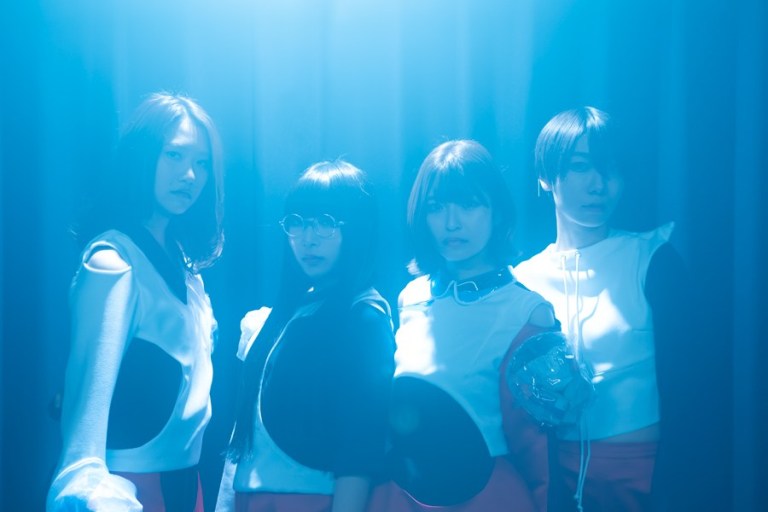
From left: Yui Inoue, Rin Wada, Aoi Yagawa, and Megumi Koshoji.
-Actually, last night, I had the opportunity to watch the documentary program "Pick Ups! -Maison book girl-", which will be available on Amazon Prime Video.
All of you. -Oh!
Inoue - That program is amazing, isn't it? It was really well done.
Wada - It was like "Jounetsu Tairiku".
Yagawa - The backgrounds and lighting were so well done that when I saw myself speaking, I thought, "Speak more firmly! (laughs).
Koshoge - But the difference in the highs and lows between the first two shows and the second half is amazing (laughs).
Q: I think that programs like that are also effective in promoting the album, because at the timing of the release of the new album, when it is easy to get into Maison book girl, there is a program that is like a supplementary reader that allows people to learn more about the group.
Koshoge - I'm grateful for that.
Inoue - The second program is a recording session of the album, so people who watch it may become interested in the album. But you know, don't you ever come to like individual members through documentaries? I have.
Yagawa: Yes, I do.
Koshozie - I think people in the industry would be very interested in watching it.
Wada - I see.
Inoue - I think that people who know the name of the group but don't know much about their activities would be more interested in watching the show. In particular, I would like people who have the image of a group that seems to be difficult to understand to watch it.
Yagawa: Recently, I've been seeing a lot of tweets from people who found out about us by watching the music video for "Yamiiro no Asa," and there are still many people who say, "I thought we were a band," or "I didn't know the four of us sing together," so I hope we can reach those people as well.
Q: On the other hand, if someone with no prior knowledge of the name Maison book girl were to hear the unit name, what would they imagine the group to be made up of and what do they do?
Inoue: A clothing brand?
Yagawa - A unique singer-songwriter?
Wada - It sounds like a solo project name. Even now, I'm thinking, "Oh my God, Maison book girl is so good! I think I found it!" I think I might have found her. I think these people know about the songs and music videos, but they don't know much about us as members, so I hope that through this documentary they can see that the four of us are doing our best, and from there they can decide to go to the live show.
A: Before "yume", one of your "selling points" was anonymity in a good sense, and that was also a weapon, wasn't it?
Koshozy: Yes, that's true. Even in the artist photos, you couldn't see my face (laughs).
But "Children of the Sea and Space" is an album that doesn't need that kind of armor. I think we should be more proud to show that "These four artists are doing this!
Koshozy: "This, this, this is me! (laughs).
(laughs). And it feels right to hold a one-man live concert "Solitude HOTEL ∞F" at LINE CUBE SHIBUYA (former Shibuya Public Hall) at the same time as the release of the album.
Koshozy - Really? But I'm totally tall (laughs).
I heard that you had many conflicts before announcing LINE CUBE SHIBUYA.
Koshozy: Yes, I did. I had a feeling from April of this year that "SHIBUYA" would be held in January next year. I had been aware of it since then, but until the actual announcement, I was really anxious and had my own conflicts. But now that I was able to say, "I'll do it! Now that I have said "I'm going to do it!
You are no longer anxious?
Koshozy: Yes. I think that's what I meant when I said that. ...... Until now, there was probably a part of us that didn't have confidence in our live performance. So, we were not very proactive in saying, "Please come to our live show! We are sure that people will like Maison book girl. We thought that people who liked Maison book girl would come to our shows even if we didn't say "please come," so the words "please come" were intended for people who were not interested in Maison book girl or people who were "a little curious, but what should we do? I thought "please come" should be used for people who are not interested in Maison book girl or for people who are a little curious about Maison book girl but not sure about the show. I also didn't have the confidence to make people who weren't interested in Maison book girl like Maison book girl after seeing her live. But now I want people who are not interested in Maison book girl to like them, and I want them to think that they are doing a good live show, so I decided to say a lot of things about them. Plus, I really want this show to sell out!
Q: At the event at WOMB on September 22 this year, when you announced the live concert, you were in tears, weren't you?
Koshozy: Yes. I believe that if this live concert sells out, something will surely change. So ......I have been motivated up to now, but maybe I have gained confidence in what I am doing, not what I said earlier ....... So I definitely want to show a different Maison book girl.
When I ask you again after the new year, I would like to say something along the lines of "It was a legendary live show! I want to talk about something like that.
All of you. (laughter)
Yagawa - I don't know what to do (laughs).
Inoue - I hope so.
Koshoge - I will definitely take responsibility for the content, so I hope everyone who is interested will come!
Source: www.maisonbookgirl.com

From left: Yui Inoue, Rin Wada, Aoi Yagawa, and Megumi Koshoji.
Below is an interview from Music Natalie.
It contains interesting content such as brief explanations of each song and behind-the-scenes stories.
I think you seem to have a wide variety of favorite songs.
───The previous album "yume" was a work that expressed the theme of "dream" throughout the entire album, but the new album "Children of the Sea and the Universe" seems to express the theme of "sea" and "space" in each song. I felt that the new album "Children of the Sea and the Universe" expresses the theme of "the sea" and "the universe" in each song.
Megumi Koshoj: During the recording process, I was more conscious of the image of each song rather than thinking about the overall theme of the album. Then, when the completed songs were gathered together, I could see this theme.
───The atmosphere of the costumes also changed considerably, perhaps to match the theme of the album. What about the bag-like part on the shoulder? ......
Wadawa: I think there are some candy trash in here.
Koshoji: Sakurai (Kenta, producer) came up with this costume. It might be an image of the sea or the universe, which are the themes of the album.
Inoue Yui Like dust?
Aoi Yagawa: This kind of thing looks like something floating in the sea, doesn't it?
Koshozy: Well, that's what it looks like (laughs).
───"Children of the Sea and Space" contains five new songs.
Koshoj: My favorite song is "Children of Sadness," which was completed later among the five. I was given the melody for one chorus before the tentative song, and I listened to that alone a lot. the part from the B melody to the chorus is especially bad. The vocal parts are also clearly separated, and I think the individual personalities and charms of each singer come through well.
Yagawa: The last song we finished was "Laundry," but Mr. Sakurai was having a hard time writing the song, and sometimes asked us, "What kind of song do you think would be good? He would ask us, "What kind of song do you think is good? At that time, we often watched Ringo Shiina's music videos together, so we introduced some songs to him.
Inoue: Rather than saying, "This is the kind of music I want," I told them that I thought it would be good if we could take a break from the music. Like, "I like this song," or "How about this one?" I was like, "I like this song," or "What do you think of this?
Yagawa So when I received the intro to "Laundry," I told .......
Koshoji It sounded like Ringo Shiina's "Righteous Town" (laughs).
Yagawa: But I was happy to see that the song was finished in the Bukuga style with those tastes mixed in. I was worried about it, but I thought, "Wow! (laughs).
Inoue "At the seashore" is a song that we have already performed live, and I especially like the way Aoi sings the solo part and then the whole band sings the chorus.
─ ─ "At the seashore" is a mid-tempo song with a sense of scale, similar to "Okaeri Sayonara" in the past. The tempo was kept low to a certain extent, so the song required a lot of power to sing through.
Inoue: At live performances, it seems that the fewer notes you use, the better your singing voice is heard, and I often received comments from fans about my voice and the lyrics. I think that lyrics are not memorable unless you concentrate on them. Maybe that's how much they listened to the songs.
Wada: In my previous songs, the only time I've heard hammoly is in unison in the chorus, but "LandmarK" has a lot of dialogue between the members. This was the first song where the members' voices overlapped in real time. The way it sounds at a live performance is going to be very different from the soundtrack.
─ You mentioned that you recorded the chorus for the first time in earnest in the song "Silhouette" from the single "umbla," so I guess you could say that this song was a development from that and a challenge to create a more complex vocal structure.
Wada: During the voice training, I was often told about the balance between the two singers, for example, "You should lean a little more toward Aoi's singing style," and so on. We recorded the songs one by one, but I think we will be able to create more beautiful harmonies in the live performance.
─ - The songs you mentioned were all very well balanced.
Koshozy: I think everyone read the atmosphere (laughs). But I think the songs that the audience likes are going to be varied as well.
Source: natalie.mu

Aoi Yagawa
I'LL TELL SAKURAI, "THESE SONGS ARE POPULAR NOW."
Dong-A: I heard that Sakurai has recently started asking people to tell her if they want to play a song like this.
コショージ During the production of this album, I was consulted several times. He said, "I don't know if I will be hired or not." For example, in the case of "Children of Sorrow", I roughly told him that it would be nice if there was a song like "karma" that was easy to incorporate into the setori, regardless of whether it was one man or against the van. The tempo is fast and the songs that are not that heavy look good, and the whole live goes well together.
Q: Do you often request songs from ブクガ's past, not from other artists?
コショージ That's right. If I had to say anything, it would have to be the Ringo Sheena I mentioned earlier. What else was there?
Yagawa Most of the music I usually listen to is major J-pop music, so I told him a bit that I like this type of music.
Because I like music that is the exact opposite of what Sakurai Inoue usually listens to.
Yagawa I'll tell you, "This kind of thing is popular now."
Q: If we didn't share your opinions and only had ideas from Sakurai, songs like "No Wonderland" and "Laundry" with a pop atmosphere might not have come out. In that sense, I think your opinions had a great influence on album production.
Inoue: Of all the works I have ever made, this may be the one in which I talked with Sakurai the most.
コショージ Also, there are many songs with "LandmarK", "Laundry" and "Run", right?
Inoue "No Wonderland" is the same.
I don't think コショージ Sakurai is aware of this (smile).
Source: natalie.mu

Megumi Koshoji
Singing voice troubled you because of your improvement
─ ─ Wasn't it difficult to record the song because not only the structure of the music, but also the vocal score and chorus assignments had become more complex?
Koshoj: It certainly was. Recently, we have all been taking voice training together, and each of us is being taught in a style that allows us to develop our individuality while making the most of it. I have been training my lung capacity to produce an airy voice, but "Children of Sadness" requires a strong, taut voice, which is the complete opposite of what I have been practicing. The competition started totally different from the equipment I had prepared for! It was like a competition. ...... But, well, I did my best.
Wada: I am always the first to record a song, but Sakurai-san would ask me several times to "make it stronger! Mr. Sakurai would ask me several times to "make it stronger! After all four of us had finished recording, he would often say, "This part was too strong, so can we re-record it? After all four of us had finished recording the songs, I would often ask, "Can we re-record this part because it was too strong? But for "Children of Sadness," we didn't have to re-record anything. Not only are the singers' voices getting stronger, but they may also be able to express themselves in various ways.
─ ─ What kind of feedback do you get from Mr. Sakurai when you record a song?
Wada: Most of them are vague. He often gives me imaginative ideas, such as "Make it a little more Aoi-like," or "Make it more spacious.
Inoue Wasn't "Laundry" also difficult? What was it, the rhythm we practiced while saying "backpack"?
Koshoji Yagawa Shuffle?
Inoue Yes, yes! To be able to feel it and sing it, my voice training teacher taught me to sing it while thinking "rucksack, rucksack" in my head. More rucksack! (laughs). That was very difficult.
─ I heard that in past songs, you taught everyone how to play the rhythm, but nowadays, do you have more and more voice teachers giving you lectures?
Wada: Yes, that's right. I could understand the beat of the song, but I didn't know how to make my voice easier. My teacher taught me how to make my voice and how to relax, so it became much easier for me to sing.
Inoue: Until now, I did not have time to practice before recording. For this recording, I used a take with a tentative song in it, and worked on it with the teacher.
Yagawa: The other song "LandmarK" is simply sung in a high key. If I try too hard to sing in a high pitch, my voice ends up sounding scratchy. I haven't performed it live yet, so I have to be more careful ...... to be able to sing it better. I've been able to feel that I've gotten to the point where I can easily sing in the same key as before, but the next new song is in an even higher key (laughs). (Laughs) Mr. Sakurai is training me more and more.
─ Did Mr. Sakurai give you any advice about singing in a higher key?
Yagawa: "It may be difficult during recording, but it will probably come out during the live performance, so don't worry! He gave me such baseless encouragement (laughs). But if I don't learn to sing, the charm of the song will be reduced by half, so I have to do my best.
─ ─ During the MC at the one-man show held the other day, you mentioned that you cried during the recording of the album because there were parts of the vocals that you just couldn't agree on. The scene is included in the program "Pick Ups!" currently available on Amazon Prime Video (see: Pick Ups! -Maison book girl-).
Wada: There was no particular conflict. Sakurai-san said, "I think this is fine," but I just couldn't get it right, so we had to re-record it many times. When we put in the songs, we would first record them the way we wanted them to be sung, and then we would ask Mr. Sakurai's opinion and make adjustments. So it was a big process.
─ The song you re-recorded was "LandmarK.
Wada: There are two parts to the chorus of this song, a high part and a low part, and they are sung by two separate singers. I was in charge of the low part, but the way Mr. Sakurai wanted me to sing it didn't sound very familiar to my ears. Recently, I have broadened the range of my vocal expression, and I am now able to sing in ways that I don't like. Perhaps it is because my ability to express myself has improved, which is a detriment.
Source: natalie.mu

Yui Inoue
I can't say I'm a pro yet.
─ ─ In January, there will be a new show in the one-man "Solitude HOTEL" series. Each time you have held this series, the number of floors has increased from 1F to 2F, but this time it is "∞F," isn't it?
Koshoji: The 8 in "8F" is written horizontally as ∞.
─ ─ I felt that "∞" has a meaningful message, but am I thinking too much ......?
Koshoj: I see...then I'll have to do something great (laughs). (laughs) Since there are more staff members participating this time, I would like to make this a great concert by combining the strengths of each of them.
Inoue Isn't this the first time you've had a one-man show with this many staff members?
Koshoj: To begin with, we did some collaborative live performances with Amazon.co.jp for this one-man show.
─ ─ The collaboration live with Amazon.co.jp in September this year was directed by HIROMI, a choreographer, for the first part and by huez, who has participated in past one-man shows, for the second part. Did you leave all the directing to them for both parts?
Koshoji: For each section, we worked together on the production. First, I gave them a rough idea of what I wanted to do, and then they gave me their ideas, "How about this kind of expression? Then, we would get ideas from them, and from there we would work together to create the music. It was similar to the one-man "Solitude HOTEL" series, but at the same time, I was able to challenge myself to express myself in ways I had not been able to before.
─ ─ HIROMI is also in charge of your dance lessons now. For many years, MIKITTY MOTO (Nichome no Kai coming out) has choreographed for Bukuga, but did anything change when HIROMI joined the project?
Yagawa: In the past, when we had a problem like "It's hard to move but we don't know what to do," we would solve it with Mikitty through trial and error.
Koshoji We were groping all the time, weren't we?
Yagawa: Hiromi-san has studied the fundamentals of dance, so when I had a problem, he would immediately tell me, "There is a way to do it this way. He gives me precise advice on how to solve problems, so I learn a lot from him.
Wada: I didn't know the correct way to do the basic aspects of dance, such as turning, and I had been forcing myself to do it until now. Then HIROMI taught me the basics, and I was able to dance beautifully to all the turns of past songs. I was able to apply the skills in this way, and it became much easier to do.
───After HIROMI became involved, did you change the choreography of past songs?
Koshoji: Yes, for some songs. HIROMI is also in charge of the choreography for the new songs. You also changed the song assignments, didn't you?
Yagawa: We had to think about the flow of the dance.
─ On the other hand, huez has a very unique staging with laser lights and images, which has been an essential part of Bukuga's one-man shows in recent years.
Koshozy: For huez's staging, I first have him create the foundation of the performance. Then, for example, if there were insects in the video, we would ask them to adjust the number of insects, or change the placement of objects in the video to match the dance, and so on. We also asked them to adjust the laser lighting to our order. Solitude HOTEL ∞F" seems to be a combination of the first and second parts of this Amazon Live.
Yagawa: I watched the video of the last show (Solitude HOTEL 7F) for the first time in a while the other day, and I thought "I can sing better now" even at the live show we did this year. I want to be able to show how much I have grown so far in "∞F".
Wada: I don't want to set a goal for each live performance. I want the latest live performance to be the pinnacle, so I want to approach "∞F" with the same feeling. However, no matter how good the live performance is, it is meaningless unless people see it. That is why I want to see a lot of people coming to the show.
Inoue We are currently on a one-man tour, and I can feel that our skills are improving with each show. I would like to continue to improve my skills and be in the best condition for the one-man show at the beginning of the new year.
Koshoji: We are now thinking about the structure of the live performance, and since there are more people involved on stage, it is important to have a concept that will serve as a pillar of the show, and we are working on that with everyone. Since everyone is a professional, I have to do my job properly. I bought the "Pokemon" that just came out the other day on the day it was released, but I've been holding back from doing it because I want to think about the one-man show all the time. ......
Yagawa: It's cool.
Koshoj: "Cool" (laughs). All the staff around me are professionals, but I can't say I'm a pro yet. I can only perform well with everyone's help, and I want to deliver the new songs well at this one-man show, so now is the time when I have to work hard the most.
Source: natalie.mu

Rin Wada

Related Articles
In-depth summary of Sakurai Kenta
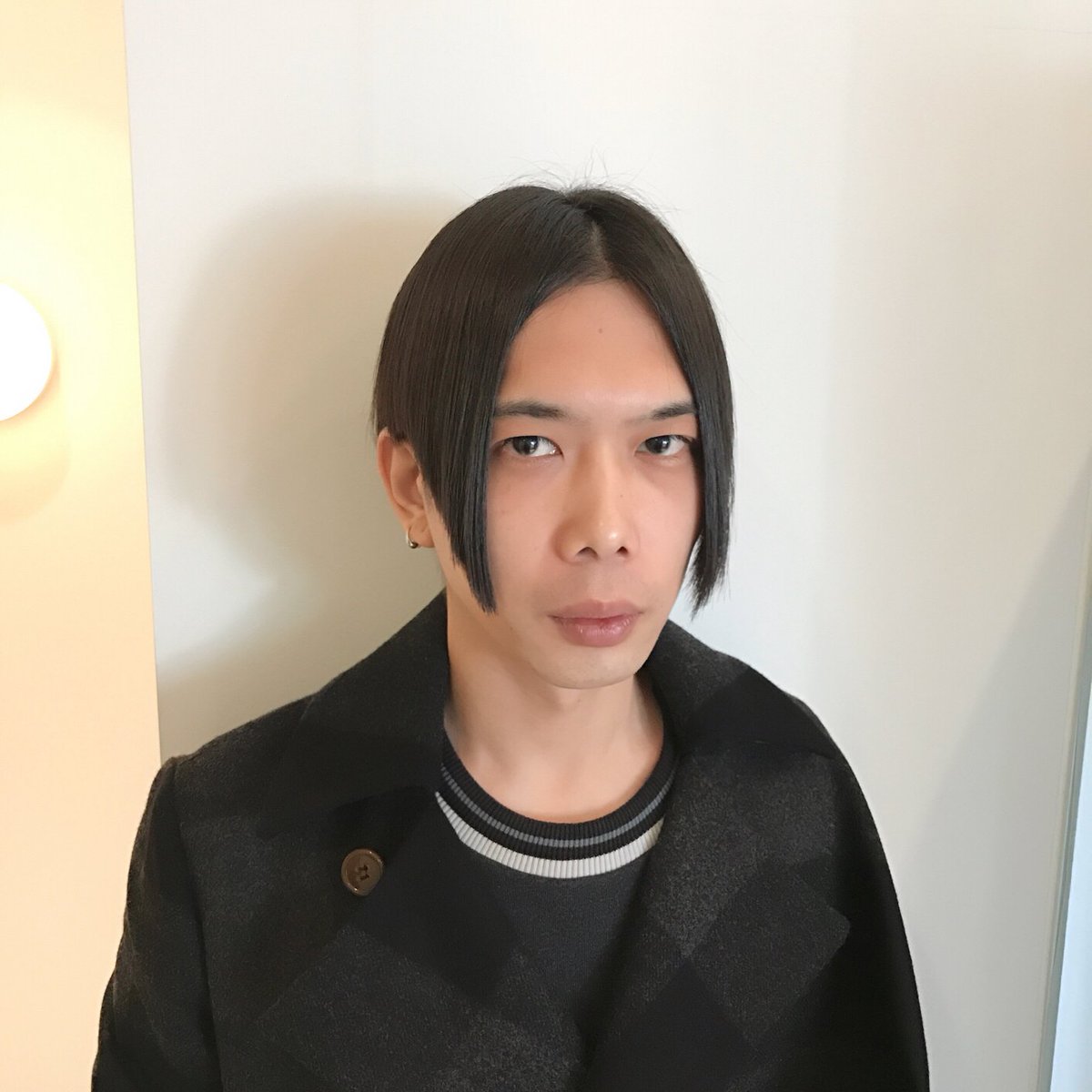
Kenta Sakurai is a lyricist, composer, arranger, and music producer, and the president of EKOMS Inc. He first emerged as a producer for Izukoneko, and later as the general producer for Maison book girl. Influenced by contemporary musicians such as Steve Reich, he is a proponent of "gen-neon pop," which mixes popular music with contemporary music, and is known not only for Maison book girl, but also for producing Kumari Department Store and working with Kaika and Yasuko Omori.
Read Article

In-depth summary of Qumali Depart
Kumari Depart is a Japanese female idol unit produced by Kenta Sakurai and formed in 2016 as a "complete royal idol". The group debuted as a three-member group consisting of Miss iD 2016 finalist Risako Hanei, the same semi-finalist Nako Yuu, and Nico Hayazakura, who was introduced by an acquaintance of Sakurai's. In May 2018, Hanei graduated and new members Ayane Oda, Fuuka Kaede, and Mitsuba Hina joined. In June of the same year, Hina left the group; in February 2020, Mei Yamano and Mana Nanase joined the group; in March 2023, the group held a solo live concert at the Nippon Budokan.
Read Article
Tags
Contents
- Maison Book Girl Overview
- About the producer Kenta Sakurai
- Maison Book Girl squad
- Yui Inoue
- Brief biography of Yui Inoue (from birth to before and after joining Maison Book Girl)
- Yui Inoue's "Special Room" and "Fashion"
- Yui Inoue's Letter of Partiality
- THIS IS WHAT Yui Inoue'S DOING.
- Impression of Yui Inoue as seen by other members
- Yui Inoue as a "nutritionist"
- Megumi Koshoji
- Brief biography of Megumi Koshoji (from birth to before and after joining Maison Book Girl)
- Megumi Koshoji's "Special Room" and "Fashion"
- Impression of Megumi Koshoji as seen by other members
- Megumi Koshoji's "Ten Pieces to Take to Uninhabited Islands"
- Megumi Koshoji and Keyakizaka46
- Aoi Yagawa
- Brief biography of Aoi Yagawa (from birth to before and after joining Maison Book Girl)
- Aoi Yagawa's "Special Room" and "Fashion"
- Impression of Aoi Yagawa as seen by other members
- Aoi Yagawa and Seiko Matsuda
- Aoi Yagawa and Haruka Kudo
- Rin Wada
- Brief biography of Rin Wada (from birth to before and after joining Maison Book Girl)
- Rin Wada's "Special Room" and "Fashion"
- Rin Wada's Letter of Partiality
- THIS IS WHAT Rin Wada'S DOING.
- Impression of Rin Wada as seen by other members
- Rin Wada's "Ten Pieces to Take to Uninhabited Islands"
- Three comic books that inspired Rin Wada
- Rin Wada and Glasses
- Former Maison Book Girl members
- Kaori Munemoto
- Brief biography of Kaori Munemoto (from birth to before and after joining Maison Book Girl)
- Impression of Kaori Munemoto as seen by other members
- Kaori Munemoto withdrew from Maison Book Girl.
- History of Maison Book Girl activities
- 2014 works
- July 2014
- August 2014
- September 2014
- October 2014
- November 2014
- December 2014
- 2015 works
- January 2015
- February 2015
- March 2015
- April 2015
- May 2015
- June 2015
- July 2015
- August 2015
- September 2015
- October 2015
- November 2015
- December 2015
- 2016 works
- January 2016
- February 2016
- March 2016
- April 2016
- May 2016
- June 2016
- July 2016
- August 2016
- September 2016
- October 2016
- November 2016
- December 2016
- 2017 works
- January 2017
- February 2017
- March 2017
- April 2017
- May 2017
- June 2017
- July 2017
- August 2017
- September 2017
- October 2017
- November 2017
- December 2017
- 2018
- January 2018
- February 2018
- March 2018
- April 2018
- May 2018
- June 2018
- July 2018
- August 2018
- September 2018
- October 2018
- November 2018
- December 2018
- 2019 works
- January 2019
- February 2019
- March 2019
- April 2019
- May 2019
- June 2019
- July 2019
- August 2019
- September 2019
- October 2019
- November 2019
- December 2019
- 2020 works
- January 2020
- February 2020
- March 2020
- April 2020
- May 2020
- June 2020
- July 2020
- August 2020
- September 2020
- October 2020
- November 2020
- December 2020
- 2021 works
- January 2021
- February 2021
- March 2021
- April 2021
- May 2021
- August 2021
- Maison Book Girl discography
- Single
- March 14, 2015: "white" (limited sale at the live venue)
- March 14, 2015: "black" (limited sale at the live venue)
- November 30, 2016: "river (cloudy irony)"
- July 19, 2017: "412"
- December 13, 2017: "cotoeri" (Sarashina)
- June 20, 2018: "Elude"
- April 3, 2019: "SOUP"
- July 31, 2019: "umbla"
- EP
- March 30, 2016: "summer continue"
- Album
- 9 / 23 / 2015: "bath room"
- April 5, 2017: "image"
- November 21, 2018: "yume"
- December 18, 2019: "Children of the Sea and the Universe"
- Best Album
- June 24, 2020: "Fiction"
- Golden Record
- October 10, 2018: "faithlessness (Tomggg Remix)"
- October 10, 2018: "last scene (Hakushi Hasegawa Remix)"
- 10 / 10 / 2018: "veranda (bo en MEGACRAZYMIX)"
- February 14, 2019: "Karma (Miii Remix)"
- February 14, 2019: "veranda (Aiobahn Remix)"
- February 14, 2019: "Okaeri Sayonara (Seiho Remix)"
- February 14, 2019: "16 years old (Ryan Hemsworth Remix)"
- Blu-ray
- February 5, 2017: "Solitude HOTEL 2F + faithlessness" (with compact disc)
- August 18, 2021: "Solitude HOTEL"
- Analog single
- May 18, 2018: "Karma-Bath Room (UK Version)"
- Release on other media
- July 9, 2015: "Oyasumi Hologram presents Midnight note" (download only)
- July 14, 2016: "サワソニ 19 Umi no Ie Acoustic Live" (Compilation Album CD-R Limited sale at live venue)
- Unknown release date MyCut soundtrack
- Participating works
- September 18, 2014: "きゅるきゅる" (single) by Seiko Omori
- July 15, 2015: "One-Way Mirror / Satchan's Curry" by Seiko Omori (single)
- December 9, 2015: Urbangarde "2015" (album)
- January 27, 2016: HARUKA Tomiyuki's "Koi wa Majutsu" (Love is Magic) (limited distribution single)
- March 23, 2016: Seiko Omori "TOKYO BLACK HOLE" (album)
- September 7, 2016: Kafka's "Peek-a-boo" (album)
- December 8, 2016: Kafka "City Boy City Girl feat. Aoi Yagawa (Maison Book Girl)" (distribution only single)
- December 14, 2016: GOMESS (album) "-" (album) by
- August 30, 2017: "draw (A) drow" by Seiko Omori (single)
- December 15, 2017: PLASTICZOOMS "Minds" (single: limited sale at live venue)
- October 17, 2018: PLASTICZOOMS "Minds" (single: limited edition)
- October 24, 2018: Naoto Nakamura "Start To Rain" (single)
- October 24, 2018: "CD won't sell anymore" (album) without pop
- November 25, 2020: Urbangarde "アバンデミック" (album)
- Solo works by Megumi Koshoji
- January 24, 2015: "Megumi Koshoji" by Megumi Koshoji (self-produced book: with CD-R)
- BiS works with Megumi Koshoji
- January 22, 2014: "STUPiG" (Sarashina)
- January 22, 2014: "Disney Rocks! Girl's Power!"
- March 5, 2014: "WHO KillEDIDOL?"
- April 9, 2014: "the divine move"
- May 21, 2014: "EMPLOYMENT 2014"
- May 28, 2014: "FiNAL DANCE / nerve"
- May 28, 2014: "Idol is Dead - Non's Propaganda War - [Super Perfect Edition]"
- July 2, 2014: "Euryaoi!"
- July 8, 2014: "All Night Japanese DVD in BiS"
- September 3, 2014: "2014.5.6 BiS Kaidan LAST GIG @ WWW" (VHS)
- 9 / 3 / 2014: "2014.5.6 BiS Kaidan LAST GIG @ WWW" (2 cd)
- September 3, 2014: "BiS Kaidan"
- September 24, 2014: "BiS Shudan LIVE' BiS Narashino Budokan' @ Yokohama Arena"
- December 12, 2014: "2nd ALBUM"
- May 27, 2015: "DJ Megumi's BiS MiX"
- July 22, 2015: "Full BiS Cannonball 2014"
- Solo works by Aoi Yagawa
- 10 / 10 / 2017: Aoi Yagawa "ON THE LINE" (download only single)
- Solo works by Rin Wada
- August 30, 2014: "PRISM DRIVE" (single) by Rin Wada (in the name of Rinne Mure)
- January 31, 2015: Rin Wada "Tsukiichi! 〜 DearStage2014 〜" (compilation album)
- Maison Book Girl's signature song
- bath room
- snow irony
- last scene
- lostAGE
- blue light
- bed
- cloudy irony
- karma
- sin morning
- end of summer dream
- veranda
- faithlessness
- int
- townscape
- screen
- opening
- After a long night
- Maison Book Girl's Inside Stories, Trivia, and Small Stories / Episodes and Anecdotes
- Megumi Koshoji's first experience of cherry blossom viewing in spring 2014
- "BiS" that was important to Megumi Koshoji and "Maison Book Girl" that was important to her
- It was December 24, 2016 when Megumi Koshoji first saw the live of Keyakizaka46, his big fan, at the first one man live at Ariake Coliseum.
- Maison Book Girl's one man live "Solitude HOTEL" is named after Megumi Koshoji.
- AT THE VERY END, I HAD TO TAKE THE TEST AGAIN, Yui Inoue.
- Shinjuku Station is the Yui Inoue of Kimon
- Yui Inoue was interviewed by Maison Book Girl on September 13, 2014.
- Birthday present for Kenta Sakurai who was treated halfheartedly by Aoi Yagawa
- Huez, the space director of Solitude HOTEL
- Delete Maison Book Girl (= end of activity)