

Maison book girl is a Japanese idol group formed on November 5, 2014. The group was born around composer and music producer Kenta Sakurai and former BiS member Megumi Koshoj. The group developed from a performance in which Megumi Koshoj recites lyrics to a backdrop of Kenta Sakurai's "Gensoundo Pop" music, which makes heavy use of irregular time signatures. On May 30, 2021, it was announced that the group would end its activities.
Below is an interview from Fanplus Music.
As with the two interviews above, this will help you listen to the album.
EMTG: This album is structured starting with the first song "ending" and ending with the 11th song "opening". Producer Kenta Sakurai does not often explain about the songs, but what did you think about starting at the end and ending at the beginning?
Megumi Koshoj: When I listen to the whole album, I feel it makes sense because the beginning and the end are repeated in the songs, starting with "ending," followed by "sin morning," and ending with "end of Summer dream.
Wada: There are lyrics in which darkness and lies are written as salvation, such as "The night you gave me will go on forever ♪♪ darkness will save me" ("townscape"). I interpreted it as if the beginning could be the end, the end could be the beginning, and the darkness could be the help. It's like something ends and begins, and then something ends with "opening.
Aoi Yagawa: There is a beginning and an end in the poetry of the last song "opening," and I thought that the last song "opening" was chosen to lead to the next work on this album.
Yui Inoue: I guess the beginning of the end is connected to the next part, but I felt that it was not an optimistic ending.
EMTG: Like your first album "bath room," this album also starts with an instrumental and ends with a poetry reading. What are your impressions after listening to the entire album?
Koshoji: The sixth instrumental ("int") is at the center of the 11 songs, and I felt that it symbolizes the album. This blank space makes me feel a little uneasy, but I also feel that the song opens up again just as it is about to end, and I really think that this song is the best song on the album. Also, I fall asleep when I listen to the whole album. When I am tired, I fall into darkness (laughs).
Yagawa: The song retains the Bukuga style, but also has a freshness to it that we haven't had much of up until now. Even in the choreography, "end of Summer dream" has a higher tension in the choreography than we have ever done before, and I feel that the image of Bukuga has expanded as the title implies.
Wada:The previous single "cloudy irony" (included in the first single "river") was catchy, and the more you listen to the album, the more you hear various sounds. The more you listen to the album, the more you hear the various sounds, and the more you realize what the rhythms here are all about, the more you appreciate the songs. So, I think it would be interesting to listen to the album over and over again.
Inoue: The inclusion of "karma" instead of "cloudy irony" from the previous single and such song selection are typical of Bukuga, and I think we have created an album that symbolizes the group.
EMTG: I see. When I was listening to the lyrics, I was thinking that there is a lot of red in the lyrics, whereas there are usually a lot of blue and white. Did that bother you when you were singing?
Yagawa: It did bother me. I think I said the word "red" twice in different songs, but I wonder if Mr. Sakurai started to feel a different color as well. (laughs).
Wada: I had associated the reddish color with lyrics like "wound" and "injury" before, so I guess I just thought of it when I heard it.
EMTG: I also thought the word "room" was used a lot this time. I looked it up and found that it had not been used that often in past works.
Wada: I have the impression that Bukuga is gradually moving out of the room. So, as the world has expanded, it may have become necessary to refer to a room as a room. Until now, it was just inside a room, so I guess we didn't call it a room.
EMTG: I see. I would like to ask you about the recording.
Wada: The recording was terrible.
Koshoji:As for "townscape," I thought, "Oh, I'm supposed to sing this song in this style," and sang it as Sakurai-san sang it, but he said, "Oh, that's the one I sang wrong because I was trying too hard. I was told, "Oh, that's the one I was trying too hard and made a mistake, so just sing it normally. (Laughs.) I thought he was singing in a very peculiar way, but it turned out to be a mistake.
All: (laughs)
EMTG: What do your tentative songs always sound like?
Koshoji: It has a rough, rough feel to it, but it's usually a little more formal. So I thought, "This is a new album, so he's trying to be quirky" (laughs).
Yagawa: Sacrai-san's tentative songs are always rather slow, and he only uses the notes and words as a guide, so when I thought, "Oh my God, he's singing with so much enthusiasm," I was just mistaken (laughs).
All: (laughter)
EMTG:What was the inspiration behind the poem "opening" that you wrote?
Koshozy: I wrote this one on the theme of a story of hope. The first thing I wrote was the conversation between the cat and the old man at the end, and I wrote the first part from there. I often write from such lines and develop the story. I write out a feeling and then create a story to get to that point.
EMTG: The theme of this year's project is hope, but I have the feeling that many of the poems you have written so far have depicted death or a sense of loss. Are you conscious of that?
Koshoji: This time, Mr. Sakurai asked me to create a story with hope. But actually, I write every time I want people to have hope. When I explain hope, I think that hope can only be seen through despair.
EMTG: So that's death and loss.
Koschoge: I think it would be easier to understand if I wrote "this is hope" after explaining and having people understand those things.
EMTG: What did the three of you think about this poem?
Wada, Yagawa, and Inoue: It's a good story!
All: (laughs)
Yagawa: When we were recording, Yui and Koshozy were both standing at the microphone, and Wada and I were at another microphone, so I couldn't see their faces, but I almost cried a little while recording (laughs). After we finished, I looked at Koshozy and saw that he was about to cry too, even though he wrote it himself.
Everyone: (laughs)
Koshoji: I wrote it myself, so I was too emotionally involved.
Yagawa: Then we got excited and said, "That's a good story, I almost cried too!
Wada: I always go "ugh" when I hear philosophical songs, but this time I was genuinely happy to hear it.
Inoue: When I listen to the finished product, I can cry because in previous poetry readings, the spoken sentences were cut off in the middle and Sakurai's sound was added, but this time the main focus was on the story, which was easy to listen to.
EMTG: After releasing such an album, there will be a tour, and in May there will be a show at Akasaka BLITZ.
Inoue: I have had the ticket sales page open since yesterday, and it has been "○" all along. (*The interview was conducted in mid-March.)
All: (laughs)
Wada: It's not "△" at all (laughs).
Yagawa: Yesterday, every time an hour passed, I wondered if the tickets had already been sold. Yagawa: Yesterday, every time an hour passed, I wondered, "Has it sold yet?
Inoue: "Is it about time?" Inoue: "Is it about time? The last show was sold out immediately. But this time we are going to a bigger venue, and it's the first time to tour as a one-man show.
EMTG: While you say so, the last one-man show at WWW X was sold out as well.
Koshoji: Yes, that's right.
Wada:I am most happy when someone says "This is the second time today" at a benefit event. It makes me happy to know that there are people who didn't stop after the first meeting.
EMTG: Let's end by asking you to advertise the one-man show at Akasaka BLITZ, which you are so concerned about the turnout.
Koshoji: Well, I'll put it in very bold letters (laughs). If you listen to the album "image", you will definitely want to go to BLITZ, so even if you can't come, just buy a ticket!
All: (laughing)
Inoue: That's terrible!
Koshoji: No, let them think about whether they can come or not later.
EMTG: I know you haven't rehearsed yet, but is there anything you would like to do at BLITZ?
Koshohji: Yes! I told that to Sakurai-san yesterday and he said, "That sounds great," so of course I can't write about it here yet, but you can look forward to that too.
Source: music.fanplus.co.jp
Maison Book Girl "image" comment video
November 21, 2018: "yume"

"yume"
01. fMRI_TEST#2
02. word selection
03. SIX
04. narrow story
05. MOVE
06. boy meets girl
07. PAST
08. rooms_
09. more past
10. sixteen_ years_ old
11. nightmare
12. shadow train
13. fMRI_TEST#3
14. dream
15. ELUDE
16. raincoat and headless bird
17. YUME
18. welcome back goodbye
19. good night
20. mysterious balloon
21. fMRI_TEST#1
Blu-ray (Limited Edition Only)
01. raincoat and headless bird
02. bath room
03. faithlessness
04. end of Summer dream
05. townscape
06. sin morning
07. rooms
08. words selection
09. sixteen years old
10. lost AGE
11. karma
12. my cut
13. last scene
Encore 1
1. cloudy irony
2. snow irony
3. welcome back goodbye
Encore 2
1. classroom
2. raincoat and headless bird
The first album after the transfer from Tokuma Japan Communications to Pony Canyon.
Three types were released: a limited edition with Blu-ray, an LP size case Amazon limited edition with an instrumental CD of the album's songs, and a standard edition.
The jackets are the same.
The Limited Edition with Blu-ray includes a full-size Blu-ray of their 5th solo live "tour final Solitude HOTEL5F" held on June 23, 2018 at Seinenkan Hall in Tokyo, Japan.
LP size case with CD containing instrumentals of the album's songs The Amazon Limited Edition comes with a CD containing instrumentals of all the songs, in an LP size case. This is a limited product on the mail-order site Amazon.
The entire album is a concept album created to be a single work, and the theme depicted throughout the work is "dream.
Of the 21 songs, 10 are instrumentals, which serve to organically link each song with a song.
Songs with "_" at the end of the title indicate that they have already been released before this album, but were rearranged for inclusion in this album.
PAST" is a newly recorded version of "blue light" and "MORE PAST" is a newly recorded version of "my cut".
In order to use the theme of "dream" as a motif, producer Kenta Sakurai went to Professor Yukiyasu Kamiya, who is doing a training course on dreams at Kyoto University, to hear various stories, and borrowed audio recordings of actual dream experiments to use in this recording.
Thus, the album is an album that aims for artistic content, while at the same time coexisting with a pop aspect without becoming pedantic, and combined with the vocals of the members, whose singing ability has improved even more than on the previous album, it is a very excellent album.
Songs
1. fMRI_TEST#2
Composed by Kenta Sakurai
Arranged by Kenta Sakurai
This is an instrumental piece that opens the album.
fMRI" is an abbreviation of "functional magnetic resonance imaging," one of the methods to visualize hemodynamic responses associated with brain and spinal cord activities in humans and animals using MRI.
This song, the 13th song "fMRI_TEST#3", and the last number on the album, "fMRI_TEST#1", use the actual audio of the dream experiment being conducted, borrowed from Dr. Yukiyasu Kamiya of Kyoto University, mentioned above.
2. 言選り_
Lyrics: Sakurai Kenta
Composed by Kenta Sakurai
Arranged by Kenta Sakurai
This song was included in the single "cotoeri" released on December 13, 2017, but the intro is four bars longer.
The song has lyrics created in collaboration with an AI (artificial intelligence) named "cotoeri" and Kenta Sakurai, and the lyrics, which seem to have meaning but do not, are absurd in a sense. The song has a different meaning from that of the single, in conjunction with the album's theme of "dreams.
The chorus was written by Kenta Sakurai on his own.
For an overview of this song, please refer to the "cotoeri" single.
3. SIX
Composed by Kenta Sakurai
Arranged by Kenta Sakurai
Instrumental with piano and SE.
While the previous song, "Kotoseiri_" ends with the sound of falling keys, this song begins with a solemn piano that seems to be a continuation of the previous song, footsteps approaching a door, and an SE that opens that door.
The "SIX" in the title may refer to the "6F" of the solo live "Solitude Hotel 6F" held immediately after the release of this album.
4. narrow story
Lyrics: Sakurai Kenta
Composed by Kenta Sakurai
Arranged by Kenta Sakurai
This is a new song with a song that appears for the first time on this album, and is also the lead song from this album.
The image of Maison book girl up to now seems to have been mainly "blue," but here "red" dominates.
Aoi Yagawa's vocals in the final chorus are especially superb.
The number of notes is surprisingly small, and the melody is pop, so the song smoothly catches the listener's ear, but it uses a rather difficult irregular time signature.
According to Kenta Sakurai, electric guitar is used in this song, but it is not so obvious.
"The Narrow Story"
Director: suzzken
Co-director: Yuki NINOMIYA
5. MOVE
Composed by Kenta Sakurai
Arranged by Kenta Sakurai
An instrumental that begins with a signal sound.
It is a short piece of 46 seconds and exists as a link between "narrow story" and "boy meets girl".
It leads to that "Boy Meets Girl" with the sound of footsteps.
6. boy meets girl
Lyrics: Sakurai Kenta
Composed by Kenta Sakurai
Arranged by Kenta Sakurai
This is a pop song with a bouncy, energetic feel that Maison book girl has never had before, and it does not use any irregular time signatures.
The electric guitar is used here as well, playing phrases that would have been played with cello tones or other instruments, and the rhythm is muted.
The singing part at the beginning of the song is by Wadawa, who is also experimenting with a new singing style.
7. past
Composed by Kenta Sakurai
Arranged by Kenta Sakurai
Piano instrumental.
Although titled "PAST," it is an accompaniment version of "blue light" from the album "image" released in April 2017.
The piano is played by sugarbeans, who was playing piano in the backing of Yasuko Omori at that time, and Kenta Sakurai asked him to play it badly on purpose.
Incidentally, together with sugarbeans, Kenta Sakurai also backed up Yasuko Omori on guitar at that time.
The final sound of the song ends with the sound of a door creaking after the sound of hurried footsteps.
8. rooms_ (lyrics by Kenta Sakurai)
Lyrics: Kenta Sakurai
Composed by Kenta Sakurai
Arranged by Kenta Sakurai
This song was included in the single "412" released on July 19, 2017, with an additional 10 seconds of intro.
This "room_" may be the room that opened the creaking door of the previous song.
For an overview of this song, see also the section on the single "412".
9. more past
Lyrics: Kenta Sakurai
Composed by Kenta Sakurai
Arranged by Kenta Sakurai
Newly recorded version of "my cut" with piano accompaniment only.
This song was included in the single "white" released on March 14, 2015 and the debut album "bath room" released on September 23, 2015.
Compared to the vocals in "white" and "bath room," which were still very young, the vocals here are full of emotion, whispered, but still have a strong presence, and you can hear the members' vocal abilities have grown a lot in just three years.
The fact that the vocals are recorded off-key seems to reflect a faint, fragile, yet "definitely there" landscape, which is consistent with the album's "dream" theme.
The piano here, as in "PAST," is by sugarbeans.
Also, the original song of "PAST", "blue light", was first released in 2017, and the original song of this music, "my cut", was first released in 2015, which is older than "PAST", so we can imagine that the title "MORE PAST" was given.
The song ends with the noise sound of an old analog record.
10. sixteen years old
Lyrics: Sakurai Kenta
Composed by Kenta Sakurai
Arranged by Kenta Sakurai
This song was included in the single "cotoeri" released on December 13, 2017, and contains a longer intro heartbeat-like sound than the single.
For an overview of this song, see also the single "cotoeri".
11. nightmare
Composed by Kenta Sakurai
Arranged by Kenta Sakurai
Instrumental.
The title directly translates to "nightmare.
The sound of the train is a foreshadowing of the next song, "Shadow Train.
12. shadow train
Lyrics: Kenta Sakurai
Composed by Kenta Sakurai
Arranged by Kenta Sakurai
This is another song with a strong song taste, something that has not been seen in Maison book girl's music in the past.
The melody of the chorus is very catchy.
At the end, like "Dream," it is abruptly cut off by the next song "fMRI_TEST#3.
13. fMRI_TEST#3
Composed by Kenta Sakurai
Arranged by Kenta Sakurai
As in the opening "fMRI_TEST#2", the actual sound of the dream experiment is used.
It starts abruptly cutting off the previous song "Shadow Train" and flows seamlessly into the next song "Dream".
14. dream
Lyrics: Sakurai Kenta
Composed by Kenta Sakurai
Arranged by Kenta Sakurai
This song can be called the title track of this album, and is seamlessly connected to the previous song "fMRI_TEST#3".
The following is a direct quote from an interview with Kenta Sakurai.
The 14th song is titled "Dream," and I went to Kyoto University to talk to a researcher named Yukiyasu Kamiya, who is studying dreams. The first track and the last track, "fMRI (_TEST#1)," are based on the actual sound of a dream experiment. In the 14th track, "Dream," I used the brain waves of a dreamer as the strength and velocity of the handclaps on the left and right sides, and the sounds become stronger and weaker in a strange way, just like the movements of the brain when dreaming. So I thought that when you listen to it, you might feel like you are really dreaming. You feel a little lost.
Velocity" here refers to the intensity of the sound.
It is a slow ballad with a large scale, and the chorus uses a rather difficult irregular time signature, which, according to Kenta Sakurai, "is 'boku-beat'. According to Kenta Sakurai, "It's a 'boku beat,' and this is what happened when I made it with a good feeling.
The ability to release this many songs is due to the improvement of each member's singing ability, and each member's vocal performance here is remarkable, both in the chorus and solos.
The song ends with the sound of "fMRI_TEST" and some rubbing.
"Dream"
Director: suzzken
Co-director: Yuki NINOMIYA
DVCAM photo by Ken'ichi Inagaki
The video in this MV shows the subjects (members) five motifs that often appear in Kenta Sakurai's world of poetry: "birds," "shrines," "doors," "beds," and "keys." It shows the process of reconstruction from the information of the brain activity.
Each member actually sleeps and dreams as a subject.
15. ELUDE
Composed by Kenta Sakurai
Arranged by Kenta Sakurai
This song has the same title as the single "elude" released on June 20, 2018, but the single "elude" does not include a song with this title.
It is an instrumental consisting of birdsong, rain drops, friction-like noises, and the sound of a camera shutter, all SEs foreshadowing the following "raincoat and headless bird".
It is the longest instrumental on the album.
16. raincoat and headless bird
Lyrics: Kenta Sakurai
Composed by Kenta Sakurai
Arranged by Kenta Sakurai
This song was included in the single "elude" released on June 20, 2018.
For an overview of this song, see the "elude" single section.
17. yume
Composed by Kenta Sakurai
Arranged by Kenta Sakurai
This instrumental is the title track of this album.
It starts with the sound of rain, as if trailing the previous song "Raincoat and Headless Bird," and the chorus of the members can be heard with a Morse-like signal sound from the rain.
This chorus is part of the next song, "Okaeri Sayonara", which is a reverse rotation.
This reverse rotation technique is also used in the poetry reading "a-shi-ta" from the single "412" released on July 19, 2017.
The sound of rain flows seamlessly into the intro of the next song, "Okaeri Sayonara".
18. okaeri sayonara
Lyrics: Sakurai Kenta
Composed by Kenta Sakurai
Arranged by Kenta Sakurai
This song was included in the single "elude" released on June 20, 2018.
For an overview of this song, see the section on the single "elude".
19. GOOD NIGHT
Composed by Kenta Sakurai
Arranged by Kenta Sakurai
This instrumental is like a lullaby played on a music box.
Various sounds can be heard rustling in the background, but it is unclear what they mean.
What does it mean to say "good night" at the end of an album about "dreams"?
Were the "dreams" up to now daydreams?
Or are we talking about a multilayered world in which we are dreaming within a "dream"?
20. mysterious balloon
Lyrics: Megumi Koshoji
Composed by Kenta Sakurai
Arranged by Kenta Sakurai
The reading of poems written by Megumi Koshoj, which has become a regular event.
The volume of the background music was louder than the members' voices, so that the audience had to strain their ears to understand what was being said.
Of course, this is probably a deliberate device.
The muted sound of small bells being struck in the background, which seems to be a random strike in the sequence, sometimes gives a sense of fear.
21. fMRI_TEST#1
Composed by Kenta Sakurai
Arranged by Kenta Sakurai
TEST#1 of "fMRI" is located in the opening and 13th tracks of the album.
The fact that TEST#1 is included in the last track means that the story begins here and continues to TEST#2, the opening track of the album.
The listener is trapped in the endless loop of this "dream.
Sakurai Kenta does not talk about many things even to the members.
He does not explain the concept of each song or album, for example.
Each member, and each listener, has his or her own interpretation.
Whether it is a "nightmare" or a "good dream," that is the correct way to deal with this album.
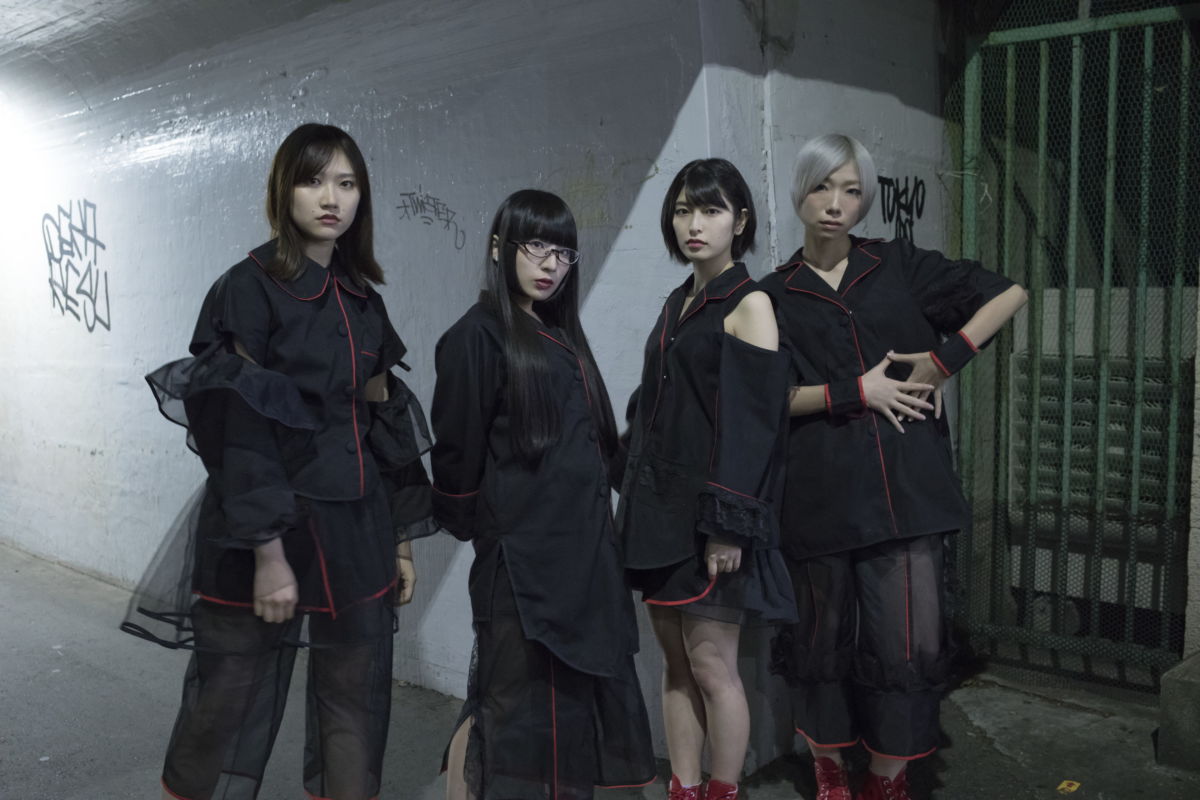
From left: Yui Inoue, Rin Wada, Aoi Yagawa, and Megumi Koshoji.
Below is an interview with Kenta Sakurai from Da Vinci News.
He talks about his vision and persistence as a producer for this work, which is like a so-called concept album, and his thoughts on the members who made this work.
In addition, although only the interview with Kenta Sakurai is quoted here, if you go to the site from "ブクガ's' Self-introduction'" and "ブクガ, the reason for evolution" below, you can also see the interview with the member.
"ブクガ's' Self Introduction'"
ddnavi.com
"ブクガ, the reason for evolution."
ddnavi.com
The more I think about it, the more disgusted I may have been.
─ ─ Your second major album, "yume", is a tremendous work of art.
Sakurai: Thank you very much. It's a bit of a long album to make one round. In this day and age, it is quite long for an album to exceed 60 minutes. Recently, there have been many shorter songs, so I was wondering if it is difficult to listen to them.
─ ─ As a listener, I feel like I'm completely in the middle of Mr. Sakurai's intentions. The last song and the first song are seamless, so when I notice it, I am made to go around several times (laughs).
Sakurai: When you notice it, you're back on track (laughs). I'm glad, I'm happy.
─ You once said that you are a perfectionist. But I thought you must be satisfied with this album.
Sakurai: I see (laughs). I had released three singles since the last album, and I wanted to include the songs from those singles, plus some new songs. I wondered how we could put them all together. So, I decided to use the word "dream" as the title, which has been a common motif in Bukuga's lyrics for a long time.
─ ─ What was your first thought when you completed the album?
Sakurai: Let's see......... "I don't want to listen to it anymore" (laughs).
(laughs) ─ haha.
Sacrai:It was quite difficult to mix. That's always the case, but this album is the kind of album where you want to check the mix all the way through. I spent an hour each time listening to the mix, concentrating on it, while discussing with the engineer about how the songs should be connected, like "I want to fix this part. When it was over, I was like, "I don't need to listen to it anymore. After we finished mixing all the songs, we went back to the mastering stage to check the mixes.
─ When your first major album "image" was released, you said that you "almost died while making it. When I remember that, I think you must have died once in the making of "yume" (laughs).
Sakurai:Yes, that's right (laughs). (Laughs.) When I made "image," I didn't have as many songs in stock as I do now. This time, there are quite a few new songs, but I was thinking about the theme of "dreams. image" had a 10-minute instrumental in the middle, which was rather simple in my opinion, but this time everything is connected, so I gave a lot of thought to the composition.
─ In fact, it has the image of one song for 67 minutes, doesn't it?
Sakurai: That's right. That's the image I wanted to create.
─ ─ In a sense, you are doing something quite challenging now that it is rare to listen to an album as a whole. However, as is the case every time, there is always a reason for the technique chosen in your music, and it is never just "I want to do it this way. For example, why do you make music with the often-mentioned odd time signatures? It is because it is the means by which the music that Kenta Sakurai makes can be heard in the most pop-like way, he says.
SAKURAI: Yes, that's right. As for the theme of dreams, it is something I have wanted to do for a long time, and I thought about what kind of album I could make using Maison book girl's songs to express it. Of course, I almost died while making it, but when I finished it, I felt a sense of relief. When you listen to the album as a whole, you can feel the warmth of the songs, and although the songs themselves are cold, I think the album as a whole has a raw warmth to it. I value what comes naturally from me in each song. Sound is like vibrations in the air. I think we have created an album where the atmosphere changes. But how do you really feel about it? Do you think this album is okay?
I think it's great.
Sakurai: I'm glad. I listened to it once yesterday, and I felt more comfortable listening to it than I did right after mixing. I have the feeling that as time goes by, I will gradually feel more and more that I have made something that I am satisfied with.
─ ─ I would like to talk about your motivation for making this album. One is the concept of "dreams," which I had envisioned for a long time. Another, and this is just a listener's impression, but I thought, "I think Kenta Sakurai was getting fed up with me. I thought, "I think Kenta Sakurai was getting tired of it.
Sacrai:I see. What do you mean by that?
Bukuga's music is very good, and I think it should reach a wider audience. I think that is your wish as well.
Sacrai:Yes, it is.
─ ─ In order to be widely heard, it is meaningless to create only what satisfies you. In that respect, Bukga's music is universal enough. But the reality has not caught up with that output, has it?
Sakurai: Yes, yes, that's true.
─ ─ That is of course not the fault of the listeners, nor of the members, nor of Mr. Sakurai. It's just that it is the way it is now. But it's definitely different from the situation I envisioned. At least, that is the situation that Bukuga was in before the release of this album. And for Mr. Sakurai, there was no way he could leave things as they are now. So, I think the reason why you were able to work so hard on this album and put so much into its production was because you were so disgusted with the situation.
Sacrai:That is something that happens all the time, but it certainly happened a lot this time (laughs).
(laughs) ─ Perhaps, Mr. Sakurai has been angry for a long time. And I think you were so disgusted that you created this "yume".
Sacrai:Yes, indeed. I was like, "Enough! I guess it's like, "As expected, please understand me. (Laughs.) If I seriously used my feelings and energy, I think it would spread outward a little more, as expected. Talking about the details of the songs, "Narrow Story" and "Boy Meets Girl" both have electric guitars in them.
Sacrai:I used to play it hard.
Sakurai: I used to use it a lot in the past. I used to use electric guitars a lot, but when I added electric guitars, the sound was so much more cohesive. It's very easy. It's hard to find a pop song in the world today that doesn't have an electric guitar. I used to think it was naive to use electric guitars because they made it so easy to put together a song. But when I started making this album, I felt a similar emotion to the "disgust" you mentioned earlier, and I thought, "Let's put electric guitars in this one. Of course, I wanted to do it in a way that made sense, but I knew it would be comfortable to listen to, and everyone is used to hearing that sound, so I thought I would include it because I think people feel comfortable with something that is familiar. I thought I'd put it in. On the other hand, there was also a part of me that said, "Let's take advantage of that feeling. Originally, I could have arranged the song without the electric guitar, but I gained confidence that I could make a cool song without it, so I felt that I didn't need to be confined to that. That was a big decision for me. I think it was a big decision for me. (laughs).
(laughs) ─ ─ (laughs) Oh, you must be very angry.
Sakurai: Yes, that's right (laughs). (laughs) Popular, easy-to-understand music usually has electric guitars blaring. It's like, "Anybody can do it, right? It's like, "Anybody can do it, right?
─ ─ In a sense, making a good song without using an electric guitar is a different kind of obsession, but this time you decided, "If it's for the song, I don't need that kind of obsession.
Sakurai: Yes, that's right. For the sake of the song. If it would make it possible for someone to listen to it, that is. I put the necessary tones only where they were needed, so I think I was able to use them in a meaningful way. But the more I think about it, the more I think it might have been infuriating. I might have been pretty pissed off, including during the production of the single songs on the album (laughs). (Laughs.) If I hadn't, I don't think songs like "Raincoat and Headless Bird" would have come out.
─ ─ To put it another way, I can feel the spirit in this album. I think that you felt that you were making something that could be listened to by a variety of people with the last few singles. But if it wasn't as well-received as I thought it would be, I think the spirit of the album overturns that situation.
Sakurai: I'm glad. The 14th song is titled "Dream," and I went to Kyoto University to talk to a researcher named Yukiyasu Kamiya, who is studying dreams. The first track and the last track, "fMRI (_TEST#1)," are based on the actual sound of a dream experiment. In the 14th track, "Dream," I used the brain waves of a dreamer as the strength and velocity of the handclaps on the left and right sides, and the sounds become stronger and weaker in a strange way, just like the movements of the brain when dreaming. So I thought that when you listen to it, you might feel like you are really dreaming. It's a bit like being lost in a dream.
This may be a bit off topic, but the more I study dreams, the more interesting they become. There are often time leaps in anime and other forms of animation. It may be occult, but there are many people who have experienced it. And when people go back to the past in a time leap, 100% of the time, there is a dream involved. There are stories of people who had lucid dreams and went back in time, and I thought it was simply an interesting theme. I think this album will give you the feeling of going back and forth, going back to the past, moving from place to place, and the sensation of dreaming.
Source: ddnavi.com
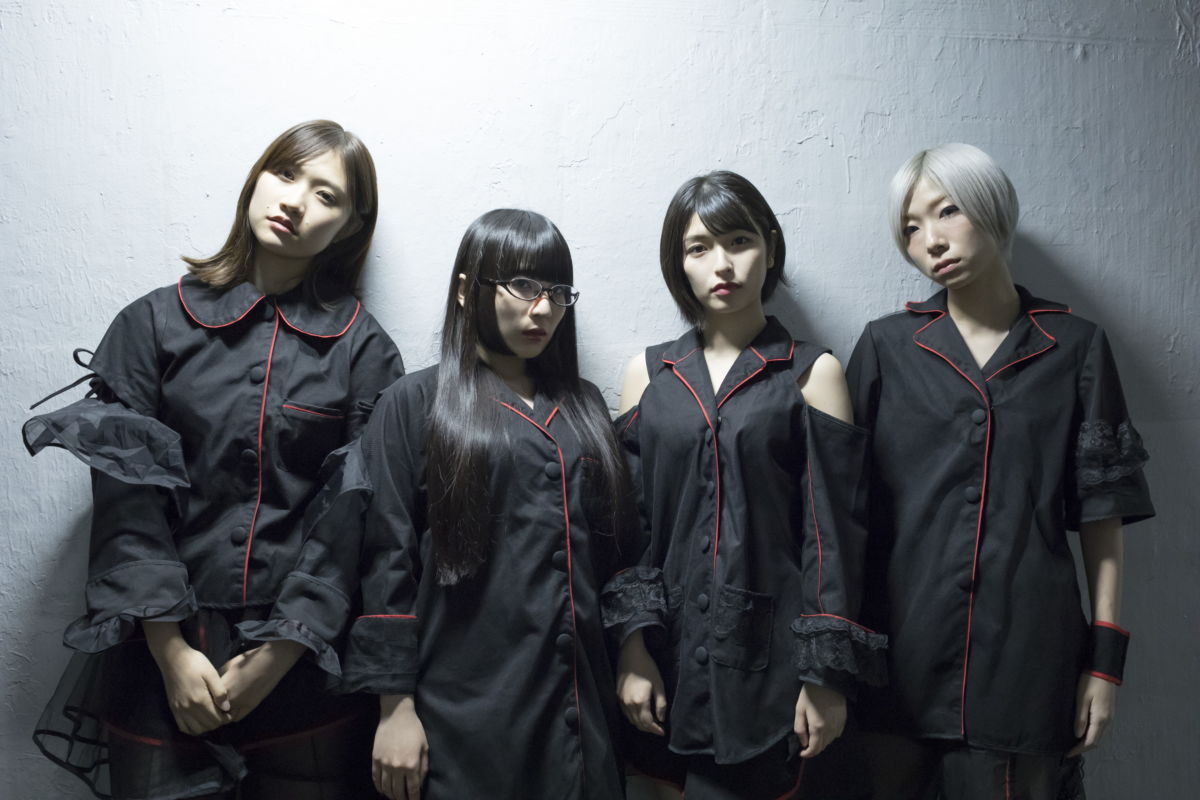
From left: Yui Inoue, Rin Wada, Aoi Yagawa, and Megumi Koshoji.
The members and I worked together to climb the stairs, and the strength of the songs themselves grew.
─ ─ What is great about this album, along with the "Kenta Sakurai was fed up with me" theory, is that the creation of this album is freer than ever before. The concept of "dream" and seamlessly connecting 21 songs with interludes, and depicting them as a single story, seems on the surface to be an intimidating task. Despite this, the popularity and universality of Sakurai's songs are suddenly enhanced in this album. The universality and the freedom of creation are fused together at a very high level in this album, and I think that's what is so great about it.
Sakurai:I am very happy. I think I may have grown. Also, as you can easily see when you listen to the album, the members' singing has improved. Each time we made a new song, I could see the members' growth, so I think we built on that by thinking, "Maybe this approach could work better, too. The members and I worked together to climb the stairs, and I feel that the strength of the songs themselves grew.
─ ─ In fact, I think that the improvement of the girls' abilities is one of the biggest factors that made this album's creativity more free. For example, a certain phrase came to mind, something that you would have given up on in the past, saying, "I can't sing this," but now you can put more and more of it into the song.
Sakurai: Yes, yes, that's true. Maybe the restrictions have decreased. When we were recording, there was a melody in a high key, and I said, "I don't know if I can get this far, but there is actually a melody like this, so can you try singing it? I would sing it, and it would come out surprisingly well. I would find parts that would never have come out before, and often I would adopt those parts. I think that the freedom of singing has been increased, and I think that the band has become more dependable in recording than before.
─ ─ One thing that struck me when I interviewed the members was that they said, "I am Bukuga. They have confidence in themselves and in their ability to protect this place. I have confidence in that, and I want to protect this place. I felt their confidence that the expression they put out is the correct expression of Bukuga.
Sakurai: Yes, that's right. The members also gained confidence after listening to the finished product, and each song became a staircase as it was completed one by one. I got the impression that each song became a staircase as it was completed one by one.
─ ─ In the case of this album, the girls have trained and improved their abilities, but there are many songs that would not be convincing unless they put forth more effort than before, and they worked hard to catch up, and the result is a good one. I think the songs themselves have a sense that they do not allow for any ambiguity.
Sakurai: Indeed. There may be many melodies and lyrics that need to be persuasive to be understood.
─ ─ In the beginning, Bukuga was interesting in the sense that Sakurai's songs were unstable, and that's what made it interesting. But now, it's not just the songs that are on top of each other. The songs and the music are combined into a single mass, an organic body.
Sakurai: Yes, that's right. It exists as a part of the song. It is indispensable, and there is no substitute for it. It is not a case of "it would be fine if someone else sang it," but I think it makes sense and takes shape only because the four of us are doing it. If the singing is good, the melody sounds better and the words are conveyed more easily, so I was simply happy to hear that.
─ As I mentioned earlier, "yume" is a piece that embodies the concept that you had in mind from the beginning, while at the same time increasing the universality of the music.
Sakurai:Yes. Originally, I like to write songs that have only a few notes and only what is necessary. But, for example, "bath room" from my indie days was unreliable, so I had to add an electric guitar to make it work as a piece of music. But by relying on singing, I was able to reduce the number of notes even further, and I can listen to the music with just a piano. I feel like the range of what I can do with Maison book girl has expanded.
─ ─ In terms of lyrics, there are a few songs that I think are symbolic. The first one is "Raincoat and Headless Bird." I feel that Bukuga's lyrics don't show a way out, but they also don't close in on the world. Also, there is almost always a motif of a room. Even if there is something outside that you don't like, inside the room is a comfortable place where no one can harm you. In that sense, the lyrics of "Raincoat" are inside a room, but there is a sense that it is not just inside the room. I think this song is the one where the flow of the album's open output began to take shape.
Sakurai:Yes, that's right. After I wrote this song, I was thinking, "Let's break it down even more," but I had a feeling of that. I think that came out in the sound as well.
I think the bright things that can be seen from inside the room have been depicted in the lyrics before, but the shift of perspective to the outside is a rather big difference.
Sakurai: I see, that's true. I guess you could say that.
Sakurai:I see... I guess that's true, if you ask me... On the contrary, when I read the lyrics of the songs in "yume" again, I thought to myself, "How could you use the same motif repeatedly in your songs?
Sakurai:(Laughs) That's what I think too. When I look at it again, I see many of the same motifs. In that sense, they are all based on the same thing. Also, the whole album is one song. It is highly possible that all the songs on this album are the dream of the same person. Of course, I can't be absolutely sure.
───Under the premise that it is a dream, there are two songs whose place is no longer in the room, aren't there? Boy Meets Girl" and "Shadow Train. I thought, "Wow, I'm really outside! I thought (laughs).
Sacrai:Haha, I see.
I see...the main characters in the lyrics have always been sheltered in their rooms. I thought they were standing in a different place. This may be a stretch, but I think the "universality with no excuses" is especially evident in the ultra-pop "Boy Meets Girl" and "Shadow Train.
Sakurai:Yes, they are super pop in my opinion. Those two songs are the most pop songs I've ever heard. It's like, "Let's fill up the outer moat" (laughs). In terms of arrangement, both songs have very few notes, but I was able to create a pop atmosphere with that number of notes and vocals, which was a good experience for me, and gave me confidence that it would work.
─ You once said about the lyrics, "There is light where it looks like a dead end, and I always think so. I feel that the two songs you just mentioned are a bit beyond the light that can be seen at a dead end.
Sakurai: Yes, that's right. Maybe they are moving around a bit. But I also think that maybe there was a room, and when I thought I went out of that room, there might have been a bigger room outside.
I see. Or maybe you thought you went outside, but it was just a dream.
Sakurai: Yes, that's right.
───By adding the concept of "dream," you can imagine how the project will expand further in the future, can't you?
Sacrai:Yes, that's right. I would be happy if there are many people who like Maison book girl or listen to the album for the first time because of this album.
─ What is your vision for Bukuga after this album?
Sakurai:Maison book girl is a group that makes proper music. From my point of view, it would not be possible without the four of us, so I would like the world to look at us in that way. I hope people will look at us honestly and without colorful eyes.
Source: ddnavi.com
From left: Yui Inoue, Rin Wada, Aoi Yagawa, and Megumi Koshoji.
Below is a personal interview between Kenta Sakurai and each member from Music Nathalie.
The producer, Kenta Sakurai, and each member have a one on-one meeting. This is a very interesting meeting for the three parties, where each member has their own true feelings, thoughts about Kenta Sakurai, impressions of this work, etc.

From left, Megumi Koshoji and Kenta Sakurai.
Please do it right!
Kenta Sakurai: I talk a lot with Koshoji about Bukuga. We discuss setlists and staging for one-man shows. I think we talked for about an hour yesterday about the next one-man show. Koshozy also comes up with setlists for our regular one-man events.
Megumi Koshoj: That's right.
Sacrai I wonder how Koshozy feels about Bukuga now.
Koshoji What is that! I mean, shouldn't that question be answered by Sakurai, on the contrary? I'm only doing Bukuga, but you have your hands in many things, don't you? There's Omori's (Yasuko) backing band, Kumari Department Store, and when I thought of ......, ZOC has also started.
Sakurai: I haven't written any songs for ZOC so far.
Koshoji: I'm sure they will. I think he will at least arrange some songs. Oh, you also do Nicho-Kai (Nichome no Kai coming out), don't you!
Sakurai You are doing it.
Koshoji That's why I'm the one who said that. How do you feel about doing Bukuga?
Sakurai: Since the beginning, I have always felt that Bukuga is a place where I can do what I want to do best.
Koshoj: What do you mean by that?
Sakurai The main body. Without it, the others would not be possible.
Koshoj If that's the case, then I'd like to talk about it a little more. ...... The other day when we were recording, he said, "I lost consciousness in a cab because Mr. Omori's rehearsal and Bukuga's composition overlapped so much. I don't know! Please do it properly!
Sakurai: I'll do my best.
Koshoji: Ha-ha-ha! (laughs) When it comes to what I have to say to Mr. Sakurai, this is what I have to say.
─ ─ In fact, you seem to be very busy, and you feel that you would like me to pay a little more attention to Bukuga?
Koshoj I think everyone thinks so.
Sakurai I wonder if that is so. ......
Koshoj: You do too many things and are always on the edge of your schedule. I think it's absolutely true that they can't see Bukuga.
Sakurai That's a lot of distrust (laughs). That's not true. That is a misunderstanding.
Koshoji Even if you say that, it's meaningless if you don't act. For example, you went to see Kumari and Kimiraji's (your neighbor Rajikarun) two man show and didn't come to Bukuga's concert, or you didn't come to the first event hosted by Bukuga and performed at Mr. Omori's birthday party.
Sakurai That was a coincidence.
Koshoji That was not by chance. It was not by chance that you said "OK" to an offer to perform at an event organized by Bukuga, even though it coincided with your own event.
Sakurai I'm sorry about that .......
Koshoj: You are so honest (laughs).
Sakurai But really, I have the greatest attachment to Bukuga, although I don't mean to compare. Nicho-kai is Mikitty's (the real one), and as for Kumari, I think it would be better to make it less like me. Bukuga takes the most energy to write songs. That's how much energy I put into making the songs.
Koshoji: Is that so?
I just put my fist down!
───This album is a tremendous achievement, isn't it? I am sure that it would not have been possible if you had not traveled around Japan with Omori's band or written songs for other idols in the artist mode.
Sakurai: That's for real. In Mr. Omori's band, there are times when the band performs songs that I didn't write. There, I learn a lot of things that I don't know, and that has an influence on Bukuga as well.
Koshoji: Last year, when Bukuga performed at TIF (TOKYO IDOL FESTIVAL), Sakurai-san performed with Omori-san's band at Rockin (ROCK IN JAPAN FESTIVAL), which was held on about the same dates. That night, after I had seen various idols, I said to Sakurai-san, "I think Bukuga lacks a sense of unity in their live performances. I told Sakurai-san that I thought Bukuga lacked a sense of togetherness in their live performances. Bukuga's outspoken live show would float away at festivals. I understand that Sakurai-san realized this because he was at Omori-san's live show.
Sakurai But?
Koshoji We knew from the beginning that it was Mr. Omori's birthday, but you put the first event hosted by Bukuga on top of it and went to his side! And the songs for the album haven't even been written yet. That kind of thing is really not good. Are you looking at Bukuga's schedule?
Sakurai: I'm looking, I'm looking, I'm looking.
Koshoj: If you keep saying that, you haven't seen it. That's the kind of thing you say when you haven't seen it.
Sacrai: I'm looking at it a lot. I think about the members every day, about 30 minutes each. That's why I'm losing about two hours of sleep.
Koshozy: Wow (laughs). I understand that, but please tell the other members about it.
─ ─ You don't usually talk about this kind of thing?
Koshozy: We don't talk about it, and we don't meet in the first place.
Sakurai: During the production period, we do see each other quite a bit.
Koshozy: We only meet when we record songs, so we only talk about recording.
───In spite of that, when I listened to the new songs on the album, I felt that your understanding of the songs and the expression of the songs have evolved dramatically.
Sakurai: That's what I think, too. When I compare the new songs recorded for the album with the songs from the previous singles, the new songs are much better. Compared to six months ago, I think I could have recorded better songs now. I thought the speed of growth was very fast. How do you feel about that?
Koshozy: I did feel that my singing was getting better when I listened to the new songs, but when I heard that they were mixed better, I thought, "Oh, that's right" (laughs).
Sakurai No, the song changed in the preliminary stage of mixing. The voices are better, and each voice stands out even more.
Koshozy: I think this album is pretty good, too.
Sakurai What do you mean by "pretty good"?
Koshoj: We had a negative image of Mr. Sakurai up to that point, like, "It takes too long to make a song. So if he had come up with a half-baked song, we would have punched him in the face, but since it was a good set of songs, we dropped our fists.
Sakurai: I'm glad. They forgave me.
Koshoj: You were really on the edge, weren't you? We were on the edge! But that means, you know? If people who don't have negative feelings like we do listen to it, it's a "very good album," right?
No, it's an album that needs to be monitored.
─ ─ I didn't hear your answer to the question "How do you feel about Maison book girl, Mr. Koshozy? What do you think?
Koshozy: Through Bukuga, I realized that I like to think about the structure of live performances and poetry. If I were another idol and not Bukuga, I don't think I would be the one who comes up with the set and the poems. In a way, I think I am similar to Sacrai.
─ Your album also includes a poetry reading "Mysterious Balloon" written by Koshozy, what do you think about his poetry?
Sakurai: I always think it's interesting. It's something I couldn't write myself.
Koshozy: Thank you!
─ Do you ever explain to Mr. Sakurai about the poems you write?
Sacrai: No, I don't. But there are times when I feel like, "I know what you mean. But there are times when I feel like, "I understand. Since we started Bukuga, Koshozy and I have had a similar worldview, so there is no gap in our perceptions. For this album, when Koshozy was wondering if he should add something, I would say, "That would be too easy to understand, so you shouldn't do that.
Koshozy: When I ask the members if they understood the meaning, they say, "I don't know. But when I told them, "This is what it means," they understood, so I thought it would be better to add that. So I asked Mr. Sakurai about it, and he said, "You don't have to add it, I understand. If Mr. Sakurai had not said that, I probably would have added it. Usually I don't think, "I have to write a poem that everyone can understand," but this time I thought, "If I'm going to write a poem, I want everyone to understand it.
Sakurai: I think it was the right decision not to add it. It is just right for the overall balance.
Koshoj: That is also the case with stage direction. When we decided to do a production like this, it may seem normal to Sakurai and myself, but to the people around us, it seems different.
Sakurai: We two don't know why. But I am the one who makes the final decision (laughs).
Koshozi: If we were working separately, our opinions would be drowned out by those around us. We would have said, "That's not normal, so I'll just go along with everyone else.
Sakurai: So I rely on you.
Koshoj: Me too. I am able to do what I want to do with Mr. Sakurai's help.
Koshoj──So, everything is settled and you are happy.
Koshoji: No, we need to monitor the situation (laughs).
Source: natalie.mu
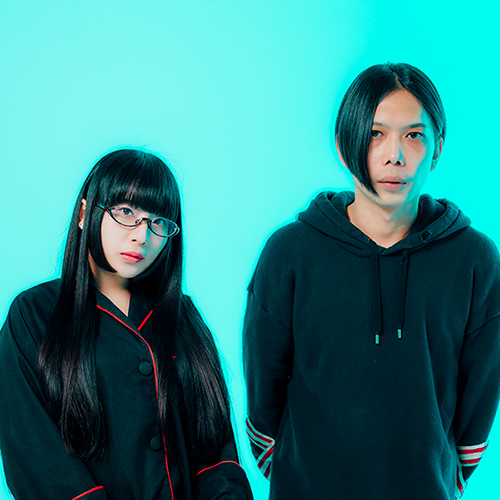
From left, Rin Wada and Kenta Sakurai.
I think Wada would like it even if he wasn't a member of Bukuga.
Sakurai What was your impression when you listened to the album as a whole?
Wadawa: Compared to this album, the old songs were sung with my head on a swivel, so I felt like "I want to re-record all the old songs.
Sakurai I see. It is obvious that your singing has improved recently.
Wada: It's especially obvious on an album because you can listen to them all together. That's why the song titles and tracks have changed, but I'm glad we were able to re-record "my cut" (retitled "more past" and newly included in the album).
Sakurai: The theme of the album is a dream, so I reworked it to fit that theme. I think that if people who know Bukuga listen to this album, they will be quite shocked. For example, if Wada were not a member of Bukuga and listened to this album, I think he would like it.
Wada: I think so. I like this album. I listen to it from a listener's point of view.
Sakurai: Wada has always liked singing. It is difficult to say, but he is a person who listens to the kind of music that music lovers among the members listen to. In that aspect, I think we are rather close to what Wada really likes.
Wada: That's right.
Sacrai Which song do you like best?
Wada I think "Yume".
Sacrai Ah. I feel that way about Wada. Only the chorus of "Yume" is strange.
Wada Yes, the beginning of the song is very pleasant to the ear, and you can easily get into it, but the chorus made me say, "Oh, wow. It's a nice song.
Sakurai Thank you very much. I did a lot of work on the sound of that song, but I think I was able to express the gentle and strong parts of the song well, like the emo feeling of COPY00.
Wada The difference in the way the A-melody and the chorus are sung is very noticeable in this song. The way I sang the first part of the song was modified a lot during the recording process. But when I listened to the final version, I thought it was better.
Sakurai: With my tentative singing, you can't understand the nuance, can you?
Wada: I thought I had tried to make it as close to a tentative song as possible within the range of my voice. Looking at the overall atmosphere, it was the right decision to have it corrected.
I was not mistaken after all.
Sakurai The songs we recorded for the album were all really good. I think we spent more time than usual on recording the songs.
Wada: Until now, we were probably struggling to find OK takes from among the NG takes, but now I think we are assuming that everyone can sing to some extent. Because everyone is now able to produce a variety of vocal tones.
Sakurai That's true. Since the members have become able to sing, I have become greedy. Even in takes that I would have accepted in the past, I started to get greedy, thinking, "Maybe it can still be done.
Wada: I think there was a lot of that going on this time. There were quite a few disagreements, such as "Sakurai-san says he likes this one better, but I like that one better. Like the second part of "Yume," "Shadow of a Building.
Sakurai: In the studio, I chose that take, but Wada preferred another take. Wada: "I prefer this one.
Wada: Neither of us would budge (laughs).
Sakurai: So I took it home and listened to it, and I felt something was different. I took it home and listened to it, and I felt something was different. In the end, I chose that one, didn't I?
Wada: I knew it. When I heard the finished product, I thought, "I chose the milder version. I was not mistaken after all (laughs). I'm glad we finally hit it off.
─ ─ Do the two of you have a lot of technical discussions?
Sakurai: Yes, we do. Wada would contact me about choreography. Wada is a person who understands time signatures, so for example, if there is a part with seven beats, he would ask me whether it would be better to use a 4-3 rhythm or a 3-4 rhythm.
Wada: If I or Mr. Sakurai left all the choreography to Mikitty without saying anything, I think we could create something interesting, but I think it would be difficult for the audience to understand unless we break down the irregular time to some extent, so I think it would be better if I take the lead in that area.
Sakurai: Mikity's choreography is free and interesting, and I feel that Wada is able to make it easier to understand. It helps me a lot.
It's a mutual "can I do it a little more?" battle.
Sakurai: I think this album is so good that if it had been released by someone other than myself, I would have felt frustrated.
Wada I don't know much about literature, so I thought I didn't really understand the lyrics either, but I thought it was a very interesting experiment to involve medical elements as you did this time.
Sakurai: When I decided on "dreams" as the overall theme for this album, I went to Kyoto University to talk to a professor, Yukiyasu Kamiya, who is researching dreams, and asked him to lend me some of his research data. The clapping sound was also made by adding velocity using brain waves during dreaming and setting the velocity to the beat. I received audio files of fMRI (a method of studying brain activity using MRI) experiments and used them in the music, and I also received texts of the actual experiments for reference when creating the music.
Wada: The fact that it is based on facts is what makes it so compelling. I thought it was very interesting.
Sakurai: But you don't explain such things to the members. It's too much trouble.
Wada That's because it's bothersome.
Sakurai Because I want them to concentrate on the songs. That's why I often inform them of the background after mastering.
Wada Also, sometimes the arrangement changes after recording. In "Raincoat and Headless Bird," I was able to sing a beautiful vibrato in the part called "Cold Morning," but when I listened to the finished recording, the track was removed from that part. I was like, "Okay, I got it.
Sakurai: I always spend a lot of time on mixing, but this album was so hard to check that I thought I was going to lose my mind. I had to make adjustments on a track-by-track basis and fix things that bothered me when I listened to it in full, but since the recording time is so long, it would take more than an hour to check it all the way through. I think Wada listens to every musical detail.
Wada: There are other members who can express themselves emotionally, but since Mr. Sakurai has gone to the trouble of creating such precise rhythmic music, I feel that I must be the one who does not disrupt it.
Sakurai Thank you very much.
─ ─ Going back to the songs, in this album, the voices are not just one of the parts of the songs, but the songs exist as if they were songs. In the beginning, I think it was considered as a part of the song.
Sakurai That's really true.
Wada: I was afraid to try to bring out my own taste a little bit at a time, and then I realized that I could do more.
Sakurai Recently, both Wada and the other members have been able to express their own singing styles, and I think it has become a good mixture.
Wada The balance of unison among the four of us is also good.
Sakurai Because the four members are of very different types, each voice can be heard even in unison.
Wada Did you envision from the beginning that the four of you would be able to express yourselves and sing together?
Sakurai I had hoped that would happen, but to be honest, there were times when I was worried that we wouldn't get any better. But I could feel that they were getting better every time we recorded, so it was a good stimulus for me to write better songs. It makes it easier for me to imagine, "Next time, I'll have them sing like that.
Wada: The fact that we are both asking each other, "Can we do a little better?
Source: natalie.mu
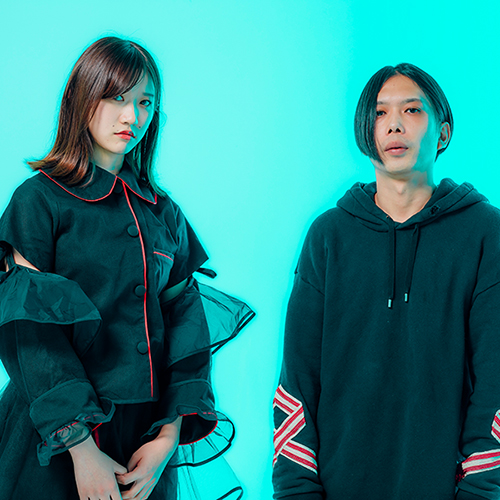
From left, Yui Inoue and Kenta Sakurai.

Related Articles
In-depth summary of Sakurai Kenta
Kenta Sakurai is a lyricist, composer, arranger, and music producer, and the president of EKOMS Inc. He first emerged as a producer for Izukoneko, and later as the general producer for Maison book girl. Influenced by contemporary musicians such as Steve Reich, he is a proponent of "gen-neon pop," which mixes popular music with contemporary music, and is known not only for Maison book girl, but also for producing Kumari Department Store and working with Kaika and Yasuko Omori.
Read Article

In-depth summary of Qumali Depart
Kumari Depart is a Japanese female idol unit produced by Kenta Sakurai and formed in 2016 as a "complete royal idol". The group debuted as a three-member group consisting of Miss iD 2016 finalist Risako Hanei, the same semi-finalist Nako Yuu, and Nico Hayazakura, who was introduced by an acquaintance of Sakurai's. In May 2018, Hanei graduated and new members Ayane Oda, Fuuka Kaede, and Mitsuba Hina joined. In June of the same year, Hina left the group; in February 2020, Mei Yamano and Mana Nanase joined the group; in March 2023, the group held a solo live concert at the Nippon Budokan.
Read Article
Tags
Contents
- Maison Book Girl Overview
- About the producer Kenta Sakurai
- Maison Book Girl squad
- Yui Inoue
- Brief biography of Yui Inoue (from birth to before and after joining Maison Book Girl)
- Yui Inoue's "Special Room" and "Fashion"
- Yui Inoue's Letter of Partiality
- THIS IS WHAT Yui Inoue'S DOING.
- Impression of Yui Inoue as seen by other members
- Yui Inoue as a "nutritionist"
- Megumi Koshoji
- Brief biography of Megumi Koshoji (from birth to before and after joining Maison Book Girl)
- Megumi Koshoji's "Special Room" and "Fashion"
- Impression of Megumi Koshoji as seen by other members
- Megumi Koshoji's "Ten Pieces to Take to Uninhabited Islands"
- Megumi Koshoji and Keyakizaka46
- Aoi Yagawa
- Brief biography of Aoi Yagawa (from birth to before and after joining Maison Book Girl)
- Aoi Yagawa's "Special Room" and "Fashion"
- Impression of Aoi Yagawa as seen by other members
- Aoi Yagawa and Seiko Matsuda
- Aoi Yagawa and Haruka Kudo
- Rin Wada
- Brief biography of Rin Wada (from birth to before and after joining Maison Book Girl)
- Rin Wada's "Special Room" and "Fashion"
- Rin Wada's Letter of Partiality
- THIS IS WHAT Rin Wada'S DOING.
- Impression of Rin Wada as seen by other members
- Rin Wada's "Ten Pieces to Take to Uninhabited Islands"
- Three comic books that inspired Rin Wada
- Rin Wada and Glasses
- Former Maison Book Girl members
- Kaori Munemoto
- Brief biography of Kaori Munemoto (from birth to before and after joining Maison Book Girl)
- Impression of Kaori Munemoto as seen by other members
- Kaori Munemoto withdrew from Maison Book Girl.
- History of Maison Book Girl activities
- 2014 works
- July 2014
- August 2014
- September 2014
- October 2014
- November 2014
- December 2014
- 2015 works
- January 2015
- February 2015
- March 2015
- April 2015
- May 2015
- June 2015
- July 2015
- August 2015
- September 2015
- October 2015
- November 2015
- December 2015
- 2016 works
- January 2016
- February 2016
- March 2016
- April 2016
- May 2016
- June 2016
- July 2016
- August 2016
- September 2016
- October 2016
- November 2016
- December 2016
- 2017 works
- January 2017
- February 2017
- March 2017
- April 2017
- May 2017
- June 2017
- July 2017
- August 2017
- September 2017
- October 2017
- November 2017
- December 2017
- 2018
- January 2018
- February 2018
- March 2018
- April 2018
- May 2018
- June 2018
- July 2018
- August 2018
- September 2018
- October 2018
- November 2018
- December 2018
- 2019 works
- January 2019
- February 2019
- March 2019
- April 2019
- May 2019
- June 2019
- July 2019
- August 2019
- September 2019
- October 2019
- November 2019
- December 2019
- 2020 works
- January 2020
- February 2020
- March 2020
- April 2020
- May 2020
- June 2020
- July 2020
- August 2020
- September 2020
- October 2020
- November 2020
- December 2020
- 2021 works
- January 2021
- February 2021
- March 2021
- April 2021
- May 2021
- August 2021
- Maison Book Girl discography
- Single
- March 14, 2015: "white" (limited sale at the live venue)
- March 14, 2015: "black" (limited sale at the live venue)
- November 30, 2016: "river (cloudy irony)"
- July 19, 2017: "412"
- December 13, 2017: "cotoeri" (Sarashina)
- June 20, 2018: "Elude"
- April 3, 2019: "SOUP"
- July 31, 2019: "umbla"
- EP
- March 30, 2016: "summer continue"
- Album
- 9 / 23 / 2015: "bath room"
- April 5, 2017: "image"
- November 21, 2018: "yume"
- December 18, 2019: "Children of the Sea and the Universe"
- Best Album
- June 24, 2020: "Fiction"
- Golden Record
- October 10, 2018: "faithlessness (Tomggg Remix)"
- October 10, 2018: "last scene (Hakushi Hasegawa Remix)"
- 10 / 10 / 2018: "veranda (bo en MEGACRAZYMIX)"
- February 14, 2019: "Karma (Miii Remix)"
- February 14, 2019: "veranda (Aiobahn Remix)"
- February 14, 2019: "Okaeri Sayonara (Seiho Remix)"
- February 14, 2019: "16 years old (Ryan Hemsworth Remix)"
- Blu-ray
- February 5, 2017: "Solitude HOTEL 2F + faithlessness" (with compact disc)
- August 18, 2021: "Solitude HOTEL"
- Analog single
- May 18, 2018: "Karma-Bath Room (UK Version)"
- Release on other media
- July 9, 2015: "Oyasumi Hologram presents Midnight note" (download only)
- July 14, 2016: "サワソニ 19 Umi no Ie Acoustic Live" (Compilation Album CD-R Limited sale at live venue)
- Unknown release date MyCut soundtrack
- Participating works
- September 18, 2014: "きゅるきゅる" (single) by Seiko Omori
- July 15, 2015: "One-Way Mirror / Satchan's Curry" by Seiko Omori (single)
- December 9, 2015: Urbangarde "2015" (album)
- January 27, 2016: HARUKA Tomiyuki's "Koi wa Majutsu" (Love is Magic) (limited distribution single)
- March 23, 2016: Seiko Omori "TOKYO BLACK HOLE" (album)
- September 7, 2016: Kafka's "Peek-a-boo" (album)
- December 8, 2016: Kafka "City Boy City Girl feat. Aoi Yagawa (Maison Book Girl)" (distribution only single)
- December 14, 2016: GOMESS (album) "-" (album) by
- August 30, 2017: "draw (A) drow" by Seiko Omori (single)
- December 15, 2017: PLASTICZOOMS "Minds" (single: limited sale at live venue)
- October 17, 2018: PLASTICZOOMS "Minds" (single: limited edition)
- October 24, 2018: Naoto Nakamura "Start To Rain" (single)
- October 24, 2018: "CD won't sell anymore" (album) without pop
- November 25, 2020: Urbangarde "アバンデミック" (album)
- Solo works by Megumi Koshoji
- January 24, 2015: "Megumi Koshoji" by Megumi Koshoji (self-produced book: with CD-R)
- BiS works with Megumi Koshoji
- January 22, 2014: "STUPiG" (Sarashina)
- January 22, 2014: "Disney Rocks! Girl's Power!"
- March 5, 2014: "WHO KillEDIDOL?"
- April 9, 2014: "the divine move"
- May 21, 2014: "EMPLOYMENT 2014"
- May 28, 2014: "FiNAL DANCE / nerve"
- May 28, 2014: "Idol is Dead - Non's Propaganda War - [Super Perfect Edition]"
- July 2, 2014: "Euryaoi!"
- July 8, 2014: "All Night Japanese DVD in BiS"
- September 3, 2014: "2014.5.6 BiS Kaidan LAST GIG @ WWW" (VHS)
- 9 / 3 / 2014: "2014.5.6 BiS Kaidan LAST GIG @ WWW" (2 cd)
- September 3, 2014: "BiS Kaidan"
- September 24, 2014: "BiS Shudan LIVE' BiS Narashino Budokan' @ Yokohama Arena"
- December 12, 2014: "2nd ALBUM"
- May 27, 2015: "DJ Megumi's BiS MiX"
- July 22, 2015: "Full BiS Cannonball 2014"
- Solo works by Aoi Yagawa
- 10 / 10 / 2017: Aoi Yagawa "ON THE LINE" (download only single)
- Solo works by Rin Wada
- August 30, 2014: "PRISM DRIVE" (single) by Rin Wada (in the name of Rinne Mure)
- January 31, 2015: Rin Wada "Tsukiichi! 〜 DearStage2014 〜" (compilation album)
- Maison Book Girl's signature song
- bath room
- snow irony
- last scene
- lostAGE
- blue light
- bed
- cloudy irony
- karma
- sin morning
- end of summer dream
- veranda
- faithlessness
- int
- townscape
- screen
- opening
- After a long night
- Maison Book Girl's Inside Stories, Trivia, and Small Stories / Episodes and Anecdotes
- Megumi Koshoji's first experience of cherry blossom viewing in spring 2014
- "BiS" that was important to Megumi Koshoji and "Maison Book Girl" that was important to her
- It was December 24, 2016 when Megumi Koshoji first saw the live of Keyakizaka46, his big fan, at the first one man live at Ariake Coliseum.
- Maison Book Girl's one man live "Solitude HOTEL" is named after Megumi Koshoji.
- AT THE VERY END, I HAD TO TAKE THE TEST AGAIN, Yui Inoue.
- Shinjuku Station is the Yui Inoue of Kimon
- Yui Inoue was interviewed by Maison Book Girl on September 13, 2014.
- Birthday present for Kenta Sakurai who was treated halfheartedly by Aoi Yagawa
- Huez, the space director of Solitude HOTEL
- Delete Maison Book Girl (= end of activity)