

Maison book girl is a Japanese idol group formed on November 5, 2014. The group was born around composer and music producer Kenta Sakurai and former BiS member Megumi Koshoj. The group developed from a performance in which Megumi Koshoj recites lyrics to a backdrop of Kenta Sakurai's "Gensoundo Pop" music, which makes heavy use of irregular time signatures. On May 30, 2021, it was announced that the group would end its activities.
INTERVIEW : Kenta Sakurai
Four-quarter time, five beats, and seven-quarter time all feel the same to me
Q: What was surprising to me when I heard the members talk about your concept, but it doesn't seem to be like that at all.
Kenta Sakurai (hereafter, Sakurai) : That's right. We are working on it rigidly, but for example, we are discussing whether or not the members should be on the surface of the jacket, and we are trying to incorporate their opinions.
Q: Maison book girl is a group that really shows off your sense of beauty, what was the concept behind the creation of this group?
Sakurai : I was originally involved in an idol group called "Izukoneko," but for my next project, I wanted to do something more sophisticated, both in terms of sound and visuals. For the music, I wanted to reduce the number of notes as much as possible and create something simple but cool. My original worldview, which I love, has not changed, but I started with the idea of keeping it simple and using only the bare minimum necessary to create something within that worldview.
Q: Many people focus on the odd time signatures in your music, but I was more impressed by the clean, sterile sound you created.
Sakurai : That's my own taste in sound, and I don't like noisy songs that much. In this album, "my cut" has electric guitars and is very well received by the audience, but I thought it would be bad if there was not at least one song that would get people excited, so I wrote it. I made the arrangement based on rhythm instruments, acoustic guitars, and classical instruments, and I tried to create a song that would be pleasant to listen to. As for the time signature, I just like the rhythm because I started playing the drums, and I don't really think of it as an odd time signature. I feel like I just go with what feels good. 4/4 time, 5/4 time, 7/4 time, it all feels the same to me.
Q: You are not trying to be pretentious?
Sakurai : Yes, I am. I tried to create something that was pleasant to listen to, and that's how it came out.
Q: Do you make references for your music? I don't really see that in Maison book girl's songs.
Sacrai : I really start with one idea and let it grow. In the case of "A song like the last one," Koshozy wanted to write lyrics for a three-beat song, so I started writing the song based on the three beats and the structure of the chorus being in 4/4 time, and imagining drum phrases, a bar phrase on the guitar, this chord, and this instrument intertwining. I started making the song with this image in mind. The rest of the song just kind of expanded on its own, or I would think about it as I was making it. I think about the rest of the song as I'm making it, so I don't try to make it sound like anything at all.
Q: One of the characteristics of your music is that the melody is catchy.
Sacrai : I always start with the piano, but I sometimes start with the A melody or the chorus while I'm working on the piano. But most of the time, I start from the introduction.
Q: You start from the introduction?
Sakurai : Yes. I make it from the intro, and then connect it to the rest of the song.
Q: That's interesting, because I haven't heard of such a way of making music.
Sacrai : I see (laughs). (laughs) The introduction sets the mood of the song, doesn't it? It's like I'm following that mood to create the rest of the song.
In my case, maybe it is mathematical.
Q: What is the axis of your music that you never break?
Sakurai : I try to make melodies that are in odd time signatures but sound beautiful or comfortable to listen to. It is simple, but it is like a puzzle. The connection between the melody and each instrument has its own meaning, and I make sure that it all fits together beautifully.
You mentioned the word "puzzle," but software such as Pro Tools is mainly used to cut and paste by looking at waveforms, so there is a lot of work involved in creating by eye. So you are thinking more visually?
Sakurai : I think so. But in my case, it may be more mathematical. I record live guitar sounds, but I know which chords I'm going to use. I record only those chords and arrange them like a puzzle. I don't really like clashing sounds, so I try to make each sound as important as possible.
Q: Did you originally study science?
Sakurai : No, not at all. I didn't even go to school properly since I was in the fourth grade (laughs).
(laughs) So you are self-taught?
Sacrai : Yes, I am self-taught in music.
Q. By the way, what kind of music did you like to listen to?
Sacrai : When I was in elementary school, I listened to the kind of music that was on TV, and when I was in junior high school, I listened to Shibuya-style music under the influence of my older sister. After that, I started listening to contemporary music, and I also started liking idols and anime songs. I started listening to contemporary music, and then I started liking idols and anisong. I would say that ani-songs are also idol-like. I like that kind of music and contemporary music, and I'm somewhere in between.
Q. Which contemporary musician do you particularly like?
Sakurai : I first started listening to Steve Reich, and I still really like him.
Q: What is it about contemporary music that attracts you?
Sacrai : I never get tired of listening to it. It has originality. It tries to express something with only classical instruments, and you can feel not only the message but also what they wanted to do with this rhythm. I think it is the same feeling as looking at old paintings. When you look at a painting, you look at it while thinking about it. I enjoy it in the same way.
Q: The more I listen to your works, the more I wonder why you are producing idols.
Sacrai : I like idols, but it's also because it's an easy way to get into the industry. Many people who like idols also listen to us musically, so I don't think there is any problem there at all.
Source: ototoy.jp
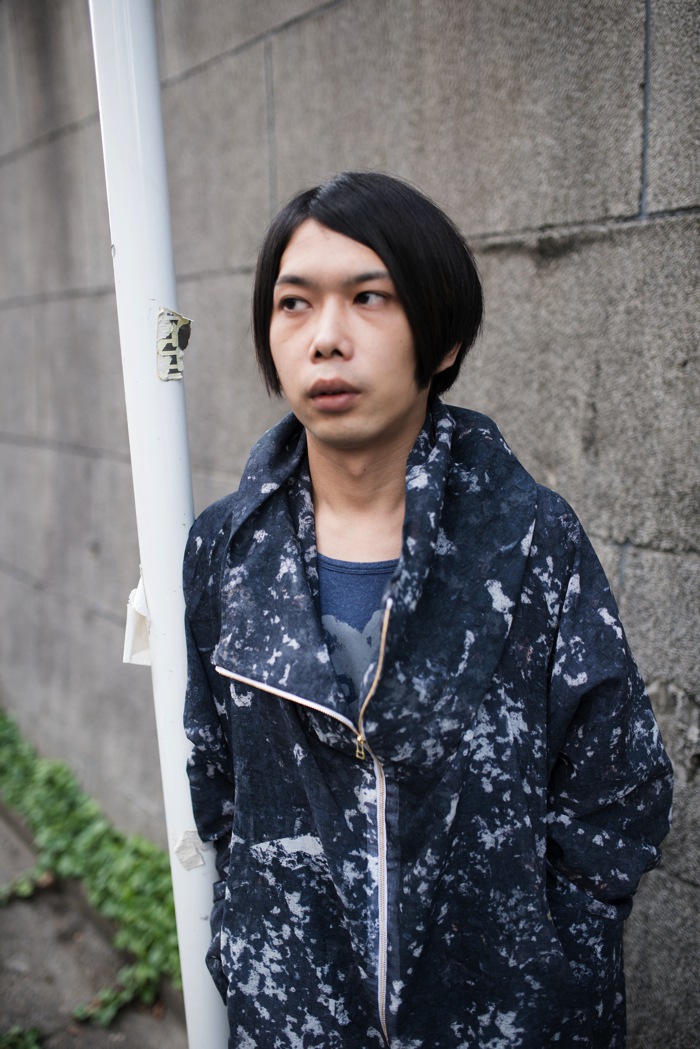
Kenta Sakurai
I thought it was interesting that the four of us were singing in an incomplete state.
Q: Maison book girl started with Koshozy as a driving force, what do you find attractive about her?
SAKURAI : Koshozy has a similar sense of what I like. When we talk, we don't really disagree on what we want to do. I think he understands me and the direction I want to take.
Q: I was most shocked to hear that there was no singing screening for the first member audition (laughs). What did you look for?
Sakurai : Humanity and aura. Also, since they are idols, they should be cute girls. I write the songs, so I can tweak the singing parts in various ways (laughs). So, I chose the girls based on their atmosphere, appearance, and aura.
Q: I feel that Maison book girl is particular about fashion and other details besides music, but you don't see them as a group that only sings?
Sakurai : Idols have product sales. I want to make it as a brand, so I don't reproduce the same items again, and if one item sells out, I make a new one. I think that if I cut corners in this area, I would lose sight of what I want to do.
Q. In the photos and music videos as well, I feel that there are no other people in the world besides the four of you, or that there are no other people in the world.
Sakurai : It may seem that way from the outside, but I don't lie in the lyrics I write. I only write the truth. If you look at the jacket, there are four people on the back. On the front, there is no one. I guess it's like that (laughs).
I have no idea what's going on (laughs)! My impression was that the world inside your brain was fully visualized, turned into sound, and shaped.
Sakurai : Koshoji wrote the lyrics for two songs on this album, but I think he would have rejected them if they were different from his own worldview. I don't mean to sound arrogant, but I used the lyrics because they fit within the scope of my worldview. So, I think that creating my own worldview is probably stronger now than it was with Izukoneko. I think Izukoneko was still more idol-like. I wrote songs with that in mind, but this time I ignored that and just made what I wanted to make, which was completely selfish (laughs).
I think this album is a great masterpiece, and I think that's because Sakurai-san has put everything he wanted to do into it. There were unexpected influences from the four members, and I think it is the combination of these influences that makes it interesting. In that sense, what do you expect from your members?
Sakurai : Although they have experience, Koshoji has only been with BiS for half a year, and Wada has the most experience, but the other two have no experience in singing or dancing. The other two have no experience in singing or dancing. I really want to see their growth in these areas. I hope the audience will enjoy seeing that. I also enjoy seeing how well I sing or how my stage presence has improved.
Q: Izukoneko certainly seemed to be completed, didn't she?
Sakurai : She was a good singer and dancer from the start, so I think it's different, but I think it's also interesting to see her growth process. I think it would be interesting to have people see the growth process. I think it's interesting that the four of them are singing in their unfinished state.
Q: Listening to this album, my consciousness has changed a lot. I have high expectations that it will become very interesting from now on.
Sakurai : Thank you (laughs). Of course I want many people to listen to the album, so I am happy if people who just like the members come to the shows, or if people who like idols come to the shows, or if people who like both the songs and the idols come to the shows. This is the first time we are releasing a nationally distributed album, so I hope this will be a good opportunity for us to sell some copies.
Source: ototoy.jp
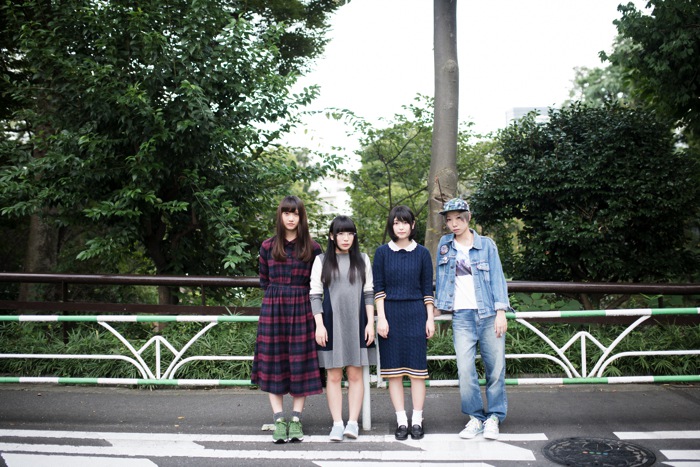
From left: Yui Inoue, Rin Wada, Aoi Yagawa, and Megumi Koshoji.
April 5, 2017: "image"

"image"
01. ending
02. sin morning
03. end of Summer dream
04. veranda
05. faithlessness
06. int
07. townscape
08. karma
09. screen
10. blue light
11. opening
This is their second album and debut album in a major label, released 2 years and 5 months after their formation on November 5, 2014.
It was released by Tokuma Japan Communications, but since their next album "yume" was released after their transfer to Pony Canyon, this "image" is the only album released by Tokuma Japan Communications.
There were two types of albums released, a limited first edition with a photo book and a standard edition, and the jackets are the same.
The photo book of the limited first edition includes photos of the members in their childhood.
Although the names of the members are not clearly indicated in each photo, it is possible to guess that these are the members' childhoods from their facial features.
Compared to the previous album "bath room," this album "image" seems to be less rigid and more flexible. One of the main reasons for this is the improvement of each member's vocal ability.
Megumi Koshoji said in an interview, "I really feel that my singing has improved. My voice and the way I sing have become more mature. That's why it is easier to listen to than "bath room. In "bath room," there was a gap between the childishness and the music, and that may have been fine, but I think it's good that the two are closer this time around.
Another factor may be that the relationship between the works of Kenta Sakurai and the four members of Maison book girl has become closer.
Megumi Koshoj also commented, "I felt especially from the songs on this album that the music Sakurai-san makes is getting closer to our side. I think that is part of the reason why we are able to express ourselves more three-dimensionally. For example, "cuteness" is something that comes from the members and something that is created by the fact that the music is closer to us. As he says, "It may be a combination of both." It seems to be a proof that the present pop sound world created by Kenta Sakurai and Maison book girl, a group consisting of four members, were able to successfully build an organic and closer relationship without diverging from each other.
While "bath room" is not a bad album, "image" is a more accessible work that resonates more deeply with the listener.
Incidentally, there was an interesting exchange in an interview regarding the recording of "image" that I would like to excerpt.
--Did you have any happenings during the recording?
Aoi Yagawa: I have the impression that Mr. Sakurai was busy with the songwriting, so he was the most slammed with work. We ended peacefully.
--Aoi Yagawa: I have the impression that Mr. Sakurai was the most busy with the songwriting and we finished the recording peacefully. Did you record the songs one by one?
Aoi Yagawa: The schedule is the same, but Wada-chan records first, then I record, then Koshoji, then Yui.
--What is the reason for that order?
Megumi Koshoj: It's the order of height (laughs).
Wadawa: Because we had to shift the height of the microphone stand.
Outline of the songs
1. ending
Composed by Kenta Sakurai
Arranged by Kenta Sakurai
The opening track of the album is an instrumental titled "ending".
The previous album "bath room" also opened with an instrumental, but the fact that Maison book girl opened the album with a performance that the members of the band had nothing to do with conveys the peculiar world Maison book girl is aiming for.
The song has an ambient music-like appearance, and the odd time signatures and tones that Kenta Sakurai makes heavy use of are provided in a clear arrangement of sounds, so it serves as a kind of preparatory exercise for listening to Maison book girl's album from now on.
2. sin morning
Lyrics: Kenta Sakurai
Composed by Kenta Sakurai
Arranged by Kenta Sakurai
My first impression is that they have become glamorous.
Maison book girl's songs used to give the impression of being inorganic and hard, but here they have added not only glamour but also "cuteness.
Megumi Koshoji's comment, "Sakurai-san's music is getting closer to our side," may have come from this area, and the individual members' vocals are also becoming more present.
Aoi Yagawa gave the most appropriate comment on the song: "It's finally the kind of song I've been listening to for a long time.
She said, "You have finally created the type of melody that I have been listening to for a long time."
"sin morning."
Director and Editor: Kenta Suzuki
Visual effects: Kanta Mochida
Director: 楽太郎 OGIWARA
3. end of Summer dream
Lyrics: Kenta Sakurai
Composition: Kenta Sakurai
Arrangement: Kenta Sakurai
There's no doubt that the four members are improving their vocal abilities to keep the music from getting too complicated for the audience.
However, it seems to be quite a troublesome song for the performer, and Yui Inoue says, "' End of Summer dream' is very difficult. I wasn't really into beats, or rather, I didn't understand the meaning when I first listened to it."
Aoi Yagawa and Rin Wada list the song as one of their favorites.
"I sang' End of Summer Dream' in a cute way, and when it was completed, it became cute and I like it," says Rin Wada.
4. veranda
Lyrics: Kenta Sakurai
Composition: Kenta Sakurai
Arrangement: Kenta Sakurai
This song, like the previous two songs, stands out for its good melody and vocal members.
In the past, the sound of the marimba in the back would have been more noticeable, but in this song, it has receded and is soft and rounded, yet it does not lose its presence.
Yui Inoue lists it as the most difficult song to record, but says it was mainly due to his physical condition.
"I got sick on the day of the recording. I had a stomach flu, and I kept throwing up from midnight until morning. The doctor told me that I was okay, so I went to the recording room. I brought my bag to the booth and sang (smile). I tried my best, even though I was about to die. That was really tough."
5. faithlessness
Lyrics: Kenta Sakurai
Composition: Kenta Sakurai
Arrangement: Kenta Sakurai
The song was attached to the CD as the lead song of the first video work "Solitude HOTEL 2F + faithlessness" which was released two months before this album.
In a sense, the direction of the album "image" was indicated at this point.
The melody of Sabi, "Betrayed by me, betrayed by me, betrayed by me, betrayed by me," has a catchy look that has never been seen before.
The composition of this song is complicated, but it doesn't make you feel it at all.
According to Megumi Koshoji, the rustic dance of this song is intense and difficult.
"faithlessness"
Director and Editor: Yuki Ninomiya
6. int
Composition: Kenta Sakurai
Arrangement: Kenta Sakurai
Instrumental for 10 minutes.
The ambient music is stronger than the opening "ending", and the frequently used sequence phrase has a hypnotic effect.
Is this really the song that should be placed in the center of the idol album (sixth of 11 songs)?
There may be a will to destroy the established concept of idols.
In the interview quoted below, Maison Book Girl describes itself as a "four man New Age Pop Unit."
If that happens, they may be denying themselves idols.
And perhaps most surprising of all is the fact that the song fits perfectly into the flow of the album.
"int"
Director: YAVAO
7. townscape
Lyrics: Kenta Sakurai
Composition: Kenta Sakurai
Arrangement: Kenta Sakurai
It's a fairly complex piece of music, and the back plays a bit more subdued, but it moves around rather busily, and the beat is not constant as usual.
Rin Wada talks about the recording of this song with the expression,' It was terrible.'
Megumi Koshoji revealed, "When I thought,' Oh, this song sings like this,' and sang it according to Sakurai's tentative song, they said,' Oh, that's the wrong one because I'm so desperate, so sing normally.' (Laugh) I thought it sings like this, but they said it was a mistake."
Kenta Sakurai, who composed the song, lamented, saying, "I even practiced putting in a temporary song."
8. karma
Lyrics: Kenta Sakurai
Composition: Kenta Sakurai
Arrangement: Kenta Sakurai
A song from the major debut single "River (cloudy irony)" which was released five months before this album.
Instead of "cloudy irony," which was the single's lead track, "karma" was chosen because it was Kenta Sakurai's favorite song.
Megumi Koshoji says, "I think I liked' karma' (as opposed to' karma' being chosen instead of' cloudy irony') (smile). In the case of' River' as well, Sakurai seemed to be wondering whether or not to choose' karma' as the lead, but in the end, it became' cloudy irony.' That's why I was able to make a pop or easy-to-listen single, but like' karma' being included in this album, I chose a song so that I could understand the deep part of Maison Book Girl."
"karma."
Photo and edit: Shiko Nakada Tayama
9. screen
Lyrics: Kenta Sakurai
Composed by Kenta Sakurai
Arranged by Kenta Sakurai
This song is also quite complicated.
The melody is pop, and the song seems to flow smoothly, but if you make a mistake, it could become a scattered and disjointed song, and I have the impression that it was put together just in time.
Yui Inoue, Ring Wada, and Aoi Yagawa were asked "Which song was the hardest to record? Yui Inoue, Ring Wada, and Aoi Yagawa were asked "Which song was the hardest to record?
Yui Inoue said, "This is actually a difficult song. I thought "townscape" was the most difficult, but actually "screen" was the hidden boss.
Wadawa: "I think "screen" is the most difficult one. The way the lyrics were divided was a little different from the other songs, so it was more difficult to sing the song than to listen to the tentative song by ear.
Aoi Yagawa: "I also "screen". I knew "townscape" would be difficult, so I wrote down the timing of my breath-holds before recording. I didn't make any notes for "screen," but it was actually the most difficult one.
10. blue light
Lyrics: Kenta Sakurai
Composed by Kenta Sakurai
Arranged by Kenta Sakurai
This song was included in the EP "summer continue" released about a year before this album, and is included here as it was recorded at that time.
Since this is the oldest recording in the album, the texture of the backing music sounds a little different from the other songs, but it does not sound strange.
The pop-ness of the music seems to blend well with the album.
According to Wadawa, "I didn't think it would be included in this album because it is a song from a while ago. I feel that "blue light" is the world of Bukuga.
I was most shocked when I heard the tentative version of the song. I thought it was really good. There were a lot of up-tempo songs on the album, so it was fresh.
For Megumi Koshoj, this song was the most difficult to record.
blue light" was an indie song, but I remember it was the most difficult song to record.
As to why this old song was included in the album, Megumi Koshoj also says, "I think Mr. Sakurai simply liked it (laughs).
11. opening
Lyrics: Megumi Koshoj
Composed by Kenta Sakurai
Arranged by Kenta Sakurai
The usual reading of poems begins with Eric Satie-like Kenta Sakurai's piano playing in the background.
This time, the poem is more like a "story" than a "poem.
Megumi Koshoj, who wrote the lyrics, says, "Before the songs for the album were written, I was thinking about Sakurai's work.
Megumi Koshoji, who wrote the lyrics, says, "Before the songs for the album were written, Sakurai-san asked me to write one song. He said, 'I want you to write something that is more like a story. He said, "I want you to write something with a theme like hope, something that looks like something is about to start.
I wrote this one with the theme of a story of hope. The first thing I wrote was the conversation between the cat and the old man at the end, and I wrote the first part from there. I often write from such lines and develop the story. I write out a feeling and then create a story to get to that point.
The other three members also responded favorably to the "opening" song.
Aoi Yagawa: "When we were recording, Yui and Koshoji were both on the mic, and Wada and I were on another mic, so I couldn't see their faces, but I almost cried while recording (laughs). After we finished, I looked at Koshoji and saw that he was about to cry, too, even though he had written the song himself.
Megumi Koshoji: "I wrote it myself, so I got too emotionally involved.
Aoi Yagawa: "Then we got excited and said, 'What a good story, I almost cried too' (laughs).
Wadawa: "I always get a bit "ugh" (when I hold my head in a pose) because the story is often philosophical, but this time I was genuinely happy for them.
Yui Inoue: "When I listen to the finished product, in previous poetry readings, the spoken sentences were cut off in the middle and Sakurai's sound was added, but this time the main focus was on the story, so it was easy to listen to, which made me cry.

From left in the front row are Rin Wada and Aoi Yagawa. From left in the back row are Yui Inoue and Megumi Koshoji.
Below is a comment on the album posted on the official site:
It also touches on the members' and Kenta Sakurai's enthusiasm for the album, their consideration of the lyrics as well as the song, and the relationship of trust between producer Kenta Sakurai and the members who perform on his music.
It should be the backbone of listening to the album.
Repeated, endless addition. Bukuga's march accelerates.
Maison book girl's first major album, "image," has been completed. As producer Kenta Sakurai recalls, "I almost died while making this album," it is a work of full-bodied effort, and a great work that will determine the future of Bukuga. The album includes "faithlessness" and "sin morning," which have already become standard items at live performances, "int," a large instrumental work that exceeds 10 minutes in length and demonstrates the essence of musician Kenta Sakurai, and "Bukuga," an album that will determine the future of Bukuga. image" is packed with the musical delights of Bukuga, including "int", five completely new songs and a poetry reading, and it is a perfect showcase of the "idea of Bukuga" expressed by Sakurai through his music and the evolution of the four members in terms of their performances. The evolution of the four members' performance is tightly integrated with the "idea of Bukuga" that Sakurai expresses through his music. Megumi Koshoji once said, "I want to become a god," and this first major album will surely mark a big step forward for the world to find Bukuga.
I had a hunch. Solitude HOTEL 2F," the second solo live held at WWW X in Shibuya on November 6, 2008, went through 15 songs without MC, and the four members showed the most radiant expressions during "my cut," the last song of the encore, which gave us a hint. What the band members were feeling at that moment was "my cut. What the members felt at that moment was the confidence that they could "do it! and a feeling of frustration that they could do better the next time. Since then, I have seen Bukuga on stage several times, and each time I have felt that they have become stronger and more stable, and that the beauty and consistency of their performances have improved, and I am certain that their second one-man show was the catalyst for this improvement. But after all, Bukuga advocates "becoming God. They cannot stand still, nor do they show any signs of being satisfied with the status quo. The high motivation they have developed through their major label debut and one-man live shows is driving them even further forward. Here are some encouraging words from the members about their current situation.
Yui Inoue: "We have to work hard now to spread the word to those who don't know us yet. What we can do is to improve our performance ability and complete the precision of our live performances. Then, like turning Othello upside down, they will say, "You too, you too! ' (laughs)."
Koshoji: "I have been told that it is difficult music, but if I understand the songs properly and perform live, I am sure the audience will understand. First of all, I want to understand the songs one by one, put them into my mind, and convey them to the audience.
As Bukuga moves forward, the reach of their music and performances will inevitably expand. And with that comes a responsibility to the audience. What do the members feel now about the existence of those who receive, love, and support Bukuga's music?
Aoi Yagawa: "After all, it means nothing without the audience, so when we hold an event and there are people even in the back, it doubles our motivation and we are grateful. But I think, 'Come more! I think (laughs)."
Wadawa: "When I see people drawing pictures of Wadawa on Twitter and elsewhere, I think, 'This is what people are looking for. I think the highest point is not only my personal goal, but also taking everyone's opinions into account, so that's where we need to reconcile them.
As can be seen from their comments, the four members are now very much in the forefront of the group. The fact that they are feeling a positive response to the precision of their singing and performances, and the growing expectations of their listeners, is also giving them strength. On the other hand, they also express their trust in the music that Kenta Sakurai produces, which is very significant. Rather than working with everyone face to face," says Sakurai, "I think I can do more new things by watching them on stage or listening to them sing on recordings. Basically, it's like, 'Yes, this is done. I'm like, 'Good luck' (laughs)," says Sakurai, and this is the key to Bukga's creations. What is happening between Sakurai and Bukuga is not a scheduled multiplication. If it were a multiplication of completed pieces, there would be only one answer and a fixed ceiling, but in the case of Bukga, a cycle has been established in which the progress of the members expands Sakurai's creative boundaries and leads to new music. When "river" was released, I wrote that "four strong forces are pushing the box of "the idea of Bukuga" in different directions," and that is exactly what Bukuga is doing now. Instead of "multiplying," they are infinitely "adding up. The four members have definitely made progress in the past few months, but at the same time, I strongly feel that they have a lot more room to grow. The members' performances are improving in response to each other, and Sacrai's creations. The "addition" of these two elements is not a vague premonition, but a strong expectation with substance.
There are many other reasons why Bukga's music attracts us, but to understand the album "image," I would like to focus on the lyrics that Sacrai spins. The image you may have of Bukga's lyrics is that they are "dark," "helpless," or that the same motifs appear frequently. Perhaps all of these are correct, and the lyrics of the songs in "image" are generally in line with this impression. In fact, the boys and girls in the lyrics are often looking for a way out, but at least in the lyrics, no way out is shown. However, while there is no exit, there is also no sense of stagnation in the places depicted in the lyrics. For example, the motif of "room" appears in many of the songs, including previously released songs, and the "room" is basically a very comfortable place. It is possible to feel sad about what is happening outside of the room, or to feel pain when thinking about someone who has left the room. However, the "room" is never harmed by a third party. It is closed, but not stuck--this is one of the main characteristics of Bukga's lyrics. Sakurai himself says, "I have an underlying feeling of liking beautiful things. If I wanted to write about the beautiful parts, I would have to explain the dirtiness as well." "The cover photo of "image" looks like a dead end, but there is some light, and it is there in the lyrics. No matter what kind of world we live in, depending on how we live, there is some light in it," he said. Listening to Sakurai's words, one senses a certain "heat" that underlies his expression, and even beyond the lyrics, which seem inorganic and decadent, there is a certain positivity, though not a warm feeling. I am sure that this is what makes "image" so pleasant to listen to.
In early March, just after the completion of the album, I had a chance to talk to each of the band members and Kenta Sakurai, so I decided to take the opportunity to ask them for their messages to each other. The members responded
I want you to do your best," and "It's fine if you think mainly of Bukuga (laughs).
In response, Sakurai said, "First of all--no, I want you to think of Bukuga as your main focus.
Sakurai responded, "I'm thinking of Bukuga first--no, I'm thinking of Bukuga as my main focus. Otherwise, I wouldn't be able to work so hard (laughs).
(laugh). ......They don't quite mesh, this feeling. But this is Maison book girl. And I think this relationship will support the future progress of Bukuga. A producer who has a clear vision of what he wants to accomplish with his music. Four members who believe in and understand their creations and pledge to enhance the precision of their performances. It is this struggle, which cannot be explained by the simple word "multiplication," that makes Bukuga's creations even more interesting. It is precisely in the future that a world in which Maison book girl's music will dominate, a situation in which they will "become gods," as Koshoji puts it, will emerge. And on their nationwide tour starting in April, they will show an overwhelming live performance that will surpass that of "Solitude HOTEL 2F. Bukuga's march will accelerate. Let's look forward to that moment while listening to "image".
Source: www.maisonbookgirl.com
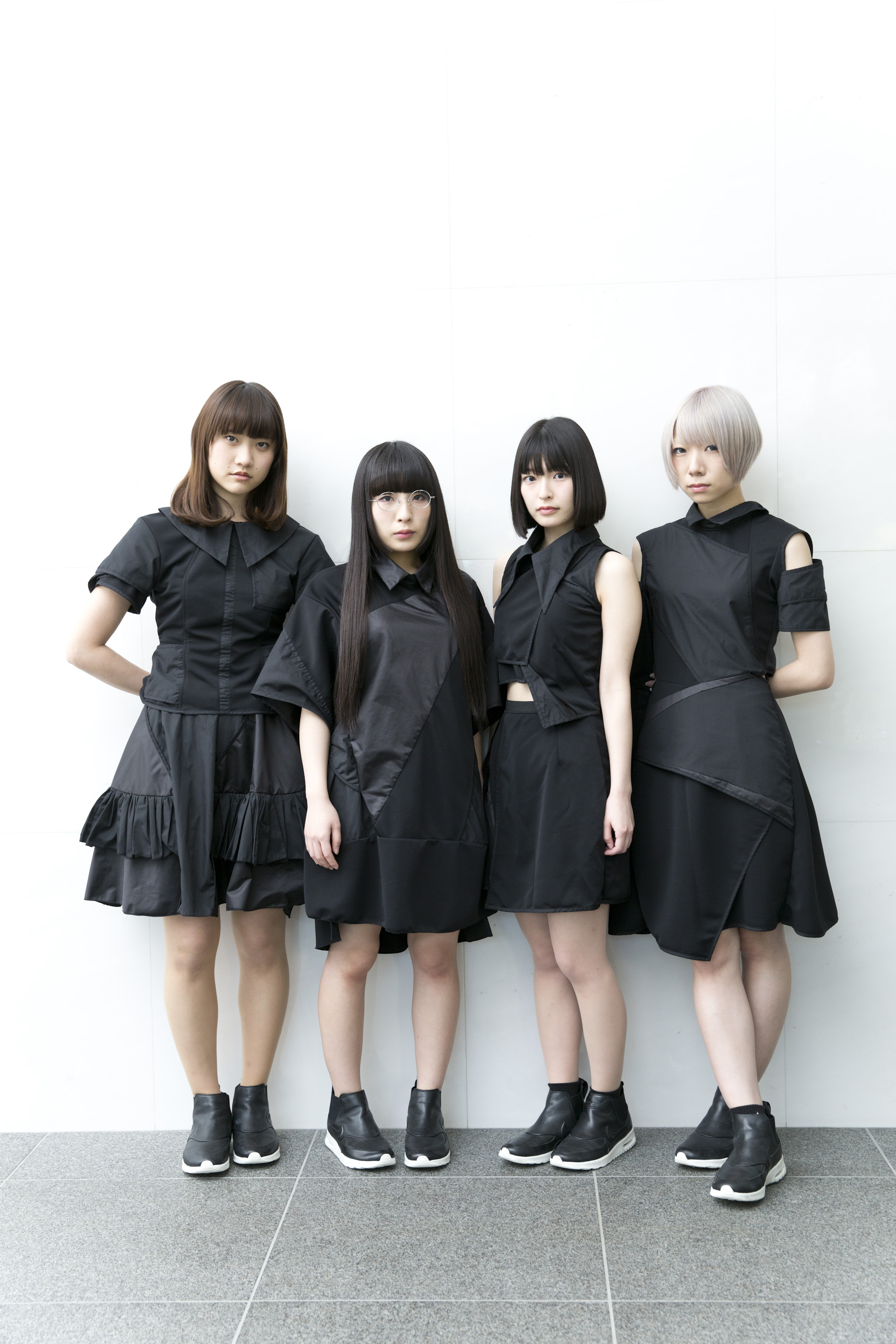
From left: Yui Inoue, Rin Wada, Aoi Yagawa, and Megumi Koshoji.
Below is a quote from Music Natalie about the members' comments on the new costumes.
It is understandable that not only music but also fashion is one of the important factors of Maison Book Girl.
Megumi Koshoji comment
My costume was the last one to be completed, but I like the one with sleeves because it's cute. Most of the previous ones were short-sleeved. The rest is closer to the body than before? That's right, it's tight! It feels like it fits perfectly. I saw it for the first time when everyone was wearing it during the MV shooting. Aoi had the least amount of cloth (smile). I was touching Aoi's upper arm all the time.
Rin Wada comment
The designer told, "I made it in the image of Assassins," and it looked like the clothes from two years ago. Last time, the sides were open, but this time it was closed (smile). When the costumes were renewed, the design gradually changed to suit the mood of each member. This time, it became darker.
Yui Inoue comment
This time I wore a skirt, so when I saw it for the first time, I thought, "I'm the only one with a different taste." (Laugh) I feel more girly than before. But when I dance around, it expands. ブクガ's choreography has many turns, so it would be nice if I could show it beautifully. It's a black outfit, but it doesn't mean it doesn't have the taste of ブクガ, and I think the atmosphere is good too.
Aoi Yagawa comment
The dress is even more cool. The amount of fabric is small, so it's easy to move around in, but my upper arms are open, so I'm embarrassed to appear in front of people. The previous dress was also scheduled to be sleeveless, so I was finally given a sleeve, but this time it was finally taken (smile). The waist of the コショージ is slightly open, giving it a nice "glimpse" feel, and Yui's skirt is voluminous and cute.
Source: natalie.mu

From left: Yui Inoue, Rin Wada, Aoi Yagawa, and Megumi Koshoji.
Below are the solo interviews with each member from Music Natalie.
You can get a glimpse of the true face of the solo, which is different from the interview with all four of them, such as how each member continued their activities until their major debut, their enthusiasm for this major debut album, etc.

Megumi Koshoji

Related Articles
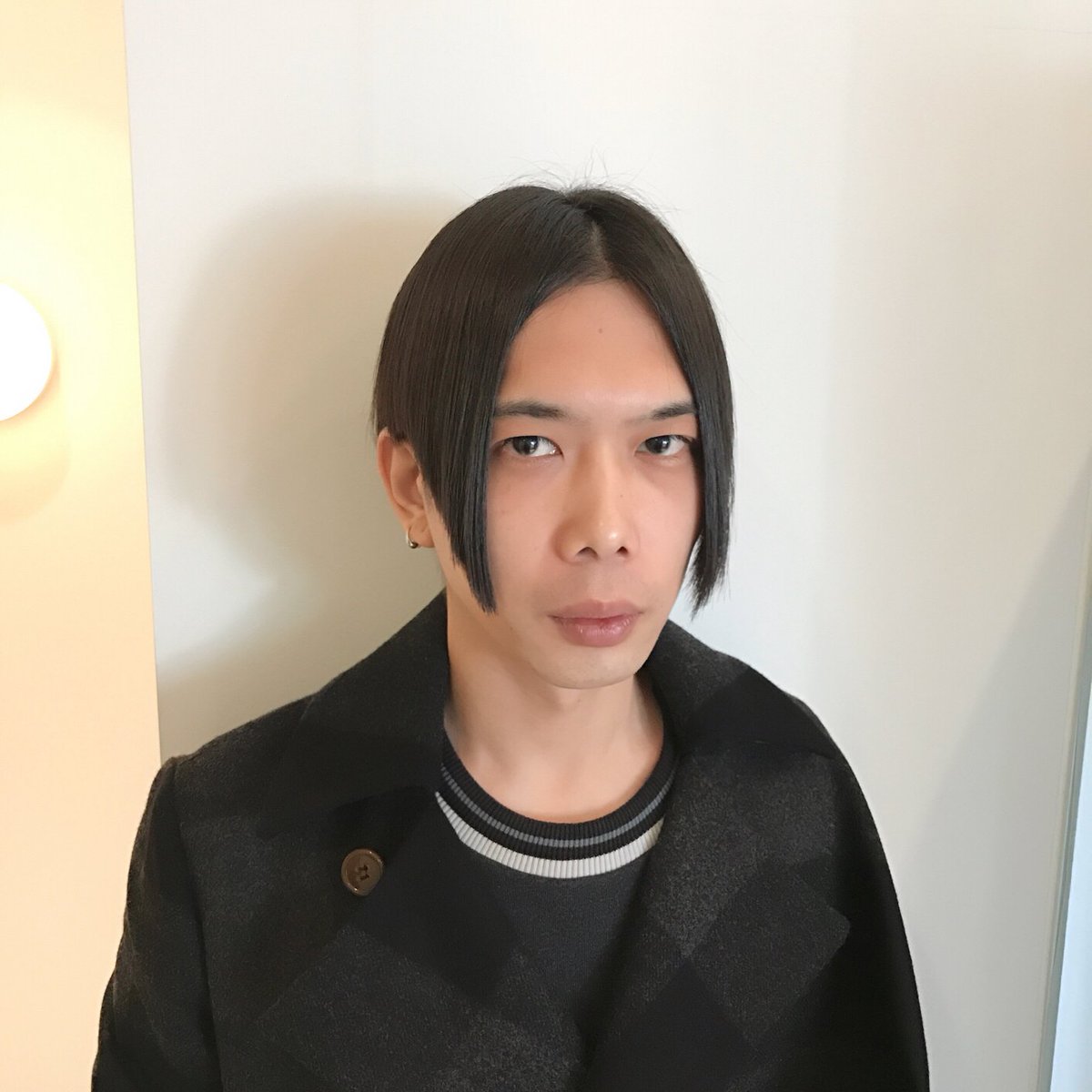
In-depth summary of Sakurai Kenta
Kenta Sakurai is a lyricist, composer, arranger, and music producer, and the president of EKOMS Inc. He first emerged as a producer for Izukoneko, and later as the general producer for Maison book girl. Influenced by contemporary musicians such as Steve Reich, he is a proponent of "gen-neon pop," which mixes popular music with contemporary music, and is known not only for Maison book girl, but also for producing Kumari Department Store and working with Kaika and Yasuko Omori.
Read Article

In-depth summary of Qumali Depart
Kumari Depart is a Japanese female idol unit produced by Kenta Sakurai and formed in 2016 as a "complete royal idol". The group debuted as a three-member group consisting of Miss iD 2016 finalist Risako Hanei, the same semi-finalist Nako Yuu, and Nico Hayazakura, who was introduced by an acquaintance of Sakurai's. In May 2018, Hanei graduated and new members Ayane Oda, Fuuka Kaede, and Mitsuba Hina joined. In June of the same year, Hina left the group; in February 2020, Mei Yamano and Mana Nanase joined the group; in March 2023, the group held a solo live concert at the Nippon Budokan.
Read Article
Tags
Contents
- Maison Book Girl Overview
- About the producer Kenta Sakurai
- Maison Book Girl squad
- Yui Inoue
- Brief biography of Yui Inoue (from birth to before and after joining Maison Book Girl)
- Yui Inoue's "Special Room" and "Fashion"
- Yui Inoue's Letter of Partiality
- THIS IS WHAT Yui Inoue'S DOING.
- Impression of Yui Inoue as seen by other members
- Yui Inoue as a "nutritionist"
- Megumi Koshoji
- Brief biography of Megumi Koshoji (from birth to before and after joining Maison Book Girl)
- Megumi Koshoji's "Special Room" and "Fashion"
- Impression of Megumi Koshoji as seen by other members
- Megumi Koshoji's "Ten Pieces to Take to Uninhabited Islands"
- Megumi Koshoji and Keyakizaka46
- Aoi Yagawa
- Brief biography of Aoi Yagawa (from birth to before and after joining Maison Book Girl)
- Aoi Yagawa's "Special Room" and "Fashion"
- Impression of Aoi Yagawa as seen by other members
- Aoi Yagawa and Seiko Matsuda
- Aoi Yagawa and Haruka Kudo
- Rin Wada
- Brief biography of Rin Wada (from birth to before and after joining Maison Book Girl)
- Rin Wada's "Special Room" and "Fashion"
- Rin Wada's Letter of Partiality
- THIS IS WHAT Rin Wada'S DOING.
- Impression of Rin Wada as seen by other members
- Rin Wada's "Ten Pieces to Take to Uninhabited Islands"
- Three comic books that inspired Rin Wada
- Rin Wada and Glasses
- Former Maison Book Girl members
- Kaori Munemoto
- Brief biography of Kaori Munemoto (from birth to before and after joining Maison Book Girl)
- Impression of Kaori Munemoto as seen by other members
- Kaori Munemoto withdrew from Maison Book Girl.
- History of Maison Book Girl activities
- 2014 works
- July 2014
- August 2014
- September 2014
- October 2014
- November 2014
- December 2014
- 2015 works
- January 2015
- February 2015
- March 2015
- April 2015
- May 2015
- June 2015
- July 2015
- August 2015
- September 2015
- October 2015
- November 2015
- December 2015
- 2016 works
- January 2016
- February 2016
- March 2016
- April 2016
- May 2016
- June 2016
- July 2016
- August 2016
- September 2016
- October 2016
- November 2016
- December 2016
- 2017 works
- January 2017
- February 2017
- March 2017
- April 2017
- May 2017
- June 2017
- July 2017
- August 2017
- September 2017
- October 2017
- November 2017
- December 2017
- 2018
- January 2018
- February 2018
- March 2018
- April 2018
- May 2018
- June 2018
- July 2018
- August 2018
- September 2018
- October 2018
- November 2018
- December 2018
- 2019 works
- January 2019
- February 2019
- March 2019
- April 2019
- May 2019
- June 2019
- July 2019
- August 2019
- September 2019
- October 2019
- November 2019
- December 2019
- 2020 works
- January 2020
- February 2020
- March 2020
- April 2020
- May 2020
- June 2020
- July 2020
- August 2020
- September 2020
- October 2020
- November 2020
- December 2020
- 2021 works
- January 2021
- February 2021
- March 2021
- April 2021
- May 2021
- August 2021
- Maison Book Girl discography
- Single
- March 14, 2015: "white" (limited sale at the live venue)
- March 14, 2015: "black" (limited sale at the live venue)
- November 30, 2016: "river (cloudy irony)"
- July 19, 2017: "412"
- December 13, 2017: "cotoeri" (Sarashina)
- June 20, 2018: "Elude"
- April 3, 2019: "SOUP"
- July 31, 2019: "umbla"
- EP
- March 30, 2016: "summer continue"
- Album
- 9 / 23 / 2015: "bath room"
- April 5, 2017: "image"
- November 21, 2018: "yume"
- December 18, 2019: "Children of the Sea and the Universe"
- Best Album
- June 24, 2020: "Fiction"
- Golden Record
- October 10, 2018: "faithlessness (Tomggg Remix)"
- October 10, 2018: "last scene (Hakushi Hasegawa Remix)"
- 10 / 10 / 2018: "veranda (bo en MEGACRAZYMIX)"
- February 14, 2019: "Karma (Miii Remix)"
- February 14, 2019: "veranda (Aiobahn Remix)"
- February 14, 2019: "Okaeri Sayonara (Seiho Remix)"
- February 14, 2019: "16 years old (Ryan Hemsworth Remix)"
- Blu-ray
- February 5, 2017: "Solitude HOTEL 2F + faithlessness" (with compact disc)
- August 18, 2021: "Solitude HOTEL"
- Analog single
- May 18, 2018: "Karma-Bath Room (UK Version)"
- Release on other media
- July 9, 2015: "Oyasumi Hologram presents Midnight note" (download only)
- July 14, 2016: "サワソニ 19 Umi no Ie Acoustic Live" (Compilation Album CD-R Limited sale at live venue)
- Unknown release date MyCut soundtrack
- Participating works
- September 18, 2014: "きゅるきゅる" (single) by Seiko Omori
- July 15, 2015: "One-Way Mirror / Satchan's Curry" by Seiko Omori (single)
- December 9, 2015: Urbangarde "2015" (album)
- January 27, 2016: HARUKA Tomiyuki's "Koi wa Majutsu" (Love is Magic) (limited distribution single)
- March 23, 2016: Seiko Omori "TOKYO BLACK HOLE" (album)
- September 7, 2016: Kafka's "Peek-a-boo" (album)
- December 8, 2016: Kafka "City Boy City Girl feat. Aoi Yagawa (Maison Book Girl)" (distribution only single)
- December 14, 2016: GOMESS (album) "-" (album) by
- August 30, 2017: "draw (A) drow" by Seiko Omori (single)
- December 15, 2017: PLASTICZOOMS "Minds" (single: limited sale at live venue)
- October 17, 2018: PLASTICZOOMS "Minds" (single: limited edition)
- October 24, 2018: Naoto Nakamura "Start To Rain" (single)
- October 24, 2018: "CD won't sell anymore" (album) without pop
- November 25, 2020: Urbangarde "アバンデミック" (album)
- Solo works by Megumi Koshoji
- January 24, 2015: "Megumi Koshoji" by Megumi Koshoji (self-produced book: with CD-R)
- BiS works with Megumi Koshoji
- January 22, 2014: "STUPiG" (Sarashina)
- January 22, 2014: "Disney Rocks! Girl's Power!"
- March 5, 2014: "WHO KillEDIDOL?"
- April 9, 2014: "the divine move"
- May 21, 2014: "EMPLOYMENT 2014"
- May 28, 2014: "FiNAL DANCE / nerve"
- May 28, 2014: "Idol is Dead - Non's Propaganda War - [Super Perfect Edition]"
- July 2, 2014: "Euryaoi!"
- July 8, 2014: "All Night Japanese DVD in BiS"
- September 3, 2014: "2014.5.6 BiS Kaidan LAST GIG @ WWW" (VHS)
- 9 / 3 / 2014: "2014.5.6 BiS Kaidan LAST GIG @ WWW" (2 cd)
- September 3, 2014: "BiS Kaidan"
- September 24, 2014: "BiS Shudan LIVE' BiS Narashino Budokan' @ Yokohama Arena"
- December 12, 2014: "2nd ALBUM"
- May 27, 2015: "DJ Megumi's BiS MiX"
- July 22, 2015: "Full BiS Cannonball 2014"
- Solo works by Aoi Yagawa
- 10 / 10 / 2017: Aoi Yagawa "ON THE LINE" (download only single)
- Solo works by Rin Wada
- August 30, 2014: "PRISM DRIVE" (single) by Rin Wada (in the name of Rinne Mure)
- January 31, 2015: Rin Wada "Tsukiichi! 〜 DearStage2014 〜" (compilation album)
- Maison Book Girl's signature song
- bath room
- snow irony
- last scene
- lostAGE
- blue light
- bed
- cloudy irony
- karma
- sin morning
- end of summer dream
- veranda
- faithlessness
- int
- townscape
- screen
- opening
- After a long night
- Maison Book Girl's Inside Stories, Trivia, and Small Stories / Episodes and Anecdotes
- Megumi Koshoji's first experience of cherry blossom viewing in spring 2014
- "BiS" that was important to Megumi Koshoji and "Maison Book Girl" that was important to her
- It was December 24, 2016 when Megumi Koshoji first saw the live of Keyakizaka46, his big fan, at the first one man live at Ariake Coliseum.
- Maison Book Girl's one man live "Solitude HOTEL" is named after Megumi Koshoji.
- AT THE VERY END, I HAD TO TAKE THE TEST AGAIN, Yui Inoue.
- Shinjuku Station is the Yui Inoue of Kimon
- Yui Inoue was interviewed by Maison Book Girl on September 13, 2014.
- Birthday present for Kenta Sakurai who was treated halfheartedly by Aoi Yagawa
- Huez, the space director of Solitude HOTEL
- Delete Maison Book Girl (= end of activity)