
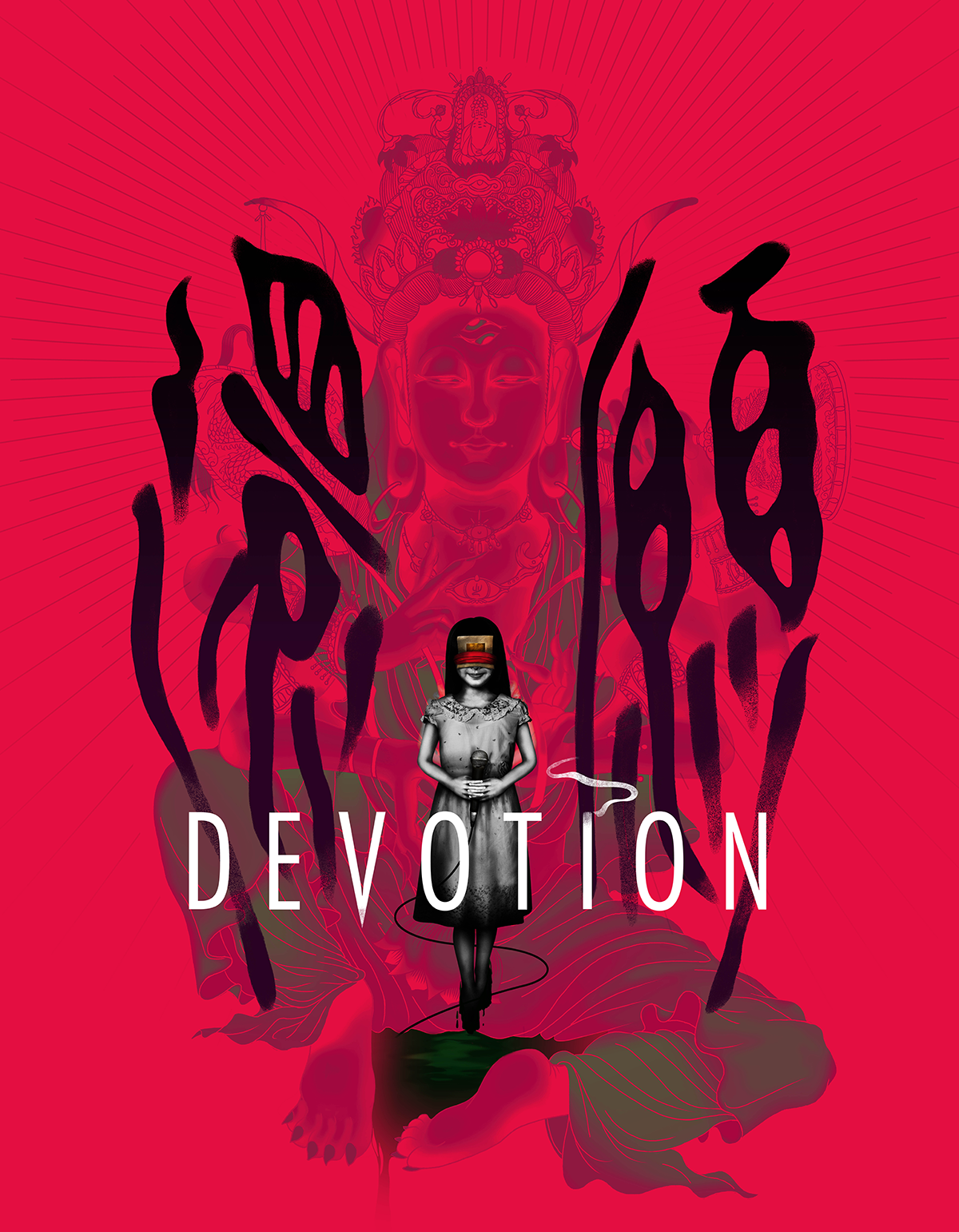
Devotion" is a horror game developed by Red Candle Games and distributed on Steam. The main character, a screenwriter named Fong Wu, wanders around a housing complex in Taipei in a warped dimension, searching for his wife Li Hou, a former actress, and his daughter Mei Xin, and gradually collects fragments of his past and remembers the events that led to the collapse of his family. The film incorporates the social conditions of the time, prejudice against the mentally ill, and the problems of new religions. Through the protagonist, who is confronted with his own ego in the process of pursuing his missing daughter, the film questions the nature of parent-child love and familial love.
Receiving a pair of scissors from the third and final Mei Xin, Fong Woo offered his heart and soul, wishing for his daughter's recovery and a leap forward, and stabbed his hand, the life of a writer of things. Dr. Ho instructed Fong Woo to perform a ritual of asking questions in order to restore his daughter's health by offering his own life in her place.
When Fong Woo opens his eyes, he finds himself in Dr. Ho's house.
However, Dr. Ho is nowhere to be found, nor are any of his household goods, and the place looks deserted, as if it had escaped in the night. On his desk was a cassette tape containing a counseling record. After playing the cassette tape on the tape recorder he found in his room, Fong Woo hears the voices of his followers protesting that Dr. Ho's teachings are completely ineffective, and that they are ineffective despite the large amount of money he has offered them as he said. Dr. Ho responded in a shameless manner, but his followers, who were furious at the futility of his teachings even after ten years of prayer, were furious. Seeing that the time had come for him to leave, Dr. Ho vacates the apartment complex and disappears.
As Fong Woo walks down the stairs, he hears Lihou's voice recorded by the answering machine. Lihou is suspicious of her husband, who cannot be reached, and she is worried about her daughter, whom she had no choice but to leave behind. The next message played back was that of Dr. Ho, who was quieting Fong Woo's complaints about the ineffectiveness of the ritual of asking questions. For her, it was just a delusion to buy time until she was ready to flee in the night, but Fong Woo believed it from the top of his head. He filled the bathtub with the liquor he had brewed when Meishin was born and locked his daughter in the bathroom. The next time Fong Woo called, Dr. Ho's phone was disconnected.
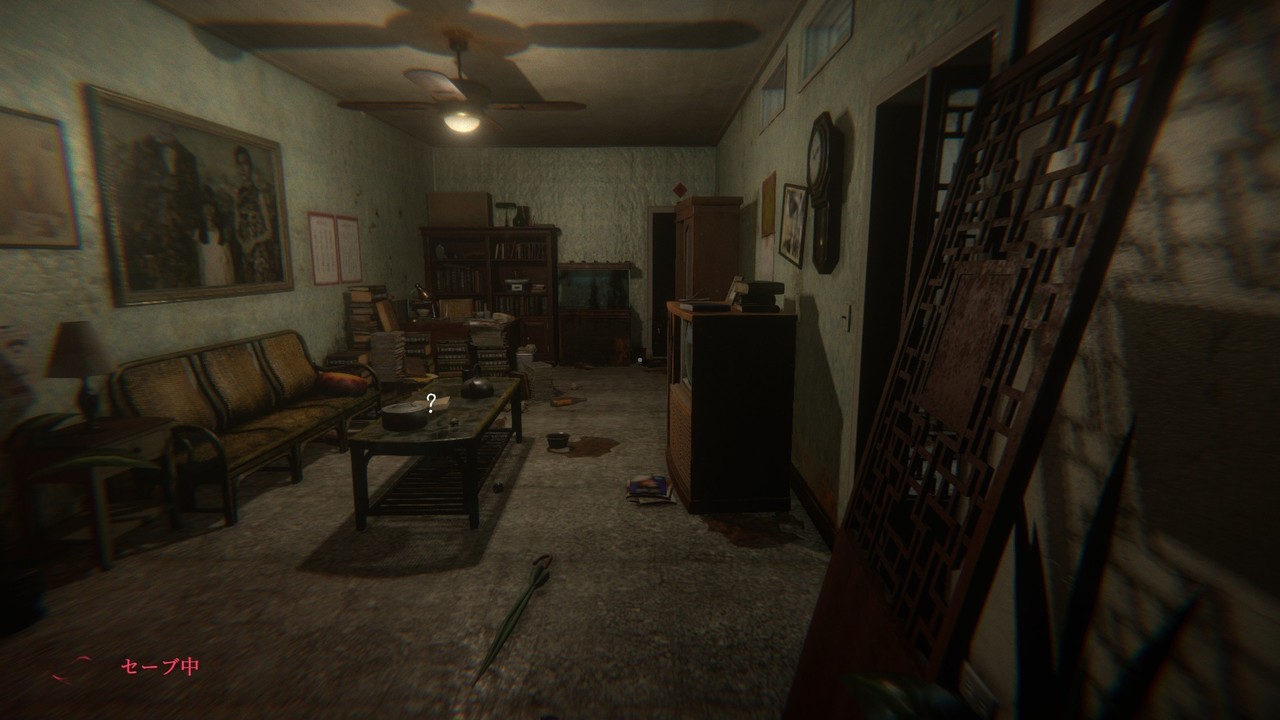
In 1987, Fong Woo awoke from his delusion and saw the devastation of his room in reality.
Fong Woo opens the door and returns home to find a painting of Meishin on the table in the dilapidated living room. It is a picture of Maixin laughing, flanked by her parents, in a house with yellow tulips. The bathroom is slightly lit, but there is no sign of Meishin, and the room is quiet.
Fong Woo had believed Dr. Ho's lies and let his beloved daughter die. But the reality is unacceptable, and the story must close with a happy ending, for he had prayed only for Meishin's happiness.
When he opened the bathroom door, a flood of light flooded in and swallowed Fong Woo. Origami tulips dot the space filled with clean light, and from somewhere, Meishin's voice echoes. Maixin says that she knew how to cure her illness without seeing a doctor, and recalls how she used to be free from seizures when her parents were kind to her and she played the piano and sang as she pleased. As Fong Woo continues to walk, he sees a revitalized Mae Shin running past him. Fong Woo sees this and realizes that his wish has finally been fulfilled at great cost, and he is deeply moved by the fact that Meishin has regained her health.
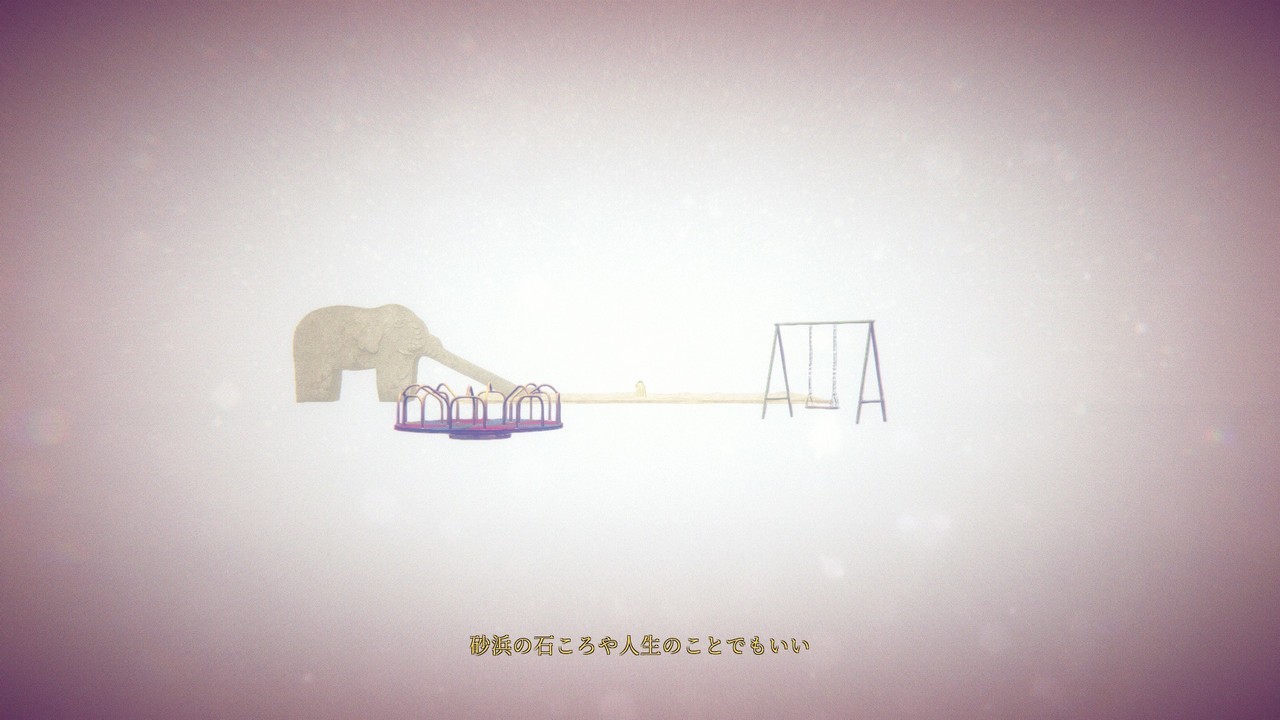
Meishin brought Fongwoo to a park where he had wanted to go to play during his illness.
The last place Maixin led her father to was a small park with a slide and swings. It was a place she had dreamed of, a place where she could fulfill her wish to play outside. After playing in the sandbox, Maixin looked up with satisfaction and cheerfully urged Fong Woo on.
Daddy, let's go home."
Meishin, who is no longer with us, lovingly calls out to Fong Woo.
After the ending song, the nihilistic final scene in which the crippled Fong Woo continues to watch the sandstorm on TV.
After a long period of darkness, the story ends with Fong Woo, who has lost everything due to his own stupidity, sitting alone in his living room watching a sandstorm on TV.
Game System of "Devotion
basic system
The game features a complete first-person perspective. The player basically controls Fong Woo to acquire items, and selects and uses them in certain places to advance the story, but the perspective switches flexibly among Meishin, Fong Woo's ornamental fish, Arowana, and Lihou, providing a sense of immersion.
The work also includes a padlock cipher in which the correct answer is entered based on a hint, and a cipher that connects the lines of a coloring book, combining exploration and puzzle-solving in its composition.
Items can be obtained by clicking on them, and using them in the right place will change the situation. For example, planting an origami tulip in a potted plant in Maysin's room in 1980 changes the passageway and home in 1985, and the tulip blooms in this area as well. The reason for this is that the episode in which Maixin folded tulips from her father's manuscript in 1980 is linked to the tulips in the picture book that Fong Woo later gave to her.
The information obtained by reading notes on the desk, scraps of newspapers, and posters on the bulletin board in the apartment complex can be combined to construct a complete picture of the story.
The story takes place in a dilapidated apartment complex in Taipei, and from the middle of the film, the viewer explores the past by going through four doors (actually three, since one of them is tightly closed) that lead to different time periods.
Each of these doors has different characteristics.
Four types of doors
Door for the year 1980, the year of the monkey
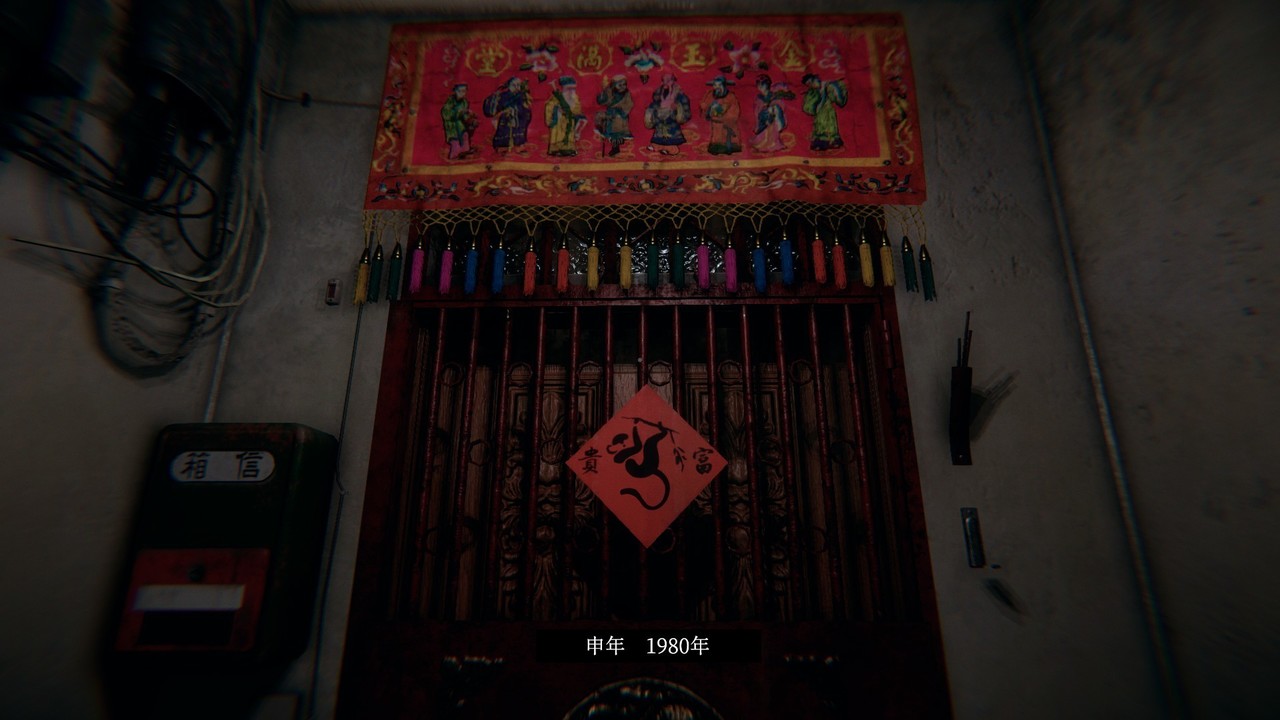
Door in the year 1980. Hallway is white lighting.
The door in 1980, the year of the Monkey. The hallway is lit with white lights. 1980 is the year Fong Woo and his family moved into the apartment complex. Meishin was five years old at the time, and although Fong Woo's work was overshadowed, the couple was still getting along well at the time.
Doors for the Year of the Ox 1985
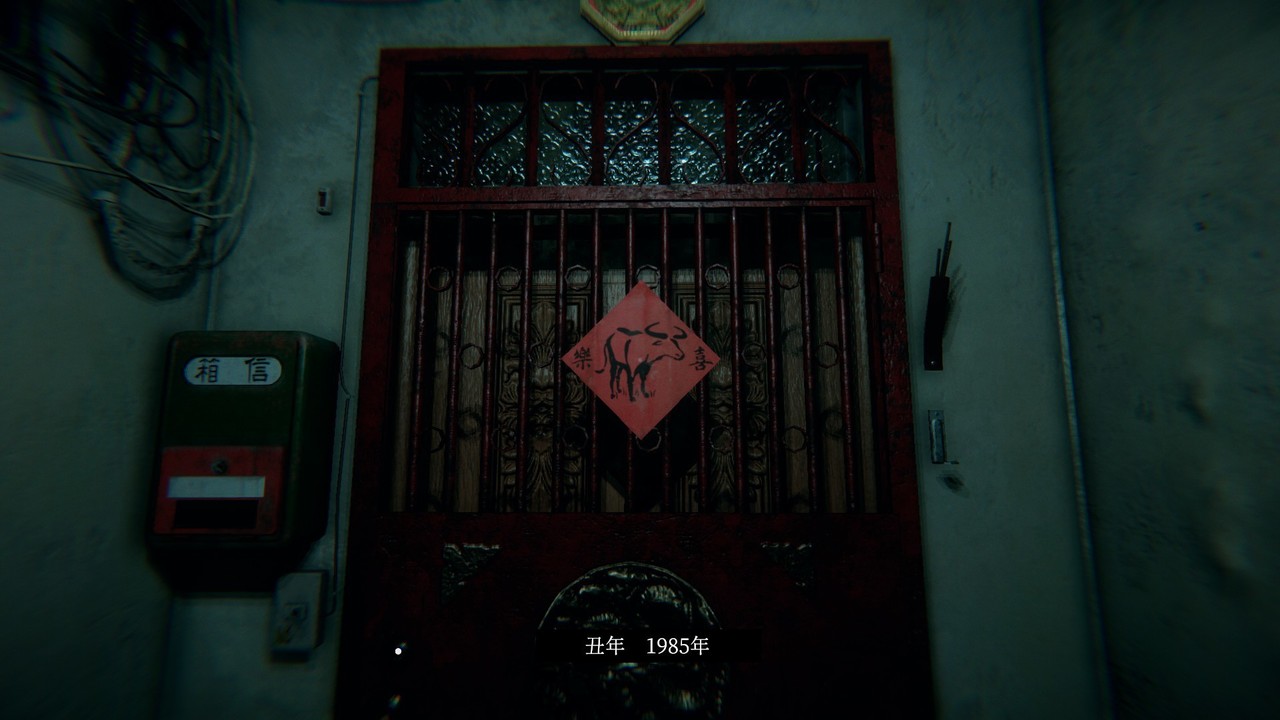
Door of the Year of the Ox 1985. Blue image.
Door from the year 1985, the year of the Ox. Blue tones throughout. The medical records show that Meishin's onset was in 1984, so this was the following year, and Meishin was 10 years old at the time. Fong Woo's prolonged slump and the difficulties of making a living due to a decrease in income caused the couple to fight constantly.
Doors for the Year of the Tiger 1986
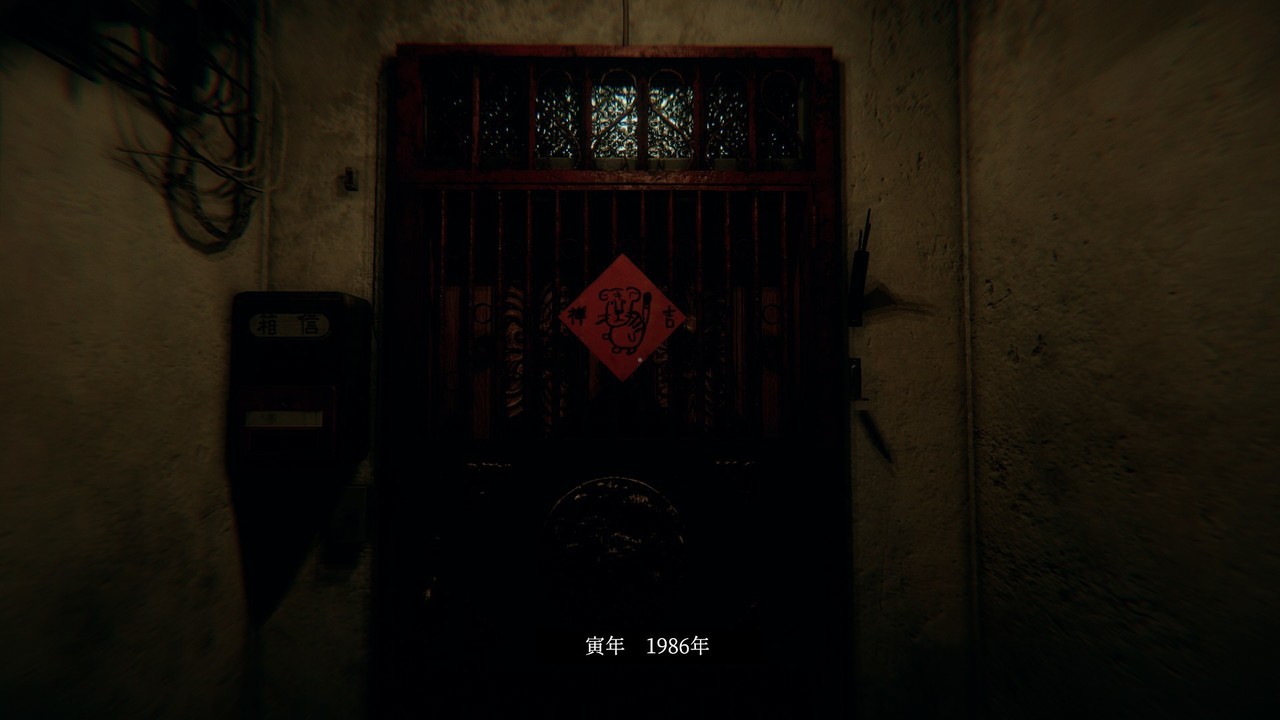
Door in the year of the tiger 1986. Yellow lighting.
The door in the year of the tiger 1986. The yellow lighting is impressive. Meishin was 11 years old at the time. Three years had passed since the onset of her disease, but her condition had not improved and her marriage had grown cold. Fong Woo has become addicted to a new religion, and Lihou's heartache has reached its limit.
Door of the Year of the Rabbit 1987 (present)
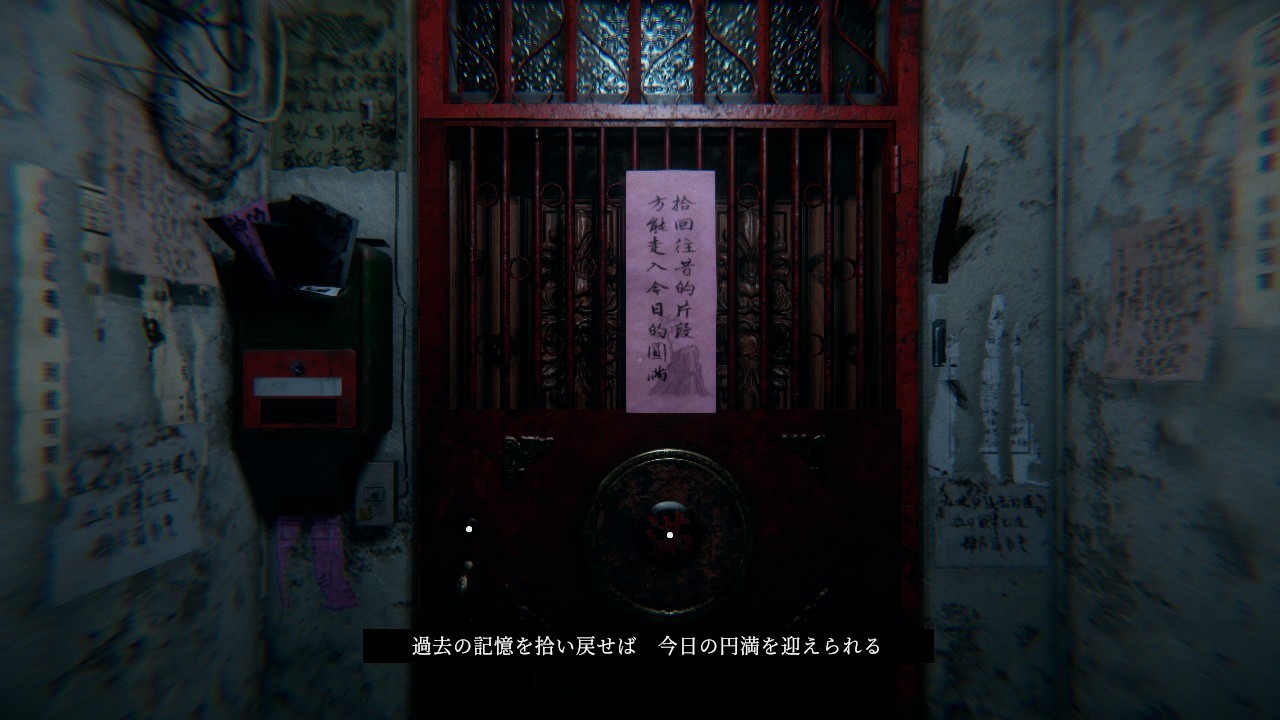
At one of the last doors, there is a poster that reads "Pick up your past memories back and you will have the fullness of today." The real Maisin is already deceased at this point. The reason for the blockade is that Fong Woo does not want to remember the fact that he killed his daughter, and the last door cannot be opened unless all the fragments of the past are retrieved by going through the three doors.
This film is not a horror film about ghosts, monsters, or other supernatural phenomena, but more like a psychological horror film that delves into the depths of the human mind and unravels its intricate and bizarre mechanisms. Lihou often appears in the film as a grudge spirit and attacks Fong Woo, but this is because Fong Woo believed that his daughter's illness could not be cured because his wife was possessed by an evil spirit, while in reality Lihou is a victim of her husband's psychological abuse. As evidence, just before the elevator closes, she regains her original appearance and tries to tell her husband something. Toward the end of the film, Meishin also appears as a near vengeful spirit, but this is the embodiment of the reality that Fong Woo has been turning away from, namely, his guilt over the murder of his daughter.
The bizarre structure of the apartment complex is not connected to another space, but is the result of Fong Woo's distorted perception, and after Dr. Ho's disappearance is confirmed and he is brought back to reality, the scene is restored to its original bleakness.
In the film, background music using traditional Taiwanese musical instruments, TV programs and songs from the 1980s, and reproductions of furniture, furnishings, and architectural styles of ordinary homes of the time successfully create a realistic worldview full of realism.
Items from "Devotion

Contents
- Overview of "Devotion
- Synopsis and story of "Devotion
- Game System of "Devotion
- basic system
- Four types of doors
- Door for the year 1980, the year of the monkey
- Doors for the Year of the Ox 1985
- Doors for the Year of the Tiger 1986
- Door of the Year of the Rabbit 1987 (present)
- Items from "Devotion
- Flowers and Love."
- The Lady of the Harbor.
- antique doll
- Ballerina doll
- Metal relief
- Origami Tulip
- Characters and characters in Devotion
- key people
- Du Feng Yu
- Du Meixin
- Sclera Lihou
- minor characters
- Master Ho Laoshi
- Terms of Devotion
- returning an application
- red dragon
- paper doll
- picking out
- reddish brown tinged with yellow
- Jikko-kannon (Śrīla Kannon, Śrīla Kannon and Kannon)
- questioning
- Famous quotes, lines/scenes and scenes from Devotion
- "May these flowers grow healthy in the future."
- But Daddy never knows that I know how to cure the disease."
- Daddy, let's go home."
- Backstory, Trivia, and Small Stories/Episodes/Anecdotes about "Devotion" (Devotion)
- The meaning of Devotion in "Devotion" is dedication.
- Deciphering the video posted by the official before the release of "Kangan (Devotion)" reveals the date of the first broadcast of the song program in the work.
- Lihou's disappearance was discovered at a user-participation event prior to the launch of "Devotion.
- The makers of "Devotion" were inspired by "Strange Things Happened at the Finch Family's Strange House.
- Theme song and insert song for "Devotion
- Ending song: 沒有派對 (台湾外表記:No Party For Cao Dong) "還願
- Ending song: Sclera Lifang (He Xia) & Du Meixin (Liu Zhi Yu) "Lady of the pier