
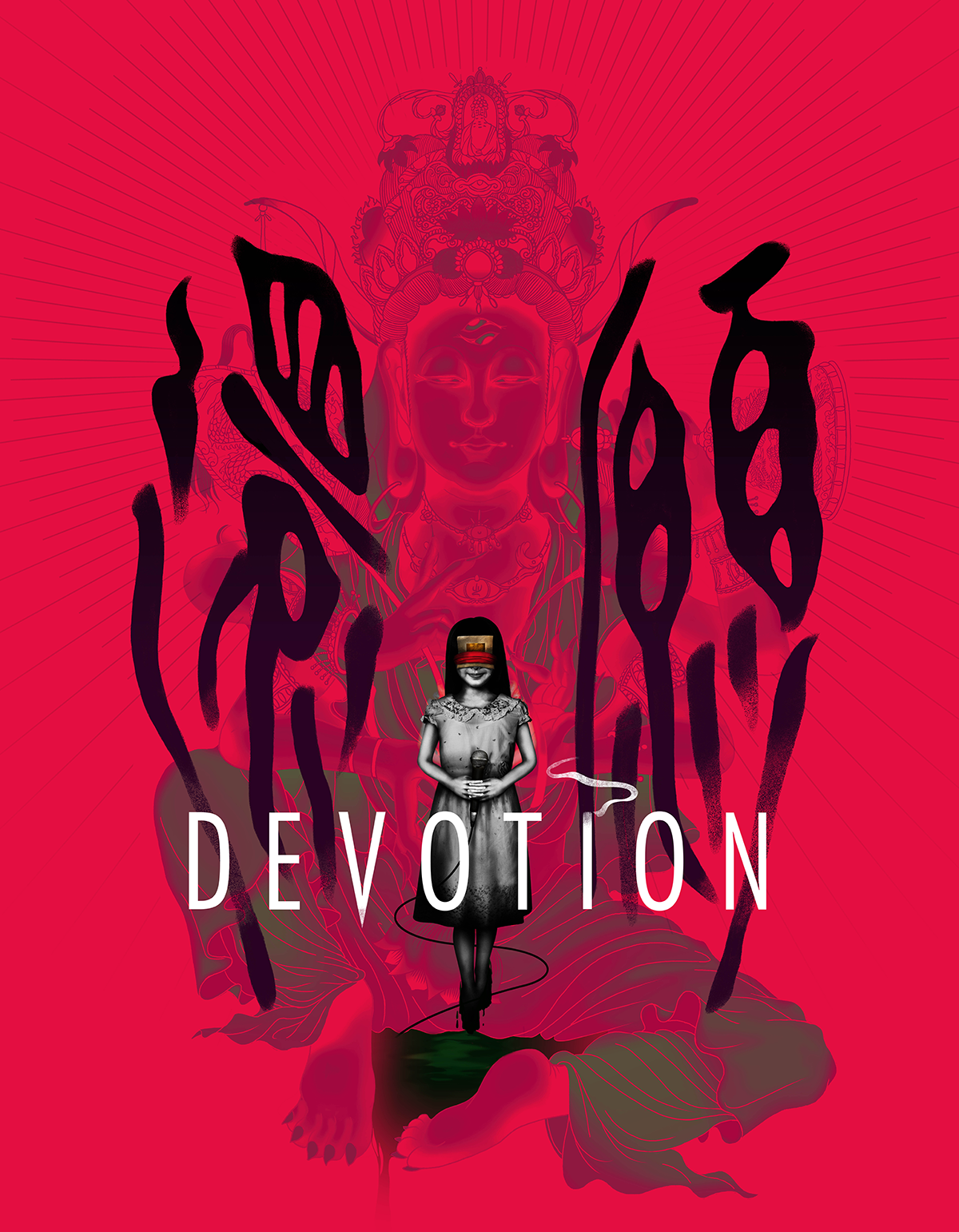
Devotion" is a horror game developed by Red Candle Games and distributed on Steam. The main character, a screenwriter named Fong Wu, wanders around a housing complex in Taipei in a warped dimension, searching for his wife Li Hou, a former actress, and his daughter Mei Xin, and gradually collects fragments of his past and remembers the events that led to the collapse of his family. The film incorporates the social conditions of the time, prejudice against the mentally ill, and the problems of new religions. Through the protagonist, who is confronted with his own ego in the process of pursuing his missing daughter, the film questions the nature of parent-child love and familial love.
Overview of "Devotion
Devotion" is a horror game for PC (Steam) developed by Taiwanese game company Red Candle Games as its second title following "Return to School" and was released on February 19, 2019. The distribution of the game was suspended due to problems in China with a yellow tag on the wall of the game that ridiculed Chinese politician Xi Jinping as Winnie the Pooh, but a limited package version was released in Taiwan from June 8, 2020 to June 15, 2020. The packaged version includes a USB flash drive containing the game, a picture book, bookmarks and stickers, and two options: Option A (NT$1,200), which includes the original soundtrack, and Option B (NT$980), which does not include the soundtrack. Whether or not the game will be released outside of Taiwan is unknown at this time.
Red Candle Games' works are characterized by a serious style that incorporates the social conditions and problems of the time, and this film is also a realistic reflection of the world of the 1980s, when there were many cases of fraud by unscrupulous new religions, and prejudice against mental illness was strong, leading to the concealment and house arrest of patients within their own families. The film was shot in 1987 in a Taipei apartment complex.
A housing complex in Taipei in 1987. The protagonist, screenwriter Fong Woo, is happily at home with his beautiful wife Li Hou, a former actress, and their daughter Mei Xin, an aspiring singer.
As he travels back and forth between the past and the present, between fiction and reality, and between his home and a strange subspace that is sometimes haunted by spirits of the dead, Fong Woo collects fragments of episodes and reconstructs his memories, gradually recalling his daughter's illness, discord with his wife, and the tragedy of his own family's collapse due to his involvement in a new religion.
The theme of the film is a family tragedy, and the focus is on the family's experience.
A daughter who becomes mentally ill due to the pressure of her parents' discordant relationship and expectations for her future, a father who falls in love with a dubious new religion in order to cure his daughter's illness, and a mother who leaves home out of love for her father, who does not work. The process of the happy family's differences and eventual downfall, triggered by the decline of Fong Woo, which has become an outmoded style after being the darling of the industry, is detailed from the perspective of the player-controlled protagonist, and the drama becomes denser in proportion to the madness of the space, which is gradually becoming more distorted and chaotic.
The game features a first-person perspective. The player basically controls Fong Woo, acquires items, and selects and uses them in certain places to advance the story. The game also contains ciphers, and is an immersive fusion of exploration and riddle-solving. The game also succeeds in creating a realistic worldview by playing background music using traditional Taiwanese instruments and songs from the 1980s, and by reproducing the furniture and architectural styles of ordinary households of the time.
The emotional effects that even create fantasy beauty, such as real tulips blooming in the aisle when Fong Woo gets an origami tulip folded by Meishin, and his daughter's out-of-focus photo clearly visible when Fong Woo regains his forgotten memory, and the ghosts of the dead attacking from the ceiling or from the shadows at a moment's notice, are all very threatening. The game deserves a special mention for its beautiful graphics, including the color tones of the light.
The ending song is "還願" by the Taiwanese traditional instrumental band "草東沒有派對" ("No Party For Cao Dong" outside Taiwan), followed by the duet "碼頭姑娘 Lady of the pier" by Sclera Lihang (CV: He Xia) and Du Meixin (CV: Liu Zhiu). This is not only Lihou's hit song, but also a memorable song that Meixin won in a singing competition.
Synopsis and story of "Devotion
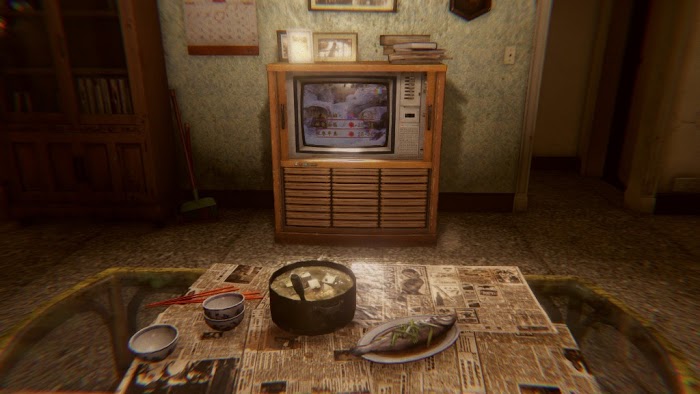
At the beginning of 1987, Fong Woo was having dinner at his home in an apartment complex.
The story begins with a harmonious dinner scene in a Taipei apartment complex in 1987. The protagonist is Du Feng Yu. He is an award-winning TV scriptwriter, and is considered the darling of his time. He is married to a beautiful former actress, Sclera Lifang, with whom he has a beloved daughter, Du Meixin.
Fong Woo is eating in the living room. His wife seems to be cooking in the kitchen and is out of sight, only her cheerful voice can be heard. His wife reports that Meishin has fallen down again at school, and she tells him not to go to Fong Woo to complain about it. Apparently, Fong Woo loves his daughter to the point of overprotectiveness. At the same time, he talks about his offerings to the teacher who is taking care of him, and his wife rejoices that thanks to her, Meishin is all cheery and merry, and that the offerings have brought him merit and virtue.
The peaceful meal scene is interrupted when the wife notices Meishin's absence and begins to fuss, distorting her vision. When she opens her eyes again, Fong Woo is alone in the dark living room. There is a sandstorm on the TV and no sign of his wife or children. The furniture has been rearranged in a different way, and the house looks a far cry from the past, when it was filled with the warmth of a happy family, but now it is in ruins. Fong Woo searches the house for his wife and child. For some reason, the bathroom is locked and he cannot enter. He has no choice but to go outside to the corridor, where he finds a figure with a red umbrella waiting for him. Fong Woo is upset when he is attacked by a shadow, but just before they collide, the enemy disappears.
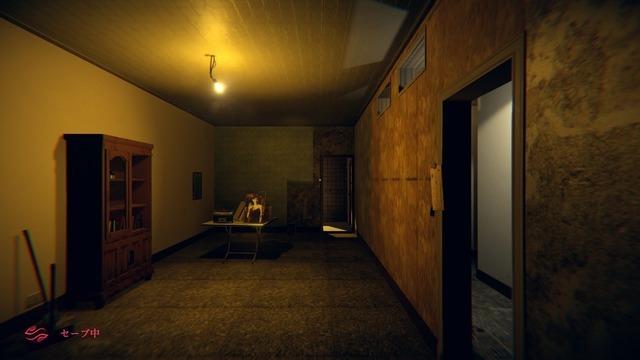
The door was opened to a new house at the time of the move.
After a while, he found a red door with the year 1980 written on it. After searching the side postbox for the key and opening the door, Fong Woo went back in time and returned to the empty room where he had moved in. The living room was empty of family portraits and the wallpaper was still fresh. He digs through the unpacked cardboard boxes and finds a picture of a young Lihou walking on the red carpet. Lihou had been an actress acclaimed for her beauty and singing ability, but had retired and entered the family after her marriage to Fong Woo.
At that moment, the power suddenly goes out. Fong Woo went to the switchboard to turn on the breaker and found a ballerina doll stuck in the device. Apparently, this is the cause of the malfunction. When Phong Woo returns to the living room, he finds red candles on the floor and the remains of some kind of ceremony. The scene changes again when he picks up the Zippo lighter on the desk.
Fong Woo was at his desk in his study, which doubles as his work space. The message card attached to the Zippo was from his wife, and it seemed to be a Father's Day present. The message said that she would continue to support you no matter what, and expressed the sentiments of an exemplary good wife who loves and supports her husband.
As I left the house again and proceeded down the hallway, I saw a large graffiti on the wall that read, "Why don't you open your eyes? I walked past it and opened the red door marked "1986.
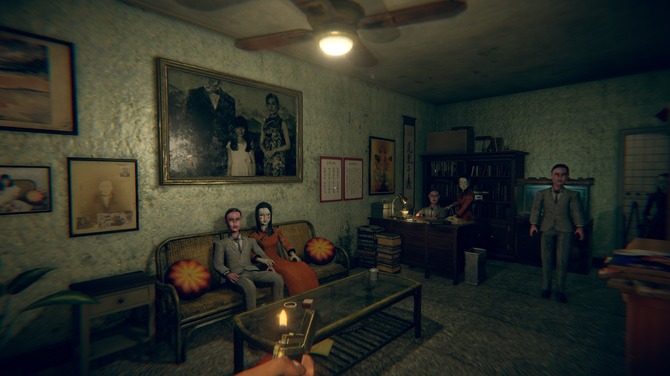
In the living room living room, there were paper dolls that imitated them, as if they were Fong Woo and Lihou.
Stepping into the living room of his home, Fong Woo is perplexed by a paper doll man and woman cuddling on the couch. On the desk was a scrap from his daughter's contact book, reporting to her homeroom teacher that she likes to play housekeeping on her bed in her room.
The paper dolls placed throughout the room resemble Fong Woo and Lihou, and are arranged to trace the couple's life line. The dolls were made of paper and bamboo, and it was the custom in Taiwan to burn them at funerals and send them to Hades with the dead to comfort them on their final journey. Not knowing why there was a paper doll that looked just like them, Fong Woo picked up an antique doll in the living room that looked just like her daughter, and went to Mei Xin's room to sit her on a chair of a children's play set spread out on the bed. In her daughter's room, there is a magnificent piano, indicating that Meishin has a strong musical sensibility and that her parents have great expectations for her future.
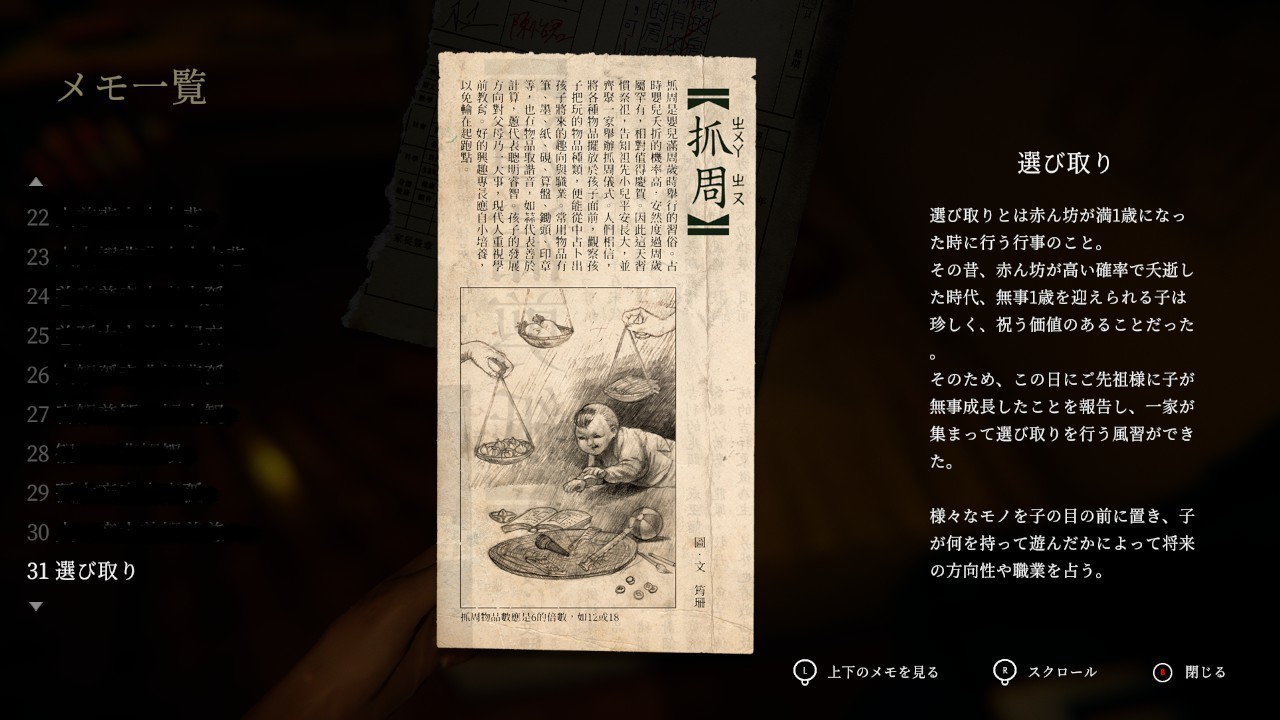
The traditional Taiwanese custom of "picking and choosing," in which a baby's future and vocation are divined by what he or she chooses to do.
On Meishin's desk was a scrap of an old newspaper, which contained details of a traditional Taiwanese custom known as "picking and choosing. In the days when the rate of premature infant deaths was high, various items were placed in front of a baby to celebrate the baby's first birthday, and the baby's future or vocation was determined by which item he or she chose.
When I looked back, I saw a rush of paper dolls of the couple at the entrance of the daughter's room. Fong Woo is reminded of something when he sees her parents crowded around the dolls, who are playing house on the bed, as if they are keeping an eye on her.
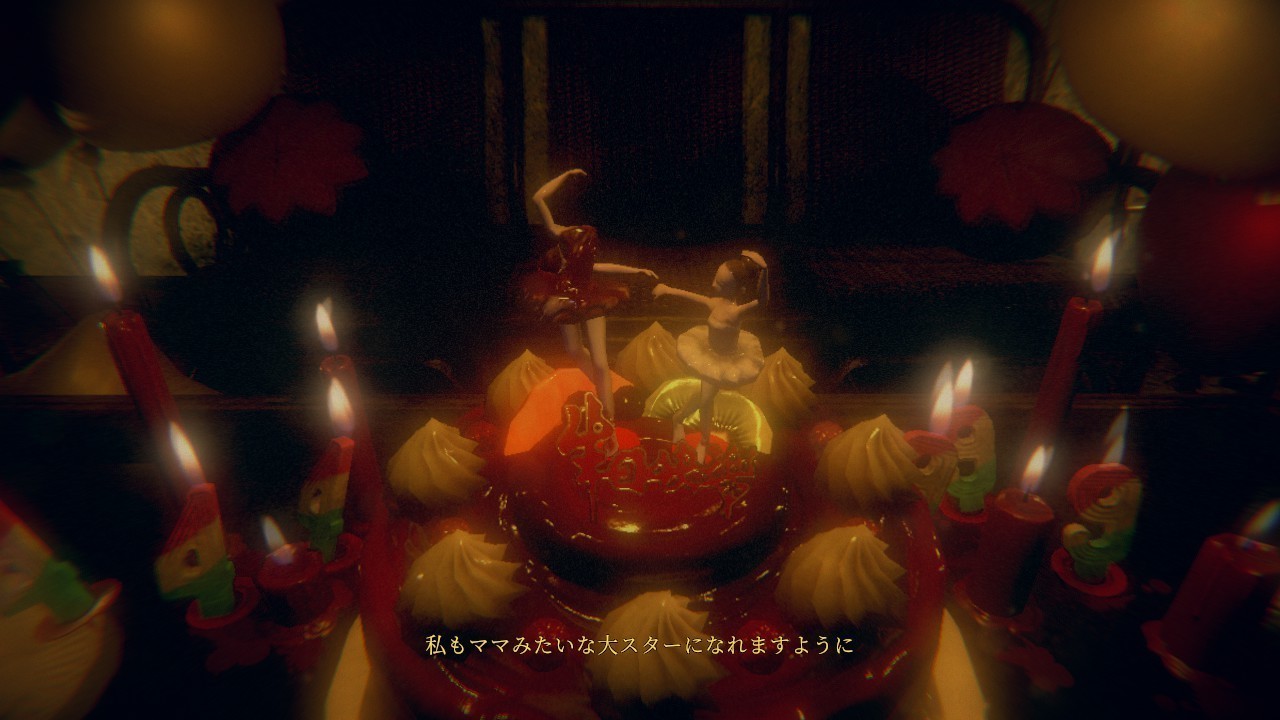
A scene from Meishin's birthday party. The large doll is a replica of her mother, Lihou, and the smaller doll is a replica of Meishin.
At that moment, a Happy Birthday song suddenly starts playing from the piano. The living room is decorated with balloons and candles, ready for Meishin's birthday party. The walls are filled with countless framed photos of her daughter. When Fong Woo decorates a ballerina doll in the center of the birthday cake, a red candle blazes up, bringing the scene back to life. There, Maixin blows out the candle and innocently dreams of becoming a star like her mother. She had always admired her mother, a former actress and a well-known diva. However, in front of Fong Woo's eyes, the heads of the large dolls that had been displayed side by side in the house in the shape of Lihou melted off.
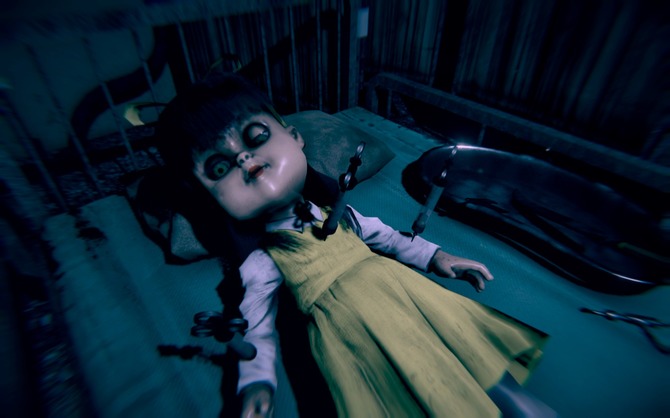
Meishin's room was transformed into a hospital room, with an antique doll lying on the bed with syringes stuck all over her body.
The next door said 1985. The living room beyond the door was furnished with backpacks and ready to leave on an excursion. In the maixin's room, there is a note that says, "You must wash your hands to enter. From behind the door, the sound of Maixin's crying echoed. Fong Woo goes to the bathroom and washes his hands as he is told, but his hands are soon stained with bright red blood. After waking up from his hallucination, Phong Woo checks his hands and is relieved to find that there is no blood on them. When he enters Meishin's room, he finds an antique doll that looks exactly like his daughter lying on her back on the bed, painfully pierced by countless syringes. When Fong Woo pulled out all the syringes, the sobs subsided and the doll closed her eyes and fell asleep. There is an intravenous drip in the room, indicating that Meishin was suffering from some kind of illness at the time. Returning to the living room, Fong Woo sees a projector on the desk with pieces of x-rays on it and puts them together correctly, like a puzzle. However, there are not enough pieces to create a complete picture. If he can complete the x-rays, he might be able to find the cause of his daughter's illness.
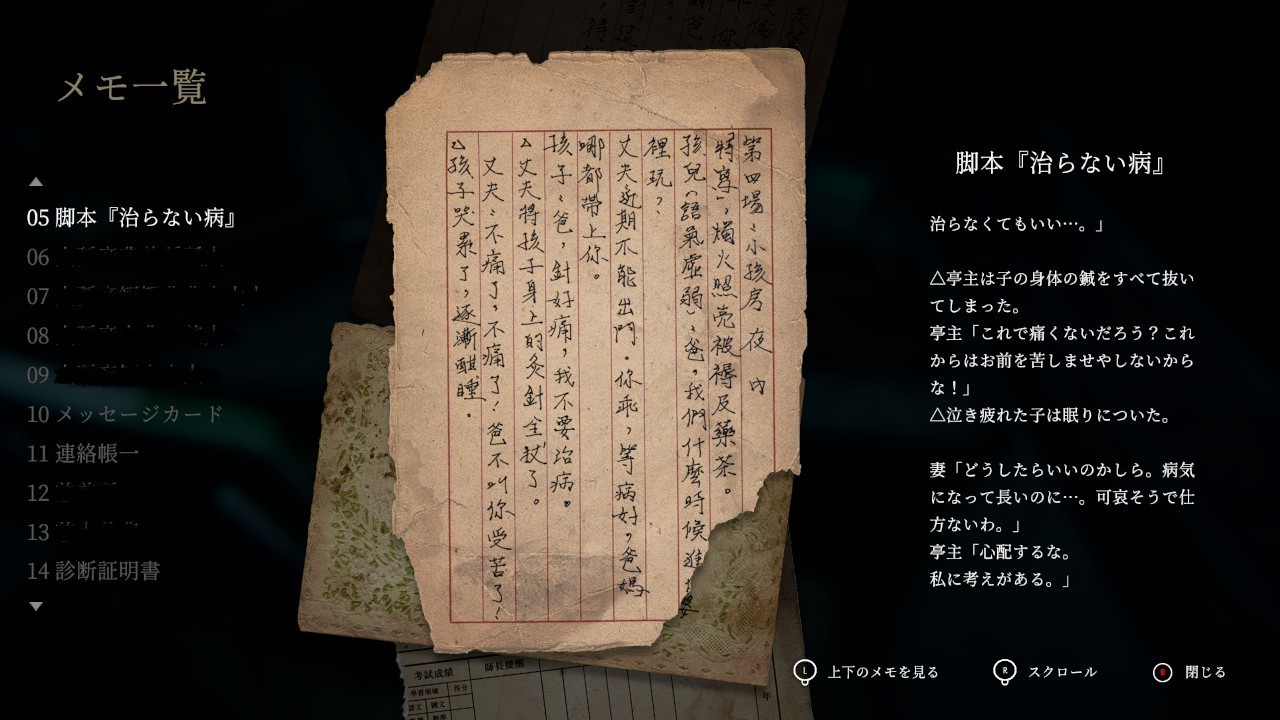
Part of the script written by Fong Woo spelled out a link to the reality of worrying about his daughter, who is suffering from a mysterious illness.
Nearby was a script by Phong Woo titled "The Incurable Disease." In the script, a daughter lying in bed with an incurable disease asks her father when she will be cured, and her mother, taking pity on her, cries.
Space distorts, and the home finds itself transformed into the interior of a hospital. Fong Woo discovers Meishin's chart at her doctor's desk and learns that Meishin complains of chest pain and suffering from not being able to breathe as symptoms.
A telephone set up in the hospital hallway rings. When he picks up the phone, he hears the voice of a woman named Dr. Ho, who shows understanding and sympathy for Mae Sing's symptoms, which are unexplained even after tests at the hospital, and leads Fong Woo upstairs.
Fong Woo heads upstairs as instructed. The hallway of the apartment complex is deserted, as if it were in ruins, and a glowing red shadow as tall as a child is crouched in front of a chair, listening to the radio or crying with its face covered, presenting an extraordinary otherworldly scene.
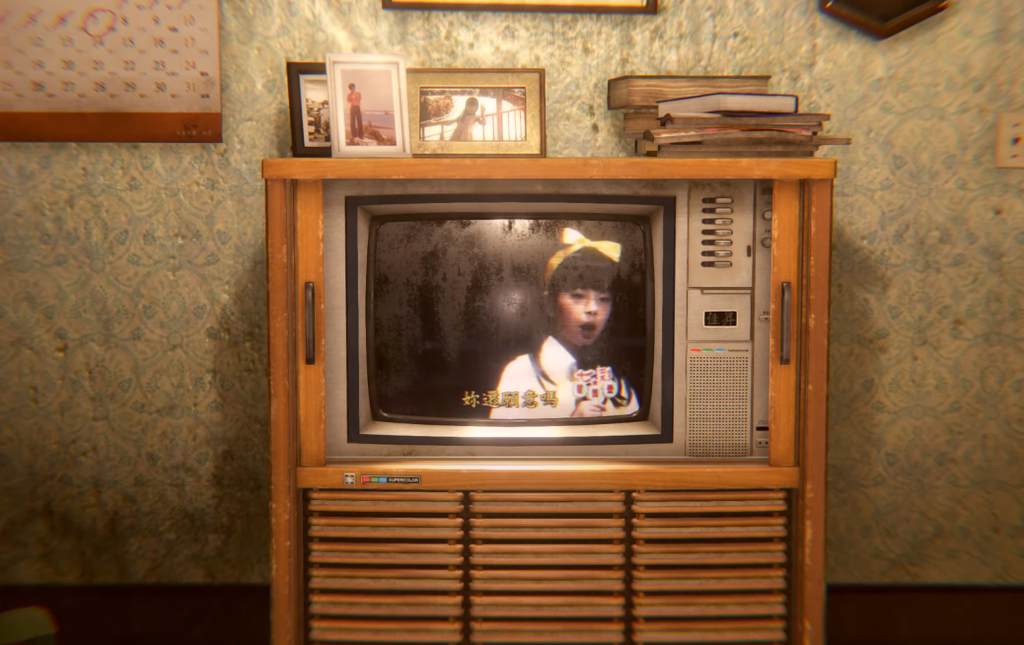
The TV singing show had Maixin on it.
When I opened the door to what appeared to be Dr. Ho's house on the second floor, I found that for some reason Phong Woo had returned to his home. On the TV set left on, there was a picture of Meishin in the limelight at an audition program, but just as she was about to sing, the noise swallowed her up and drowned her out. The calendar was circled from the 1st to the 7th of October 1987. Fong Woo turned around and saw an eerie image of the Avalokitesvara Bodhisattva floating in the family photo behind him. Distracted by the vision of the Avalokitesvara image covering her daughter's photo, she is trapped in a bathroom with vertical walls and a pool of murky, black, blood-like water. Drowned in the black water, which rises rapidly, Fong Woo is denounced by a woman with dark hair and pallid skin who sticks to the ceiling.
Where is Meishin?"
The next time Fong Woo, engulfed by the black water, wakes up in a bathtub placed in the center of a large space. There are red doors at each of the four corners. Fong Woo crawled out of the half-dead bathtub and saw Meishin's back as he ran forward into the passageway. He chases after Meishin with a lit Zippo as his light source, and the red door closes in front of him, and is sealed from above with a sticker or incantation that says, "If you pick up your past memories back, you will have today's perfect day. A large number of newspapers and advertisements were stuck in the mailbox next to it, and the door was shaken from the inside.
Fong Woo feels that something happened here, but he is distressed because he cannot remember the details. Once back in the hall, he begins to examine the bulletin board, which has been stripped of all the pasting, indicating the year 1986.
When he opens the red door, he is transported to July 27, 1986. Just inside the entranceway, there is an altar with a statue of the Avalokitesvara Bodhisattva, Jikko-guanyin, with a candle that is kept burning and offerings made. This is apparently the idol of a new religious group worshipped by Dr. Ho, who lives on the floor above Phuong Woo and his family. Fong Woo, who was pessimistic about his daughter's condition that was not getting any better, had taken Dr. Ho's sweet words to heart that if he worshipped and contributed to the Ji Kuan Yin every day, Meishin would be cured and would be able to perform on stage again.
The living room was decorated with a large number of miniature light bulbs and the TV was on. On the desk was an album with a picture of Maixin playing the piano, but it was too blurry to see clearly. On the TV was Maixin, who sang her mother's signature song from her working days flawlessly, making no mistakes and receiving rave reviews from the judges. The walls of the hallway beyond the living room are covered with crayon graffiti that must have been done by Meishin.
Fong Woo goes to Meishin's room and reads her essay on her future dreams at her study desk.
In her essay, she writes that she wants to be a big star like Lihou and appear on TV. Fong Woo, who is Meishin's father, supports her dream and says that if she works hard, her dream will come true. With her parents' hopes pinned on her, Maixin takes singing lessons every week and actively participates in contests. She does not resent her parents' busy schedule and says that she wants to take them out to play with her when she grows up.
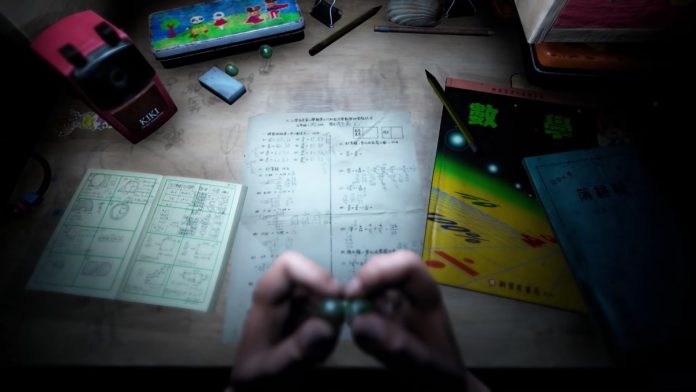
Meishin locks herself in her room and just endures until the fight between her parents is over.
Then we switch to Maisin's point of view. Playing with marbles by clicking them together, Meishin hears a fight between a couple over the wall. Lihou was considering a return to show business. Fong Woo has been laid off from the industry because he is stuck in his job, and he will not be able to pay his utility and gas bills. Lihou, who has been added to the cast by a director acquaintance, asks Fong Woo about resuming her acting career, but Fong Woo, who is obsessed with the appearance and pride of a great writer, refuses to accept the reality that he has to send his wife to work because of his own lack of ability and will not allow her to return to the entertainment business.
Lihou tries her best to persuade him not to return to show business and neglect his household chores or take care of their daughter, but he is fed up with her stubborn attitude of not meddling in men's affairs and accuses her of staying at home all day, not looking for a job, and producing unsuccessful scripts. Lihou scolds Fong Woo's outdated scripts and tells him to get a grip on reality, but Fong Woo is so upset that they cannot have a conversation.
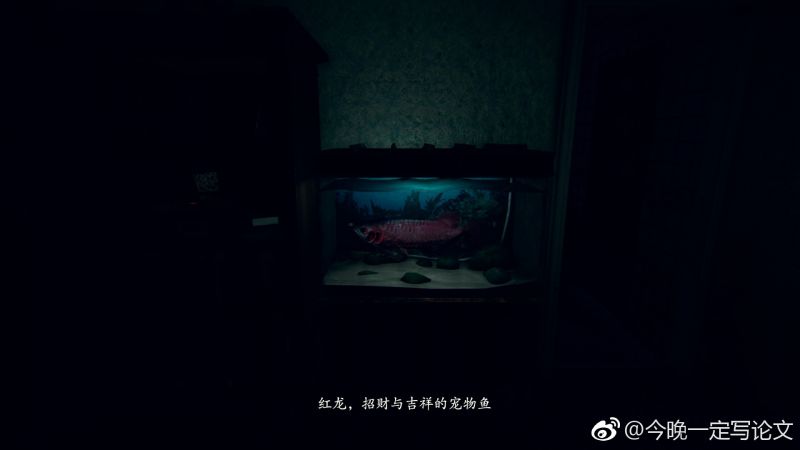
The ornamental fish Fong Woo purchased, the arowana, was considered a lucky fish in Taiwan that would bring him money. Fong Woo was a superstitious person.
Fong Woo sarcastically blames his wife's extravagant spending for his hardship, and Lihou accuses Fong Woo of buying a record player, an expensive wristwatch, and an arowana, an ornamental fish, to make himself look good. Moreover, Fong Woo had donated a large sum of money to the Ci Kwun Yin Foundation.
Listening to their argument, Mae-shin has a hyperventilating fit and falls down on her desk. Her parents' disagreement was putting undue stress on her young daughter's mind and body. The doctor recommended that Maisin see a psychosomatic medicine specialist, but mental illness was not widely recognized in Taiwan at the time, and relatives tended to hide their patients from the public for fear of the public's blinding eye. Therefore, Fong Woo, who was more concerned about his appearance than anyone else, stubbornly refused to acknowledge the possibility that his daughter had a mental illness, and decided to let Mei Xin receive medical treatment at home.
The couple's quarrel continues, and Li Ho chastises her husband for his attitude toward her family's financial support, and in a fit of rage, Fong Wu rips off her treasured china dress. It was her favorite stage costume from her working days.
The TV in the living room continues to broadcast a live singing show, announcing that Meishin has won for the fourth week in a row. Proceeding to the couple's bedroom, the walls were decorated with many photos from her glamorous days, as if to suggest Lihou's lingering interest in the entertainment industry.
After completing his search, Fong Woo went out into the hallway and encountered a woman in a Chinese dress, but she soon disappeared.
When he opens the next door, he finds a flyer on the living room desk. It was a brochure for a trip to Alishan, where the family was to go. The trunk and backpack were already stuffed with a change of clothes, but the room was dark and empty. Outside, a torrential rain and wind storm roared. The family trip that Meishin had been looking forward to had been canceled due to a direct hit by a typhoon.
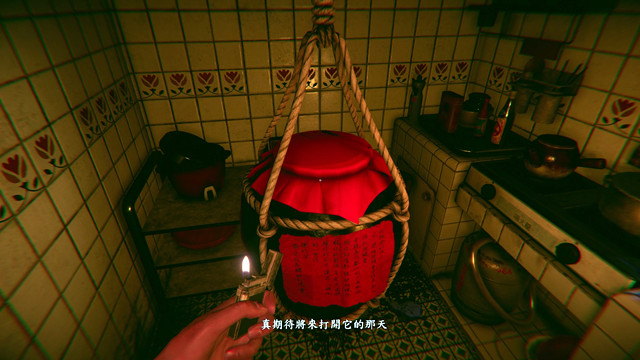
In the kitchen of Fong Woo's house hangs a jar of sake brewed for Meishin's birthday celebration.

Contents
- Overview of "Devotion
- Synopsis and story of "Devotion
- Game System of "Devotion
- basic system
- Four types of doors
- Door for the year 1980, the year of the monkey
- Doors for the Year of the Ox 1985
- Doors for the Year of the Tiger 1986
- Door of the Year of the Rabbit 1987 (present)
- Items from "Devotion
- Flowers and Love."
- The Lady of the Harbor.
- antique doll
- Ballerina doll
- Metal relief
- Origami Tulip
- Characters and characters in Devotion
- key people
- Du Feng Yu
- Du Meixin
- Sclera Lihou
- minor characters
- Master Ho Laoshi
- Terms of Devotion
- returning an application
- red dragon
- paper doll
- picking out
- reddish brown tinged with yellow
- Jikko-kannon (Śrīla Kannon, Śrīla Kannon and Kannon)
- questioning
- Famous quotes, lines/scenes and scenes from Devotion
- "May these flowers grow healthy in the future."
- But Daddy never knows that I know how to cure the disease."
- Daddy, let's go home."
- Backstory, Trivia, and Small Stories/Episodes/Anecdotes about "Devotion" (Devotion)
- The meaning of Devotion in "Devotion" is dedication.
- Deciphering the video posted by the official before the release of "Kangan (Devotion)" reveals the date of the first broadcast of the song program in the work.
- Lihou's disappearance was discovered at a user-participation event prior to the launch of "Devotion.
- The makers of "Devotion" were inspired by "Strange Things Happened at the Finch Family's Strange House.
- Theme song and insert song for "Devotion
- Ending song: 沒有派對 (台湾外表記:No Party For Cao Dong) "還願
- Ending song: Sclera Lifang (He Xia) & Du Meixin (Liu Zhi Yu) "Lady of the pier