
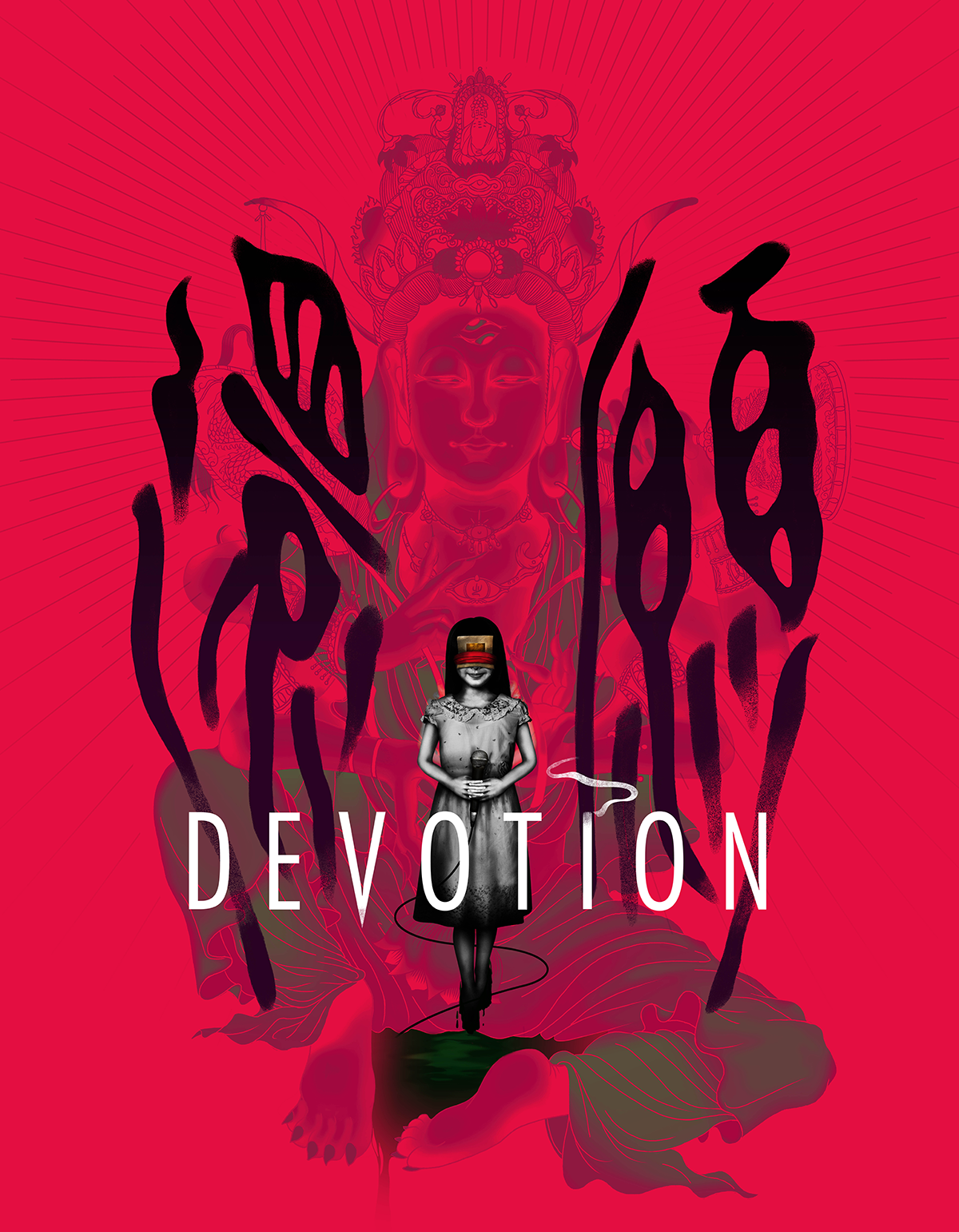
Devotion" is a horror game developed by Red Candle Games and distributed on Steam. The main character, a screenwriter named Fong Wu, wanders around a housing complex in Taipei in a warped dimension, searching for his wife Li Hou, a former actress, and his daughter Mei Xin, and gradually collects fragments of his past and remembers the events that led to the collapse of his family. The film incorporates the social conditions of the time, prejudice against the mentally ill, and the problems of new religions. Through the protagonist, who is confronted with his own ego in the process of pursuing his missing daughter, the film questions the nature of parent-child love and familial love.
Stepping into the kitchen, Fong Woo sees Meishin's graffiti on the refrigerator. There, along with Fong Woo's poem, was a description of how to brew a big star. She seemed to believe that if you put a red dress, ballet shoes, and a tiara in the same jar and let them sleep, a big star would be created. In Taiwan and China, when a daughter is born, the culture of brewing wine is handed down, and the jar is opened at a banquet on the day the daughter is sent off as a bride. This wine is called "jiao-hong" (女兒紅), but when the daughter dies prematurely due to accident or illness, it is changed to "hua diao jiu jiu" (花雕酒). In the kitchen of Fong Woo's house, there was also a jar of "jia hong" made when Meishin was born hanging.
When we go to Meishin's room, we find an antique doll lying on her bed and an essay titled "My Family" on her study desk. Her mother is a housewife who likes to sing, and her father is at home every day writing something. He has to play quietly at home because his mother gets angry if he interrupts his father's work. Maixin, who is ill, has been absent from school most of the time, but her parents are devoted caretakers at home. Meishin loved her kind parents the most and wished for a peaceful and happy life for the whole family.
Returning to the living room, Fong Woo read the numerous posters on the trunk. It was a letter of protest from Maesin, saying, "Papa is a liar and doesn't keep his promises. Fong Woo had forced his daughter to miss a school field trip because of her condition, and had planned a family trip to make up for it. But even that trip was cancelled because of the typhoon, and Mae-sin was extremely angry.
In the rest of the correspondence book, Maesin writes about her boredom while recuperating at home, and her anxiety over not knowing the cause of her illness.
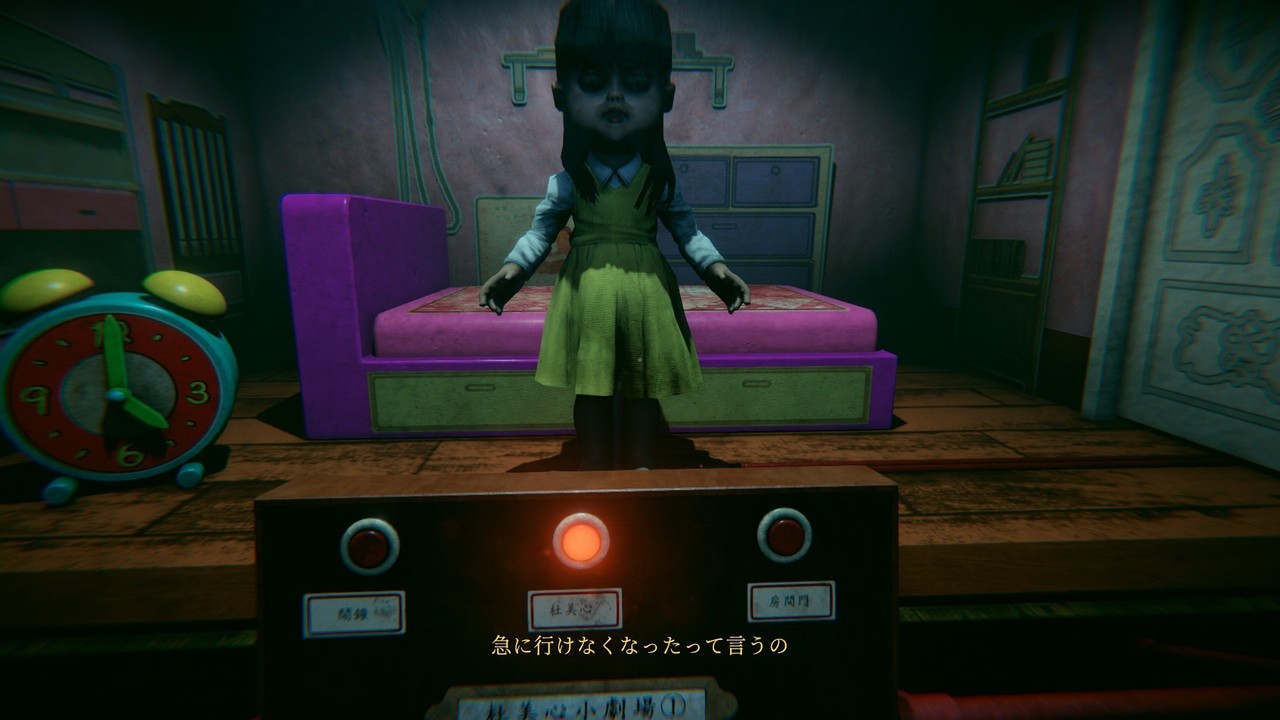
The puppet show, which begins abruptly, recreates Maixin's behavior on the day the family trip was canceled.
Inside the room was a miniature set of a child's room in a case, and when Fong Woo pressed the start button, an antique doll that looked exactly like Mei Xin began a puppet show that traced her behavior on the day of the trip cancellation. She had long been frustrated and antagonistic toward her father, who did not care for her, but the news of the cancellation of the family trip was the decisive factor.
Unable to give up on the trip, Maixin tried to go out alone. To get back at her parents, she stuffed her mother's clothes in her father's trunk and hid the key in her secret place, namely, her closet. As the doll slides down the rail to another room, she hears Lihou's voice lamenting Meishin's selfishness.
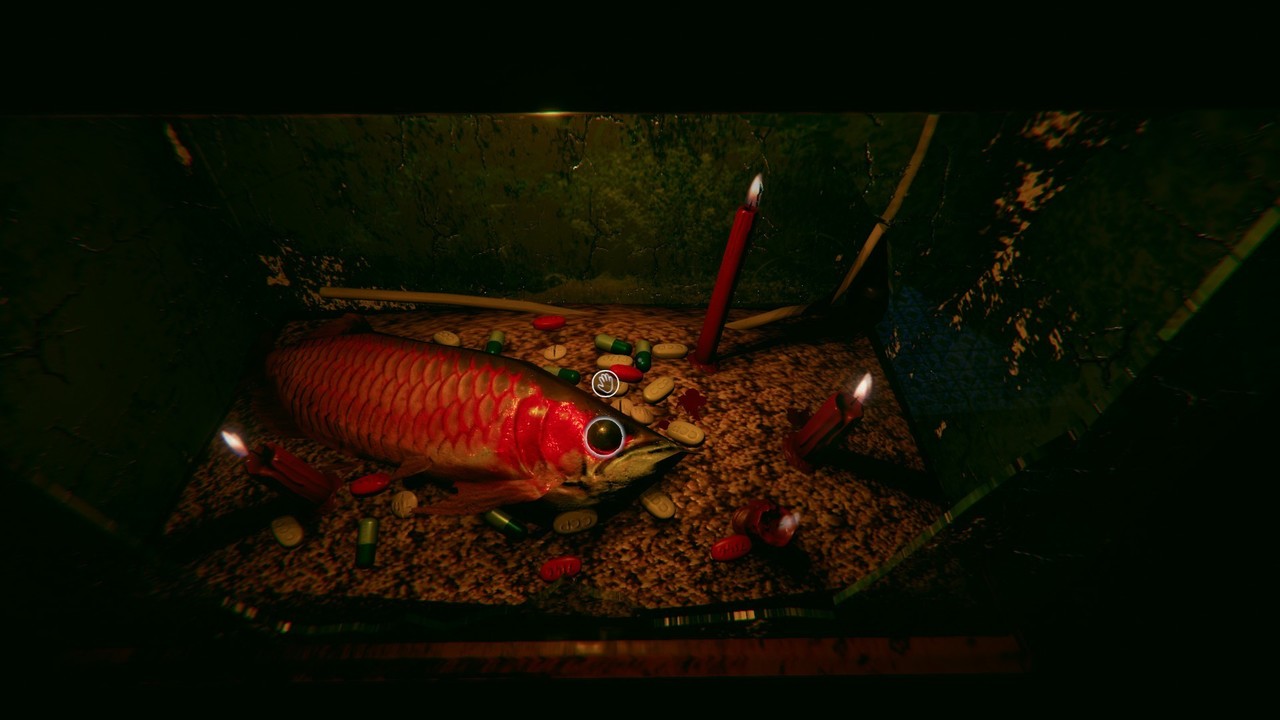
The arowana died because Meishin dumped vitamins into the tank.
Already drugged, Maixin refused to take the prescribed vitamins and dumped them into the tank of an Asian arowana kept by Fong Woo. As a result of the prank and destruction of evidence, the arowanas that ingested the water in which the vitamins had dissolved died.
At the bottom of the tank, where the water had dried up, a candle was set up, and the transformed arowana was mourned. After examining the arowana's eyes, Fong Woo obtained a marble that had been dislodged from its eye socket. Returning to the couple's bedroom, he opens the closet and discovers Meishin's toy marble roller. Fong Woo puts in the marble from the arowana's eye socket, clears the maze, and successfully leads it to the goal, and obtains the key to the trunk. When he returns to the living room to unlock the trunk, he finds a picture book inside. It was a book called "Flowers and Love," which Fong Woo used to read to Meishin every night before bed. In Maixin's room, her doll was waiting on her bed, and Fong Woo opened the book and began to read to her.
A hunter draws a bow on a wild boar he meets in the forest, but he falls ill from an injury sustained by the boar, and his daughter's nursing care is not enough to help him.
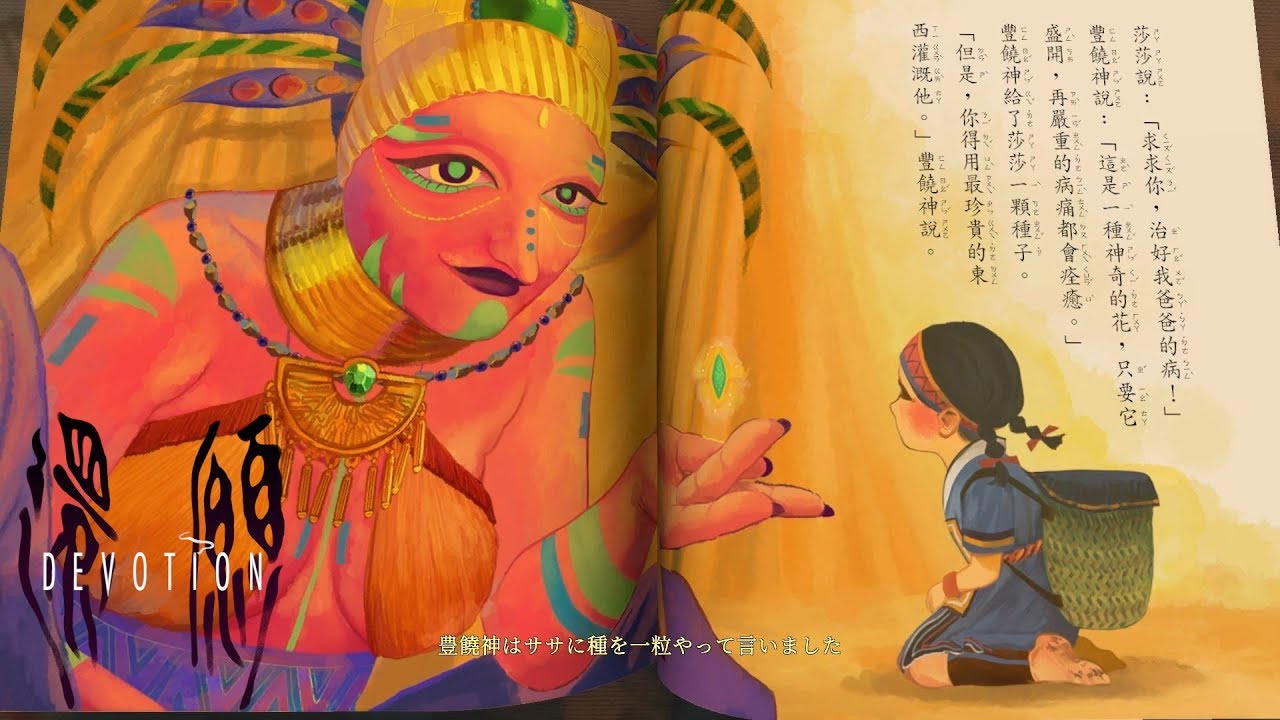
The daughter sets out on a journey to pray for her father's recovery and is given the seed of a panacea by the god of fertility.
She sets out on a journey to find a way to save her father, and at a palace she stops at on the way, she is given a single seed by the god of fertility, who tells her that a flower that will cure all illnesses will bloom from now on. However, in order for the flower to grow, she needs divine water that can only be found in the sky tree, which is so huge that it reaches to the heavens. As they turn the pages of the picture book, they hear the voices of Meishin and Fong Woo talking to each other. The daughter of the picture book, whose path is blocked by a river, throws an apple to the opposite bank and crosses the river, stepping on a bear that has fallen in to take it. The kind-hearted Maixin takes pity on the bear and adds a giant bubbles to the illustration. When Fong Woo asks the bear where he is going, Meishin replies, "School," expressing her wish to return to school as soon as possible. Fong Woo then asked Maixin for ideas, and they worked together to solve obstacles along the way by drawing various items in the picture book. The time before bedtime, when her father, who usually stays in his study and does not give her much time, reads the picture book to her, is one of the few comforts for Maixin, who misses going to school.
The daughter eventually reaches the top of the sky tree, but the water in the spring has already dried up. The father consoled her by telling her that she would only need to sleep for a little while. A tear fell from her eye, and the elixir bloomed beautifully, curing her father's illness.
The elixir flower in the story was a yellow tulip, and on the last page was an origami tulip handmade by Meishin.
Fong Woo opens the next door, August 8, 1980. In the living room, many chairs had been set out and there were signs of a meeting. In the kitchen, there was a message from Fong Woo to his wife, instructing her in detail to make tea every minute and to replace the entire contents of the refrigerator in the morning. It seems that Fong Woo was a bit paranoid, nervous, and had a tendency to be an overbearing husband.
When I went to the couple's bedroom, I found the closet padlocked and a note from Meishin, which read, "My secret base. The password was apparently her favorite photo. It seems that the password for the padlock was set to a date that had something to do with Maycine's favorite photo.
Fong Woo rummages around the dresser and obtains a pair of red ballet slippers, a favorite of Lihou's. On the bed, he finds a pair of ballet slippers from a friend of Lihou's. On the bed is a letter from a friend of Lihou's, expressing regret for her retirement and sympathy for Fong Woo's decision to sell his house and move into an apartment complex after his income plummeted; it seems that by 1980, Fong Woo as a screenwriter had already reached a deadlock. Further exploration led to the discovery of a record of the theme song to a film starring Lihou himself, "Lady of the Harbor.
There was a hole in the wall of the bedroom. We peeked in and found Fong Woo at his desk in his study, working on a screenplay. There, shifting to Meishin's point of view, she innocently calls out to her father through the peephole. Meishin is so focused on her father that he doesn't even notice her, and she is constantly appealing to him to look at me. He continues to beg her to play with him, but Fong Woo, suffering from a slump, rips up the manuscript and cleaves everything on the desk before Lihou can pull Meishin away from the tearhole.
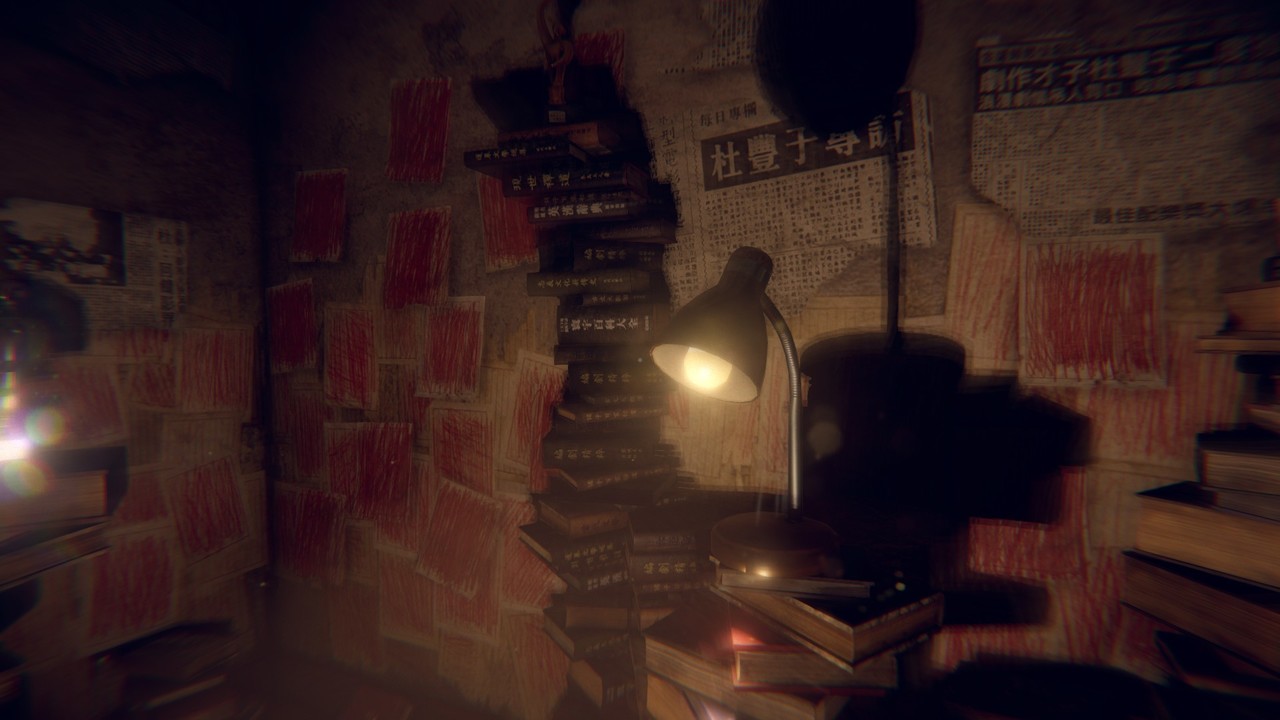
Meishin's room was dominated by a precariously stacked pile of materials that reflected Fong Woo's slump.
Upon entering Meishin's room, Fong Woo saw that her room was occupied with documents, reflecting her distress, and that the walls were covered with manuscript papers painted in red. Returning to the living room, Fong Woo obtains a scrap of newspaper in which it is written that Jikki-kwannon, whom Fong Woo had begun to worship under the teachings of Master Ho, is the incarnation of a precious spirit snake. When I went to the kitchen, I heard a conversation on the radio. A woman living in Taiwan called the host of the program and asked him about her husband, whose business was not going well and who had not stopped being extravagant and was still dreaming of a comeback. The woman wishes her husband would see reality, but the host admonishes her that people are not easily able to admit setbacks. Fong Woo, who recognized the woman's identity as Lihou from her voice and the content of her advice, learned that his own fanaticism and extravagant spending habits had driven his wife to seek a cure for their daughter's illness by putting his faith in the gods and Buddha.
When Fong Woo returns to the living room, a tripod camera appears in front of him, and when he looks through the viewfinder, the scene from the photo shoot comes back to life. Meishin is about to play a song called "Cute Family" on the piano. Lihou watches from the side, while Fong Woo holds up the camera. The sound of the shutter clicks and a picture emerges, showing Maixin's profile as she plays the piano with one finger. It seems that she is playing a song for Fong Woo's birthday. This photo, taken by her father, is the one that Maixin loves the most and treasures the most.
Fong Woo leaves the room and returns to the bathtub in the hall, where he hears Lihou's phone call to his mother at home. Lihou, weighed down by a spendthrift husband who never accepts failure and continues to write unsuccessful screenplays, and a sick daughter, had become feeble and made the call to her parents' house. Her mother was concerned about her appearance in the world, and she told Lihou to respect her husband when he showed signs of wanting to return home.
When we open the door to 1986 again, we can clearly see a photograph pasted in an album on the desk. It was a picture of Meishin playing the piano on Fong Woo's birthday. After retrieving the photo, Fong Woo went to the couple's bedroom and put "Lady in the Harbor" on the record player. As he does so, Maixin appears sitting on the bed, but disappears as soon as Fong Woo turns around in front of her. The daughter's face, visible only for a moment, was blackened like a dead person. When Fong Woo retrieves the tiara, the eyes of Lihou's picture, which is displayed throughout the room, begin to glow red. It is eerie, as if tears of blood are streaming down her cheeks.
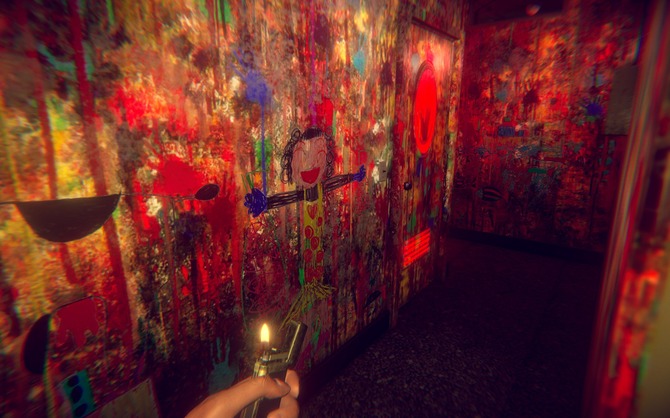
When I left the bedroom, extremely colored graffiti covered the walls.
When I left the bedroom, I found an odd sight: the hallway walls were painted with messy graffiti. When I reached the living room through the flood of extreme colors, I found that a singing show featuring Meishin was being broadcast live. Proceeding through the living room, the space distorted to reveal an unmanned stage surrounded by chairs that looked like audience seats. On the ceiling, a microphone was dangling and swaying. Suddenly, a loud noise rang out, and Meishin appeared on stage, crouching down to cover her ears. She had been the focus of attention as the singing show's beauty queen, but the expectations of her parents and the pressure of winning broke down, and one day she suddenly couldn't sing anymore.
Fong Woo returns to the kitchen on the night of the typhoon when the trip was canceled and throws the last tiara into the jar. He threw in the dress, ballet shoes, and tiara just as Meishin had scribbled, and if that recipe was correct, a big star would be born. Fong Woo goes to his bedroom muttering, "I can't wait to see what I can do in the future," only to find that Lihou's feelings for him have completely cooled off when he finds himself painted over in a photo taken with his wife.
Fong Woo opens the door to 1980 and puts an origami tulip in an empty pot in Meishin's room. The tulip is then sucked into the soil and a real flower blooms.
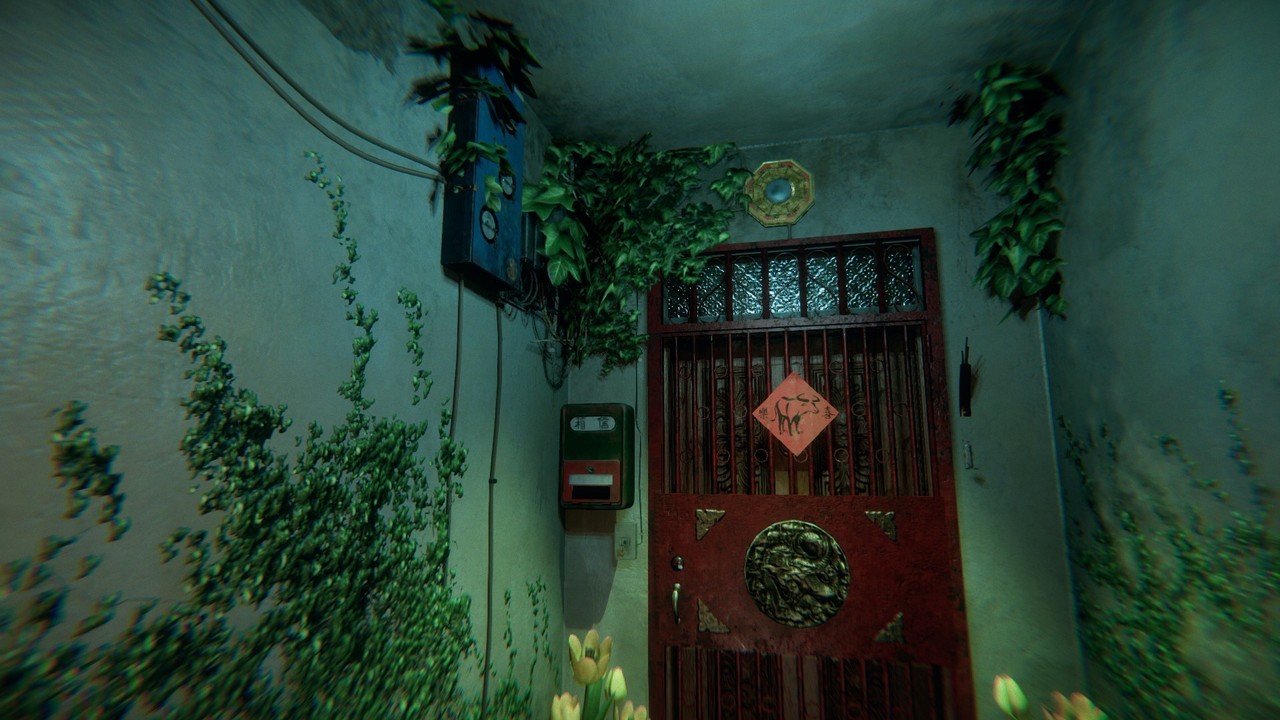
Tulips growing in the corridor in 1985.
When Fong Woo opened the door and returned to the hall, he peeked into the passageway leading to the 1985 door and saw ivy growing thickly on the walls and tulips blooming as if reproducing the picture book he had read to Meishin. Beyond the door was a fantastic landscape blended with nature, and the sound of Maixin's voice echoing with happiness at the gift of the picture book Fong Woo had given her. The book, "Flowers and Love," had been purchased by Fong Woo as a comfort to his daughter, who spends all day in bed. Maisin folded a yellow tulip, imitating the illustration, and was pleased to find that she could breathe more easily. Tucked away at the end of the picture book was her best folded creation, but it was made from manuscript paper that Fong Woo had discarded.
The transformation of the 1980 potted plant with origami into the 1985 home came from an episode in 1980 when Meishin played with tulips folded from Fong Woo's dead manuscript. It seems that Fong Woo lamented the depletion of his screenwriting talent and looked at the flowers his daughter had gone to the trouble of folding with mixed feelings, wondering if his manuscript was worth as much as a child's toy. Five years later, he bought a picture book with tulips in it for his sickbed daughter.
In Meishin's room, which is full of tulips, Fong Woo obtains a metal relief.
Returning to the hall, Phong Woo sees a newspaper article about Mae Sing on the 1986 bulletin board. According to the article, Maixin was disqualified because she could not sing during an audition and was never allowed to perform in a singing show again, and it was whispered to the public that the fate of second-generation talents had run out.
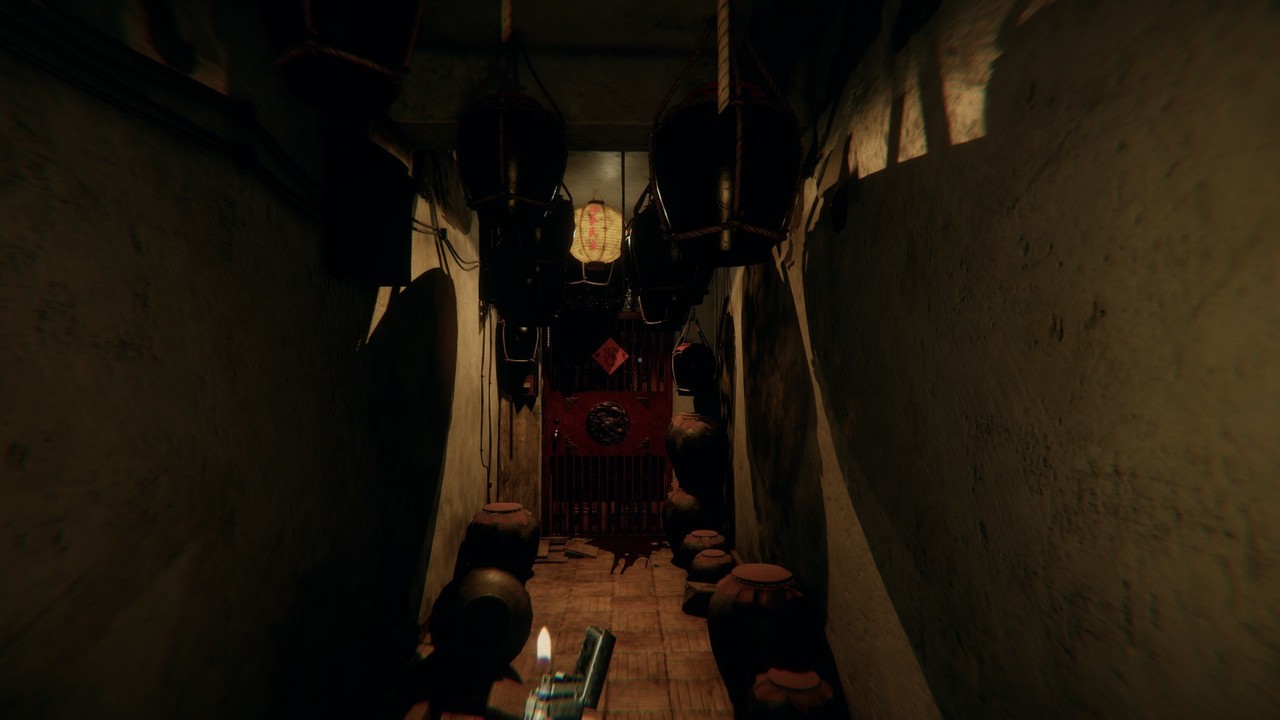
In 1986, jars of sake were clamoring in the aisles.
When you enter the 1986 aisle, jars are lying here and there. The door opens into a transformed liquor cellar, with jars lined up tightly on the shelves on either side. Fong Woo hears Meishin's voice reading from her diary. Meishin's condition has not improved, and when she is at home, she begins to have headaches, breathing difficulties, body tremors, and even a cough. The more Mae Sing brooded, the worse her symptoms became, and she could no longer even sleep at night. Fong Woo took her to Dr. Ho and forced her to pray.
Fong Woo is dependent on her, believing that Dr. Ho's divine power saved Meishin's life when she was most seriously ill, but Lihou is skeptical. However, Meishin follows his father's example and tells him that if Fong Woo believes in her, he believes in her too.
After passing through the brewery, they come to a waterway where a black-and-white striped snake is wandering around. It is an amagasa snake, which is said to be a follower of Jikko-guanyin. The living room at the end of the canal was lit by a red light, and the TV kept playing a scene from a singing show in which Meishin appeared on a loop. The TV rewinds to a scene from a singing show in which Meishin appears on the screen, clutching the microphone with a tight, tense look on her face, before the host announces the winner. The challengers who appeared every week, the expectations of the program staff and viewers who lifted up the Nisei celebrity, and the pressure to constantly produce results steadily tortured Maisin's psyche.
In 1980, a children's program was airing in her living room, teaching her how to fold origami. The then 5-year-old Meishin apparently learned how to fold by watching the program. When she went to the couple's bedroom, suddenly there was a creaking sound and the ghost of Lihou appeared on the doorstep. He attacks them with a terrible look, but disappears just before they collide.
Fong Woo reviews the photo of Meishin. The photo was taken on July 16, Fong Woo's birthday, and the padlock on the closet opened at 0716. The closet is littered with crayons and sketchbooks, but as we move forward, our perspective switches to Meishin as a baby, and the selection ritual is reenacted.
As you crawl forward, you hear Maysin's voice. Maysin was a shy child who hid in the closet whenever acquaintances or relatives of her parents came to visit. The closet was her favorite secret base, the only safe place where she could protect herself. Adults are a pain in the ass because they ask so many questions. She was shy, and to be honest, it was very difficult for her to stand up on stage and sing in front of a crowd.
Eventually, baby Maisin made her way to the stage where the spotlight shone on her. The audience seemed dark and empty, but there was only one person sitting in the audience. She recalls that she can sing freely in the closet because no one is listening, and fantasizes that the contest venue could be a closet. Immediately afterwards, a person in the audience looks up and reprimands her, saying, "Why don't you sing?
Returning from the inner world of the closet, Phong Woo returns to the hall and walks toward the only remaining door to 1987, but for some reason the door is moving further and further away. Whenever he thinks he is close to the door, he is repeatedly drawn back to his starting point, and he is unable to open the door at all. Behind me, the darkness echoes the vindictiveness of Rehobo. Lihou raised his Zippo and turned around to see Lihou approaching him as the lights flashed on and off. Its limbs are twisted in strange directions, and its joints are clearly moving strangely. Lihou approaches at close range and glares at Fong Woo with hatred.
The vision of Fong Woo, who has been attacked by Lihou, goes dark, and he is returned to his starting point. He almost despairs that he will never get there, but then he looks to the side and sees that another door has been created. Beyond the golden door was another door, and Fong Woo fled through it endlessly. He continued to run, winding his way around the ghost of Lihou, and after a few rounds of this, the elevator in his path opened. Fong Woo runs into the elevator and frantically presses the buttons, but it does not close. Suddenly, the elevator shakes vertically, all the buttons light up, and Lihou crawls through the open door. Lihou's face changes as she scratches the floor and pleads for help, finally clinging to her husband with a sad expression on her face.
At the same time, the doors close, and Fong Woo narrowly escapes danger. The elevator is back in operation, and a radio signal is heard. There, the host congratulates Lihou on her return to show business and asks her about her motives. Lihou replies, "Because I had to leave a lot of things behind," and then he tells Fong Woo that he is furious with his decision and that the man cares most about his own reputation.
Lihou tries hard to make a good home, but Fong Woo does not reciprocate his wife's devotion. He wraps a large sum of money for Dr. Ho, worships a strange Guanyin elephant, and covers the house in incense sticks. He even forces her to do penance, blaming Lihou's possession by an evil spirit for Meishin's failure to get better. Lihou expresses the unbearable pain of being treated like a monster by her husband. Meishin has always been fond of Fong Woo, and Lihou cannot stop them from staying at Dr. Ho's house. To get them away from Mr. Ho, Lihou takes her family and leaves the house, trying to find a quiet place to rebuild her life, but Fong Woo and Mr. Ho interfere, and it ends up being an unfulfilled dream.
As he exited the elevator, he saw a door ahead. Lihou's voice echoed in Fong Woo's ears, nostalgic for the days when family life was simple and joyful.
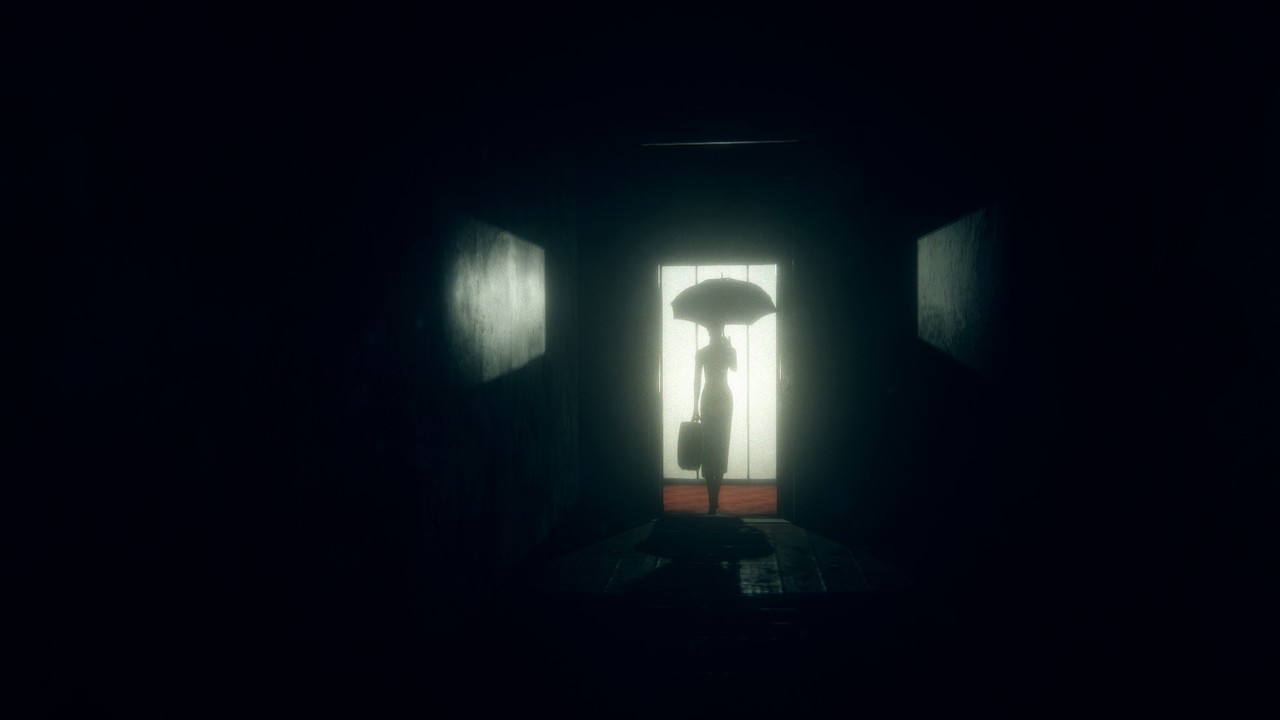
Lihou leaves the house out of love for Fong Woo.
Fong Woo hears the sound of hard shoes and turns to see Lihou leaving behind, carrying a bag and holding a parasol. Tired of everything, Lihou has given up on the idea of revitalizing her family and has left her husband and daughter behind.
When the metal reliefs obtained in the previous rooms are fitted into the last door, a brilliant light floods out from inside the door. Finally, the door to 1987 opened.
The living room was filled with the same peaceful dinner scene as at the beginning of the film. Fong Woo is having dinner while watching a live TV program featuring Meishin. Lihou, seeing her husband, stops the cooking and makes fun of him for being such an enthusiastic fan of Meishin, and teases him for being too impatient to wait for the reruns.
Fong Woo turns his head to the side and notices a small shadow standing in front of Meishin's room. It was Meishin, who was supposed to be on a live singing show right now.
Puzzled as to why Meishin was here, she locked herself in her room. Suddenly the room goes dark and the TV is engulfed in noise. Fong Woo went to Meishin's room and was shocked to find it empty. Her personal belongings have been cleared out of the child's room, and an empty bed and desk are left there, empty and empty.
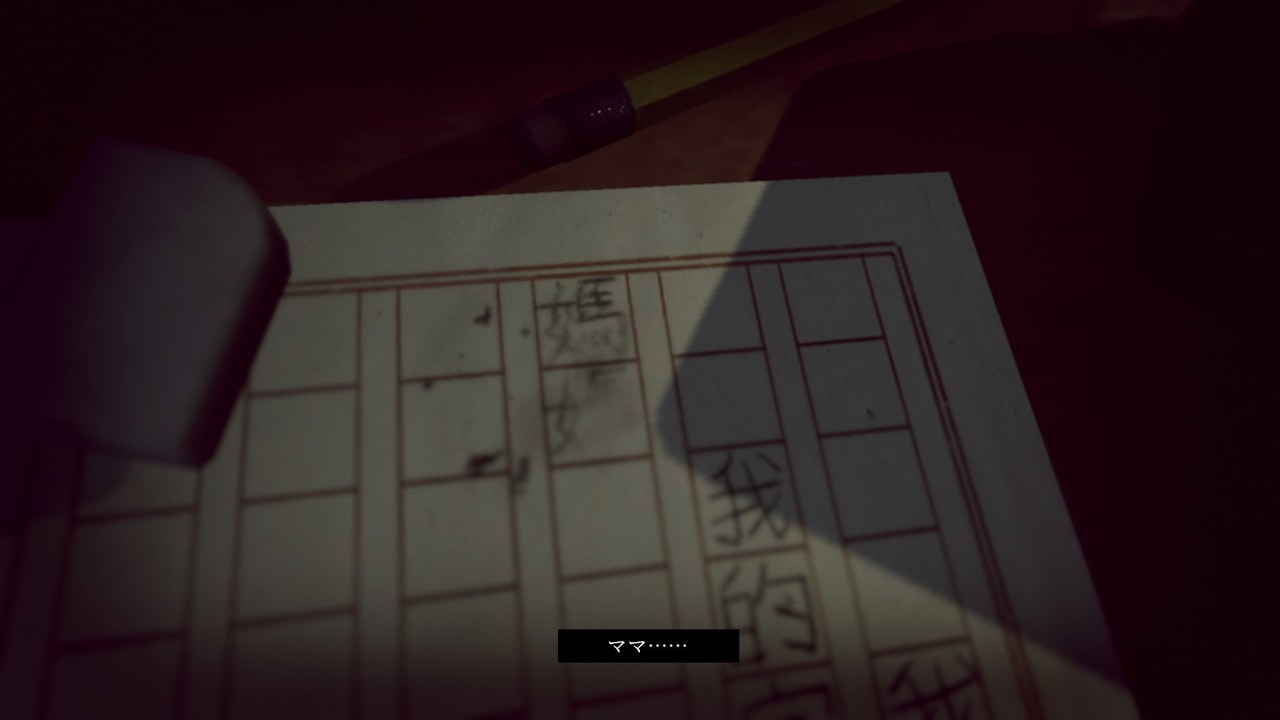
The mother's departure from the house was the decisive factor in the worsening of Maixin's illness.
Suddenly, Meishin's voice rings out and asks Fong Woo if his mother has returned yet. Then the viewpoint shifts to Maisin crying because she misses her mother.
Meishin's condition is further aggravated by Lihou's abandonment, and she has insomnia and cannot stop shaking at night.
The scene jumps even further: Meishin is writing an essay on "My Family" at school, but her mother's name has been crossed out with an eraser. At the dinner table alone with her father, a large amount of pills are served in Meishin's bowl. The scene of a traumatic singing show, the packed auditorium and the pasted-on smile of the presenter. The chaotic images are so convoluted that Meishin's hand, driven to the verge of insanity, is gently cupped by Lihou's hand, which reaches out from the darkness.
Once again, the perspective shifts to Fong Woo. After repeated tests, the cause of his illness was diagnosed as unknown, and the doctors finally gave up on him. From then on, he recommends that she see a psychiatrist, and Fong Woo tears up the medical report and exclaims that there is no way his daughter is crazy.
The phone on his desk rings. I pick up the receiver and it is Dr. Ho. Dr. Ho, who knows that Meishin has been abandoned by the doctor, reassures Fong Woo that she will be fine if she asks Ji Kuan Yin to teach her a lesson.
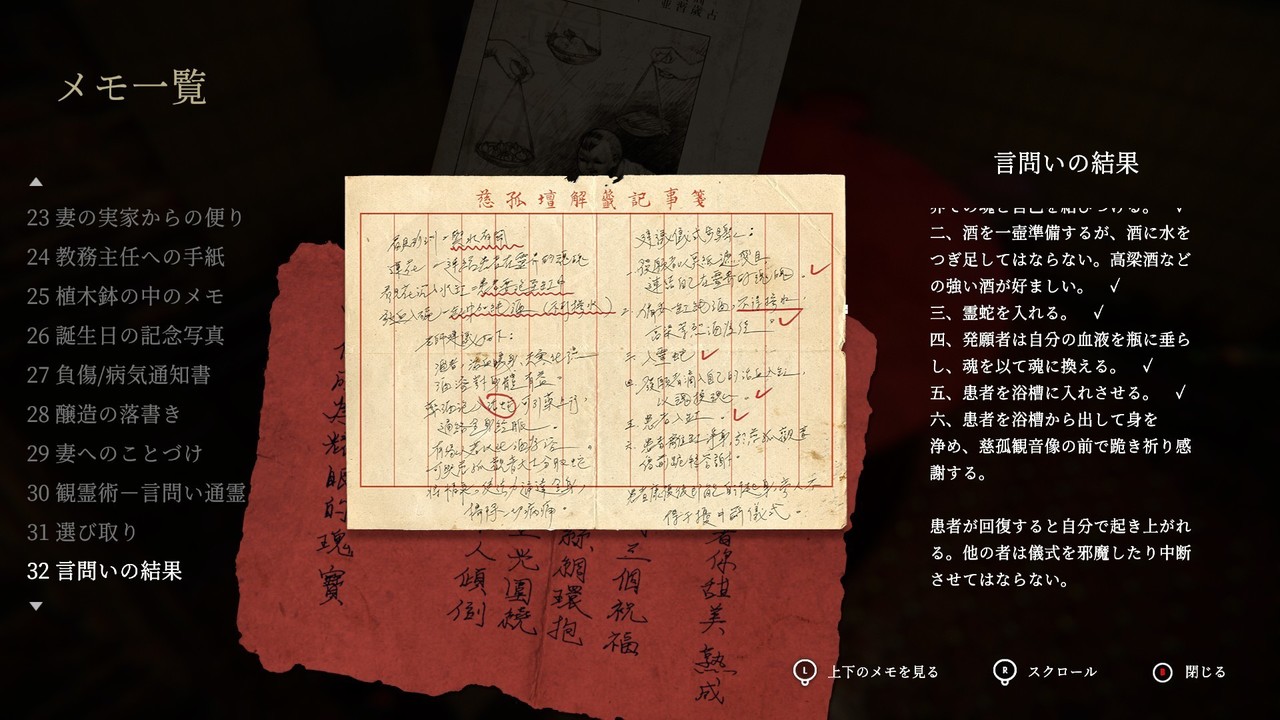
The ritual of saying and asking questions that Fong Woo was instructed by Dr. Ho.
Huong Woo, with a glimmer of hope that her daughter will be cured, goes through the ritual of asking questions, which Dr. Ho had taught her. She promised that if she could overcome this ordeal, Meishin's illness would be cured. However, Dr. Ho had already been accused of committing a serious crime of fraud and was now under the watchful eye of the police.
Fong Woo could no longer distinguish between delusion and reality. Hell was the embodiment of his inner world, a hallucination created by his mind. As he travels through the desolate hell, Phong Woo converses with his soul. His soul tells him that it is not too late, that he can save Meishin, and tries to lead him to the back of the bathroom door.
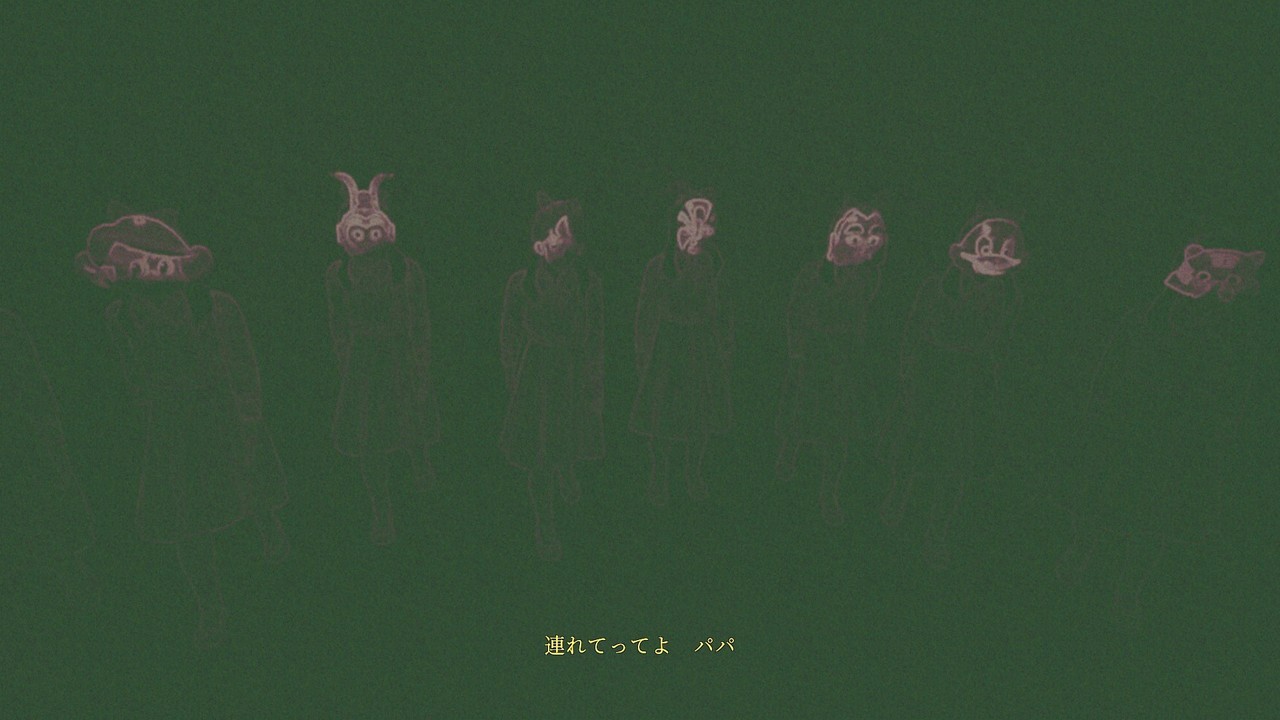
When the bathroom door opens, children with creepy masks surround Fong Woo.
When the bathroom door opens, the children in their strange masks are all there, pouring out the words that Fong Woo wanted: daddy is amazing, daddy is kind, daddy loves daddy more than anything else in the world. Soon the children surround Fong Woo, begging him to take them outside and let them out.
Fong Woo shakes them off and walks on, until he finally arrives at the giant Ci Kuan Yin. As he climbs the stairs to the top of the temple, the faceless Meishin is waiting for him and hands him a spoon. Fong Woo grabs the spoon and, in great pain, gouges out his eyeball. Further on, a second maisin appears and hands him a spoon. Fong Woo pulls out his tongue with the spoon.
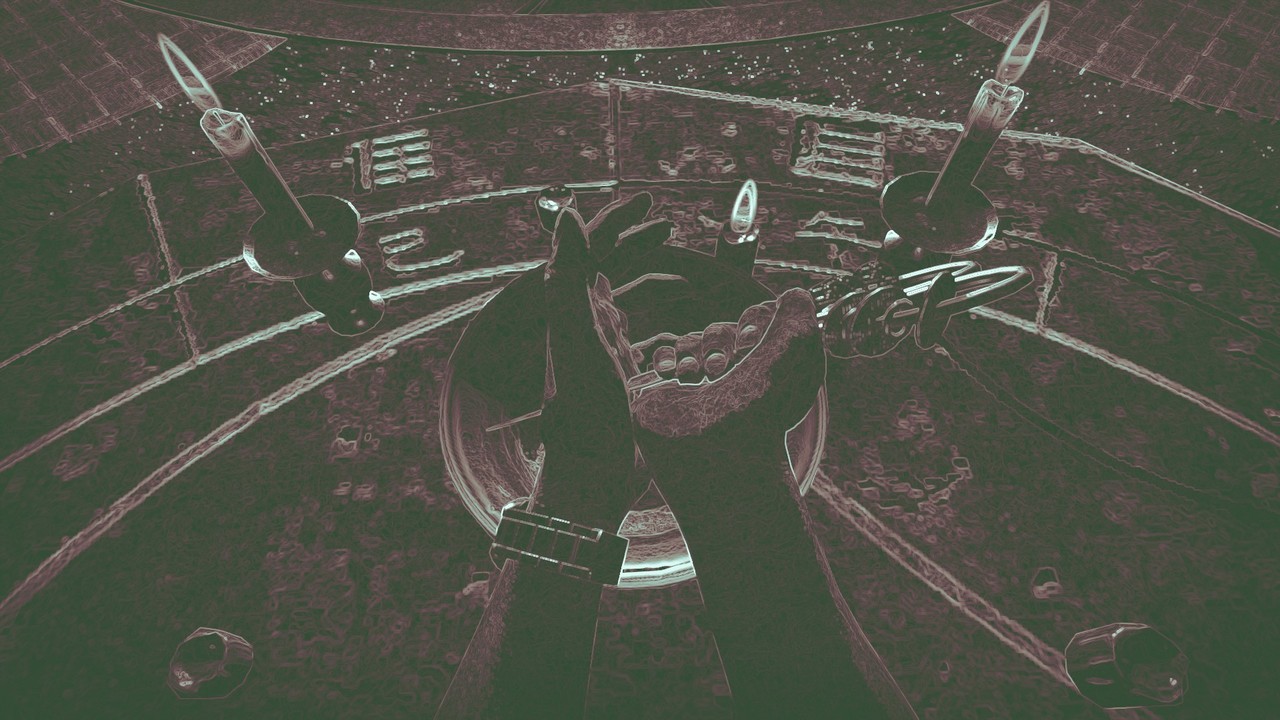
At the climax of the tour of hell, Fong Woo prays for Maisin's healing at the cost of his hand, which can be said to be the life of a writer.

Contents
- Overview of "Devotion
- Synopsis and story of "Devotion
- Game System of "Devotion
- basic system
- Four types of doors
- Door for the year 1980, the year of the monkey
- Doors for the Year of the Ox 1985
- Doors for the Year of the Tiger 1986
- Door of the Year of the Rabbit 1987 (present)
- Items from "Devotion
- Flowers and Love."
- The Lady of the Harbor.
- antique doll
- Ballerina doll
- Metal relief
- Origami Tulip
- Characters and characters in Devotion
- key people
- Du Feng Yu
- Du Meixin
- Sclera Lihou
- minor characters
- Master Ho Laoshi
- Terms of Devotion
- returning an application
- red dragon
- paper doll
- picking out
- reddish brown tinged with yellow
- Jikko-kannon (Śrīla Kannon, Śrīla Kannon and Kannon)
- questioning
- Famous quotes, lines/scenes and scenes from Devotion
- "May these flowers grow healthy in the future."
- But Daddy never knows that I know how to cure the disease."
- Daddy, let's go home."
- Backstory, Trivia, and Small Stories/Episodes/Anecdotes about "Devotion" (Devotion)
- The meaning of Devotion in "Devotion" is dedication.
- Deciphering the video posted by the official before the release of "Kangan (Devotion)" reveals the date of the first broadcast of the song program in the work.
- Lihou's disappearance was discovered at a user-participation event prior to the launch of "Devotion.
- The makers of "Devotion" were inspired by "Strange Things Happened at the Finch Family's Strange House.
- Theme song and insert song for "Devotion
- Ending song: 沒有派對 (台湾外表記:No Party For Cao Dong) "還願
- Ending song: Sclera Lifang (He Xia) & Du Meixin (Liu Zhi Yu) "Lady of the pier