
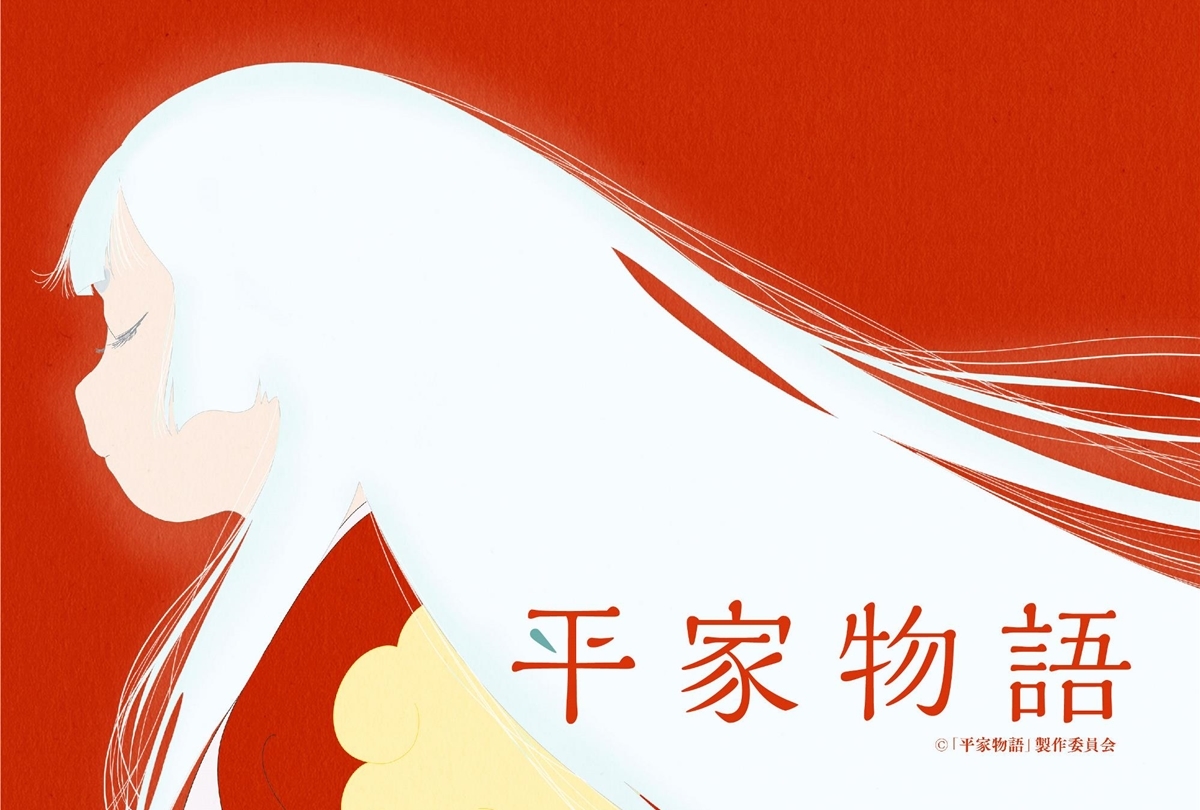
Heike Monogatari" is a TV animation produced by Science SARU and broadcast from January 2022, based on a modern translation by Hideo Furukawa of "The Tale of the Heike," a military chronicle from the Kamakura period. Biwa, a biwa priestess who is the narrator of the story, is set as the main character as an original anime character. Biwa, the daughter of a biwa master with the power to see the future, comes to live in the Heike family mansion and observes the rise and fall of the dying family with her own eyes. Centered on Biwa's interaction with the people of the Heike clan, the film tells the story of a group of people who lived their lives to the fullest, despite being tossed about by the times.
Biwa: "I want to see the future of the Taira family. Seeing it, I play the biwa with prayers."
In Shirabyoshi, Biwa was once reunited with her mother, who had left her and her father behind. The mother, who had been taken to her without reason, was always praying for her and her father. When Biwa heard this story, she found something she could do now because she couldn't do anything even if she could see the future. After completing her journey to find her mother, journey to find her mother, Biwa told her that she wanted to see the future of the Taira family and that she would play the biwa in prayer.
The Battle and Death of Atsumori
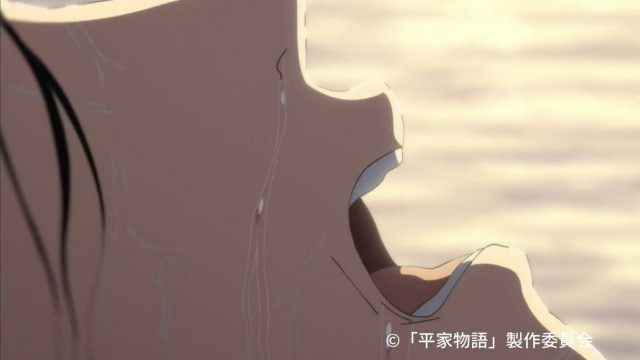
Atsumori shouts to the enemy like a todome.
Atsumori was riding on a horse that ran over shallow water in the morning sun. A samurai of the Minamoto clan stopped him, asking,' Do you want to show your back to the enemy?' and the image of Kiyotsune, who had already taken his own life, comes to Atsumori's mind. The battle he longed for and the battlefield were darker than he had expected and the place where his life was cut off. Atsumori, who also felt regret for the Taira family which continued to be routed, remembered his promise with Kiyotsune that he would' fight well as a samurai' and faced the one on-one battle. The opponent was bigger than himself and had a rough appearance, but Atsumori did not hesitate to swing his sword. The scene in which Atsumori shouted' take your head off now' to the enemy who hesitated to kill him because of Atsumori's young age was valiant, and the flute held in his hand was reflected in sorrow. The sound of the flute heard on the seashore after Atsumori was killed by the samurai of the Minamoto clan further highlights his sorrow.
Taira-no Shigemori and biwa (loquats):' The sound of the bell of Gion Shoja Temple'
Source: fugaofftime.com
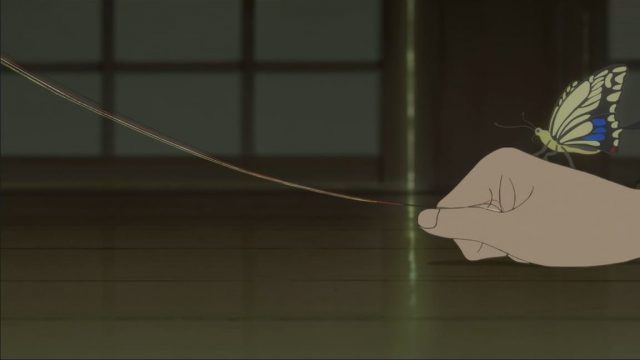
Tokuko holds five colored threads from Amida Buddha.
Tokuko, who survived the Battle of Dannoura, tells the beginning of the tale of a loquat that is handed down to Cloistered Emperor Goshirakawa. The beginning of the story begins with the "Sound of the Bell at the Gion Shoja Monastery." The voices of the Minamoto warrior who became a monk after defeating Atsumori, the Taira clan who might have escaped to somewhere, and Cloistered Emperor Goshirakawa all repeat and overlap. Tokuko holds the five colored thread that stretches from the Buddha statue of the mountain temple where Tokuko is, murmurs a prayer, and the voice of Shigemori overlaps it. Gradually, only the loquat and the voice of Shigemori are heard, and the beginning of "The Tale of the Heike" is concluded with' It is the same as the dust in front of the wind.'
The behind-the-scenes stories, trivia, and small stories / episodes and anecdotes of "Heike Monogatari"
Tokuko no Monogatari
Hayami, who plays Tokuko, was first told by director Naoko Yamada, "It's also the story of Tokuko." With these words, Hayami seemed to feel more pressure and said that Tokuko, who is growing up at the mercy of the Taira family, "lives with a strong will." Nyuno and Hanae also mentioned Tokuko as a character they care about in their interviews. Tokuko's fragile and dignified beautiful voice is also notable in this work.
Biwa singing is certified by professionals
The biwa songs that the biwa sings are actually voiced by voice actor Yuki. The biwa songs that Sakurai and Hayami also mention as highlights were created under the supervision of professionals. Yuki says, "It was the first time, but since I improved considerably, the requests from the supervising teacher increased steadily." The feelings of running, voice inflection, and sadness due to strength and weakness in the battle are also carefully expressed.
Koremori's weakness is necessary for "Heike Monogatari"
Furukawa, who translated the original text of "The Tale of the Heike" and wrote the book that became the original text for the anime, talks about its fascinating characters. In particular, he cites Koremori, the eldest son of Shigemori and a direct grandson of Kiyomori, as the driving force behind the long reading of "The Tale of the Heike." Koremori is a person who, when it comes to a battle, runs away trembling at the exchange of life, or escapes from the Taira family and jumps into the sea at the end without trying to face him saying' I'm scared.' However, Furukawa analyzed that modern people can find a person who sympathizes with them in "The Tale of the Heike" by having Koremori who "shows universal weakness easily." Furukawa expresses Koremori's modernity by saying, "I just know that love is more important."
Theme song and inserted song of "Heike Monogatari"
OP (opening): Western literature "When Shining"
"Kagayaku Toki" was written by the vocalist Moeka Shiotsuka as the theme song of an anime. This is the first attempt to write a theme song for a TV anime as a Western literature. production, "Every time I read the script, I learned the human and beautiful side of the people of the Taira family, who tend to be talked about with an arrogant image. I think I was able to make a song that praises and lights up such a figure in our own way." The gentle and refreshing tone creates a feeling of moving forward in a positive way, and there are many words that make you feel "The Tale of the Heike." The accompanying guitar sounds somewhat like a biwa (Japanese lute), strengthening the world view. Shiotsuka
ED (ending): Kensuke Ushio feat. ANI (Scha Dara Parr) "unified perspective"
This song features the rap of Scha Dara Parr by Kensuke Ushio, the solo unit of 憲輔 Ushino, who is in charge of the music of "Heike Monogatari". It is the first release in five and a half years since the third album "the shader". It is a strange music with waves that starts with a quiet intro that seems to sink into the sea, a rap that seems to be a simple narrative, and a pop sound that appears when the tune changes. It is a song that the main character Biwa plays as if he is remembering the happy and sad days with the Taira family.

Related Articles
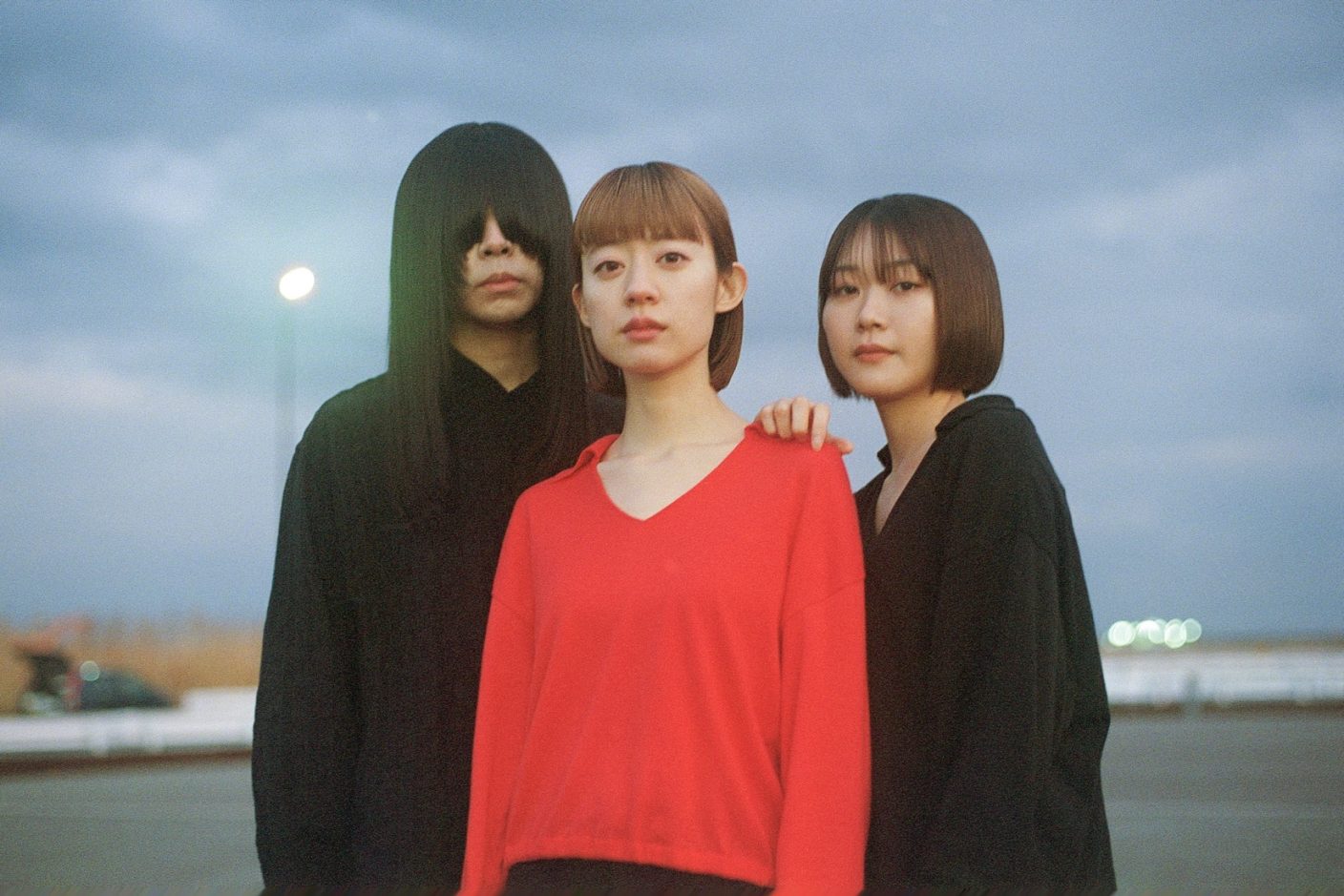
In-depth summary of sheep literature (bands)
Sheep Literature is an alternative rock band formed in 2011. The band was originally a five-member group, but since the members were high school students, they went through several member changes, including suspensions and withdrawals due to entrance exams; Hiroa Fukuda joined in 2015 and Yurika Kawanishi in 2017, and the three have been performing together with Moeka Shiotsuka, the founder of Hitsuyo Bungaku ever since. Their songs contain a positive message of "live your life as it is," and their unpretentious appearance and sensitive music have touched the hearts of many fans and resonated with them.
Read Article
犬王(INU-OH)のネタバレ解説・考察まとめ
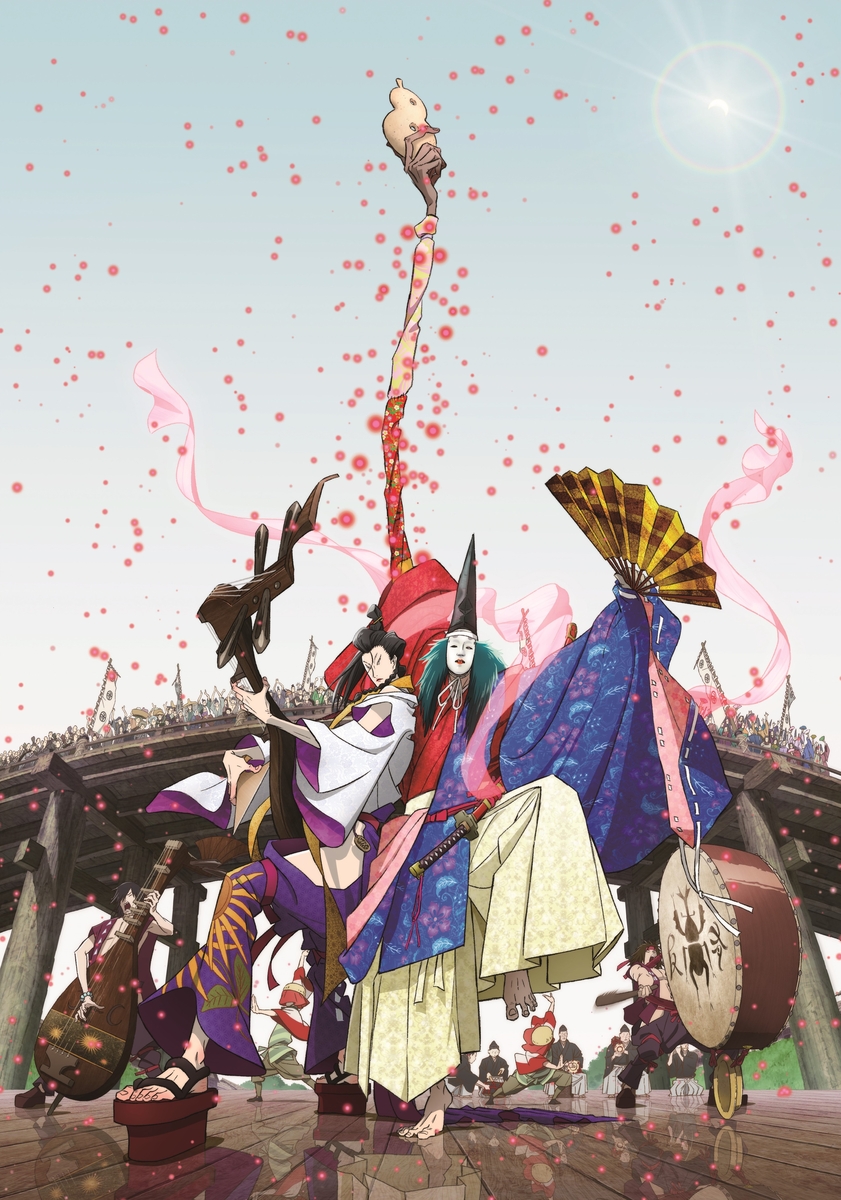
『犬王』とは、2022年5月に劇場公開された湯浅政明監督によるミュージカルアニメ映画。小説『平家物語 犬王の巻』を原作として、室町時代活躍した能楽師・犬王と琵琶法師の友魚の友情を描く物語となっている。別々の場所で生まれ育った2人が、出会いをきっかけにそれぞれ演舞や演奏の才能を開花させ、人々を魅了する存在へと成長していく。室町時代の能に現代のロックミュージックを取り入れた演奏が特徴的で、犬王と友魚の唯一無二の演舞が見どころの作品である。
Read Article
Summary of Collaboration and the Lexi Name in Lexi's Second Album "Lexit"
Featuring history, the popular artist "Lexi" continues to push forward on his own unique path. The artists that Lexi collaborates with are always gorgeous. Whenever Lexi collaborates with an artist, the artist is given a name called "Lexi Name," which has become a topic of conversation. In this article, we will introduce the artists who collaborated on Lexi's second album "Lexitsu" and their Lexi-names.
Read Article
Tags
Contents
- Outline of "Heike Monogatari"
- Outline and story of "Heike Monogatari"
- The Encounter of Heike and Biwa
- Gio's Fate and Tokuko's Marriage
- Memories of Itsukushima and the direct petition of Enryaku-ji Temple
- Shishigatani conspiracy
- Order of Prince Mochihito
- The appearance of Atsumori and the Battle of Fujigawa
- Death of Kiyomori
- The battle of Kurikara Pass and the exile from the capital
- Kiyotsune's death, Biwa no Haha
- The Battle of Ichinotani and Atsumori
- Koremori's death
- The Tale of the Ruined Heike
- Characters in "Heike Monogatari"
- Key person
- Loquat
- Taira-no Shigemori
- People of the Taira family
- Taira no Tokuko (Taira no Tokuko)
- Taira no Koremori (The Paulownia Court)
- Taira no Sukemori (The Paulownia Court)
- Taira no Kiyotsune
- Taira no Tsuneko
- Taira no Munemori (The Paulownia Court)
- Taira no Tomomori
- Taira-no-shigehira
- Taira no Atsumori
- TAIRA no Kiyomori
- Taira no Tokiko
- Taira no Tokitada (Taira no Tokitada)
- Taira no Takakiyo
- Shin Dainagon no Tsubone
- Taira no Tadanori
- Taira no Noritsune
- Genji people
- MINAMOTO no Yoritomo
- Masako Hōjō
- MINAMOTO no Yoshitsune
- Musashibo Benkei (Musashibo Benkei)
- Shizuka Gozen
- Yoshinaka KISO
- Tomoe Gozen
- Kumagai Naozane
- Imperial Court
- Cloistered Emperor Go-Shirakawa
- Taira no Shigeko
- Emperor Emeritus TAKAKURA
- Emperor Antoku
- Emperor Gotoba
- Prince Mochihito
- Other characters
- Gio
- Asagi no Kata
- The Father of Loquats
- Fujiwara no Narichika
- Shunkan
- Terms used in "Heike Monogatari"
- Biwa
- Biwa Hoshi
- Kaburo (Kamuro)
- Toryo (master builder)
- Sessho (regent)
- Shirabyoshi (Shirabii)
- Direct petition
- Pardon (Onsha)
- Ryoji
- Saeda no Fue
- Words, lines, scenes and scenes of "Heike Monogatari"
- Loquat "Someday is a good word. Tomorrow, the day after tomorrow. I'm looking forward to the future a little."
- Taira-no Shigemori said,' I have involved you. You are going to be ruined by the family called Heike.'
- Taira no Tokuko "I want to think that the world is not just painful. So I forgive, forgive, forgive."
- Biwa: "I want to see the future of the Taira family. Seeing it, I play the biwa with prayers."
- The Battle and Death of Atsumori
- Taira-no Shigemori and biwa (loquats):' The sound of the bell of Gion Shoja Temple'
- The behind-the-scenes stories, trivia, and small stories / episodes and anecdotes of "Heike Monogatari"
- Tokuko no Monogatari
- Biwa singing is certified by professionals
- Koremori's weakness is necessary for "Heike Monogatari"
- Theme song and inserted song of "Heike Monogatari"
- OP (opening): Western literature "When Shining"
- ED (ending): Kensuke Ushio feat. ANI (Scha Dara Parr) "unified perspective"