
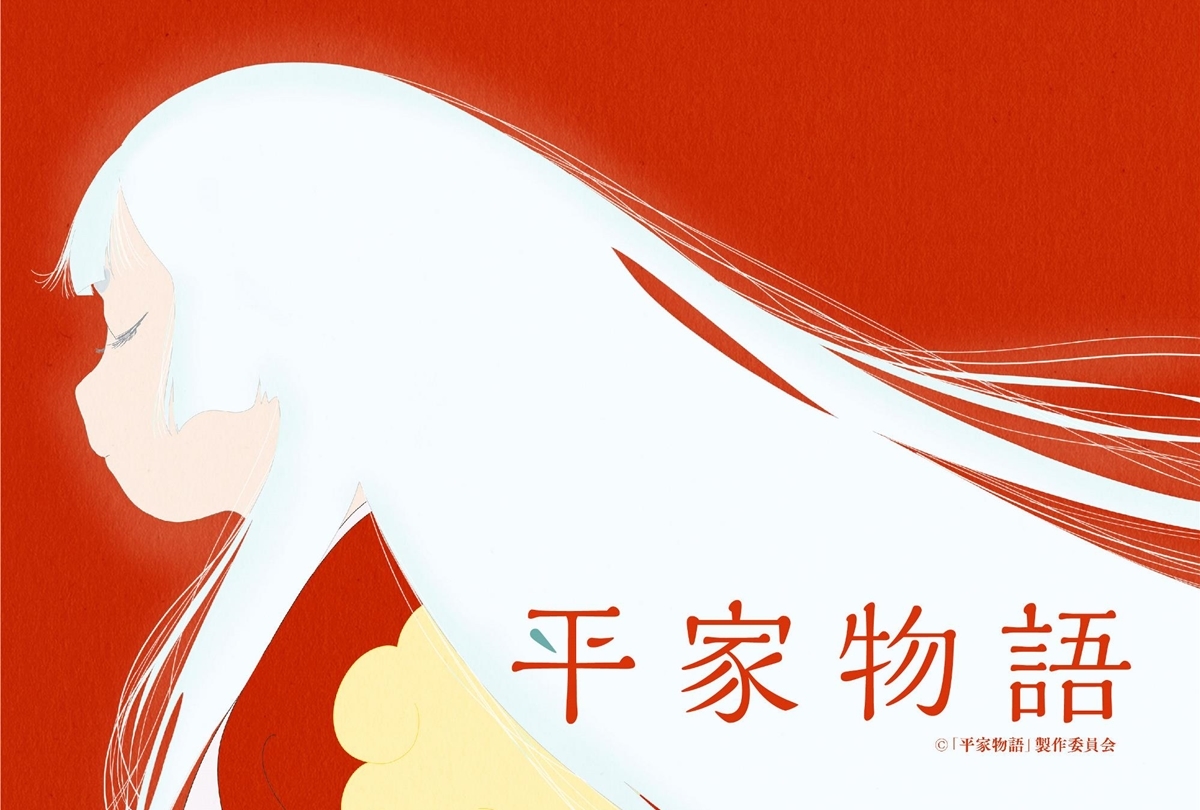
Heike Monogatari" is a TV animation produced by Science SARU and broadcast from January 2022, based on a modern translation by Hideo Furukawa of "The Tale of the Heike," a military chronicle from the Kamakura period. Biwa, a biwa priestess who is the narrator of the story, is set as the main character as an original anime character. Biwa, the daughter of a biwa master with the power to see the future, comes to live in the Heike family mansion and observes the rise and fall of the dying family with her own eyes. Centered on Biwa's interaction with the people of the Heike clan, the film tells the story of a group of people who lived their lives to the fullest, despite being tossed about by the times.
Outline of "Heike Monogatari"
"The Tale of the Heike" is a TV anime produced by Science SARU and broadcast since January 2022 based on the modern translation of the Kamakura-period war chronicle "The Tale of the Heike" by Hideo Furukawa. It is based on the modern translation of "The Tale of the Heike" by the author Hideo Furukawa, "Ikezawa Natsuki = Privately Edited Complete Works of Japanese Literature 09 The Tale of the Heike" (published by Kawade Shobo Shinsha), and features Biwa Hoshi's "Biwa" as the main character, the original character of the anime.
A young Biwa with a vision of the future, whose father was killed by a samurai of the Taira family who was proud of his glory, happened to tell the fall of the Taira family to Shigemori, the son of TAIRA no Kiyomori. Shigemori became interested in the Biwa and decided to leave the helpless infant in his own residence. The biwa shared happiness with the Taira family, including Shigemori's son and Kiyomori's daughter, Tokuko. However, the biwa could not do anything before the inevitable fall of the family and the deaths of their loved ones. Centering on the interaction between the Taira family and the Biwa, a group drama of people who are at the mercy of the times but who are working hard is depicted along with the sound of the biwa.
Outline and story of "Heike Monogatari"
The Encounter of Heike and Biwa

Biwa over the right eye where the future can be seen
When there was a Kaburo in the capital who caught people who were cursing the Taira family, the young Biwa encountered the scene where his father and people from the capital were taken away. When Heike people tried to take women out of their houses violently, the Biwa unconsciously said to them, "That's terrible." Hearing this, Kaburo approached the Biwa and the father covered the Biwa and was killed by the Heike samurai. The right eye of the Biwa, upset by his dying father, saw the future of the Taira family, which was going to ruin. The right eye of the Biwa, which was pale in color, saw the future of the person who saw it.
One night, at a banquet for TAIRA no Kiyomori, the leader of the Taira family, Kiyomori's younger brother-in-law, Tokitada, livened up the scene by saying, "Those who are not the Taira family are not human beings." In the midst of this, Kiyomori told Shigemori, the eldest son of Kiyomori, who had a gloomy face, that Kiyomori would build a shrine in Itsukushima and move to Fukuhara. He left Kyoto in Fukuhara, close to the sea, to trade with the People's Republic of China and gain more wealth. Then, Kiyomori passed the position of leader to Shigemori. At night, in the garden of the residence, Shigemori heard the sound of a biwa (Japanese lute). When a loquat dressed in rags told Shigemori that "you will soon perish," Shigemori told him that he could see the dead in his left eye, saying, "I can see it, too." Then, when he learned that a samurai of the Taira family had killed the loquat's father, he knelt down and apologized. Shigemori decided to leave the weeping loquat in the residence, saying, "Stay close to us."
Biwa was to live with Shigemori's sons of the same generation, Koremori, Sukemori, and Kiyotsune. As the seasons passed, Biwa played and fought with Koremori and others like brothers, sometimes playing the biwa to Shigemori, and leading a peaceful life. The eldest son, Koremori, was thoughtful and gentle, but he was afraid. The second son, Sukemori, was arrogant and a valiant boy who spoke what he thought. The third son, Kiyotsune, was bright and cheerful and good at playing the flute. One day, when Sukemori passed in front of the regent who was a close aide to the Emperor without getting off the horse, he was punished on the spot and came back full of wounds. Kiyomori got angry about this and, after attacking the Taira family's warriors, dropped all of the opponent's topknot (the part where the hair was tied up on the top of the head) in order to move the regent. Shigemori's words of' too much' have not reached Kiyomori, who laughed and said' funny,' and Shigemori, who praised him, said' too much.'
Gio's Fate and Tokuko's Marriage
At the decision of Shigemori, Sukemori showed remorse by living away from his parents in Ise-jingu Shrine. The decision was made after considering the people who had a grudge against the Taira family after the previous attack. Shigemori told Kiyomori, "You are not funny," and Biwa ate up on him, saying, "It's dark in the future." The reason why Biwa visited the residence of Kiyomori was because she was called by Kiyomori's daughter, Tokuko (Tokuko). Tokuko liked Biwa because she had no one to talk to after her sister married, and she often talked about things and complained about it. Tokuko's younger sister, Moriko, married into the Fujiwara family, but her husband soon died and she had to raise a child between her husband and her ex-wife. Tokuko sighed as she worried about her younger sister who was at the mercy of a political marriage. She murmured, "I am no exception." Tokuko had already decided to be married to Emperor Takakura, the next emperor, who was six years younger than her. On the day of the marriage, Biwa, who was complaining, "Don't go!", saw the unfortunate way Tokuko would sink into the waves.
At the residence of Kiyomori, Biwa meets a Shirabyoshi (Shirabii) called Gio (a courtesan who dances songs and dances that occurred at the end of the Heian period). She was originally a favorite of Kiyomori, but after Kiyomori began to favor a Shirabyoshi called Hotoke Gozen, she was called to the residence to talk with Hotoke Gozen. Biwa often fell in love with a beautiful and gentle Gio because she had heard that her mother, who she had left alive, was also Shirabyoshi. With such a Biwa, Gio tells her that there is a possibility that her mother is still alive somewhere. "Someday," she says to her smiling Gio, "Someday is a good word. Tomorrow, the day after tomorrow. I'm looking forward to the future a bit." Biwa happily says to her, "Someday is a good word. Tomorrow, the day after tomorrow. I'm looking forward to the future a bit." The Gio said to Biwa, "Next time," and left him on that day. However, after that, Gio became a priest, and the next time Biwa saw Gio was at a quiet mountain temple. Gio, who had escaped from the life of being at the mercy of the Taira family, had a clear face.
Memories of Itsukushima and the direct petition of Enryaku-ji Temple
At the newly completed Itsukushima-jinja Shrine, Koremori dedicated a dance so that Tokuko would be blessed with a child. It had been six years since Tokuko had married, and the Emperor was now 16. The loquats walk along the path to the sunken torii with Koremori and others, who laugh and say, "This is the Taira family's territory to the end." When they return to the Kiyomori residence, Tokuko is there. Tokuko smiles at the loquats, saying, "It might be better not to be born because it makes you suffer." Sukemori joins the two of them in their conversation, and Tokuko comes to tell them that the Emperor Takakura is leaving. Tokuko, who is willing to send, knows that the Emperor is going to see another woman.
On the other hand, Shigemori was worried that the Fujiwara clan, which was connected to the Taira family, had a dispute with a certain temple and burned it down. The temple was associated with Enryaku-ji Temple, which was gaining power at that time, and Enryaku-ji Temple asked the burned Fujiwara clan to punish them. However, since they were the sons of Saiko, a close aide to Cloistered Emperor Goshirakawa, the highest authority in the Imperial Court, they hesitated to punish them. Before long, Enryaku-ji Temple's armed priests came to the Imperial Court carrying mikoshi (portable shrines). Shigemori, who had no choice but to send his troops, said, "You must not shoot mikoshi (portable shrines)," but in the end he was defeated.
Shishigatani conspiracy
One night, the Cloistered Emperor Goshirakawa, Saiko, Shunkan, and several others, including Shigemori's brother-in-law Fujiwara no Narichika, held a secret meeting at Shunkan's residence to plot the fall of the Taira family. The story soon reached Kiyomori's ears. Partly because Shigemori managed the direct petition at Enryaku-ji Temple, Saiko was captured and beheaded. After that, Shigemori appeared with a serious expression to Kiyomori, who was preparing to capture and confine the Cloistered Emperor as well, and told him,' Don't go to the Cloistered Emperor.' Shigemori continued,' The Taira family, who had served the Imperial Court, must not disobey the Imperial Court, and it was with the support of the Imperial Court that the Taira family was able to prosper this far.' Then, Shigemori looked straight at Kiyomori, saying,' If you want to go through here, please cut my head off.' Thanks to this, the Cloistered Emperor was no longer under the control of Kiyomori. However, Tokuko fell sick soon after the incident was over. Shigemori saw the grudge of Saiko and Shunkan who had been demoted around Tokuko who was being told something. An amnesty was granted to Tokuko, who had a child, but Shunkan was the only one who was not pardoned.
After that, Tokuko gave birth to a son, and Kiyomori was pleased. However, natural disasters continued in the capital, and Tokuko's younger sister, Seishi, died young. While the Taira family was increasingly under fire, Shigemori visited Kumano. He prayed earnestly,' If Kiyomori does not seek prosperity and the prosperity ends in one generation, I want him to shorten my life so that I do not have to be ashamed of the family.' Soon after that, Shigemori fell ill. The Cloistered Emperor Goshirakawa also visited his residence worrying about Shigemori, but his illness did not improve at all. Shigemori, who was suffering from a sickbed, muttered to Biwa,' You have been involved. You are going to perish, the Taira family,' and wanted the sound of the biwa. While listening to the sound of the biwa played by the biwa, Shigemori passed away. After that, the biwa began to see the dead with its left eye like Shigemori.
Order of Prince Mochihito
For a while after Shigemori died, Munemori, a younger brother of Shigemori, became the head of the clan. Munemori used his position as the head of the Taira family to do whatever he wanted, and because he did not act as a deterrent to Kiyomori, the situation got worse and worse. Cloistered Emperor Goshirakawa took advantage of this opportunity to confiscate the territory of the Taira family from Kiyomori, who had lost his confidence because his trusted son had died earlier than him. When Kiyomori heard this story, he became angry and sent soldiers to the Imperial Court in Kyoto. Kiyomori changed all the important posts in the Imperial Court to the Taira family, and Cloistered Emperor Goshirakawa became a. Leaving the Cloistered Emperor Goshirakawa, who was growing resentful, as he was, Tokuko's son ascended to the throne at the youngest age at the time, becoming Emperor Antoku. In the midst of this, Prince Mochihito, the second son of Cloistered Emperor Goshirakawa, was dissatisfied with the Taira family and sent a message to various places ordering the suppression of the Taira family. The soldiers of the Taira family immediately approached to capture Prince Mochihito, but he fled to Byodoaway to Byodo-in Temple, so he attacked there at once. Koremori was also sent to the battle and fought with his uncles Shigehira and Tomomori. After the victory of the Taira family, Prince Mochihito was killed by an arrow, and the temple where Prince Mochihito was sheltered was burned by Shigehira. That night, Koremori, who shed tears at the Jigoku-ezu (a picture of hell) of an unfamiliar battlefield, was trembling with fear of the battle.
On the other hand, Tokuko tells a loquat that Emperor Emeritus Takakura and another woman had a baby. "It must be a more relaxing place than I, the daughter of Kiyomori," Tokuko said sadly. Looking at her behavior, Tokuko lamented and said in tears, "I want to think that the world is not only painful, so I will forgive, forgive, forgive."
The appearance of Atsumori and the Battle of Fujigawa
In order to avoid a war in Kyoto, the Taira family and the Emperor moved the capital to Fukuhara. Biwa, Sukemori, and Kiyotsune met Atsumori there. Atsumori, who had inherited the flute of a twig, was good at playing the flute, and was looking forward to meeting Kiyotsune, who was also a flute master. That night, Shigehira joined the two at the moon viewing and played a beautiful flute. Emperor Emeritus Takakura had moved to Fukuhara and was sick. Emperor Emeritus apologized to Tokuko, who was taking care of her, raising her eyebrows and saying, "I am grateful to you." Around that time, Kiyomori was suffering from a skeleton and nightmares. Kiyomori asked Biwa to play the biwa so that he could sleep, and told Koremori and Sukemori, who had accompanied him, that "we have changed ourselves into an aristocrat who can't do anything and made it easier for us to live." However, hearing this, Koremori was caught by the fact that they were now being shunned and resented.
At that time, MINAMOTO no Yoritomo in Izu received a message from the Cloistered Emperor Goshirakawa to overthrow the Taira family. Yoritomo immediately raised an army, but he was defeated by the Taira family and fled with only a few soldiers. However, Kiyomori ordered his sons to follow Yoritomo and named Koremori as the supreme commander, anticipating a subsequent battle. Pushing through the surroundings that it was "too early," the young Koremori was sent to the battlefield. The Minamoto clan from various places joined Yoritomo's army and took up positions across the river far ahead of the Taira family, but the battle was supposed to start in the morning. That night, all the waterfowl in the river jumped out at once, and the soldiers of the Taira family, who thought it was an enemy attack, rushed out. Koremori felt Kiyomori's anger, but he managed to get away with it. On the beach, Biwa asks Koremori to "show me the dance," but he coldly says, "I have to change, too."
Death of Kiyomori
Only six months after the capital was moved to Fukuhara, the Taira family and the Emperor returned to Kyoto. Not pleased with the Taira family, the armed priests of Kofuku-ji Temple turned back and killed the messengers of the Taira family who had come to inform them that they had no intention of fighting. Angered by this, Kiyomori told Shigehira to attack Kofuku-ji Temple. The battle with the armed priests continued until the night, and Shigehira had no choice but to burn his house and light it because the chance to win would disappear if the fire was not lit. However, Shigehira regretted the unintentional burning of the temple when hunting down and killing Prince Mochihito, and was reluctant to make a decision until the end. As he was worried, the fire around the temple reached the temple and burned down Kofuku-ji Temple and Todai-ji Temple. By burning the temple continuously in the battle, Shigehira, who was afraid of tatari, stopped performing arts and spent days reciting sutras with all his heart.
At that time, Emperor Emeritus Takakura, who was in poor health from Fukuhara, became critically ill, and Tokuko was summoned by Kiyomori. Kiyomori recommended that Tokuko marry her father-in-law, Cloistered Emperor Goshirakawa. However, Tokuko declined, saying "no," and cut her hair on the spot to become a priest. In a hurry, Kiyomori decided to let Tokuko do as she liked. Soon after that, Kiyomori developed a high fever. Kiyomori was steaming all over his body and bathing in water, but he passed away without telling his wife Tokiko, "Bring the head of Yoritomo to the grave." Soon after that, Sukemori pushed Biwa away from the Taira family on purpose, saying, "Get out before spring."
The battle of Kurikara Pass and the exile from the capital
After leaving the residence of the Heike family, Biwa was looking for her mother, who was a Shirabyoshi, while playing the biwa. According to what Biwa heard, there was a Shirabyoshi in Echigo whose eye color was the same as that of Biwa. The Shirabyoshi was called Asagi no Kata, and Biwa heard from a local person that she was a concubine of a man called Echigo-Heishi. Biwa was delighted, saying, "I can finally meet you," but Asagi no Kata dropped her shoulders when she learned that she had returned to Kyoto from Echigo.
Yoshinaka KISO followed Yoritomo, and Yoshinaka drove the Heike into a corner. It seemed that Yoshinaka would come to Kyoto before Yoritomo, but Munemori, the head of the clan, was holding banquets every night. Unable to hide his impatience, Koremori departed for the front to kill Yoshinaka. After calling each other "I'll be there tomorrow," Yoshinaka told Koremori, who was resting in preparation for the battle of the Ming Dynasty, but Koremori woke up in the middle of the night with the shouts of a large army. A large army was rushing behind the Heike, and Koremori was completely deceived by Yoshinaka. The soldiers of the Heike who were running away were cornered and fell to the bottom of the valley. Finally, the Heike moved to Fukuhara and left Kyoto. Fukuhara was devastated for the first time in several years, and on the beach where Kiyotsune and Atsumori had played the flute together, Kiyotsune tearfully appealed to Atsumori, saying, "What will become of the Heike with a small number of soldiers?" In contrast to Atsumori, who exulted, "It's our turn to fight," Kiyotsune lost his former cheerfulness. Later, Fukuhara was attacked by the Minamoto clan and burnt to the ground, so the Heike fled to the sea.
Kiyotsune's death, Biwa no Haha
The Taira family fled to Dazaifu in Kyushu, where they spent the night in a shabby house. Tokuko was informed in Kyoto that a new emperor had been installed by the Cloistered Emperor Goshirakawa. The Emperor Antoku, who was still young, stood beside Tokuko, who clearly said, "There is only one emperor." However, the Cloistered Emperor Goshirakawa even ordered Dazaifu to defeat the Taira family, and the Taira family had no choice but to prepare for the battle. When Sukemori told Kiyotsune, who had not yet dressed up, that' it can't be helped that this happened,' Kiyotsune shed tears by saying,' The sincerity and honesty of the samurai who were with the Taira family are meaningless.'
Biwa was thinking of the Heike escaping from the sea. She traveled with three young Shirabyoshi she met in Kyoto, and while she was looking for her mother, she saw Kiyotsune in her mind. The Heike, who had also escaped from Dazaifu, was trying to stay overnight on a boat to be attacked by enemies when they arrived on the land. In the moonlight, Kiyotsune played a flute a little, climbed to the edge of the hill, jumped into the sea and killed himself. Seeing this with her right eye, Biwa cried all night, saying, "I can't do anything at all." The next day, she finally located her mother and visited her home with her three Shirabyoshi. She met her mother, who was totally blind, and was told that she had been forced to marry a samurai. She heard her mother say, "At any time, I was thinking of and praying for Biwa and my father." She said, "I want to see the future of the Heike. See it and play the biwa in prayer." She once again acted with the Heike.
The Battle of Ichinotani and Atsumori

Related Articles
In-depth summary of sheep literature (bands)
Sheep Literature is an alternative rock band formed in 2011. The band was originally a five-member group, but since the members were high school students, they went through several member changes, including suspensions and withdrawals due to entrance exams; Hiroa Fukuda joined in 2015 and Yurika Kawanishi in 2017, and the three have been performing together with Moeka Shiotsuka, the founder of Hitsuyo Bungaku ever since. Their songs contain a positive message of "live your life as it is," and their unpretentious appearance and sensitive music have touched the hearts of many fans and resonated with them.
Read Article
犬王(INU-OH)のネタバレ解説・考察まとめ
『犬王』とは、2022年5月に劇場公開された湯浅政明監督によるミュージカルアニメ映画。小説『平家物語 犬王の巻』を原作として、室町時代活躍した能楽師・犬王と琵琶法師の友魚の友情を描く物語となっている。別々の場所で生まれ育った2人が、出会いをきっかけにそれぞれ演舞や演奏の才能を開花させ、人々を魅了する存在へと成長していく。室町時代の能に現代のロックミュージックを取り入れた演奏が特徴的で、犬王と友魚の唯一無二の演舞が見どころの作品である。
Read Article
Summary of Collaboration and the Lexi Name in Lexi's Second Album "Lexit"
Featuring history, the popular artist "Lexi" continues to push forward on his own unique path. The artists that Lexi collaborates with are always gorgeous. Whenever Lexi collaborates with an artist, the artist is given a name called "Lexi Name," which has become a topic of conversation. In this article, we will introduce the artists who collaborated on Lexi's second album "Lexitsu" and their Lexi-names.
Read Article
Tags
Contents
- Outline of "Heike Monogatari"
- Outline and story of "Heike Monogatari"
- The Encounter of Heike and Biwa
- Gio's Fate and Tokuko's Marriage
- Memories of Itsukushima and the direct petition of Enryaku-ji Temple
- Shishigatani conspiracy
- Order of Prince Mochihito
- The appearance of Atsumori and the Battle of Fujigawa
- Death of Kiyomori
- The battle of Kurikara Pass and the exile from the capital
- Kiyotsune's death, Biwa no Haha
- The Battle of Ichinotani and Atsumori
- Koremori's death
- The Tale of the Ruined Heike
- Characters in "Heike Monogatari"
- Key person
- Loquat
- Taira-no Shigemori
- People of the Taira family
- Taira no Tokuko (Taira no Tokuko)
- Taira no Koremori (The Paulownia Court)
- Taira no Sukemori (The Paulownia Court)
- Taira no Kiyotsune
- Taira no Tsuneko
- Taira no Munemori (The Paulownia Court)
- Taira no Tomomori
- Taira-no-shigehira
- Taira no Atsumori
- TAIRA no Kiyomori
- Taira no Tokiko
- Taira no Tokitada (Taira no Tokitada)
- Taira no Takakiyo
- Shin Dainagon no Tsubone
- Taira no Tadanori
- Taira no Noritsune
- Genji people
- MINAMOTO no Yoritomo
- Masako Hōjō
- MINAMOTO no Yoshitsune
- Musashibo Benkei (Musashibo Benkei)
- Shizuka Gozen
- Yoshinaka KISO
- Tomoe Gozen
- Kumagai Naozane
- Imperial Court
- Cloistered Emperor Go-Shirakawa
- Taira no Shigeko
- Emperor Emeritus TAKAKURA
- Emperor Antoku
- Emperor Gotoba
- Prince Mochihito
- Other characters
- Gio
- Asagi no Kata
- The Father of Loquats
- Fujiwara no Narichika
- Shunkan
- Terms used in "Heike Monogatari"
- Biwa
- Biwa Hoshi
- Kaburo (Kamuro)
- Toryo (master builder)
- Sessho (regent)
- Shirabyoshi (Shirabii)
- Direct petition
- Pardon (Onsha)
- Ryoji
- Saeda no Fue
- Words, lines, scenes and scenes of "Heike Monogatari"
- Loquat "Someday is a good word. Tomorrow, the day after tomorrow. I'm looking forward to the future a little."
- Taira-no Shigemori said,' I have involved you. You are going to be ruined by the family called Heike.'
- Taira no Tokuko "I want to think that the world is not just painful. So I forgive, forgive, forgive."
- Biwa: "I want to see the future of the Taira family. Seeing it, I play the biwa with prayers."
- The Battle and Death of Atsumori
- Taira-no Shigemori and biwa (loquats):' The sound of the bell of Gion Shoja Temple'
- The behind-the-scenes stories, trivia, and small stories / episodes and anecdotes of "Heike Monogatari"
- Tokuko no Monogatari
- Biwa singing is certified by professionals
- Koremori's weakness is necessary for "Heike Monogatari"
- Theme song and inserted song of "Heike Monogatari"
- OP (opening): Western literature "When Shining"
- ED (ending): Kensuke Ushio feat. ANI (Scha Dara Parr) "unified perspective"