
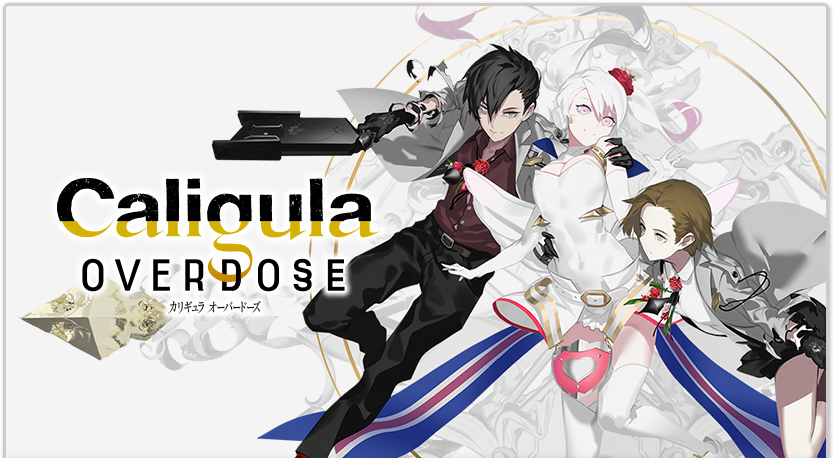
Caligula Overdose" is a PS4 title that is a remake of the PSvita RPG software "Caligula" released by Frew. The storyline is the same as the PSvita version, with the main character and his friends forming a "homecoming club" to return to reality and escape from the virtual world, but the main feature of this title is the addition of the storyline of the "Musicians of Ostinato," the nemesis of the homecoming club.
Song: Rena Ueda
Lyrics and music by MIKITO P
This is the theme song of the Vita version of μ, and is used in the movie of the prologue at the station square and the BGM of the last battle in the homecoming route.
Veritas
Song: Asami Shimoda
Lyrics and music by MIKITO P
One of the newly added insert songs in this work. It is Aria's theme song and is used as the BGM for the last battle in the Musicians' route.
Backstory, Trivia, and Small Stories/Episodes/Anecdotes from "Caligula Overdose".
What is the Caligula effect?
It is a keyword that symbolizes this work and refers to the psychological phenomenon that the more one is prohibited, the more one wants to try. For example, when you are forbidden from viewing information, such as "you are not allowed to listen" or "you are not allowed to look at this," you will want to try it again.
In this work, when proceeding through the character episodes of the homecoming club and the musician, the warning screen "Do you want to step into the mind of XX (character name)?" appeared twice. appears twice in the episode, and the user is forbidden to watch the rest of the episodes. In reality, however, the only way to complete the trauma quest of the homecoming club and the musician is to continue to select "step into the mind," and it is believed that this warning screen is used to strongly arouse the player's interest in the story.
The term "Caligula" originated in the 1980 American-Italian co-production "Caligula," which was modeled after the third Roman emperor, Caligula, and was banned in some areas, including Boston, because of its extreme content. What kind of film is it?" and "Is it really that bad?
This effect is also used in advertisements and TV programs, for example, by adding sound effects such as "beeps" to TV programs to make the audience unable to hear what is being said, or by creating mosaics to obscure parts of the images, thereby further stimulating viewer interest.
Mental illness suffered by the characters
The psychoses suffered by the main characters of the film, the members of the homecoming club and the musicians of Ostinato, are all real-life cases that have been discussed and noted in psychology and psychiatry. The real-life mental illnesses suffered by the main characters are as follows.
Shogo Satake: Adjustment disorder (てきおうしょうがい)
A type of psychosis in which certain situations or events are felt to be so painful and unbearable that they manifest themselves in mood and behavior. The depression and anxiety can lead to tearfulness, excessive worrying, nervousness, and aggressive behavior and speech.
Shogo was invited by Ichirin to a heart-to-heart in high school, but he ran away at the last minute because he was afraid of dying. He developed an adjustment disorder and became a reclusive NEET because he felt so much regret and guilt over the fact that only Ichirin died as a result. After this, he became so sick that the sight of Ichirin instantly made him vomit.
Minezawa Weigen: Schizoid Personality Disorder
A psychosis in which the patient has no interest in the outside world or social relationships and often chooses to be alone. Schizoid has become the term for a personality trait that is "socially isolated, does not like interpersonal contact, has poor emotional expression, and appears to have no interest or concern in anything.
Koretsune developed this psychosis because of his mother's over-interference and his father's indifference since he was a child, and because he was not given even a moment's freedom, he gave up the ability to relate to others, let alone express his feelings. In junior high school, there was no end to the number of girls who tried to attract his attention and woo him because of his good looks, and when Koregen was so fed up that he deliberately tried to turn them down by hurling cold-hearted abuse at them to cut them off, he was constantly bullied by the girls whose affection turned to hatred.
Kotaro Tomoe: Messiah Complex
Also known as "Christ complex" or "messiah delusion," this term describes a state of mind in which an individual harbors a delusional belief that he or she is destined to become a savior (hero). It mainly refers to the state of mind seen in religious people who have delusions of grandeur, but in a broader sense, it also includes people who try to cover up their underlying pride and lack of self-confidence with a sense of self-usefulness gained by helping others.
Koutarou has always suffered from loneliness and a sense of inferiority due to the loss of his parents, a lack of a place at home, and his small size and weak body. Therefore, by insisting on helping others, Koutarou tries to convince himself that he is a capable and happy person, and he also has an unconscious troublemaker side that tries to create problems that would be solved without his awareness if there were no problems in his surroundings.
Kikisuke Hibiki: Peter Pan Syndrome
The syndrome, proposed by American psychologist Dan Kiley in 1983, is named after the famous British fairy tale "Peter Pan," which features a boy who never grows up. Kiley defined this psychosis as "a man who refuses to grow up." The patients are often men who are physically old enough to be adults, but mentally immature. They are often unable to adapt to social life and inevitably isolate themselves because of their disdain for common sense and the laws of the world, which are dominated by adult values.
Keisuke's Peter Pan Syndrome was caused by his parents, who worked from morning to night and came home exhausted, and his teachers, who were teased by their students at school on a daily basis. Keisuke began to feel that being an adult had no merit, or even meaning, and that he would only lose his freedom. He applied to study music at the University of the Arts, even though he didn't understand a single basic of music. As a result, she felt isolated and alienated from her classmates, who were busy writing music and studying hard for the entrance examinations.
Kotono Kashiwaba: Cinderella Complex
The syndrome was proposed by American woman writer Colette Dowling in 1981, and points to the subconscious, dependent desire of women to continue pursuing high ideals in men. It was named after Cinderella, who was abused by her stepmother, but with the help of a fairy, went to the ball of her dreams, was discovered by a prince, and was lucky enough to win his fortune, and was defined by the concept that "women are still waiting today for something from the outside to come and change their lives.
Dowling describes this psychosis as a condition in which a woman is unable to fully exercise her mind and creativity due to a latent desire to be taken care of by others. It is also said that in many cases, women have believed from an early age that a man determines a woman's happiness, and although they pursue their ideals like Cinderella, they lose their independence while being housewives, and as a result, they become dependent on their husbands and abandon their freedom and independence.
In reality, Kotono's rebellion against her mother, who was a water-saleswoman by profession, and a fateful encounter during her last summer vacation in high school led her to become a single mother while she was still growing up, and she was exhausted by child-rearing, which triggered her Cinderella complex. Kotono's Cinderella complex has led her to envy the college girls and female office workers of her generation whom she passes on her way home from shopping or daycare, and she is alienated from her children, wishing every day that she could go back to her free time as a student and start her life over, or that someone would help her.
Naruko Morita: Internet addiction
It is a psychosis of excessive dependence on the Internet to the point of ruining one's daily life, and has various names such as "problematic Internet use," "excessive Internet use," "problematic computer use," "pathological computer use," etc. In Naruko's case, the condition is described as "social networking addiction. In Naruko's case, the condition is described as "SNS addiction," and since SNS is also considered to be something that can be used on the Internet, it can be considered as one of the categories of Internet addiction.
Mifue Shinohara, Ike P.: Body Dysmorphic Disorder (Body Dysmorphic Disorder)
It is a type of psychosis related to an extremely low sense of self-worth, and is sometimes referred to as "disfigurement phobia," a mental disorder in which a person is extremely obsessed with the beauty or ugliness of his or her own face or body. In the case of women, they tend to be conscious of the superiority of their mothers, sisters, and other body parts over those of the people around them. This is the reason why she developed this body dysmorphic disorder.
Men dislike the parts of their bodies that have changed into manhood due to secondary sexual characteristics, such as musculature and body hair, and are especially concerned about changes in their faces, checking the mirror repeatedly to maintain their image. In the real world, Ike-P is criticized and looked down upon by those around him because of his facial changes. Even after obtaining his ideal appearance at Mobius, he still checks his image many times in the mirror to solidify and maintain it.

Related Articles

Spoiler commentary and discussion of Caligula -Caligula- (anime)
Caligula" is an anime adaptation of a juvenile RPG game released by Furyu. It depicts a group of people with a dark heart who try to escape from an idealized virtual world. The story is about the main character, Ritsu Shima, who is the official character of the game, and his attempt to return to reality from the virtual world created by μ. He confronts the musicians of Ostinato, who provide songs to μ and still cooperate with μ, and destroys the virtual world to return to reality.
Read Article
LITTLE NIGHTMARES spoiler commentary and discussion summary
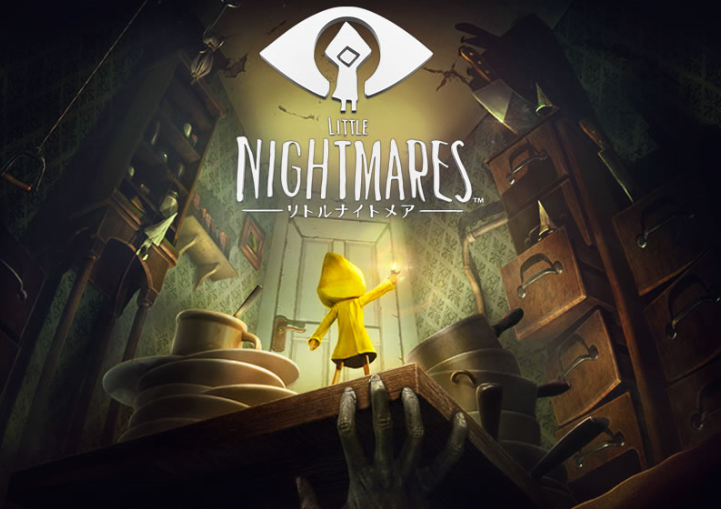
LITTLE NIGHTMARES" is a suspense adventure game released by Namco Bandai Entertainment. It was developed by Tarsier Studios. The main character is Six, a young girl in a yellow raincoat who wakes up in the depths of the Mou, a huge ship called a stomach. The player controls Sixx and proceeds to escape the Mou while solving various tricks that exist in the Mou and sometimes escaping from the enemies that attack her.
Read Article
Tags
Contents
- Overview of "Caligula Overdose
- Synopsis and story of Caligula Overdose
- Return home route, top
- Prologue - Kagi P.
- Sweet P ed.
- Stork Edition
- Musicians' Route, Upper
- Yoshimai High School
- Return home route, middle
- Shonen Dole ed.
- Gardenia ed.
- Mirei, ed.
- Musicians' route, middle
- Miyahi Onsen Monogatari Edition
- City Libraries, ed.
- Return home route, bottom
- Ike P ed.
- Shadow Knife Edition
- Wicked Edition
- Musicians' route, bottom
- Theme Park Edition
- Aquarium Edition
- Landmark Tower Edition
- concluding volume (part) (e.g. of novel)
- Thorne, ed.
- A Reality Named Hope (µ version: Homecoming Route Ending)
- Beyond Betrayal (Aria version: Musicians' Route ending)
- Game System of "Caligula Overdose
- field
- Conversations with Students
- Encounter with Digihead (Lagarde)
- trauma quest
- WIRE
- stigma
- skill reel
- battle
- action option
- weapon system
- Two pistols (main character, Ike P.)
- Pistol (Shogo)
- Bow (Kotono, sweet P)
- Tekko (Koutarou)
- Great Sword (Keisuke)
- Hammer (Miho Mirei)
- Spear (Suzuna Thorn)
- Bit (Naruko)
- Nails (boy doll)
- One-handed sword (Weigen, Shadow Knife)
- Stun gun (colored voice, gardenia)
- Whip (Eiji Stork)
- Bomb (Wicked)
- DigiHead equipment
- Future Prediction (Imaginary Chain)
- overdose skill
- risk
- Characters in Caligula Overdose
- group of school pupils who are not members of any club
- protagonist
- aria
- Shogo Satake
- Izuru Minezawa
- Kotaro Tomoe
- Kensuke Hibiki / Kagi P
- Kotono Kashiwaba
- Naruko Morita
- Mifue Shinohara
- Suzuna Kagura
- Ayana Amamoto
- Eiji Biwasaka
- Ostinato Musicians
- Lucid
- μ
- Sweet P / Shizuka Nijoin
- Stork / Masahiro Sagan
- Shounen Doll / Akira Komori
- Gardenia (Gardenia jasminoide) / Yumino walnut
- Mirei Ichinose / Mirei Ichinose
- Ike P / Tomoya Koike
- Shadow Knife / Hiroki Yamada
- Thorn / Asuka Natsume
- Wicked / Marie Mizuguchi
- Other characters
- Koki Tadokoro
- Himari Minamide
- Flower Princess Rose / Lily / Iris
- Toshizo Natori
- Bifue's mother
- Worldview and terminology for Caligula Overdose
- Moebius
- Miyabishi
- landmark tower
- sea paraiso (Origanum vulgare)
- Miyabi Onsen Monogatari
- metavarces
- digital head
- The Department of Return Home (KITAKUBU)
- Ostinato (persistent repetition) musician
- cathartic effect
- astral syndrome
- Famous quotes, lines/scenes and scenes from "Caligula Overdose".
- Another perspective not seen back home.
- An unexpected encounter leads to a new beginning
- The First Battle of the Jet-Black Musicians
- The protagonist who became the true last boss.
- Theme song and insert song for "Caligula Overdose
- Theme song: Cradle
- featured songs
- Suicide Prototype
- Peter Pan syndrome
- Tokimeki☆Liberie
- Love Scope
- Originality Incident
- dilapidated
- Sadistic Queen
- Song of the Angels
- Sin
- Distorted†Happiness
- cosmo dancer
- Orbit
- Veritas
- Backstory, Trivia, and Small Stories/Episodes/Anecdotes from "Caligula Overdose".
- What is the Caligula effect?
- Mental illness suffered by the characters
- Shogo Satake: Adjustment disorder (てきおうしょうがい)
- Minezawa Weigen: Schizoid Personality Disorder
- Kotaro Tomoe: Messiah Complex
- Kikisuke Hibiki: Peter Pan Syndrome
- Kotono Kashiwaba: Cinderella Complex
- Naruko Morita: Internet addiction
- Mifue Shinohara, Ike P.: Body Dysmorphic Disorder (Body Dysmorphic Disorder)
- Suzuna Kagura: Lunchmate Syndrome
- Aya Amamoto voice: Heterophobia
- Eiji Biwasaka: Psychopath (psychopath)
- Suite P: Transvestism (cross-dressing habit)
- Stork: Stalking
- Juvenile Doll: Avoidant Personality Disorder
- Gardenia: aphonia (loss of voice)
- Mirei: narcissistic personality disorder
- Shadow Knife: Chunibyo
- Thorn: Grief
- Wicked: sociopath (antisocial personality disorder)
- New developments you can see if you are a female protagonist
- No. 1: Yuri couples go to a tea party
- No.2: Sneaking into the women's bath
- No.3: Ayako wakes up to the yuri
- Aria and Koutarou are dogs and monkeys in this film as well.
- No. 1: A grand quarrel from the very beginning of our meeting.
- No. 2: Aria, the "big head".
- No.3: A blowout at Suzuna's lunch box
- A beautiful flute that is about to awaken into the wild?
- Suzuna has a yandere attribute.
- Musicians being scratched by Naruko
- No. 1: A boy doll whose room is open to the public.
- No. 2: Mirei furious at the perverted commotion at the hot springs.
- No. 3: Ike P explodes at the disclosure of his appearance in real life.