
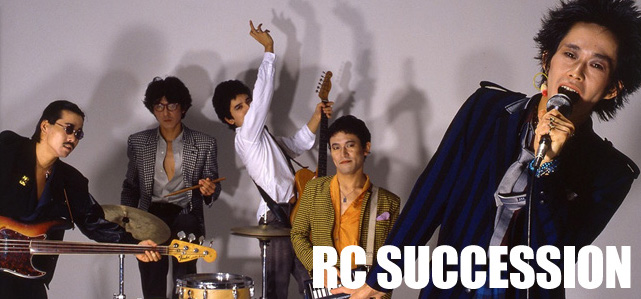
RC Succession is a Japanese rock band that debuted in 1970. Led by vocalist Kiyoshiro Imawano and guitarist Reichi Nakaiido, the band has left behind many masterpieces and classic albums. In 1991, the band went on hiatus and virtually disbanded, and with the death of Imawano on May 2, 2009, the dream of reviving RC Succession was ended forever.
1976
January 21: Single "Slow Ballad
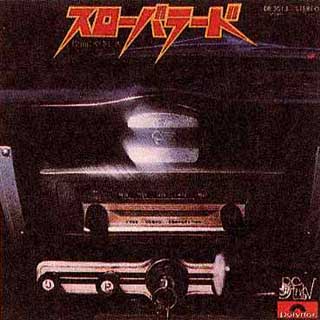
Side A
1. slow ballad
Side B
1. tenderness
This is the first single in about 3 years since "Sannibei Daiimattekimono" (The Third Most Important Thing), released on December 20, 1972.
Slow Ballad" was written by Imawano Kiyoshiro and Mikan, and arranged by Hoshi Masaru and RC Succession.
It is one of RC's best-known songs and has been covered by Tamio Okuda, UA, Superfly, Gospellers, Noriyuki Makihara, Akiko Wada, Masanori Sera, and many other artists.
Despite being a great song, "Slow Ballad" did not sell at all when it was first released, and was discontinued after only a few months. This is one of the best examples of how a great song does not always become a hit.
There are two versions, a single version and an album version, with the only difference being that the ending of the album version is about 30 seconds longer than the single version.
Mikan-san was Seishiro's girlfriend at the time. The song "Slow Ballad" is based on his own experience when his car broke down and they had to spend the night together in the parking lot of Hachioji Municipal Baseball Stadium. While I was sleeping in the car, a policeman on patrol came and forcibly woke me up. At first, the lyrics were filled with anger at that time, but they were even more wonderful than I expected. Mikan-san advised to remove the policeman's part to make it better. That is how the lyrics were completed, and Mikan-san's name was also credited.
Masaru Hoshi is a former guitarist of the Mops. Yosui Inoue's debut album "Kessan" was his arranging and producing debut. Hoshikatsu was also deeply involved in the album "Single Man.
The horn section was played by "Tower of Power", who was having a concert in Japan at that time. Tower of Power" also participated in the album "Single Man".
According to the recollections of Kinshin Morikawa, who was friends with Seishiro before his debut, directed RC in the 1980s, and is now the president of Office Augusta, the car in this "slow ballad" is a used Nissan Sunny Coupe that Seishiro bought for 50,000 yen. Morikawa got into this Sunny Coupe of Seishiro's and they talked, which was the beginning of their friendship.
In 1991, Morikawa was the star of a movie directed by Yukihiko Tsutsumi (then Yukihiko Tsutsumi), entitled "! [ai-ou]" directed by Yukihiko Tsutsumi (then Yukihiko Tsutsumi).
In 2015, it was used as the theme song for the movie "Love & Peace" directed by Sion Sono. Director Sion Sono wrote the script for this film around 1990, and being a fan of RC, he offered to make the film with Seishiro in the lead role, but Seishiro refused on the grounds that he was not in the acting business. This is why "Slow Ballad" was chosen as the theme song when the film adaptation came to fruition more than 20 years later.
Yasashisa" is a song written by Kiyoshiro Imawano, composed by Bandichi Kimosawa, and arranged by Masaru Hoshi and RC Succession.
The melodious and soft part is interrupted by a part in which Kiyoshiro growls hard, backed by freaky horns and a piano that incites an unsettling atmosphere. The song is full of experimental playfulness in its composition, arrangement, lyrics, and background chorus.
There is a single version and an album version of this song as well, with slight differences in the mix of the various instruments.
April 21: "Single Man" album
Side A
1. gift from a fan
2. big Haruko-chan
3. kindness
4. for me, for me
5. recording man (relaxing or rushing to conclusion) 6.
6. why don't we go for a walk at night?
Side B
1. for the hippies
2. the sky is empty
3. the reason why you made it cold
4. it's already autumn on the Koshu highway
5. slow ballad
*****
CD Single Man +4
01. gift from a fan
02. big haruko
03. kindness
04. boku wa boku no tame ni
05. recording man (relaxing or rushing to conclusion)
06. why don't we go for a night walk?
07. for the hippies
08. the sky is empty
09. the reason why I made you cold
10. it's already autumn on the Koshu highway
11. slow ballad
12. you'll understand
13. dirty face de konnichiwa
14. slow ballad (single version)
15. yasasisa (single version)
This is the third album released after three years and four months since the release of "Fun Evening" on December 5, 1972. It was released after many twists and turns, but was discontinued in less than a year. The album was then re-released after various circumstances.
Although it is called a "masterpiece," it is not because it is filled with grating melodies and songs that will be accepted by everyone. Rather, it is because it is filled with arrangements and song structures that intentionally aim at the opposite end of the "selling line," experimental attempts, lyrics that in some cases seem to be trying to fight with their fans, and vocals filled with anger and mockery, all of which are "whirlwind" elements, and yet it is full of charm that never ceases to fascinate listeners.
It is an ambitious work, and perhaps it was the antithesis of the mainstream "Kaguyahime" and "Tulip" that were popular at the time of recording. It may have simply been an expression of his refusal to sell well.
Of course, it was not just such an innocent feeling. There is an irresistible tenderness that peeks through the cynical attitude, a heartrending cry of helplessness, and a brilliant love without calculation due to youth. There are no jarring melodies, but there are melodies that are both extraordinarily sad and extraordinarily beautiful.
This is not an album for everyone, so it is an album for the right listener. The songs and performances transcend the safe zone that listeners have in advance when listening to music, so there are bound to be listeners who will reject the album. Nevertheless, once you are hooked by the charm of this album, you cannot turn your back on it. That is why it is a masterpiece.
Background to the release
In November 1974, RC transferred from Toshiba, whose contract had expired, to Polydor. Hidenori Taga, who was the director of Polydor at the time, was a great admirer of RC, and the decision was made to transfer the company. With the transfer, recording began after a long absence. This is "Single Man". Incidentally, Hidenori Taga later became independent. He is the founder of Kitty Group and currently the president of Kitty Film.
Soon after recording began, RC's manager at the time, Yoshiyuki Okuda, went independent, taking Yosui Inoue, who was a dollar-box star of HORIPRO, with him, in a form of rebellion against HORIPRO. He would establish his own production company, Ribon. Initially, it was believed that RC would also work with Okuda, but with one year left on his contract with HORIPRO, HORIPRO refused to terminate the contract with RC. It can be imagined that this was probably meant as an example to Okuda. In fact, RC was only paid 30,000 yen per month until his contract with Horipro expired, and he was left in a state of "idleness" where he was not allowed to do any work.
Because of this situation, they were not given sufficient support for the recording of "Single Man. Horipro knew that RC would leave Horipro when his contract expired after one year, so why should they help such an artist with the recording of "Single Man"? RC had no choice but to continue the recording, which had been suspended in secrecy to Horipro.
In the recording, which was carried out in secret, Masaru Hoshi was invited as an arranger, and the sound was created with electric instruments and a horn section. Seishiro, however, found Hoshi's arrangement "too neatly organized and luxurious, too easy to listen to. Too easy to listen to. (I liked the Mops. So I was expecting something like that or Vanilla Fudge, but it almost sounded like a Yosui Inoue album.
In March 1975, recording of "Single Man" was completed. It was the first album they were satisfied with. However, because of the clandestine nature of the recording process, Hollypro did not give permission for its release, and it remained in storage for a year.
On April 21, 1976, their contract with Horipro finally expired, and they were transferred to Ribbon, a company established by Okuda, and "Single Man" was successfully released. However, it did not receive much promotion from the office, and sales did not increase, and it was discontinued within a year.
Single Man Re-release Executive Committee
In 1979, RC turned into a rock band and gradually gained popularity mainly in live houses. Yuko Yoshimi, a music critic who had been waiting for RC's new album, established the "Single Man Re-release Committee" under the policy of "If we can't release a new album, then we should bring "Single Man," which had been discontinued, to the fans. She herself became the secretary general of the committee and lobbied Polydor for the re-release.
This campaign was picked up by newspapers and magazines, and gained the attention of the public. As a result, an exceptional re-release of the album was realized in the form of an "independent production limited to 300 copies. Initially, the album was sold only at two stores, "Record Plant" in Kunitachi and "Pied Piper House" in Aoyama, where members of the re-release executive committee were involved, but sales were so strong that a total of 1,500 copies were sold, and the re-press could not keep up with the demand.
Single Man officially re-released
On August 1, 1980, the Single Man was officially re-released by Polydor, thanks to the efforts of the "Single Man Re-release Committee" of the previous year. On the obi of the re-released LP, a letter of apology from Polydor appeared as follows.
On the reissue of Single Man... This album, Single Man, was originally released four years ago and was unfortunately discontinued. However, a "reissue committee" was formed with the cooperation of Yuko Yoshimi, Masatoshi Iwanaga of "Pied Piper House," Kimiaki Ashino of "ART VIVANT," Marue Hotta, and many others to bring this album back to the public once again, and it has been on sale on a voluntary basis since the end of last year. The album was sold out every time it was pressed, and there were many complaints from those who could not get it and from those outside of Tokyo, but now it is available again so that it can be obtained anywhere. We are deeply grateful to all the fans who support RC Succession, and to those who have directly and indirectly supported the reissue committee, for their enthusiasm. As a record company, we are ashamed and remorseful that we had to put such a wonderful record out of print."
●Afterwards
In the age of CDs, the album has been reissued several times.
On December 19, 1994, the album was re-released with the addition of a bonus track, the single "I-ke na-i rouge magic" by Kiyoshiro Imawano and Ryuichi Sakamoto, and the single's coupling song "Me-ru-i yo" (the addition of the bonus track was not very complimentary as it destroyed the album's world view. (It is not very complimentary because it is an addition of a bonus track that destroys the world of the album.)
Re-released in paper jacket on October 25, 2002.
The re-release of "Single Man +4 [SHM-CD]" on May 2, 2015 is now a regular item, and includes the respective single versions of "Slow Ballad" and "Yasashisa", as well as "Wakaranaru Sasa" and "Yogokareta Face de Hi" (which were only released as singles), for a total of four songs. The album also includes four additional bonus tracks: "Slow Ballad" and "Yasashisashi," which were only released as singles.
An analog version, remastered from the original masters, was also re-released on June 10, 2015 as an initial production limited edition.
Participating musicians
Due to contractual reasons, no musicians other than the three members of RC are credited. Instead, the lyric card states, "Please rest assured that this record is rich in world-class musicians. Since then, information on the participating musicians has gradually become known through interviews with those involved.
The following musicians are known to date.
Tetsuya Nishi - Drums: He plays drums on almost all the songs.
*Tetsuya Nishi was the drummer of "Funny Company" in which Masahiro Kuwana was a member.
Tito Kawachi - Drums: Drums on "The Reason I Got Cold".
*He was the drummer of "The Happenings Four" and "Shin Rokubun Sen".
Mickey Yoshino - Keyboards: Plays Hammond organ on "Dedicated to a Hippie".
*Formed "Mickey Yoshino Group" at the time of recording, and has been active as "Godaigo" since 1975.
Yoshiya Shibata - Piano: Plays piano on "Won't You Take a Walk at Night?
*Officially joined RC in May 1980.
New York Philharmonic - Strings.
Tower of Power - Horns and rhythm section.
*A funk and R&B band from Oakland, USA. Before recording with RC, they participated in the recording of Kamayatsu Hiroshi's "Have You Ever Smoked Goloise" (the coupling song of the single "My Good Friend").
About the jacket
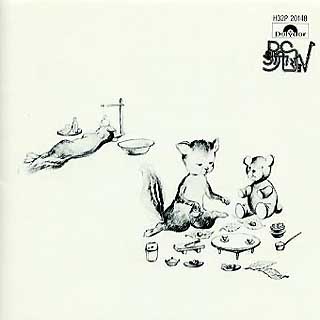
The illustration used on the jacket is taken from "Infant Child Picture Tosoku Shiken Zukan Zuban" (Kaneko Shuppan). This is a material for judging mental states through pictures of child psychology. Seishiro has searched for it. The "RC Succession" logo on the upper right of the jacket was also designed by Seishiro.
About "[Early Single Man
The CD "Early Single Man -The Immortal RC SUCCESSION-" was scheduled for release on November 9, 2016. As of February 2018, this has not yet been released, nor has any information been communicated after the release was postponed.
The release is by "Nakayoshi Group", which is also the company that released "PLEASE ROCK ME OUT AT Hibiya Outdoor Music Hall 1981.5.30/5.31" on February 5, 2016, and is also the music publisher for "Ribbon Co.
Information by the manufacturer is as follows
The famous "Single Man" album was released in 1976.
The story of how it was released and the twists and turns from its demise to its reissue have been discussed in special programs that accompanied last year's re-release, but the company's office at the time unearthed a cassette tape of a studio demo session that took place before that time.
The cassette tape contains almost uncut footage of the demo session held at Mouris Studios in the early 1970s, including previously unreleased songs that have only been recorded live.
Also included as a bonus disc is the "Interrupter RC Succession Concert" held at Yokohama Kyoiku Kaikan on October 31, 1974.
*A bonus CD-R containing completely unreleased songs will be given (to be enclosed) as a bonus for the first production run. (Distribution will end as soon as they are gone.
The release of the album may have been postponed (or cancelled) due to the rights to the songs, etc. We hope that the release will be announced in a manner that properly clears up these issues.
The following is the planned (or scheduled) contents of the 4-CD set.
Disc 1
01. gift from a fan
02. big Haruko-chan
03. kindness
04. for me, for me
05. why don't we go for a walk at night
06. dedicated to a hippie
07. the sky
08. the reason why i made it cold
09. it's already autumn on the Koshu highway
10. slow ballad
Disc 2
01. dreamed a dream
02. bell come to me
03. because i'm weak
04. one day
05. my lover
06. mariko
07. me and the girl
08. you know me
09. darling sewing machine
10. grave
11. because it's my job
12. naivete
13. rainy day
14. snow outside the window
15. junk
16. i'm a towel
17. good-bye to you
18. elementary school children go by in front of my house this morning
Dsic 3 (from the "Interrupter RC Succession Concert" at Yokohama Kyoiku Kaikan on October 31, 1974)
01. 2 hours 35 minutes
02. this time last year
03. uw no sora
04. ride on the back of your bicycle, NISUMI-kun
05. it's already autumn on the Koshu highway
06. all sad things
07. big haruko
08. mariko
09. for me, for me
10. the world is a big joke
11. dedicated to hippies
12. more calm
Disc 4
01. why don't we go for a night walk
02. gift from a fan
03. you know me
04. because i'm weak
05. kindness
06. darling sewing machine
07. slow ballad
Outline of each song
Gift from a Fan" is a song written by Kiyoshiro Imawano, composed by Hanichi Kimosawa, and arranged by Masaru Hoshi and RC Succession.
It starts off with a funky clavinet performance. The detailed credits have not been released yet, so it is difficult to say for sure, but the crisp rhythm section and horn section must be Tower of Power. It is not a sticky funk, but an open funk. Seishiro's lyrics contain a rather strong venom.
Big Haruko-chan" was written by Kiyoshiro Imawano, composed by Hakuichi Kimozawa, and arranged by Masaru Hoshi and RC Succession.
Kobayashi sings lead vocals. The wood bass, which sings well as always, stands out.
Yasashisa" (lyrics by Kiyoshiro Imawano, music composed by Hakuichi Kimozawa, arranged by Masaru Hoshi and RC Succession)
It was released as a coupling to the preceding single "Slow Ballad," but the album version has some differences in the mix of the various instruments.
Boku wa boku no toe no to" is a song written by Kiyoshiro Imawano, composed by Broadbandichi Kimosawa, and arranged by Masaru Hoshi and RC Succession.
The song is a busy number with scraggly acoustic guitar cuts and various screams.
Recording Man" is a song written by Kiyoshiro Imawano, composed by Broadside Kimozawa, and arranged by RC Succession, with no arrangement by Hoshikatsu. Masaru Hoshi did not participate in the arrangement.
The title "Recording Man" is not a typo. The title "Recording Man" is not a typo; it is written as "Recording Man" on the analog version. On the CD, however, it is "Recording Man.
This is a collage of sounds. It is an avant-garde piece that reminds me of Mothers of Invention.
The lyrics are by Kiyoshiro Imawano, the music is composed by Bandukazu Kimosawa, and arranged by Masaru Hoshi and RC Succession.
Piano by Yoshiya Shibata, who later became a member of RC as Gee2wo. The song is slow and full of jazzy mood, but there are sweet whispers of women in the background ("Wait a minute ......, I'm coming," "I love you," etc.) and laughter.
Dedicated to a Hippie" is a song written by Kiyoshiro Imawano, composed by Broadbandichi Kimosawa, and arranged by Masaru Hoshi and RC Succession.
The song mourns the death of Oshiro, who was RC's sub-manager during his time at Horipro. His nickname was "Hippie. Seishiro later said of the song, "I was a sub-manager of Oshiro.
There was a sub-manager named Oshiro, and his nickname was Hippie. He was a smart guy, and when we were in a bad situation, he said to us, 'I'm going to make you famous. Then he died in the summer. He was very sick. It was a shock. ...... After the funeral, there was a show at Jiangjian or somewhere. I was commuting by train at the time. ...... I had just bought a new guitar. It was a used Gibson Hummingbird ....... This song is dedicated to him. I think Mickey Yoshino was there on the recording, playing Hammond."
Uwano no sora" is a song with lyrics by Kiyoshiro Imawano, composed by Broadside Kimosawa, and arranged by Masaru Hoshi and RC Succession.
The lyrics are a bit harsh and sad with a gentle melody. Beautiful strings in the background. The ending has a disturbing atmosphere.
The reason for the coldness" is a song written by Kiyoshiro Imawano, composed by Hakuichi Kimosawa, and arranged by Masaru Hoshi and RC Succession.
The crisp horn section reappeared on the stage. This time it is not funk but R&B. Seishiro's voice is also soulful, shouting "Gotta gotta gotta gotta gotta! like Otis.
Koshu kaido wa aki no nanasanaso" (Koshu highway is already autumn) is a song written by Imawano Kiyoshiro, composed by Kimotsuwa Hakikazu, and arranged by Hoshikatsu and RC Succession.
The string part arranged by Hoshikatsu was removed by the members during track down. Kobayashi's arco bass can be heard here as well. Seishiro's shouts of "Lies all over the place! by Seishiro is heartbreaking.
Slow Ballad" was written by Imawano Kiyoshiro and Mikan and arranged by Hoshi Masaru and RC Succession.
The ending of the song is about 30 seconds longer than the previously released single.
October 11: Single "You'll Understand"
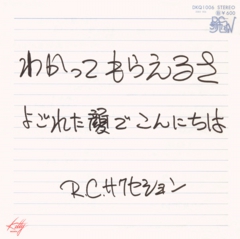
Side A
1. you will understand
Side B
1. hello with a dirty face
This single was released at a time when the band was at the bottom of the heap. This single was released around the same time as "I'm really at the bottom! It was also the first single released after the transfer to Kitty.
The cover and lyrics are handwritten by Seishiro, and the two sides are labeled D-side and S-side instead of A-side and B-side, but this is Polydor Records' original notation (which was used until 1976).
Although Kenchi Daren's name is credited, he was already too depressed to play guitar by this time, and Seishiro played all the guitar parts.
Both the A-side and B-side were included in the "EPLP" released on June 1, 1981, where they were credited as "Bass: Yawao Kobayashi".
The lyrics of the song were written by Kiyoshiro Imawano and the music was composed by Broadband Kazuichi Kimosawa.
The drums were played by "UTAN (Wu-Tang Suzuki)" and the keyboards by Masahiro Sayama.
The lyrics of the song can be considered very prophetic now that we know about RC's later activities, but at the time of its release, the song did not sell at all before considering "how it was received". Seishiro sang, "We did nothing wrong," and it would be proven years later that this was not a lie.
The lyrics of the song, "Yogokoreta kojo de konnichiwa (Hello with a dirty face)," were written by Kiyoshiro Imawano, and the music was composed by Broadband Kazuichi Kimosawa.
The drums are played by UTAN (Wu-Tang Suzuki) and keyboards by Yoshiya Shibata aka Gee2wo. The pianica is played by Seishiro.
1979
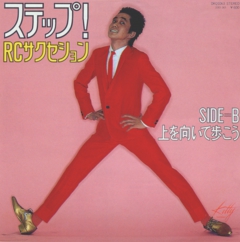
July 21: Single "Step!
Side A
1. step!
Side B
1. let's look up and walk
This is the first single in two years and nine months since the release of "Wakaruaruaru Iuwa" on October 11, 1976.
The jacket photo is by Nakaiido's wife, Hisako Okubo.
Step ! was written by Kiyoshiro Imawano and arranged by Kazuo Shiina.
Although this is the credit for the single, when the song was included on the EPLP, it was credited to Kazuo Shiina as the composer and arranger. It was also the first single in which he stopped using the pen name "Kimotsuwa Hanbasukazu" (肝沢幅一).
Members of RC during this period were Seishiro, Kobayashi, Ginji Ogawa, and Kozo Araida. Although Nakaiido did not officially join the band, he hung around with Furuiido and worked with him in earnest.
The office was skeptical of the band's performance ability, so the following studio musicians were used for the recording.
Drums: Yutaka Uehara
He was a member of "Mura Hachibu" and "Sugar Babe". Later joined Seishiro's band "Laffy Taffy.
Bass: Akihiro Tanaka
*Formed "Huckleback" with Shigeru Suzuki after "Happiendo" broke up.
Electric guitar: Kazuo Shiina
Arranged the music for this single. He was the first guitarist of "Moonriders".
Electric guitar: Tsuyoshi Kon
Electric guitar: Tsuyoshi Kon *Former member of "PANTA&HAL" and fusion band "Parachute".
Acoustic guitar: Hiromi Yasuda
*He played back-up guitar for Yosui Inoue at the time of her debut. Husband of Haco Yamazaki.
Keyboard: Hiroyuki Namba
*Former member of "Mari Kaneko & Bucks Bunny" and "Sense of Wonder".
Synthesizer: Hiroki Inui
*Former member of the fusion band "Carioca.
Percussion: Pecker
Pecker has participated in many recordings. Original member of "Orquesta del Sol".
Percussion:Eiji Narushima
Percussion: Eiji Narushima* Participated in many recordings.
Thus, only Seishiro participated from RC. The music is disco-style with horns and strings, so if you don't hear Seishiro's voice, you may not recognize it as an RC work.
Ue o muite aruko" was written by Rokusuke Ei, composed by Hachio Nakamura, and arranged by Kazuo Shiina.
The song is a bold rock arrangement of a song by Kyu Sakamoto, which was a big hit in the U.S. under the title "Sukiyaki. At the show, he introduced the song as "Japan's famous rock 'n' roll song! and introduced as "Japan's Famous Rock 'n' Roll !
1980
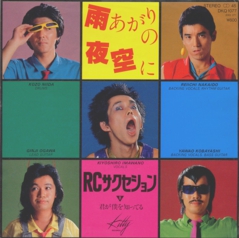
January 21: Single "Ameagari no Yozora ni
Side A
1. in the night sky after the rain
Side B
1. you know me
The first single after Nakaiido's participation. Also, "Hirofumi Kasuga" is credited as "thanks to musicians" as a guitarist.
Ameagari no Yozora ni" was written by Seishiro Imawano and Reiichi Nakaiido and arranged by Kazuo Shiina of RC Succession.
Nakaiido created the guitar riffs and chord progression, and Seishiro added the lyrics and melody to complete the song.
The lyrics are a double-meaning of the true story of Seishiro's used Nissan Sunny Coupe that broke down in the rain and his love affair with a girl. It is unclear if this car is the same one used in "Slow Ballad. Seishiro bought several used Sunny Coupes during this period.
Some of the lyrics were rewritten according to the wishes of the office, as in the first chorus, "Oh please let it fall on its own, Woo... let me see how long it lasts.
On the first live album "Rhapsody" released on June 5, 1980
The first chorus is "Oh please let it fall on its own.
The second chorus is "Oh, after the rain, the night sky shines Woo... diamonds scattered among the clouds..."
The third chorus is "Oh, the night sky after the rain, flowing Woo... the moon like gin lime..."
and sung exactly as the lyrics on the single version.
In "The KING of LIVE" released on December 5, 1983
The first chorus is "Oh, the moon like a gin lime shines in the night sky after the rain".
The second chorus is "Oh, Woo...diamonds scattered among the clouds shining in the night sky after the rain".
The third chorus is "Oh, the wind in the night sky after the rain is woo... calling us to come on quickly.
and this "Oh the wind that blows in the night sky after the rain is calling us to Woo...come quick" is the original lyric.
In "the TEARS OF a CLOWN" released on October 21, 1986
The first chorus is "Oh, Woo...diamonds scattered among the clouds that shine in the night sky after the rain".
The second chorus is "Oh, Woo...moon like gin lime shining in the night sky after the rain
The third chorus is "Oh, the wind in the night sky after the rain is woo... calling us to come on quickly.
The third chorus is "Oh, the wind in the night sky after the rain is calling us, Woo... come on.
The third chorus, "Oh, the wind in the night sky after the rain is blowing Woo...the moon like gin lime is calling us to come on," could be sung slightly differently from the single version. In the single version, it is not "Oh, it shines in the night sky after the rain" but "Oh, it flows in the night sky after the rain".
Kinshin Morikawa, who has been friends with Seishiro since before his debut, directed RC in the 80s, and is now the president of Office Augusta, remarked after listening to the high-resolution version of "Oh Ameagari no Yozora ni" in 2015.
There are too many instruments. I don't think we need synths or anything at all, and the piano is too loud. Ginji Ogawa plays a wonderful counter-melody phrase behind the chorus, but I can't hear it very well. I should have been braver then and said let's not put in so many sounds. It's embarrassing to listen to it in high-res (laughs). (Laughs.) RC was really good when we were doing it in the attic. And then, for example, the record company staff would give their opinions, as I did, and the people at the office would say all kinds of things, too, right? In order to package the greatness of the Attic concert as it was, I think it would have been better if we had not said anything unnecessary. Well, we both had our reservations. Maybe RC would have sold better if I hadn't done it.
(After receiving the message that the previous song, "Step! (After the last album, "Step!", was not performed by RC, we were forced to perform "Ameagari no Yozora ni" by ourselves, but it didn't sound the way we wanted it to. Some of the lyrics were messed with. And above all, the engineers at the time weren't used to recording rock music. It was more like balancing the sound to make it easier to listen to. ...... I think Seishiro and the others were dissatisfied with that."
Thus, despite being "the best-known rock number in Japan" (one of the best rock numbers, perhaps), the results were still not satisfactory for the members.
Note that on September 7, 2017, Nakaiido covered "Ameagari no Yozora ni" (under the name "Nakaiido "CHABO" Reichi") in a limited distribution release.
Kimi ga boku wo shirueteru" (You know me) was written by Kiyoshiro Imawano and arranged by Kazuo Shiina of RC Succession.
The song begins with three fingers of acoustic guitar in a C&W style. You can also hear the impressive finger picking lead guitar in the interlude.
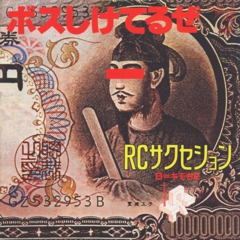
May 21: Single "Boss Shikeiteruze
Side A
1. the boss is shaking
Side B
1. creepy e
This is the first single after Yoshiya Shibata aka Gee 2wo officially joined the band. Also credited as "thanks to musicians" are "Ginji Ogawa (SIDE-1) and Hirofumi Kasuga (SIDE-2).
Boss Shiketeruze" was written by Kiyoshiro Imawano and arranged by RC Succession.
The song quotes a phrase from Henry Mancini's "Peter Gunn's Theme" in the background, with Kiyoshiro's vocals playing the dual role of a plain employee begging for a raise and the boss saying back, "I wish I could get a raise too.
There is a story that the song was banned from cable broadcasting in the Akasaka and Ginza areas due to complaints from small and medium business owners, but this was a lie by the record company for sales promotion purposes.
Kimochi E" is a song written by Kiyoshiro Imawano and arranged by RC Succession.
It is a speedy rock number that flies by in a little over three minutes. According to Seishiro, the song is about how he felt when he did heroin, but the true meaning of the song is unknown.
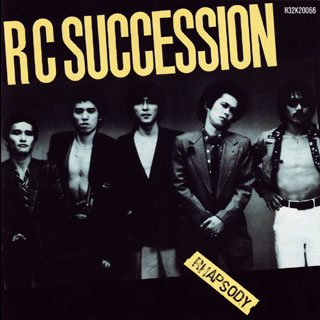
June 5: Album "RHAPSODY
Side A
1. hello!
2. energy Oh energy
3. rhapsody
4. boss, it's getting cold
Side B
1. angel
2. boo boo boo boo
3. in the night sky after the rain
4. upo o muite arukou
5. kimochi e
*****
CD RHAPSODY
Same as the analog version
This is a live recording of a concert held on April 5, 1980 at the now defunct Kubo Auditorium in Toranomon, Tokyo.
It is also their first album since "Single Man" released on April 21, 1976, their first album after moving to Kitty Records, their first album after Reiichi Nakaiido and Kozo Araida joined the band, their first album with Kazutoki Umezu on saxophone, and their first album after changing into a rock band. It is also the first album with Kazutoki Umezu on saxophone, and the first album after the band changed into a rock band. Gee 2wo also officially joined RC one month after this live performance.
In an interview, Kinshin Morikawa, the director of the band at the time, recalls how this live album was made: "The album was a very good idea.
(In response to the fact that the single "Ameagari no Yozora ni" did not sound the way they wanted it to sound.)
We couldn't record the sound we wanted in the studio. The live sound is so good. When you listen to the live sound recorded on cassette, it is very powerful and good. It's rough and loud, like it's over the peak level. The tape limiter was naturally applied. So Seishiro and the others kept asking me if I could make it sound like that. So when we talked about making an album, we decided to make it a live album. I didn't come up with the idea of making a live album. It came from the members. So, we set up the Kubo Auditorium and brought in a 16- or 24-channel recorder to record the show. That show was not a tour or anything. It was a recording gig. Later, in the studio, we made a lot of corrections. Not only the wrong lyrics, but also a lot of the guitars and bass were changed. That's why it doesn't say "live" anywhere on the album cover.
On the other hand, Seishiro explains how the live album was made.
Kitty Records wanted to release a studio version, but Nakayoshi (the original recording company) thought a live version would be cheaper. So, things got complicated. So they called me in. I said, "If Seishiro tells me, we can work something out. I said, "Single Man is a masterpiece, and I can't do anything better than that even if I go into the studio. So we decided to record the Kubo Auditorium show."
A total of 18 songs were performed at the show (the credits for "RHAPSODY NAKED," released on October 26, 2005, show a total of 20 songs, but in the commentary Mr. Morikawa describes the total as 18 songs. (This is because "Opening MC" and "Marin Blues" are not counted in the song count, and we will follow that here as well.) ) Of these, four are existing songs. The remaining 14 songs were unreleased, and "Bun Bun Bun Bun" and "Angel" were completed just before this show. The entire show is presented in the aforementioned "RHAPSODY NAKED". Of the songs included in this album, four are existing songs, "Boss Shiketeruze," "Ameagari no Yozora ni," "Ue wo Mukete Arukou," and "Kimochi E," while the remaining five songs are unreleased. In fact, more than half of the songs are presented for the first time on this album. According to Mr. Morikawa's recollection, "One of the members said to me, 'You should think of it more like a recording studio than a live performance. Even so, it would be fearless to do a live show in which more than half of the material is unreleased, and one would have to be extremely confident to shy away from such an idea.
Although it was an album full of "firsts," Ogawa left RC after this show, and this was the last album in which he participated. Unfortunately, since he had already decided to leave the band, he is not even on the cover.
Welcome" is a song written and composed by Seishiro Imawano.
It is an R&B number that serves as a greeting from the band, introducing the members. It is a good mood song that announces the beginning of a good mood show.
The opening theme song "Domoto Brothers Theme" for Fuji Television's "Domoto Brothers" is thought to have been inspired by this song and "Ameagari no Yozora ni".
Energy OH Energy" was written by Kiyoshiro Imawano.
It is a rock number that begins with a Chuck Berry style guitar riff. It is an orthodox rock style, but it has a lively feeling that makes the listener's body naturally follow the rhythm.
Rhapsody" is a song written and composed by Kiyoshiro Imawano.
It is a mid-tempo rock number with reggae rhythms. The song is sung by Kiyoshiro himself, who is a band member at heart.
Boss Shiketeruze" is a song written and composed by Kiyoshiro Imawano.
It is one of the previously released songs. You can hear Kiyoshiro's vocals, which are full of sass.
Angel" is a song written and composed by Seishiro Imawano.
It is a slow heartbreak song. The chord progression of "You Never Give Me Your Money" by The Beatles is borrowed. The atmosphere of the song, the composition of the song, and the use of piano and guitar are thought to be based on "Angie" by The Rolling Stones.
Boom Boom Boom" lyrics by Kiyoshiro Imawano, music composed by Kiyoshiro Imawano and Reiichi Nakaiido.
It is a good-humored rock number. I'll never be intimidated by the police or the state! The song is a statement of determination, "I'll never get caught. The "friend" in "I'll never get caught by anyone who hurts my friend" may be Yosui Inoue, who was arrested on September 10, 1977 for possession of marijuana.
Ameagari no Yozora ni" (In the Night Sky After the Rain) was written by Imawano Seishiro and Nakaiido Reiichi.
At this point, the song is still sung with the same lyrics as the single release.
Ue wo muite arukou" was written by Rokusuke Ei and composed by Hachidai Nakamura.
The lyrics are by Rokusuke Ei and the music is by Hachidai Nakamura. One! To! One! To! Sun! Shhh!" The event begins with a shout of
Kimochi E" was written by Kiyoshiro Imawano.
In the live version, Kiyoshiro's vocals seem more like Otis'.

Related Articles
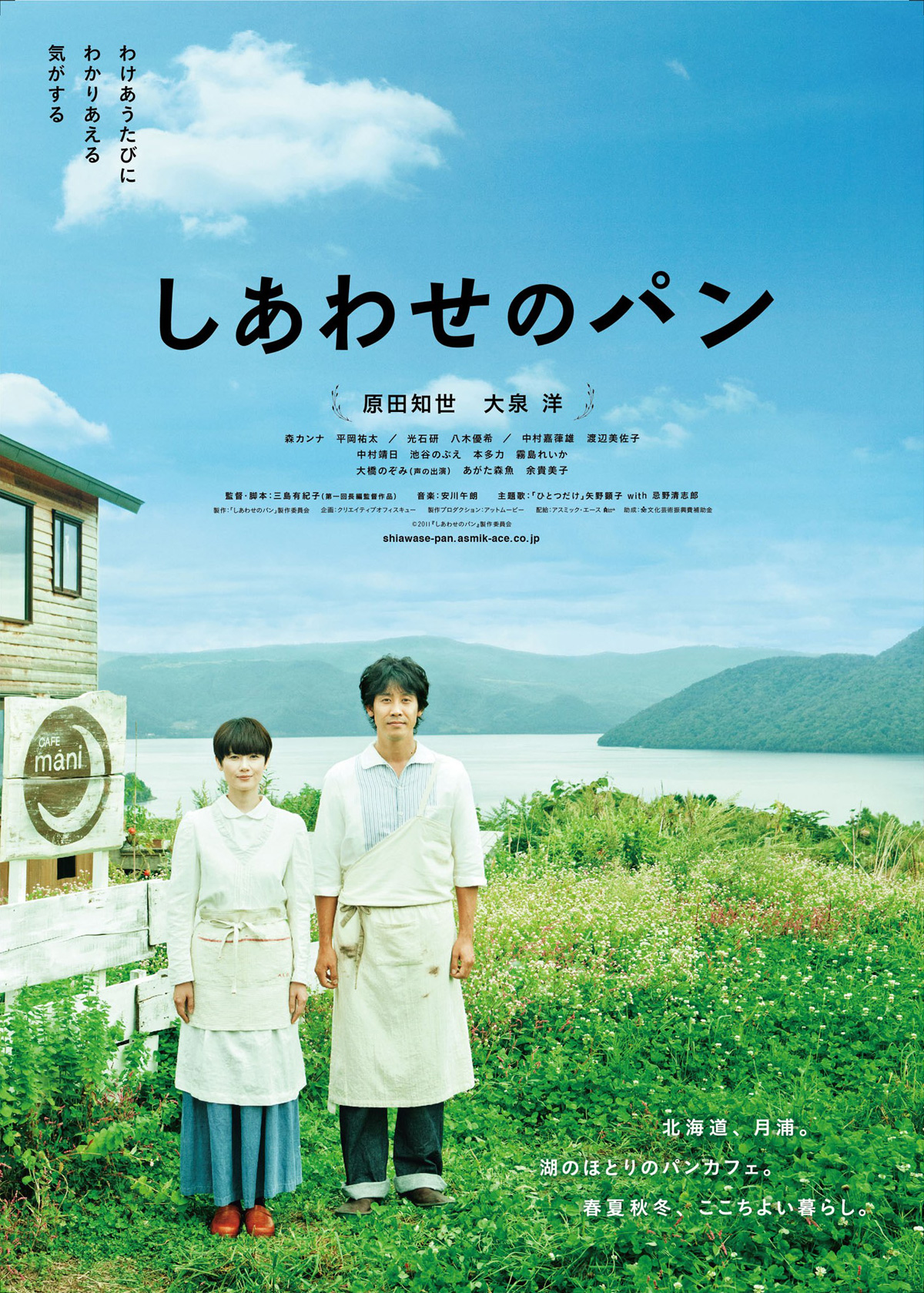
Summary of Bread of Happiness (film) spoilers and discussion
Shiawase no Pan" is a 2012 Japanese human drama film set in Hokkaido. The film was directed and written by Yukiko Mishima, and stars Tomoyo Harada and Yo Oizumi. The film depicts the interaction between Mr. and Mrs. Mizushima, who moved from Tokyo to Hokkaido to run a café, and the customers who visit them. The Mizushima's delicious food and kindness heals the customers, each of whom has their own worries and problems. Rie, the wife with emotional problems, is also healed by the nature of Hokkaido, her husband, and their friends. This is a film in which you can enjoy the beautiful nature of Hokkaido, the unique characters of their friends, the interior design of the restaurant, and the food.
Read Article
Summary of bands and units that changed their names, including RC Succession!
Here is a list of bands and units that changed their names during the course of their activities. RC Succession", of which Kiyoshiro Imawano was a member, was originally called "The Clover". Other bands and units introduced here include "RIP SLYME," which used to be called "Givinibanko.
Read Article
Tags
Contents
- RC Succession Overview
- Members of RC Succession
- Kiyoshiro Imawano
- Kazuo Kobayashi
- Reichi Nakaiido
- Kozo Araida
- Yoshiya Shibata (Yoshiya Shibata: Gee2wo)
- Former member of RC Succession
- Haren Kenchi(1968 - 1977)
- Ginji Ogawa (1979 - 1980)
- Hirofumi Kasuga (1978, 1990 - 1991)
- Brief History of RC Succession
- 1950-1967: On the Eve of Formation
- 1968-1972: From RC formation to debut
- 1973-1979: Dark Ages
- 1980-1984: To the top of the rock world
- 1985-1987: Increased solo activity
- 1988-1990: "COVERS" album, and then the end
- RC Succession Discography
- 1969.
- November 1: "College Pops Concert Live Recording" album
- 1970
- March 5: Single "I Don't Buy Lottery Tickets"
- December 5: Single "Full of Tears
- 1972.
- February 5: Single "Bokuno no Sensei" (My Favorite Teacher)
- February 5: Album "Early RC Succession
- July 5: Single "Kimi kawaii ne
- December 5: Album "On a joyful evening".
- December 20: Single "The Third Most Important Thing"
- 1976
- January 21: Single "Slow Ballad
- April 21: "Single Man" album
- October 11: Single "You'll Understand"
- 1979
- July 21: Single "Step!
- 1980
- January 21: Single "Ameagari no Yozora ni
- May 21: Single "Boss Shikeiteruze
- June 5: Album "RHAPSODY
- October 28: Single "Transistor Radio
- December 5: Album "PLEASE
- 1981
- June 1: "EPLP" album
- November 21: Album "BLUE
- 1982
- March 21: Album "HARD FOLK SUCCESSION
- April 5: Album "Yeahhhhhh.... at Budokan".
- June 23: Single "SUMMER TOUR
- October 25: Album "BEAT POPS
- December 10: Album "The Day of R&B
- December 15: Single "Tsuki ai ai tai tai
- 1983
- June 1: Single "Oh! Baby
- July 5: Album "OK
- November 7: Single "Baby! Run away."
- December 5: Album "The KING of LIVE
- 1984
- July 21: Single "Wonder
- July 21: Album "EPLP-2
- September 21: Album "The LiVE!
- November 23: Album "FEEL SO BAD
- December 21: "Mix & Mix-er" album
- 1985
- April 21: Single "All is ALRIGHT (YA BABY)
- November 21: Album "HEART ACE" (Ace of Hearts)
- December 21: Single "SKY PILOT Sky Pilot
- 1986
- April 23: Album "NAUGHTY BOY
- October 21: Album "the TEARS OF a CLOWN
- 1988
- February 25: Album "MARVY
- March 25: Single "NAUGHTY BOY
- August 15: Single "LOVE ME TENDER
- August 15: Album "COVERS
- December 16: "Cobra In Trouble" album
- 1990
- September 5: Single "I LIKE YOU
- September 27: "Baby a Go Go" album
- 1995
- September 25: Album "SOULMATES
- 2005
- October 26: Album "RHAPSODY NAKED
- 2011
- November 23: Album "singing soul ballads
- 2013
- May 3: Album "Sad Things (Official Bootleg)
- 2015
- December 16: Album "Nipporini Bonus Tracks
- 2016
- February 5: Album "PLEASE ROCK ME OUT at Hibiya Open-Air Concert Hall 1981.5.30 - 5.31
- March 30: Album "SUMMER TOUR'83 SHIBUYA KOKAIDO ~KING OF LIVE COMPLETE~".
- RC Succession's representative song
- I don't buy lottery tickets.
- My Favorite Teacher
- The reason for the cold shoulder is...
- slow ballad
- In the night sky after the rain
- welcome!
- transistor radio
- Nothing but good things can come of it.
- rock 'n' roll show
- 摩蘭坂(tamaoranzaka)
- I want to be .......
- Oh! Baby!
- Booming, loud R&R band
- Baby! Get out of here.
- freedom
- get off your arse (ass)
- Winding road by the sea
- Dedicated to Hippies
- World without Tomorrow
- Summertime Blues - Love Me Tender
- I Like You
- Overflowing hot tears
- RC Succession's backstory, trivia, small stories/episodes, anecdotes
- How Tomokazu Miura made his acting debut
- Outbursts, outbursts, etc.
- The last co-starring
- Dessert is yours.
- Have you listened to Love Me Tender?
- Dissolution of the Company
- leading a group of people singing songs about nuclear power plants