
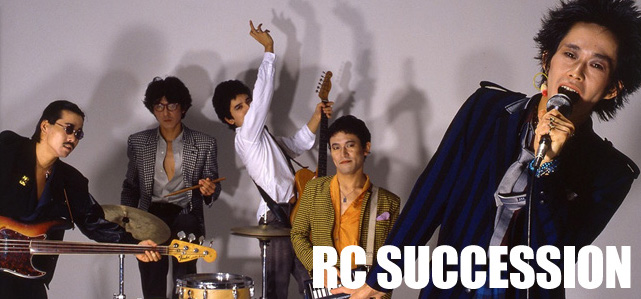
RC Succession is a Japanese rock band that debuted in 1970. Led by vocalist Kiyoshiro Imawano and guitarist Reichi Nakaiido, the band has left behind many masterpieces and classic albums. In 1991, the band went on hiatus and virtually disbanded, and with the death of Imawano on May 2, 2009, the dream of reviving RC Succession was ended forever.
April 23: Album "NAUGHTY BOY
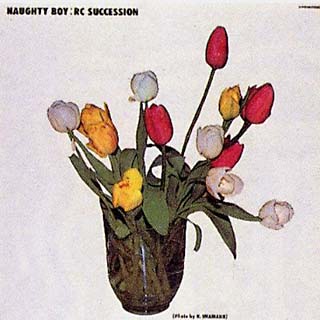
Side A
1. mariko
2. winding road by the sea (utopia re-mix version)
Side B
1. summer romance
2. living with a dog at the foot of the mountain (UTOPIA RE-MIX VERSION)
*****
CD NAUGHTY BOY
*As of February 2018: not yet on CD
This work was released in the format of a 12-inch single, which was popular at the time.
It consists of two new songs and remixed versions of two songs from "HEART ACE".
The mixing was done at Utopia Studios in London, England. The mixer is Tim Palmer.
Tim Palmer was an assistant engineer for the British band Simple Minds. He later became a producer, working with Robert Plant, Pearl Jam, U2, and others.
Since all members of the band except Seishiro "hated foreign countries," Seishiro was the only one who produced the band. From this experience, Kiyoshiro also said, "Mixers are important. It has to be a foreigner. These keywords, "London," "hating foreign countries," and "mixer must be a foreigner," lead to Seishiro's solo album, "RAZOR SHARPS.
Mariko" is a song written and composed by Kiyoshiro Imawano.
It is a slow love song.
A demo tape of this song was played on the radio program "FURUIDO NIGHT TOGETHER" in the summer of 1974, in which FURUIDO was a radio personality. It was also featured in the recording session for "Single Man," and a folk-era version of the song was included in the May 3, 2013 release of "Sad Kototo Battara (Official Bootleg).
It was hard to find for a while, but was included in the compilation "GREATFUL DAYS 1981-90" released on June 1, 2005.
The song "Winding Road by the Sea (UTOPIA RE-MIX VERSION)" was written and composed by Kiyoshiro Imawano.
The sound of the remixed version is much better. The saxophone, which was omitted from "HEART ACE," has been restored.
It was finally released on CD in the compilation album "BEST OF THE RC SUCCESSION 1981-1990" released on November 14, 1990.
Summer Romance" is a song written and composed by Imawano Seishiro and Gee2wo.
It is a jazzy type of music.
It may be influenced by the fact that Gee2wo used to play jazz.
It is currently hard to find.
UTOPIA RE-MIX VERSION" is a song written and composed by Kiyoshiro Imawano.
The remix of this song has also improved the sound. Also, the saxophone part at the ending was omitted and the song was edited so that it ends easily.
It was finally released on CD on the November 14, 1990 release of the compilation "BEST OF THE RC SUCCESSION 1981-1990".
October 21: Album "the TEARS OF a CLOWN
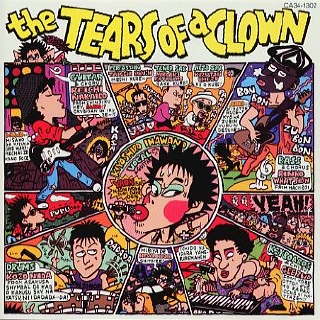
Side A
1. in the midnight hour
SWEET SOUL MUSIC~STRAWBERRY FIELDS FOREVER
3. you know me
4. rhapsody
Side B
1. stranger
2. you will die
3. breakthrough
4. slow ballad
Side C
SKY PILOT
2. transistor radio
3. thump-thump-thump R&R band
LONELY NIGHT (NEVER NEVER)
Side D
1. dedicated to hippies
2. freedom
3. in the night sky after the rain
*****
CD the TEARS OF a CLOWN
Same as the analog version
Live recording of the concert "4 SUMMER NITES" held at Hibiya Open-Air Concert Hall on August 16, 17, 23 and 24, 1986, featuring songs from the second and fourth days.
The cover is by illustrator Asami Kayoko. It is often said that the cover is inspired by Janice Joplin's album "Cheap Thrills," but it is actually an album of "Big Brother & The Holding Company" not "Janice Joplin. Janis Joplin" was the vocalist of the band. Incidentally, the cover of "Cheap Thrill" was designed by an American cartoonist, Robert Crumb.
The album title "the TEARS OF a CLOWN" is taken from the 1967 hit song by Smokey Robinson & the Miracles, led by Smokey Robinson, a rare singer and songwriter of Motown. The Japanese title of the song is "Crown of Tears.
IN THE MIDNIGHT HOUR" was written by Wilson Picket Jr. and Steve Cropper.
The original was written by Wilson Picket, one of the authors of the song. Steve Cropper, who co-wrote the song, was the backing guitarist for Otis Redding, who would also participate in Seishiro's solo album.
Seishiro said of Steve Cropper: "The stupid young guy in the street is a real young guy.
The young idiots out there are always going on about Keith Richards and Eric Clapton, but the coolest guitarist of all is still Steve Cropper.
The outdoor summer show was very cool, starting with the chirping of cicadas.
SWEET SOUL MUSIC" was written and composed by Kiyoshiro Imawano. STRAWBERRY FIELDS FOREVER" was written by John Lennon and Paul McCartny.
Kiyoshiro sings "STRAWBERRY FIELDS FOREVER" and "IN THE MIDNIGHT HOUR" in English, saying, "My English is a little stiff.
Kimi ga boku wo shitteiru" (You know me) is a song written and composed by Seishiro Imawano.
When it was included in the coupling of the single "Ameagari no Yozora ni", it was written as "Kimi ga Boku wo Shiru" (You know me), but in this album, it is written as "Kimi ga Boku wo Shiru" (You know me), which is a little more polite (?). The notation on this album is "Kimi ga Boku wo Shiru Shiru" (You know me).
Rhapsody" is a song written and composed by Seishiro Imawano.
Kimi ha naze wa naze wa naze wa naze wa naze wa naze wa naze wa naze wa naze wa naze wa naze wa naze wa naze wa naze wa naze wa.
This album is the first release, but the song itself has been around since the folk era.
The song is about Gonza Nikuma, a classmate of Seishiro's from junior high and high school, who was also credited as a mixer on his second album "Fun Evening. The song was an attempt to paradoxically cheer him up when Nikuma was suffering from depression. He ended up committing railroad suicide.
Also, on April 8, about four months before this show, a female idol "Yukiko Okada," who was at the height of her popularity at the time, committed suicide. A number of young people followed her suicide and it became a social problem. It is against this background that the song was sung at the Hibiya Open-Air Concert Hall. The original lyrics of the song were "I'll jump off a building and die," but it is said that the original lyrics were "I'll hang myself and die. This change in the lyrics seems to have been made in response to the suicide of "Yukiko Okada. What Seishiro's intention was in performing this song is a matter of conjecture, as there is no comment from the man himself.
Depending on how one perceives this song, the value of this album changes considerably. In fact, some people dislike this album because of the inclusion of this song. The lyrics are not included on the lyric card.
In addition to this song, the album also includes a song titled "Dedicated to a Hippie," which deals with the theme of death. This song should be listened to together with "You'll Die Sooner or Later".
The song "Datsuwa" was written and composed by Reiichi Nakaiido.
It is from Nakaiido's solo album "THE NAKAIDO REIICHI BOOK.
In the latter half of the song, he shouts "Seishiro! and invites Seishiro to join him for a duet.
Slow Ballad" is a song written by Imawano Seishiro and composed by Mikan.
SKY PILOT" is a song written and composed by Kiyoshiro Imawano and Kazuo Kobayashi.
Transistor Radio" is a song written and composed by Kiyoshiro Imawano and G1,238,471.
Dvorak's "Homeward Road from the New World" (Hi ga yama ni hi ga fukashita) is played in the middle of the song.
LONELY NIGHT (NEVER NEVER)" is a song written and composed by Seishiro Imawano.
Hippie ni Dedougou" is a song written by Kiyoshiro Imawano with lyrics by Kiyoshiro Imawano and music composed by Broadbandichi Kimosawa.
This number was included in the album "Single Man". The timing of its release may have been due to the suicide of "Yukiko Okada".
The song mourns the death of Mr. Oshiro, who was RC's sub-manager during the Horipro era. His nickname was "Hippie. Seishiro later said of the song, "I was a sub-manager of Oshiro's. He was a hippie.
There was a sub-manager named Oshiro, and his nickname was Hippie. He was a smart guy, and when we were in a bad situation, he said to us, 'I'm going to make you famous. Then he died in the summer. He was very sick. It was a shock. ...... After the funeral, there was a show at Jiangjian or somewhere. I was commuting by train at the time. ...... I had just bought a new guitar. It was a used Gibson Hummingbird ....... This song is dedicated to him. I think Mickey Yoshino was there playing Hammond on the recording."
Listen to Seishiro's plaintive cry in the latter half of the show. I hope you can feel how he feels about "death" with him. And remember the album title "the TEARS OF a CLOWN". CLOWN" means clown. Tears of a Clown" is the title of the album. It makes no sense to listen to "You Will Die Sooner or Later" by itself.
Freedom" is a song written and composed by Seishiro Imawano.
Ameagari no Yozora ni" is a song written and composed by Kiyoshiro Imawano and Reiichi Nakaiido.
1988
February 25: Album "MARVY
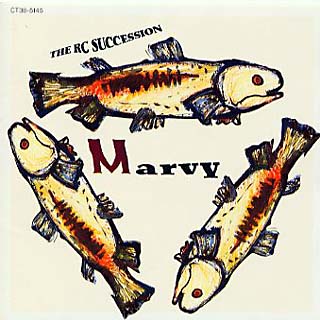
Side A (WOLF SIDE)
1. digital reb child
2. midnight blue
3. full of tears
4. an old story, a common occurrence part 2
Side B (WOLF SIDE)
1. call me
2. cool feeling
3. the Accomolice
4. distant cry
Side C (FISH SIDE)
1. HONEY PIE
2. gibson (chabo's blues)
3. the sky is crying
4. make me crazy about you
Side D (FISH SIDE)
1. dance
2. watashi wa denki
3. SHELTER OF LOVE
4. NAUGHTY BOY
*****
CD MARVY
Same as the analog version
This was the first full studio-recorded album released in two years and three months since "HEART ACE" released on November 21, 1985. It was a two-disc set in analog form, with the first disc titled "WOLF" and the second disc "FISH
The first was titled "WOLF" and the second "FISH".
A "London recording" of RC was planned for the previous year, but the other members of the band were not keen on the idea, and in the end, Seishiro went to England on his own. He made a solo album backed by "RAZOR SHARPS" formed by Ian Dury & Brockheads.
MARVY" is an American slang word meaning "marvelous, spectacular. The word was derived from "MARVELOUS. The fish on the front cover were drawn by Seishiro. The fish is a drawing of a lone albino mountain lioness that was in an aquarium on one wall of a men's bath that Seishiro entered when he visited Marunuma Onsen in Nikko. The wolf on the back jacket was drawn by Jiyuri Aizawa, who belonged to the master recording company "Happy Joke" at the time and is now the representative of the music office. The coloring was done by Seishiro. This was the planned front jacket.
The previous album "HEART ACE" did not have a clean sound, "NAUGHTY BOY," which was produced and remixed in London as a trial, had a good sound, and above all, Seishiro's solo album "RAZOR SHARP," which was produced in London, was well done. Based on these factors, "Charlie Howell," who worked on "RAZOR SHARP," was chosen as the engineer for this album. He is the same person who worked on "Psychedelic Furs" and "Public Image Limited". The members of the band, except for Seishiro, were apparently at first bewildered by the foreign engineer, but they gradually became accustomed to him, and eventually two analog records were made.
Seishiro said, "The relationship between the mixer and the sound was haunting.
I've made it clear that the mixer and the sound have a relationship, so let's call in a foreigner! The mixer must be a foreigner! So I teamed up with a young mixer from England. We decided to work with a young mixer from England, and the sound was great. We were able to record a lot of songs. Then, when it came time to compile the songs into a single disc, we couldn't come to a consensus. We said, 'Well, let's make a two-disc set,' and sent it out.
At this time, the mainstream of music software was shifting from vinyl records to CDs, and it is said that the decision to put this album on two discs was made with CDs in mind.
In Seishiro's own words again, "I set it to the maximum recording time for CDs. Records are old. We are always thinking about CDs! We are always thinking about CDs!
Incidentally, the CD is a single disc, but the CD reissued on July 2, 2008 was a 2-disc set (¥3,086 including tax).
Overall, the percentage of Gee2wo's keyboards has been decreasing, which seems to be related to the decrease in his contribution in arrangements. It seems that the conflicts between Gee2wo and the other members and Gee2wo's own motivation for the band began to surface around this time.
DIGITAL REVERB CHILD" is a song written by Kiyoshiro Imawano and Hirofumi Kasuga.
As CDs became the mainstream music software, one of the inevitable issues for musicians was how to deal with digital technology, and this was true for RC as well, and the atmosphere of this song, including the drums, has a digital flavor.
The change of engineer has improved the sound and made it clearer, which has also contributed to the digital flavor of this song. One can imagine that some fans may have felt uncomfortable.
The lyric, "Rather than being passed around," refers to the fact that the record company had been passed around from Toshiba, Polydor, Kitty, London, Toshiba, and so on.
Midnight Blue" is a song written and composed by Seishiro Imawano.
This song is more like a straight rock song, closer to RC's taste up to now.
The sound is still much better.
FULL OF TEARS Tears overflowing" is a song written and composed by Kiyoshiro Imawano.
It is a triplet ballad.
The lyrics seem to contain a criticism against songs that excessively produce sadness.
Unlike "Winding Road by the Sea," which is of a similar type, the keyboards are drastically reduced, and the role of Gee 2wo in this album (not only on the keyboards but also in the arrangement) seems to have been drastically reduced.
AN OLD STORY, A Mundane Occurrence Part 2" is a song written by Kiyoshiro Imawano and composed by Seiichi Takeda.
It is a slow song with a tropical atmosphere.
Seiichi Takeda was a member of "The Remainders of The Clover," a high school band formed by Kiyoshiro and Kobayashi, who later debuted with "Nipporoshi.
This song was included in the album of the same name released by "Nipporoshi" in 1977, and the lyrics were rewritten for this album.
CALL ME" is a song written and composed by Kiyoshiro Imawano.
It is a light, pop love song.
The backing band is a complete guitar band.
The lyrics, "Kimi ni sareta de irassharu telefon card" (I'll send you a telephone card), are very much of its time.
COOL FEELING" is a song written and composed by Kiyoshiro Imawano.
It is another light pop love song.
The backing band was again a guitar band, and there was no keyboard.
THE ACCOMPLICE - Accomplice" is a song written and composed by Kiyoshiro Imawano.
Both the lyrics and the performance of this rock song are heavy and sincere.
The song compares himself to a criminal and asks his lover to make the ultimate choice: "Will you still love me? The lyrics are of a type rarely seen in Seishiro's work up to this point.
Distant Cry" is a minor rock number with lyrics and music by Reiichi Nakaiido.
It is a minor rock number.
It was written by Nakaiido, who also sings lead vocals.
Another version of the song was used in the anime "Serial experiments lain" that aired on TV Tokyo from July 6 to September 28, 1998. The album version is cleaner than the anime theme song version, while the anime theme song version seems a bit excessive.
Honey Pie" was written by Kiyoshiro Imawano.
It is a vigorous rock number. As usual, the lyrics are sexually charged and double-meaning.
It was also included in Koji Kikkawa's album "GLAMOROUS JUMP" released about 3 months before this album, so it is a self-cover type of recording.
GIBSON (CHABO'S BLUES)" is a song written and composed by Reiichi Nakaiido.
It is a blues number that is a guitar song by Nakaiido for Nakaiido.
It was also included as a self-cover in the 4-CD set commemorating the 30th anniversary of Reiichi Nakaiido's debut, released on February 9, 2000.
The Sky is Crying" is a light pop number with lyrics and music by Seishiro Imawano.
It is a light pop number. This album contains many light and catchy songs like this.
The Sky is Crying" is the title of a song by Elmore James, a blues standard.
Make Me Crazy About You" is a song written and composed by Seishiro Imawano.
It is a three-song slow number.
It may have been Kiyoshiro's favorite type of song at that time, since "Winding Road by the Sea" from his previous album and "Full of Tears" from this album were also three-song slow numbers.
DANCE" was written and composed by Kiyoshiro Imawano.
It is a blues number of the John Lee Hooker's "Boom Boom" type.
Kiyoshiro's vocals are sometimes hateful, sometimes powerful, and show a variety of faces.
I'm Denki" was written by B. Nelson and arranged by Reiichi Nakaiido.
Nakaiido covers the song.
The original is "Don't Touch Me (I'm Electric)" by the British rock band Bill Nelson's Red Noise. The tempo of the original is a bit slower, and it is somewhere between punk and new wave, like early XTC.
In terms of Western music covers, it can be interpreted that the germ of the next album, "Covers," can already be seen here.
SHELTER OF LOVE TSUR TSUR" is a song written and composed by Seishiro Imawano.
It is a tight and catchy rock number, and the seeds of the next album "COVERS" can be seen here as well, an anti-nuclear power song.
Kiyoshiro says, "It's a bit far-fetched, but as an adult, I think I should touch on such issues a little bit.
He also said, "We debated whether to use this song or 'NAUGHTY BOY' for the single. In the end, it ended up being 'NAUGHTY BOY,' but Shigeru Izumiya was angry, saying, 'Why don't you make 'Tsuru Tsuru' the single, you idiot?
NAUGHTY BOY" was written by Seishiro Imawano.
It is a catchy number with impressive guitar arpeggios.
The name "NAUGHTY BOY" comes from the fact that Kiyoshiro was called "NAUGHTY BOY" when he was recording "RAZOR SHARP" in London. NAUGHTY BOY" means "naughty boy.
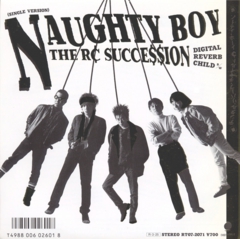
March 25: Single "NAUGHTY BOY
Side A
1. NAUGHTY BOY
Side B
1. digital reb child
Single cut from the album "MARVY" released on January 25.
Both sides A and B are the same as the album version.
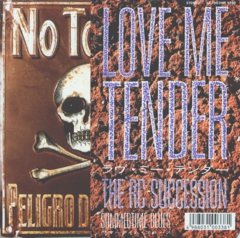
August 15: Single "LOVE ME TENDER
Side A
1. love me tender
Side B
Summertime Blues
This single was originally supposed to be released by Toshiba EMI on June 25, 1988.
The single was eventually released by Kitty on August 15, 1988, "the day the war ended.
For an overview of each song, see the album COVERS.
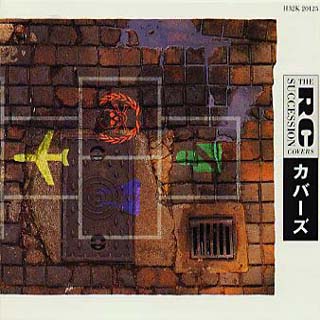
August 15: Album "COVERS
Side A
1. world without tomorrow
2. blown by the wind
3. rose rose
Secret Agent Man
5. love me tender
6. wet in black!
Side B
Summertime Blues
2. money
3. san toi ma me
4. under a bad star
5. imagine
*****
CD COVERS
*Same as the analog version
Probably one of RC's most famous albums. It is also one of the best-selling albums of all time, and is currently the only RC album to reach No. 1 on the Oricon album chart.
COVERS" began on December 25, 1987, at the annual Christmas concert at the Budokan, where RC performed a Bob Dylan cover in Japanese, "Kaze ni Fukarete (Blowin' in the Wind)," which was a big hit with the record company. The staff of their record company, Toshiba-EMI, praised the cover so highly that a plan to make a cover album was finalized within a few days.
Seishiro was also very fond of open tuning on the guitar at the time, and when he tried to master it by recalling and playing various old songs, he found that it "sounded pretty good," and he said, "It would be something fun to incorporate new lyrics and make it into a replacement song. It is said that the album "Moondog Matinee," a collection of The Band's cover songs, was used as a reference.
After performing "Shelter of Love Zulu Zulu," which touched on the nuclear power plant issue in his previous album "Marvy," Seishiro received various materials from fans who were interested in the nuclear power plant issue, and his awareness of the issue was growing.
After the recording of "Marvy" was completed, RC returned to the studio without waiting for the release of "Marvy," and Seishiro faxed a proposal to his friends, inviting them to participate. Those who responded to his call were Mari Kaneko, Shinji Miyake, Johnny Thunders, Fujio Yamaguchi, Maiko Takai, Tomokazu Miura, Fuyumi Sakamoto, Mayumi Chiwaki, Shigeru Izumiya, Keisuke Kuwata (under the name Kuwatake Iisuke), and others. Other artists such as Ryuichi Sakamoto and Toshihiko Tahara were also invited to join the project, but they were turned down due to scheduling conflicts. Recording proceeded at great speed. At first, there was even a proposal to make a three-disc set.
Looking back on those days, Fujio Yamaguchi said, "Anyway, I was thinking about the nuclear power plant and other such evil things.
Anyway, we started by saying that it was absurd to think that rock 'n' rollers like us were being watched by the authorities while such great evils as nuclear power plants were being allowed to exist. I think the first one we did was "Wet Black! I think.
Keisuke Kuwata, who went by a different name (Kuwatake-isuke) because of his record company, later said in his radio program "Yasashii yasobi" (Easy nightlife), "(At first), I had no interest in nuclear power, and I thought they were talking about something like 'Love Me Tender' and 'Summer Time Blues,' which were so annoying and troublesome. I thought it was a bit of a pain in the ass," he said. He reflected on this and sang a variation of "Goodbye Waltz" from his solo album "MUSICMAN" on the same radio program (the theme of which is the Fukushima Daiichi Nuclear Power Plant accident that occurred after the March 11, 2011 earthquake and tsunami in Japan).
The song "Secret Agent Man" uses a tape of the press conference of Kim Hyon-Hui, one of the perpetrators of the Korean Air jet bombing. This tape was obtained with the cooperation of the "Asahi Journal," and the Ministry of Foreign Affairs of Japan was contacted and approved if there were any problems with the use of this tape. It also passed the Recording Production Standards and Ethics Committee (RecoRin) without any problems. The Korean Air plane bombing was a terrorist attack in which a Boeing 707-320B passenger plane was blown up in flight by North Korean agents using false passports and pretending to be Japanese on November 29, 1987, about eight months before the scheduled release date of this album (August 6, 1988). All 115 passengers and crew on board were killed. The perpetrator, Kim Hyon-Hui, and another man were taken into custody at the Bahrain airport, and during interrogation the man committed suicide by smoking a cigarette containing potassium cyanide. Kim Hyon-Hui also tried to commit suicide, but her attempt ended in failure.
It was confirmed that there were no problems with the use of Kim Hyon-Hui's tapes, and the single "Love Me Tender" was scheduled for release on June 25, and the album "COVERS" on August 6, Hiroshima Peace Memorial Day. Samples of the singles were also completed and distributed to newspapers, magazines, and broadcast stations. The head of Toshiba EMI's production department went to the trouble of sending samples directly to music critics. In other words, Toshiba EMI was putting a lot of effort into this album "COVERS" at this point.
On June 9, 1988, Seishiro was summoned by Keiichi Ishizaka, then General Manager of the Japanese Music Division of Toshiba EMI. The place was the Hotel Okura in Toranomon. At the meeting, Seishiro was told by Ishizaka, "Due to company circumstances, this album cannot be released by Toshiba EMI. I am truly sorry, even though it is an excellent album. The reason was that "Love Me Tender" and "Summertime Blues" were written to express concern about nuclear power generation and its dangers. Toshiba EMI, the distributor, is a subsidiary of Toshiba, a nuclear reactor manufacturer. According to Ishizaka, the decision to cancel the concert was made by then Toshiba EMI president Tsuyoshi Otokone. He was someone who came from the parent company, Toshiba. He could not approve a song that challenged nuclear power generation, a major pillar of the parent company's business. It is said that there was not much pressure from Toshiba, the parent company, and that Toshiba EMI, a subsidiary, refrained from doing so, but the truth remains a mystery. At that time, Seishiro is said to have growled, "Ummm ...... that's terrible," and at the same time threw an ashtray against the wall.
As a remedy, Ishizaka suggested that the album could be released if four songs were cut: "Love Me Tender," "Summertime Blues," "Money," and "Secret Agent Man. The proposal was to cut more songs from the album, which was originally planned to be a three-disc set. Seishiro said, "We should release it because it's Toshiba. Toshiba is the rock 'n' roll company! Then we should definitely release this kind of work with a strong message. This is necessary, so I'll release it!" However, the talks continued, and eventually broke down. Negotiations continued the next day, and discussions were held within Toshiba EMI, but the decision to cancel the release was not reversed.
On June 13, 1988, at Nagasaki City Public Hall, and on June 19, 1988, at the Mojiko Rock Festival in Mojiko, Uwajima, Seishiro said, "In case the record is not released, please think that they were cheated or set up.
Fujio Yamaguchi recalls the incident and says, "I was told that the release of the record was cancelled.
Fujio Yamaguchi recalls, "I received a phone call from Seishiro informing me that the release of the album had been canceled. The record company was OK with it, but he said it was an order from higher up. I was mad. But more than that, I realized that there was no freedom of speech, that freedom was only a facade, and that the truth was different. But Seishiro was determined to get it out, so I felt safe and didn't say anything.
On June 22, 1988, the following advertisement appeared in the Mainichi, Asahi, and Yomiuri newspapers.
RC Succession: Notice of Cancellation of Record Release
COVERS" to be released on August 6 / "Love Me Tender" to be released on June 25
The above works are too wonderful to be released. Toshiba EMI Corporation."
This was published in response to Seishiro's appeal, "If you say it's too good to be released, then put it in the newspaper.
In 1988, the Federation of Electric Power Companies of Japan (FEPC) established the "Nuclear Power PA Planning Headquarters," which stands for "Public acceptance, endorsement, and support. At the time, public opinion was moving against nuclear power following the Chernobyl nuclear power plant accident that occurred two years earlier on April 26, 1986, and Takashi Hirose's book "Dangerous Talks," which discussed the nuclear power plant issue, was a best-seller. In response, Bungeishunju published "Dangerous Talks Full of Bullshit," and the Japan Atomic Energy Relations Foundation published "The Fallacies of 'Dangerous Talks'" (Tsukureta Fear: The Fallacies of 'Dangerous Talks'), creating a situation where the anti-nuclear camp and the pro-nuclear camp were at loggerheads.
The Federation of Electric Power Companies of Japan (FEPC) established the "Nuclear Power PA Planning Headquarters" and began "public opinion maneuvering" to calm the anti-nuclear movement. It was under these circumstances that the release of the song was cancelled, and since it was deduced that the reason for the cancellation was because the song was an anti-nuclear power song, it attracted a great deal of attention from society.
In addition, since the "incident" involved the issue of freedom of expression and a rock band with a large name value, RC Succession, many newspapers, TV stations, and other mass media showed interest in the matter, but the truth was never heard from Toshiba EMI.
Nevertheless, Toshiba EMI did give some "response.
Toshiba EMI responded to many inquiries by fax as follows
We have made the decision as stated above (in the advertisement) and have returned the master recordings to the artists. We would like to respect the work that we have already returned to you, and therefore, we would like to refrain from responding to any questions regarding this decision. Please take the message in the advertisement of the unavailability as a message of regret for our departing work. Although the world is shifting from analog to digital these days, we hope that our interaction with artists will be analog, not digital, and that it will be based on empathy. We would like to quietly watch over the children (artworks) that have left us before we have had a chance to nurture them, from a distance. We hope you will understand our feelings. Toshiba EMI Corporation
Yoshitsugu Nomura, director of public relations for Toshiba EMI, responded to the Asahi Shimbun's call.
The original recording was returned to us this week. This decision was made at Toshiba EMI's sole discretion. There is no pressure of any kind. This decision was based on the LP as a whole. The single was meant to promote the LP, so as long as the LP itself was cancelled, the single was also cancelled. There was no particular problem with the two singles."
Toshiba EMI President Tsuyoshi Otokone told the July 8 issue of the Asahi Journal.
I think Seishiro is the best. I am sure this record will be released by some other company. I did a bad thing to RC. But as a man, I can't say what's wrong with my ex-wife, or that I don't like her. (omission) The cancellation of the release of the record will strengthen distrust from the production site and artists, and it is inevitable that the company's image will be damaged. However, a president has to look at what is going on in the world and make decisions when he has to. I made the decision based solely on my own judgment. If there is criticism, it is because I am a fool."
After Kiyoshiro passed away in 2009, Ishizaka reflected on that time in the June 2015 issue of Rolling Stone Japan.
In the June 2015 issue of Rolling Stone Japan, after Kiyoshiro passed away in 2009, Ishizaka recalled, "That was me and Imawano Kiyoshiro. We talked about it a lot, and Kiyoshiro said, 'This is necessary, so I'm going to release it. But I said, 'I can't do it. Because the lives of everyone in the company would be at stake. It was the parent company's advice.
Here, Ishizaka clearly states that it was "the parent company's advice. It is assumed that there was pressure from the parent company, Toshiba Corporation.
Let me quote a little more from Rolling Stone Japan.
In the world of businessmen and salarymen, there is no other answer. At that time, the president came from Toshiba, and he couldn't say things based on his personal feelings."
He continued, "According to the rules of capitalist society, you can't ignore the advice of Toshiba, a major shareholder, because it is a businessman's world. In that sense, I am not wrong. Seishiro, who said, 'I'll get it out,' is not wrong either."
Ishizaka has probably fulfilled his duty as a so-called "middle manager. However, to his credit, I might add, he did not just end up as a "middle-manager. He lobbied quite a few people so that "COVERS" could be released by other companies. When Ishizaka became general manager of Toshiba EMI, he wanted to make RC Succession a pillar of Toshiba EMI's Japanese music business. and he personally took the initiative in acquiring the band. He was in love with RC.
Immediately after the decision to cancel the release of "COVERS," Ishizaka began secret negotiations with record companies that might release the album. It is believed that Tsuyoshi Otokotsu, the president of Toshiba EMI, had given his consent to such negotiations. When one thinks about it, Tsuyoshi Otokone must have been in a "middle-management" position between Toshiba EMI and its parent company.
In some cases, the record companies that negotiated with Otokotsuki Tsuyoshi were pressured in some way after he had agreed to release the album, and the negotiations broke down. Negotiations were difficult because most record companies in Japan at that time were subsidiaries or affiliates of major electronics manufacturers.
Finally, it was decided with Kitty Records to release the album on August 15. One of the factors that led to the agreement can be imagined to be the fact that Kitty Records was not affiliated with any electronics manufacturer at all. Also, Hidenori Taga, the founder of Kitty Records, had previously been a director of Polydor, and it was his knowledge of RC that led to its transfer to Polydor in 1974 when its contract with Toshiba (not Toshiba EMI) expired.
The fact that the decision to release the album on August 15 (Hiroshima Peace Memorial Day), only nine days after the original release date of August 6 (Hiroshima Peace Memorial Day), was made so quickly may have been due to the efforts of Ishizaka and others who were not so publicly known. Of course, it would have been best if the release had not been cancelled.
In this way, Toshiba EMI itself seems to have been positive about the "COVERS" project. I can only imagine that the main culprit (if that is the right word) was the parent company, Toshiba. When I think of the problems that Toshiba has had since then (e.g., the revelation of accounting irregularities in its nuclear power plant construction business in the U.S. and the employment of people under the age of 18 at nuclear power plants), I can't help but feel a sense of irony.
Although the timing is unclear, Jiyuri Aizawa, who worked for the master recording production company Happy Joke, said this.
After a while, through an advertising agency, TEPCO continuously asked Seishiro to do commercial songs for them. We refused, saying that we would not do a commercial for a company that promotes nuclear power. I don't know about TEPCO's true intentions."
On March 11, 2011, the song "Summertime Blues" from this album received renewed attention during the Fukushima Daiichi Nuclear Power Plant accident following the Tohoku earthquake and tsunami, and Peter Barakan performed the song "Love Me Tender" from this album on his radio program "Barakan Morning" on April 1, 2011. On April 1 of the same year, Peter Baracan stated that he was "stopped by the station" when he tried to play "Love Me Tender" from this album on his radio program "Barakan Morning.
Although "COVERS" is inevitably centered on anti-nuclear power, only two of the 11 songs on the album are actually anti-nuclear, "Love Me Tender" and "Summertime Blues," and the album was originally intended to be simply a "cover album of Western music with Japanese lyrics. The album was originally intended to be simply "a cover album of Western music with Japanese lyrics.
Nakaiido later commented on the furore, saying, "(Now) I'm trying to make a 'Covers' album.
(In response to the question, "Looking back on the "Covers" incident, how do you feel about it now? When it becomes social news, I become very objective. ...... There were so many things that came up that I wondered why these people were approaching me. I was so awakened. ...... The musical pleasure of doing a cover remained, and that theme has not disappeared, but it has not dragged on at all. Now it's more like, "Oh, I remember that kind of thing.
Seishiro later commented on the turmoil.
But I didn't understand at all about 'Covers. Why is there such a fuss about it? It's simply funny, isn't it? It's funny, isn't it? I don't know why people are getting so upset about it. From society and everything. Well, if the song doesn't hit on something, it's not funny, but even so, it's really funny in the world of bad jokes. ......."
EVE OF DESTRUCTION
Song written and composed by P.F. Sloan with Japanese lyrics by Tomoya Takaishi and Kiyoshiro Imawano.
The original is "EVE OF DESTRUCTION" by Barry McGuire.
Mari Kaneko and Shinji Miyake provide backing vocals, and Johnny Thunders plays guitar and narrates the beginning of the song.
The lyrics are based on a Japanese translation sung by Tomoya Takaishi, famous for his "Examinee Blues.
Seishiro's vocals convey a strong sense of anger and resentment.
BLOWIN' THE WIND
Written by B.Dylan with Japanese lyrics by Kiyoshiro Imawano.
The original is "Blowin' In The Wind" by Bob Dylan.
The song features backing vocals by Asamiko Takai, with backing vocals and guitar by Fujio Yamaguchi and Shinji Miyake. Fujio Yamaguchi also sings some lead vocals. The children also participate on background vocals under the credit "Kodomotachi" (Children).
The song was performed at the Budokan Christmas Live in 1987, the previous year. This was the beginning of the creation of "COVERS".
BALLA BALLA
Written and composed by H.Lippok with Japanese lyrics by Kiyoshiro Imawano and Reiichi Nakaiido.
The original song is "BALLA BALLA" by the German band The Rainbows.
The original song has only the phrases "My Baby Baby Balla Balla Balla" and "Balla Balla Balla Balla ......" in the lyrics.
Tomokazu Miura and Keisuke Kuwata (under the name Kuwatake Iisuke) are on backing vocals, with Fujio Yamaguchi on backing vocals and guitar.
The song was used in a commercial for Tyrol Chocolate around 1997.
SECRET AGENT MAN
Written and composed by P.F.Sloan & S.Barry with Japanese lyrics by Kiyoshiro Imawano and Reiichi Nakaiido.
The original is "Secret Agent Man" by Johnny Rivers.
There was a British TV drama show called "Danger Man," which was aired in the U.S. under the title "Secret Agent. An instrumental song called "High Wire" was used as the theme song in the UK, while "Secret Agent Man" sung by Johnny Rivers was used as the theme song in the US and became a hit. The Ventures also covered the song, and the RC version is closer to The Ventures than to Johnny Rivers.
Fuyumi Sakamoto sang vocals and Johnny Thunders joined on backing vocals and guitar.
The song is based on the "Korean Air Plane Bombing Incident" that occurred on November 29, 1987, the year before, and the tape of the press conference of "Kim Hyon-Hui (North Korean agent)," one of the perpetrators of the incident, is used at the beginning of the song (obtained with the cooperation of "Asahi Journal"). The use of this tape was approved in advance by the Ministry of Foreign Affairs and passed the Recording Production Standards and Ethics Committee (RecoRin) without any problems. Toshiba EMI proposed cutting four songs, including this one, but since neither the Ministry of Foreign Affairs nor the RecoRin had any problems with this, it is believed that they simply proposed cutting the songs on the basis of "no gods can touch them.
LOVE ME TENDER
Written and composed by E. Presley & V. Matson with Japanese lyrics by Kiyoshiro Imawano.
The original is "Love Me Tender" by Elvis Presley.
Although the lyrics and music were written by E. Presley & V. Matson, the original song is actually "AURA LEE" released in 1861. The lyrics were written by W. W. Fosdick and composed by George R. Poulton, and the Presley version was released with rewritten lyrics. The Presley version was released with rewritten lyrics, which means that Presley's version was also a replacement version of the song.
The "children" participate in the backing vocals.
Many fans are not comfortable with the use of puns and unserious lyrics to make an anti-nuclear power appeal, but I think that this kind of reception may have contributed to the outcry. Fans, or society, may have taken it as "This is a serious anti-nuclear message! and Seishiro said, "It's funny, isn't it! It's a joke, baby! There was certainly a large discrepancy between the sender and the receiver.
The lyric, "I don't want radiation, I want to drink milk," is excellent. By replacing the not-so-familiar subject of "radiation" with the familiar subject of "milk," the song reminds us that "it's not a fire on the other side of the river, it's our problem," and that we should not be concerned about it.
Paint it black! (PAINT IT BLACK)"
Written and composed by M. Jagger & K. Richerd with Japanese lyrics by Seishiro Imawano.
The original is "Paint it, Black" by The Rolling Stones.
Shinji Miyake plays guitar, Fujio Yamaguchi sings background vocals and guitar, and Mayumi Chiwaki and Tomokazu Miura sing background vocals.
SUMMERTIME BLUES
Written by E.Cochran & J.Capehart with Japanese lyrics by Kiyoshiro Imawano.
The original is "Summertime Blues" by Eddie Cochran.
The song features backing vocals by Takai Amiko and vocals by Izumiya Shigeru and Miura Tomokazu. In the middle of the song, the singer says, "Let's change the term 'nuclear power plant. It is a bad habit of the Nipponjin to shorten everything. Let's call it a nuclear power plant. There is no need to worry about it," narrated by Tomokazu Miura. He also provided a Japanese translation of "Dock of the Bay," but it was not adopted.
Seishiro's Japanese translation was based on the Japanese translation of "Summertime Blues" covered by "Kodomo Band" led by Ujiki Tsuyoshi. Incidentally, the Kodomo Band's version is close to the version covered by The Who.
The song states that there are 37 nuclear power plants in Japan, but as of March 2018, 40 are in operation, 19 are decommissioned or dismantled (including the Fukushima Daiichi Nuclear Power Plant), and two are under construction or planning.
The song has become even more compelling after the accident at the Fukushima Daiichi NPP in the Great East Japan Earthquake of March 11, 2011.
MONEY
Written by J.Bradford & B.Gordy Jr. with Japanese lyrics by Reiichi Nakaiido and Kiyoshiro Imawano.
The original is "Money (That's What I Want)" by Barret Strong. One of the songwriters and lyricists, Berry Gordy Jr. is the founder of Motown Records.
Fujio Yamaguchi and Shinji Miyake participate on backing vocals and guitar, and Tomokazu Miura sings backing vocals.
The lead vocalist is Nakaiido, and RC has been performing this song live for some time.
SANS TOI M'A MIE
Written by S. Adamo, Japanese lyrics by Tokiko Iwatani, and supplementary lyrics by Seishiro Imawano.
The original is "Sans Toi M'amie" by Adamo.
The Japanese translation is based on Tokiko Iwatani's translation of Fukietsuetsu Koshiji's cover of the song.
Yosuke Yamashita plays piano, Kazutoki Umezu plays alto saxophone, Keisuke Kuwata (under the name Kuwatake Iisuke) sings backing vocals, and Corinne Blais narrates. Corinne Blais is a French journalist.
The song has been used as the ending theme song for the Fuji Television drama "I Love Cats After All," a commercial for Nissan's "Le Mans Participation Campaign," and the theme song for the "Bakayaro" movie series.
BORN UNDER A BAD SIGN
Written and composed by W.Bell & B.T.Jones with Japanese lyrics by Kiyoshiro Imawano.
The original is "Born Under A Bad Sign" by Albert King.
Fujio Yamaguchi played guitar on this song.
Fujio Yamaguchi later said, "'Under a Bad Star' is my guitar.
I think my guitar was too hard on "Born Under A Bad Sign". On the record, it was stripped down a lot.
IMAGINE
Written and composed by J.Lennon with Japanese lyrics by Imawano Kiyoshiro.
The original is "Imagine" by John Lennon.
Mayumi Chiwaki and Tomokazu Miura provided backing vocals.
Seishiro's Japanese translation is close to a direct translation of John Lennon's lyrics.
The second half of the song, "Bokutachi wa Usukude de Laughing" is taken from the song "Mado no Sotoba wa Yuki" which is a coupling track of the single "Tsuki Ai Ai Tai Tai" released on December 15, 1982.
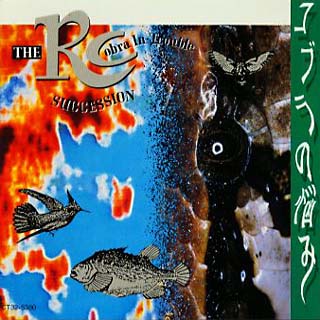
December 16: "Cobra In Trouble" album
Side A
I Shall Be Released
2. freedom of speech
3. call me
4. help
5. world without tomorrow
6. raven baby
Side B
1. frivolous journalist
2. don't make me worry
3. paradise
4. i am electricity
5. i can't even say anything
6. have you heard LOVE ME TENDER? (special short version)
*****
CD Cobra In Trouble
Same as the analog version
Live recording of a show held at Hibiya Open-Air Concert Hall on August 14, 1988.
The show was held in the midst of the "COVERS" release scandal, and included a song that directly blamed "Toshiba," as well as a song about the media frenzy that accompanied the release of "COVERS," which was released by Toshiba EMI.
COVERS" was released on August 15, 1988, the day after the live recording took place. Although there was indeed a great uproar over the cancellation of the release of the album, it seems strange that a live album cannot be discussed without the existence of the pre-release album.
Of the 12 songs on the album, two were studio recordings. Of the 10 live versions, one was composed by Mari Kaneko.
Looking back on those days, Seishiro said, "At the time of the '88 show, I was in the middle of a concert.
When we did the show in 1988, I said that we could bring a casserole recorder to the venue and record as many songs as we wanted. Rather than giving up, they gave up on the music industry itself. They were really boring people. So I lost the feeling that I was making a work of art. My way of thinking has changed. I now have a correct and accurate view. I think it's more harsh than when they were singing "Monkey Business," which is a joke. (So, I wanted to put out a response to all the "Cobra's Trouble," which has been written about in the newspapers. The other members had different opinions. Some said we should sell it by hand (laughs). (Laughs.) There were also those who said we shouldn't sing this much.
I SHALL BE RELEASED
Written and composed by Bob Dylan with Japanese lyrics by Seishiro Imawano.
The original is by THE BAND, but Bob Dylan may be considered the original.
The song, the performance, and the Japanese lyrics are all excellent. It is truly a response from Seishiro to the "COVERS" fiasco. The lyric card describes the song as "The sun will rise again, even on the east island," but Seishiro actually sings "The sun will rise again, even on the east lawn. If I may insert a wild commentary, "east lawn" = "Toshiba".
The clock bell and the sound of the bell at the beginning of the song are taken from the beginning of the song "TIME" by Pink Floyd.
Freedom of Speech" is a song written and composed by Seishiro Imawano.
It is a song from RC's debut album "Early RC Succession" released on February 5, 1972.
The song was released 16 years ago, and rather than being a prophetic song, we should be concerned about the fact that a situation has been brought about that is so consistent with the song's content. The notion that "aren't situations like this universal?" is just too sad.
Call Me" is a song written and composed by Kiyoshiro Imawano.
It is from the album "Marvy" released on February 25, 1988.
The lyrics of "Call Me" are sung by Kiyoshiro Imawano, who also wrote "If I'm alone and bored" and "If I'm alone and safe," respectively, and "If I'm alone and free," respectively. The song "MARVY" is sung in the same way as the song "MARVY", but the song "MARVY" is sung in the same way as the song "MARVY".
The song "HELP! (HELP!)"
(HELP!)" is a song written by Lennon-McCartney with Japanese lyrics by Kiyoshiro Imawano.
The original is "Help!" by The Beatles.
Kiyoshiro's puns can be heard here as well.
The original is "HELP ME", but here it is sung as "HELP US".
EVE OF DESTRUCTION
Written by P.F. Sloan with Japanese lyrics by Tomoya Takaishi and Kiyoshiro Imawano.
The song is briefly interrupted in the middle of the song because the microphone fell off the microphone stand.
The song "Karasu no Baby" was written by Minoru Uminuma.
This song was recorded in the studio, not live.
Just as the recording of "COVERS" was being completed, Seishiro's father passed away. Around the time of his father's first seventh-day, a relative's aunt handed Seishiro a memento of Seishiro's own mother (who died when Seishiro was three years old). Among them was a record that was blown by Seishiro's own mother, and this song was included on it.
Seishiro said.
When my father died, a relative gave me a package that belonged to my birth mother. When my father died, my aunt gave me a package of my birth mother's belongings, and among them was a record of her singing. She wasn't a singer or anything, but she sang 'Karasu no bako' (raven baby) and 'Arirang. I thought, 'My own mother's voice sounded like that.
Seishiro has been singing this song since he went solo. I think it is an important song for him.
He sings the lyrics slightly differently than in the original, but it is unclear whether this was a change by Seishiro or whether his own mother sang it that way.
Minoru Uminuma, who wrote the lyrics and composed the music, is a children's song composer born in 1909. The song "Karasu no Baby" is one of the few songs he wrote and composed, and was made into a record by the Otowa Yurikago Kai after the war and became a big hit.
Other hit songs include "Monkey's Cage" and "Ano Ko ha Tare" before World War II, and "Mikan no Hana Sakaku Oka" after the war.
The song "Karusu na Journalist" was written and composed by Seishiro Imawano.
It is his first published song.
The song is exactly what the title says: "The name represents the body. It is Kiyoshiro's response to the nonsense heroism of the mass media in relation to the "COVERS" album.
It is a heavy blues number, and although the song is monotonous, the content is harsh, ending with the strong statement, "I would rather sleep in that power plant than be subjected to frivolous journalism, than be made to dance around frivolous heroism, rather than be subjected to such a situation.
The lyrics and music for "Don't Let Me Worry You" were written by Imawano Kiyoshiro, who also wrote the song for the first time.
This is also the first song to appear on the album.
At first glance, it seems to be a love song between a man and a woman, but this is clearly not the case.
Kiyoshiro is concerned not only about "you" but also about "us" as well as "our children.
At the end of the song, he sings "Peace to Us," which is the title of a song by John Lennon (Plastic Ono Band).
Paradise" is a song written and composed by Nagao Ishida.
The lead vocalist is Mari Kaneko, and the song was included in her first solo album released in 1983 (titled "GET TO PARADISE").
The lyrics and music were written by Nagao Ishida, a guitarist from Osaka. In 1989, he formed the acoustic guitar duo "BAHO" with Char, which rose to prominence, but he died of esophageal cancer in 2015.
The song "I'M ELECTRIC" was written by B.Nelson with lyrics and music by Reiichi Nakaiido.
It is from the album "Marvy" released on February 25, 1988.
The lead vocalist is Reiichi Nakaiido.
Akekite Mono Monogatari" is a song written and composed by Seishiro Imawano.
It was included in the album "PLEASE" released on December 5, 1980.
Originally, the "Yamashishi" sung here was referring to Shigeru Izumiya, but who (or what) is being targeted this time around?
Have you heard LOVE ME TENDER?" (SPECIAL SHORT VERSION) is a song written and composed by Kiyoshiro Imawano.
It is a studio-recorded song, and as the title suggests, it is only 30 seconds long on this album, but originally it was about 4 minutes and 8 seconds long.
Kiyoshiro said of the song: "That song was written for Toshiba, the mass media, and for the press.
That song is a harangue against Toshiba, the press, and everything else."
He added, "I received complaints from purchasers that the last song was not included all the way through! What if a purchaser complains that the last song is not included? If that's the case, then the whole song should be included! He answered, "In that case, the whole album should be included!
The full version was performed at the Budokan Christmas live on December 25, 1988, the same year that the album was released, and on "Imawano Seishiro no Yoru wo Battobase" broadcast on FM Osaka on December 16, 1988 (the day of the album's release), Seishiro called out to listeners, "Now, are you ready to play the cassette? The full version of the song was broadcasted with Kiyoshiro's call to the listeners, "Now, are you ready for the cassette?
The ironic and sarcastic lyrics of the song, which include the melody of "Love Me Tender," can be heard in places, but unfortunately, it has not been released on CD to this day.
1990
September 5: Single "I LIKE YOU

Related Articles
Summary of Bread of Happiness (film) spoilers and discussion
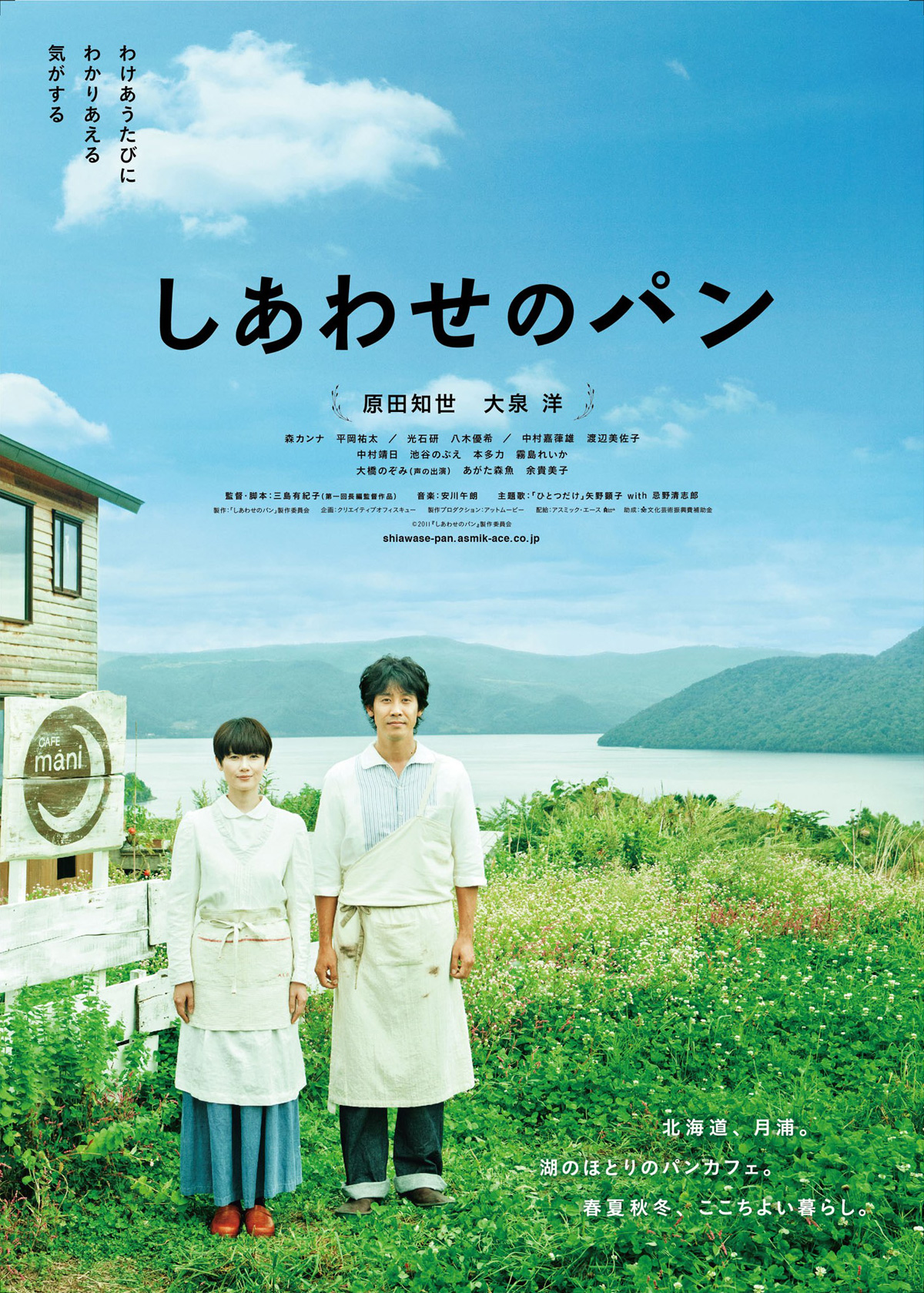
Shiawase no Pan" is a 2012 Japanese human drama film set in Hokkaido. The film was directed and written by Yukiko Mishima, and stars Tomoyo Harada and Yo Oizumi. The film depicts the interaction between Mr. and Mrs. Mizushima, who moved from Tokyo to Hokkaido to run a café, and the customers who visit them. The Mizushima's delicious food and kindness heals the customers, each of whom has their own worries and problems. Rie, the wife with emotional problems, is also healed by the nature of Hokkaido, her husband, and their friends. This is a film in which you can enjoy the beautiful nature of Hokkaido, the unique characters of their friends, the interior design of the restaurant, and the food.
Read Article
Summary of bands and units that changed their names, including RC Succession!
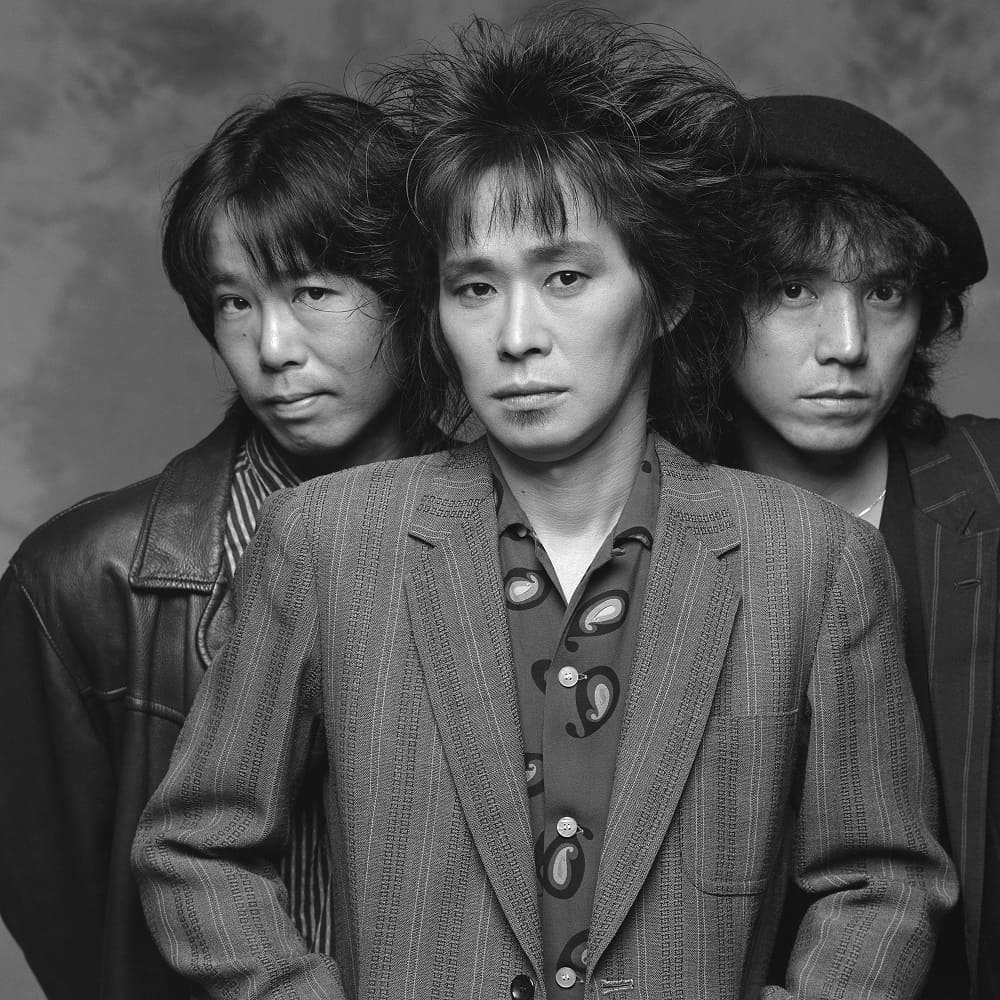
Here is a list of bands and units that changed their names during the course of their activities. RC Succession", of which Kiyoshiro Imawano was a member, was originally called "The Clover". Other bands and units introduced here include "RIP SLYME," which used to be called "Givinibanko.
Read Article
Tags
Contents
- RC Succession Overview
- Members of RC Succession
- Kiyoshiro Imawano
- Kazuo Kobayashi
- Reichi Nakaiido
- Kozo Araida
- Yoshiya Shibata (Yoshiya Shibata: Gee2wo)
- Former member of RC Succession
- Haren Kenchi(1968 - 1977)
- Ginji Ogawa (1979 - 1980)
- Hirofumi Kasuga (1978, 1990 - 1991)
- Brief History of RC Succession
- 1950-1967: On the Eve of Formation
- 1968-1972: From RC formation to debut
- 1973-1979: Dark Ages
- 1980-1984: To the top of the rock world
- 1985-1987: Increased solo activity
- 1988-1990: "COVERS" album, and then the end
- RC Succession Discography
- 1969.
- November 1: "College Pops Concert Live Recording" album
- 1970
- March 5: Single "I Don't Buy Lottery Tickets"
- December 5: Single "Full of Tears
- 1972.
- February 5: Single "Bokuno no Sensei" (My Favorite Teacher)
- February 5: Album "Early RC Succession
- July 5: Single "Kimi kawaii ne
- December 5: Album "On a joyful evening".
- December 20: Single "The Third Most Important Thing"
- 1976
- January 21: Single "Slow Ballad
- April 21: "Single Man" album
- October 11: Single "You'll Understand"
- 1979
- July 21: Single "Step!
- 1980
- January 21: Single "Ameagari no Yozora ni
- May 21: Single "Boss Shikeiteruze
- June 5: Album "RHAPSODY
- October 28: Single "Transistor Radio
- December 5: Album "PLEASE
- 1981
- June 1: "EPLP" album
- November 21: Album "BLUE
- 1982
- March 21: Album "HARD FOLK SUCCESSION
- April 5: Album "Yeahhhhhh.... at Budokan".
- June 23: Single "SUMMER TOUR
- October 25: Album "BEAT POPS
- December 10: Album "The Day of R&B
- December 15: Single "Tsuki ai ai tai tai
- 1983
- June 1: Single "Oh! Baby
- July 5: Album "OK
- November 7: Single "Baby! Run away."
- December 5: Album "The KING of LIVE
- 1984
- July 21: Single "Wonder
- July 21: Album "EPLP-2
- September 21: Album "The LiVE!
- November 23: Album "FEEL SO BAD
- December 21: "Mix & Mix-er" album
- 1985
- April 21: Single "All is ALRIGHT (YA BABY)
- November 21: Album "HEART ACE" (Ace of Hearts)
- December 21: Single "SKY PILOT Sky Pilot
- 1986
- April 23: Album "NAUGHTY BOY
- October 21: Album "the TEARS OF a CLOWN
- 1988
- February 25: Album "MARVY
- March 25: Single "NAUGHTY BOY
- August 15: Single "LOVE ME TENDER
- August 15: Album "COVERS
- December 16: "Cobra In Trouble" album
- 1990
- September 5: Single "I LIKE YOU
- September 27: "Baby a Go Go" album
- 1995
- September 25: Album "SOULMATES
- 2005
- October 26: Album "RHAPSODY NAKED
- 2011
- November 23: Album "singing soul ballads
- 2013
- May 3: Album "Sad Things (Official Bootleg)
- 2015
- December 16: Album "Nipporini Bonus Tracks
- 2016
- February 5: Album "PLEASE ROCK ME OUT at Hibiya Open-Air Concert Hall 1981.5.30 - 5.31
- March 30: Album "SUMMER TOUR'83 SHIBUYA KOKAIDO ~KING OF LIVE COMPLETE~".
- RC Succession's representative song
- I don't buy lottery tickets.
- My Favorite Teacher
- The reason for the cold shoulder is...
- slow ballad
- In the night sky after the rain
- welcome!
- transistor radio
- Nothing but good things can come of it.
- rock 'n' roll show
- 摩蘭坂(tamaoranzaka)
- I want to be .......
- Oh! Baby!
- Booming, loud R&R band
- Baby! Get out of here.
- freedom
- get off your arse (ass)
- Winding road by the sea
- Dedicated to Hippies
- World without Tomorrow
- Summertime Blues - Love Me Tender
- I Like You
- Overflowing hot tears
- RC Succession's backstory, trivia, small stories/episodes, anecdotes
- How Tomokazu Miura made his acting debut
- Outbursts, outbursts, etc.
- The last co-starring
- Dessert is yours.
- Have you listened to Love Me Tender?
- Dissolution of the Company
- leading a group of people singing songs about nuclear power plants