
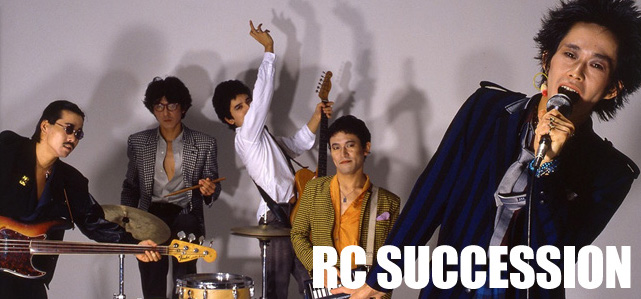
RC Succession is a Japanese rock band that debuted in 1970. Led by vocalist Kiyoshiro Imawano and guitarist Reichi Nakaiido, the band has left behind many masterpieces and classic albums. In 1991, the band went on hiatus and virtually disbanded, and with the death of Imawano on May 2, 2009, the dream of reviving RC Succession was ended forever.
Ginji Ogawa
Date of birth : September 24, 1956
Place of birth :
Real name : Same as above
Nickname :
Assignment : Guitar
Date of death : August 2, 2015
Started playing guitar at age 17; formed "Nezumi Kojo" (later "Bem") at age 18 and "CROSSWIND" at age 19, a band based on the concept of "picture-perfect music"; debuted with "CROSSWIND" in 1978. The following year, in 1979, they released their second album "CROSSWIND 2," but in the meantime, they frequently worked outside of their own band.
In December 1978, he met Reiichi Nakaiido and Kiyoshiro Imawano at a Shimokitazawa Loft when he supported the band "ZONE" with Kozo Araida on drums, and was asked to support RC. Hirofumi Kasuga, guitarist of RC at the time, invited him to join RC in January 1979, and he joined RC in January 1979, playing with his own band "CROSSWIND". Hirofumi Kasuga left RC and went to the U.S. to join Carmen Maki's solo album.
He continued to play with his own band "CROSSWIND" and RC, but he became so busy that he left RC after the recording live of "RHAPSODY" at Kubo Auditorium on April 5, 1980, to concentrate on "CROSSWIND". He had a considerable guitar technique, and he sometimes became a floating presence in RC. It is said that the frustration of not being able to play to his heart's content was one of the reasons he left the band.
In 1984, "CROSSWIND" ceased its activities. After that, he divided his band into three parts: "Ogawa Ginji Band," "the-Orchestra," and "Ogawa Ginji & Inner-WIND. At the same time, he started to create his solo album.
Reunited with Seishiro after a long absence on "Kitano Fan Club," which aired on Fuji Television from February 13, 1991 to March 22, 1996. With their guitars in the background, Takeshi Kitano sang "Ameagari no Yozora ni" and "Slow Ballad" as a replacement song; in 2001, he simultaneously released 12 full-length albums and simultaneously established his own record company, POWER RECORD.
He passed away on August 2, 2015. He was 58 years old, the same age as Seishiro.
I cannot find any news mention of his death on his official website. The website itself appears to have stopped updating, but it also lists an article about his release in 2016. On his profile page, he left this description. It's a little early to die, but you're never too old to play the guitar."
May he rest in peace.
Hirofumi Kasuga (1978, 1990 - 1991)
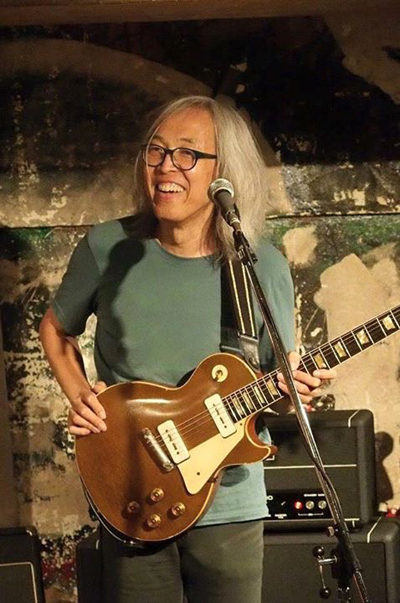
Hirofumi Kasuga
Date of birth : January 25, 1954
Place of birth : Minato Ward, Tokyo
Real name : Same as above
Nickname : Hachi
Charge : Guitar, drums
From 1972 to 1977, he was a member of Carmen Maki & OZ, which he formed with Carmen Maki. He has always held Seishiro in high esteem, and even had him perform in front of his own shows during RC's dark period.
On January 18, 1978, after the breakup of Carmen Maki & OZ, he got drunk and jumped into RC's show at the "Roof Attic" live house. They performed slow ballads and other songs together. The members of RC, who at first did not think much of Kasuga, began to get along well with him. Seishiro was particularly impressed by Kasuga's stage presence and asked him to join RC on the spot. Kasuga officially joins RC as a guitarist on the condition that he changes the drummer.
As per Kasuga's condition, Kozo Araida joined the band, replacing Kotaro Doi, who had been the drummer until then. Around the same time, Kasuga also suggested to Seishiro that he concentrate on vocals.
During this period, Reichi Nakaiido also began to participate in frequent live performances, and Kasuga played a role in RC's electrification. However, he became busy with other work and was unable to attend RC's shows more often. In January 1979, he left RC when he went to the U.S. to participate in Carmen Maki's solo album.
In 1990, when drummer Kozo Araida and keyboardist G2 left the group, he returned to RC, this time as drummer, and also produced "Baby a Go Go," RC's last album.
His other RC-related producing credits include Reichi Nakai's solo album "THE Reichi Nakaiido BOOK" in 1985 and Reichi Nakaiido's solo album "E (Picture)" in 1990. It is said that Kasuga's words and actions while producing these "pictures" were the cause of RC's dissolution. However, he does not admit this.
Brief History of RC Succession
1950-1967: On the Eve of Formation
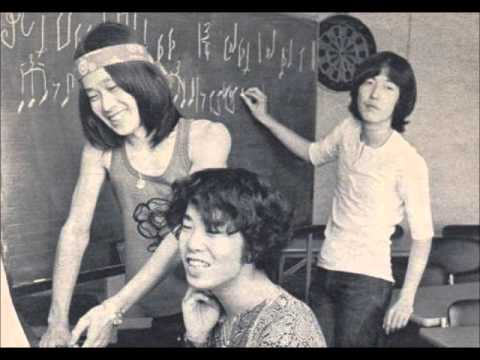
1950
October 9
Hideaki Kato (Reichi Nakaido) is born in Toyama Heights, Shinjuku-ku, Tokyo.
1951
April 2
Kiyoshi Kurihara (Imawano Kiyoshiro) is born in Nakano Ward, Tokyo.
September 19
Kenichi Okeda (Kenichi Baren) is born in Kunitachi City, Tokyo.
December 5
Kazuo Kobayashi is born in Kokubunji City, Tokyo.
●1953
March 25
Kozo Araida was born in Asakusa, Taito-ku, Tokyo.
1954
January 25
Hirofumi Kasuga is born in Minato Ward, Tokyo.
September 17
Yoshiya Shibata is born in Kobe City, Hyogo Prefecture.
●1956
September 24
Ginji Ogawa is born.
1957
Seishiro transfers from a kindergarten in Kodaira to Mifuji Kindergarten in Kokubunji. There he meets Kobayashi, but Kobayashi is soon transferred to a nursery school run by his parents.
1958
April.
Seishiro and Kobayashi enter Kokubunji Daini Elementary School, where they meet again.
Seishiro produces his own manga magazine "Hato" and continues to do so until he graduates from elementary school.
1958
Seishiro begins wearing glasses around this time.
1964
April
Seishiro and Kobayashi enter Kokubunji Daisan Junior High School and both join the mountaineering club.
Seishiro and Kobayashi were the only two who brought climbing knives to the mountain club's training camp.
Kobayashi was athletic and did backflips and big rides on the bars.
●1965
May.
In January of this year, the Ventures made their second visit to Japan, creating an unprecedented electric boom throughout Japan.
Seishiro also took advantage of this electric boom and made his own guitar. However, it was just a guitar made of cut wood and had no sound. Later, he buys his first guitar (a 3,000 yen gut guitar) at Ozaki Music Store in Tachikawa.
Aug.
Seishiro and Kobayashi form "No Names" with Toshikazu Tanaka, who is in the next class. This is the first band for Seishiro and Kobayashi. Tanaka becomes a member because he has a guitar.
Nov.
Ren Hakuen transfers to Kokubunji Daisan Junior High School. He joins "No Names" because of his guitar skills, and the band becomes a four-piece. However, "No Names" breaks up after a few months without performing anything in particular.
1966
June
Seishiro, Kobayashi, and Breaking Bad form "The Clover" to take advantage of the folk boom, covering PPM (Peter, Paul & Marie) and the Kingston Trio. They also played a song called "Okinawa Line," an arrangement of the Ventures' "Pipeline.
At the time, Japan was in the midst of a rapid transition from the electric guitar boom led by the Ventures to a folk boom. One reason for this was the spread of erroneous public opinion that electric guitars encouraged youths to become delinquents. Another reason was that electric guitars required accessories such as amplifiers, while acoustic guitars did not, making them easier to play. The relationship with the student movement that was raging at the time cannot be ignored. Mike Maki's "Roses Are Blooming" and Yoshiko Moriyama's "Sayonara Today" became hits in the same year.
However, The Beatles also came to Japan in 1966, and the group-sounds boom that was influenced by them also began. Radical reforms began in rock music overseas as well, and one can imagine that it was an interesting, if chaotic, time musically. Seishiro and his colleagues must have sensed these trends of the times with their whole bodies.
1967
March 1967
The Clover" disbanded after their performance at the Kokubunji Daisan Junior High School graduation thank-you party. The band disbanded after their graduation from Kokubunji Daisan Junior High School.
At the thank-you party, "The Clover" performed PPM's "Tragic War," "Niji to tomoni mo mo nai ka Koi" and "Puff" among others.
Apr.
The three members went to different high schools.
Seishiro went on to Tokyo Metropolitan Hino High School.
It is well known that one of his classmates was Tomokazu Miura. He and he were together every morning on the bus to Tama Zoological Park.
He also had an art club advisor named Haruo Kobayashi. He was a teacher who "became a painter because he hated studying," and "hated the staff room and always smoked cigarettes alone in the art preparation room. This teacher was the model for RC's first hit song, "My Favorite Teacher.
It was around this time that Seishiro began writing songs.
For a while, he was involved in various bands, playing in The Turtles' "Happy Together" and helping out in a Cream copy band with his classmate Tomokazu Miura.
Kobayashi went on to Tokyo Metropolitan Kitatama High School.
Alumni of the school include Shiro Ishimoda, the voice actor who dubbed "John Connor" in the DVD version of "Terminator 3.
Unfortunately, the school closed in 2013.
For a while after entering high school, he was a member of the light music club. He was doing duets with girls, etc.
Ren Hui went on to Tokyo Metropolitan Fujimori Senior High School.
Among the graduates of the school are Naoki Urasawa, a manga artist who drew "YAWARA!" and "20th Century Boys. Also, the Shogi player "Zenji Hanyu," who won the National Medal of Honor, was also a student at the school, but since he had already become a professional chess player, he did not have enough days of attendance and was forced to transfer to the correspondence course at Tokyo Metropolitan Ueno High School, where he graduated.
1968-1972: From RC formation to debut
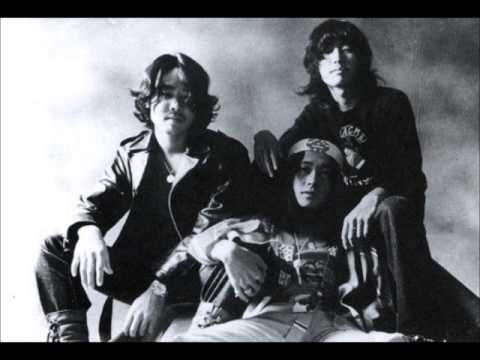
July 1968
July.
Seishiro, Kobayashi, and Seiichi Takeda, two years senior at Kokubunji Daisan Junior High School, formed "The Remainders of The Clover. Since "Remainder of" means "remaining, remainder, remainder," it means "the remnants of The Clover.
At this time, Kobayashi switched from guitar to bass. He purchased a wood bass at Marui in Shinjuku.
He performed original songs such as "Friday's Heavy Snow," "Boku no Me wa Neko no Me" and "Phone is Ringing" at school festivals and at the weddings of his senior acquaintances.
During this period, Daren was working with another band.
October 22.
Performed at the folk cafe "Folk Village". This was the first time he received a fee, but it was only a transportation fee. The band performed covers of "And I Love Her" by The Beatles and "Kaze ni Fukarete" by Bob Dylan, as well as original songs such as "Skinny Woman," "Ame ga Yonte," and "Bright That Girl.
Nov.
The Remainders of The Clover disbanded.
Seiichi Takeda formed "Nipporini" in 1972. In April 1973, he made his debut on Nippon Columbia with the single "Machiboke - Sado wo Koiru Uta" and in 1977, he released his signature song "I-ni-shi-e". Also included in RC's album "MARVY" released on February 25, 1988, is "AN OLD STORY An Uncommon Incident Part 2," a lyrical adaptation of Nichibei's "An Uncommon Incident," with lyrics by Kiyoshiro Imawano and music by Seiichi Takeda.
Nichibutsu "I-ni-ni-shi-e"
Nov.
After the breakup of "The Remainders of The Clover," Seishiro, Kobayashi, and Baren reunite to form "The Remainders of the Clover succession. The word "succession" means "continuity, continuity, continuation," so it means "the continuation of the remnants of The Clover. The Remainders of the Clover" is abbreviated to "R.C.", which becomes "RC Succession". Let's Create It One Day -> Aru Hissakuseisho -> Aru Sakuseisho" is the origin of the name, which Seishiro came up with after the fact because it was too much trouble to explain it.
Seishiro explains the origin of the name. In his explanation, he states that "Seishiro, Kobayashi, and Haren" gathered again three times, but Haren did not participate in the second meeting, and Takeda took his place. It is thought that Seishiro may have misremembered.
Although Seiichi Takeda is no longer a member of "The Remainders of the Clover succession," the B-side of RC's single "Kimi kawaii ne" released on July 5, 1972, "Ano uta wo kawaii nai" (I can't remember that song) was written by Kiyoshiro Imawano and composed by Seiichi Takeda. 2015. When the two Nichibutsu albums "Mundane Event" and "Fruits of Memory" were released on CD, a bonus CD containing a demo of the song was distributed as a special offer for purchasing both albums at the same time. The name of the song is "RC Succession + Seiichi Takeda," which means "Seishiro, Kobayashi, Haren, and Takeda" are all on the same CD.
The song "Ano uta omoidekasenai" was included in the second Kaguyahime's debut album "Hajimete nakatta" (Nice to meet you), and there is a theory that Seishiro went to Kaguyahime to sell the song, but this is a complete falsehood. Takeda said, "When I was in Strawberry Cream (the band Takeda was in at the time), I got to know Yamada Panda (Kaguyahime's bassist), and when he heard me singing this song in Strawberry Cream at the time, he said, 'Can you let us sing it? He heard me singing this song with Strawberry Cream at the time, and asked if he could sing it with us. I think RC was singing it live at the time. So I went to Kiyoshi (Seishiro) and asked him, "Yamada Panda and the others want to sing. He said, 'If Kiyoshi (Takeda) wants to sing it, it's fine,' so they covered it.
Kaguyahime: "I can't remember that song."
1969
In this year, Seishiro skipped high school to see Sam & Dave perform at Shibuya Public Hall on their first visit to Japan.
Since he had no money to buy a ticket, he boarded a tour bus on the condition of carrying luggage and doing chores, and was allowed into the concert hall from the back.
March 3.
Seishiro has a long phone call with his girlfriend at the time, Chiiko, lasting 2 hours and 35 minutes. This later becomes RC's song "2 hours 35 minutes".
April 14
Appears in an audition for the amateur band section of the TBS TV program "Young 720". They perform "Muddy Sea" and pass the audition. The first person to apply for the audition was Daren.
At this time, they met a man named Hitoshi Kaneda, who was one year older than them, and he came forward to be their first manager. He encouraged Seishiro to listen to R&B such as Otis Redding because he felt Seishiro looked black. This was the beginning of Seishiro's commitment to R&B. At this time, Seishiro borrowed R&B and soul records, but these did not belong to Jin Kaneda, but to his younger brother.
In June 1999, he was released on parole. After his sentence expired, he has been working as a bridge between Japan and the Philippines, building schools and a memorial to the war dead of the U.S., Japan, and the Philippines as a form of atonement.
June 8
RC performs "Dorodareta Umi" on the TBS TV program "Young 720. The host is Osamu Kitayama, formerly of The Folk Crusaders, and it is RC's first appearance on TV.
The members of RC started using their stage names around this time. The members began using their stage names: "Imawano Seishiro," "Hayashi Kowasei," and "Kenchi Toren" were the names they used. Seishiro also began using the composer's pen name Kimosawa Fukuichi. The name "Kimosawa Fuukichi" comes from the fact that Seishiro's father mistakenly remembered "Sawada Kenji" as "Kimosawa Fuukichi.
August 21.
Participates in the preliminary round of the "Toshiba College Pops Concert" at Toshiba Studios in Akasaka. He passes the preliminary round and advances to the finals to be held at Shibuya Public Hall.
August 29
Final of "Toshiba College Pops Concert" held at Shibuya Auditorium; RC performs "Dorodarake no Umi", "Takarakuji ha nai buyai", and "Boku no suki na Sensei", and is selected for the third prize. Their first manager, Kaneda, advised them to go pro, and they later signed a contract with Toshiba Onkyo (later Toshiba EMI → EMI Music Japan → UNIVERSAL MUSIC EMI Records Japan).
The performance was recorded on the album "College Pops Concert Live Recording" released on November 1 of the same year. On August 8, 2007, a CD was released in a paper-jacketed limited edition, which is now available in used condition.
November 4
Hisako, Seishiro's mother, wrote a letter to the Asahi Shimbun newspaper's "Personal Advice Corner" on the same day. The following is the content of the letter.
My child, who is now 18 years old, has not been a good sleeper since he was a child, but since he became a senior high school student, he has not woken up on time for school and is often late. We have been told by the teacher that he is not a good student, but he still does not want to fix his behavior. His personality is introverted and he is not very assertive, but he seems to be well-liked by his friends. I was planning to enter an art college after graduating from high school, but recently, I have been saying that I don't want to go there. He also plays the guitar with three of his friends, writes his own lyrics and composes his own music, which he blows onto records, and occasionally performs at a hall here and a broadcasting station there, which seems to have been well received. On days off from school, I sleep all day long. I am afraid that if he keeps repeating this condition, he will be ruined both mentally and physically. I told him that if he does not want to go to college, I want him to leave high school and go to work. We were at a loss as to what was going on. Is it easy to become a professional? How can I make him go to school seriously? (Tokyo, Hiko)"
Submitted by Hisako. From Izumi of Trivia.
*I should probably explain here about Imawano Kiyoshiro's parents.
This "Hisako" is not Kiyoshiro's biological mother. Hisako" is not Kiyoshiro's biological mother, but his mother's name is "Fukiko" and she passed away when Kiyoshiro was 3 years old. She was 33 years old. Hisako" is the older sister of "Tomikiko" and an aunt to Seishiro.
Her first husband was killed in the Battle of Leyte during the Pacific War. Seishiro is the child of Tomikiko's second marriage to Hiroshi Arai.
When "Tomikiko" died, 3-year-old Seishiro was left in the care of "Hisako's" family. Although he lived apart from his biological father, Hiroshi, he came to check on Seishiro from time to time. Also, after Seishiro began his battle with laryngeal cancer, he and "Hiroshi" took a trip to a hot spring together.
Kiyoshiro's foster father, "Hisako"'s husband is "Kohei Kurihara. Hisako's husband was named "Kohei Kurihara," which is where Seishiro's real name, "Kiyoshi Kurihara," comes from. Seishiro was shocked to learn of Kohei's death while working on the radio.
Seishiro, Thoughts on Mother #1
Seishiro, Thoughts on Mother #2
Seishiro, Thoughts on Mother #3
December 24.
Recording of "I Won't Buy a Lottery Ticket" and "Muddy Sea" at Toshiba's studio. Recording director was Kazunaga Nitta, who later became president of Funhouse Co.
Yoshiyuki Okuda, a former freelance producer for Hori Pro, also offered to manage RC. Okuda later became the president of the music agency Ribbon with Yosui Inoue in tow, and was also the person who caused RC to be "hung out to dry. RC also belonged to "Ribbon" but became independent in 1985 after a long struggle.
1970
In this year, Seishiro ran away from home for the first time. He rented a room with a friend, but on the first day he moved in, the landlord was surprised by the sound of his electric guitar, which he played through an amplifier "with a very small sound" and kicked him out.
Tomokazu Miura, who occasionally joined RC and played bongos during this period, gave up making a living from his musical activities when Okuda told him, "You are not suited to be a band member," and chose to become an actor by process of elimination.
March 5
Debuted with the single "Takara-Kuji wa I'm Not Buying a Lottery Ticket".
Apr.
Begins live performances mainly at the live cafe "Blue Forest" in Shibuya. The set list at this time included songs from their first album "Early RC Succession" released on February 5, 1972, as well as songs recorded later, such as "Boku to Ano Musume", "Gift from a Fan", "Darling Machine", "Uwanokora", "Mariko", "Kimi ga Boku wo Kishiteru" and "Oubume". and "Grave" were also included in the album.
December 5
Second single "Nada de Fill Up" is released.
1971
The group signs a contract with HORIPRO. The salary is 30,000 yen.
The manager, Okuda, had originally been an employee of Horipro, but had left the company and gone freelance due to circumstances. He had fallen in love with RC's talent and had been taking care of them, but he was having financial difficulties and came back to Horipro with RC as if he was crying to his old employer.
Around this time, Seishiro met Nakaiido. At the time, Nakaiido was a member of Furuiido, and Furuiido was still a three-piece group. The first time they met was when one of them shared a chocolate in the dressing room. They said to each other, "You gave me those.
Around this time, in addition to the "Blue Forest," they began performing live at the small theater "Shibuya Jianjian.
Apr.
Shigeru Izumiya saw RC for the first time at "Aoi no Mori" and was shocked. Izumiya says of RC at that time, "They were great. Even though it was an acoustic guitar rhythm group, it was rock 'n' roll. The wood bass was thrilling and soulful.
November 5
Shigeru Izumiya's debut album "Shigeru Izumiya's Appearance" is released. Furuiido joins as backing band.
1972
January 25
Furuiido makes his official recording debut on ELEC Records' omnibus album Uta no Ichi-shu (The City of Songs, Vol. 1). The album includes "Hanagatari" and "Daikyuki no Ato no Ato de" (After the Heavy Snow).
On February 5, his first album "Early RC Succession" and third single "Boku no Suki no Sensei" are released simultaneously.
Boku no Suki no Sensei" became their first hit and led to more TV appearances, including regular appearances on TV Kanagawa's "Young Impulse. The "Young Impulse" video was compiled and released on DVD "Live Empire RC Succession 70's" on December 10, 2003.
March 5.
Furuiido's debut album "Furuiido's World" is released on ELEC Records.
May.
Performs with Yosui Inoue as the frontman for the national tour of the Mops.
May 25
FURUIDO's debut single "Sanae-chan" is released and becomes a considerable hit.
Although this was a folk song written by Nakaiido with only a light heart, the song, combined with Nakaiido's looks, created an idol-like image of Furuiido as "cute" and "popular with girls.
When he appeared on Fuji Television's "Live Young! a Fuji Television program at the time, Nakaiido, who was required to sing only "Sanae-chan," said, "I can't sing this kind of song anymore. He sang "I can't sing this song any more," and then ad-libbed his way out of the studio (the program was broadcast live). He originally disliked the host (Kinya Aikawa) and could not stand to be forced to sing the same songs over and over again. He was then banned from the show. At that time, Shigeru Izumiya, who had joined the program as a chorus singer, said to him, "I'm glad for you. I was getting angry too.
Old well "Sanae-chan"

Related Articles
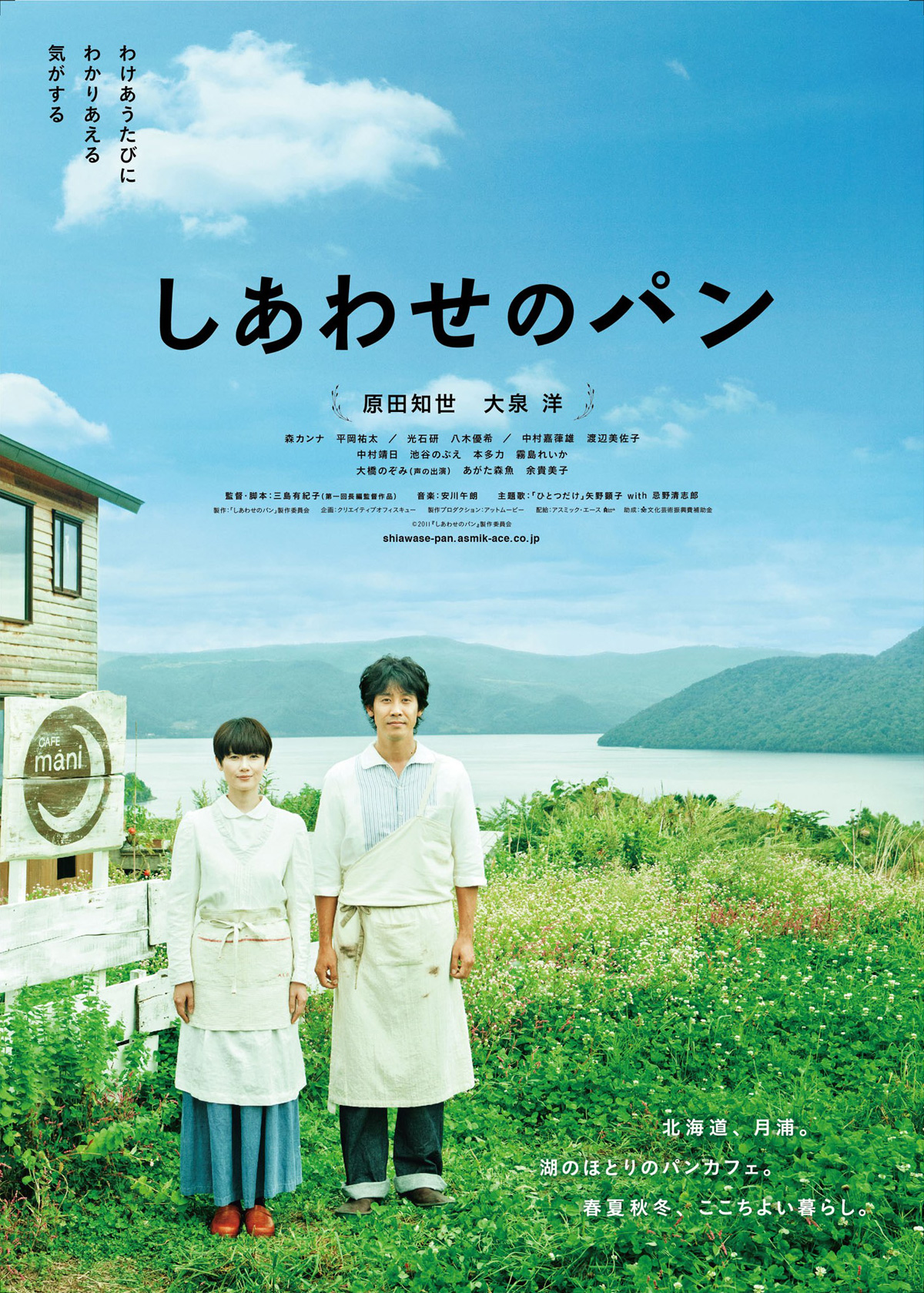
Summary of Bread of Happiness (film) spoilers and discussion
Shiawase no Pan" is a 2012 Japanese human drama film set in Hokkaido. The film was directed and written by Yukiko Mishima, and stars Tomoyo Harada and Yo Oizumi. The film depicts the interaction between Mr. and Mrs. Mizushima, who moved from Tokyo to Hokkaido to run a café, and the customers who visit them. The Mizushima's delicious food and kindness heals the customers, each of whom has their own worries and problems. Rie, the wife with emotional problems, is also healed by the nature of Hokkaido, her husband, and their friends. This is a film in which you can enjoy the beautiful nature of Hokkaido, the unique characters of their friends, the interior design of the restaurant, and the food.
Read Article
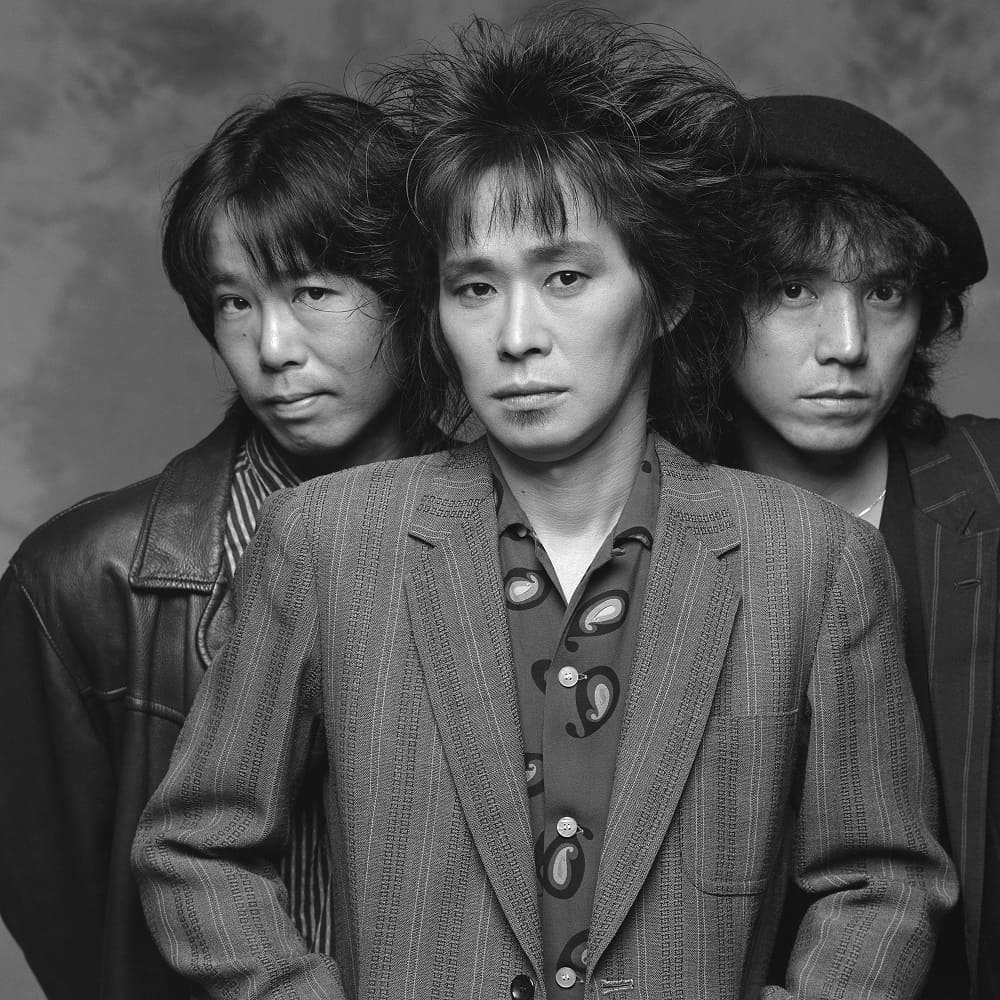
Summary of bands and units that changed their names, including RC Succession!
Here is a list of bands and units that changed their names during the course of their activities. RC Succession", of which Kiyoshiro Imawano was a member, was originally called "The Clover". Other bands and units introduced here include "RIP SLYME," which used to be called "Givinibanko.
Read Article
Tags
Contents
- RC Succession Overview
- Members of RC Succession
- Kiyoshiro Imawano
- Kazuo Kobayashi
- Reichi Nakaiido
- Kozo Araida
- Yoshiya Shibata (Yoshiya Shibata: Gee2wo)
- Former member of RC Succession
- Haren Kenchi(1968 - 1977)
- Ginji Ogawa (1979 - 1980)
- Hirofumi Kasuga (1978, 1990 - 1991)
- Brief History of RC Succession
- 1950-1967: On the Eve of Formation
- 1968-1972: From RC formation to debut
- 1973-1979: Dark Ages
- 1980-1984: To the top of the rock world
- 1985-1987: Increased solo activity
- 1988-1990: "COVERS" album, and then the end
- RC Succession Discography
- 1969.
- November 1: "College Pops Concert Live Recording" album
- 1970
- March 5: Single "I Don't Buy Lottery Tickets"
- December 5: Single "Full of Tears
- 1972.
- February 5: Single "Bokuno no Sensei" (My Favorite Teacher)
- February 5: Album "Early RC Succession
- July 5: Single "Kimi kawaii ne
- December 5: Album "On a joyful evening".
- December 20: Single "The Third Most Important Thing"
- 1976
- January 21: Single "Slow Ballad
- April 21: "Single Man" album
- October 11: Single "You'll Understand"
- 1979
- July 21: Single "Step!
- 1980
- January 21: Single "Ameagari no Yozora ni
- May 21: Single "Boss Shikeiteruze
- June 5: Album "RHAPSODY
- October 28: Single "Transistor Radio
- December 5: Album "PLEASE
- 1981
- June 1: "EPLP" album
- November 21: Album "BLUE
- 1982
- March 21: Album "HARD FOLK SUCCESSION
- April 5: Album "Yeahhhhhh.... at Budokan".
- June 23: Single "SUMMER TOUR
- October 25: Album "BEAT POPS
- December 10: Album "The Day of R&B
- December 15: Single "Tsuki ai ai tai tai
- 1983
- June 1: Single "Oh! Baby
- July 5: Album "OK
- November 7: Single "Baby! Run away."
- December 5: Album "The KING of LIVE
- 1984
- July 21: Single "Wonder
- July 21: Album "EPLP-2
- September 21: Album "The LiVE!
- November 23: Album "FEEL SO BAD
- December 21: "Mix & Mix-er" album
- 1985
- April 21: Single "All is ALRIGHT (YA BABY)
- November 21: Album "HEART ACE" (Ace of Hearts)
- December 21: Single "SKY PILOT Sky Pilot
- 1986
- April 23: Album "NAUGHTY BOY
- October 21: Album "the TEARS OF a CLOWN
- 1988
- February 25: Album "MARVY
- March 25: Single "NAUGHTY BOY
- August 15: Single "LOVE ME TENDER
- August 15: Album "COVERS
- December 16: "Cobra In Trouble" album
- 1990
- September 5: Single "I LIKE YOU
- September 27: "Baby a Go Go" album
- 1995
- September 25: Album "SOULMATES
- 2005
- October 26: Album "RHAPSODY NAKED
- 2011
- November 23: Album "singing soul ballads
- 2013
- May 3: Album "Sad Things (Official Bootleg)
- 2015
- December 16: Album "Nipporini Bonus Tracks
- 2016
- February 5: Album "PLEASE ROCK ME OUT at Hibiya Open-Air Concert Hall 1981.5.30 - 5.31
- March 30: Album "SUMMER TOUR'83 SHIBUYA KOKAIDO ~KING OF LIVE COMPLETE~".
- RC Succession's representative song
- I don't buy lottery tickets.
- My Favorite Teacher
- The reason for the cold shoulder is...
- slow ballad
- In the night sky after the rain
- welcome!
- transistor radio
- Nothing but good things can come of it.
- rock 'n' roll show
- 摩蘭坂(tamaoranzaka)
- I want to be .......
- Oh! Baby!
- Booming, loud R&R band
- Baby! Get out of here.
- freedom
- get off your arse (ass)
- Winding road by the sea
- Dedicated to Hippies
- World without Tomorrow
- Summertime Blues - Love Me Tender
- I Like You
- Overflowing hot tears
- RC Succession's backstory, trivia, small stories/episodes, anecdotes
- How Tomokazu Miura made his acting debut
- Outbursts, outbursts, etc.
- The last co-starring
- Dessert is yours.
- Have you listened to Love Me Tender?
- Dissolution of the Company
- leading a group of people singing songs about nuclear power plants