時をかける少女(アニメ映画) / 時かけ(アニメ映画) / The Girl Who Leapt Through Time (2006 film)

時をかける少女(アニメ映画) / 時かけ(アニメ映画) / The Girl Who Leapt Through Time (2006 film)

The Girl Who Leapt Through Time" is an animated science fiction film based on the novel by Yasutaka Tsutsui, released on July 15, 2006. Directed by Mamoru Hosoda and produced by MADHOUSE. It was Mamoru Hosoda's first feature-length film as a freelance director. The film was treated as a single film at the time of its release, with little publicity, but word of mouth spread after its release, and the number of viewers gradually increased. The film was highly acclaimed, winning numerous awards at film festivals around the world.
The film is not an adaptation of the novel itself, but depicts the world approximately 20 years after the events of the original story. It is a coming-of-age story in which Makoto Konno, the niece of Kazuko Yoshiyama, the protagonist of the original novel, becomes the main character. Makoto is a high school sophomore who has suddenly acquired the power of "time leap," which allows her to travel back in time. He begins to willingly use this power to resolve his everyday frustrations and desires, but there is a limit to the number of times he can time leap. The film depicts the love and friendship of a high school girl who struggles to regain irreplaceable time.
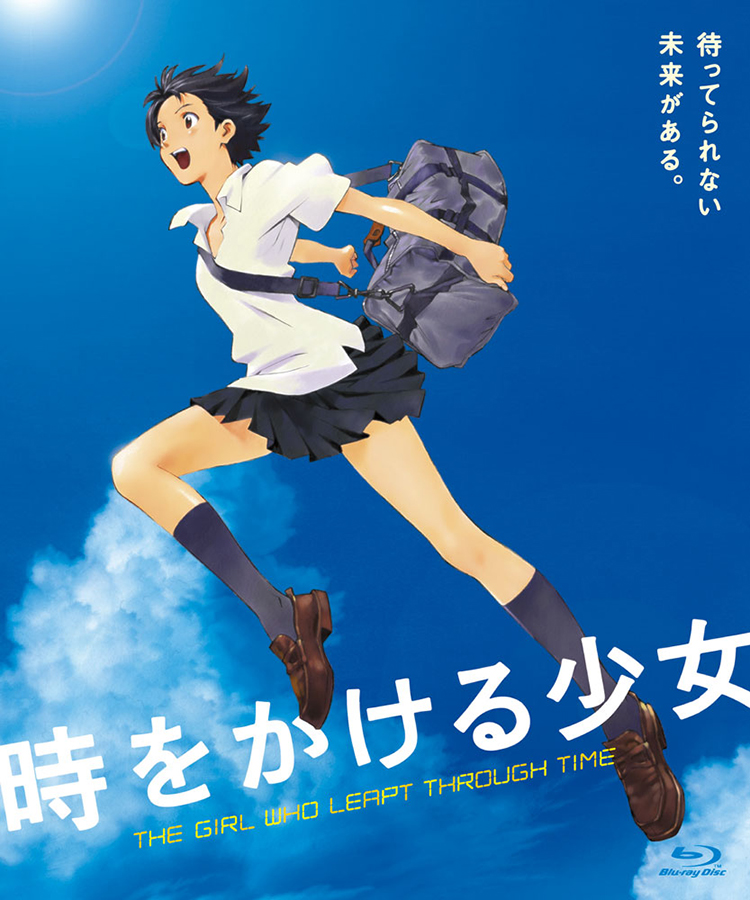
The catchphrase is "We can't wait, there is a future." It has been dramatized for television five times between 1972 and 2016, and is a long-loved work.

Reviews, Ratings and Comments on 時をかける少女(アニメ映画) / 時かけ(アニメ映画) / The Girl Who Leapt Through Time (2006 film)

時をかける少女(アニメ映画) / 時かけ(アニメ映画) / The Girl Who Leapt Through Time (2006 film)
9

What is the real appeal of "The Girl Who Leapt Through Time"?

At first glance, one might think that this is a conventional film about transcending time and space, but that is not the only good thing about this film.
Although it contains science fiction elements, it has a realistic feel to it, and one can relate to it somehow.
The story alone is enjoyable enough, but I think the real charm of this film is that as you watch it several times, you notice the foreshadowing of the story and can enjoy it again and again.
For example, Makoto Konno's aunt (a.k.a. Aunt Witch) in the story is not just a minor character, but is actually the main character in the original "The Girl Who Leapt Through Time.
So I was very surprised when I learned that the young aunt herself was also a time traveler.
In the scene with my aunt, I was convinced that it was because she was such a witch aunt that she was able to give that advice.
In another famous scene at the end, Chiaki says, "I'll be waiting for you in the future," which could be interpreted simply as meaning that Chiaki is waiting for Makoto in the future. There is an interesting aspect to this film that can be discovered by watching it over and over again.
Also, two songs by Oku Hanako, "Garnet" and "Unchanging Things," are used in the film. If you watch the film knowing that these two songs are poems written from Chiaki's and Makoto's point of view, you can deepen your understanding of the film from the music as well, which I also recommend.

時をかける少女(アニメ映画) / 時かけ(アニメ映画) / The Girl Who Leapt Through Time (2006 film)
10

A film that makes you want to cherish your ordinary, everyday life.

Based on a novel by Yoshitaka Tsutsui. The movie is directed by Mamoru Hosoda. There have been many movies about time leap, but I personally think that "The Girl Who Leapt Through Time" is a movie that both children and adults will want to watch again and again.
One day, Makoto Konno, a high school student living an ordinary life, obtains the power to "time leap. She realizes her power when she rides down a hill on her bicycle, the brakes of which have stopped working. She plunged onto the railroad tracks with such force that she would not have been seriously injured. However, I heard the same melody from the clock tower that I had just heard, telling the same time. A father and son, who had just passed by. Makoto then realizes that he is in a time leap. Soaring, she repeats time leaps over and over again to redo the trivial events of her daily life. One day, she oversleeps, the next, she sings karaoke until she gets bored. Finally, he repeats time leaps to make the confession of Chiaki Mamiya, with whom he has always played together, a thing of the past. Makoto spends all her time doing whatever she wants, resetting everything that is inconvenient, and it seems that her life will continue as it is, with no need for redemption. However, he learns that there is a limit to time leaps and that Chiaki Mamiya is "from the future. The film is warm and tearful as Makoto struggles with various issues.

時をかける少女(アニメ映画) / 時かけ(アニメ映画) / The Girl Who Leapt Through Time (2006 film)
8

Differences in Mamoru Hosoda's version of "The Girl Who Leapt Through Time" from the original work

Mamoru Hosoda's 2006 film "The Girl Who Leapt Through Time" has many changes in setting from Yasutaka Tsutsui's original story of the same title.
The original work was published in 1967, and it is only natural that changes should be made to the setting in order to produce a film as a contemporary drama in 2006.
In this article, we would like to discuss the differences between "Tsutsui Yasutaka Shojo" and the original story to find out what the filmmakers were aiming for when they made the film.

The Character of the Boy from the Fat Future
In Mamoru Hosoda's version of "The Girl Who Leapt Through Time," the main character Makoto Konno, his male friend Chiaki Mamiya, and Kosuke Tsuda are the three main characters. In the original story, their names were Kazuko Yoshiyama, Kazuo Fukamachi, and Goro Asakura; in Nobuhiko Obayashi's 1983 version of "The Girl Who Leapt Through Time," the names were the same as in the original story, but it is more natural to change them to match the period setting of the Mamoru Hosoda version, about 40 years after the original story.
Kazuo Fukamachi in the original story and Chiaki Mamiya in Mamoru Hosoda's version are both boys from the future.
Fukamachi is a quiet character with very high academic ability because he came back in time from the 2600s, when the educational environment was more advanced, using a drug he developed through his own experiments. Chiaki, on the other hand, is a mischievous character whose academic ability is not emphasized because she was transported back in time by the power of an item that exists in the future.
The important role of the boy from the future in the story of "The Girl Who Leapt Through Time" is to make the protagonist girl fall in love with him and to create conflict in her heart when he returns to the future. The fact that the original depicts a taciturn, intellectual boy as the object of romance, while Mamoru Hosoda's version depicts an active, mischievous boy as the object of romance, gives a sense of the changes that have occurred in the "image of a boy who can easily become the object of a girl's love" over the course of about 40 years.

◯The frequency of time leaps
The ability to "travel through time," which is also in the title, is called "time leap" in the work.
In the original work, time leaps can be counted on one hand, but in Mamoru Hosoda's version, time leaps are depicted more than 20 times.
Kazuko, the main character in the original work, hates herself for having the special ability of time leap, and uses time leap with her own will at critical junctures where people's lives and deaths are at stake.
Mamoru Hosoda's version of Makoto tended to abuse time leaps for his own little convenience (e.g., getting higher test scores or enjoying karaoke more than once).
By repeatedly depicting time leaps, Mamoru Hosoda's version clearly shows the audience how a small action can change fate.

Summary
The two points discussed in this article were "the character of the boy from the future" and "the number of time leaps".
Of course, there are many other differences from the original.
In the original work, the main theme was the romantic relationship between the main character, Kazuko, and Fukamachi, who returns to the future.
In Mamoru Hosoda's version, the themes were Makoto's inability to see Chiaki back in the future and her growth as she comes to accept the fact that she cannot conveniently change her destiny through time leaps.
The differences from the original version can be said to have been made primarily to effectively depict Makoto's growth.

時をかける少女(アニメ映画) / 時かけ(アニメ映画) / The Girl Who Leapt Through Time (2006 film)
8

I hope you'll be waiting for me in the future.

One of my favorite animated films is "The Girl Who Leapt Through Time.
It is a manga that is separate from the novel "Toki wo Kakeru Shoujo" (The Girl Who Leapt Through Time), but as someone who has checked out both, I was very pleased and amused by the manga's connection to the novel.

The main character is a girl who goes through a time warp, and I learned a lot about friendship and love from this work. One of my favorite characters is Chiaki Mamiya. Chiaki is secretly in love with the main character, Makoto, but at the end of the story, he tells the main character that he is from the future, even though he has to keep it a secret. He has to disappear after that, but the way he leaves her is the most beautiful and sad parting, and it is a famous scene that I will never forget. In the scene where Chiaki Mamiya tells Makoto that he will be waiting for him in the future and leaves, I thought for sure he would kiss her, but instead he whispers in her ear and leaves. I found it very attractive, sad and beautiful, and I will never forget it. I am sure there are viewers who have similar memories. I thought, "Wait for me in the future, too. I don't think there are many animated films that allow viewers to become so immersed in the world, so I thought the director and author were the best in capturing the viewer's heart in an unrealistic way.
I am sure that there are viewers who have similar memories. I thought, "Wait for me in the future, too. I don't think there are many animations that allow viewers to become so deeply absorbed in the world, so I thought the director and author were the best in capturing the viewer's hearts in an unrealistic way.

時をかける少女(アニメ映画) / 時かけ(アニメ映画) / The Girl Who Leapt Through Time (2006 film)
9

An inspirational film! Adults need to see this! It's a movie with a strong message!

Everyone has at one time or another wished they could rewind time. Makoto is a girl who has acquired such a longed-for ability. The way she uses her ability, which is typical of high school students, reminds her of her sweet and sour youth, and for some reason makes her nervous. However, the tragedy that she has invited because of the way she used it. Because of her, her best friend Chiaki is unable to return to the future. Adults must feel that when they were teenagers, they too ran forward without thinking about the future, only to regret it later. Yes, this movie is not an unrealistic story about time, but a movie about teenage love and failure that everyone has experienced. Therefore, at first glance, one might think that this is an animated film for teens, but its actual target audience might be us adults.
As mentioned above, this movie reminds me of my younger days when I used to act without thinking. I feel that this is telling us, as adults, "Let's rush ahead without thinking about the future sometimes! Can such an adult grow up if he/she has become cautious and stopped making mistakes? They will not grow up. Makoto must have grown a lot through his mistakes. Why don't we adults act without second thoughts once in a while? First of all, please watch this movie as if you were fooled. Without second thoughts.