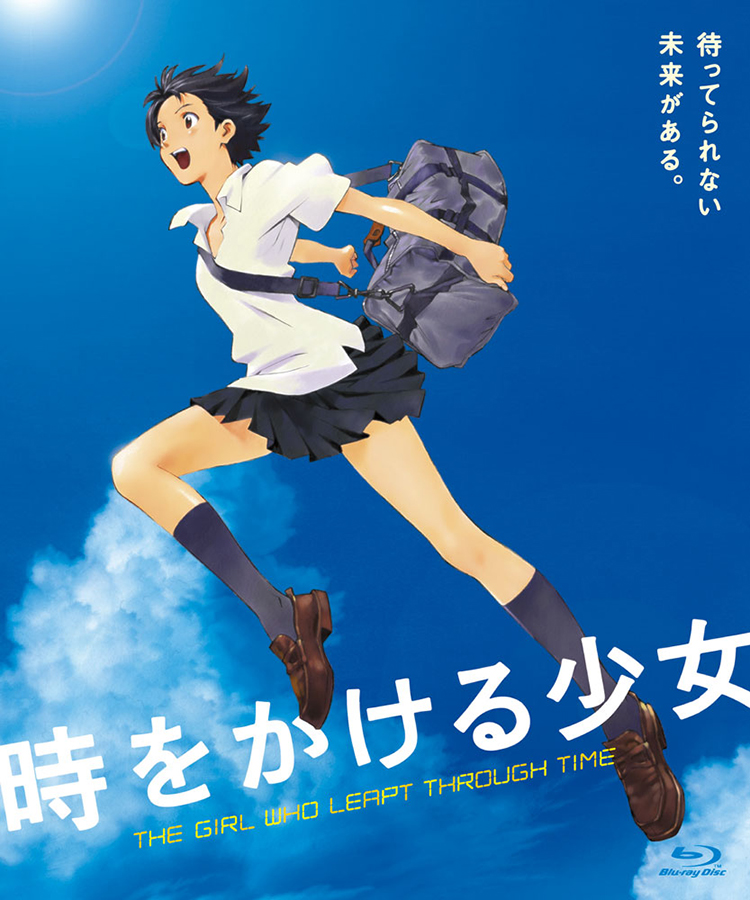
時をかける少女(アニメ映画) / 時かけ(アニメ映画) / The Girl Who Leapt Through Time (2006 film)

時をかける少女(アニメ映画) / 時かけ(アニメ映画) / The Girl Who Leapt Through Time (2006 film)

The Girl Who Leapt Through Time" is an animated science fiction film based on the novel by Yasutaka Tsutsui, released on July 15, 2006. Directed by Mamoru Hosoda and produced by MADHOUSE. It was Mamoru Hosoda's first feature-length film as a freelance director. The film was treated as a single film at the time of its release, with little publicity, but word of mouth spread after its release, and the number of viewers gradually increased. The film was highly acclaimed, winning numerous awards at film festivals around the world.
The film is not an adaptation of the novel itself, but depicts the world approximately 20 years after the events of the original story. It is a coming-of-age story in which Makoto Konno, the niece of Kazuko Yoshiyama, the protagonist of the original novel, becomes the main character. Makoto is a high school sophomore who has suddenly acquired the power of "time leap," which allows her to travel back in time. He begins to willingly use this power to resolve his everyday frustrations and desires, but there is a limit to the number of times he can time leap. The film depicts the love and friendship of a high school girl who struggles to regain irreplaceable time.
The catchphrase is "We can't wait, there is a future." It has been dramatized for television five times between 1972 and 2016, and is a long-loved work.

nico0's Reviews, Ratings and Comments

時をかける少女(アニメ映画) / 時かけ(アニメ映画) / The Girl Who Leapt Through Time (2006 film)
9

What is the real appeal of "The Girl Who Leapt Through Time"?

At first glance, one might think that this is a conventional film about transcending time and space, but that is not the only good thing about this film.
Although it contains science fiction elements, it has a realistic feel to it, and one can relate to it somehow.
The story alone is enjoyable enough, but I think the real charm of this film is that as you watch it several times, you notice the foreshadowing of the story and can enjoy it again and again.
For example, Makoto Konno's aunt (a.k.a. Aunt Witch) in the story is not just a minor character, but is actually the main character in the original "The Girl Who Leapt Through Time.
So I was very surprised when I learned that the young aunt herself was also a time traveler.
In the scene with my aunt, I was convinced that it was because she was such a witch aunt that she was able to give that advice.
In another famous scene at the end, Chiaki says, "I'll be waiting for you in the future," which could be interpreted simply as meaning that Chiaki is waiting for Makoto in the future. There is an interesting aspect to this film that can be discovered by watching it over and over again.
Also, two songs by Oku Hanako, "Garnet" and "Unchanging Things," are used in the film. If you watch the film knowing that these two songs are poems written from Chiaki's and Makoto's point of view, you can deepen your understanding of the film from the music as well, which I also recommend.