ジョゼと虎と魚たち

ジョゼと虎と魚たち

『ジョゼと虎と魚たち』とは、1985年に発表された田辺聖子による恋愛小説、およびそれを原作とするメディアミックス作品。
足が悪いためほとんど外出をしたことがないジョゼこと山村クミ子と、大学生・恒夫の純愛が描かれている。
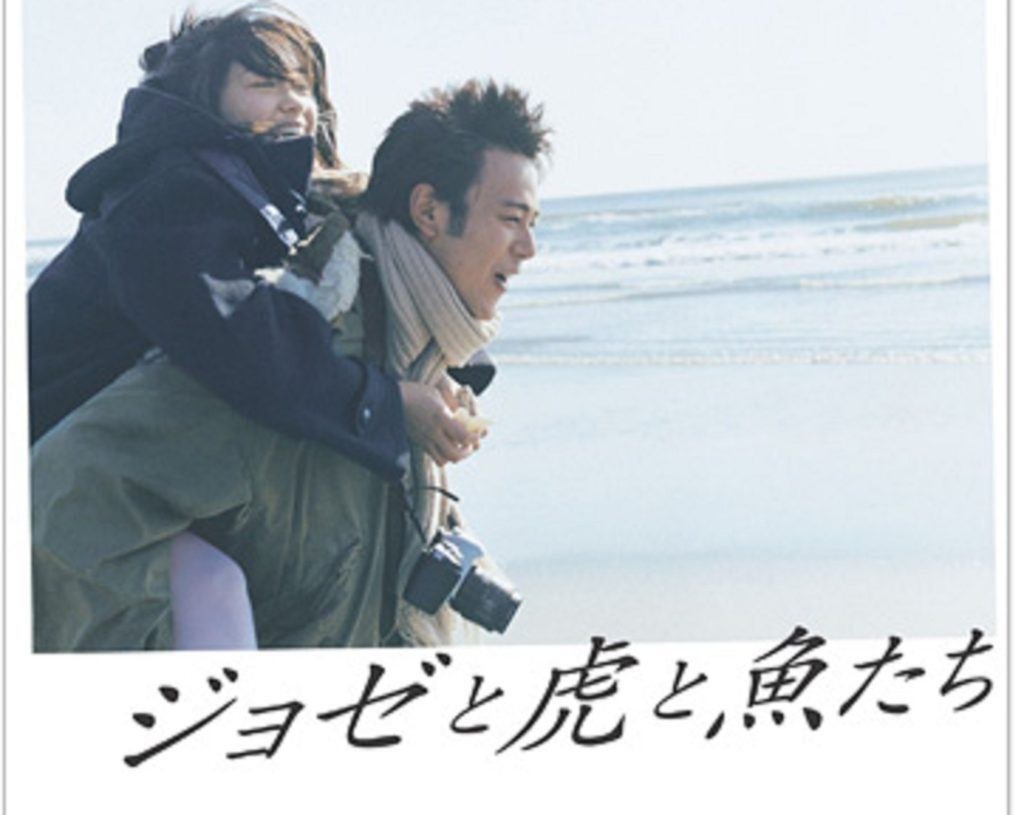
2003年に実写映画化。監督は犬童一心、主演は妻夫木聡と池脇千鶴が務めた。その他、上野樹里、新井浩文、江口のりこなどが出演している。2020年には、韓国にて実写映画がリメイクされた。また、同じく2020年には原作小説を新しく脚色した劇場版アニメが公開されている。

Related Articles on ジョゼと虎と魚たち

Reviews, Ratings and Comments on ジョゼと虎と魚たち

ジョゼと虎と魚たち
10

Animated feature film version of "Josee, the Tiger and the Fish" A romantic success story that will make you laugh, cry and give you courage.

The images, music, and story were all top notch in this animated film. The animation was produced by BONES and concept designed by loundraw, and the beauty of the images was so beautiful that it drew me in. The water droplets in the scene where the two main characters are deepening their friendship at sea are especially impressive! The theme song was sung by Eve, who also sang the OP of "Jutsu Kaisen". Her clear and beautiful voice matched the light and sad worldview so well that I was moved to tears naturally. And what's more, the story is the best. The two main characters have the usual set-up of bickering when they first meet each other, but that is not the only charm of this movie. Many of the characters have "dreams" and their struggle to make them come true is very encouraging to watch. Watching the characters go through various hardships and setbacks in the story makes my heart tighten, but it also made me realize once again that dreams are dreams because you can't give up on them. I also believe that the realistic love story that unfolds throughout the story will touch the hearts of many people. The double lead actors, Daishi Nakagawa and Kaya Kiyohara, were so good at dubbing that it was hard to believe that their main job was acting. I hope many people will see this wonderful film, which strongly encourages those who are pursuing their dreams.

ジョゼと虎と魚たち
9

'Someday you will not love that man. Bernhardt said quietly. And one day I will also stop loving you. We will be alone again. And yet it is all the same. There is only another year gone by" (a passage from Françoise Sagan's "After a Year," quoted in the play).

The story is about Tsuneo, an ordinary college student, and a girl who is eccentric, stubborn, and crippled.
At first, I was sniffing at Tsuneo's insouciance, thinking that the way he is attracted to the free-spirited girl, who calls herself Jose, shows his lightness of footwork in terms of love and sex, and that this is also true for people with disabilities.
But Tsuneo is a straightforward man. He goes to see José because he wants to see him, and he goes because he wants to eat a good meal.
I got the impression that he fell in love with José, who is handicapped, rather than the girl he fell in love with who happens to be handicapped.
Tsuneo is always kind. And a little cunning, too. So Tsuneo "flinches" at the carefree José, and the two choose to part ways.
José, who sees her off without a care in the world, never asked for promises, constraints, or permanence when she was with Tsuneo.
I love you. I love you and what you do.
These words are so poignant, spoken at the time of their first meeting.
José must have been affirming Tsuneo until the moment he left her.

The title is a passage from José's favorite novel.
I think that for the two of them, the way they perceive these words may be diametrically opposed.
Like myself, who is not sure whether I want to condemn or defend Tsuneo for moping around saying, "I ran away."

ジョゼと虎と魚たち
10

Movie Animation Josee, the Tiger and the Fishes

There are two main characters. One is a college boy who wants to see a school of fish he once saw at an ornamental fish store, and dreams of studying abroad at a university where he can study fish. The two met when José's wheelchair was pushed down a hill and she was thrown out of it, but the boy caught her and saved her. After that, they were served dinner at José's house, and the grandmother who was taking care of José offered him a part-time job with a high hourly wage. The part-time job was to do what José said. At first, there was a rift between José and the boy, and he asked him unreasonable questions such as "Count the number of eyes on the tatami mats" and "Go collect four-leaf clovers. Later, when he said, "I want to see the ocean," the boy felt as if he had touched José's heart for the first time, and he tried to make it happen. In the process of going to the ocean, the boy learns about the difficulties of using a wheelchair and the reactions of the people around him. He is also curious because he has not been able to go out freely before, and his ever-changing facial expressions are a highlight of the film. After that, the two become closer at once, and they go out together more often. However, the death of José's grandmother and the boy's decision to go to study in Japan have caused a rift between the two of them. As a last request, the two go to the beach. On the way back, they have an accident and the doctor tells them that the boy has a broken bone and may never dive again. José is also convinced that the accident is his fault. The story ends with the boy's friend getting José back on his feet and José getting the boy back on his feet. This is a work that shows how it feels to pursue a dream, how hard it is to do so, and how important friends are.

ジョゼと虎と魚たち
8

A film that shows the significance of social participation for the physically challenged

In this live-action version, Tsuneo is played by Satoshi Tsumabuki and José by Chizuru Ikewaki. The film was made in 2003, when people were considerably richer and more comfortable than today and there were no social networking services, so the depiction of the public housing in which José lives was somewhat obscene, and the way the college student Tsuneo and his surroundings were also depicted as having a comfortable lifestyle showed how the times had changed.
José and his grandmother live in public housing, but since they live in poverty, they are unaware of the various things that are subsidized by the government, and Tsuneo asks his acquaintances around him to get the government to do things to make their lives easier. This made me think about the size of the information gap regarding public assistance between elderly and disabled households and the rest of the population.
As for José, there have been many changes due to her accidental relationship with Heng Husband, but those who do not have such a relationship are likely to spend their time without knowing much about the public assistance they can naturally receive. People in the welfare and medical fields often talk about normalization, and this film shows why it is so important.
Tsuneo's ex-girlfriend (Juri Ueno) is jealous of José and says some heartless things to him, but without a certain level of equality, he would probably remain indifferent and just a sorry partner. In this light, I understood the significance of various people's participation in society.

ジョゼと虎と魚たち
9

I was impressed by the beauty of the images, and the emotional agility of the characters was well expressed.

Josee, the Tiger and the Fishes" was released in theaters in the winter of 2020. Based on a novel of the same title published in 1985. Tamura Kotaro, assistant director of "Wolf Children: Rain and Snow," is directing "Josée. The film version is set in the present day. The main character Tsuneo is walking down the street one day when he is assaulted by "José," a girl in a wheelchair. It was a steep slope, and José was unable to stop on her own, but thanks to Tsuneo, she was able to stop. Tsuneo then went to the house where José and José's grandmother lived, and gradually he and José grew closer to each other. José had learned from his grandmother that he was afraid of the outside, and he had never been out much, but when he rode the train with Tsuneo, his eyes lit up. They go to the beach, but José's wheelchair gets buried in the sand and falls over. Tsuneo holds José as he crawls along the beach, and they go straight into the ocean. The scene with the splashing water is very beautiful, and it is the very essence of "youth. However, the happy scene does not last long, and one day José's grandmother dies of a heart attack. A welfare commissioner and people from the neighborhood association come to her house to talk with José. José wants to paint, but the neighborhood association members tell him, "A dream is a dream. José decides to become independent and makes a final request to Tsuneo. They visit again to the beach they went to together and talk on the beach. Until now, José's grandmother has been paying Tsuneo an hourly wage, but José tells her that he can no longer pay her. She gets away from Tsuneo and while crossing the crosswalk, her electric wheelchair gets stuck and almost hits a running car. Tsuneo rushes to protect her, but an overspeeding car jumps Tsuneo, and Tsuneo is rushed to the emergency room. Tsuneo's life is not in serious condition, but his leg is broken free, and he is desperate because he had planned to study abroad in March but has to cancel it. José breaks through this situation. She called on the receptionist and a friend of Tsuneo's whom she befriended at the library, drew a story for him, and read it to him and the children at the library. Tsuneo regained hope and was discharged from the hospital just as he was able to walk with crutches after a painful rehabilitation. However, José did not come to pick him up, as he had promised, and his phone calls to José were not answered. Worried, Tsuneo went to José's home as well, but no one was there either. Despite the snowfall, Tsuneo was running around the town with a strong desire to see José, when he met José again, this time rolling down a steep hill just as they had met. Tsuneo was able to recover from his injuries and fulfill his dream of studying abroad, and there was a happy ending. Although I was worried about Tsuneo during the story, it was a very heartwarming and good story.

ジョゼと虎と魚たち
3

film that makes one's heart ache

A rather unusual love story featuring Satoshi Tsumabuki and Chizuru Ikewaki. The first half of the story is about a handicapped girl, but the first half is not tragic, and the strong Osaka dialect is rather hateful. However, the scenes in the second half and the ending are heartbreaking. The tears of a pathetic man and the healthy girlfriend leave a sad aftertaste, just like Mr. Tsumabuki. The end is indigestible, but if you taste it carefully, you will be convinced that it is realistic. I think it is a good work, but it is also a little painful.
I wanted it to have a happy ending.
As for the feelings from the woman's side... too sad.
In the end, the man runs away without balls.

Even an able-bodied person feels this way, so if a handicapped person watches it, he or she will lose the dream.
I knew it...".
I'm just going to do what I have to do, and when I get tired of it, I'll just throw it away....

A movie that was interesting until the middle, but fell apart at the end.
Women want men to be responsible, ballsy, and poised at all times. I don't think the fundamental point is the same today as it was in the past.
It's like the half-hearted man who runs away when he hears he's pregnant. You did what you had to do, didn't you? You did what you had to do, didn't you?

If you can't take responsibility, you shouldn't have been nice to her in the first place.
I wish people would have the kindness to consider the feelings of the physically disabled.