
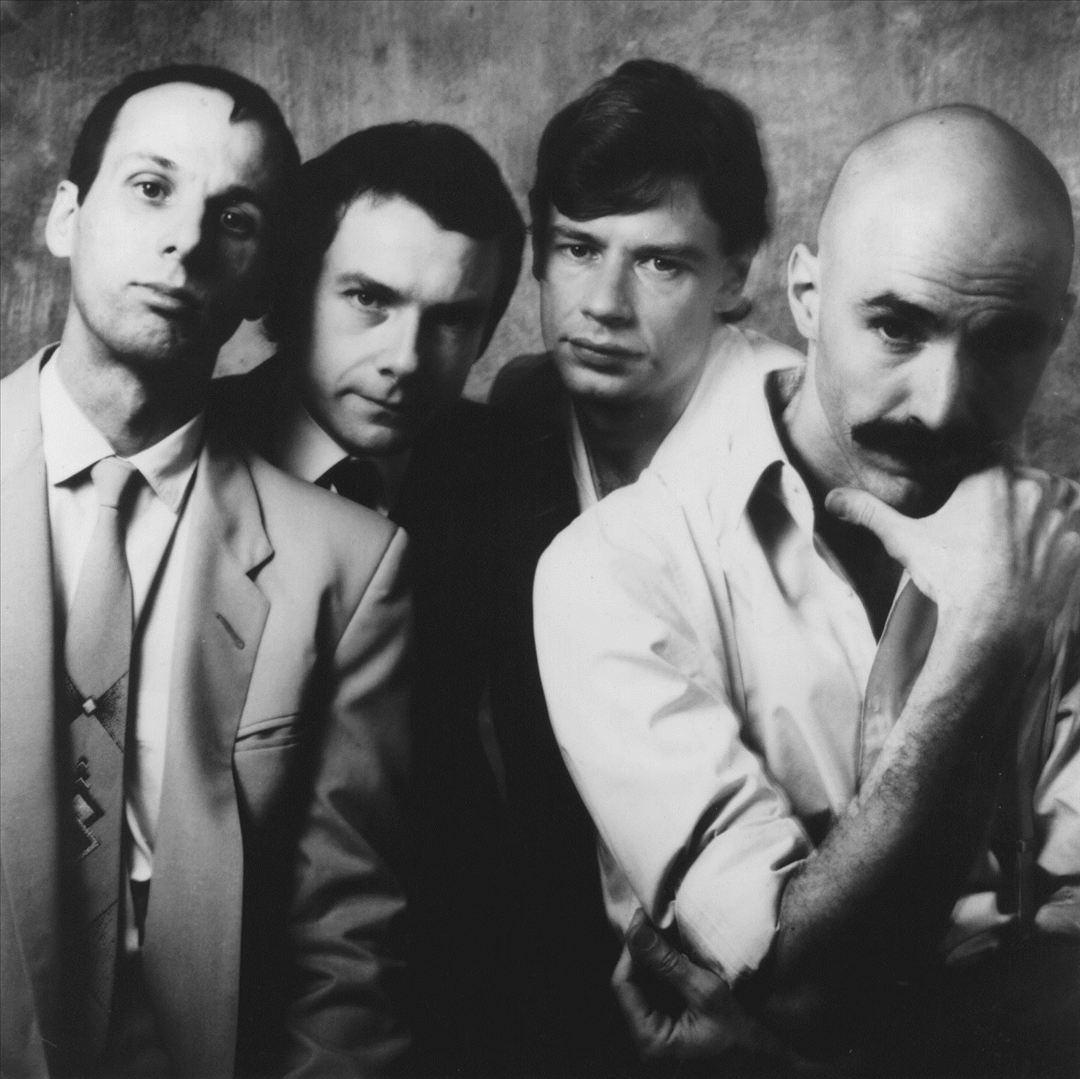
A British progressive rock band group, also one of the five major progressive rock bands, but sometimes categorized as an experimental music genre. The group is also a legendary rock group and has had a profound influence on the music scene for generations to come since its formation in 1968. Although the membership of the group has changed rapidly, Robert Fripp, one of the founders of the group, is the only original member who remains.
However, he has been very active with many artists, and has collaborated and worked with David Bowie, Brian Eno, Peter Gabriel, Daryl Hall, David Byrne (Talking Heads), Andy Summers (The Police), and David Sylvian (Japan), to name just a few. Police), and David Sylvian (Japan), among others. In 2017, he also released a tribute album, "Heroes," in memory of David Bowie.
He was ranked 42nd on Rolling Stone magazine's list of the 100 Greatest Guitarists in 2016.
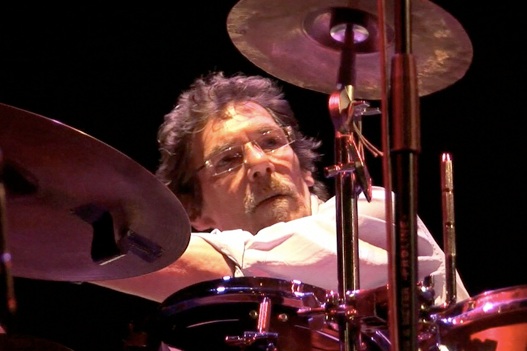
Michael Rex Giles (enrolled in 1969)
Source: megaforce.c.blog.so-net.ne.jp
Born: March 1, 1942 in Hampshire, England Responsibility: Drums
One of the founders and the first drummer of King Crimson, he started playing drums as a teenager and began playing professionally with his brother Peter Giles, bassist, in 1964. After working with several bands, in 1967, he recruited a member who could sing backup vocals and play the organ for Peter to start his own band, where he met Robert Fripp.
After the release of "In The Court Of The Crimson King" in 1969, he left the group due to differences of opinion with Fripp. Since then, he has worked as a session musician with Roger Glover, Anthony Phillips, and Bryan Ferry, among others.
He was ranked #49 on Rolling Stone magazine's 2012 list of the 100 Greatest Drummers.
Greg Lake (enrolled 1969-1970)
Source: img.barks.jp
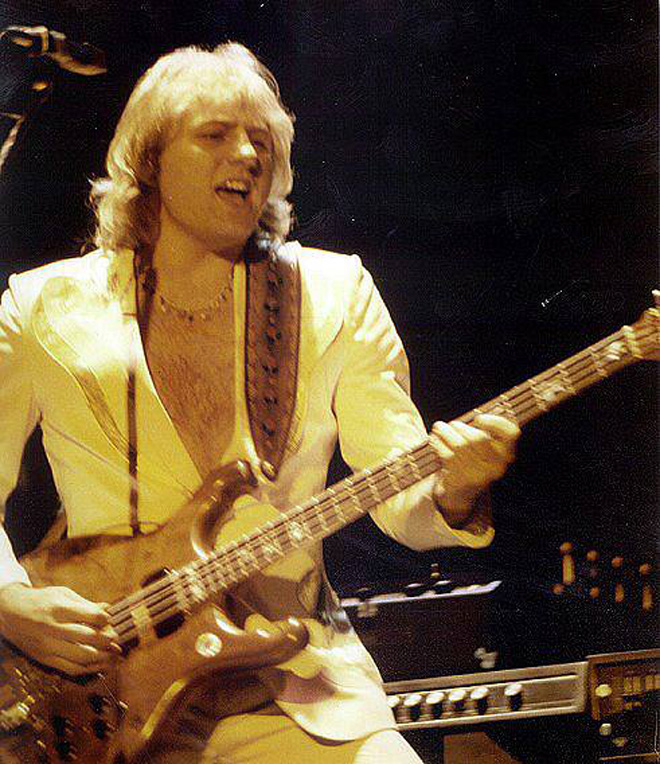
November 10, 1947 - December 7, 2016 Born in Dorset, England Responsibilities: bass, vocals
A founding member of King Crimson and founder of Emerson, Lake & Palmer ("ELP"), Flip was born in Dorset, England, on November 11, 1947.
He has been involved in music since he was a child and began playing bass in his teens. 1968, Fripp invited him to join King Crimson, and in 1970, while recording their second album "In The Wake Of Poseidon", he was invited to join Keith Emerson to form ELP, He left the group.
He then became the bassist of ELP.
Passed away in December 2016 due to cancer.
John Kenneth Wetton (with the company from 1973 to 1975)
Source: amassing2.sakura.ne.jp
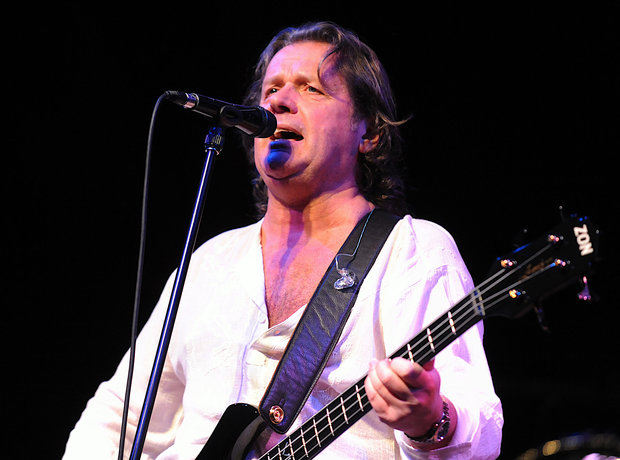
June 12, 1949 - January 31, 2017 Born in Derby, England Responsibilities: bass, vocals
Joined the group from the album "Larks' Tongues in Aspic" through "Red". His technical bass playing was highly acclaimed, which led him to play in many well-known bands such as Asia and U.K., in addition to King Crimson.
In his later years, he became increasingly ill and underwent heart bypass surgery in 2006.
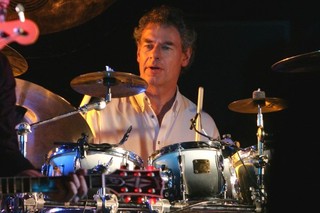
Bill Bruford, William Scott Bruford (with the company from 1972-1997)
Source: blogimg.goo.ne.jp
Born: May 17, 1949, Kent, England Responsibility: Drums
A legendary drummer who has played with King Crimson, Yes, Genesis, and many other progressive rock bands.
He has loved jazz since he was a child and used to play along with jazz records using a toothbrush as a stick.
His notable career began when he joined Yes in 1968. Although he was with King Crimson for more than 20 years, he often joined other bands in between as the group broke up and reformed repeatedly, especially U.K., which he formed with John Wetton and was hailed as a super band at the time. When King Crimson broke up for the second time in 1974, he was introduced by Phil Collins as the drummer for Genesis.
His style of playing is not extremely fast, but rather very advanced and solid, with a precise and unmatched ability to play complex modulated rhythms, the so-called polyrhythms. This is very similar to Fripp's guitar playing style, which is said to be one of the reasons why Fripp has accepted him as a member for many years.
Since leaving the band in 1997, he has distanced himself from the rock music scene and is exclusively active in the contemporary jazz genre.
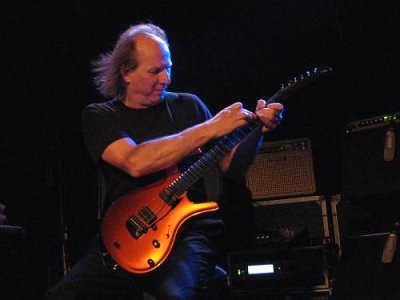
Adrian Belew (with the company from 1981-2008)
Source: cdn-ak.f.st-hatena.com
Born December 23, 1949 in Kentucky, USA Responsibility: Guitar, Vocals
From an early age, he loved jazz, and the first instrument he took up was drums. However, he began playing guitar when he was hospitalized with an incurable disease called mononucleosis leukocytoclasticus.
After leaving the hospital, he aspired to become a professional musician. The turning point came in 1977, when he was playing as a member of a local band in a club in Nashville and was recognized by Frank Zappa, who invited him to an audition. After successfully passing the audition, he became a member of the Frank Zappa Band.
In 1979, Brian Eno was impressed by his live performance with the Zappa Band, and David Bowie was looking for a guitarist for his band at that time, but Eno persuaded him to join the band.
He remained with David Bowie until 1980. Later, through Eno's introduction, he met Robert Fripp. At the time, Fripp was planning to start a new band called "Disciple," and he invited him to join King Crimson as a guitarist.
He has an orthodox but solid guitar technique, but his specialty is playing sound effects using a variety of effectors, and on "Elephant Talk," the first track on the album "Discipline," he reproduced the sound of a statue using effectors.
He also sings lead vocals in King Crimson. He sings with a mellow, extended voice.
He is said to have effectively left the group after its 2008 breakup and did not respond to a 2015 reunion.
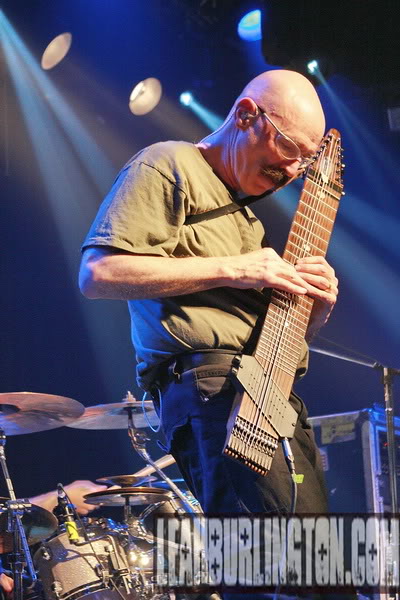
Tony Levin (with us 1981-1984, 1994-1997, 2003-2008, 2015-present)
Source: i47.photobucket.com
Born on June 6, 1946 in Massachusetts, U.S.A. Charge: Bass
Born in Massachusetts, U.S.A., on June 6, 1946, he has been playing classical music since childhood, and started playing double bass at age 10.
While attending the Eastman School of Music, he met Steve Gadd, a jazz drummer, and switched to jazz and fusion.
He began his career as a professional musician in the 1970s, but initially worked as a studio musician, participating in the creation of albums by Paul Simon and Lennon & Yoko.
In 1977, he left Genesis and joined Peter Gabriel's band, with whom he has been working since he began his solo career.
He joined King Crimson in 1981. At the time, Gabriel introduced him to Fripp, who was looking for a bassist for Disciple. Since then, he has left the group several times, including when the group disbanded.
He plays not only electric bass, but also double bass, Chapman stick, cello, and many other instruments. His sound is characterized by its wide range and versatility, and his ability to adapt to a wide variety of genres has made him a favorite of Fripp and Gabriel.
Main Albums
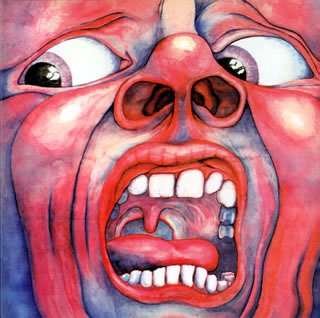
In The Court Of The Crimson King
Source: ec1.images-amazon.com
21st Century Schizoid Man including Mirrors
2. i Talk to the Wind
3. Epitaph
a. March for No Reason
b. Tomorrow and Tomorrow
4. Moonchild
a. The Dream
b. The Illusion
5. the Court of the Crimson King
a. The Return of the Fire Witch
b. The Dance of the Puppets
King Crimson's first album, released in 1969. It reached #5 in the UK charts.
King Crimson will be accused by some of being arrogant. But such criticism is really unfair. They have combined elements of all musical styles to create a surreal work of energy and originality. John Morthland of Rolling Stone magazine said of the album at the time: "Before this album, the underground scene had been a big part of the music scene.
Before this album, there had been a template for progressive rock as psychedelic music in the underground scene. Just as Pink Floyd and other experimental groups were beginning to emerge, the impact of this album, which brought elements of jazz and classical music into the rock world against the bluesy trend that dominated British rock in the 1960s, was huge, The impact of this album led to the creation of a new type of music called progressive rock.
It is also famous for its eye-catching liner jacket. The painting, said to be a self-portrait by British artist Barry Godber, is an all too apt representation of the album.
The group's name "King Crimson" was taken from the name of this album.

Tags
Contents
- King Crimson(キング・クリムゾン)の概要
- Band History
- Since its formation in 1969
- 1970-1972
- 1973-1974
- New Wave period in the 1980s
- Double trio period (1994-2000)
- Devotion to nouveau metal (2001-2008)
- 2011-.
- ダブルカルテット編成と結成50周年(2017年~2020年)
- ツアーの終焉とプロジェクトの今後(2021年~)
- Main Members
- Robert Fripp
- Michael Rex Giles (enrolled in 1969)
- Greg Lake (enrolled 1969-1970)
- John Kenneth Wetton (with the company from 1973 to 1975)
- Bill Bruford, William Scott Bruford (with the company from 1972-1997)
- Adrian Belew (with the company from 1981-2008)
- Tony Levin (with us 1981-1984, 1994-1997, 2003-2008, 2015-present)
- Main Albums
- In The Court Of The Crimson King
- In The Wake Of Poseidon
- 『リザード』(Lizard)
- 『アイランズ』(Islands)
- Larks' Tongues in Aspic
- 『暗黒の世界』(Starless and Bible Black)
- Red
- Disciprin
- 『ビート』 (Beat)
- 『スリー・オブ・ア・パーフェクト・ペアー』(Three of a Perfect Pair)
- Thrak
- 『ザ・コンストラクション・オブ・ライト』(The ConstruKction of Light)
- 『ザ・パワー・トゥ・ビリーヴ』(The Power to Believe)
- King Crimson's signature song
- Epitaph
- In The Wake Of Poseidon
- Larks' Tongues In Aspic Part Two
- Elephant Talk
- Frame by Frame
- King Crimson Episodes and Anecdotes
- college days
- Commitment to Guitar
- Do you like Japan?