
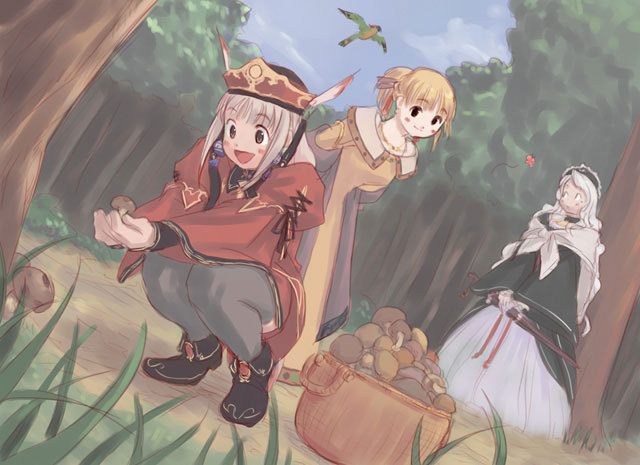
Released by Gust in 2002 for the PlayStation 2. It is the fourth title in the "Atelier series".
It is set in the time line after the previous title "Lily's Atelier: The Alchemist of Saarburg 3," and there are several connections with the "Saarburg series.
A remake with new elements was released later in 2010.
Yudie, who flew to the future due to an alchemy failure, is on a quest in Gramnath to return to his original world.
Outline of "Yudhi's Atelier - The Alchemist of Gramnath
In this work, the main character "Yudie" has been sent to the world 200 years later due to a failure in the preparation of a formula, and he must use his own energy and alchemy to obtain the "dragon's hourglass," an item that transcends time to the original era, repay the "debt" he owes in advance for transcending time, and return safely to the original era. The goal is to return safely to the original time period.
The player repeatedly learns new things in a strange land, finds a new place to live, searches for materials, accomplishes town requests, obtains money, and creates new concoctions.
After paying off his debt and building the dragon's hourglass, he is able to return to his original world.
At that time, Yudie chooses whether to "return to the original world" or "continue living in this world," and the ending changes according to the result.
In later remakes, there is a separate ending with the new character "Sphere. However, because of the special ending, it is not clear whether or not Yudie returns to his original world, and the ending can be said to be halfway through the game.
The story of "Yudhi's Atelier - The Alchemist of Gramnath
Yudit Fortune (a.k.a. Yudie), who lives in the village of Leif, famous for its alchemy, runs a store with his parrot buddy Fink, where their main product is a "dragon's hourglass" that can stop time when used.
One day, he was mixing a large quantity of dragon's hourglasses at the request of a customer, but he was so busy that he did not notice his own hair falling into the mixing pot and started mixing, which caused the mixing to fail and the pot exploded.
Yudie thought it was a common mistake, but when the smoke from the explosion cleared, the area around him was so shattered that it was hard to believe that it had been caused by an explosion.
Curious, Yudi went outside, but there was no Life Village around his house. At a loss, Yudie is visited by a young loan shark named "Vitos.
Yudy asks Vitos about Life Village, but Vitos does not know about it. He tells Yudy that the village existed 200 years ago, and Yudy learns that he has slipped back in time to 200 years in the future due to a mixing error.
Again at a loss, Vitos rents him an inn as a base and offers him a job where he can use his alchemy. Yudie is grateful, but Vitus is a loan shark and he is saddled with a large debt.
Although he is dissatisfied with the amount of the debt, he ends up accepting the loan, and together with Fink, who travels back in time with him, they struggle to repay the debt and find a way to return to the original time period.
With the help of many people he meets, he succeeds in making the "Dragon's Hourglass," an item that will enable him to repay his debt and return to his own time.
In order to return home, Yudie arrives at a mysterious magic circle deep in the scholarly city of Vern.
There, as Yudie uses the dragon's hourglass to return home, his friend "Rastel," who believed that Yudie had come through the ages and helped him, rushes to his aid. Yudhi says thank you and goodbye to Rastel, and returns to his own time period, leaving behind the finished dragon's hourglass and disappearing.
After returning to his own time, Eudy succeeds in creating a large amount of the dragon's hourglass that caused time to pass, and his days go on as usual.
Rastel was reading a book while staring at the remaining dragon hourglass. The author of the book was "Judith Fortune. Through the book, Rastel learns of his friend's timeless record and achievements, and the story comes to an end.
system
field
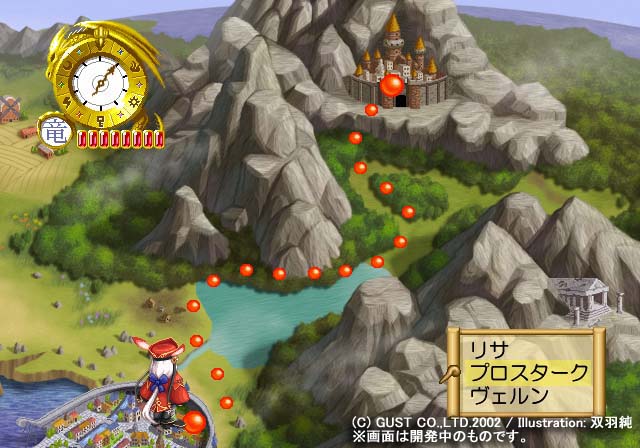
Dots on the field become city roads, allowing you to move to the next destination. New destinations are indicated by asking people or breaking through dungeons.
The number of days advances as you move along the road. In addition, you may encounter "monsters," "merchants," and other happenings while moving along the city streets.
Some of the things that Yudhi makes assist in moving along the city streets, and by creating them, it is possible to reduce the number of days spent traveling.
dungeon map
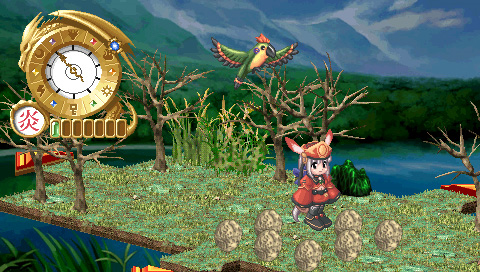
In the past "Saalburg" series, when obtaining materials in dungeons, players had to obtain items in batches as they moved around. In this work, however, dungeon floors exist, and players can directly pick up materials that have fallen, making it easier to distinguish them from unwanted items.
To move to the next floor, one can go to the doorway with an arrow pointing to the next floor.
There are gimmicks on the floor, such as "obstacles that can be destroyed by bombs" and "steps that are impossible to progress," and the player must decide how to proceed with the search.
Enemies basically appear when moving from one floor to another. There are also boss monsters on some dungeon floors.
battle
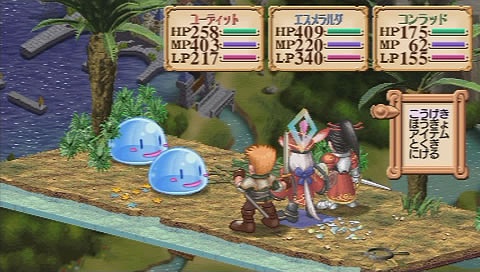
Enemies and allies are placed in "3 x 3" squares for combat. The number of squares that can be attacked changes depending on the technique used, and the size of the enemy affects appearance restrictions and other factors.
The game is turn-based, and victory is achieved when all enemies are eliminated.
Units have "HP," "MP," and "LP," and if one of them reaches zero, the unit is disabled. Excessive use of combat skills will reduce the value of MPLP, and even a weak attack may result in the loss of a combatant, so combat skills must be used with consideration.
mixing
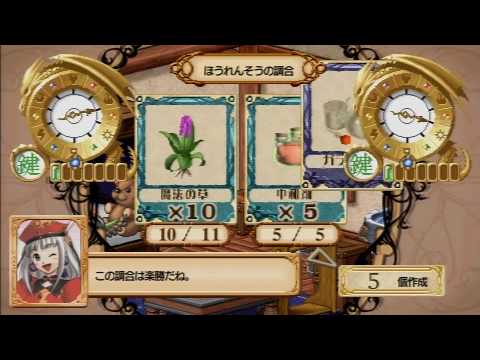
Alchemical items are created at the base's workshop.
The item to be created is selected, and the corresponding materials are chosen to start the creation process.
There is a success rate for the creation of the item, and if it fails, the completed item will be turned into "industrial waste. When creating an item, Yudie will tell you the approximate success rate.
The number of days elapsed will vary depending on the item being created. It is also possible to create items in batches, and the number of days elapsed will vary depending on the item created and the number of items created.
Effectiveness and Quality
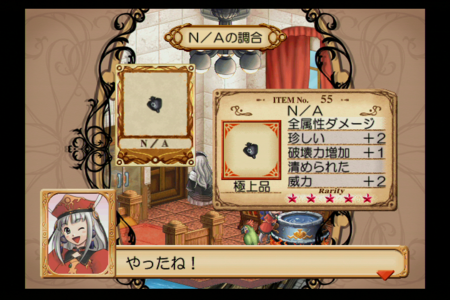
In this work, every item has a "basic potency," "dependent potency," and "quality.
Basic potency" refers to the effect of each item (in the image, "all attribute damage") when the item is used, and some items have effects that change depending on the ingredients used to mix them.
Dependent potency" is an effect inherited from the material (in the image, "rare +2," "increased destructive power +1," "purified," "power +2"), which affects the basic potency when the item is used. The effect is selected from the effects contained in the selected material used for the preparation. Some effects cannot be inherited.
Quality" is the performance of the item (in the image, the item is "very high quality"), and the effect of the item increases or decreases depending on the quality of the item. Quality is the ability to create items of good quality by using materials of good quality as ingredients.
Some items (such as raw items) decrease in quality with use and the passage of time, while others (fermented items) increase in quality with the passage of time. When the quality reaches 0, the item becomes "broken.
Hours.
The past "Saalburg" series had a time limit, and the ending changed depending on how the player spent the time before the deadline, but this title does not have a time limit. Therefore, the ending will not be reached until the conditions are completed, and it will be possible to continue working on the project.
The days are used as a guide for events such as town festivals, and events occur when the player moves to the corresponding location at a predetermined date and time.
location
Yudhi does not have a base of operations because he has traveled through time. Therefore, he rents an inn in town and turns it into his "base (workshop).
Since the location of the base is rented, it is possible to move the base to another town. When moving, the current location must be vacated and the base rented in the new town. The base can be moved as many times as you want, as long as you have enough money.
In this work, there are facilities in each town to help Yudhi. In the blacksmith town of Prostark, there is a "blast furnace," and in the farming town of Lissa, there are "fields" that can be used in each town.
Since these facilities are specific to each town, they are not available in every town. Therefore, it is important to use them as a guideline for establishing a base of operations.

Related Articles

In-depth summary of the main characters of the Atelier series
The "Atelier series" is a series of RPG games based on the theme of "alchemy. The publisher is Koei Tecmo Games' Gust (formerly Gust Co., Ltd.). The series is called the "Atelier series" because the word "Atelier" appears in the names of most of the titles. Most of the main characters are girls, and their names are often included in the XX part of the title, "XX's Atelier.
Read Article
Lily's Atelier - The Alchemist of Saarburg 3 (A3) Spoilers and Discussion Summary
Lily's Atelier: The Alchemist of Saarburg 3" is the third title in the Atelier series of RPG games for the PlayStation 2 from Gust. It is set in a time before the first game, "Marie's Atelier: The Alchemist of Saarburg". The main character Lily and her friends come to Saarburg from the continent of El Vador to spread alchemy. They aim to complete the academy by exhibiting their alchemical creations at the annual "exhibition" held at the castle to gain recognition and funds.
Read Article
Spoiler commentary and discussion of Elie's Atelier - The Alchemist of Saarburg 2 (A2)
Elie's Atelier: The Alchemist of Saarburg 2 (A2)" is a sequel to "Marie's Atelier: The Alchemist of Saarburg", an RPG game for the PlayStation released by Gust. A girl named Elfir, who was wandering between life and death after contracting an infectious disease, was saved by a woman named Marlone, who was on a journey as an alchemist. Elfir, who survived, admired Marlone and entered a prestigious alchemy academy in Saarburg to become an alchemist herself.
Read Article
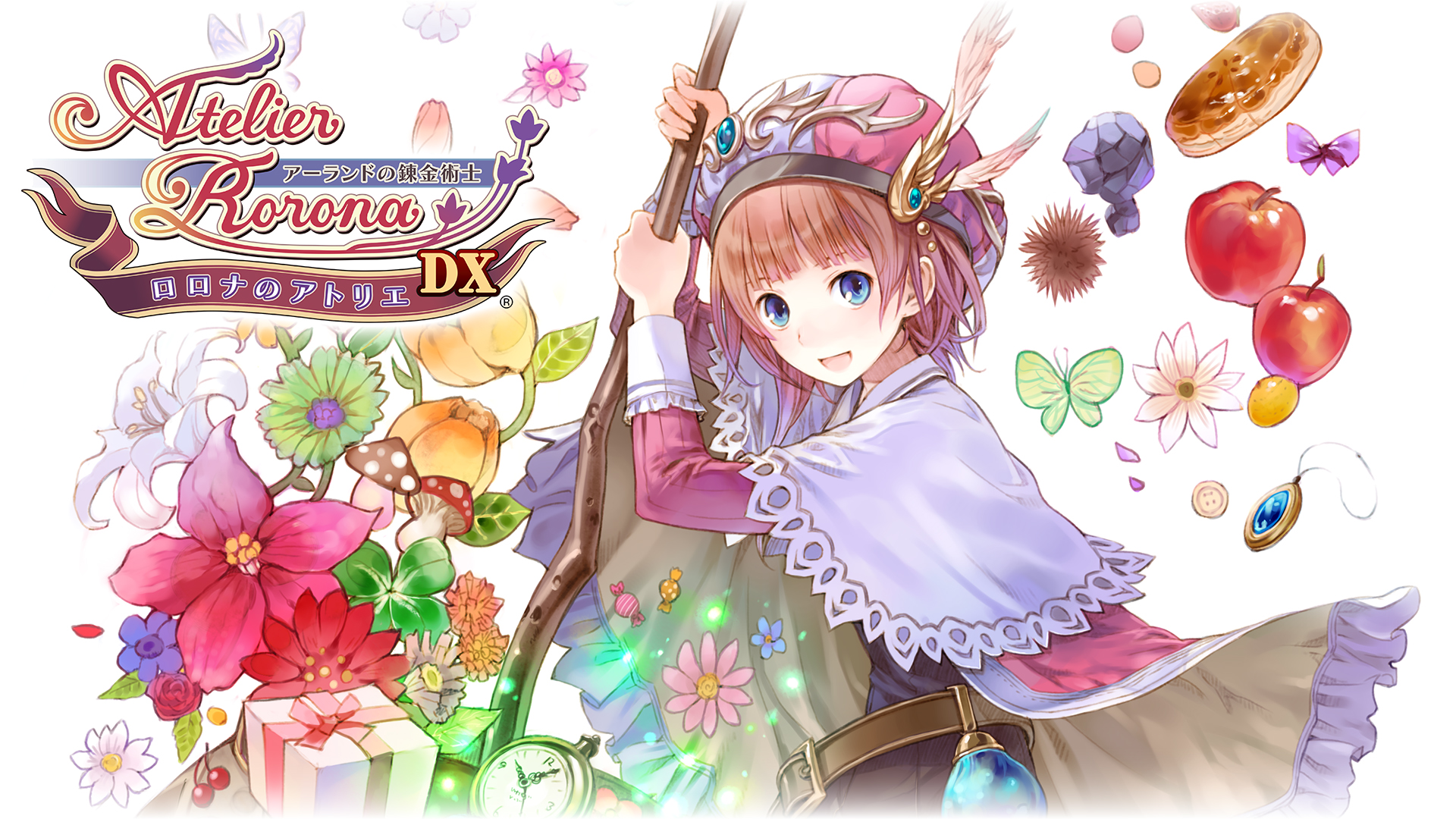
Spoiler commentary and discussion of Rorona's Atelier - The Alchemist of Arland (A11)
Rorona's Atelier: The Alchemist of Arland" is the 11th title in the Atelier series of RPG games for the PlayStation 3 from Gust. Later remakes were made and a DX version was released as a set with the sequel. A girl named Rorona lives with her master in the Atelier of Alchemy in a corner of the Kingdom of Arland. One day, a knight comes from the castle and tells her that if she does not continue to fulfill the tasks given by the castle for three years, the atelier will be torn down. Rorona becomes the owner of the atelier as a new alchemist and faces the three-year task to protect the atelier.
Read Article
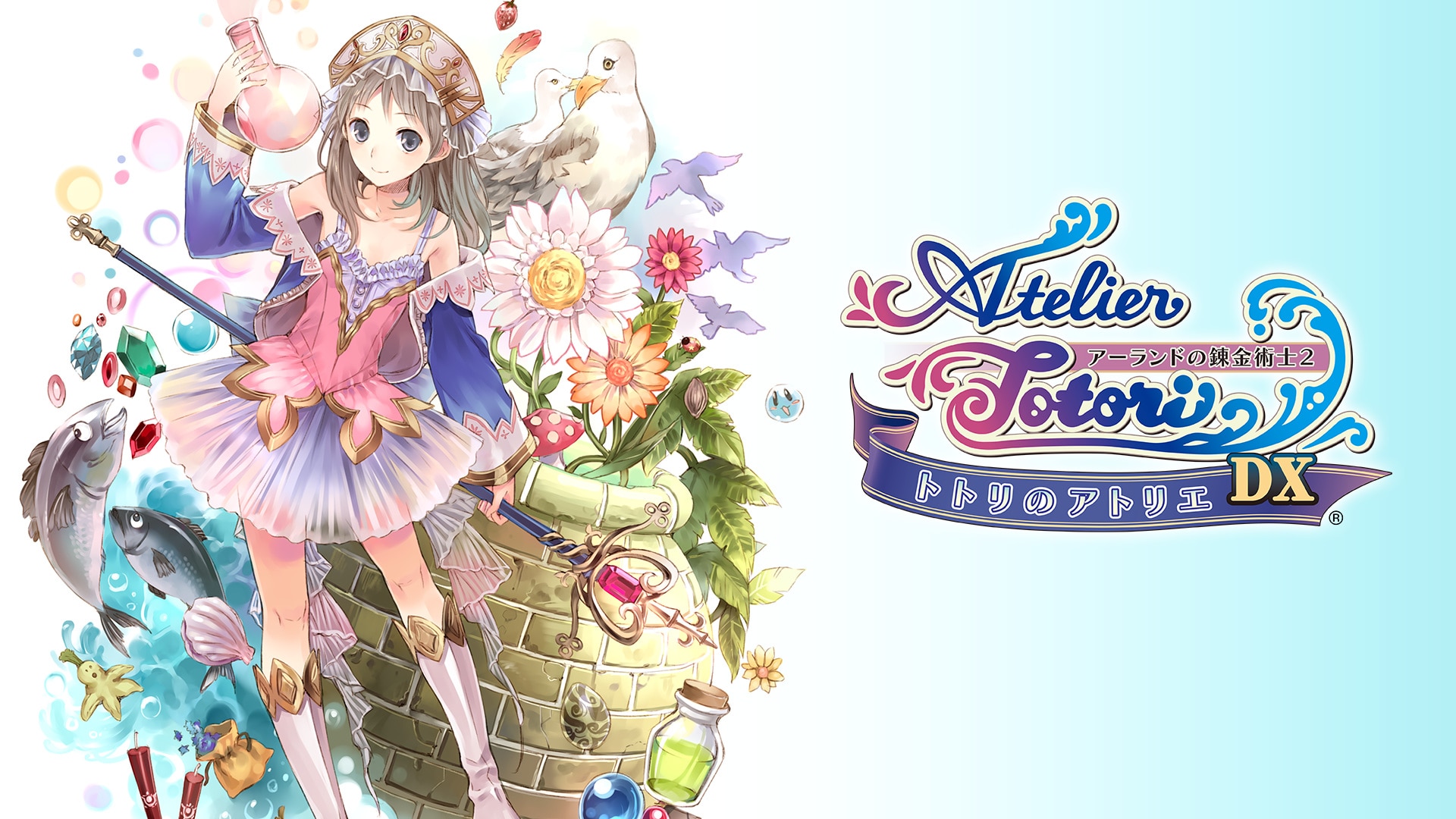
Spoiler commentary and discussion of Totori no Atelier - Alchemist of Arland 2 (A12)
Totori no Atelier -The Alchemist of Arland 2 (A12)" is a sequel to "Rorona no Atelier -The Alchemist of Arland", an RPG game for the PlayStation 3 released by Gust. In a small fishing village called Aranya in the Republic of Arland, there lives a girl named Totori, who is Rorona's apprentice. Totori decides to become an adventurer in order to follow in the footsteps of her mother, who went on an adventure when she was a child and has since disappeared. Totori's adventure begins as she dreams of being reunited with her mother.
Read Article
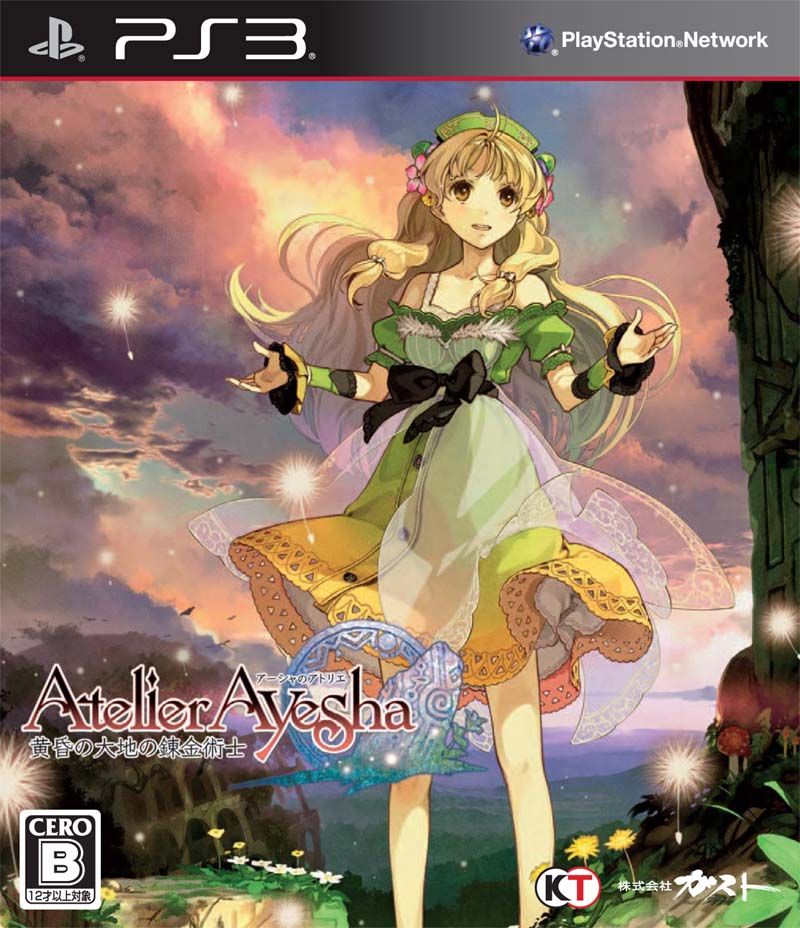
Asha's Atelier - The Alchemist of the Twilight Zone (A14) Spoilers and Discussion Summary
Asha's Atelier: The Alchemist of Dusk (A14)" is a PlayStation 3 software developed by Gust (now Koei Tecmo Games) and is the 14th title in the Atelier series of alchemy-themed RPGs. Like the previous titles in the series, the story is based on a cheerful style, but the story takes place in the twilight age, when alchemy, once a flourishing art, has fallen into disuse. The story is about Asha, a young pharmacist girl who learns alchemy and searches for her missing sister in a dying world.
Read Article

Marie's Atelier - The Alchemist of Saarburg (A1) Spoilers and Discussion Summary
Marie's Atelier: The Alchemist of Saarburg (A1)" is an RPG game for the PlayStation released by Gust. The game was later ported to various consoles, including the Sega Saturn version with additional events and endings. The main character, Marlone, was studying at an academy to become an alchemist, but his grades were not good enough to graduate. The academy then issued a graduation exam: "Run an alchemy store in town, create a high-level item, and submit it to the academy. Marlone is to take the 5-year graduation exam while running the store.
Read Article
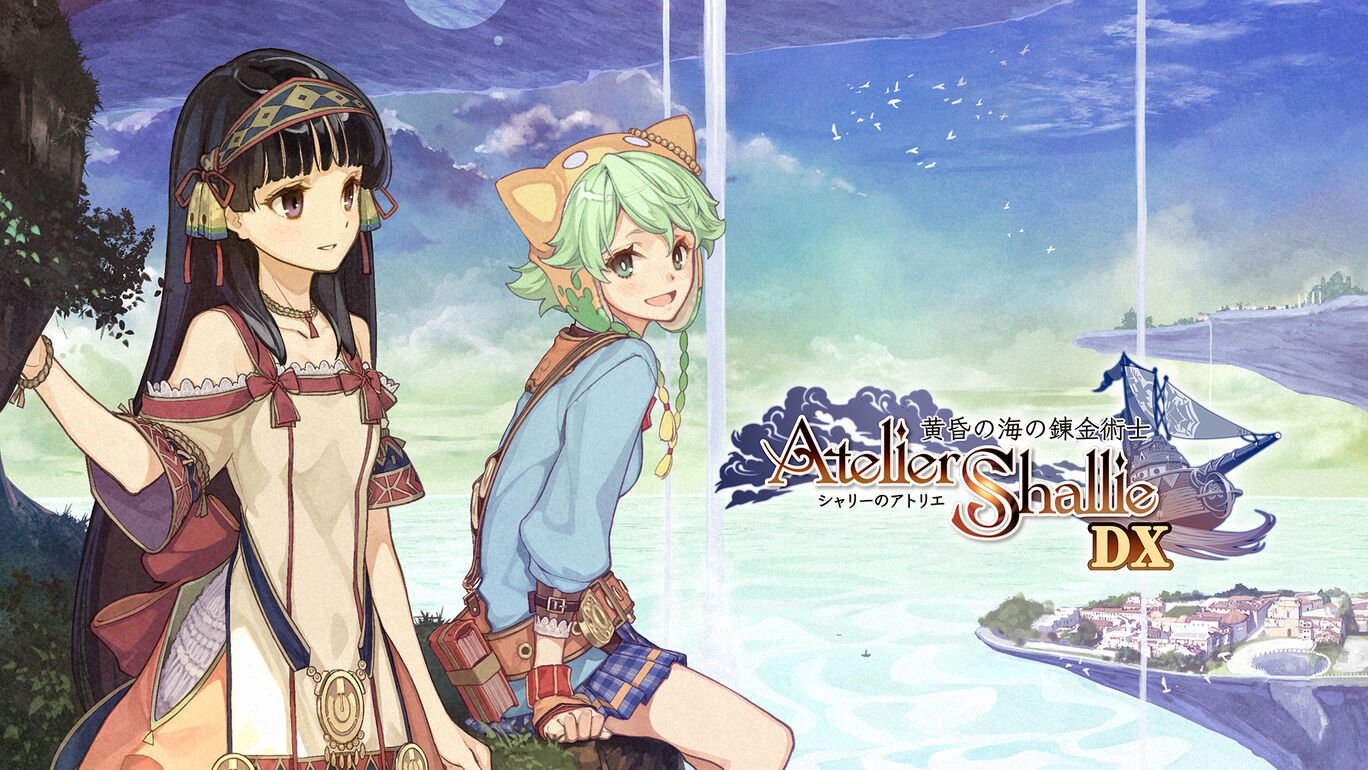
Spoiler commentary and discussion of Shari's Atelier - The Alchemist of the Twilight Sea (A16)
Shari no Atelier: Alchemist of the Dusk Sea (A16) is the 16th title in the Atelier series of alchemy-themed RPGs developed by Gust. Gust was later known as Koei Tecmo Games. It is also the third and final installment of the "Twilight Series" and was released in 2014 for the PlayStation 3. The main characters in this work are the two Charlies "Charistella" and "Charlotte," and the story unfolds from different perspectives, as in the previous "Atelier of Esca and Logie."
Read Article
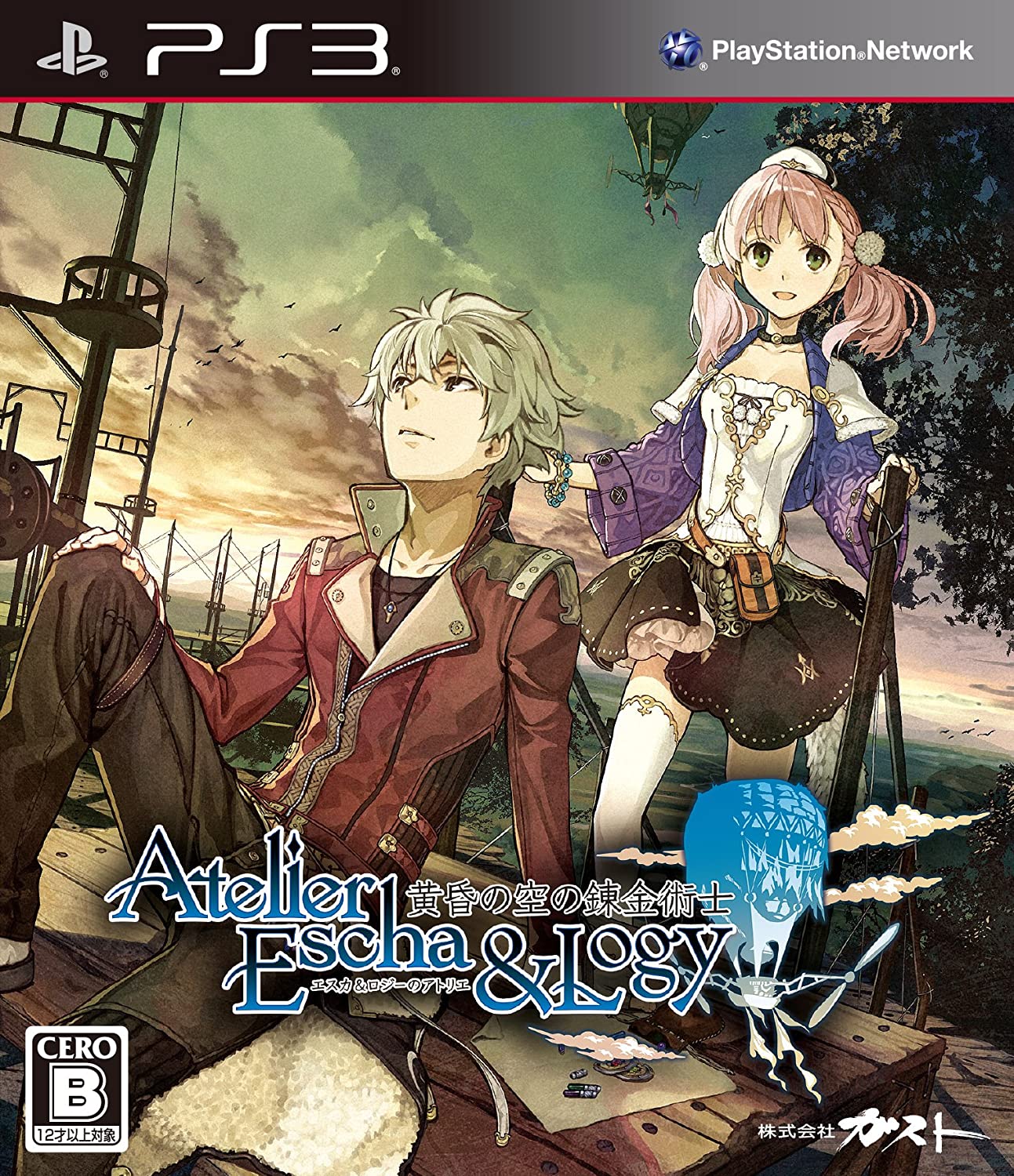
Spoiler commentary and discussion of Eska & Rosie's Atelier - The Alchemist of the Dusk Sky (A15)
Esca & Logy: Atelier of the Dusk Sky (A15)" is the 15th title in the alchemy-themed RPG "Atelier series" developed by Gust (later Koei Tecmo Games) for the PlayStation 3, and the second installment in the "Dusk Series". The main characters in this title are two alchemists, a young girl named "Esca" and a young man named "Rosie," and the story is told from different perspectives depending on the protagonist chosen.
Read Article
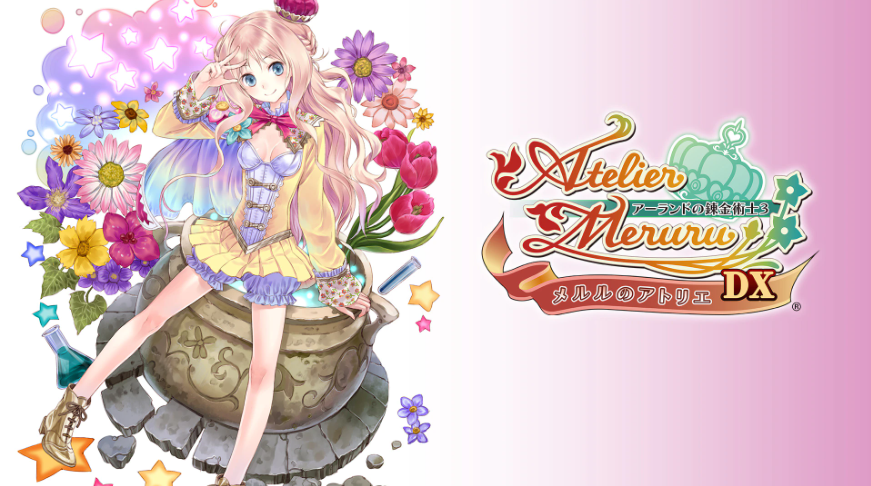
Spoiler commentary and discussion of Meruru's Atelier - Alchemist of Arland 3 (A13)
Meruru's Atelier: The Alchemist of Arland 3 (A13)" is a sequel to "Totori no Atelier: The Alchemist of Arland 2", an RPG game for the PlayStation 3 released by Gust. Meruru, the princess of the small frontier kingdom of Arles, apprentices herself to Totori, an alchemist sent from the Republic of Arland. Overcoming her parents' opposition, Merle learns alchemy and struggles to improve the kingdom's national interests and pioneering projects. This is the story of how the Earls grows up to be a great company by the time it fully merges with the Republic of Arland five years later.
Read Article
Spoiler commentary and discussion of Violato's Atelier - The Alchemist of Gramnath 2 (A5)
Released on June 26, 2003 by Gust Inc. for the PlayStation 2. This is the fifth title in the "Atelier series," an RPG in which players grow through the use of alchemy. The story takes place in "Gramnath", a world about 25 years after the previous title "Yudie's Atelier: The Alchemist of Gramnath". In order to be recognized by his parents, Violato uses alchemy to revitalize his village.
Read Article
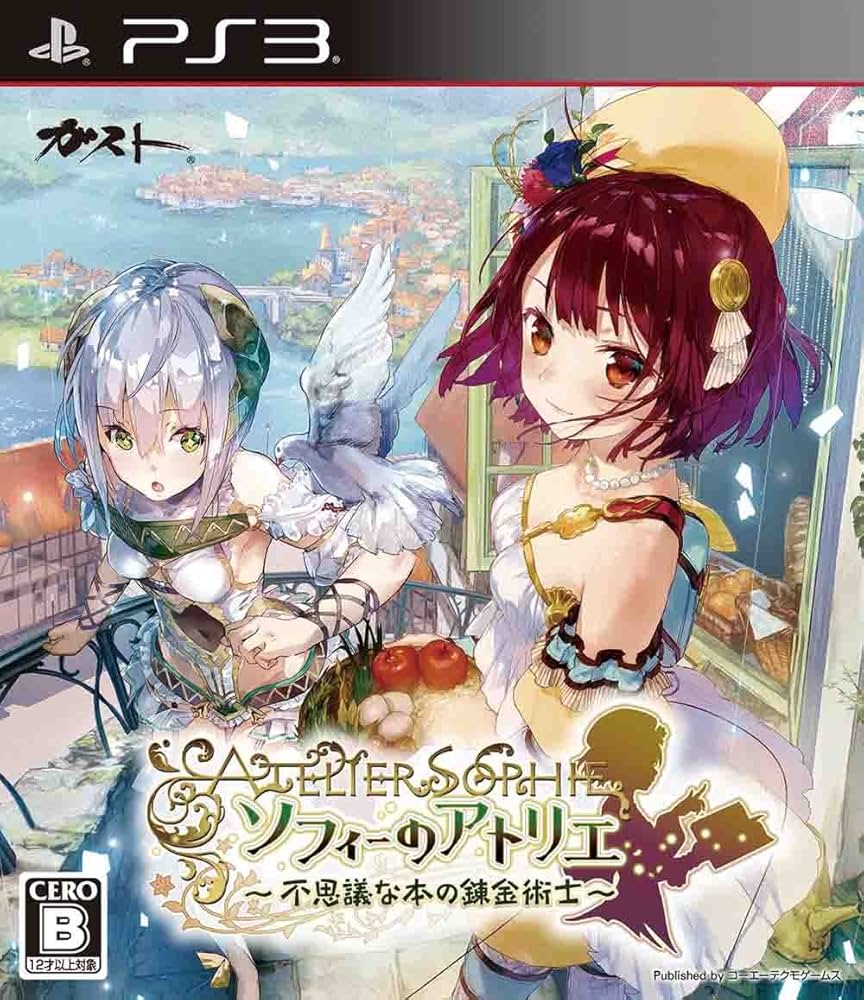
Sophie's Atelier" is a completely new Atelier series.
It has only been a short time since the release of Koei Tecmo's very popular "Sophie's Atelier," which has had its release postponed, but its content was a new series that was very different from the past Atelier series! While it inherited the elements unique to the previous Atelier series, such as alchemy and world map gathering, it was a legitimate evolution so that players could enjoy the Atelier series even more. In this article, we summarize the key points of the new series along with the key points of the new series. (Spoiler alert)
Read Article
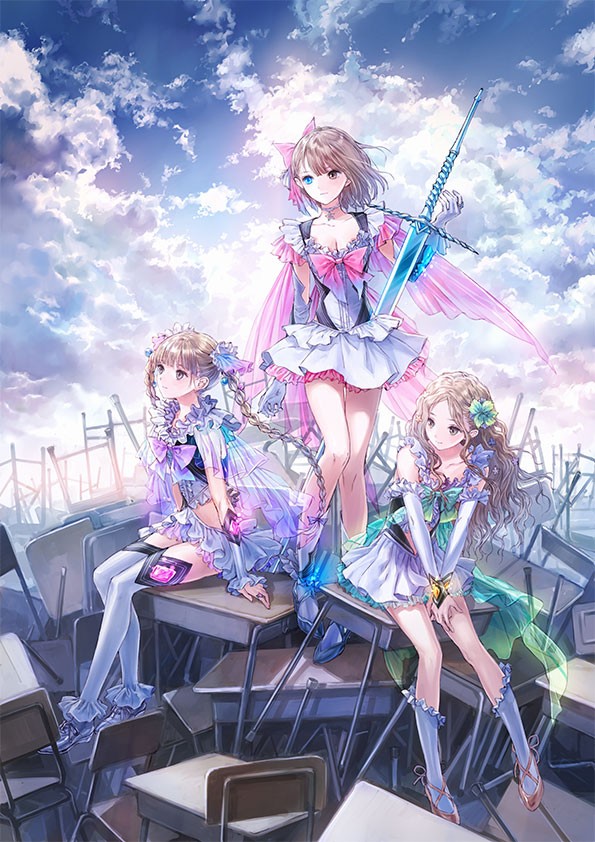
BLUE REFLECTION: The Sword of the Girl Who Dances in the Phantom (BLUE REFLECTION) Spoilers and Discussion Summary
BLUE REFLECTION: The Sword of the Girl Who Danced in the Phantom" is a heroic role-playing game developed by the Gust brand, an affiliate of Koei Tecmo Games, and was announced as the third game title in the "Gust Bishojo Festival" following "Phyllis atelier" and "Yorononokuni 2". It is set in modern Japan. Set in modern Japan, the main story is about friendship and battles between 15 girls in the real world and "Common," an alternate world created by human minds and emotions.
Read Article
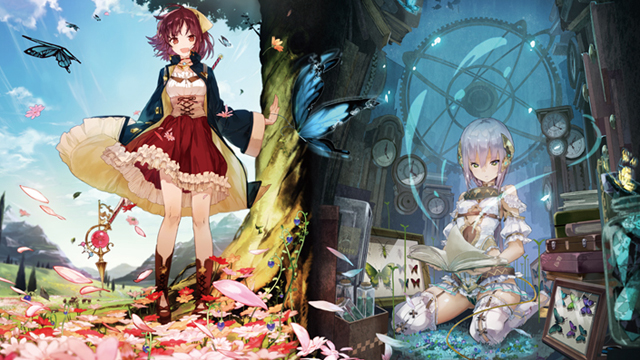
Summary of successive Atelier series
The Atelier series is a series of challenging mix-and-match RPGs released by Gust (now Koei Tecmo). The Atelier series has a different worldview for each of the two or three games, and each has its own unique characteristics. Here is a summary of the differences. There are now more than 20 games in the series as a whole, and some people may not know which one to start with. Please use this as a reference for those who are not sure which one to start with.
Read Article

Atelier series strategy site summary
The "Atelier series" spins a variety of stories based on the theme of "alchemy. The "Atelier series" is further subdivided into several series due to differences in systems, styles, etc., and many people find it difficult to understand the series, but there is basically no story connection between the series, so it does not matter which series you start playing. Here we have compiled a list of strategy sites for each title in the Atelier series.
Read Article
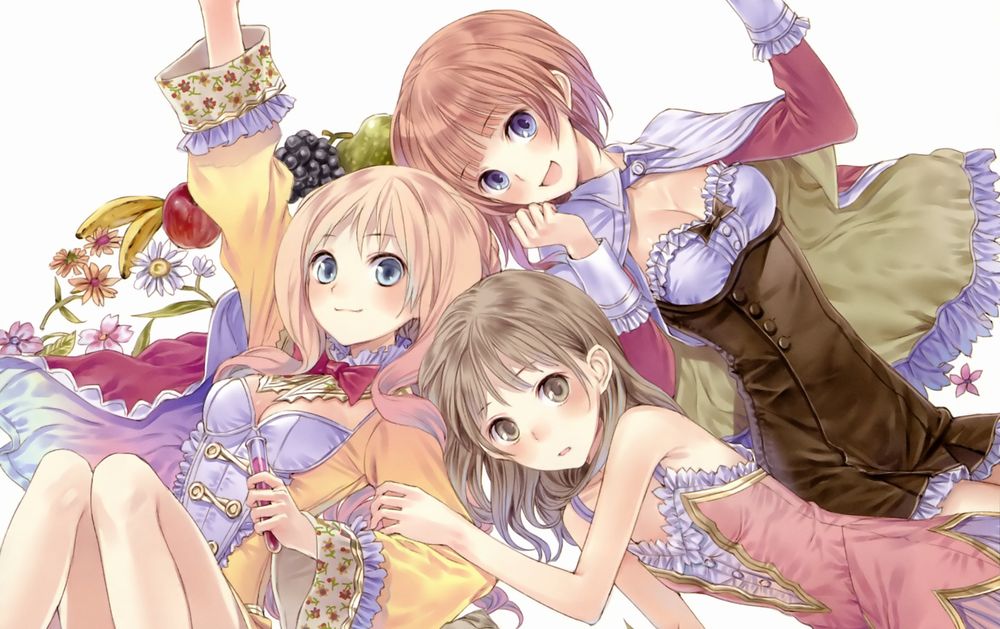
A compilation of illustrations of the Atelier series by Mel Kishida [Atelier of Rorona, Totori, and Meruru].
In the "Atelier series" of games, illustrator Mel Kishida is in charge of character design for the three games called the Arland series: "Rorona's Atelier: The Alchemist of Arland", "Totori's Atelier: The Alchemist of Arland 2", and "Meruru's Atelier: The Alchemist of Arland 3". Mel Kishida is in charge of character design. Here is a collection of illustrations of the "Atelier series" by Mel Kishida.
Read Article
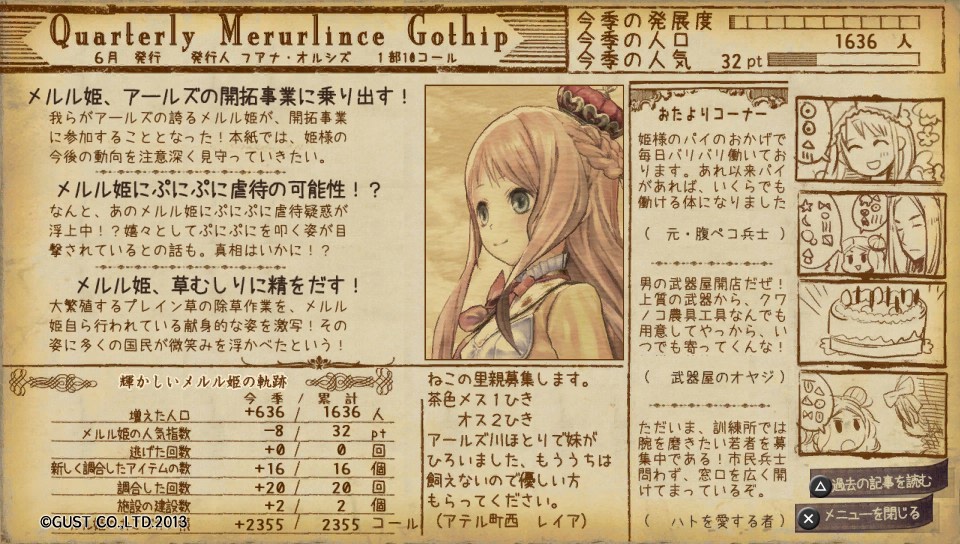
(1) Kawaraban (newspaper) of "Meruru no Atelier PLUS" is an interesting summary to look at.
In "Meruru's Atelier PLUS: Alchemist of Arland 3," there is a Kawaraban (newspaper) that Juana-san makes for us. Kawaraban is a kind of newspaper that mainly records the activities of the main heroine, Merle, and includes stories and columns, etc. The contents are very interesting to read. This time, we have compiled such Kawaraban. (All images are self-taken by the uploader.)
Read Article
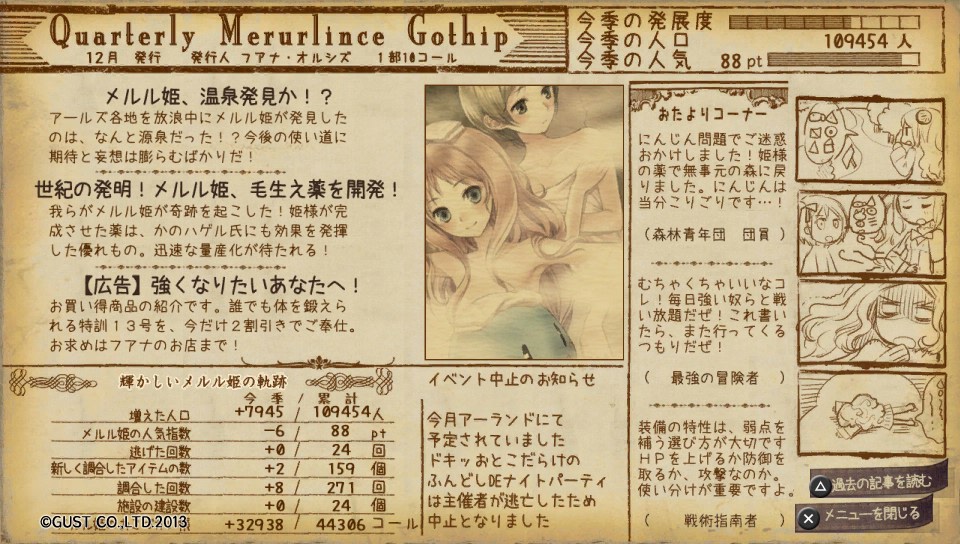
(2) Kawaraban (newspaper) of "Meruru no Atelier PLUS" is an interesting summary to look at.
This is a continuation of Kawaraban (Newspaper) (1) of "Merle's Atelier PLUS". There are a lot of things of interest in the articles, the four panels, and even the column below. There is a lot of crazy interesting content in this issue as well (laughs). If you are curious about how Kawaraban is created, please play the full version (PS3, PSVITA). (The image is a selfie of the uploader)
Read Article
Contents
- Outline of "Yudhi's Atelier - The Alchemist of Gramnath
- The story of "Yudhi's Atelier - The Alchemist of Gramnath
- system
- field
- dungeon map
- battle
- mixing
- Effectiveness and Quality
- Hours.
- location
- Characters in "Yudhi's Atelier - The Alchemist of Gramnath
- Youdit Fortune.
- Vitos Roth.
- Rastel Biehausen.
- Pamela Eavis.
- Christa Schulze.
- Esmeralda
- Hermina.
- Martin Crome.
- Adelbert Hocker
- Conrad Io
- Borer Kvelle.
- sphere
- Items from "Yudhi's Atelier - The Alchemist of Gramnart
- toad lily (Tricyrtis hirta)
- craft
- elixir
- Kern's knot
- Dragon's Hourglass
- remake
- Yudhi's Atelier - The Alchemist of Gramnath - The Prisoner's Guardian