
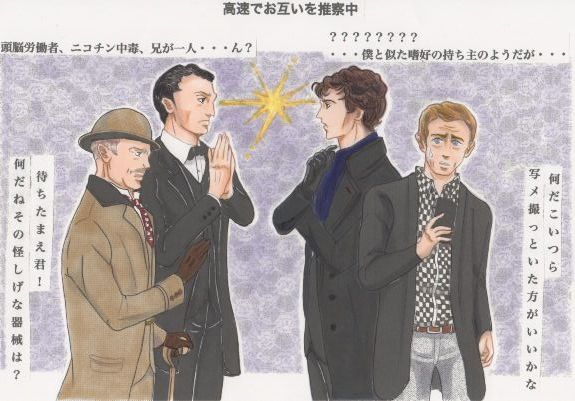
The drama series "Sherlock" first aired on the BBC in 2010. It became a huge hit, far exceeding the expectations of the producers, and its popularity quickly spread around the world. It also created a large number of followers in Japan. I would like to compare it with the Granada TV version of "The Adventures of Sherlock Holmes" series, which was considered "the best Holmes drama" until this series became a hit.
There are two people who have become image models for Holmes.
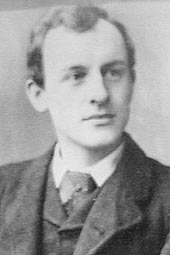
Sidney Paget, who defined the image of Holmes, had a younger brother named Walter who was also a painter. It is said that Sidney modeled his Holmes on his handsome brother. As you can see, he is indeed a beautiful man with a reasonably intelligent image. Visually, he would have shaped the "Holmes" look.
In addition, Conan Doyle, the author of the "Holmes" stories, had an acquaintance when he was a medical student, Professor Joseph Bell, who was able to guess the occupations and names of his patients' diseases with his outstanding deductive powers. The image of Holmes, who was always one step ahead of others and possessed genius deductive powers, was based on this Professor Bell.
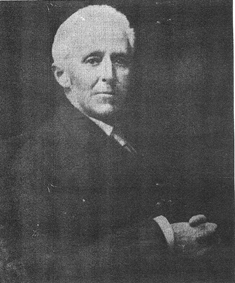
By the way, this is who Professor Bell is. It seems that he was also quite a well-dressed man.
Now, I would like to focus on the two drama series that seem to have portrayed Sherlock Holmes most attractively at this stage, mainly based on the aforementioned illustrations by Sidney Paget, and compare how the same scene was portrayed in each.
One is the series "The Adventures of Sherlock Holmes" produced by Granada TV in the UK from the early 1980s to the early 1990s.
The other is the "Sherlock" series, also produced by BBC in the UK, which has been on air since 2010 (currently awaiting a fourth series).
Familiar Pose 1
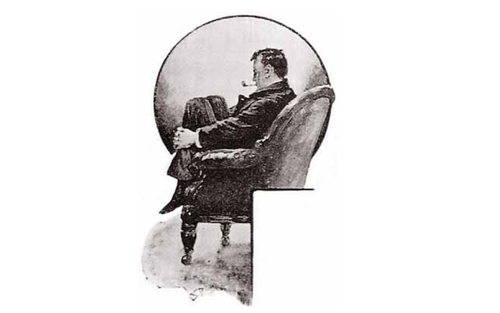
Holmes is on his knees in his chair, his back rounded in contemplation. Often, when faced with a difficult problem, he would strike a pose like this.
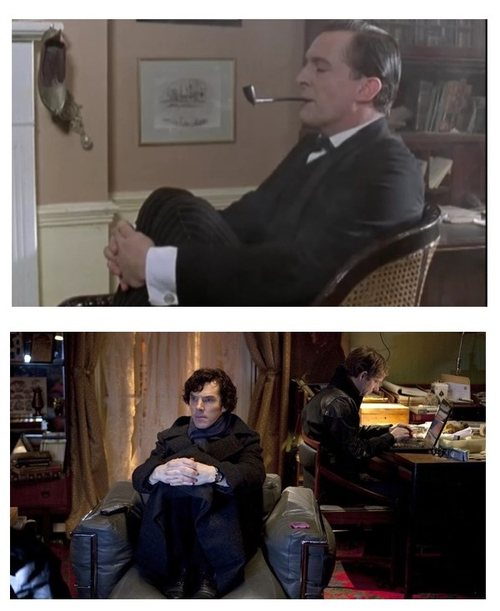
Above is JEREMY BRETT, playing Holmes on Granada TV, and below is BENEDICT CUMBERBATCH, playing "Sherlock" on the BBC. A pose that would not suit them unless they were tall, long-limbed and handsome.
Familiar Pose 2
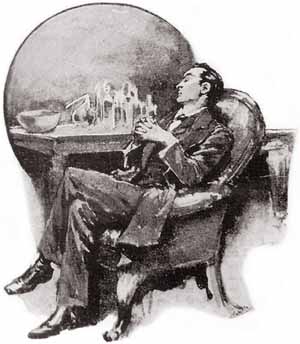
This pose is described as "putting the fingertips of both hands together." It is a pose that Holmes often does when he is trying to think of something.
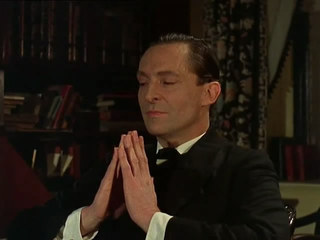
Jeremy Holmes, just as he is in the illustration. It is as if Holmes is really there! It even feels like Holmes is really there.
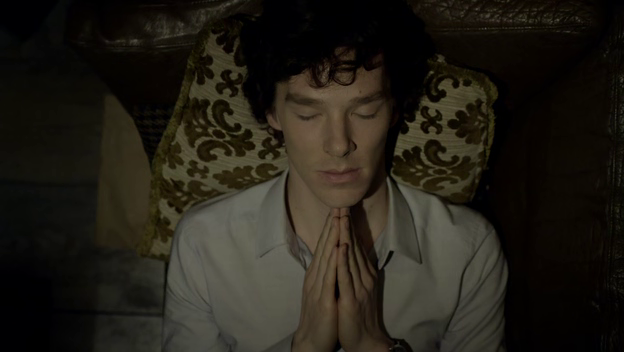
And Benedict-Sherlock also showed this kind of pose in the first episode of season 1, "A Study in Pink". At this time he had a nicotine patch on the inside of his arm in place of a cigarette. In the original story, Holmes smokes quite a bit, but this happened because there are extremely few places in modern Britain where you can smoke freely.
Violin performance
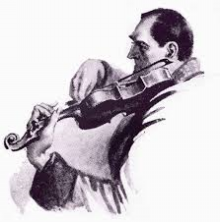
Holmes often played the violin when he needed to calm down. He once put Watson to sleep by playing a lullaby. He also often attended violin concerts.
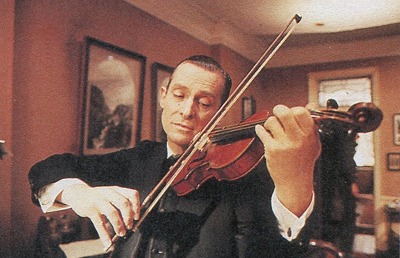
Jeremy Holmes plays the violin with graceful form. The atmosphere is very Victorian. Incidentally, this violin is a famous Stradivarius. Holmes, who bought this violin at an antique dealer for free, seems to have been a great connoisseur of violins.
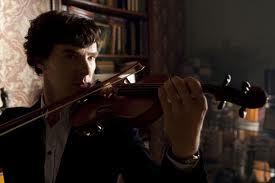
The Sherlock Holmes of the 21st century also plays the violin properly. In the third series, he plays his own compositions on the violin for John, who is getting married. Cumberbatch has very long arms, so this kind of gesture is very good.
Deer Stalker (Deer Aiming Hat)
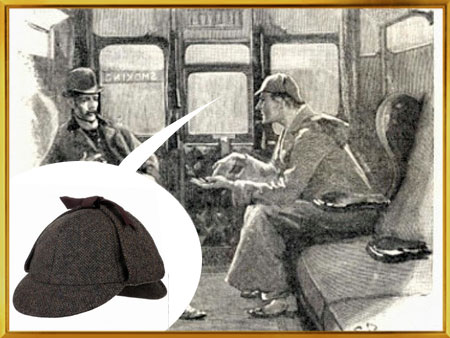
Originally, there is no depiction of Holmes wearing a Deerstalker in the original story, but because of Paget's illustrations, the image of Holmes as a "pipe, Deerstalker, and Inverness (coat)" was created.
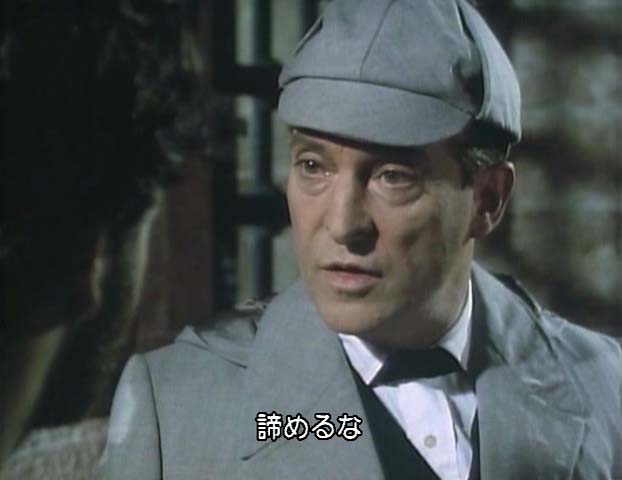
On the streets of London, the Granada TV version of Holmes always wore a neat black silk hat. Only when there was a case investigation in the provinces, he wore a deerstalker like this one.
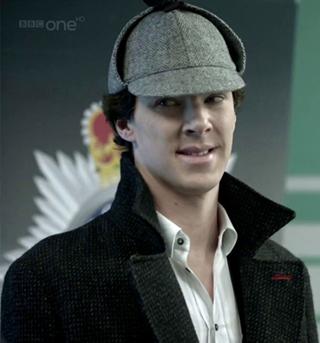
The modern Sherlock Holmes was sometimes referred to in dramas as "the detective with the weird hat. However, with each episode of the drama, I became more and more familiar with this figure.
Sherlock Holmes with his partner John Watson
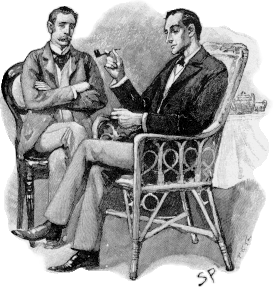
In Paget's illustrations, we could not find any illustrations of Watson alone. It may be that Watson was always seen as a constant companion to Holmes. Watson returned home from the Afghan War as a wounded soldier, and while working as a doctor again, he wrote stories about his good friend Holmes' many brilliant and difficult case solutions. But that is not the only role he played. He was an indispensable "companion" and "listener" to Holmes, who was a difficult man and whose senses differed greatly from those of ordinary people.
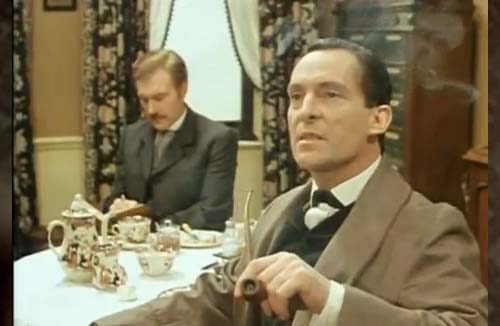
The Granada version of Watson was played by David Burke from the first episode to "The Last Case" and by Edward Hardwicke from "The Mysterious Case of the Empty House" to the final episode. Both Watsons were warm, sensible, and dependable, standing by the eccentric Holmes, gently watching over him, sometimes giving him a scolding, and sometimes crossing dangerous bridges together.
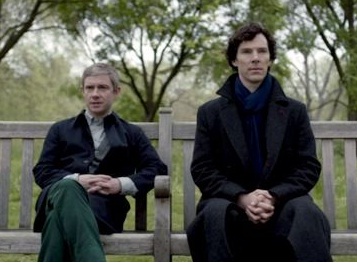
Martin Freeman (MARTIN FREEMAN) played John Watson in the BBC's "Sherlock. The actor also played the lead role in the "Hobbit" movie series. Ironically, just as in the original story, there was an Afghan war not long ago in modern Britain, so the modern Watson also went to Afghanistan as a military doctor, where he was wounded and discharged. After returning to Japan, he suffered from PTSD and was living a reclusive life in London when he suddenly met Sherlock...that's how it was depicted in the first episode. The only difference from the Granada version is the lack of a beard. However, in the first episode of the third series, John appeared with a mustache for some reason, which surprised me. After all, the mustache was eventually shaved off. John Watson here is also warm and sensible. And like in the Granada version, he is an indispensable support for Sherlock.
Also, like a modern "Watson," his tool for introducing Sherlock's case is the Internet. In his blog, he writes articles about cases that Sherlock has given him permission to publish.

Related Articles
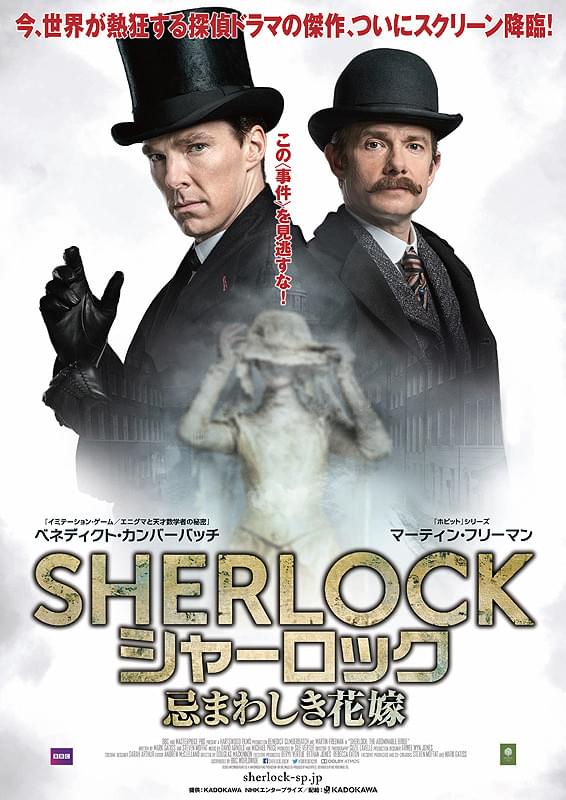
Double and triple foreshadowing! The charm of "Sherlock: The Abominable Bride
A new installment in the BBC's "Sherlock" series! In its home country of the UK, it was aired on TV as a Christmas special, but in Japan it has been made into a theater version. From the trailer to the film, here are some details.
Read Article
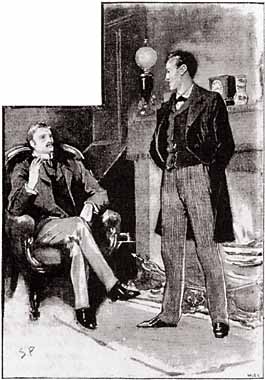
Which is your favorite? The best Sherlock Holmes from England, old and new!
Sherlock Holmes is a well-known British detective, right? He has been the subject of numerous dramas, films, and stage productions. His popularity is well known even now, more than 100 years after his first novel was published in 1887. In this issue, we will introduce two of these Sherlock Holmes dramas! Which one is your favorite?
Read Article
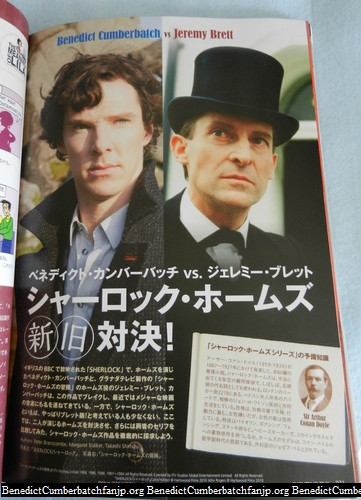
In-depth comparison! BBC version of "Sherlock" vs Granada TV version of "Holmes" Part2
In Part 1, I compared the main character Sherlock Holmes and his sidekick John Watson; in Part 2, I will expand the scope of the comparison to the people and things that surround them.
Read Article
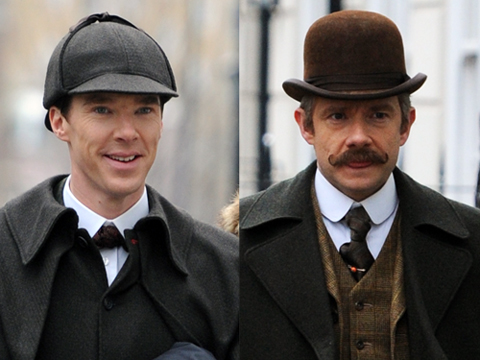
Breaking News! Drama "Sherlock" Christmas Special to air!
The BBC drama "Sherlock" is awaiting its fourth season. The decision to air a Christmas special has just been announced. The trailer shows Benedict Cumberbatch and Martin Freeman as the Victorian-era "Holmes and Watson"! We will bring you the latest information as soon as it becomes available.
Read Article