
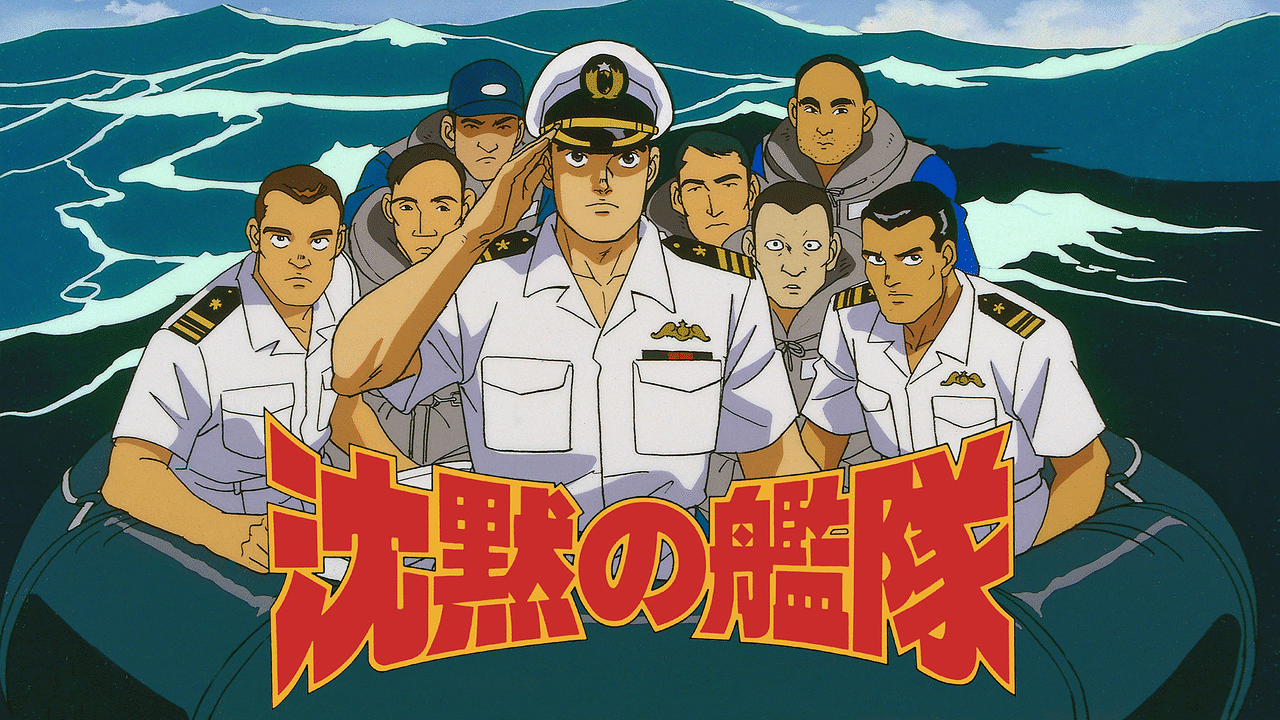
The Silent Fleet" is a radio drama, anime, and film based on a fictional war and military policy manga series by Kaiji Kawaguchi that was serialized in "Morning" magazine from 1988 to 1996. Against a backdrop of political intrigue and strained international relations due to advances in military technology, the story follows the activities of Shiro Kaieda, captain of the fictional state-of-the-art submarine Yamato, and his crew. The film was highly acclaimed for its realistic depiction and detailed storyline.

Japanese "Kurama" escorting "Yamato" is attacked by Harpoon missiles from the U.S. 3rd Fleet.
The Japanese destroyer Kurama, commanded by First Sea Captain Tokuji Numata, was on an escort mission for the nuclear submarine Yamato. At this time, the Yamato, under the command of Captain Kaieda, had declared its status as an independent fighting nation and was at the center of international tensions. The "exclusive defense," as Numata described it, was a basic principle of Japan's defense policy, meaning that combat action would be taken only in the event of invasion in response to security challenges facing the nation. In actual international affairs, however, the criteria for determining "aggression" are ambiguous, and complex decisions are often required over how Japan should respond. Kaieda, you answered that "exclusive defense means fighting in the event of invasion," which is true. But in reality, Japan's position is that it cannot be judged as invasion no matter what is done." These words of Numata illustrate the dilemma of Japan's defense policy and the harsh reality it faces. At the climax of the scene, a Harpoon missile fired from the U.S. Third Fleet hits the Kurama, causing heavy damage to Japanese Self-Defense Force vessels. This attack further heightens the military tension between the U.S. and the Yamato and the Japanese who support it, highlighting the complexity of international relations in the story and the difficult position in which Japan finds itself.
Kaieda avoids enemy torpedoes with precise judgment and instructions

The screw of the "Yamato" is being reversed to agitate the ocean currents.
Reverse the screw, stir up the current. Captain Kaieda orders the Yamato's screw (propeller) to rotate in reverse, thereby violently stirring the seawater and utilizing the resulting turbulence in the water current to cause enemy torpedoes to fail in their guidance. This technical maneuver greatly stirs up the seawater around the Yamato, confusing the torpedo's sensors, which would normally track its target precisely, and causing it to accidentally self-destruct in response to the stirred water current rather than its target, the Yamato. This tactic has the dual effect of disabling the enemy torpedo and protecting the "Yamato. This scene is a moment in which Kaieda's exceptional submarine piloting skills and tactical thinking shine through, showing how well he is able to assess the situation and how calm he is. It is also a highly innovative defensive measure that utilizes the physical manipulation of a submarine, which is often overlooked in conventional military strategy. This tactic enabled the Yamato to successfully defend itself against overwhelming enemy attack, albeit temporarily, and it continues to play an important role in subsequent operational maneuvers. The success of these tactics is symbolic of Kaieda's leadership and the technical skills and high level of coordination of the crew of the "Yamato" under his command.
Terrence B. Carver: "This Aegis ship with the world's most powerful data system has been completely defeated. So it is no longer possible to sink the Yamato with any other ocean-going ship in the world."

The "Yamato" was positioned vertically directly below the Aegis and released a warheadless torpedo while at the same time avoiding the torpedo, thereby defeating the Aegis captain, Terrence B. Carver.
The Aegis, commanded by Captain Terrence B. Carver, is one of the most powerful maritime combat fleets in the world because of its advanced data systems and armament. However, the "Yamato" manages to defeat the Aegis with tactics that surpass them all. During the battle, the Yamato demonstrated an extremely advanced maneuvering technique by turning its hull vertical and diving directly under the Aegis in order to skillfully avoid torpedoes fired by the Aegis. From this position, the Yamato fires a special warheadless torpedo that it is equipped with, delivering a precise blow against the Aegis' bottom. This attack severely damages the Aegis and paralyzes its functions. The Aegis, with the world's most powerful data system, has been completely defeated. Captain Carver's statement expresses his surprise at the situation and his bitter realization of defeat. He realized that even his ship's data systems and armaments, which were claimed to be the most powerful in the world, were no match for the Yamato, and he concluded that no other ship at sea could sink the Yamato.
Hiroshi Fukamachi: "We have been attacking and slaughtering other countries as we please. Then let me tell you that we have to take the same risk. That is the meaning of defense!

Scene where torpedoes are fired from Captain Hiroshi Fukamachi's "Tatsunami" against a U.S. submarine attempting to attack the Southern Cross.
When an American nuclear submarine was about to attack a floating dock called Southern Cross, Captain Fukamachi operated the TATSUNAMI to counter the American forces. His decision came out of protest against foreign military actions to attack other countries beyond the scope of self-defense and with the intention of demonstrating his country's defense posture. We have been attacking and slaughtering other countries as we please," he said. So let's show them that we have to take the same risk. That is the meaning of defense! This line from Fukamachi underscores his interpretation of the nature of defense. For he argues that "defensiveness" is not only protection, but also includes the ability to take equal risks against an attacker. This indicates that his tactical decision is not just a reaction, but an act of active self-defense. This scene depicts the moment when the "Tatsunami" fires the torpedo, emphasizing Fukamachi's leadership and his ship's capabilities while symbolizing Japan's tactical independence and exercise of its right to self-defense in the story.
The Yamato dives rapidly to dodge the pressure of the torpedo explosion.

The "Yamato" torpedo that hit an ice block by itself.
It depicts the moment of a daring maneuver by Kaieda to demonstrate his ship's advanced maneuvering techniques and tactics to the enemy. He orders a tactic of rapid submergence just before the torpedo hits the ice block to avoid the pressure wave of the explosion and at the same time disappear from the enemy's radar. This action symbolized Kaieda's calm and daring character as a commander, and made a strong impression on the readers. Gentlemen, let us show the enemy our divine deeds. In a few moments, our torpedo will hit a block of ice. Just before that, we will make a quick dive. Dodge the pressure of the explosion and disappear from the enemy at the same time!" These lines express Kaieda's leadership, precision in assessing the situation, and his pursuit of victory without regard for the risks involved. His calm judgment and actions under extreme circumstances also strongly impress readers and highlight the charisma of the character.
Yamato tries to shake off the pursuit of the Sea Wolves by going through the unprecedented twin horns

Yamato" through the ice crevasse gap called Twin Horns
This is the first time in history that this ship has passed through the Twin Horns. This line was uttered by Kaieda as he commanded the nuclear submarine Yamato through the Arctic Ocean. The "twin horns" refers to the passage between specific icebergs, and Kaieda chooses this challenging route. This action symbolizes the courage and adventurous spirit of Yamato and her crew to take on unprecedented challenges, and represents the excitement and pride of stepping into uncharted territory. The challenge of a mission never before attempted in history underscores their bravery, inquisitiveness, and willingness to push the boundaries of human knowledge. For readers and viewers, this line sheds light on the historical role that Yamato is trying to play in the story and the depth of humanity that the characters demonstrate in the process. Moreover, this line also demonstrates the leadership and vision of the character of Kaieda. He is determined not only to carry out his mission, but also to make new history in the process, and to move forward into uncharted territory with his crew. In this way, Kaieda's words highlight the importance of their journey and are remembered as one of the unforgettable moments in the story of "The Silent Fleet."
Norman King Bates "Kaieda, I knew I should have met you..."

Norman thought the torpedo fired by the Yamato was a homing torpedo, but it was a normal torpedo that went straight ahead, and the Yamato's torpedo hit the Norman-operated Seawolf, which was flooded.
Norman King Bates says, "Kaieda, I knew I should have met you..." just before the sinking of the Seawolf-class nuclear submarine King, which he commands. This line is uttered in the scene where he and his ship are defeated after a fierce underwater battle with the nuclear submarine Yamato, commanded by Kaieda. Norman expresses his regret for ending up without the opportunity to face his adversary, Kaieda. This famous line also highlights the complex emotions of the character of Norman King Bates. Despite his high position as a potential candidate for the next president of Japan, apart from his own military ambitions, he also held a certain respect and interest in his enemy, Kaieda. His last words emphasize the importance of understanding and dialogue between human beings in the midst of war and conflict, suggesting the possibility of mutual respect that transcends hostility. They also express the fragility and dignity of human beings in the midst of battle, and evoke deep emotion and reflection in the story. Norman's words leave a powerful impression on readers and viewers through his own dreams of the future and the tragedy of the moment when they suddenly come to an end.
Backstories, trivia, and small stories/episodes and anecdotes about "The Silence Fleet
Acoustic Torpedo Misconceptions
The weapon depicted in the story is said to have the property of disrupting and disabling enemy sonar systems by generating intense sound. This depiction reduces the detection capability of enemy ships and provides a tactical advantage for the "Yamato" to get through the enemy's surveillance network. In actual military technology, however, "acoustic torpedoes" primarily refer to autonomous torpedoes with the ability to track enemy acoustic signals. This type of torpedo has the technology to detect the sound emitted by an enemy ship and automatically correct its course toward that sound source as it approaches. In other words, they actually serve as offensive weapons and are used for the purpose of damaging enemy ships.
Domestic and International Evaluation of "The Silent Fleet

Related Articles
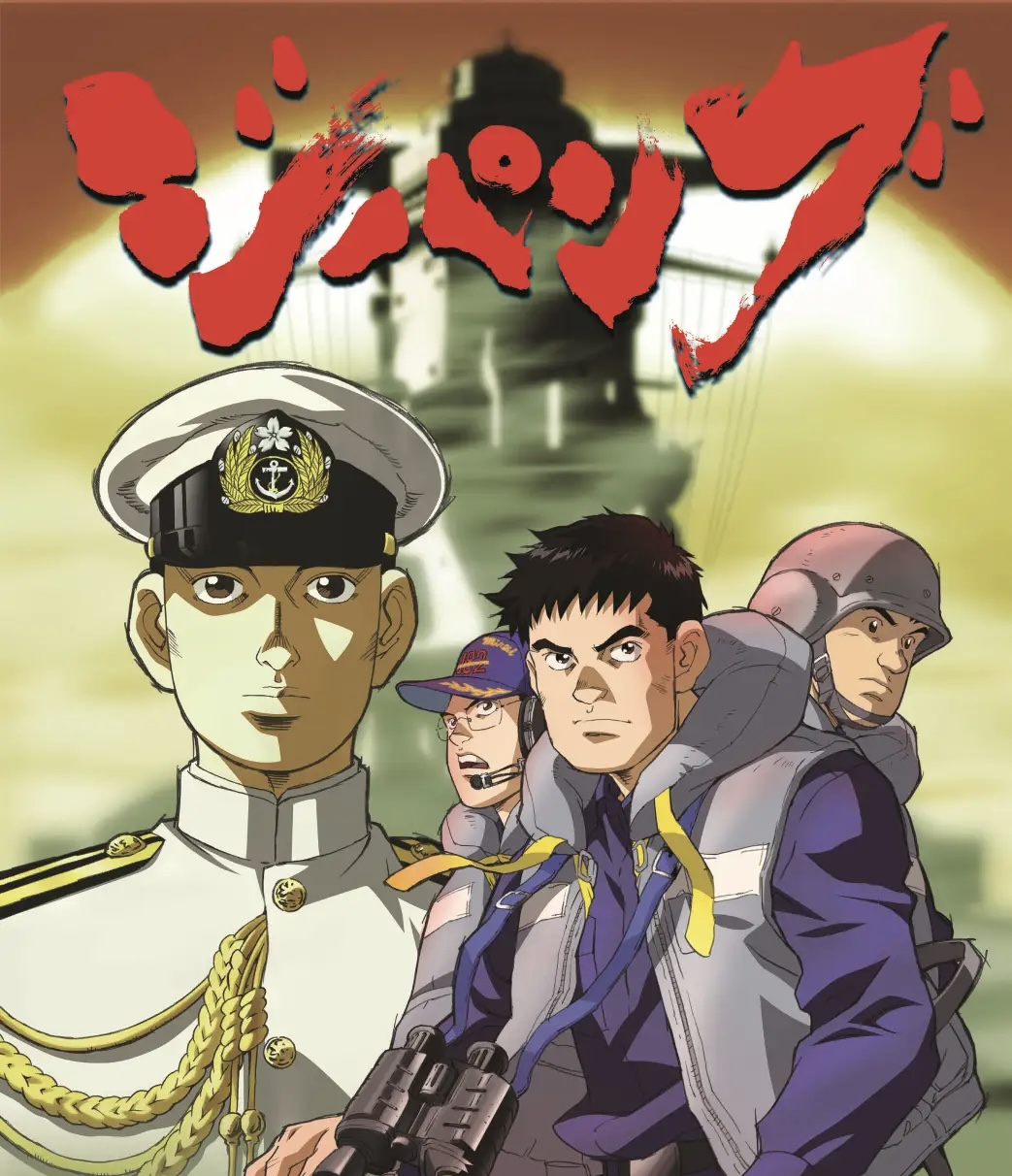
ジパング(かわぐちかいじ)のネタバレ解説・考察まとめ
『ジパング』とは2000年よりかわぐちかいじが『モーニング』で連載していた漫画、およびそれを原作としたアニメ作品。西暦200X年の6月、日本海上自衛隊の最新型イージス艦みらいはミッドウェー沖合にて落雷を受ける。それをきっかけに、彼等はイージス艦ごとミッドウェー海戦直前の1942年6月4日の太平洋上にタイムスリップした。オーバーテクノロジーを保有する形となった彼等は、戦前の人々や歴史の流れの中で葛藤し、各々の思想の違いによって対立していく。そして彼等の存在は、歴史を大きく変えて行くのであった。
Read Article

太陽の牙ダグラム(Fang of the Sun Dougram)のネタバレ解説・考察まとめ
『太陽の牙ダグラム』とは、テレビ東京系列で1981年10月から1983年3月まで放送されたSFロボットアニメである。地球からの圧政に苦しむ植民惑星「デロイア」が独立するまでの動乱を、戦争と政治の両面から描く。地球生まれの主人公「クリン・カシム」は数奇な運命の下、デロイア独立戦争に義勇兵として参戦する。『機動戦士ガンダム』の流れを汲んだ「リアルロボット」路線の作品であり、後に『装甲騎兵ボトムズ』や『機甲界ガリアン』を手掛ける高橋良輔のロボットアニメ初監督作品でもある。
Read Article

太陽の黙示録(かわぐちかいじ)のネタバレ解説・考察まとめ
『太陽の黙示録』とは2002年よりかわぐちかいじが『ビッグコミック』で連載していた漫画、およびそれを原作としたアニメ作品。西暦2002年の8月、マグニチュード8.8の大地震が日本を襲う。大地は東西に分裂し壊滅的な打撃を受けた日本は、やむなくアメリカと中国の南北分断統治を受け入れる。それから15年後、南北に分裂した日本は、それぞれの国の下で復興をしていた。だが、アメリカと中国の影響力が強く、かつての日本は失われてしまう。その中で日本人は様々な問題に苦悩しながらも、日本再興の為に力を尽くしていく。
Read Article
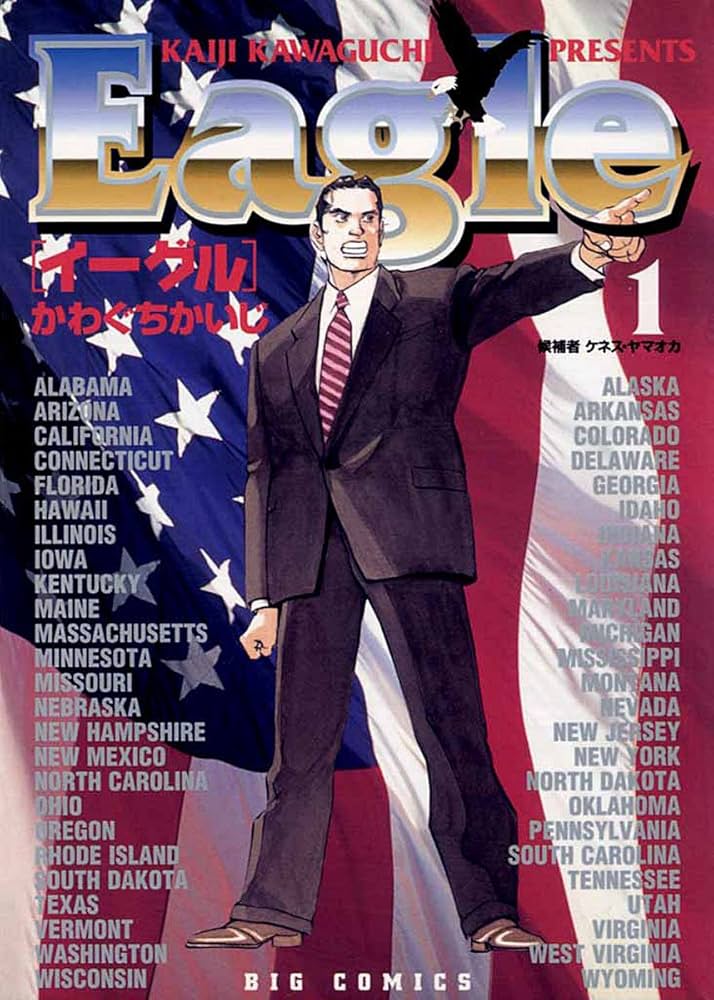
イーグル(かわぐちかいじ)のネタバレ解説・考察まとめ
『イーグル』とは、かわぐちかいじの政治漫画である。1998年から2001年まで『ビッグコミック』で連載された。新聞記者城鷹志は、唯一の肉親である母を事故で亡くす。悲しみの中、突如アメリカ大統領選挙候補者の1人ケネスから密着取材を指名された。アメリカに渡った城は、ケネスから自分の子供である事を告げられる。動揺しながらも、彼はアメリカ大統領選挙を戦うケネスの取材を行う。その取材の過程で母親が何者かに暗殺された事に気付く。事件の真相に迫りながら、アメリカの抱える政治的問題が描かれていく。
Read Article
Tags
Contents
- Overview of "The Silent Fleet
- Synopsis and story of "The Silence Fleet
- preface
- background
- Test Voyage of the "Seabat
- international conflict
- Response by the Japanese Government
- Kaieda's "Silent Fleet Plan" Proposal at the UN
- end
- Characters and characters from "The Silent Fleet
- Main Characters
- Shiro Kaieda / played by Takao Osawa
- Hiroshi Fukamachi (played by Hiroshi Tamaki)
- Nicholas J. Bennett (played by Rick Amesbury)
- Toshio Takegami (Played by Takashi Sasano)
- Japanese Government Officials
- Daigo Unabara (played by Isao Hashizume)
- Wataru Unabara (played by Yosuke Eguchi)
- Koichiro Amatsu
- Ichiro Kaido
- Hideki Kounouchi
- Jun Otaki
- Seiji Kageyama (Seiji Kageyama / performed by Yoshi Sakamukai)
- Noboru Sonezaki / Live Action: Hitomi Sonezaki (Noboru Sonezaki / Hitomi Sonezaki / acted by Yui Natsukawa)
- Keisuke Hamamoto
- Sakae Kuraike
- long river
- Yamato officials
- Eiji Yamanaka (played by Aoi Nakamura)
- Utsumi
- Takuo Mizoguchi (played by Koh Maehara)
- Maritime Self-Defense Force personnel
- Saburo Akagaki (played by Toru Tezuka)
- Susumu Tadokoro / played by Hiroshi Okochi
- Tokuji Numata (played by Yoji Tanaka)
- Kenji Hayami / Live Action: Takako Hayami (Played by Asami Mizukawa)
- Goro Watase (played by Ippei Sasaki)
- Eiichi Namba (played by Yusuke Santamaria)
- U.S. Navy personnel
- Logan Steiger (played by Aleks Ponovic)
- David Ryan (played by Jeffrey Lowe)
- Alan B. Lansing (played by Michael Gencher)
- Richard Boyce (played by Rob Flanagan)
- Terrence B. Carver
- Hendrik Doll.
- Colonel Kelly J. Nelson
- Colonel Alex P. Nagabuchi
- John Alexander Bates
- Norman King Bates.
- U.S. Government Officials
- Andy Reid
- Robert D. Baker (played by Kevin Copeland)
- Jack Turner.
- Richard Rosenberg
- Andrew Gill
- Carl Schulz
- U.S.A. and other characters
- Lee Goldwell
- Isaac Nathan.
- Mars Bennett.
- Sniper (name unknown)
- Royal Navy and government officials
- Chris Stringer
- Joseph Lowry.
- Julius Lowdon.
- William Scott
- Godfrey Lawrence.
- Cohen
- Soviet Union Navy and Russian Navy personnel
- Yuri Andropov.
- Andrei Lobkov
- Ivan Borodin
- Mikhail Sergeyevich
- Soviet Union and Russian government officials
- Mikhail Malenkov
- Yuri Gorshkov
- Victor Rozak.
- French Navy and government officials
- Jean Rouault Melville.
- Pierre Morgan
- Charles Alida.
- German and Chinese officials
- Ludwig Kiesinger
- Youwei Zhang
- news media
- Cecile Demille.
- Bob McKay
- Lucas Foss
- Murooka
- Winston Salo.
- United Nations officials
- George Adams.
- Rick Thornburg.
- Tawanda Moyo
- chabar
- Terms of "The Silent Fleet
- nuclear submarine
- Yamato
- Seawolf class nuclear submarine
- Alpha class nuclear submarine "Red Scorpion
- conventional (conventional-powered) submarine
- standing waves
- range of mountains
- separation of church and state
- Yamato Insurance
- World Government
- The Silent Fleet Project
- Famous quotes, lines, scenes and scenes from "The Silent Fleet
- David Ryan: "I see, you were approaching while squeezing the music. This way, our fleet can't torpedo them."
- Shiro Kaieda "We are Yamato, an independent nation. This is our declaration of independence.
- Japanese government and "Yamato" treaty scene
- Tokuji Numata: "Kaieda, you answered that exclusive defense means fighting in case of invasion. But in reality, Japan's position is that whatever is done cannot be judged as aggression."
- Kaieda avoids enemy torpedoes with precise judgment and instructions
- Terrence B. Carver: "This Aegis ship with the world's most powerful data system has been completely defeated. So it is no longer possible to sink the Yamato with any other ocean-going ship in the world."
- Hiroshi Fukamachi: "We have been attacking and slaughtering other countries as we please. Then let me tell you that we have to take the same risk. That is the meaning of defense!
- The Yamato dives rapidly to dodge the pressure of the torpedo explosion.
- Yamato tries to shake off the pursuit of the Sea Wolves by going through the unprecedented twin horns
- Norman King Bates "Kaieda, I knew I should have met you..."
- Backstories, trivia, and small stories/episodes and anecdotes about "The Silence Fleet
- Acoustic Torpedo Misconceptions
- Domestic and International Evaluation of "The Silent Fleet
- Media Development of "The Silent Fleet
- Takao Osawa before the release of the movie version
- Social conditions at the start of the series
- The inspiration for "Independent States in Motion
- Theme and insert songs for "The Silent Fleet
- Theme song for the anime version: Takao Raise: "Yume no Nagisa ~The Silent Service~" (The Silent Service)
- OVA version (VOYAGE2, VOYAGE3) theme song: Hiroko Kasahara "Yume no Nagisa - The Silent Service
- Radio drama theme song: CHAGE and ASKA "BIG TREE
- Theme song for live-action drama version and movie version : Ado "DIGNITY
- Insertion: Mozart, Symphony No. 40
- Insertion: Mozart, Symphony No. 41