
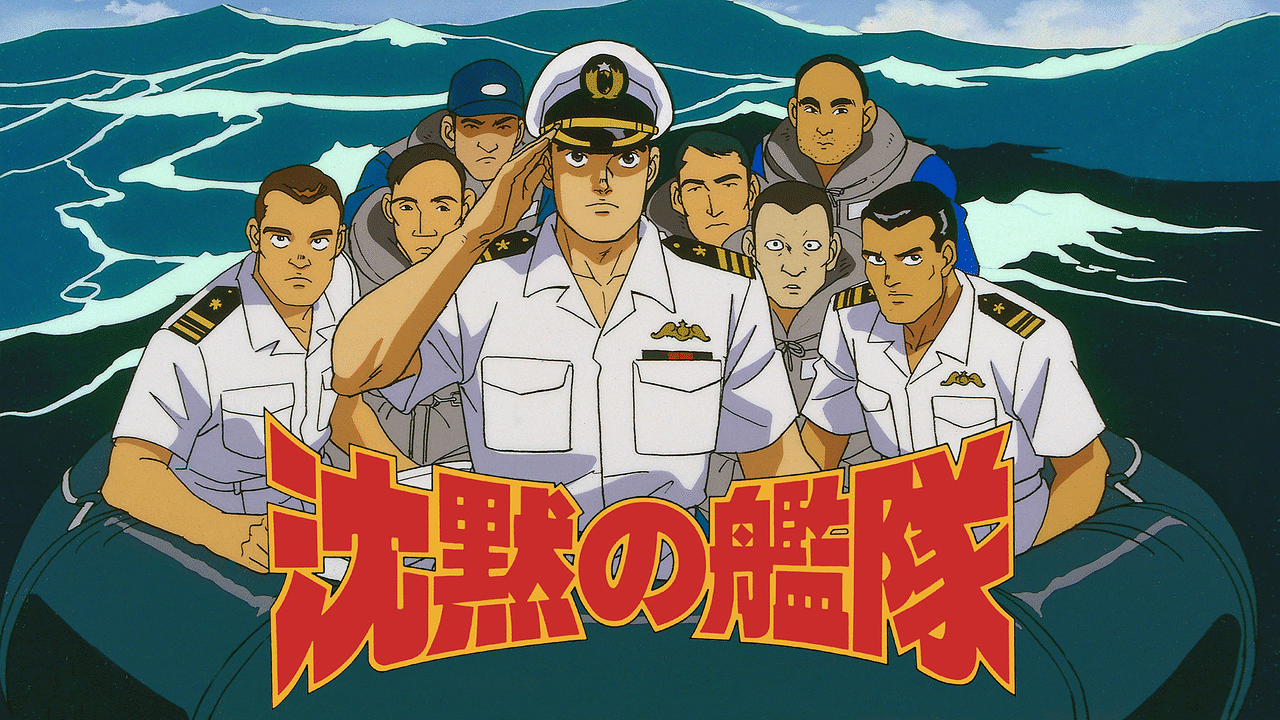
The Silent Fleet" is a radio drama, anime, and film based on a fictional war and military policy manga series by Kaiji Kawaguchi that was serialized in "Morning" magazine from 1988 to 1996. Against a backdrop of political intrigue and strained international relations due to advances in military technology, the story follows the activities of Shiro Kaieda, captain of the fictional state-of-the-art submarine Yamato, and his crew. The film was highly acclaimed for its realistic depiction and detailed storyline.
Overview of "The Silent Fleet
Silence of the Fleet" was serialized by Kaiji Kawaguchi in "Morning" magazine from 1988 to 1996, and has since been adapted into an anime, radio drama, theater version, and drama. The story revolves around submarine warfare and deals with serious themes such as nuclear war and international politics. The title "Silent Fleet" is a literal translation of "Silent Service," meaning submarine warfare, and despite the fact that the time lapse in the story is only two months, real world events such as the collapse of the Soviet Union and the end of the Cold War are the background. The story centers on the fictional nuclear submarine Yamato, secretly developed by Japan, and its captain, Kaieda. The overwhelming performance of the Yamato and Kaieda's leadership lead to the establishment of the independent combat state of Yamato, and military and political battles unfold between Japan and superpowers such as the U.S. and Russia.
Author Kaiji Kawaguchi, born in 1948 in Hiroshima Prefecture, is known for his historical and military-themed works such as "Zipangu" and "Aircraft Carrier Ibuki. His works are popular among a wide readership for their realistic military and historical depictions based on thorough research and stories interwoven with complex human relationships. In addition, "The Silent Fleet" is set in the formative years of the new world order after the end of the Cold War, and is set in a world where military technologies developed during the Cold War, such as nuclear weapons and advanced submarine technology, are central to international security. The escape from the U.S. Navy by Kaieda and the "Yamato" and the establishment of an independent combatant state show the world Japan's new status and at the same time cause an international crisis, depicting tense political and military confrontations throughout the story. The work won the 14th Kodansha Manga Award in the general category.
Synopsis and story of "The Silence Fleet
preface
The submarine Yamanami, belonging to the Japanese Maritime Self-Defense Force, was on a peaceful mission when she was suddenly struck by tragedy. On that day, an unexpected maritime accident occurred in the waters off Chiba Prefecture, particularly in the waters near Inubosaki. The submarine, commanded by Shiro Kaieda (海江田四郎), was involved in a fatal collision with a nuclear submarine of the Soviet Union Navy during a routine patrol mission. The impact of the collision severely damaged the "Yamanami" and she crushed and sank into the ocean depths.
The accident immediately sent shockwaves throughout Japan. With the survival of all 76 crewmembers, including Captain Kaieda, seemingly hopeless, the Japanese media reported the tragedy as top news every day, and the nation waited breathlessly for the latest news in a tense atmosphere. Working in the enclosed space of a submarine always entails a certain amount of risk, but when an accident of this magnitude actually occurred, the risk was confronted with the reality of the situation.
background
While the shocking news of the maritime accident shook the nation, another drama was quietly unfolding inside the Maritime Self-Defense Force. Hiroshi Fukamachi, Kaieda's classmate and close friend, had strong suspicions about the accident report that had been accepted on the surface. His intuition told him that Kaieda was not the kind of person who would lose his life so easily. Fukamachi's intuition was based on the long time they had spent together and their intimate knowledge of each other's abilities.
Fukamachi's suspicions soon became reality, and it became clear that the accident was in fact a major cover-up. Behind it all was an ambitious, top-secret plan being pursued by the U.S. and Japanese governments. The Japanese and U.S. governments jointly built Japan's first nuclear submarine, the Seabat. This advanced submarine was key to establishing Japan's new position in the international military balance. And it was Kaieda and the crew of the "Yamanami" who were selected as the crew to carry out this important mission.
The accident report was a smokescreen for Kaieda and his crew to be assigned to the "Seabat," and their "deaths" were all part of a planned scenario. The existence of this top-secret project was kept under strict secrecy, and the participating crew members also accepted their important roles in silence for the sake of the nation and the achievement of a greater goal.
When Fukamachi arrived at the truth, he felt a certain relief as well as shock. He knew that his friends were alive and that they were on a very important mission for their country. But at the same time, he was also concerned about the unknown path ahead, about how this secret would affect them, themselves, and the country as a whole.
Test Voyage of the "Seabat
The test voyage of Japan's first nuclear-powered submarine, the Seabat, began quietly off the coast of Cape Ashizuri in Kochi Prefecture. As a joint project between the Maritime Self-Defense Force and the U.S. Navy, this advanced submarine was to symbolize the military ties between the United States and Japan, as well as an opportunity to show the world the fruits of technological innovation. Kaieda was the man chosen to lead this historic moment. His calm and firm leadership was widely recognized as essential to the success of this highly risky mission.
However, during the course of the test voyage, Kaieda suddenly took unexpected action. He makes the shocking decision to gather the entire ship's crew and mutiny with them. It soon becomes clear that this mutiny is not merely a deviation from the voyage plan, but part of a larger ambition. Kaieda skillfully used acoustic torpedoes to evade U.S. Navy surveillance and lead the "Seabat" to the free sea. This brave action transformed the Seabat from a mere submarine into a symbol of the independent fighting nation of Yamato.
The new naming of the Yamato was a symbolic act by which Kaieda declared himself head of state and demonstrated to the world his willingness to challenge the conventional international order. Furthermore, the revelation that the submarine was likely to be armed with a nuclear warhead sent a serious message to the international community that its existence was more than just a military force.
Kaieda's actions revealed him not merely as a submarine commander, but as a leader with a strategic mindset and a deep understanding of international politics. For he had a grand vision of building a new world order, one in which he would have the power to shake the balance of power in the world. This indicated that the voyage of the Yamato led by him was of historical significance beyond a mere test voyage.
international conflict
The President of the United States, Nicholas J. Bennett, was charged with the grave mission of protecting the peace and security of the world, and was doing his utmost to counter any and all threats to the stability of the international community. In the midst of all this, information was delivered to the United States that Japan's first nuclear-powered submarine, the Seabat, had been declared an independent combatant nation, Yamato, and that its commander, Kaieda, may be armed with nuclear weapons. President Bennett then received this information and instantly took action. He viewed Kaieda as a dangerous nuclear terrorist and a direct threat to the security of the United States, and decided to eliminate him.
Working with his military advisors, President Bennett formulated a plan to mobilize the naval forces of the U.S. Navy and other allies to track down, capture, and if necessary, sink the Yamato. He demonstrated America's leadership in the international community and proclaimed to the world its determination to confront the nuclear threat. Kaieda, on the other hand, did not yield to this overwhelming pressure, but acted calmly and calculatingly. Using his own prodigious maneuvering skills and the superior performance of the "Yamato," he defeated the navies of the United States, Russia, and other advanced nations one after another, skillfully dodging their pursuit of him. Furthermore, Kaieda's suggestion of the existence of nuclear weapons served to deter them as a threat and strengthened his and the Yamato's position in the international community.
The series of games played between Kaieda and President Bennett thus intensified the international confrontation and captured the world's attention. It was more than just a military confrontation; it symbolized the dynamics among the major powers in the international political arena and the search for a new world order. Kaieda's actions shook the existing balance in the international community and brought to the world's attention once again the universal problem of the threat of nuclear weapons.
Response by the Japanese Government
The Japanese government faced severe criticism from the international community for the declaration of independence of the nuclear submarine Yamato, commanded by Kaieda, and the series of actions that followed. In particular, reports that the Yamato may have been armed with nuclear weapons intensified this condemnation, and Japan was on the verge of deepening its international isolation. In this critical situation, Prime Minister Toshio Takegami was called upon to respond calmly and decisively. He ordered Chief Cabinet Secretary Wataru Kaihara and Vice Minister of Foreign Affairs Koichiro Amatsu to attempt direct dialogue with Yamato in order to regain the trust of the international community and bring this unprecedented situation under control.
Kaihara and Amatsu acted urgently and discreetly to ease the tension in international politics. They attempted to contact "Yamato" through diplomatic means, with the aim of setting up a negotiating table with Kaieda. As part of this effort, when "Yamato" arrived in New York, the Japanese government entrusted Fukamachi with "Yamato" to enable direct dialogue with Kaieda, who was attending the United Nations. This move was symbolic of the Japanese government's proactive response to the international crisis and its search for a path toward peace.
Under Takekami's leadership, Kaihara and Tianjin were able to successfully engage in dialogue with Yamato in the face of strong domestic and international pressure and condemnation and take the first steps toward easing the tense international situation. This series of actions demonstrated to the world the diplomatic flexibility and crisis management capabilities of the Japanese government and underscored Japan's commitment to resolving international conflicts over nuclear weapons in a peaceful manner.
Kaieda's "Silent Fleet Plan" Proposal at the UN
When Kaieda attended the UN General Assembly, he enthusiastically shared his long-held ideals and vision before delegates from around the world. The "Silent Fleet Plan" proposed on this occasion revolved around the independence of military power, including nuclear weapons, and its new role in the international community. Kaieda proposed to use his own nuclear-powered submarine, Yamato, to fundamentally change the world's military balance. His proposal focused on a world without nuclear weapons and concrete steps to realize it: the "separation of government and military," "Yamato insurance," and ultimately, the "establishment of a world government.
The "Separation of Government and Military" is a plan to resolve conflicts among nations peacefully by making military power independent of individual nations and entrusting it to a supranational organization. The "Yamato Insurance" program was designed to guarantee the existence of Yamato in order to maintain peace, and aimed to create a political structure in which maintaining peace was in the interest of other nations. And in the "Silent Fleet Plan," it was proposed to operate a submarine fleet that would not have nuclear weapons but would effectively have nuclear deterrence by creating the threat of nuclear weapons.
Through these plans, Kaieda sought to change the balance of power among nations and build more just and peaceful international relations. He proposed to provide fundamental solutions to the complex problems of contemporary international society and laid out a concrete path to achieve this goal. According to Kaieda's explanation, there are in fact no nuclear weapons inside the Yamato, but by concealing this fact and presenting only the nuclear threat, he sought to appeal to the world with the existence of a "silent fleet" and establish a substantial deterrent force.
This grand scheme shocked many delegates to the UN General Assembly and made them think of new possibilities beyond the conventional framework of international politics. Kaieda's proposal attracted strong interest as a feasible alternative to the greatest threat facing the nations of the world: nuclear weapons.
end

Kaieda felled by a deadly bullet
The story of "The Armada of Silence" climaxes with Kaieda appealing to the entire world for his principles on the platform of the United Nations General Assembly. His words were watched closely by the world, as they offered a roadmap for nuclear disarmament and world peace. Kaieda speaks of the importance of moving forward with courage and determination toward a common future for humanity. His speech deeply impressed many delegates and seemed to ignite their hearts.
At that moment, however, the hall was suddenly filled with tension. A sniper's shot rang out, and Kaieda fell to the ground. The attack shook the world, and was perceived as a serious challenge to Kaieda's principles and his path to peace. He was seriously wounded and pronounced brain dead in the hospital, but miraculously his heart and lungs continued to function. The news quickly spread around the world, inspiring many people with Kaieda's vitality and unwavering belief in his principles.
His heartbeat was broadcast around the world as if Kaieda himself were continuing to send his final message to the world, and his principles and spirit spread beyond his physical body. This event symbolized the beginning of a new solidarity in the international community and showed that Kaieda's wish for peace would continue to influence the world beyond his lifetime.
Thus, the story of "The Silent Fleet" comes to an end. The courage and ideals demonstrated by one man, Kaieda, will be deeply engraved in the hearts of people around the world, and his legacy will be passed on to the next generation.
Characters and characters from "The Silent Fleet
Main Characters
Shiro Kaieda / played by Takao Osawa

Shiro Kaieda
CV: Masatane Tsugayama (anime) / Morio Kazama (radio drama)
Kaieda is the captain of the diesel submarine "Yamanami" of the Maritime Self-Defense Force, and has the rank of second class maritime commander when he first appears in the story. However, after faking the sinking of the "Yamanami" and being declared a martyr, he was promoted two ranks to Assistant Vice Admiral. He was then secretly appointed captain of Japan's first nuclear-powered submarine, the Seabat, and after an acoustic torpedo attack on a U.S. nuclear submarine unit on its maiden voyage, he took action to realize his principles as head of state of the independent fighting nation of Yamato.
Kaieda has been called "the most gifted man in the history of the Maritime Self-Defense Force," and his outstanding performance in RIMPAC exercises and recognition by the U.S. Navy have earned him recognition for his outstanding ship-handling skills and strategic thinking. He leads his crew with charisma and deep insight into not only military affairs but also politics and international affairs, and overcomes numerous challenges with actions that are not bound by existing strategic techniques. He is also a lover of classical music, and scenes in the film show that the music of Mozart and Stravinsky reflect his sentiments.
During the naval battle off the coast of New York, he leaves alone for the United Nations, and while en route, he is shot and rendered brain-dead, but his heartbeat continues to be transmitted to the world. He has a family; his mother lives in Kamakura and his late father is Kaisho Kaieda Iwao, "the leading figure of the Maritime Self-Defense Force. His role as captain of the "Seabat" puts him in the complicated position of commanding a ship belonging to the U.S. Navy, even though he is from the Maritime Self-Defense Force. As the central character in "The Silent Fleet," Kaieda founded the independent combatant nation of Yamato, and his decisions and leadership are at the heart of the story.
Hiroshi Fukamachi (played by Hiroshi Tamaki)

Related Articles
ジパング(かわぐちかいじ)のネタバレ解説・考察まとめ
『ジパング』とは2000年よりかわぐちかいじが『モーニング』で連載していた漫画、およびそれを原作としたアニメ作品。西暦200X年の6月、日本海上自衛隊の最新型イージス艦みらいはミッドウェー沖合にて落雷を受ける。それをきっかけに、彼等はイージス艦ごとミッドウェー海戦直前の1942年6月4日の太平洋上にタイムスリップした。オーバーテクノロジーを保有する形となった彼等は、戦前の人々や歴史の流れの中で葛藤し、各々の思想の違いによって対立していく。そして彼等の存在は、歴史を大きく変えて行くのであった。
Read Article

太陽の牙ダグラム(Fang of the Sun Dougram)のネタバレ解説・考察まとめ
『太陽の牙ダグラム』とは、テレビ東京系列で1981年10月から1983年3月まで放送されたSFロボットアニメである。地球からの圧政に苦しむ植民惑星「デロイア」が独立するまでの動乱を、戦争と政治の両面から描く。地球生まれの主人公「クリン・カシム」は数奇な運命の下、デロイア独立戦争に義勇兵として参戦する。『機動戦士ガンダム』の流れを汲んだ「リアルロボット」路線の作品であり、後に『装甲騎兵ボトムズ』や『機甲界ガリアン』を手掛ける高橋良輔のロボットアニメ初監督作品でもある。
Read Article

太陽の黙示録(かわぐちかいじ)のネタバレ解説・考察まとめ
『太陽の黙示録』とは2002年よりかわぐちかいじが『ビッグコミック』で連載していた漫画、およびそれを原作としたアニメ作品。西暦2002年の8月、マグニチュード8.8の大地震が日本を襲う。大地は東西に分裂し壊滅的な打撃を受けた日本は、やむなくアメリカと中国の南北分断統治を受け入れる。それから15年後、南北に分裂した日本は、それぞれの国の下で復興をしていた。だが、アメリカと中国の影響力が強く、かつての日本は失われてしまう。その中で日本人は様々な問題に苦悩しながらも、日本再興の為に力を尽くしていく。
Read Article
イーグル(かわぐちかいじ)のネタバレ解説・考察まとめ
『イーグル』とは、かわぐちかいじの政治漫画である。1998年から2001年まで『ビッグコミック』で連載された。新聞記者城鷹志は、唯一の肉親である母を事故で亡くす。悲しみの中、突如アメリカ大統領選挙候補者の1人ケネスから密着取材を指名された。アメリカに渡った城は、ケネスから自分の子供である事を告げられる。動揺しながらも、彼はアメリカ大統領選挙を戦うケネスの取材を行う。その取材の過程で母親が何者かに暗殺された事に気付く。事件の真相に迫りながら、アメリカの抱える政治的問題が描かれていく。
Read Article
Tags
Contents
- Overview of "The Silent Fleet
- Synopsis and story of "The Silence Fleet
- preface
- background
- Test Voyage of the "Seabat
- international conflict
- Response by the Japanese Government
- Kaieda's "Silent Fleet Plan" Proposal at the UN
- end
- Characters and characters from "The Silent Fleet
- Main Characters
- Shiro Kaieda / played by Takao Osawa
- Hiroshi Fukamachi (played by Hiroshi Tamaki)
- Nicholas J. Bennett (played by Rick Amesbury)
- Toshio Takegami (Played by Takashi Sasano)
- Japanese Government Officials
- Daigo Unabara (played by Isao Hashizume)
- Wataru Unabara (played by Yosuke Eguchi)
- Koichiro Amatsu
- Ichiro Kaido
- Hideki Kounouchi
- Jun Otaki
- Seiji Kageyama (Seiji Kageyama / performed by Yoshi Sakamukai)
- Noboru Sonezaki / Live Action: Hitomi Sonezaki (Noboru Sonezaki / Hitomi Sonezaki / acted by Yui Natsukawa)
- Keisuke Hamamoto
- Sakae Kuraike
- long river
- Yamato officials
- Eiji Yamanaka (played by Aoi Nakamura)
- Utsumi
- Takuo Mizoguchi (played by Koh Maehara)
- Maritime Self-Defense Force personnel
- Saburo Akagaki (played by Toru Tezuka)
- Susumu Tadokoro / played by Hiroshi Okochi
- Tokuji Numata (played by Yoji Tanaka)
- Kenji Hayami / Live Action: Takako Hayami (Played by Asami Mizukawa)
- Goro Watase (played by Ippei Sasaki)
- Eiichi Namba (played by Yusuke Santamaria)
- U.S. Navy personnel
- Logan Steiger (played by Aleks Ponovic)
- David Ryan (played by Jeffrey Lowe)
- Alan B. Lansing (played by Michael Gencher)
- Richard Boyce (played by Rob Flanagan)
- Terrence B. Carver
- Hendrik Doll.
- Colonel Kelly J. Nelson
- Colonel Alex P. Nagabuchi
- John Alexander Bates
- Norman King Bates.
- U.S. Government Officials
- Andy Reid
- Robert D. Baker (played by Kevin Copeland)
- Jack Turner.
- Richard Rosenberg
- Andrew Gill
- Carl Schulz
- U.S.A. and other characters
- Lee Goldwell
- Isaac Nathan.
- Mars Bennett.
- Sniper (name unknown)
- Royal Navy and government officials
- Chris Stringer
- Joseph Lowry.
- Julius Lowdon.
- William Scott
- Godfrey Lawrence.
- Cohen
- Soviet Union Navy and Russian Navy personnel
- Yuri Andropov.
- Andrei Lobkov
- Ivan Borodin
- Mikhail Sergeyevich
- Soviet Union and Russian government officials
- Mikhail Malenkov
- Yuri Gorshkov
- Victor Rozak.
- French Navy and government officials
- Jean Rouault Melville.
- Pierre Morgan
- Charles Alida.
- German and Chinese officials
- Ludwig Kiesinger
- Youwei Zhang
- news media
- Cecile Demille.
- Bob McKay
- Lucas Foss
- Murooka
- Winston Salo.
- United Nations officials
- George Adams.
- Rick Thornburg.
- Tawanda Moyo
- chabar
- Terms of "The Silent Fleet
- nuclear submarine
- Yamato
- Seawolf class nuclear submarine
- Alpha class nuclear submarine "Red Scorpion
- conventional (conventional-powered) submarine
- standing waves
- range of mountains
- separation of church and state
- Yamato Insurance
- World Government
- The Silent Fleet Project
- Famous quotes, lines, scenes and scenes from "The Silent Fleet
- David Ryan: "I see, you were approaching while squeezing the music. This way, our fleet can't torpedo them."
- Shiro Kaieda "We are Yamato, an independent nation. This is our declaration of independence.
- Japanese government and "Yamato" treaty scene
- Tokuji Numata: "Kaieda, you answered that exclusive defense means fighting in case of invasion. But in reality, Japan's position is that whatever is done cannot be judged as aggression."
- Kaieda avoids enemy torpedoes with precise judgment and instructions
- Terrence B. Carver: "This Aegis ship with the world's most powerful data system has been completely defeated. So it is no longer possible to sink the Yamato with any other ocean-going ship in the world."
- Hiroshi Fukamachi: "We have been attacking and slaughtering other countries as we please. Then let me tell you that we have to take the same risk. That is the meaning of defense!
- The Yamato dives rapidly to dodge the pressure of the torpedo explosion.
- Yamato tries to shake off the pursuit of the Sea Wolves by going through the unprecedented twin horns
- Norman King Bates "Kaieda, I knew I should have met you..."
- Backstories, trivia, and small stories/episodes and anecdotes about "The Silence Fleet
- Acoustic Torpedo Misconceptions
- Domestic and International Evaluation of "The Silent Fleet
- Media Development of "The Silent Fleet
- Takao Osawa before the release of the movie version
- Social conditions at the start of the series
- The inspiration for "Independent States in Motion
- Theme and insert songs for "The Silent Fleet
- Theme song for the anime version: Takao Raise: "Yume no Nagisa ~The Silent Service~" (The Silent Service)
- OVA version (VOYAGE2, VOYAGE3) theme song: Hiroko Kasahara "Yume no Nagisa - The Silent Service
- Radio drama theme song: CHAGE and ASKA "BIG TREE
- Theme song for live-action drama version and movie version : Ado "DIGNITY
- Insertion: Mozart, Symphony No. 40
- Insertion: Mozart, Symphony No. 41