
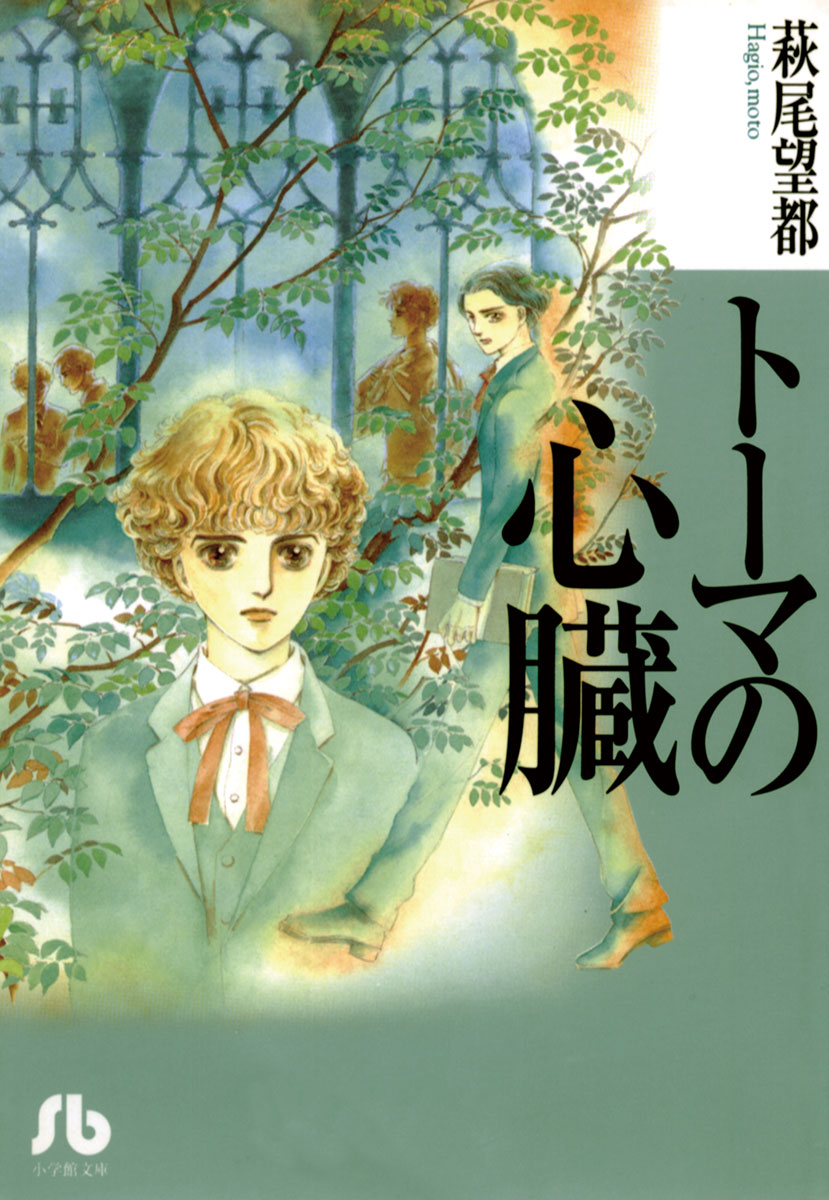
Thomas' Heart" is a girls' manga by Moto Hagio that was serialized in "Weekly Shoujo Comic" for a total of 33 issues starting in 1974, depicting the doubts and interactions of boys in a German gimnazium. It is a timeless masterpiece of girls' manga that boasts strong popularity, delicately depicting boys who are lost and find love in a closed gymnasium. On the last snowy day of that winter, a boy died. The main character, Yuri, receives a short suicide note. The story depicts the fragile and beautiful boys' faith, love, and friendship.
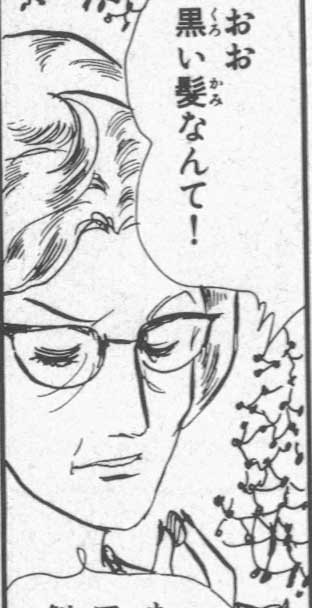
She is Yuri's grandmother and Shelly's mother. She has a racist, white supremacist mindset, and is averse to Yuri, who has dark hair.
Elisabeth Bayhan
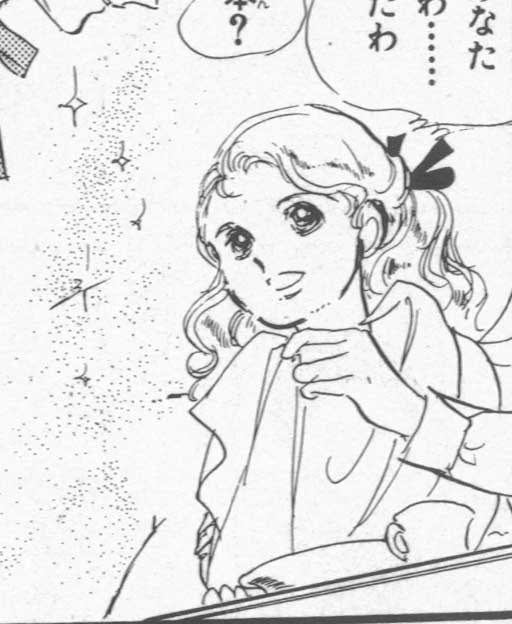
Yuri's younger sister who is 8 years old.
She is sickly and unable to get out of bed, but she is a pure and kind girl. She is adored by her grandmother because of her blonde hair.
Bernhard Werner.
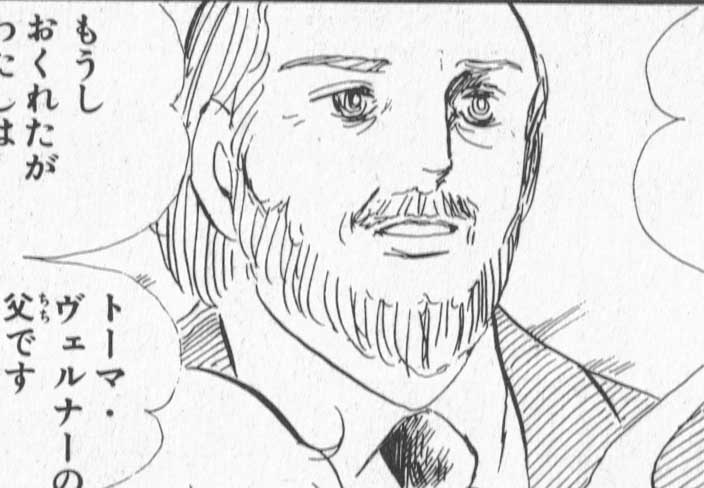
Thomas' father and former teacher at Schlotter Betz. He is worried about his wife who lost Thomas.
Adèle Werner.
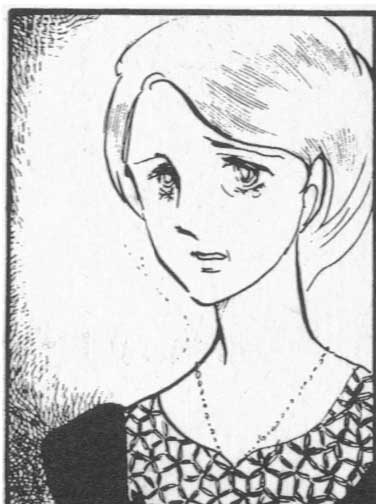
Thomas' mother and cousin of Erick's biological father. She was kind and doted on Toma.
Thomas' brother
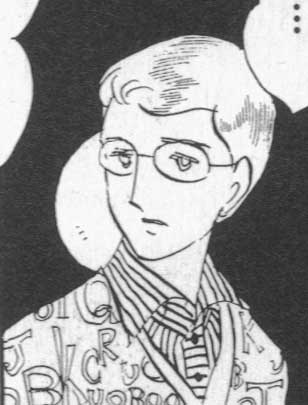
A thoughtful young man. A kind young man who loves his mother.
Terminology for The Heart of Thomas
gymnasium
A secondary educational institution prepared as a preparatory stage for higher education in Europe. In Germany, where the film is set, it is an eight-year educational institution for university admission. It does not exist in the former East Germany. It is equivalent to integrated junior and senior high schools in Japan, lycées in France, and grammar schools in England. The word "gemnasium" is derived from the ancient Greek word "gymnasium.
In Germany, students are required to decide on their future career path at the age of 10 or 11, although this varies from region to region. Students who choose a gymnasium for a university education are considered to be from excellent and wealthy families. In addition, there are vocational training schools and schools for the acquisition of the Meister (national diploma).
In the film, the school is treated as a boarding school for boys, but co-educational and commuter schools are also common.
gymnasium product
This is a favorite setting of the "Hana no 24-nen Gumi" (Hagio Moto, Takemiya Keiko, Oshima Yumiko, Yamagishi Ryoko, etc.), who represented the shoujo manga revolutionary period. Keiko Takemiya's "The Poem of Wind and Trees" is another representative work.
In shōjo manga, gimnasium is a boarding school for boys where mass is often held every morning. Ribbon ties are the standard uniform.
The theme of the story is the growth of immature boys. Boys from good families gather in a closed world, and fragile, beautiful boys and mature, delinquent seniors who enjoy drinking and smoking appear. Boy love is often depicted, and it is also the prototype for today's boys' love.
Novels include Erich Kestner's "Flying Classroom" and Jean Cocteau's "Horrible Children" (which has been comicized by Mochito Hagio).
Frequently used German Ruby
Freulein (Fräulein) is the German name given before the name of an unmarried woman. Example: Freulein Thomas.
Le bébé (le bébé) means baby in French, but is also used for a lover with affection.
Various other German rubrics such as Meine Muthe (my mom), Amour (god of love), Arut (doctor), Fechten (fencing), Alkohol (alcohol), and Liebe (like) are also used in sentences in the work.
Jacobian building
This is an annex-like building located away from the dormitory. The upperclassmen are holding a tea party in a room at the end of the second floor. The room is brightly lit and furnished with large sofas.
Before Cyfreet was released from the school, it was a dark hangout for delinquents, and there were often disturbances.
Yuri had refused to enter the room where he was chastised, but after regaining his faith, he was invited by Bacchus to enter. It is also a symbol of Yuri's rut.
There are also the John and Simon Pavilions.
Famous quotes, lines/scenes and scenes from "The Heart of Thomas"

Related Articles
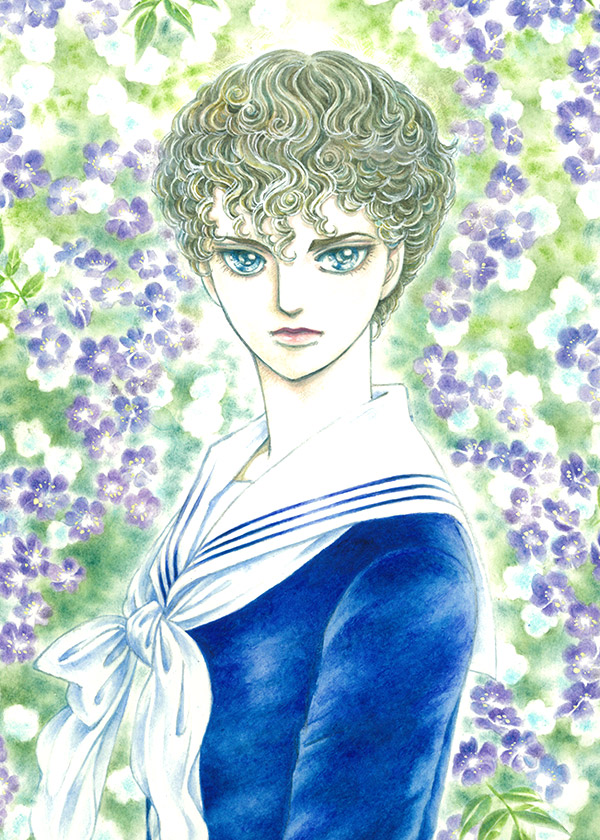
Spoiler commentary and discussion of Poe's Family (Mochito Hagio)
Poe's Clan" is a girls' manga featuring Edgar, a vampire boy, that has been published since 1972. It has a strong fan base for its aesthetic appeal and the melancholy of the vampaneras, who are not accepted by humans and must live in solitude. It was adapted for the stage in 2018 by the Takarazuka Revue, with which it has a strong affinity. It tells the story of Edgar, who wanders around the country as a boy who will never age, and survives alone while losing his friends.
Read Article
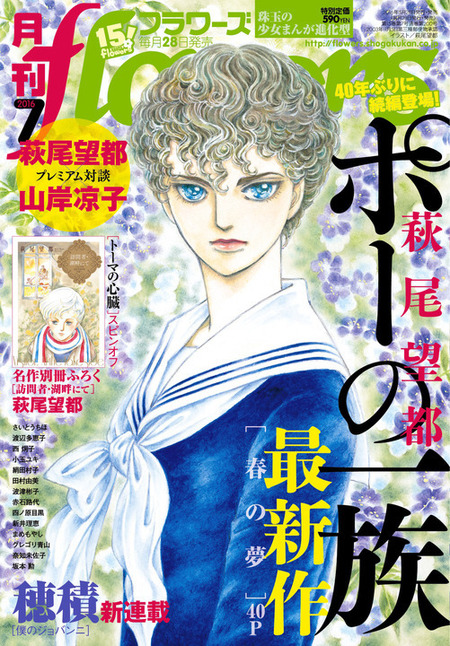
Hagio Moto's "Poe's Family": "Haru no Yume," the first sequel in 40 years, is so well-received that the magazine is going into overprint!
Since I was still young, the name "Moto Hagio" had already set him apart from other manga artists. Mr. Hagio has many excellent works, among which the "sequel" to his especially famous "Poe's Family" has recently been published in the monthly magazine "Flowers. The sales of the book far exceeded the publisher's expectations, and the book will soon be reprinted.
Read Article

Hana no 24-nen Gumi: Women Artists Who Radically Changed the Shojo Manga Industry
These female artists were active in the 1970s and took approaches that had never been taken in girls' manga before, such as BL and aesthetic expressions, which are not uncommon nowadays, content that included literary elements, and delicate illustrations. Since they were all born in 1949, they are known as the "Hana no 24-nen class. Here is a summary of the artists who are nostalgic for the author's generation.
Read Article
Tags
Contents
- Overview of "The Heart of Thomas
- Synopsis and story of "The Heart of Thomas"
- Death of Thomas
- Transfer student Erik
- Yuri's Secret
- Reunion with the devil and leftover love letters
- Thomas' will
- Characters and characters from "The Heart of Thomas"
- Schlotter Betz students
- Yuri (Yurismor Bayhan)
- Thomas Werner
- Erich Fruehlink
- Oscar Reiser
- Cyfried Gast.
- Ante Rohe.
- Bacchus
- redovi
- Jose.
- Herbert
- love
- earldom
- Airos (Aro)
- Igu (lake monster said to be living in Kyushu's Lake Ikeda)
- faculty
- Rudolf Muller
- Dr. Bush.
- Dr. Homan.
- School Doctor (Alut)
- Students' families/adults
- Marie Schwarz
- Yuri Sid Schwarz
- Maks Dodd.
- Alfonne Kimburg.
- Roger Brown
- Gustav Reiser.
- Hera (Helene Reiser)
- Sherry Bayhan.
- Yuri's father
- Yuri's grandmother
- Elisabeth Bayhan
- Bernhard Werner.
- Adèle Werner.
- Thomas' brother
- Terminology for The Heart of Thomas
- gymnasium
- gymnasium product
- Frequently used German Ruby
- Jacobian building
- Famous quotes, lines/scenes and scenes from "The Heart of Thomas"
- Thomas' will
- Thomas' love letter
- Erik: "I'll give you one feather."
- Backstories, trivia, subplots/episodes, and anecdotes from "The Heart of Thomas"
- Works that influenced this work
- Struggling Popular Vote
- Influence of Mochito Hagio