
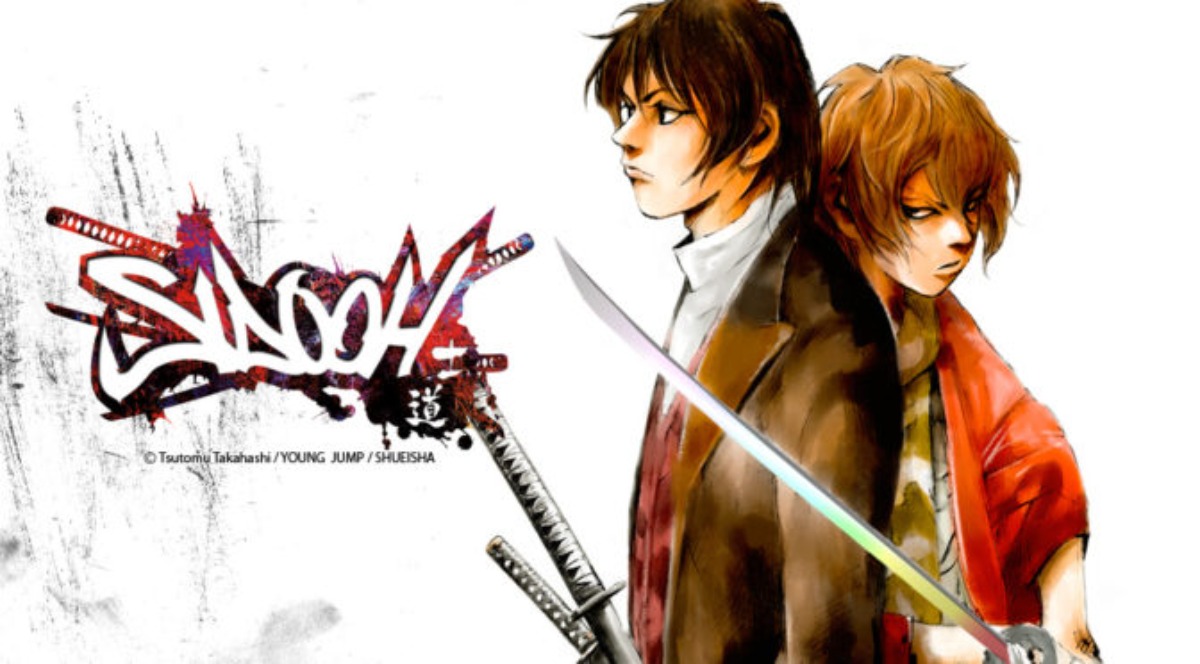
SIDOOH-Shido" is a historical manga by Tutomu Takahashi, serialized in "Weekly Young Jump" from June 2005 to November 2010. Set in the Edo period (1603-1868) just before the upheaval at the end of the Edo period, it tells the story of the Yukimura brothers, who lost their parents, and their survival as samurai while learning swordsmanship. The story depicts the brothers' growth and the ordeals they face against the backdrop of the chaos and shura of the times, deeply moving the reader.
Kajiro Tanabe
A merchant who owned a kimono shop in Asakusa. He had two daughters, but one of them died suddenly, and out of his grief he lost the will to live. In despair, he begins to wish to enter Hakushin-go in search of happiness. However, the merchant became obsessed with gambling and women, and as a result, he neglected his work and spent his days chasing debts. Still, he maintained his belief in Baishin-go and hoped to escape from his own unhappy situation. He coined a new word, "Morumi. He feels good when others chant this word with him. The merchant is put to the test. The merchant succeeds in overcoming the ordeal, abandoning the real world, which has been plagued by calamities, in order to be allowed to enter Baishin Township. During the Bae-shin Festival, the merchant participates in the "Fire Running Ceremony" to raise his manhood. He succeeded in advancing only one step to the gojinshi, but was suddenly pushed aside and fell into the scorching heat, burning to death.
Kiritake Tsukumo
Member of Baishin Township.
Arara.
Member of Baishin Township.
Ullala
Member of Baishin Township.
person associated with the Edo shogunate
Tokugawa Iemochi
He was the 14th conquering general of the Edo shogunate, with long hair and a love of confectionery. Iemochi lived only 20 years during his lifetime. In his short life, he is highly regarded for overcoming the turmoil of the closing days of the Tokugawa shogunate with his youth. Katsumaishuu said of him, "He was tossed about by the waves of the times because of his youth, but if he had lived a little longer, he might have built a reputation as a great monarch. He was also a man of great military prowess.
Ii Naosuke
In 1853, the arrival of the black ships forced Japan to choose between opening its borders to the outside world and seclusion from the rest of the world. In 1858, Ii Naosuke decided to open the country on his own initiative in accordance with the demands of the United States. Emperor Komei and the Hitotsubashi faction of the shogunate reformists, who supported the Emperor's exclusion of foreigners, were outraged by this decision. In 1860, the anti-exclusionist faction planned to assassinate Ii Naosuke, the most powerful person in the shogunate. On March 3 of the same year, Ii Naosuke was assassinated outside Sakuradamon Gate of Edo Castle by Mito Imperial Roushi (Mito Imperial Roushi) in the snow (Sakuradamon-gai no Hen). This historic terrorist attack plunged Japan into a period of turmoil at the end of the Edo period.
Hikogoro Hori
He was a shogun of the Edo Shogunate and served as a Kanagawa Magistrate. He was a supporter of opening the country to the outside world and considered pirates who tried to overthrow the country a national disgrace. He could speak English and was in a position to be held accountable by Johnson whenever scandals occurred. He noticed that Mito ronin were breaking in as laundresses and kidnapped and imprisoned Osono. When Ozon confessed his plan to attack the black ships, he attacked Shimizu-ya and had Tanabe kill them all. Later, he despairs after witnessing Johnson's betrayal on the black ship Washington. He then engages in a one-on-one battle with Seizo for the future of Japan, but is ultimately beheaded.
Kaishu Katsu

He was a shogunate official of the Edo Shogunate and served as the head of the Bansho Chosho. He was a joking, high-spirited character who often slipped up. However, he was consistent in his beliefs and actions and was respected by everyone. He was fond of American bourbon, and in his opening address at the Gekken Gathering held by the Banmeikan of Aizu, he explained the importance of accepting new things without abandoning the sword, which holds the soul of the Japanese people, and this attracted the attention of the Shiryurentai and the Shinsengumi. After the meeting, he advised the Yukimura brothers to find a safe place to live, comparing the samurai way of life to cherry blossoms. He also introduced them to Kanbei Sagawa of the Aizu clan. He was called "Ichimotsu Oyaji" by Gentaro. Although he had a heart for his country, he also had a black heart, saying that he was not a samurai and would not choose any means to achieve his goal. Although he was indebted to Shotaro, he once threatened to cut him down when all was said and done, but this did not happen due to his death.
Michitaka Tanabe
He was a shogun of the Edo Shogunate and served as the Kanagawa Magistrate. He was a close associate of Hori, known in Edo as an invincible first-class swordsman, and his swordsmanship was no less than Ino's and equal to Seizo's. He preferred direct action, and would decisively defeat his enemies without detouring. He preferred direct action and resolutely defeated his enemies without detours. He mercilessly destroyed Kawabata, Koharu, and others who invaded the port of Yokohama to exclude the barbarians. He was also a good judge of human nature and noticed early on that Momotei was not in good health. He crossed swords with Ino on the black ship Washington and showed an overwhelming advantage. However, while in pursuit of the White Regiment, he came under fire from the fleet led by the traitor Johnson, and sank into the sea along with the Washington.
Tadayoshi Sakai
He was the chief of the Edo Shogunate's Kyoto Office, and appears only by name in this volume. He was targeted for assassination by Satsuma radicals, along with KUJO Naotada, the chief seiji (chief advisor to the shogunate).
Yamagata
A shogunate official of the Edo Shogunate, he was a Kanagawa magistrate.

Tags
Contents
- Outline of "SIDOOH
- The story of "SIDOOH
- Joined the White Lotus Corps (Biyakurentai)
- Encounters and many trials in Edo
- Activities in the Aizu Clan
- Interaction with Shinsengumi
- The Final Battle for Choshu's Transformation
- Characters in "SIDOOH
- protagonist
- Shoutaro Yukimura
- Gentaro Yukimura
- White Regiment (any of the armies that opposed the Bolsheviks during the Russian Revolution)
- Hundred Tongues
- Tasuke Samejima
- Kiyozo Asakura
- Kennosuke Ino
- Baishin Township
- Rugi
- NAGAMO (a type of duck)
- Asaji Kawakubo
- Shizuku Asakura
- Hikosaburo Yamazaki
- Kajiro Tanabe
- Kiritake Tsukumo
- Arara.
- Ullala
- person associated with the Edo shogunate
- Tokugawa Iemochi
- Ii Naosuke
- Hikogoro Hori
- Kaishu Katsu
- Michitaka Tanabe
- Tadayoshi Sakai
- Yamagata
- Shinsengumi (Mibu Roushi Gumi)
- Isami Kondo
- Toshizo Hijikata
- Soji Okita
- Hajime Saito
- Shinpachi Nagakura
- Sanosuke Harada
- Serizawa Duck (Serizawa Kamo)
- Arikawa
- Nohmi
- Persons related to the Aizu clan
- Kanbei Sagawa
- Matsudaira Katamori
- Jirobe Kimura
- Hayakawa
- Jimbo Kurasuke
- Motokichi Hayakawa
- Hideomi Uchiyama
- Choshu clan officials
- Shinsaku Takasugi
- Kogoro Katsura
- Yoshida Shoin
- Monta Inoue
- Genzui Kusaka
- Ryouemon Ishijima
- person related to the Satsuma clan
- Takamori Saigo
- Ryankina.
- Hisamitsu Shimazu
- Toshimichi Okubo
- Persons related to the Tosa Clan
- Ryoma Sakamoto
- Shintaro Nakaoka
- Izo Okada
- Seisen Osawa
- People related to the Mito Clan
- Daigo Kawabata
- Kahei Nagato
- Roushigumi
- Hachiro Kiyokawa
- Imperial Court (Chotei)
- Emperor Komei
- Hisatada Kujo
- Europe and America
- Johnson.
- Ford (car)
- Other
- Koharu
- park
- Kengo Soma
- Kikuno Soma
- Seijiro Morita
- Tetsumasa
- Toshigoro Gonda
- Sakuma Shozan
- Terms of "SIDOOH
- Difference between "shido" and "bushido
- Siberian blue robin (Luscinia cyane)
- Baisin Township (China)
- White Regiment
- group of Ronin
- Mibu Roshi Gumi
- Famous quotes, lines, scenes and scenes from "SIDOOH
- Shotaro Yukimura: "I can cut your body, but I can't cut your will."
- Shotaro Yukimura: "No matter how many roads there are, the path of the samurai is one."
- Shotaro Yukimura: "We... will defend this country even if we die."
- Gentaro Yukimura: "Brother, I will live with you. That's my shido."
- Gentaro Yukimura: "I believe in my brother. Because you are my brother."
- Seizo Asakura: "I make money with my sword. That is my shido."
- Seizo Asakura: "We will kill you before you kill us."
- Shinsaku Takasugi: "If you throw it away so easily... give it to me."
- The scene where he loses his mother in a corollary.
- The Yukimura brothers meet Seizo and beg him to be their apprentice.
- Backstory, Trivia, and Anecdotes about "SIDOOH
- The idea for this work is based on real people and historical facts
- Suspended in the middle of the season due to health problems
- Popular not only in Japan but also abroad
- Models and names of Shotaro and Gentaro
- The unit that served as the model for the White Regiment
- Author apologizes for last episode's online spoiler spreading frenzy.