
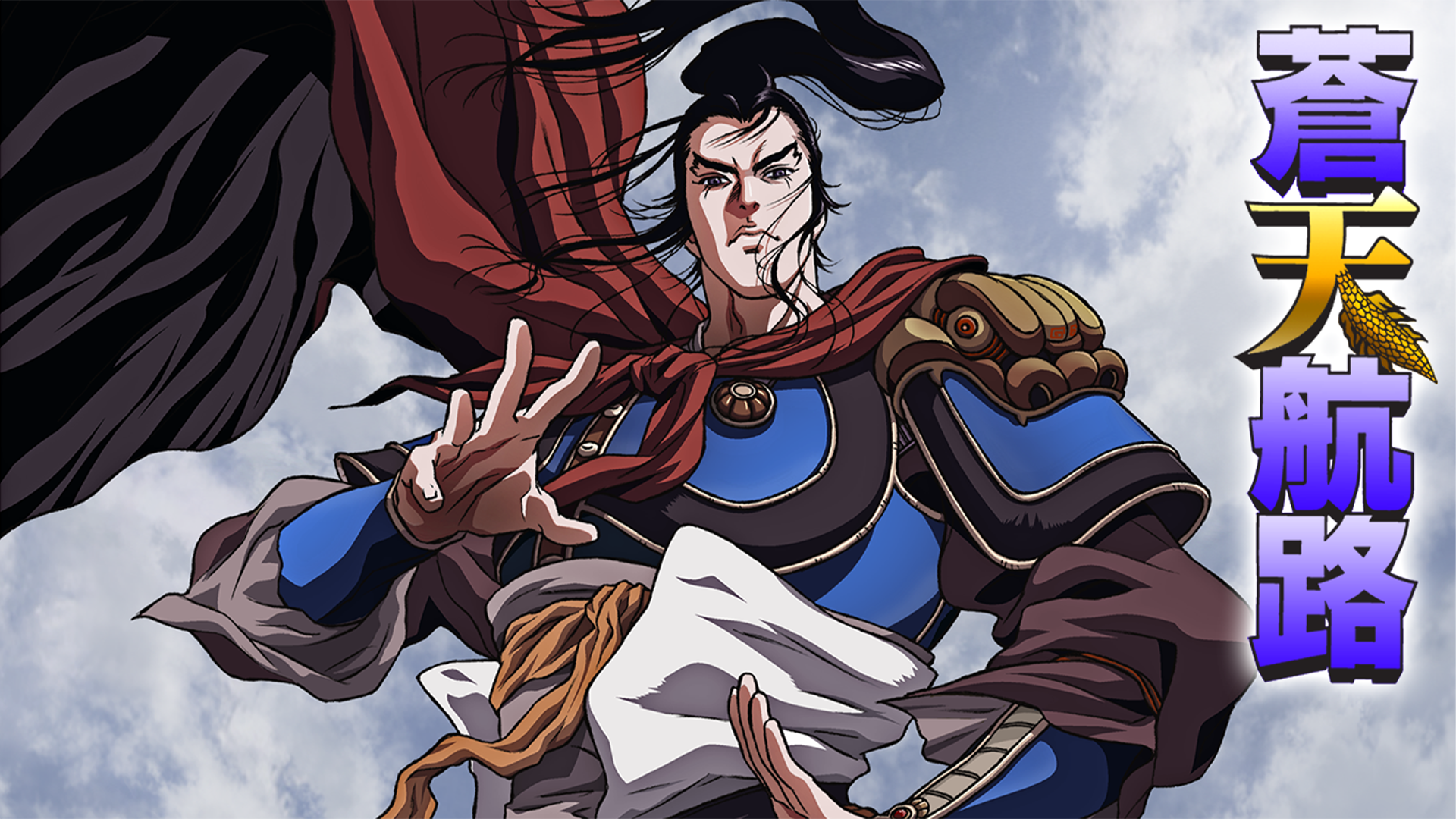
Souten Kouro" is a manga and anime based on the manga that was serialized in "Morning" magazine from 1994 to 2005 by Lee Gaku-ren (original story and draft) and Wang Xinta (artwork).
Originally, Cao Cao was considered the villain of the "History of the Three Kingdoms," but this historical work depicts the rise and fall of Cao Cao from the end of the Later Han Dynasty to the Three Kingdoms period in China. By depicting the Legend of the Three Kingdoms from an unprecedented new perspective, the film developed a new fan base in addition to the traditional Legend of the Three Kingdoms fans. This work led the Sanguozhi boom in the Heisei era, establishing the Sanguozhi as a genre in various media and triggering the birth of many boldly adapted works.
Wu Lan (look)
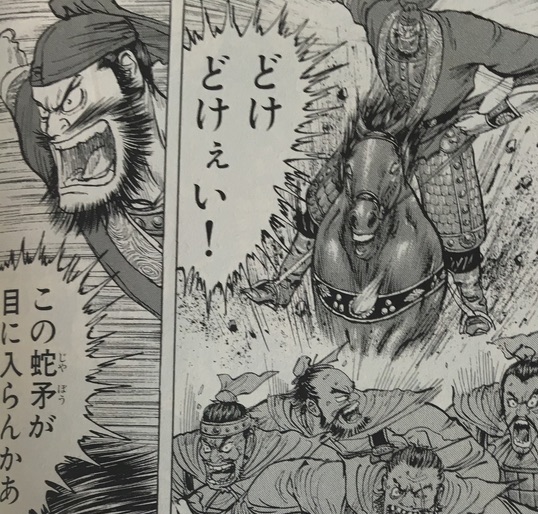
He was a busho (Japanese military commander) who appeared in the Kanchu War.
It is strongly influenced by Kanu.
He was killed by Cao Hong.
Liao Hua
His azana (adult males nickname) was 元倹.
During the offensive and defensive battle at Hanji Castle, he tried to inform Guan Yu of Lü Meng's occupation of Jingzhou, but was defeated by Sun Jiao.
Zhang Yi
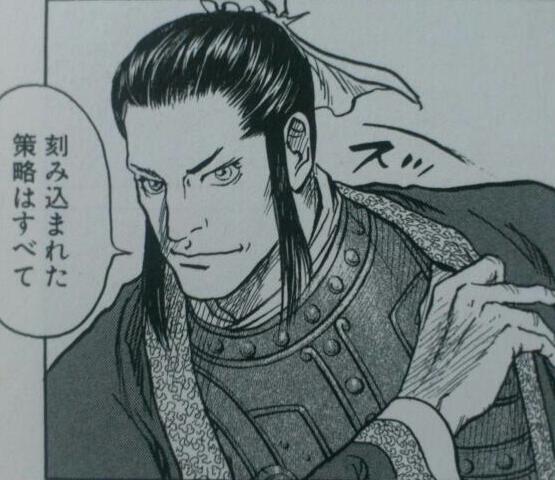
His azana (adult male's nickname) was Hakukyo.
He was a busho (Japanese military commander) who appeared in the Kanchu War.
Civilian of Shu
Zhuge Liang
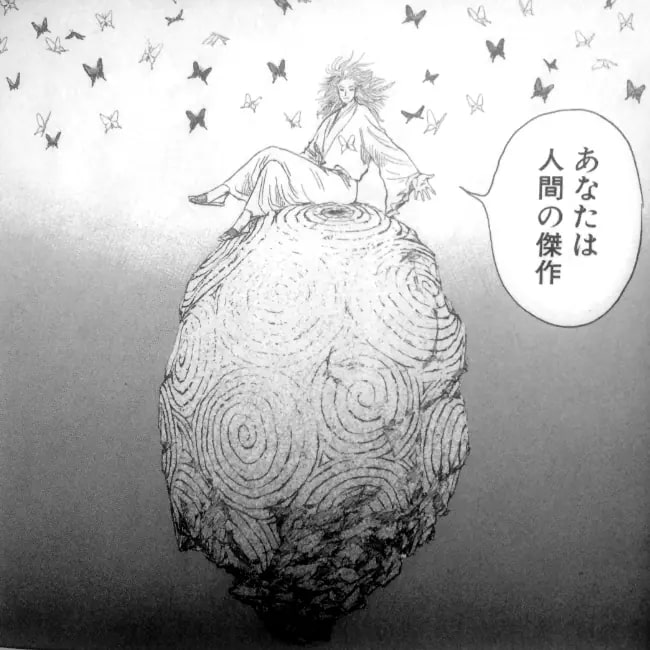
His azana (adult male's nickname) was Komei.
Referred to as' 伏龍' by the famous Sima Hui, he is a talented person with a mysterious and mysterious look.
When he met Liu Bei for the first time, he preached the' Tenka Sanbun no Kei' (Plan of the Three Parts of Tenka), and joined the camp by the' Sanko no Rei' (Gratitude for Three Visits).
In the Battle of Chohan, he awakened Liu Bei as tenkabito (ruler of the country).
Although he showed an unusual obsession with Cao Cao (right), he never lost interest from Cao Cao.
Cao Bao
He was originally a vassal of Tao Qian.
After Liu Bei gave the title of Xu Zhou to him, he became a vassal of Liu Bei.
When he was attacked by Lü Bu, he remonstrated with Zhang Fei and was strangled to death by Zhang Fei who got angry.
Xu Shu
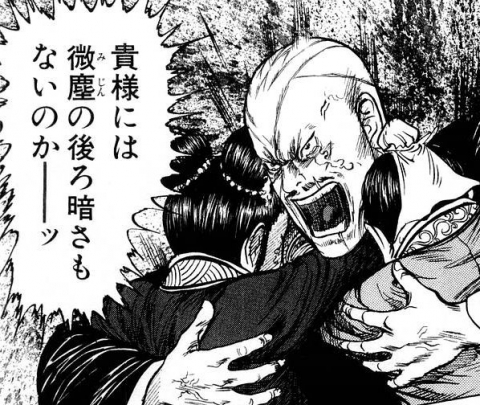
His azana (adult males nickname) was Genchoku.
He taught Liu Bei about the existence of Zhuge Liang.
In the Battle of Nagasaka, he moved his troops in place of Liu Bei, but was captured by the army of Cao Cao.
Ma Liang
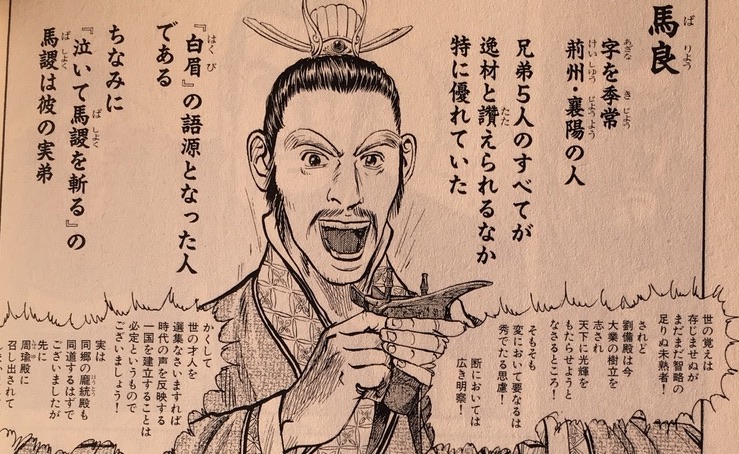
His azana (adult male's nickname) was Kijo.
His eyebrows are white, and he was a retainer of Liu Bei, the origin of the word' shiromayu' (white eyebrows).
Mi Zhu
His azana (adult male's nickname) was Shichu.
He was an older brother of Hikiken.
He was a senior vassal of Liu Bei from the time of Xu Zhou.
Yin Guan
His azana (adult males nickname) was Kokyu.
He was originally a vassal of Liu Biao.
When Liu Bei and Sun Quan formed an alliance, they strongly insisted on the return of Gyeongju.

Tags
Contents
- Overview of Soten Koro
- Outline and story of "Soten Koro"
- Juvenile to adolescent
- Kinu no ran
- Battle of Dong Zhuo
- Battle against the Cheongju Yellow Cloth Party
- Battle of Lü Bu
- Battle of Guandu
- Hokusetsu
- Battle of Nagaita
- Battle of the Red Wall
- Guxianling
- Battle of Tongguan
- Liu Bei no 入蜀: Hanchu seito (Sino-Chinese Conquest): Giou inauguration
- Battle of Hefei 〜 Battle of 濡須
- Battle of Mount Dingjun: The Birth of the Han Chinese King
- The Battle of Fan Cheng: The Death of Cao Cao
- List of Soten Koro characters
- Protagonist
- Cao Cao
- Cao Cao Shitenno
- Xiahou Dun
- Xiahou Yuan
- Cao Ren
- Cao Hong
- Wei military officers
- Xu Chu
- Yu Jin
- Dian Wei
- Pan
- Zhang Xiu
- Yue Jin
- Li Tong
- Zhang Liao
- Xu Huang
- Li Dian
- Man Chong
- Hōtoku
- Zhang He
- Zang Ba
- Shin (spicy)
- Song Il
- Chokan
- Wei civil servants
- Xun Yu
- Guo Jia
- Cheng Yu
- Xun You
- Jia Xu
- Liu Ye
- Wen Hui
- Chusei
- Liu Fu
- Sima Yi
- Zhang Ji
- Zhao Yan
- He Yan
- Guo Huai (or Arrowhead)
- Mao Jie
- Chen Lin
- Song Zhong
- Du Xi
- Hua Xin
- Cai Mao
- Zhang Yun
- Xun Yi
- Xun Can
- Cui Yan
- Du Ji (time)
- Jia Kui
- Teihi
- Yang Pei
- Lou Gui
- Zhong Yao
- Joeki
- Zheng Hun
- Dong Zhao
- Wei Kang
- Wei Feng
- Liang Mao
- Wang Can
- Ying Chang
- Xu Gan
- Liu Zhen
- Chen Jiao
- Wu Zhi
- Shushaku
- Chen Qun
- Chin 禕
- So-do, O Sho, O Tan, Zhang Quan, and Liu Wei
- Cao Cao officials
- Benriro
- Cao Ang
- Cao Pi
- Cao Zhang
- Cao Zhi
- Cao Xiu
- Cao Teng
- Cao Song
- Byakuren (White Lotus)
- Temiko
- Kanrin 霖明
- 甄姚
- Cao Rui
- Cao Jie
- Cao Anmin
- Cao Tai
- The Shu and Liu Bei Camps
- Liu Bei
- Military officer of Shu
- Kanu
- Zhang Fei
- Zhao Yun
- Huang Zhong
- Ma Chao
- Guan Ping
- Shuko
- Ma Dai
- Meng Da
- Wei Yan
- Yan Yan
- Chen Shi
- Lei Tong
- Wu Lan (look)
- Liao Hua
- Zhang Yi
- Civilian of Shu
- Zhuge Liang
- Cao Bao
- Xu Shu
- Ma Liang
- Mi Zhu
- Yin Guan
- Pang Tong
- Ma Su
- Fa Zheng
- Jian Yong
- Takuyo
- Li Hui
- Zhao Lei
- Sonro
- Wang Fu
- Liu Bei officials
- Hikiken
- Lady Gan
- Liu Ji
- Liu Shan
- Liu Feng
- Kure and the Sun Jian, Sun Ce, and Sun Quan camps
- Sun Jian
- Sun Ce
- Sun Quan
- Military officer of Wu
- Zhou Yu
- Lu Su
- Huang Gai
- Cheng Pu
- Han Dang
- Zu Mao
- Taishi Ci
- Wu Can
- Zhu Ran
- Lu Xun
- Shi Ren
- 阿獞
- Ding Feng
- Luo Tong
- Pan Jun
- 黥赤
- Eight Beasts
- Gan Ning
- Zhou Tai
- Zhang Qin
- Xu Sheng
- Chen Wu
- Pan Zhang
- Ling Tong
- Lü Meng
- Wu civil servants
- Chosho (Zhang Zhao)
- Zhang Hong
- Lü Fan
- Zhuge Jin
- Yu Fan
- Gu Yong
- 孫家 officials
- Son 燁夏
- Da Qiao
- Xiao Qiao
- Sun Shao
- Sun Jiao
- Later Han Dynasty
- Liu Hong
- Ryuben
- Ryu Kyo
- 亶公
- Empress Dowager Who
- He Jin
- Empress Dowager Dong
- Dong Cheng
- Empress Fu Shou
- Fukutoku
- 蹇朔
- Qiao Xuan
- 阿政
- Chen Fan
- Huangfu Song
- 厳忠
- Ding Yuan
- Gofu
- Cai Yong
- Wang Yun
- Sĩ Tôn Thụy
- Wang Zifu
- 呉子 ran (orchid)
- 种輯
- Kong Rong
- Kitsune (lucky 邈)
- Left ridge
- Oko (Wang Gong)
- Jujoji
- Zhang Rang
- Zhao Zhong
- Jian Shuo
- Dong Zhuo camp
- Dong Zhuo
- Li Ru
- Xu Rong
- Hua Xiong
- 李傕
- Lü Bu camp
- Lü Bu
- Chen Gong
- Gao Shun
- Chen Gui
- Chen Deng
- Song Xian
- Wei Xu
- Hou Cheng
- Yuan Shao camp
- Yuan Shao
- A military officer of the Yuan Shao army
- Kikugi (malted rice)
- Yan Liang
- Wen Chou
- Rikara
- Han Jun
- Liu Pi
- Chunyu Qiong
- Choi Gye
- Mutsugenshin
- Korean 莒子
- Lü Weihuang
- Guo Yuan
- Civilian of the Yuan Shao army
- Tian Feng
- Xu You
- Soju
- Shen Pei
- Yuan Shao officials
- Yuan Tan
- Yuan Xi
- Yuan Shang
- Consort Dowager Liu
- Yuan Shu camp
- Yuan Shu
- Ji Ling (pretty)
- Hashi 甤
- Li Feng
- Yue Jiu
- Beam steel
- Liu Biao camp
- Liu Biao
- Liu Qi
- Liu Cong
- Kuai Yue
- Fu Xun
- Liu Zhang camp
- Liu Zhang
- Chosho (Zhang Song)
- Gao Pei
- Yang Huai
- Teitaku
- Zhang Ren
- Xu Jing
- Suzuzhou warlords
- Ma Teng
- Han Sui
- Chenggong Ying
- Cheng Yi
- Liang Xing
- Yang Qiu
- Li Kan
- Ma Wan
- Troop
- Zhang Miao
- Bao Xin
- Gongsun Zan
- Tao Qian
- Qiao Mao
- Kong Zhou
- Lu Kang
- Liu Yao
- Gongsun Kang
- Lei Xu
- Other
- Lee Ryeol
- Suisho (crystal)
- Zhang Jue
- Cosen
- Huche'er
- Mr. Zou
- Anikiba
- Tadun
- Kyotan
- Terms of the Soten Koro
- 党錮 no kin
- Tai Hiramichi
- Kinu no ran
- Later Han
- Eunuch
- 俠
- Denkoku no Gyokuji
- Confucianism
- Wei
- Kure
- Shu
- Tenka Sanbun no Kei
- Words, lines, scenes from "Soten Koro"
- Cao Cao "Amore!"
- Cao Cao "Heaven"
- Cao Cao: "Well then!"
- Zhang Fei: "I'm a mere 侠者. I have lost sight of your place."
- Sun Quan "Don't say the point,"
- Behind the Scenes, Trivia, Small Stories / Episodes and Anecdotes of "Soten Koro"
- Author Lee Hak-in's Death and Impact
- The author was not familiar with "Sangokushi."
- Theme song and insert song of "Soten Koro"
- OP (opening): TRIBAL CHAIR "909"
- EDs (ending): Ogre You Asshole "Pinholes"