
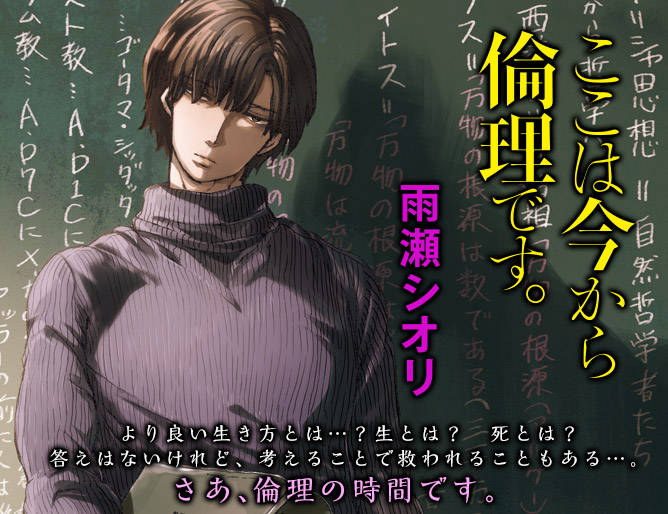
This is ethics from now on." is a manga work by Shiori Amase. It was serialized in the November 2016 issue of Shueisha's magazine Grand Jump PREMIUM. It depicts Takayanagi, a teacher in charge of the ethics department at a high school, dealing with students with various problems and anxieties and leading them to solutions to their problems. In January 2021, the series was dramatized with Hiroki Yamada in the lead role.
German philosopher; with Marx built the worldview of scientific socialism; perfected scientific socialism by inheriting the scientific and revolutionary traditions of classical British economics and French socialism; and, as an advocate of Marx's theory, focused on criticizing what misled or deviated from the theory.
Robert Owen
British early socialist; leader of fanciful socialism who built the New Harmony communist village in the United States; successfully ran a factory in Manchester; worked to improve society in Scottish New Lanark; worked to protect workers by amending factory laws; led trade union and cooperative movements; pioneered socialism.
Words, lines, scenes, and scenes of "Here is now ethics."
Max Scheler: "Love Is the Bridge from Poor to Rich Knowledge"
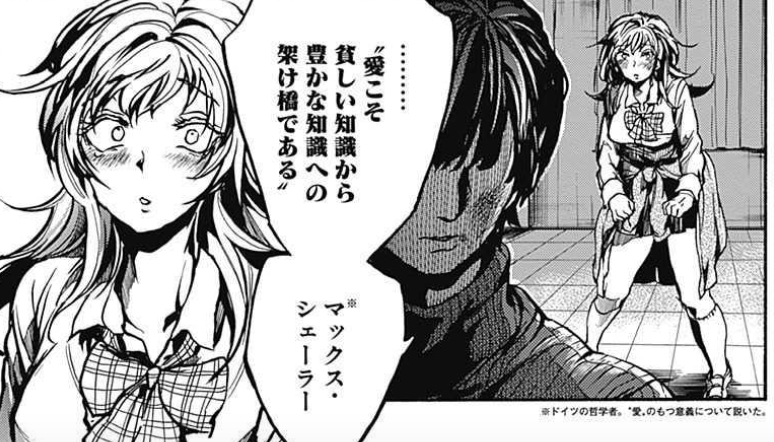
Aizawa is passionate about Takayanagi. Takayanagi encourages Aizawa to acquire culture. When she declares to Takayanagi that she will acquire culture in order to become a woman worthy of Takayanagi, she tells Aizawa that "love is a bridge from poor knowledge to rich knowledge" and leaves the classroom.
Schopenhauer "Everyone thinks that the limits of his vision are the limits of the vision of the world."
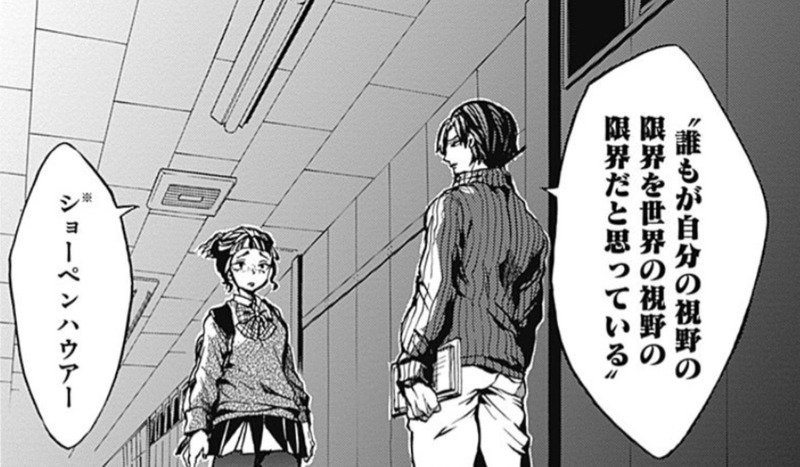
Sakai, who looked down on everyone around him because of his intelligence, did not like Takayanagi's attitude, and after the class, he talked to Takayanagi in the hallway to complain to him. Takayanagi said to Sakai,' Everyone thinks that the limit of their field of vision is the limit of the world's field of vision.'
Francis Bacon "Experience is the best proof, after all."
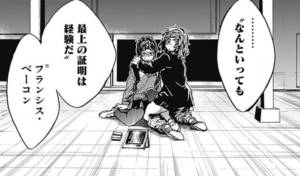
Takayanagi stopped Yagi's attempt to commit suicide and rushed to Sakai. Sakai thought that all he had to do was get information from books and the Internet, so he couldn't understand Yagi's feelings leading to his suicide. Takayanagi said to Sakai and Yagi,' Above all, the best proof is experience,' and recommended them to experience various kinds of study and play.
Lao-tzu (Lao-tzu):' A good man considers it good, and a bad man considers it good. Virtue is good.'
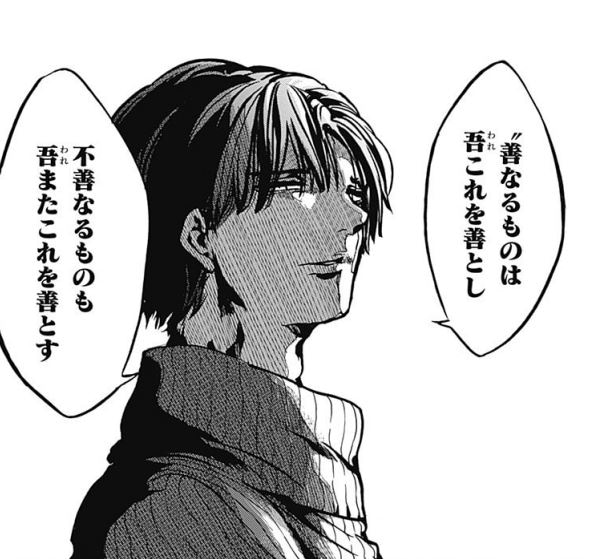
When Taniguchi was wondering,' If there is a cause in both the oppressor and the oppressor, who should I help?', he told Taniguchi that people are all good, saying,' Good people regard this as good, and bad people regard this as good. Virtue is good.' Then he told Taniguchi that he wanted him to be a teacher who could believe in and save all bullies and bullies.
Gautama シッダータ "Don't believe anything, no matter what you read or are told, except that your own reason agrees."
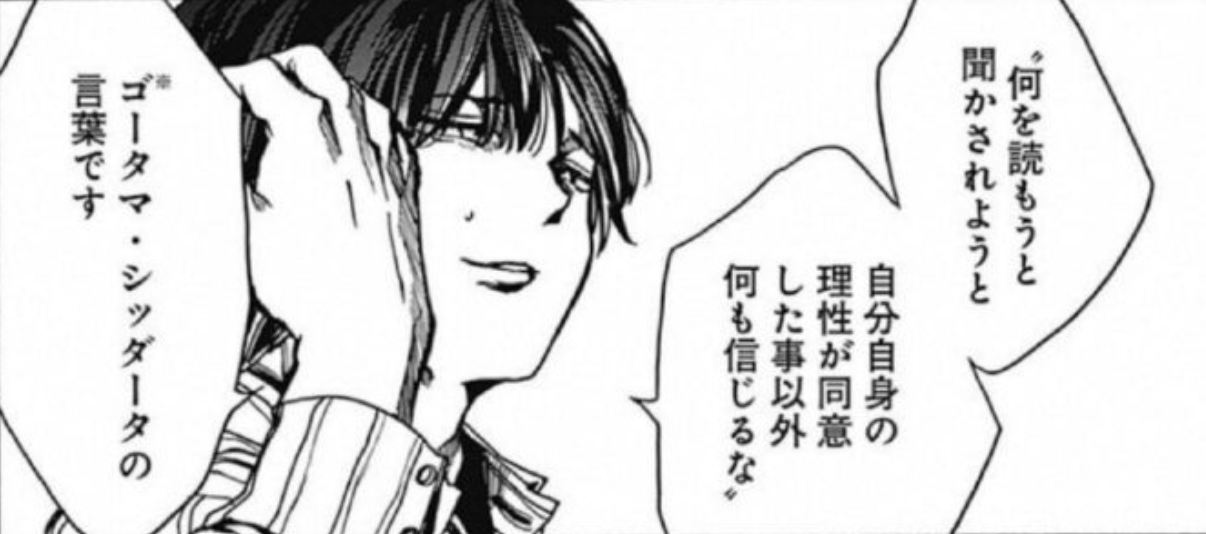
Takayanagi talks about various ethical issues, such as Arete and エウゼーン, to Honda, who is aware of the fact that she can hear her voice from the stuffed toy Ryu. When the conversation became difficult, Takayanagi told Honda, "No matter what you read or hear, don't believe anything except what your own reason agrees with," and advised him to refer to the opinion he thought was correct.
Behind the Scenes, Trivia, Small Stories / Episodes, and Anecdotes of "Koko wa Now de Rinri de aru."
"Here is now ethics." was born when the author's aunt committed suicide.
It was the suicide of the author's aunt that led to the creation of "Koko wa Ima kara Rinri." Suffering from depression and unable to work, she was living with her mother. One day, when she was told by a relative that she had no heart, she became depressed and thought, "I wish I didn't die at all." After a week of preparation, she committed suicide.
Later, an ethics textbook full of sticky notes, a philosophy book, and a diary titled "Dialogue Diary" were found. The sticky notes were full of notes, and her thoughts, which she had never shared with anyone, were written in the diary.
The author, 雨瀬, who found out that her aunt had been "studying for living" through philosophies, wrote "Koko wa Ima wa Sekken" (This is Ethics from Now) because she didn't want her late aunt's life to end with "suicide of a depressed person."
An author who is well versed in ethics but not in school affairs
Takayanagi gets kicked out of the social studies preparation room because he is a smoker. The revised law went into effect on July 1, 2019, and smoking is prohibited in the premises of "schools, hospitals, child welfare facilities, government buildings, etc." This basically bans smoking in the school premises and there are separate smoking areas. Therefore, the scene of smoking in the preparation room is not true in the first place, but the author 雨瀬 painted it without knowing about it.

Tags
Contents
- Overview of "Here is now ethics."
- The plot and story of "Koko wa Ima kara Shihon de."
- New third year students
- New Second Year Students
- Transfer
- Past edition
- Atami Travel Edition
- Seminar trip edition
- Characters in "Koko wa Ima kara Shihon de."
- Third year students
- Ichiko Aizawa (played by Mizuki Kayashima)
- Miyuki Sakai
- Yagi Maria (Yagi Maria)
- Kyoichi TANIGUCHI (played by Yuto Ikeda)
- Natsuko Natsuko
- Koki HAZAMA (played by Ao Watanabe)
- The Fukagawa period (played by Akana Ikeda)
- Yukito Toki river (played by Rihito Itagaki)
- Ryota YAMANO (played by Seishu Uragami)
- Mayu Yasumura
- Riku KONDO (played by Kaisei Kawano)
- SOGA no 涼馬 (played by Naoki Inukai)
- Hajime Tamura (played by Rairu Sugita)
- Kaori Minami (played by Seina Nakata)
- Yuri Takasaki (played by Sakura Kiryu)
- New second year students
- Okitsu 叶太
- 花琳 INOUE
- Yusuke Watano
- 隅井 Ouka
- Haruyama Tsuyoshi
- Rokumoto (six pieces)
- 鳥岡
- Mie Takeda
- Ryotaro Ryota TOGAWA
- Okayoshi Yoshikazu
- Kawanishi
- Nanjo
- Third year and second year teachers
- Takayanagi (played by Yuki Yamada)
- Kobayashi
- Hagiwara
- MATSUDA (played by Kentaro Tamura)
- Umezawa (played by Jun'ya Kawashima)
- Fujikawa (played by Ariei Umefune)
- Kihara
- Hiiragi
- Kamata
- Transfer teachers
- Tomoko Kuzuo
- Sumiko Ichii
- Hasui
- Other characters
- Professor
- Kaito KONDO
- Yuma
- Juda (played by Sonha)
- Kayashima
- Tsuge
- Minami 佐名
- Kikukawa (Kikukawa)
- The term "here is now ethics"
- Max Scheler
- Arthur Schopenhauer
- Laozi
- Gautama シッダータ
- Søren Kirkegaard
- Socrates
- J. S. Mill
- Epictetus
- Immanuel Kant
- Xunzi
- Hannah Arendt
- Francis Bacon
- Eric Hoffer
- Karl Marx
- Friedrich Engels
- Robert Owen
- Words, lines, scenes, and scenes of "Here is now ethics."
- Max Scheler: "Love Is the Bridge from Poor to Rich Knowledge"
- Schopenhauer "Everyone thinks that the limits of his vision are the limits of the vision of the world."
- Francis Bacon "Experience is the best proof, after all."
- Lao-tzu (Lao-tzu):' A good man considers it good, and a bad man considers it good. Virtue is good.'
- Gautama シッダータ "Don't believe anything, no matter what you read or are told, except that your own reason agrees."
- Behind the Scenes, Trivia, Small Stories / Episodes, and Anecdotes of "Koko wa Now de Rinri de aru."
- "Here is now ethics." was born when the author's aunt committed suicide.
- An author who is well versed in ethics but not in school affairs
- The author who worries whether or not to stick to' mysterious Takayanagi'
- Theme song and insert song of "Koko wa Ima kara Shihon de."
- Theme song: "How To Live (feat. Alisa)" by (feat.) "