
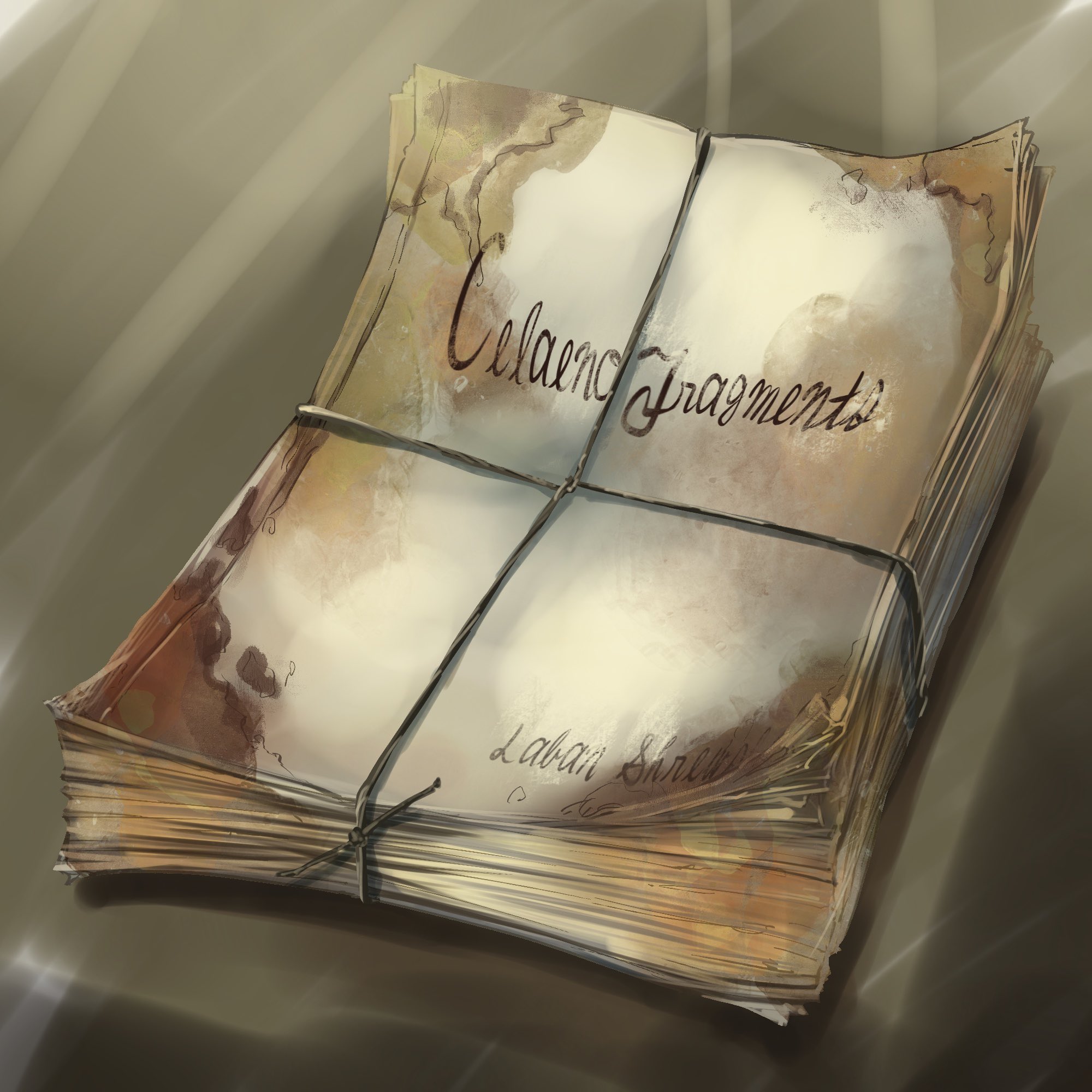
Here we introduce the grimoires that appear in the Cthulhu Mythos, a story system that began with the American novelist H.P. Lovecraft. Various grimoires appear in the Cthulhu Mythos, containing knowledge about old rulers, old gods, and how to summon them.
▼ San's Seven Secret Scriptures
This is a book that has long been a topic of discussion in the West.
It is in seven separate volumes, each volume dealing with a different theme.
In "The Deities of the Unusual," a book called "The Seven Secret Scriptures of the Earth" also appears, but its relevance is unclear.
The sage Barzai is said to have been familiar with this book, which is now maintained by the monks of Dreamland.
Its contents are unknown except that it is written in Chinese.
It is said to be a secret book about ancient gods.
▼ Shibijikikyo Tengi
The author is the "Count de Dalet" and it was written around 1702.
The book describes in detail the paganism in France, including cannibalism and necrophilia.
It was published in France, but was immediately banned by the Church after publication.
There is one copy at Miskatonic University and 13 other copies in existence.
▼ Witch worship in Western Europe
It is a modern English 8-fold format, with various editions and printings.
The hypothesis is stated that the medieval witch coven was a remnant of an ancient pre-Christian religion.
▼ People on the stone monument
A collection of poems with a dull red cover.
The author, known as the Black Poet, became fascinated with the world of nightmares as a result of a supernatural experience he had as a boy.
This collection of poems was printed when he was 17, just before his confinement in a mental hospital, and 1,200 copies were published.
It was apparently inspired by the "Black Stone" of Stregókapár, which he saw during a trip to Hungary, and he died screaming in the hospital afterward.
▼ Serrano Dansho
It is a forbidden book that was left behind not in book form or manuscript, but in the form of a broken tablet.
Dr. Shrewsbury was exposed to its secrets during his stay at the Great Library of Seraeno, and translated a portion of it into English.
Only one copy of the manuscript exists, and it is kept at Miskatonic University in a sealed document case.
The original is a damaged stone tablet from the Great Library of the star Seraeno (Keraeno), a star in the Pleiades cluster. The tablet was inscribed with secret knowledge about the "outer gods" and their adversaries.
The contents include old seals, the art of summoning Cthugua, and the method of making golden mead.
▼ Book of Dojian
A magical book whose existence was claimed by 19th century theosophist Madame Helena Petrovina Pravatsky.
According to her book "The Secret Doctrine," it is the oldest manuscript known to mankind, written in the "forgotten Senzal language."
It is said to have been compiled on specially treated palm leaves.
Its contents are a history book of pre-human Lemurian and Hyperborean history.
▼ Nakoto Codex
The oldest of the books mentioned in the Cthulhu Mythos. It was left behind by the race that ruled the earth about 5,000 years before the birth of mankind, and was translated into human language by the Romar people who existed in the Arctic Circle before the Ice Age. When the Romar people were destroyed by the Noh-Ke, the last copy was brought to the Dreamlands, where it is kept by the priest Atar in the Temple of the Ancient Ones in Ulthar.
The contents include references to the great race of Ys, Tsatgwa, Itaka, and Kadath, methods of mental manipulation through posthypnosis, methods of making time-travel medicines, and details of Ahm-Zar's arrival on earth. Some of the manuscripts mention such things as the marks of the outer deities (banshin) and the nakot pentagon, and in the eighth fragment there is a detailed description of the impalpable and invincible divinity Rahn-Tegos.
▼ Necronomicon
According to Lovecraft's biography, the original source is "Al Azif" (or Kitab al-Azif: Kitab means book/book), written in Damascus in 730 by the mad poet Abdul al-Hazrat.
There are various theories about the end of al-Hazrat, but one specific tradition relates that he was devoured alive by an invisible monster in broad daylight on a street in Damascus after he wrote the book.
Source: ja.wikipedia.org
▼ Ponape Scripture
The original text was found by the author on the island of Ponape and translated by a squire of mixed Polynesian and Asian descent.
The original manuscript was written on paper made of palm leaf fibers and bound in prehistoric wooden boards.
The one circulating was printed after the author's death, but is said to be inferior to the original manuscript.
The whereabouts of the original manuscript are unknown.
The book describes the doctrines of an ancient religion in the South Pacific.
▼ Anonymous religious service book
It describes the ancient beliefs, secret sects, various traditions, and forgotten languages associated with such fearsome deities as Cthulhu, Yog-Sothothoth, Tsatgwa, Gathanothoa, Shub-Niggurath, and Ig, which the author, von Junzt, has seen and heard about throughout the world.
Three editions of this book are said to exist.
▼ The Secret of Maggots
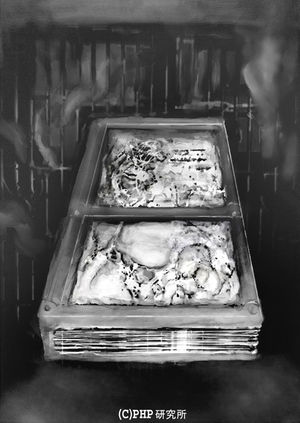
The author, Prin, was a Flemish alchemist, seer, and magician who claimed to be the sole survivor of the Ninth Crusade. He learned witchcraft in Syria, where he was detained as a prisoner of war during his participation in the Crusades, and wrote this book in prison shortly before he was burned in Brussels by the Inquisition.
He is particularly knowledgeable about heretical beliefs in the Middle East region, and describes secret legends and traditions in ancient Egypt, divination, rituals and incantations of the Saracens, and snake gods such as Ig the Father, Han the Dark, and the snake-haired Baiatis.
Source: plagueface.com

Related Articles
In-depth explanation and discussion of the Cthulhu Mythos TRPG (The Call of Cthulhu)
The Cthulhu Mythos TRPG (Call of Cthulhu, CoC) is a tabletop role-playing game (TRPG) by the American game company Keisseum. In the world of fictional gods created by author H.P. Lovecraft, players create the character of the explorer and role-play through him or her. The game is a game in which the players aim to solve a case under a scenario prepared by an arbiter, while being tossed about by fear.
Read Article
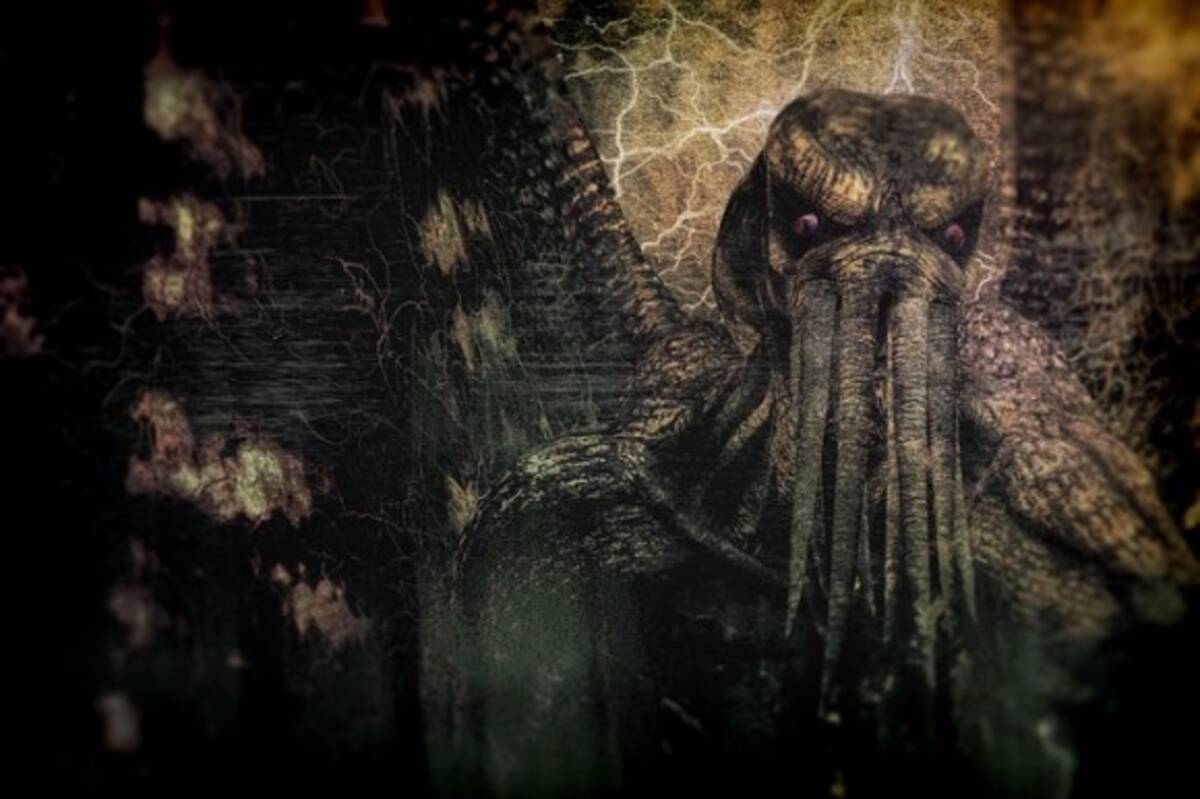
A compilation of images of evil gods, former rulers, and races in the Cthulhu Mythos
This section summarizes the evil gods, former rulers, and races that appear in the Cthulhu Mythos, a creation myth that began with American author Howard Phillips Lovecraft and his friends in the 1930s. An overview and images of the monsters, including "Cthulhu," which is also the title of the genre, are presented.
Read Article
Contents
- ▼ Book of Avon
- ▼ Emerald ceramic piece
- ▼ El toda Un Shirs
- ▼ The King of Yellow Robes
- ▼ Monster and its followers
- ▼ Garrun Dansho
- ▼ Kanaeda
- ▼ クタート Aquadingen (Watato Suijin)
- ▼ Graqui Apocalypse
- ▼ ザンツゥー Tokakazu
- ▼ San's Seven Secret Scriptures
- ▼ Shibijikikyo Tengi
- ▼ Witch worship in Western Europe
- ▼ People on the stone monument
- ▼ Serrano Dansho
- ▼ Book of Dojian
- ▼ Nakoto Codex
- ▼ Necronomicon
- ▼ Ponape Scripture
- ▼ Anonymous religious service book
- ▼ The Secret of Maggots
- ▼ Ruruye variant
- ▼ Related summary