
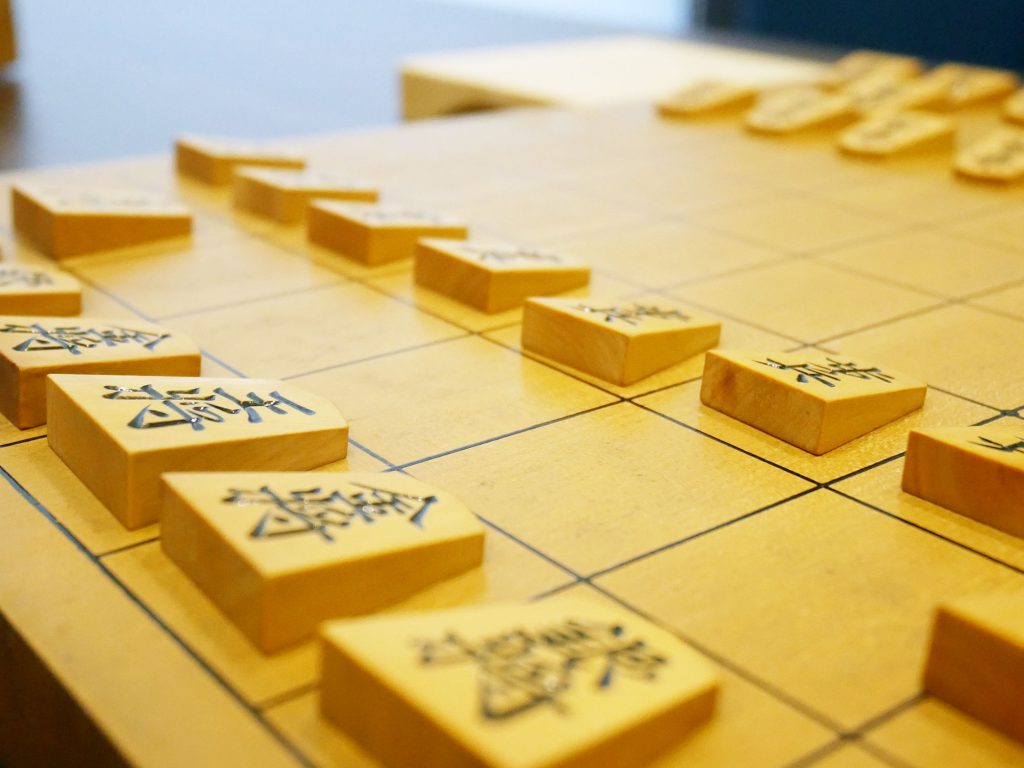
This article summarizes basic knowledge of Shogi, such as the roles of Shogi pieces, how they move, rules, and fouls. The explanation is concise enough for even beginners to remember, so please read this article if you are thinking of starting Shogi or if you have just started and still do not understand it well.

Source: ja.wikipedia.org
Hisha, abbreviated as Hi.
You can go up and sideways as much as possible.
↑
●
←●△●→
●
↓

Source: ja.wikipedia.org
Kakugyo (abbreviated as Kaku)
You can go diagonally as far as possible.
Check
● ●
△
● ●
↘

Source: ja.wikipedia.org
Kinsho (abbreviation: Kin)
You can go 1 square other than diagonally behind.
● ● ●
●△●
●

Source: ja.wikipedia.org
Ginsho (silver general), abbreviated as Gin (silver)
You can go 1 square apart from the side and the back.
● ● ●
△
● ●

Source: ja.wikipedia.org
Keima (abbreviation: Kei)
If you go 1 square, you can go left and right diagonally.
※ The Keima can jump over other pieces and proceed.
● ●
△

Source: ja.wikipedia.org
Kyosha (Incense Burning Cart), abbreviated as Ko
You can go forward as far as possible.
↑
●
△

Source: ja.wikipedia.org
Hohei (foot soldier), abbreviated as Fu.
You can move forward one square.
●
△
◆ Special Rules of Shogi (1) Narikoma
Except for Tama and Kin, players can become' Narikoma' if they advance to the third level of the opponent's territory (opponent's camp).
Source: ja.wikibooks.org
小駒 (pieces other than Osho, Bisha, and Kakugyo) can be changed to Kinsho's movements, and Okoma (pieces other than Osho, Bisha, and Kakugyo) can add Osho's movements to their original movements.
In addition, if you move a piece in the 3rd stage of the opponent's line to somewhere, it can also be done.
King Generals and Gold Generals cannot be.
You can also choose not to become one if you don't want to.
In Shogi, a player turns over a piece to show that he or she has become a Narikoma.
Source: ja.wikipedia.org
Turn over the pieces if you want to be.
The flipped pieces are called differently:

Source: ja.wikipedia.org
Bisha => Ryuo / Ryuo, abbreviation: Ryu / Ryu
The movement of Osho is added to that of Bisha.
↑
● ● ●
←●△●→
● ● ●
↓

Source: ja.wikipedia.org
Kakugyo => Ryoma / Ryoma, abbreviation: Uma
The movement of Osho is added to that of Kakugyo.
Check
● ● ●
●△●
● ● ●
↘

Source: ja.wikipedia.org
Ginsho => Narigin
It moves in the same way as gold.
● ● ●
●△●
●

Source: ja.wikipedia.org
Keima => Narikei
It moves in the same way as gold.
● ● ●
●△●
●

Source: ja.wikipedia.org
Koguruma => Naruka
It moves in the same way as gold.
● ● ●
●△●
●

Source: ja.wikipedia.org
Hohei (infantry) => to kin (gold), abbreviated as: to
It moves in the same way as gold.
● ● ●
●△●
●
◆ Special Rules of Shogi (Japanese Chess) ② Hand Pieces
You can always hold your opponent's piece in your hand
Source: ja.wikipedia.org
The piece you take from your opponent is called Mochikoma, and you can use it when you are your turn.
However, it is a foul to put it where you can't move.
And you can't become one if you put it in the third stage of the enemy line. (You can become one if you move once.)
◆ Foul play in shogi
Don't move your piece when it's your opponent's turn.
This is a foul called two moves.
If you think for a long time, you may not know your turn and point twice in a row, so please be careful.
Also, you can't make a pass in Shogi, so please make sure that 2 players move their pieces alternately.
If a piece goes to the place where it can't move, it will be a foul.
Source: www.shogi.or.jp

Contents
- Children's Rule Setsumei is this way!
- Don't young people know the rules of shogi these days?
- The Basics of Shogi
- ◆ Basic rules of Shogi
- ◆ The movement of the piece
- ◆ Special Rules of Shogi (1) Narikoma
- ◆ Special Rules of Shogi (Japanese Chess) ② Hand Pieces
- ◆ Foul play in shogi
- ONCE YOU'VE LEARNED THIS FAR, LET'S POINT IT OUT!
- Special Rules of Shogi
- ・ Sennichi te
- ・ Jishogi
- ・ Uchiashibue
- ▼ Related articles