
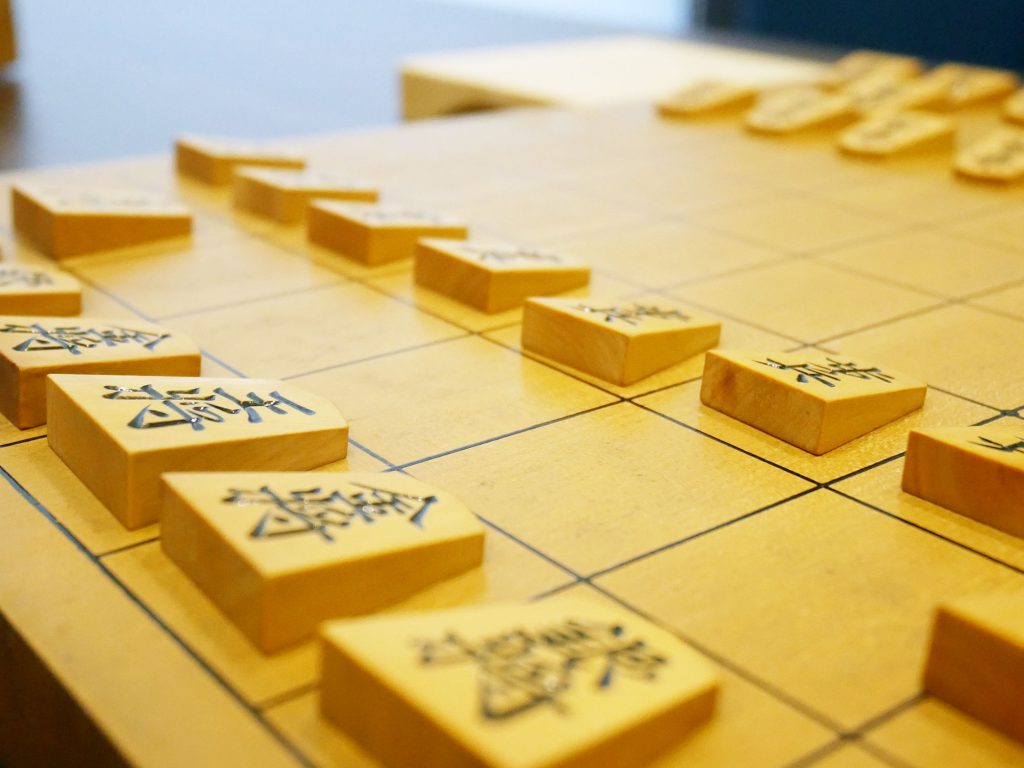
This article summarizes basic knowledge of Shogi, such as the roles of Shogi pieces, how they move, rules, and fouls. The explanation is concise enough for even beginners to remember, so please read this article if you are thinking of starting Shogi or if you have just started and still do not understand it well.
Children's Rule Setsumei is this way!
Shogi (Shogi): How to play Shogi (Shogi) and the rules! For Elementary School Students - RENOTE
renote.net
This article provides a comprehensive introduction to how to play Shogi and the rules for elementary school students. I have tried to explain in an easy-to-understand way, with images, how the frames progress, etc.
If you want to enjoy playing Shogi with your friends or if your grandparents play Shogi and you are curious about it, please read this article and try it for yourself!
Don't young people know the rules of shogi these days?
[Percentage of men who do not know the rules of shogi by age group]
20s: 42.7%
30s: 24.7%
40s: 25.3%
50s: 26.0%
60s: 26.0%
Source: news.mynavi.jp
Recently, data has been released that nearly half of men in their 20s don't know the rules of Shogi.

Source: amanaimages.com
So, I'd like to explain the rules of Shogi from the beginning.
The Basics of Shogi
Shogi is a game in which two people compete to win or lose.
Source: www.shogi.or.jp
In Shogi, two players play alternately.
Source: www.shogi.or.jp
In Shogi, "pointing" means moving a piece to move the game forward.
You need a board and pieces to play Shogi.
Source: www.shogi.or.jp
◆ Basic rules of Shogi
A 9 by 9 square is written on the board, and a piece is placed in the square.
Source: www.shogi.or.jp
In Shogi, there are 20 pieces of each of the 8 types of pieces, which are used by the first hand and the second hand respectively, so a total of 40 pieces are used.
Source: www.shogi.or.jp
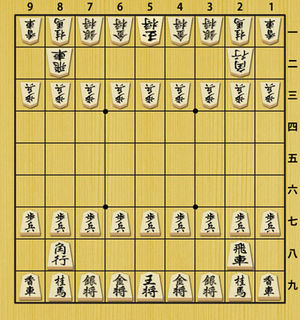
Initial layout of shogi
Why this initial deployment?
But I can only say that this is fixed, so just start with this state.
IN THE END, THE ONE WHO TAKES THE OPPONENT'S TAMASHO WINS.
Source: www.shogi.or.jp
In Shogi, the player who takes the king on the board, the Osho (Tamasho), wins.
To be exact, the match is won when the opposing Osho (Tamasho) is unable to move (this situation is called Zume).
You can't jump over other pieces.
Source: ja.wikipedia.org
However, only the Keima described below can jump over.
You can remove your opponent's pieces from the board when you move your pieces to their positions
Source: ja.wikipedia.org
Place the pieces you have captured on a stand called a koma-dake, or line them up in a place where your opponent can see them.
◆ The movement of the piece
The names of the following pieces are usually referred to by their abbreviated names, except for "Bisha."
Note that formal names such as "Fuhyo" for "Bu" and "Kakugyo" for "Tsuno" may be different from "Fuhyo" and "Kakugyo," respectively (Kosha and Keima may be used as formal or abbreviated names).

Source: ja.wikipedia.org
Osho / Gyokusho (abbreviation: O / Gyoku)
You can go up, down, left and right diagonally for 1 square.
* Osho and Tamasho are the same thing, so there is no need to think deeply about the difference at this point.
● ● ●
●△●
● ● ●

Contents
- Children's Rule Setsumei is this way!
- Don't young people know the rules of shogi these days?
- The Basics of Shogi
- ◆ Basic rules of Shogi
- ◆ The movement of the piece
- ◆ Special Rules of Shogi (1) Narikoma
- ◆ Special Rules of Shogi (Japanese Chess) ② Hand Pieces
- ◆ Foul play in shogi
- ONCE YOU'VE LEARNED THIS FAR, LET'S POINT IT OUT!
- Special Rules of Shogi
- ・ Sennichi te
- ・ Jishogi
- ・ Uchiashibue
- ▼ Related articles