
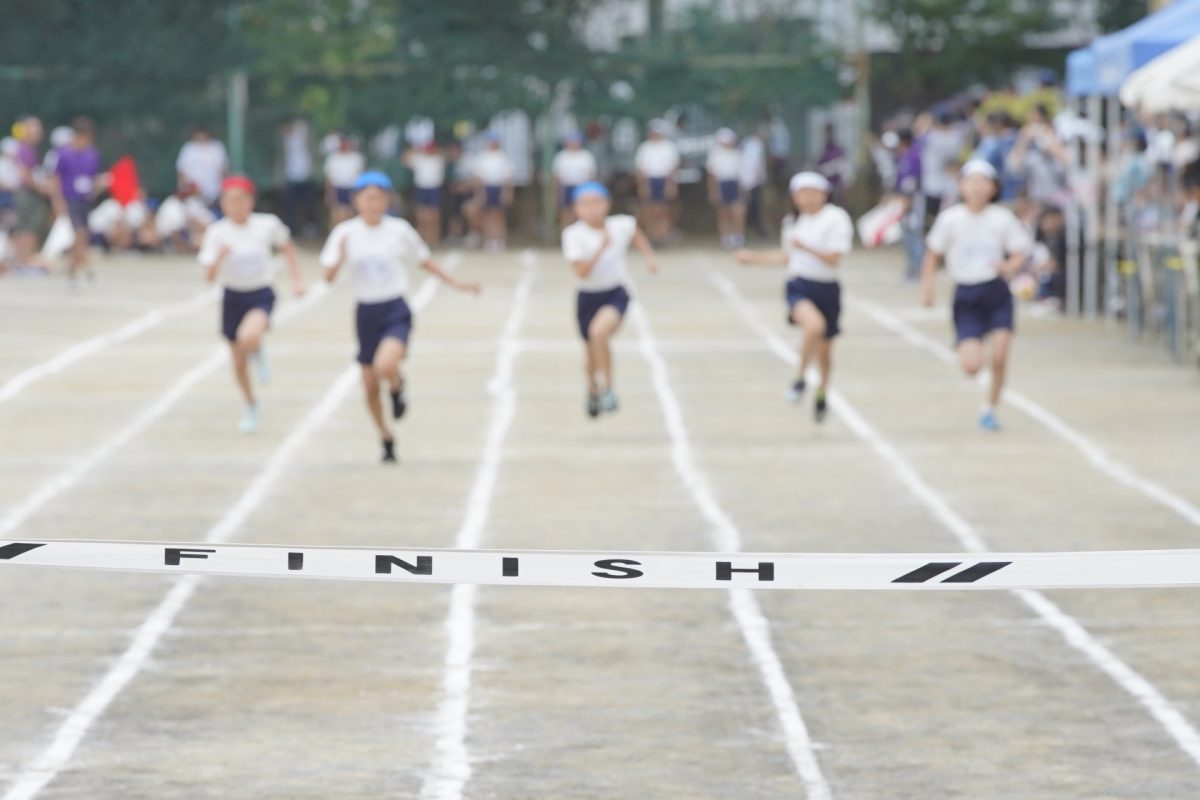
The following is a summary of the "hand-holding goal" at athletic meets. In order to prevent the slower runners from feeling uncomfortable during the athletic meet, the faster runners stop before the goal, and when all the runners have reached the goal, they hold hands to reach the goal at once. Although the term was well known, no schools could be found that actually practiced it, and it was whispered to be an urban legend. Here, we will introduce the contents of the investigation conducted by the radio program "Tamamusubi" and information found in newspaper articles and on the Internet.
Institute for Buraku Studies - Wikipedia
ja.wikipedia.org
Burakudai Kenkyujo Source: Wikipedia, the free encyclopedia Burakudai Kenkyujo (Burakudai Kenkyujo) is a Japanese research organization dedicated to the study of discrimination against the Burakumin. It is located in Sakyo-ku, Kyoto City, Kyoto Prefecture. It publishes a monthly journal, "Human Rights and Buraku Mondai" and a quarterly journal, "Buraku Mondai Kenkyu" (Studies on Buraku Issues). It is virtually identical to the Japanese Communist Party (JCP) and the National Federation of Regional Human Rights Movements...
Newspaper article on the "hand-to-hand goal" in Kyushu around 1990.
They don't rank the runners in the athletic meet because they believe it leads to discrimination. Everyone joins hands to reach the goal.
From the 1980s to the 1990s, such a phenomenon occurred in elementary and junior high schools in Kyushu. Some of this "philosophy" has been carried over to this day.
Source: www.nishinippon.co.jp
December 29, 2005 article in the morning edition of the Nishinippon Shimbun.
In the article, "Such a Phenomenon Happened," there is a reference to "joining hands and reaching the goal together."
However, no details of "joining hands to reach a goal together" are given, especially in the text that follows.
Criticism of "hand-holding goal" in conservative magazines and journals around 2000.
[Sapio, Vol. 10, Nos. 8-14 1998]
Page 130
Why is it that
Takeshi: I heard a story about a coach in a children's soccer school who gave gifts to his children to make them regular players. Nowadays, people don't run hand in hand in athletic meets. Then, when they grow up, will they all be able to run hand in hand, enter Tokyo University, and become high-ranking bureaucrats? There is always a choice. I think it is important for children to know about these kinds of competitions from the time they are children. Even if parents feel sorry for their children, these children will not be able to rise to the top when the real competition comes. When I look at foreign athletes, I think that they are living in a much tougher place.
Source: books.google.co.jp
Although unconfirmed, it appears to be an article about a conversation between Beat Takeshi and Rui Ramos in a separate issue of Shogakukan's "Sapio" magazine, "Sports SAPIO World Cup Special Issue" (1998).
In the article, the author says, "Nowadays, people don't run hand in hand in athletic meets without racing.
Education in 1998 - Wikipedia
https://ja.wikipedia.org/wiki/1998%E5%B9%B4%E3%81%AE%E6%95%99%E8%82%B2
[Nikkei Business No. 1048-1055, 2000]
Page 403
I believe that the accumulation of such a "spoiled structure" has led to the current educational system. When Sunryoku attended his kindergarten, the children lined up side by side at the finish line of the athletic meet, holding hands and getting along well with each other. The purpose of this was to prevent the losers from being eliminated, but it was nothing but indiscriminate and unequal.
Source: books.google.co.jp
Nikkei Business, a magazine published by Nikkei Business Publications, Inc. from the July 3, 2000 issue (No. 1048) to the August 28, 2000 issue (No. 1055).
An article around the July 17, 2000 issue (No. 1050) says, "In the athletic meet at the kindergarten my grandson attended, the children lined up side by side in front of the goal and held hands in good harmony as they reached the goal.
It seems that the article claims to have actually seen this practice at the kindergarten. I have not confirmed who wrote the article.
[Seoron No. 10-12, 2000]
Page 190
Some teachers are advocating the abolition of race races, or even if they do not abolish such races, they are putting a gap between the starting line and the finish line, or holding a ridiculous athletic meet where the fastest child has to stop before the finish line and then clasp hands with the slowest child to reach the goal.
Source: books.google.co.jp
Sankei Shimbun Publishing's magazine "Shoron". Sentence is broken in Google Book Search, but corrected. The original has not been confirmed. The preamble of the column seems to be related to the issue of abolishing field day at Nakanobu Nursery School in Shinagawa Ward, which was a hot topic at the time.
The Japanese Communist Party's Shinagawa Ward Assembly -Issue of abolishing field day at ward nursery schools
http://www.jcp-shinagawa.com/report/08/20001020_01.htm
On page 191, it says, "Some children are good at studying while others are good at running. Isn't it "respect for individuality" to recognize each child's special characteristics? Forcing them to "hold hands and play golein" is not respecting their individuality.
[Liberal Democratic Monthly No. 580-585, 2001].
Page 49
The reason is that they were too strongly conscious of equality and fairness. Thus, in the bōku competition, we were forced to run with thrust until ninety pas,^ and after that, we had to finish together, hand in hand. When I was a child, there were honor contests, effort awards, and athletic competitions.
Source: books.google.co.jp
Liberal Democratic Party's official magazine, Monthly Liberal Democrat, 2001. Google book search shows the text is broken, but corrected. I wondered if an article criticizing the "hand-tied goal" was written. This is the year when LDP lawmakers started using "hand-tied goals" in their parliamentary questions.
Sankei's "righteous argument" line drives public opinion
There are many strange things going on in Japan today. Take, for example, elementary school athletic meets. In the race, there is no distinction between first place and last place. Equality" and "unfairness" are mixed up, making the race meaningless, and even healthy competition is treated as a bad thing. The same is true of the Japan-U.S. Guidelines. Mention this, and you are labeled "militarism. Shouldn't national security be considered? It is time to shed the cloak of blandishments.
Sankei Shimbun's magazine "Shoron" is an opinion magazine that clearly states what is wrong in order to protect freedom and democracy. It celebrated its 25th anniversary in 1998. Overcoming a period of struggle, it has gained the support of readers to the point where it is now competing for the top position.
http://www.sankei.co.jp/pr/guide99/html/guide17.html
Source: www.asyura.com
The link is not archived and unconfirmed, but it looks like a promotional letter from Sankei Shimbun in 2000.
It is not "hand-holding," but it is a criticism of the athletic meet's clown race.
In the same year, Sankei Shimbun ran a campaign article criticizing Toyonaka City, Osaka Prefecture, for its "no ranking" education.
------------
Education in Toyonaka, the False Image of an Education City
The article was serialized in Sankei Shimbun over six issues from November 14 to November 23, 2000.
http://www5.plala.or.jp/ysk/kimigayo-toyonaka.htm
------------
The "hand-holding goal," frequently criticized since 2001 in the National Assembly
In the Diet, the "hand-holding goal" has often been critically discussed even after the questioning by a Communist Party member in 1998.
A search for "Sports Day Goal" on a transcript search site compiles the results, showing that in 2001, then-Minister of Education Machimura repeatedly diffused the "hand-holding goal" in recent years.
------------------------------------------------------
September 24, 1998, Committee on Education and Science, House of Councillors, Noriko Hayashi (Communist Party), "Elementary schools in cities such as Miyoshi, Shobara, and Fukuyama (in Hiroshima Prefecture). Let's all join hands together to reach the goal, it's being done."
http://kokkai.ndl.go.jp/SENTAKU/sangiin/143/1150/14309241150003c.html
February 8, 2001, Budget Committee of the House of Representatives (Mori Cabinet), Mr. Nobutaka Machimura, Minister of Education, Culture, Sports, Science and Technology, said, "This has gone too far and, in some cases, people are pursuing equality of results rather than equality of opportunity. This is very common not only in society as a whole, but also in education. So, as is often cartoonishly said, in the old days, I used to be the fastest runner, so I used to get at least a pencil for being the first to cross the finish line. Why is that? There should be no difference. In fact, there is a tendency in the field of education to believe that it is wrong to be different from others.
http://kokkai.ndl.go.jp/SENTAKU/syugiin/151/0018/15102080018002c.html
February 19, 2001, Budget Committee of the House of Representatives (Mori Cabinet) Kensaku Morita (independent) "The other day, Minister Machimura said at the Budget Committee. He said, "The people are ready, everyone is running, and now they are in front of the goal, and everyone is holding hands and yo-yoing to get to the goal. This is not right, is it?
Prime Minister Yoshiro Mori: "I think Mr. Machimura mentioned something about equality of results. Recently, I think that the idea that equality of results is all that is needed has become too much in the foreground. That's why we are all the same up to the point of running, and we are all the same when we enter the finish line.
http://kokkai.ndl.go.jp/SENTAKU/syugiin/151/0018/15102190018008c.html
February 27, 2001, Committee on Education, Culture, Sports, Science and Technology, House of Representatives (Mori Cabinet) Hiromichi Watanabe (Liberal Democratic Party): "Looking at the current situation in schools, while they talk about placing importance on individuality and individuality, for example, in athletic meets, they talk about reaching the goal together in a race, and this kind of so-called egalitarianism or egalitarianism in the wrong sense is too much prevalent. I think this kind of so-called egalitarianism, egalitarianism in the wrong sense, is too prevalent.
Sayuri Kamata (Democratic Party of Japan) "As I mentioned earlier, I think this is a totally wrong concern. Everyone goes to the finish line holding hands, and everyone wins first prize together. Or, if you go to a school play, the girls who play the leading role of Cinderella will come out in a row, ten or more in number. In the field of school education, competition is being eliminated in combination with "relaxed education," as if competition, as represented by exam wars and exam competitions, is a competitive evil.
Takeo Kawamura (Vice Minister) "I am from Yamaguchi Prefecture, so even in Yamaguchi Prefecture, there used to be athletic meets like the one you mentioned, although there was no such thing in my neighborhood. I have heard that there are still a few such prefectures."
http://kokkai.ndl.go.jp/SENTAKU/syugiin/151/0096/15102270096003c.html
March 9, 2001, Committee on Education, Culture, Sports, Science and Technology, House of Representatives (Mori Cabinet) In response to Keiko Yamauchi's (Social Democratic Party) question, "This educational reform is an introduction of the principle of competition," Education Minister Nobutaka Machimura said, "To stir up competition unnecessarily, that may not be good. However, as is often cartoonishly said, at an athletic meet, everyone in the running race holds hands three meters before the finish line and crosses the finish line at the same time. Why? It is the worst kind of school behavior, I think, to seek equality of results. If you look at it from that perspective, there is too much pursuit of equality of results in schools.
http://kokkai.ndl.go.jp/SENTAKU/syugiin/151/0096/15103090096005c.html
March 22, 2001, Education, Culture, Sports, Science and Technology Committee of the House of Councillors (Mori Cabinet) Shoji Motooka (Democratic Party of Japan) asked, "Why don't you withdraw the term 'postwar educational defects'?" to which Education Minister Nobutaka Machimura replied, "However, as is often said, for example, when children run in a school race or at a field day, they hold hands in unison before reaching the goal, this is not a good idea. For example, it is often said that the goal of a school athletic race is equality of result, and that the goal line should be equal because all children are equal, so that there is no discrimination. I was surprised to learn that such an idea exists, but the examples are too numerous to mention.
http://kokkai.ndl.go.jp/SENTAKU/sangiin/151/0061/15103220061003c.html
Ryuji Matsumura (Liberal Democratic Party): "I think that there are schools where it sounds as if it is not a joke to say, 'Let's not let the students compete superficially this time, but let's all run 100 meters together at the athletic meet, and let's all finish together, holding hands and winning first prize. It may be that there is a school site where it sounds as if it is not a joke." http://kokkai.ndl.go.jp/SENTAKU/sangiin/151/0061/15106250061014c.html
November 27, 2001, Education and Science Committee of the House of Councillors (Mori Cabinet), Yuko Mori (Liberal) "In fact, when I was bringing up my children, for example, when we had a play, for example, if it was Red Riding Hood and the Wolf, there were five wolves and two red rats, and they would race each other up to 50 meters of the 100 meter race, and at the end, they all got along with each other and did not hold hands. And at the end of the race, they would all be holding hands in a friendly manner.
Hidenori Fujita, a witness: "As I wrote in my book about the Red Riding Hood and the 50-meter race, it is true that there were clearly excessive or even unjustified egalitarianism and uniform treatment. This tendency gradually began to appear in the latter half of the 1970s.
For example, there was a policy of emphasizing internal examinations in high school entrance examinations, and there were various pressures from parents who demanded fairness and other things. I think this problem is difficult to solve, but it is gradually changing. I think the number of schools where students run 50 meters, run 40 meters as hard as they can, and then finish the race hand in hand is decreasing. http://kokkai.ndl.go.jp/SENTAKU/sangiin/153/0061/15311270061004c.html
November 28, 2002, Subcommittee on the Guarantees of Fundamental Human Rights, Constitutional Research Committee, House of Representatives (Koizumi Cabinet), Mr. Takehiko Kariya, a witness: "In the world of education, it is often said that equality of results is achieved when everyone holds hands to reach the goal at a field day and when there is no competition. This is certainly a problem within the Japanese organization, within the Japanese culture."
Azuma Konno (Democratic Party of Japan) "I have also seen a similar scene at a public kindergarten's arts and crafts festival, or "fun festival," where everyone comes to the finish line holding hands at the field day. I have also seen the same thing happen at a public kindergarten school play, or a school play, or a play for amusement, or something like that. sentaku/syugiin/155/0107/15511280107001c.html
March 25, 2003, Committee on Education, Culture, Sports, Science and Technology, House of Councillors (Koizumi Cabinet) Haruko Arimura (Liberal Democratic Party): "In some schools, before the finish line in athletic meets, children hold hands and finish the race together so that no ranking is given. I understand that this is still said and still practiced, but I think it is a deception not to teach the reality of competition and not to educate students to have a more realistic perception of victory and defeat through repetition of winning and losing, etc."
Atsuko Toyama, Minister of Education, Culture, Sports, Science and Technology: "I don't think there are many schools anymore that don't rank students in terms of first or second place in games of chance, but the fact that this has happened in reality suggests to me that Japanese schools have been too focused on equality in terms of results. I think that this is the reason why Japanese schools have been too focused on equality in results.
Haruko Arimura (Liberal Democratic Party) "I myself am not speaking from a sense, but I understand that the number of cases where everyone runs to the finish line together has decreased considerably, so I really appreciate your comment.
http://kokkai.ndl.go.jp/SENTAKU/sangiin/156/0061/15603250061003c.html
March 2, 2004, Budget Committee of the House of Representatives, Fourth Subcommittee (Koizumi Cabinet), Minister of Education, Culture, Sports, Science and Technology Takeo Kawamura: "It has often been pointed out that, for example, in athletic meets, there are actual cases in the field of education where students are asked to start and finish together holding hands at the end of a race. This kind of uniformity and excessive egalitarianism has led to the loss of human individuality, and has made it impossible to keep up with the times." http://kokkai.ndl.go.jp/SENTAKU/syugiin/159/0034/ 15903020034002c.html
April 23, 2004, Committee on Land, Infrastructure, Transport and Tourism, House of Representatives (Koizumi Cabinet), Seiji Maehara (Democratic Party of Japan) "The Japan Expressway Holding and Debt Repayment Agency, which has become a large pool, will be a combination of private companies and Seine for 45 years, and like an elementary school field day nowadays, everyone will join hands and reach the goal in the 45th year. That's right." http://kokkai.ndl.go.jp/SENTAKU/syugiin/159/0099/15904230099017c.html
Nobutaka Machimura (LDP): "In my experience as Minister of Education, it is often said in a cartoonish way that when we had a race, the fastest and the slowest children all joined hands and crossed the finish line at the same time five meters before the goal. This is really a joke, but it happens all the time. http://kokkai.ndl.go.jp/SENTAKU/syugiin/164/0018/16402280018019c.html
March 22, 2006, House of Councillors Committee on Economy, Trade and Industry (Koizumi Cabinet), Mr. Toshihiro Nikai, Minister of Economy, Trade and Industry: "It may sound like a joke, but it is true that there should be competition and friendly rivalry. But of course there should be competition and friendly rivalry." http://kokkai.ndl.go.jp/SENTAKU/sangiin/164/0063/16403220063003c.html
March 30, 2006, Education and Science Committee of the House of Councillors (Koizumi Cabinet) Atsushi Onita (Liberal Democratic Party) "What do you think about the current practice in other schools of holding hands before crossing the finish line, or holding hands at the finish line?
Minister of Education, Culture, Sports, Science and Technology Kenji Kosaka: "That is not the meaning of competition. I don't think this is a good way to have students experience friendly competition in life. However, if you are going to adopt such a method because of the situation of that school, etc., and because of the very excessive competition with each other, that may be one way." http://kokkai.ndl.go.jp/SENTAKU/sangiin/164/0061/ 16403300061006c.html
November 9, 2006 Special Committee on the Fundamental Law of Education, House of Representatives (Abe Cabinet) Chikara Sakaguchi (Komei) "Even at sports meets, I think it's a good idea to hold hands to reach the finish line..." http://kokkai.ndl.go.jp/SENTAKU/syugiin/165/0158/ 16511090158009c.html
November 22, 2006, House of Councillors Special Committee on the Fundamental Law of Education (Abe Cabinet) Prime Minister Abe: "It is often said that a typical example of equality of results was actually done, for example, in a running race, where everyone held hands at the end to reach the goal..."
Taisuke Sato (Democratic Party of Japan) "You often use the example of a clique race, but did you see the actual site or read about it in a book? I would like to ask the four ministers if they have ever visited the site of the race, or if they have read about it in books. In particular, I have never seen or experienced a school race in which the children hold hands at the end of the race. Every time, since the Koizumi cabinet, there has been an example of equality of results or something like that, it is always the goal with hands held in the air. Are there any other examples? I wonder if you have seen that. I ask you, Shikata."
Prime Minister Abe: "I remember reading about the example of the race in the newspaper, but I did not witness it on the spot.
Minister of Education, Culture, Sports, Science and Technology Ibuki: "As you mentioned, I remember reading in the newspaper that such a thing had happened, and I thought it was interesting.
Chief Cabinet Secretary Yasuhisa Shiozaki: "I have never seen a couple reach the finish line holding hands in the field, but I have heard about it in various places.
Minister of State for Declining Birthrate Sanae Takaichi: "I have seen a race in which the children did not hold hands, but rather they were separated by speed until just before the finish line, but in the end they were not ranked in order. I have seen such a race in which the winners were not ranked in any particular order, from the first prize to the last prize.
Taisuke Sato (Democratic Party of Japan) "From now on, can we please stop saying that the result is equal and that the goal line is reached by holding hands? What do you think?
Minister of Education, Culture, Sports, Science and Technology Ibuki: "If it is not appropriate as an example, I would like to tell you exactly what I have seen.
Prime Minister Abe: "Since it was pointed out by a committee member that it would be better to use actual examples, I think that the explanation should be based on actual examples.
http://kokkai.ndl.go.jp/SENTAKU/sangiin/165/0091/16511220091001c.html
November 13, 2008, Committee on Education, Culture, Sports, Science and Technology, House of Councillors (Aso Cabinet), Mr. Hirosuke Yoshiya (LDP) "For example, there has been a lot of talk in the past about not ranking people in athletic meets, or about everyone finishing together, but I have never actually seen anyone finish together, but it is common practice not to rank people. It is a common story that there is no ranking." http://kokkai.ndl.go.jp/SENTAKU/sangiin/170/0061/17011130061002c.html
October 22, 2013, Budget Committee of the House of Representatives (Abe Cabinet), Takeo Hiranuma (Restoration): "I think it's unfortunate that the way the Japan Education Association and the Board of Education are now, for example, when you have a 100 meter long race, the first child also stamps his/her feet and waits at the finish line, waiting until the last child comes along and then joins hands to the side. They enter in single file, hand in hand, side by side. This kind of education, in which children are not allowed to be superior or inferior, is in effect." http://kokkai.ndl.go.jp/SENTAKU/syugiin/185/0018/18510220018003c.html
November 11, 2015 Upper House Budget Committee (Abe Cabinet) Antonio Inoki (Genki) "I've been meaning to ask you a question for a while, but I think it was a long time ago about the "relaxed education," where everyone holds hands when they reach the finish line. At that time, I was interviewed from various places and asked what I thought. I remember I said to them, "What do you think of that?
http://kokkai.ndl.go.jp/SENTAKU/sangiin/189/0014/18911110014001c.html
------------------------------------------------------------
The "hand-holding goal," which was much used as a criticism of equal education during discussions of education reform in the early 2000s, was overshadowed in 2006 by Democratic Party of Japan member Taisuke Sato, who asked, "Did you actually see this? If not, don't mention it as an example. Of the three Diet members who have mentioned it in the Diet since then, only Takeo Hiranuma of the Restoration Association confidently stated that he had.
Criticism of the "hand-holding goal" that became active around the year 2000
----------------
----------------
The "hand-holding goal" attracted media attention around 2000, and when MEXT Minister Nobutaka Machimura frequently brought it up in the Diet in 2001, it became a symbol of "criticism of the Japan Education Association" and "criticism of Yutori.
However, "Yutori" peaked around 2002.
Yutori education - Wikipedia
https://ja.wikipedia.org/wiki/%E3%82%86%E3%81%A8%E3%82%8A%E6%95%99%E8%82%B2
Category:Education in various years - Wikipedia
https://ja.wikipedia.org/wiki/Category:%E5%90%84%E5%B9%B4%E3%81%AE%E6%95%99%E8%82%B2
It seems strange that the Minister of Education, Culture, Sports, Science and Technology, who is supposed to be a promoter of "Yutori" (relaxed) education, should criticize "hand-holding goal" as a symbol of "relaxed" education in the midst of such a policy. The "hand-holding goal" has long been discussed as a question of "equal education or competitive education," and should have nothing to do with "Yutori" in the first place. Expert commentary on the history of education is required.
In 2006, the first Abe cabinet called for a review of "Yutori" education, which was subsequently terminated. Prime Minister Abe cited the "hand-tied goal" in the Diet, but a Democratic Party of Japan lawmaker pursued the issue, saying that the existence of the goal could not be confirmed, and since then, there has been almost no mention of the "hand-tied goal" in the Diet or in the media. Then, it remained only a public rumor, and the vague memory may have just been assumed to be a "symbol of yutaka" on its own.
TBS Radio's "Tamamusubi" treated Yoshinori Kobayashi's "Gomanism Manifesto" as if it were the "source of the hoax," but if the first time it was mentioned in Gosen was in 2002, it had nothing to do with the spread of the "hand-tied goal. Kobayashi simply picked up a story that had already been sufficiently diffused. I actually read the relevant section of "Gosen," but such a small description in a single frame has no influence to spread the story nationwide. This is another urban legend based on a vague memory, just like the "Yuto-generation is hand-holding goal" story. (Perhaps there is a manuscript of "Hand-Tied Goals" drawn in the 1990s that has not yet been published in a book.)
) I believe that the influence of TV broadcasts is a much more significant factor in creating the wrong image of the event than the manga, so I am waiting for an investigation into the record of the TV broadcasts. If we can examine the past TV broadcasts of "fields days without ranking" on NHK and private TV stations, we may be able to determine the extent of the spread and changes in the image of the "hand-tied goal" from the content of past broadcasts of the "hand-tied goal. As for weekly magazine reports, we can find more articles that may plant a crude image in the minds of readers if we look in the Oyake Soichi library.
Finally, although "Tamamusubi" concluded that "it is almost certainly an urban legend," there are testimonies that there was "no hand-holding but stopping at the finish line all together. There is also "In kindergarten, we held hands and finished the race all together." In such a situation, it would be prudent to be cautious about the "hand-holding goal" cited in the discussion of "equality or competition," because to say that it is a hoax because they did not hold hands or because it is not an elementary or junior high school story would also be to talk away from the discussion.

Tags
Contents
- TBS Radio's "Tamamusubi" investigates whether there really is (or was) a "hand-holding goal" at athletic meets.
- In "Tamamusubi," a 1997 Asahi article and Yoshinori Kobayashi's "Gomanism Manifesto" causal argument.
- In fact, there had been a previous "hand-in-hand goal" verification article written and talked about before.
- Even earlier, the Communist Party asked a committee question in the Diet about the "hand-in-hand goal" in connection with the Buraku Liberation League.
- Buraku Issue Magazine and "Hand in Hand Goal
- Newspaper article on the "hand-to-hand goal" in Kyushu around 1990.
- Criticism of "hand-holding goal" in conservative magazines and journals around 2000.
- The "hand-holding goal," frequently criticized since 2001 in the National Assembly
- Criticism of the "hand-holding goal" that became active around the year 2000
- Note: A month later, a sequel to the "hand-to-hand goal" verification will be broadcast on "Tamamusubi". Addition of its contents
- In light of this, the historical timeline of the hand-coupled goals has been updated (6.26.2016).