
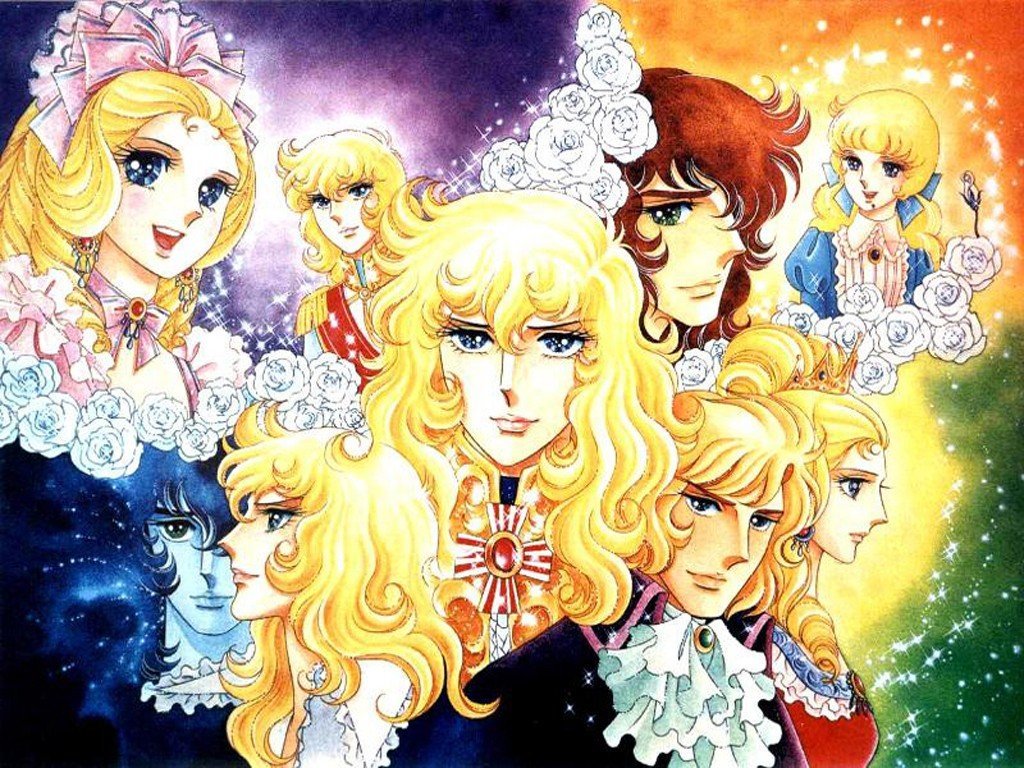
The Rose of Versailles" is a manga work written by Riyoko Ikeda, commonly known as "The Rose of Versailles. It was serialized in Shueisha's Weekly Margaret from 1972 to 1973. The story centers on Queen Marie Antoinette of France, Oscar, a beautiful man dressed in men's clothes, and Felsen, a Swedish nobleman, and takes place from the end of Louis XV to the time of Antoinette's execution. The series became explosively popular. With more than 20 million copies in circulation, it continues to be a much-loved work.
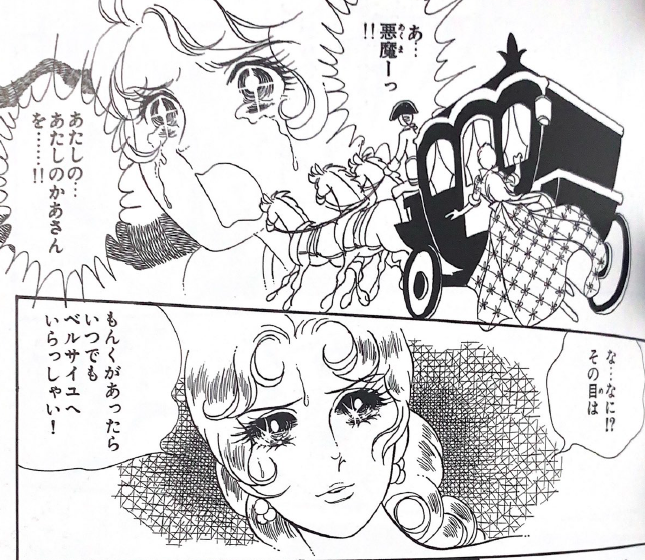
The words of the Countess of Polignac against Rosalee's hateful look when she ran over her mother, La Moliere, in a horse-drawn carriage. A glimpse of the arrogance of the Countess of Polignac, who had been favored by Marie Antoinette and was establishing power in Versailles. When she later found out that Rosalee was her daughter, she regretted having run over her benefactor.
Oscar: "Watashi no Harukaze!"
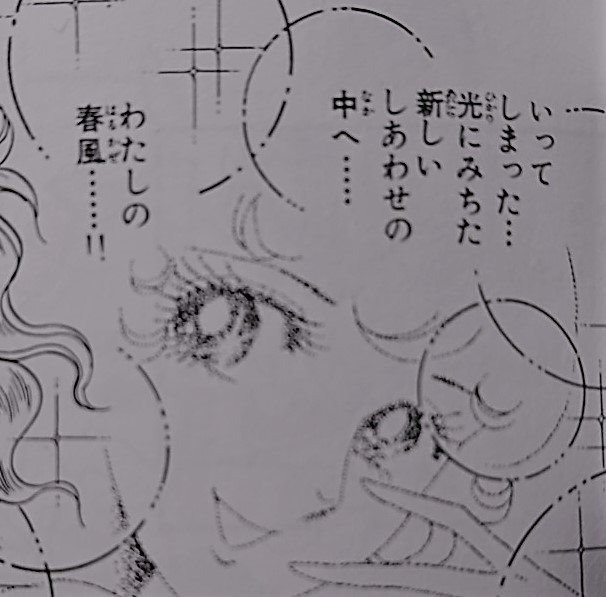
The words that Oscar murmured as he remembered Rosalee.
Like a warm spring wind, the words well express Rosalee who calmed Oscar's heart, and you can feel Oscar's deep affection for Rosalee.
She murmured these words to Dianne, who had some trace of Rosalee.
Andre: "Be happy that the chocolate wasn't hot!"
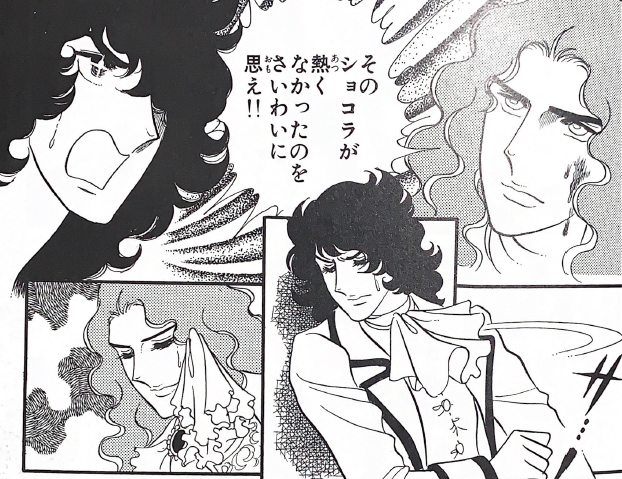
Jerodel, who visits the Jarge family as Oscar's fiancee, says, "I have the breadth of my heart to have a servant who loves my wife near my wife." Andre gets angry and throws chocolate that he brought to her. This line is filled with the conflict of Andre, who can't do anything with his status as a commoner even though he steals the woman he has always liked.
Oscar: "F-Lance. Banzai!"
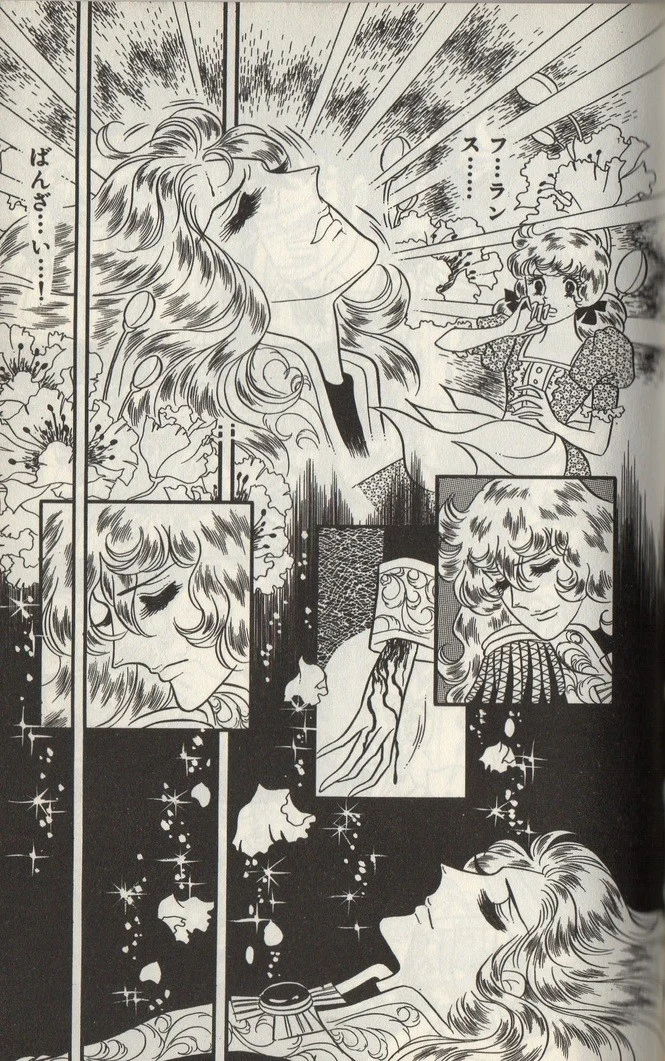
These words were uttered by Oscar, who was shot to death in the Bastille prison attack, just as he was about to die. These words are also used by Oscar, who could have chosen a splendid life as an aristocrat, to celebrate the first victory of the people by deciding to renounce his peerage and stand up with the people.
Behind the Scenes, Trivia, Small Stories / Episodes and Anecdotes of "Versailles-no Bara"
Oscar, a character born out of a backlash against male society
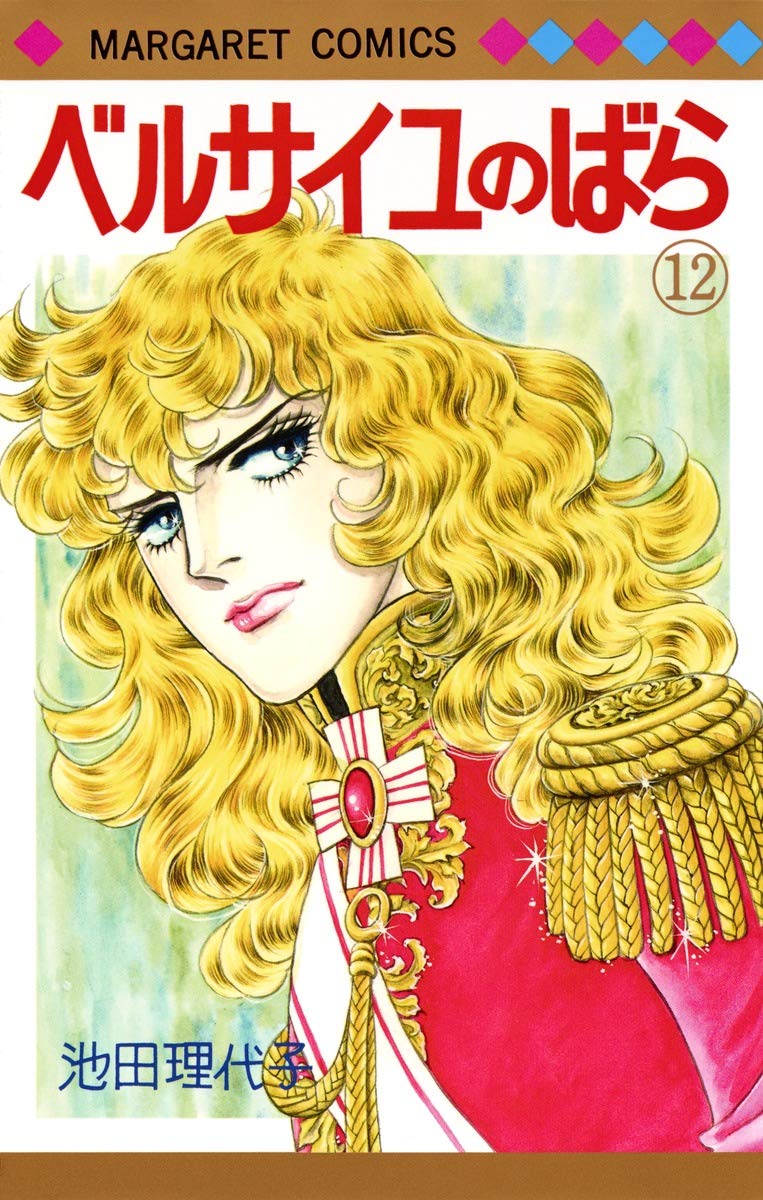
Oscar, born out of a backlash against the author's male-dominated society
The author, Riyoko Ikeda, is said to have been so masculine since he was a junior high and high school student that he received love letters from female students even though it was not a girls' school. Oscar was also a character that projected that kind of personality. At the time of the series, the social status of women was not yet high. He also said that behind the drawing of the character, Oscar, was "a feeling of antithesis towards male society." In fact, he received fan letters from readers saying that he had been given courage, and he became a figure that encouraged female readers of the time ("Riyoko Ikeda Interview" from Riyoko Ikeda Production's "Eternal Versailles-no Bara").
After Oscar's death, I had to finish with 10 stories.
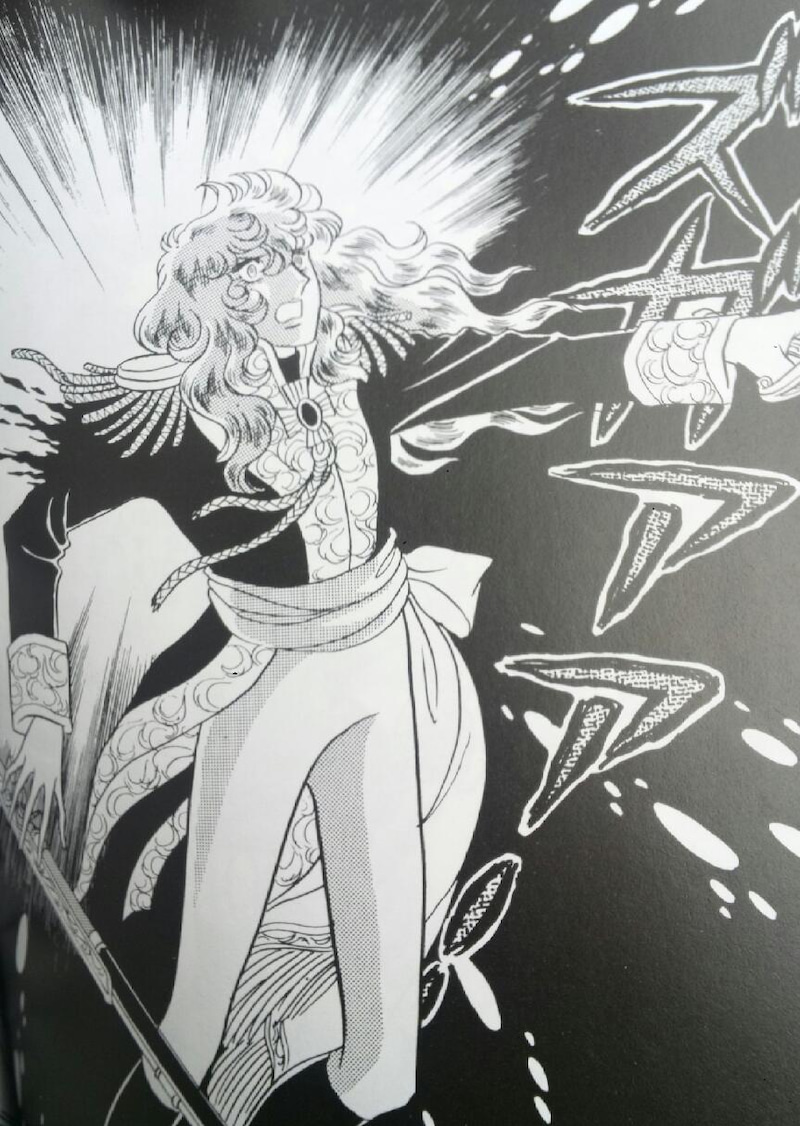
Oscar, shot by the enemy.
Although Oskar was extremely popular among women at the time, he died in the middle of his work. The author, Riyoko Ikeda, had the following to say about this.
I had already decided that he would die on July 14. I had decided long ago that I would die on July 14. If things got too dangerous in the way I was going with the story, I would kill him with a disease. I was working on a double feature." (Interview with Riyoko Ikeda from Shueisha's "The Rose of Versailles Encyclopedia")
Many readers did not read the story after Oskar's death, and the editorial department told them to stop reading the story after 10 episodes if Oskar died. Therefore, the story from Oscar's death to Marie Antoinette's execution was hastily drawn up, but Riyoko Ikeda herself wanted to go into more detail, including what happened to Robespierre, Saint Juste, Fersen, and Marie Therese.
Study painting during the series
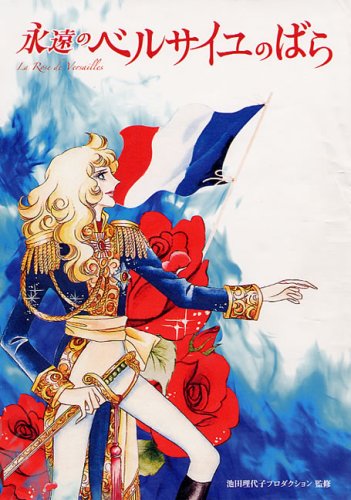
Cover of "Eternal Versailles-no Bara," a booklet that interviews with Riyoko Ikeda
At the time of the series, Riyoko Ikeda was not satisfied with his paintings. "I want to paint in a way that I can imagine more," he said. He began to learn to draw while he was busy writing. He had students from Musashino Art University come to his home and study plaster design and oil painting while drawing manuscripts. After overcoming his hard days, he says, "It has become much easier and easier to draw." He especially put effort on his face and had a hard time with Oscar's blonde hair. ("Riyoko Ikeda Interview" from Riyoko Ikeda Production's "Eternal Versailles-no Bara")
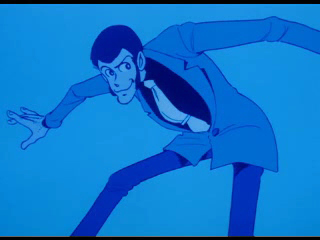
Collaboration with "Lupin III"
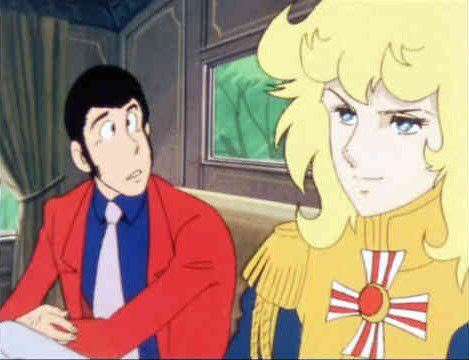
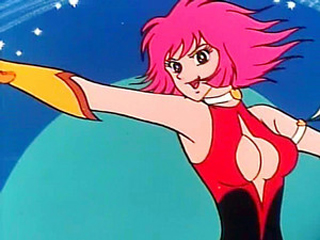
(Lupin (left) and Oscar (right))
On September 17, 1979, Oscar appeared in the 101 episode of "Lupin III,"' The Versailles Burned in Love,' and was selected as one of the scripts for the commemoration of the 100th episode of Lupin III, which was set in France in the 20th century.
As in the original story, she appears as a Reijin dressed as a man, but she is found to be a woman by Lupin and others because her dress is torn by a sword. The story has a strong element of a parallel world story because Oscar, who was alive in the 18th century, appears in the 20th century, and Andre was made into a stone statue by the secret medicine of petrification that angered Antoinette.

Related Articles
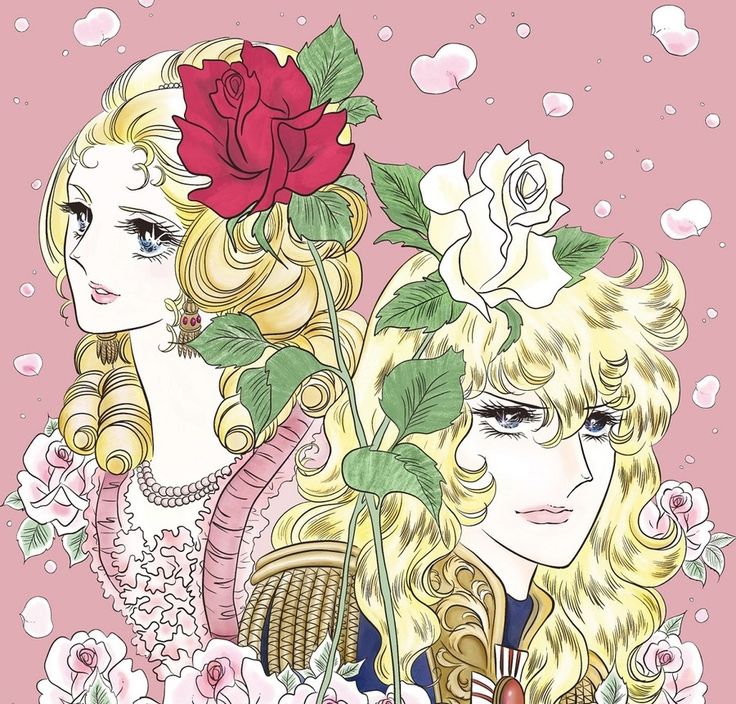
Summary of Versailles (Versailles) love relationships, couples, couplings, married couples, and lovers.
Versailles Rose (Versailles Rose)" is a manga by Riyoko Ikeda that was serialized in the manga magazine "Weekly Margaret" from 1972 and has been adapted into an anime, a stage play by the Takarazuka Revue Company, and a movie. Set in Paris, France, the manga depicts the lives of Queen Marie Antoinette of France and Oscar, the "Man Dressed in Men's Clothing," and others as the era moves toward revolution. The highlights of the film are Marie Antoinette's love story based on historical facts and the love game over Oscar.
Read Article
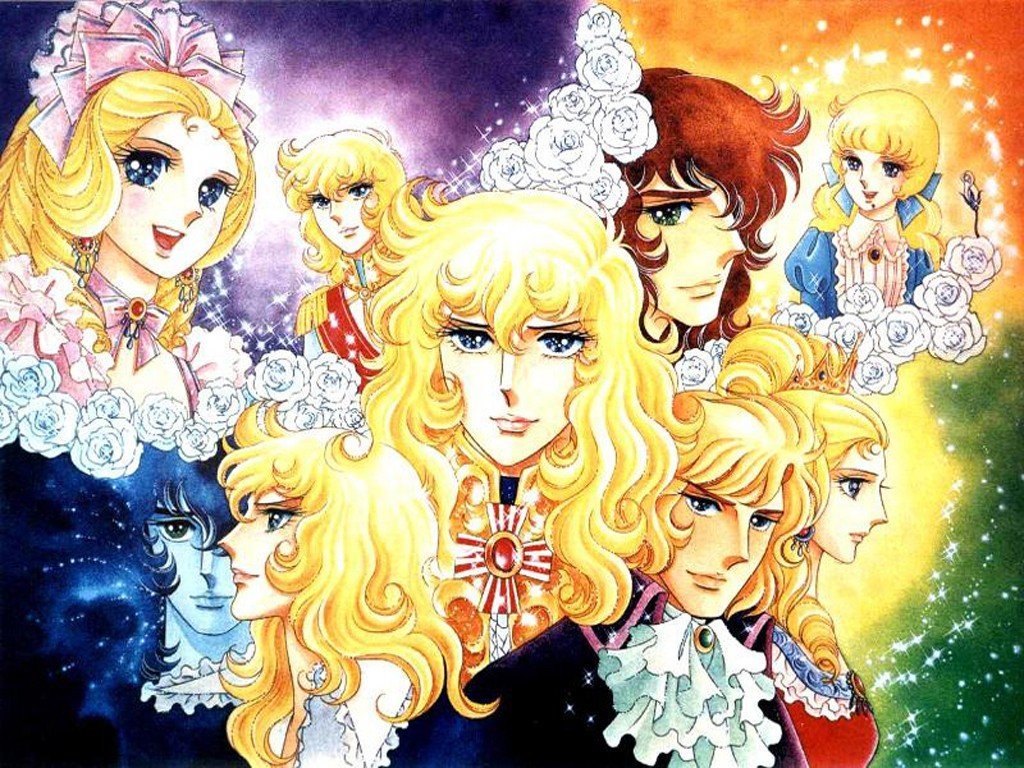
Versailles Rose (Versailles Rose) Quotes, Great Lines / Great Scenes and Scenes of Versailles Rose (Versailles Rose)
The Rose of Versailles" is a girls' manga by Riyoko Ikeda, set in France from 1770 to 17789. Since its serialization in Weekly Margaret, the manga has become popular among young girls and has been adapted into anime and Takarazuka. The romantic love lines and the cool lines about trying desperately to survive while being swallowed by the waves of the times have been loved by readers for many years.
Read Article
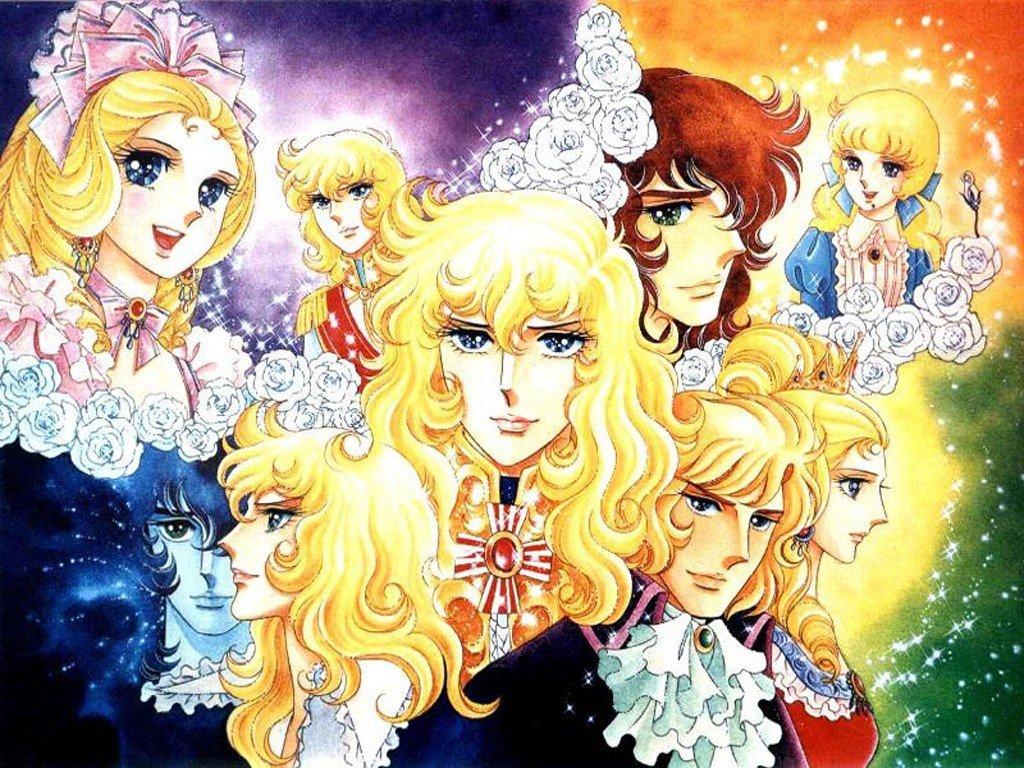
Meet the new Lady Oscar after 40 years! The Rose of Versailles" is back in production!
The Rose of Versailles" is a nationally famous girls' manga by Riyoko Ikeda. The love between Queen Marie Antoinette of France and Fersen, and the tragic fate of Oscar, a beautiful man-dresser, and his lover Andre, have brought tears to the eyes of girls not only in Japan but around the world. The manga world has been shocked by the new works.
Read Article
Ten animated films from 1991, which celebrates its 25th anniversary this year.
This year, 2016, marks the 25th anniversary and quarter-century of such works as "Kinko's Beware! The year 1991 was a boom year for Sunrise's robot animation. In addition to "Raijin-O" from the Eldoran series and "Phibird" from the Yusha series, the Gundam series "F91" and "0083" were produced as if they were competing with each other. We have selected 10 works that represent such an era.
Read Article
Takeo Yamashita's anime songs and special effects songs
A new "Lupin the Third" is still being made today. The theme of "Lupin the Third" is generally known as Yuji Ohno's song from the second series onward, but Takeo Yamashita's melancholy song from the first series also has a charm that cannot be discarded. Other representative anime and special effects songs composed by Takeo Yamashita are introduced below.
Read Article
Takeo Watanabe's World of Anison
Ani-song opening themes are the face of anime. As one of the composers of the early days of anime, Takeo Watanabe should not be forgotten; he passed away in 1989 at the young age of 56, but his songs will remain as anime works.
Read Article
Contents
- Overview of Versailles-no Bara
- Outline and story of "Versailles-no Bara"
- The Little Princess
- The Countess of Polignac
- The Necklace Incident
- Black Knight
- French Guard
- Oscar and André
- Trilogy of Three Sections
- French Revolution
- The End of the Revolution
- List of Versailles-no Bara characters
- Main character
- Marie Antoinette
- Hans Axel von Versen
- Oscar François de Jarge
- Andre Grandier
- Rosalee La Moliere
- People around Marie Antoinette
- Louis XVI (Louis o' Güstow Capet)
- Louis the 15th
- Duke of Orleans (Louis Philippe II, Duke of Orléans)
- Marie Thérèse, Madame Royale (Marie Thérèse, Madame Royale de France)
- Louis Joseph of Lorraine, Duke of Guise (Prince Louis, Duke of Burgundy)
- Louis Charles
- Maria Theresa
- Countess du Barrie (Madame du Barry / Mari-Jeanne ベキュー)
- Countess of Polignac (Martine Gabriel de Polignac)
- Charlotte de Polignac
- Anne d'Arpajon
- Florimond Claude, Comte de Mercy-Argenteau (Flolimont Claude de Merci アルジャント)
- People around Oscar
- Alain de Soison
- Geraudel
- Bernard Shatre
- General Járje (Renier de Járje)
- Countess of Jarge
- Marron Glace (BAYA)
- People involved in the necklace case
- Jeanne Valois de la Motte
- Nicolas de la Motte
- email from another party
- Archbishop of Louie de Rouen
- Oliva (Nicol de Oliva)
- Leto
- Other Characters
- La Moliere
- Duchess of Bourenbillier
- Rose Bertin
- Pierre, my boy.
- Sofia
- Baron San Remy
- Dianne de Soison
- Louis Antoine, Duke of Angoulême León Florel de Saint Just
- Maximilian I of Mexico de Robespierre
- Marquess of La Fayette
- Earl of Mirabeau
- Duke of De Geische
- Drue
- General Buye.
- Terms of the Versailles-no Bara
- Royal buildings
- Palace of Versailles
- Petit Trianon
- Palais Royal
- Bastille Prison
- Other buildings and families
- Louis Le Grand Academy
- High Court
- House of Valois
- Incident
- Necklace Incident
- Black Knight Incident
- Famous quotes, lines, scenes, and scenes from "The Rose of Versailles
- Marie Antoinette: "Today, Versailles is a hard man."
- Oskar: "Your Highness is looking at 200,000 people who are in love with you right now."
- The Countess of Polignac: "Come to Versailles whenever you want!"
- Oscar: "Watashi no Harukaze!"
- Andre: "Be happy that the chocolate wasn't hot!"
- Oscar: "F-Lance. Banzai!"
- Behind the Scenes, Trivia, Small Stories / Episodes and Anecdotes of "Versailles-no Bara"
- Oscar, a character born out of a backlash against male society
- After Oscar's death, I had to finish with 10 stories.
- Study painting during the series
- Collaboration with "Lupin III"
- Authors who have not seen the animated TV series
- About the Oscar dress.
- Rosalee's dress was originally Oscar's.
- Recreation of the Oscar dress by students
- Marie Antoinette's hair color change
- Theme song and insert song of "Versailles-no Bara"
- OP (opening): Hiroko Suzuki "Roses fall beautifully"
- ED (ending): "Light and Shadow of Love" by Hiroko Suzuki
- Insert and image song: Hiroko Suzuki "Watashi wa Habebito" (I am a captive)
- Inserted music and image song: Hiroko Suzuki, Reiko Tajima' Aikike no Hami' (Sorrow due to love)
- Inserted song and image song: Brownie "MAGICAL ROSE"
- Insert / Image Song: Brownie "C' est Toi"