
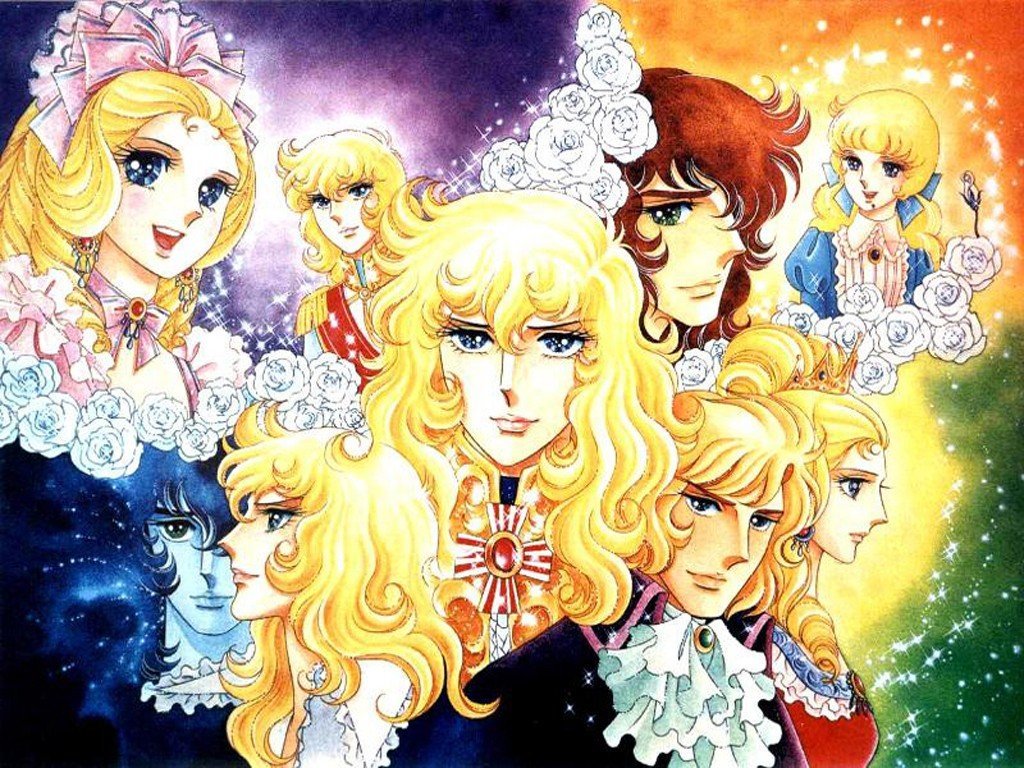
The Rose of Versailles" is a manga work written by Riyoko Ikeda, commonly known as "The Rose of Versailles. It was serialized in Shueisha's Weekly Margaret from 1972 to 1973. The story centers on Queen Marie Antoinette of France, Oscar, a beautiful man dressed in men's clothes, and Felsen, a Swedish nobleman, and takes place from the end of Louis XV to the time of Antoinette's execution. The series became explosively popular. With more than 20 million copies in circulation, it continues to be a much-loved work.
Earl of Mirabeau
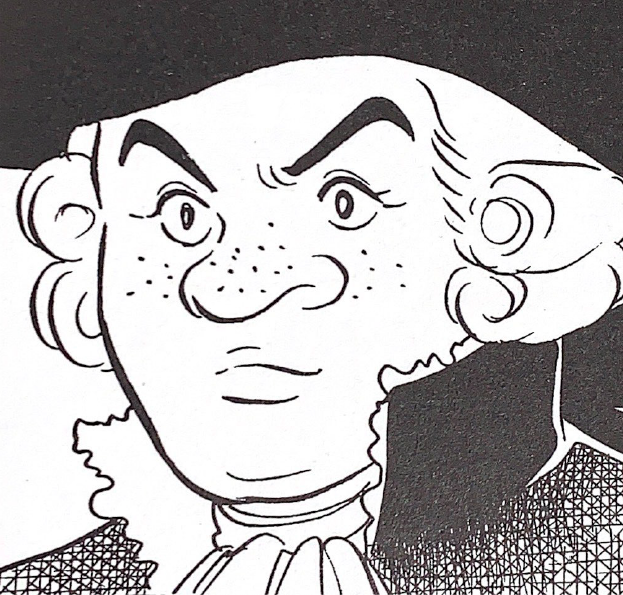
A character modeled after Honoré Gabriel Riqueti, comte de Mirabeau, a real aristocrat. At the beginning of the story, he appears as a hopeless prodigal who indulges himself in drinking and playing with women. He also picks up Rosalee in downtown Paris. At that time, he is slapped by Rosalee.
Although he was an aristocrat, he ran as a representative of commoners in the Three Parties, gaining popularity among the populace. He agreed with Robespierre, who proposed that all ranks join forces to fight. However, as the revolution progressed, he switched to the royal family. During the French Revolution, he completely betrayed the revolutionary faction and sided with the royal family. He died suddenly in April 1791.
Duke of De Geische
The Countess of Polignac wanted to marry 11-year-old Charlotte to strengthen her power. She had a taste for girls and had been looking forward to marrying Rosalee after Charlotte died.
Drue
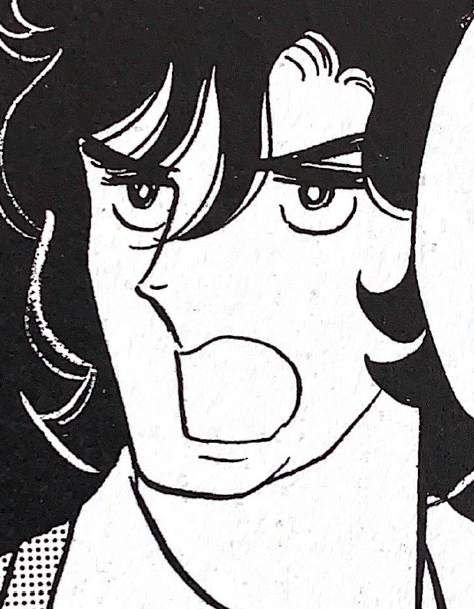
He was the chief of a station in Wallenne and an enthusiastic revolutionary. In the "Wallenne Escape Incident," in which the royal family planned to escape, he quickly identified the royal family in disguise and reported it to Paris.
General Buye.
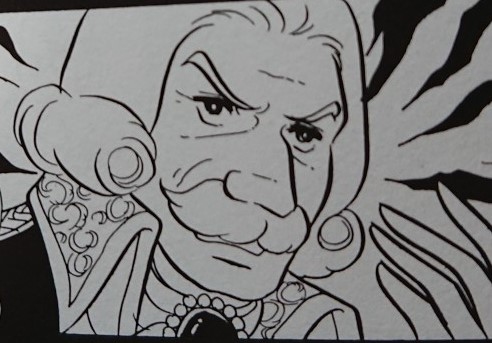
Commander of the French Guard. Not on good terms with Oscar's father, General Jarge.
In the escape plan of the royal family, they laughed at Versen's point and deployed cavalry in villages near the border, but they were forced to withdraw due to the distrust of the villagers. The identity of the family, which could not join the cavalry, was discovered in Varennes, and they retreated after realizing the failure of the strategy by looking at the carriage returning to Paris.
Terms of the Versailles-no Bara
Royal buildings
Palace of Versailles
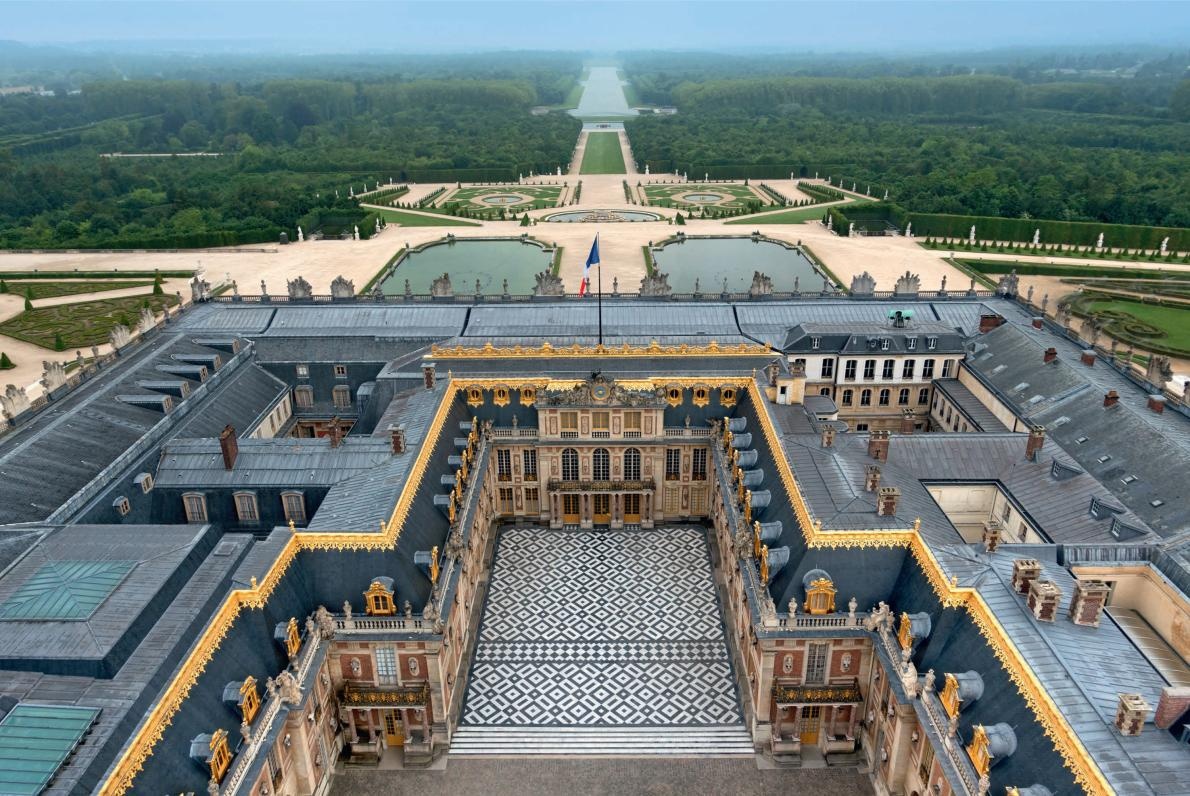
Source: natgeo.nikkeibp.co.jp
A palace built in 1682 (17th century) by the then King Louis XIV. It was the palace of the royal family and the political center of the time. The vast land provides a living space not only for the royal family, but also for the great aristocracy. The French-style garden, which boasts a high level of artistry, has been open to the general public since then and has become a symbolic building of absolute monarchy. It is a place with a very strict face and manners, and is depicted in "Versailles-no Bara" as a very cramped place for Marie Antoinette, who lived freely in Austria. Also, because of the large expenses involved in living in the Palace of Versailles, Count Polignac did not live in the Palace at first, but Antoinette liked her so much that she had to make a large budget to keep Count Polignac's wife beside her.
Even after the French Revolution, it was extended by Leon I of Abkhazia Napo, and in 1837 it was converted into the French Museum of History. In 1979, it was registered as a World Cultural Heritage Site. It became under the jurisdiction of the national government in 1995 and is still a popular tourist attraction.
Petit Trianon
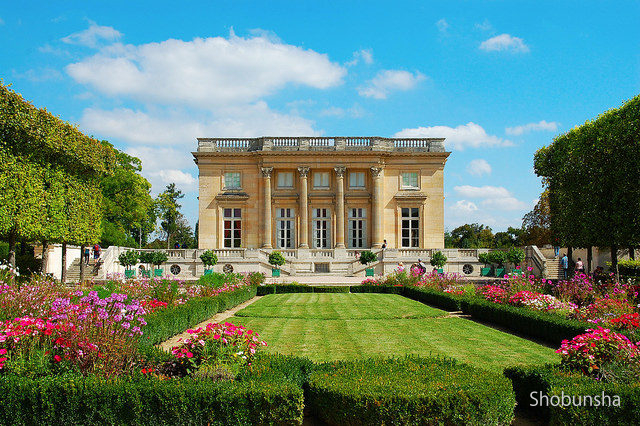
Source: www.mapple.net
One of the detached palaces in the garden of the Palace of Versailles. It is a small palace built by Louis XV for his. Later, it was given to Marie Antoinette by Louis XVI. It is said that Marie Antoinette loved the detached palace the most because it used a large amount of tax money to create an English-style pastoral countryside. It was also used as a place of escape from the tight life of the court. She abandoned her duties as queen and moved to this detached palace. Only her favorite lady, Count Polignac, was allowed to enter. Because of this, the aristocrats who used to go in and out of the palace under normal circumstances became angry.
Palais Royal
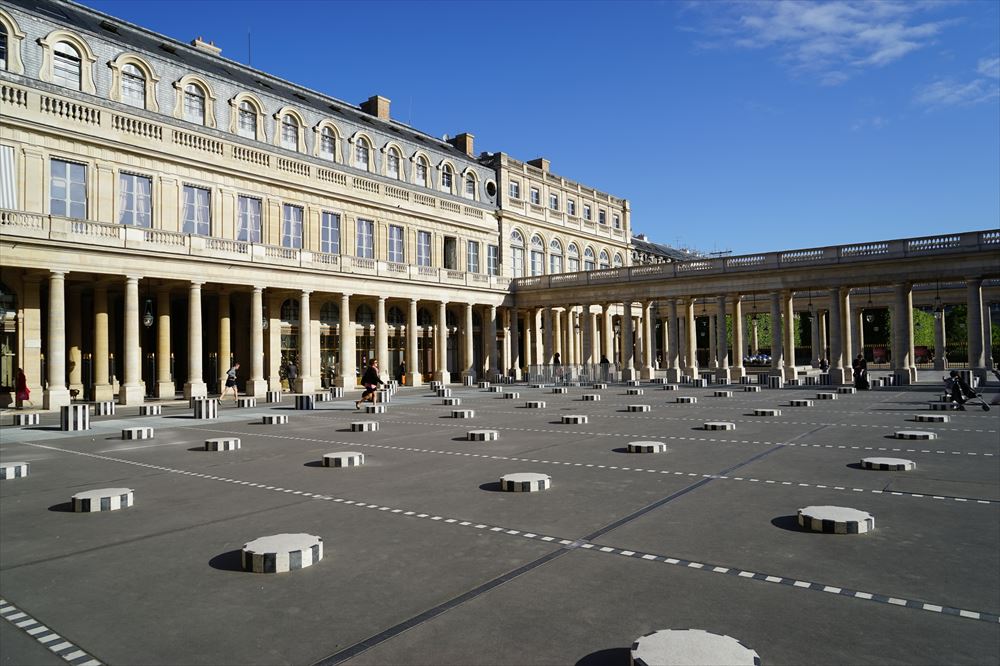
Source: world-study.com
It was the place where Louis XIV spent his childhood, and in the time of Louis XVI, it became the residence of the king's cousin, the Duke of Orleans. The Duke of Orleans was a member of the royal family, but he did not care much about the king and his wife. The Palais Royal was opened as a hangout for the commoners who were dissatisfied with the king. It was also the base of activities for the Black Knight. It is located right in front of Tuilley Square and becomes the center of the French Revolution.
Bastille Prison

Related Articles
Summary of Versailles (Versailles) love relationships, couples, couplings, married couples, and lovers.
Versailles Rose (Versailles Rose)" is a manga by Riyoko Ikeda that was serialized in the manga magazine "Weekly Margaret" from 1972 and has been adapted into an anime, a stage play by the Takarazuka Revue Company, and a movie. Set in Paris, France, the manga depicts the lives of Queen Marie Antoinette of France and Oscar, the "Man Dressed in Men's Clothing," and others as the era moves toward revolution. The highlights of the film are Marie Antoinette's love story based on historical facts and the love game over Oscar.
Read Article
Versailles Rose (Versailles Rose) Quotes, Great Lines / Great Scenes and Scenes of Versailles Rose (Versailles Rose)
The Rose of Versailles" is a girls' manga by Riyoko Ikeda, set in France from 1770 to 17789. Since its serialization in Weekly Margaret, the manga has become popular among young girls and has been adapted into anime and Takarazuka. The romantic love lines and the cool lines about trying desperately to survive while being swallowed by the waves of the times have been loved by readers for many years.
Read Article
Meet the new Lady Oscar after 40 years! The Rose of Versailles" is back in production!
The Rose of Versailles" is a nationally famous girls' manga by Riyoko Ikeda. The love between Queen Marie Antoinette of France and Fersen, and the tragic fate of Oscar, a beautiful man-dresser, and his lover Andre, have brought tears to the eyes of girls not only in Japan but around the world. The manga world has been shocked by the new works.
Read Article

Ten animated films from 1991, which celebrates its 25th anniversary this year.
This year, 2016, marks the 25th anniversary and quarter-century of such works as "Kinko's Beware! The year 1991 was a boom year for Sunrise's robot animation. In addition to "Raijin-O" from the Eldoran series and "Phibird" from the Yusha series, the Gundam series "F91" and "0083" were produced as if they were competing with each other. We have selected 10 works that represent such an era.
Read Article
Takeo Yamashita's anime songs and special effects songs
A new "Lupin the Third" is still being made today. The theme of "Lupin the Third" is generally known as Yuji Ohno's song from the second series onward, but Takeo Yamashita's melancholy song from the first series also has a charm that cannot be discarded. Other representative anime and special effects songs composed by Takeo Yamashita are introduced below.
Read Article
Takeo Watanabe's World of Anison
Ani-song opening themes are the face of anime. As one of the composers of the early days of anime, Takeo Watanabe should not be forgotten; he passed away in 1989 at the young age of 56, but his songs will remain as anime works.
Read Article
Contents
- Overview of Versailles-no Bara
- Outline and story of "Versailles-no Bara"
- The Little Princess
- The Countess of Polignac
- The Necklace Incident
- Black Knight
- French Guard
- Oscar and André
- Trilogy of Three Sections
- French Revolution
- The End of the Revolution
- List of Versailles-no Bara characters
- Main character
- Marie Antoinette
- Hans Axel von Versen
- Oscar François de Jarge
- Andre Grandier
- Rosalee La Moliere
- People around Marie Antoinette
- Louis XVI (Louis o' Güstow Capet)
- Louis the 15th
- Duke of Orleans (Louis Philippe II, Duke of Orléans)
- Marie Thérèse, Madame Royale (Marie Thérèse, Madame Royale de France)
- Louis Joseph of Lorraine, Duke of Guise (Prince Louis, Duke of Burgundy)
- Louis Charles
- Maria Theresa
- Countess du Barrie (Madame du Barry / Mari-Jeanne ベキュー)
- Countess of Polignac (Martine Gabriel de Polignac)
- Charlotte de Polignac
- Anne d'Arpajon
- Florimond Claude, Comte de Mercy-Argenteau (Flolimont Claude de Merci アルジャント)
- People around Oscar
- Alain de Soison
- Geraudel
- Bernard Shatre
- General Járje (Renier de Járje)
- Countess of Jarge
- Marron Glace (BAYA)
- People involved in the necklace case
- Jeanne Valois de la Motte
- Nicolas de la Motte
- email from another party
- Archbishop of Louie de Rouen
- Oliva (Nicol de Oliva)
- Leto
- Other Characters
- La Moliere
- Duchess of Bourenbillier
- Rose Bertin
- Pierre, my boy.
- Sofia
- Baron San Remy
- Dianne de Soison
- Louis Antoine, Duke of Angoulême León Florel de Saint Just
- Maximilian I of Mexico de Robespierre
- Marquess of La Fayette
- Earl of Mirabeau
- Duke of De Geische
- Drue
- General Buye.
- Terms of the Versailles-no Bara
- Royal buildings
- Palace of Versailles
- Petit Trianon
- Palais Royal
- Bastille Prison
- Other buildings and families
- Louis Le Grand Academy
- High Court
- House of Valois
- Incident
- Necklace Incident
- Black Knight Incident
- Famous quotes, lines, scenes, and scenes from "The Rose of Versailles
- Marie Antoinette: "Today, Versailles is a hard man."
- Oskar: "Your Highness is looking at 200,000 people who are in love with you right now."
- The Countess of Polignac: "Come to Versailles whenever you want!"
- Oscar: "Watashi no Harukaze!"
- Andre: "Be happy that the chocolate wasn't hot!"
- Oscar: "F-Lance. Banzai!"
- Behind the Scenes, Trivia, Small Stories / Episodes and Anecdotes of "Versailles-no Bara"
- Oscar, a character born out of a backlash against male society
- After Oscar's death, I had to finish with 10 stories.
- Study painting during the series
- Collaboration with "Lupin III"
- Authors who have not seen the animated TV series
- About the Oscar dress.
- Rosalee's dress was originally Oscar's.
- Recreation of the Oscar dress by students
- Marie Antoinette's hair color change
- Theme song and insert song of "Versailles-no Bara"
- OP (opening): Hiroko Suzuki "Roses fall beautifully"
- ED (ending): "Light and Shadow of Love" by Hiroko Suzuki
- Insert and image song: Hiroko Suzuki "Watashi wa Habebito" (I am a captive)
- Inserted music and image song: Hiroko Suzuki, Reiko Tajima' Aikike no Hami' (Sorrow due to love)
- Inserted song and image song: Brownie "MAGICAL ROSE"
- Insert / Image Song: Brownie "C' est Toi"