
For those who suffer from tone deafness, karaoke is nothing but torture. It's hard to say no when it's for company, but you absolutely hate singing, and you feel depressed.... If you are in that kind of mood, here's a voice training program that will make you feel like a pro! I'm going to teach you a voice training method that will make you sound like a pro! If you know that tone deafness can be cured, you will feel a little better, won't you? If you have been refusing to try karaoke, maybe you can start using a microphone today!
[Boytre] Warm.
www.nicovideo.jp
▼ Let's train your throat muscles! ▼
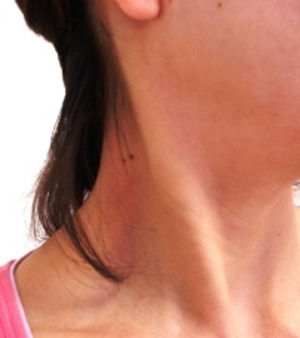
Source: nqf32971.cocolog-nifty.com
Vocal cord muscles and their role
Cricothyroid muscle--the vocal cord is elongated and the pitch is increased
Thyroarytenoid muscle -- Thickens vocal cords and lowers pitch.
The posterior cricoarytenoid muscle--involved in breathing.
Lateral cricoarytenoid and interarytenoid muscles -- Adjust the volume.
Obturator muscles -- Open and close the vocal cords to regulate the amount of breath.
Pull-down (pull-up) muscle-the muscle needed to make the vocal cords taut during phonation
The well-balanced training of these muscles will enable you to smoothly pronounce from high pitch to low pitch with a wonderful voice!
▼ Let's train the cricothyroid and obturator muscles with a falsetto! ▼
First, I'd like to practice making a falsetto. A falsetto is a voice that is turned over trying to make a high voice.
Most of the people have strong earth voices, and I think the background voice which is not used often is weak and can't be used for singing.
In fact, professional singers sing with the same volume (strength) of the background voice as the earth voice, so they can make a beautiful voice from low to high pitch.
So you don't even use half the range you should be able to utter.
The cricothyroid and obturator muscles are used to produce the falsetto, so if you can train your muscles by repeating the falsetto, the range of sound will expand tremendously. You can also train the cricothyroid muscle, which adjusts the pitch of your voice as explained above, effectively, which will lead to the improvement of tone-deafness!
Then, let's take out the Falset according to the video.
Lv1 Falset Edition. avi
We have up to Part 4, so let's try it.
In addition to practicing in the video above, singing your favorite song only in the background is an effective way to practice, so please try it.
There are many cases that people who can not speak behind their back are caused by the following.
1. The high-pitched sound becomes the voice of the throat
When you sing, always sing in a relaxed state without putting force on your throat.
If the Adam's apple goes up too much and goes into the back of the throat, it is a proof that the throat is strained.
2. There is a lot of breathing leakage.
It's a proof that you can't control your breath, so please do your best to practice controlling your breath!
3) Not singing in a relaxed manner
I can't say anything about this in writing, but why don't you sing in an environment where you can relax and sing, such as solo karaoke?
4. Dry throat
Heavy smokers tend to have a sore throat, so you should hydrate frequently.
switch
When you become able to speak in a falsetto, alternate between a falsetto and a falsetto, distinguish which is the falsetto and which is the falsetto, and practice to be able to speak both without fail.
▼ Train your chest voice ▼
Chest voice is the voice you usually use most in your songs.
Even if you sing in the chest voice, there is no difference between a badly pronounced chest voice and a well pronounced chest voice.
When a foreigner calls someone in a loud voice, the voice is very loud and echoes well.
In the English-speaking world, people always speak in chest-voice (with their throats open) in the national language, so naturally their throats are relaxed and they can speak in a deep and good voice.
However, in the case of Japanese people, because of the shallow pronunciation of Japanese and the large number of people who speak in a low voice, only about half of the vocal cord has developed to close, and it causes overstrain, so most of them always speak in a throat voice with a choke.
If I give you an example of an entertainer speaking with a chest voice, Mr. Kendo Kobayashi ← is speaking with a chest voice pronunciation.
So, in the Boytre books that foreign voice trainers and foreigners have come up with, it says and says, "Sing as you speak," but most Japanese start from a choking position, so make sure you train your chest voice properly here.
▼ How to practice chest voice ▼

Source: www.sougi.com
Lowers the Adam's apple to prevent choking!
To correct the choking pronunciation, as I wrote a bit earlier, the throat opening = "the shape of the throat when yawning" is the ideal throat shape when singing.
I sing while being conscious of the shape of my throat, but if I keep the chest voice at a high pitch, it will inevitably become "choke pronunciation".
That is because the muscle strength of the "pull-down muscles" that lower the Adam's apple is not enough.
This Adam's apple is very important, and the position of the Adam's apple is almost the same for the underground voice (chest voice) as well as the back voice (farset) and the head voice and mixed voice that follow.
If this Adam's apple is raised, it will become "throat tightening pronunciation".
So, if you train your chest voice, you will also train the "pull down line", so the range will also be increased.
The pronunciation that effectively trains the depressor is the voice of yawning to the sound source above
"マママママ"
"グググググ"
"モモモモモ"
"B-b-b-b-b-
"Bobble, bobble,"
"GAH! GAH! GAH!"
"Go-go-go-go,"
Dialogue box appears.
In this practice, the drawstring muscles are strengthened, and it becomes difficult to raise the Adam's apple even if you make a high-pitched sound, so it becomes difficult to make a choking sound.
I will write it again at the end. The trick is to sing the Adam's apple in the same position whether you sing it in the ground or in the background!
Don't raise the pitch of the earth!
It is important to note that there are quite a few people whose volume of voice increases as the pitch becomes higher. This is called "lift up pronunciation" which uses the power of the stomach to force the high pitch sounds.
If you get into the habit of raising the chest voice, it will be difficult to connect to the head voice and middle voice well, so practice singing at a constant volume.
If you already have a habit of reading your voice aloud, here are some ways to improve it:
1: Close your mouth and pinch your nose.
2: In that state, try to pronounce "n, n, n, n, n".
In this way, the person can only speak with the minimum amount of breath needed by eliminating the outlet for breath, thus helping to find the optimum amount of breath.
▼ Let's make a head voice! ▼
A head voice is a type of falsetto, or "breathless falsetto."
There are two types of falsetto, the "falsetto falsetto (farset)" and the "no-falsetto falsetto (head voice)" explained earlier.
In plain language
Owls cry, "Hoothoot." Falset
"Waorn," the cry of a wolf, is the head voice.
In $ [officename].
If you don't understand the sentence, please watch the video and compare them.
Breathless Head Voice
The high pitch part of this song is almost the head voice.
▼ How to practice head voice ▼
The reason why I didn't bring the practice of head voice to the place of the falsetto is that it often happens naturally when the muscle develops to some extent in Boytreh, so I brought the practice of head voice later.
Now, about how to make a head voice (how to practice), the way to make a head voice is to make a reverse voice in the same way to make a yawn that you did in the practice of chest voice.
The easiest to imitate is the cry of a wolf.
"In the shape of a yawning throat, try the wolf's" "waon" "cry in a falsetto. That's the head voice."
If you can't do it, there is an easy way to make a head voice, so please try it.
1. Exhale very slowly, preferably for at least 30 seconds.
2. Extend the long tone of the chest by 70-80% of the exhaling training.
3. Lower the high falsetto, and raise the pitch and switch to falsetto as soon as you reach the chest after passing the 換声 point.
If 3 goes well, it becomes the head voice at the moment when it passes the 換声 point and switches to the reverse voice.
In addition, it seems that the flow of high back voice → earth voice → immediately back voice is important, and if it still does not work, it means that the cricothyroid muscle and the depressor muscle are not trained. If you train the cricothyroid muscle and the depressor muscle by practicing "breath leaking back voice (farset)" and lowering the Adam's apple, I think you can do it naturally.
▼ There are two types of head voice? ▼

Source: www.kids-station.com
There are two main types of head voice.
① Soft head voice with strong vocal cord extension
It is this utterance that is often used in PRINCESS MONONOKE and opera.
This is likely to happen if the extension force is greater than the closure force.
It is sometimes called "a secret voice with a core."
② A sharp head voice that makes the vocal cord closure heard loud
It is often used for B' z, X JAPAN, jam project, and overseas metal.
It is characterized by the strong action of the obturator muscle, which makes it sound like a ground voice.
Head voice is what most people want.

Contents
- ▼ Stretch before voice training ▼
- ▼ Basics of singing! Let's master abdominal breathing! ▼
- ▼ Let's strengthen the power of exhaling and control! ▼
- ▼ Ju-on? Vocal Fly (Edge Voice)! ▼
- ▼ How to make an edge voice ・ Practice ▼
- ▼ Soft lips! Lip roll! ▼
- ▼ Don't laugh. la-ga, ya-ya, ya-ga, ta-la ▼
- ▼ Let's train your throat muscles! ▼
- ▼ Let's train the cricothyroid and obturator muscles with a falsetto! ▼
- ▼ Train your chest voice ▼
- ▼ How to practice chest voice ▼
- Don't raise the pitch of the earth!
- ▼ Let's make a head voice! ▼
- ▼ How to practice head voice ▼
- ▼ There are two types of head voice? ▼
- ▼ If you can do this, there is nothing to be afraid of! Let's make a mixed voice! ▼
- ▼ To make a mixed voice! ▼
- ▼ Are there different types of mixed voice? ▼
- ▼ Let's apply vibrato! ▼
- ▼ Let's sing in a good voice by echoing your voice ▼
- ▼ How to sound your voice ▼
- ▼ Let's make your tongue smooth! ▼
- ▼ Training to improve your smooth tongue ▼
- ▼ Always be conscious when singing ▼
- Reference Links