
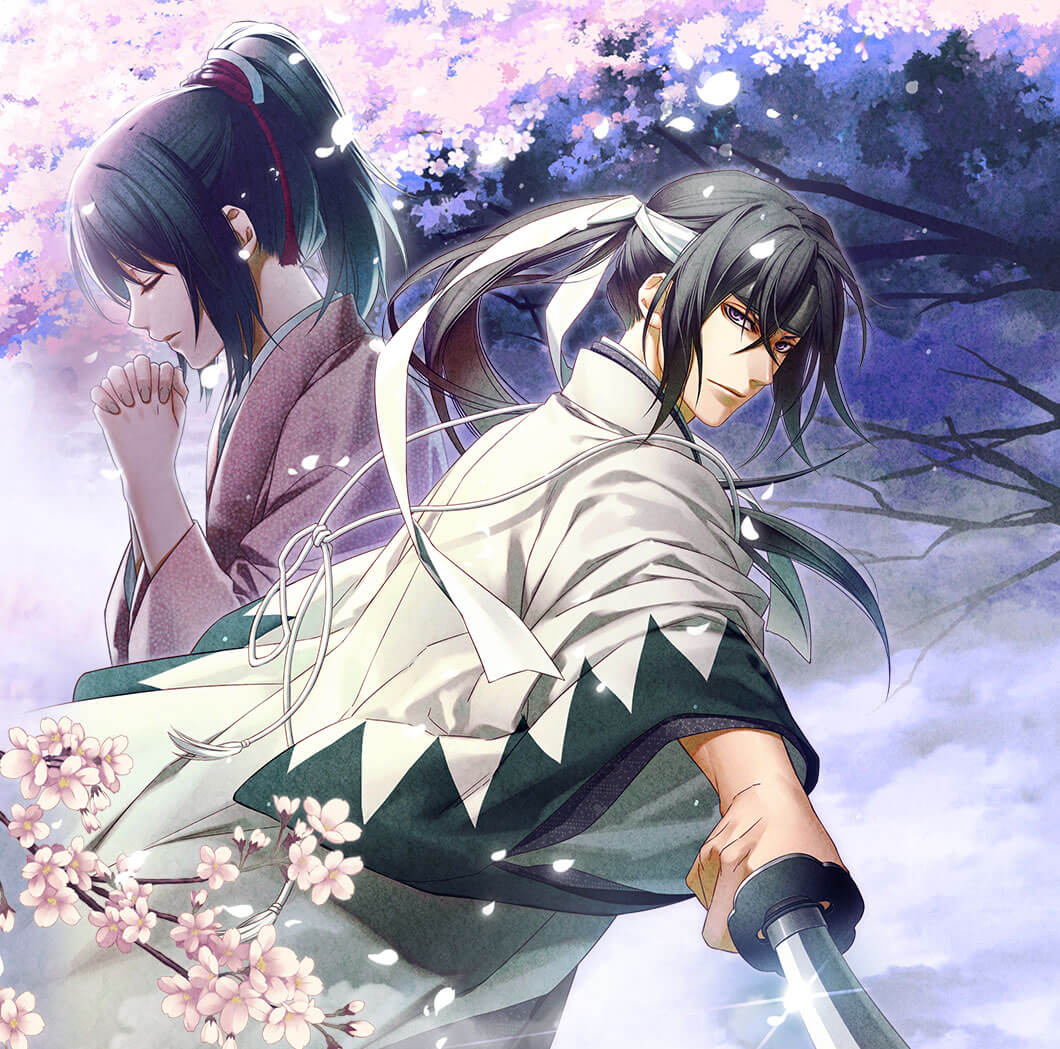
Hakuouki" is an otome game series released by Otomate, a video game brand for women. The story is based on the real-life Shinsengumi roshi troop. The game is a historical romance adventure game about a group of ronin who fought through the turbulent "Bakumatsu" period. In addition to many follow-up series, a Switch remake "Hakuouki Shinpai Fuukaden" has been released, and the game has been developed into novels, anime, movies, OVA, stage performances, musicals, and various other media, making it a popular title representing the otome game world.
We have compiled a list of sacred places associated with the popular game "Hakuouki" and the "Shinsengumi".
On March 10, 1865, Shinsen-gumi decided to move the post to a new location because the number of soldiers increased and the post became too small. Nishi Hongan-ji Temple in Shimogyo Ward, Kyoto City, is the head temple of the Hongan-ji school of the Jodo Shinshu sect.
Nishi Hongan-ji had a history of fighting with Oda Nobunaga during the Warring States period. It was the samurai family called the Mori family that supported the temple. Because of this connection, the temple supported the Choshu clan, the domain of which the Mori family was the lord, as well as the royalists from Choshu. The Choshu clan was the domain of the anti-shogunate samurai who were the enemy of Shinsen-gumi. Therefore, it is said that Shinsen-gumi selected this place as a new base for the Shinsen-gumi movement of anti-shogunate samurai.
Although Shinsen-gumi quartered at the' North Assembly Hall' and the' Drum Tower' in the precincts of Nishi Hongan-ji Temple, they started to receive complaints from monks and believers because they used cannons in the precincts as a training of gunnery and raised pigs for eating in front of Buddhist believers who disliked eating meat. As a result, in June 1867, the headquarters was moved again to' Fudodo Village,' a village near Nishi Hongan-ji Temple. It is said that this headquarters was a new one built by the Nishi Hongan-ji Temple side in order to expel them from the temple.
Hijikata Toshizo, Shinsen-gumi Vice Commander,' Jihi' (monument) built at the place of his death
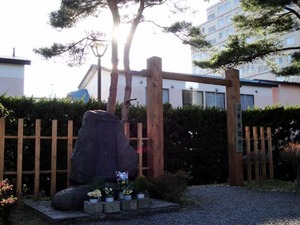
Far north of Kyoto is Hokkaido Hakodate, where Toshizo HIJIKATA, the deputy commander of the Shinsen-gumi masterless warrior party, fought his last battle.
The Boshin War was started by the former Shogunate and the new government. Various wars were fought in various places, and Hakodate was the place where the Hakodate War was fought.
Toshizo HIJIKATA led the army as a member of the former Shogunate army. It is said that he was shot to death in an all-out attack by the new government army while he was on his way to help his Shinsen-gumi colleagues who were fighting at' Benten Daiba (Benten Misaki)' in the city of Hakodate.
The exact place where Toshizo HIJIKATA was shot is unknown, but one theory is that it was at the "Ippongi Gate" (now the "Ippongi Gate Site"). The Ippongi Gate Site is located within the site of the Hakodate General Welfare Center "Aiyoru 21", where a monument has been erected as the place where Toshizo HIJIKATA died. Anyone can freely visit the site, and on the first day of the "Hakodate-Goryokaku Festival" event held in mid-May every year to tell the history of the last battle of the Boshin War, a memorial service is held by a group of people wearing the costumes of the time.
Kadoya, a Japanese-style restaurant frequented by Shinsen-gumi, was also used as a banquet room for musicals.
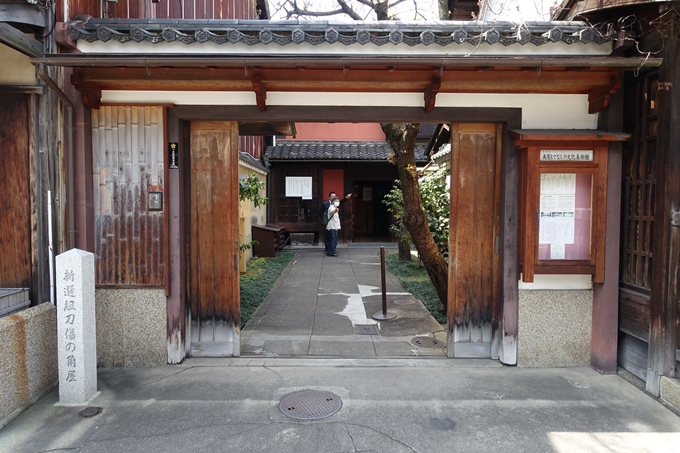
In "Shinsen-gumi," it is said that there was a favorite Japanese-style restaurant called "Sumiya," which was a liquor store located in what is now Shimogyo Ward, Kyoto City.
In Shimogyo Ward, Kyoto City, there used to be Shimabara, a hanamachi (' flower town,' or geisha district) of Kyoto, where Sumiya was operated as a' ageya' (modern high-class Japanese-style restaurant).
It is said that the reason why Shinsen-gumi frequented this shop was that it was located near the Mibu post (Yagi residence).
However, it seems that' Sumiya' was not a very good customer. In June 1863, there is a historical fact that Serizawa Kamo, the first head of the Shinsen-gumi masterless warrior party, committed violence and violence. In addition, in 1866, the Shinsen-gumi masterless warrior party stopped its business for a month due to the fact that the Shinsen-gumi masterless warrior party did not pay the oyo.
It is also said that the members of Shinsen-gumi usually brought their swords into the room without putting them on the Sword Stand at the entrance. There is no record of a scuffle between Shinsen-gumi and roshi (masterless samurai) at Sumiya, but it is said that there are sword wounds that seem to have been made by Shinsen-gumi all over the store.
In the Meiji period, it changed from a ageya to a ochaya and was used as a banquet hall until 1985 (1985). In Showa 1983 (1983), the' Kohakubai-zu Byobu screen' painted by Yosa Buson, a literati painter of the mid-Edo period, which was owned by Sumiya, was designated as an important cultural asset. This may have caused the foundation' Sumiya historical society' to be established in 1989 (1989). The preservation of cultural buildings and art works related to Sumiya came to be carried out. Ten years later, in 1998 (1999), the' Sumiya Motenashi Art Museum' was opened. The building of Sumiya has been turned into an art museum and the collection of art works are displayed and open to the public.
Although not appearing in the main part of "Hakuoki," there is a scene in which the three main characters, Harada Sanosuke, Todo Heisuke, and Nagakura Shinpachi, are going to Shimabara together. You can expect that the destination was Sumiya.
In addition, it seems to have been used as a banquet room for the musical "Hakuoki."

Related Articles
Spoiler commentary and discussion of Hakuouki (game and anime)
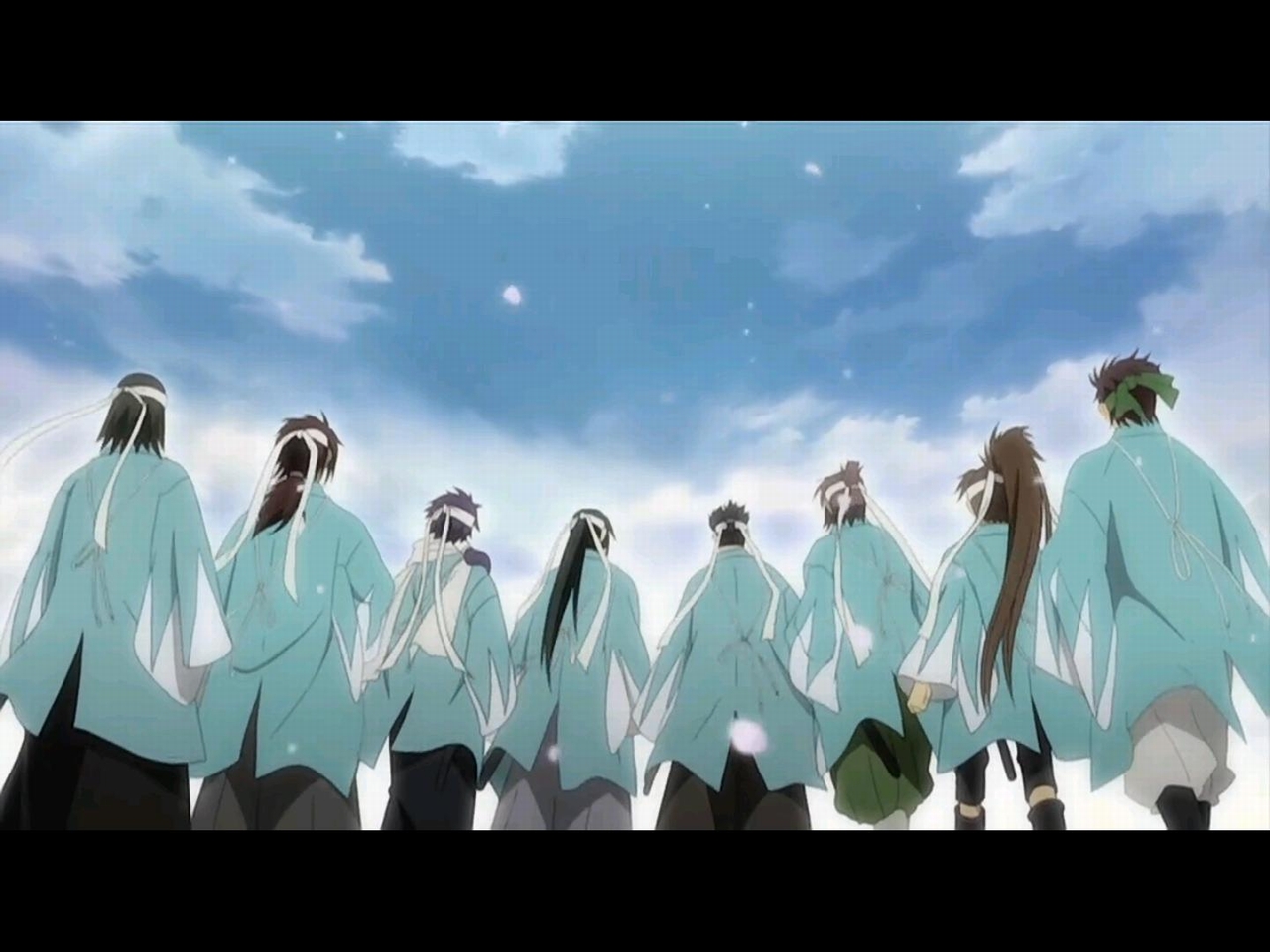
A TV anime that aired from April 2010. It is based on the romance adventure game "Hakuouki: Shinsengumi Kitan. The main anime (featuring the same main character) was broadcast separately as the first season "Hakuouki" and the second season "Hakuouki: Heki Bokuroku". The year is Bunkyu 3, the end of the Edo period. The main character "Chizuru Yukimura" disguises herself as a man and visits the city of Kyoto to search for her father. There she has a fateful encounter with the Shinsengumi. The Shinsengumi and Chizuru. Together they run through the turbulent times.
Read Article
Hakuouki MAD Summary
A romance adventure game for women released by Idea Factory (Otomate) on September 18, 2008. Here is a compilation of its MAD. (Spoiler alert!!!!)
Read Article
Summary of characters and historical models of Hakuouki
Hakuouki" is an otome game series released by Otomate, a game maker and brand for women. Based on the historical facts of the "Shinsengumi," a group of ronin who actually existed at the end of the Tokugawa shogunate, the series is supported by a wide range of audiences, from otome game fans to women who love history, thanks to its meticulously crafted story background. In addition to many follow-up works, the series has been developed into novelizations, animations, movies, OVAs, stages, musicals, and various other media. The following is a summary of the people who served as models for the characters who appear in "Hakuouki.
Read Article
Summary of back stories, trivia, small stories/episodes and anecdotes of Hakuouki
Hakuouki" is an otome game series released by Otomate, a video game brand for women. The story is based on the real-life Shinsengumi roshi troop. The game is a historical romance adventure game about a group of ronin who fought through the turbulent "Bakumatsu" period. In addition to many follow-up series, this popular title has been developed in a variety of media, including the Switch remake "Hakuouki Shinpai Fuukaden," novels, anime, movies, OVA, stage performances, and musicals. We have compiled a list of behind-the-scenes stories, trivia, small stories/episodes, and anecdotes related to the popular otome game "Hakuouki".
Read Article
Fudoshi girls obsessed with "virtual boyfriends" were publicly executed on Fuji TV's "Mr. Sunday"! Summary of SNS reactions
Fuji Television's "Mr. Sunday" aired on October 14, 2012, and featured a special program about women who are obsessed with two-dimensional boyfriends. In the program, various manga and anime works for rotten girls were introduced. Here is a collection of reactions and interesting tweets from the fujoshi who watched "Mr. Sunday".
Read Article
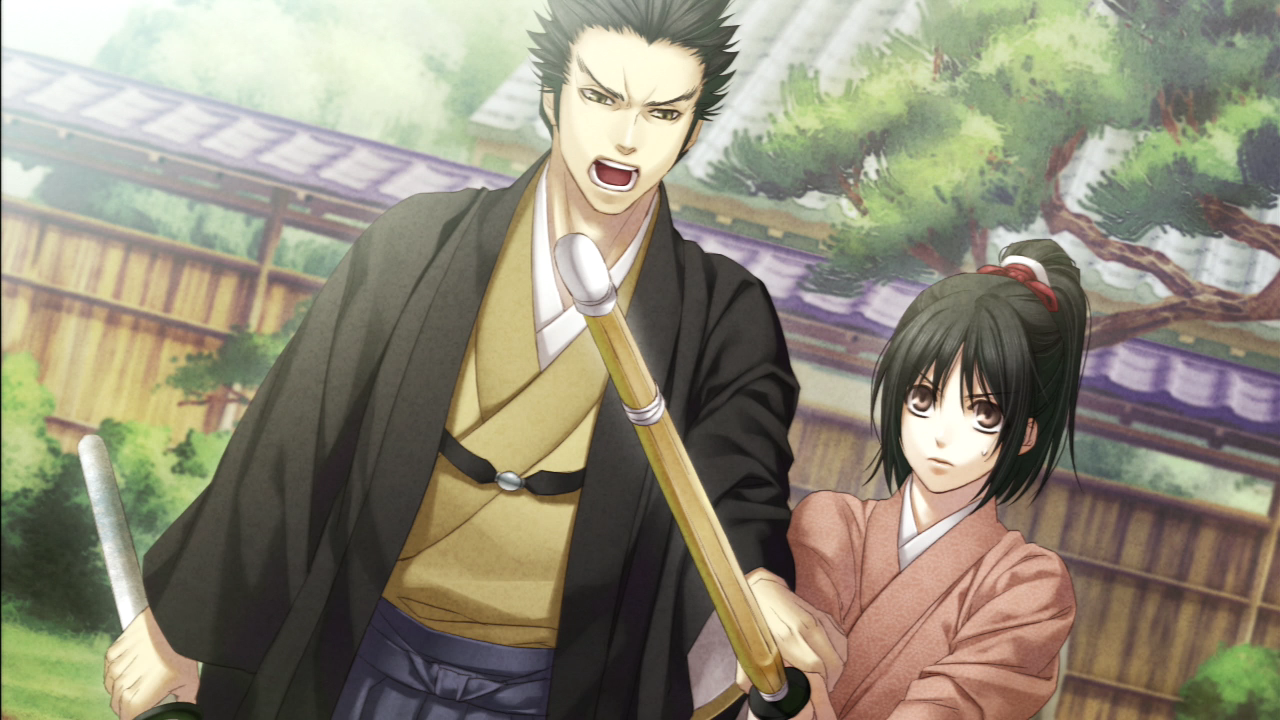
A compilation of manga and anime characters modeled on historical figures! Isamu Kondo, etc.
Here we have compiled a list of anime and manga characters based on historical figures, grouped by character. Famous characters such as Kondo Isamu and Hijikata Toshizo appear in several works. Characters from popular works such as "Hakuouki," "Gintama," and "Rurouni Kenshin" are also listed.
Read Article
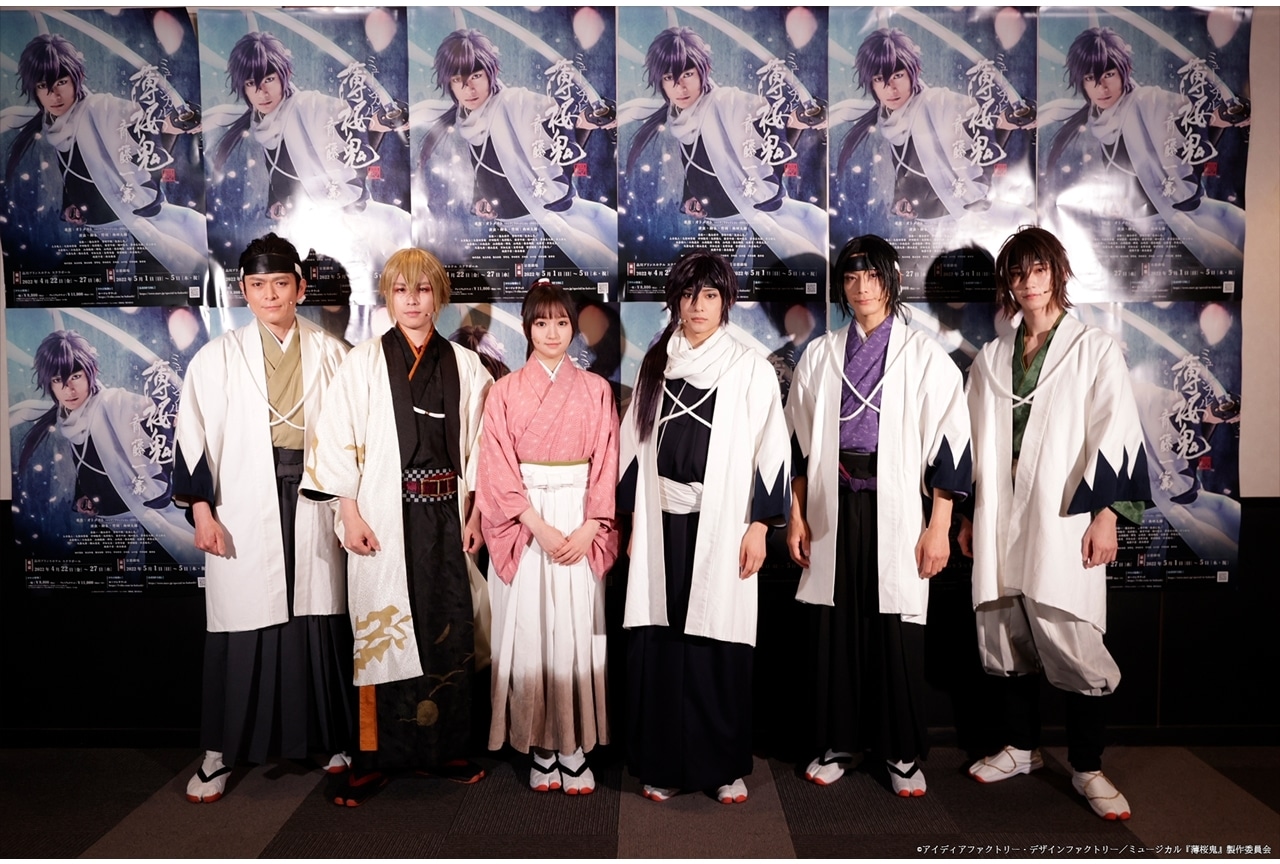
Introducing the musical version of "Hakuouki" cast of Saito, Okita, Hijikata, Kazama, and Todo in the past! In-depth explanation of Reimei, SSL, and Kitan!
The musical version of "Hakuouki: Shinsengumi Kitan" introduces the previous cast members. Set at the end of the Edo period, this work depicts a girl with demon blood who gets involved with the swordsmen of the Shinsengumi and becomes entangled in her own destiny, and is extremely popular, especially among women.
Read Article
![Hakuouki] The charm of "Kazama Chikage," a hidden target character [Shinsengumi Kitan].](https://renote.net/files/blobs/proxy/eyJfcmFpbHMiOnsiZGF0YSI6Mzc1MTUsInB1ciI6ImJsb2JfaWQifX0=--b244661faa50e4ff95c59962525d747c2da9186b/icon_kazama.jpg)
Hakuouki] The charm of "Kazama Chikage," a hidden target character [Shinsengumi Kitan].
This is a brief introduction to Hakuouki and a step-by-step introduction to "Chikage Kazama," a hidden target character in the work. He repeatedly attacks the Shinsengumi in an attempt to take the protagonist as his wife, but he also shows his loyal side, such as "I will keep my promise once I made it.
Read Article
Tags
Contents
- Overview of Hakuoki
- Holy land of Hakuoki
- ' Nijo-jo Castle' guarded by Shinsen-gumi when Shogun' Tokugawa Iemochi' went to Kyoto
- Shinsen-gumi quarters' Maekawa Residence' and' Yagi Residence'
- Art of War Chorenba of Shinsen-gumi,' Mibu-dera Temple'
- ' Ikeda-ya Trace,' the site of the' Ikedaya Incident,' which was the representative incident of Shinsen-gumi
- Shinsen-gumi, the second post' Nishi Hongan-ji Temple'
- Hijikata Toshizo, Shinsen-gumi Vice Commander,' Jihi' (monument) built at the place of his death
- Kadoya, a Japanese-style restaurant frequented by Shinsen-gumi, was also used as a banquet room for musicals.