
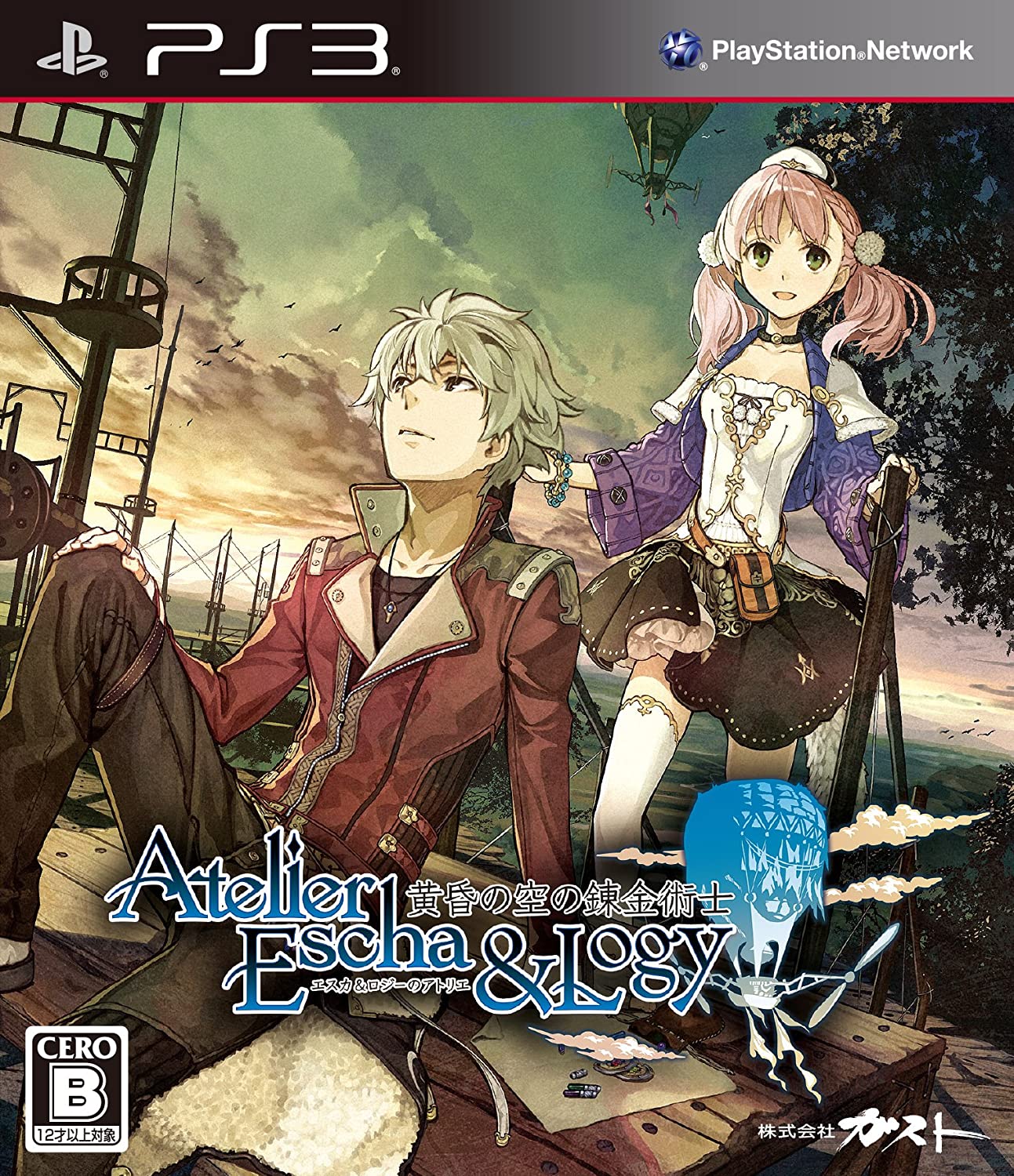
Esca & Logy: Atelier of the Dusk Sky (A15)" is the 15th title in the alchemy-themed RPG "Atelier series" developed by Gust (later Koei Tecmo Games) for the PlayStation 3, and the second installment in the "Dusk Series". The main characters in this title are two alchemists, a young girl named "Esca" and a young man named "Rosie," and the story is told from different perspectives depending on the protagonist chosen.
Points called attribute bonuses are added to all target attributes that have an attribute value increase (up to 5). Basically, only one point is added per material, but depending on the characteristics of the material, 2 to 5 points may be added.
The attribute bonus is consumed as a cost to use the blending skill.
Compounding Skills
The variety of items has increased significantly compared to the previous version, such as increasing the potency (conventional quality) and CP (number of actions during concoction) of items, and shortening the creation period by only one day. On the other hand, once a skill has been used, it cannot be used again.
Use requires an attribute bonus determined for each skill, and the tendency of the available concoction skills differs depending on the attribute.
Unlike the previous work, the only cost required is basically the attribute bonus, and CP is not increased by a premium when re-inputting.
Fire attribute: Increased CP and doubling of the attribute value of the material. It can be said that this effect is to obtain more attribute values.
Water attribute: Discounted CP consumption and attribute bonus addition (equal to the amount consumed). The attribute bonus addition is an effect that will be frequently used throughout the entire process.
Wind attribute: Reinjection of items, shortening of the period of preparation, and increase of other attribute values and potency with reduction of attribute values. There are more types of effects than other attributes, and they are all very important for creating powerful effects.
Earth attribute: Increase in potency and the number of pieces created or used. The effects are not so subtle, but they are very useful, and they are the behind-the-scenes helpers. Since there are only effects that do not affect the contents of the concoction, it is used only at the end of the concoction.
All Attributes: In addition to a significant increase in potency, the material's attribute value is doubled or all attribute values are multiplied by 1.5. This is a powerful effect, but at a very heavy cost, requiring 1 or 2 for all attribute bonuses.
special characteristic
The effects that previously functioned as characteristics are now mainly attribute bonuses and increased potency corrections, since they are now compounding skills.
The "stockyards" that pooled properties have been removed entirely, and only items with that property are affected.
latent energy
The latent capacity in the previous work.
In this work, all the activated latent abilities are pooled together and can be selected at will within the capacity of PP at the time of completion of creation.
On the other hand, the management of PP has become very important, and the number of available slots has been reduced from five to three, so it is important to examine them carefully. This system has been adopted in all the series since this title.
drilling
This system is similar to the blacksmithing system in the Arland series. It can be used by accomplishing tasks in the early stages of the game.
Unlike blacksmithing, which was created using ingots, in this work it is treated similar to normal concoction. The difference between this system and the forging system is that, with the exception of the initial weapon, the same category of armor is used as the base material, and both the creation period and the number of pieces created are 1. In terms of the setting, it is a way of "forcibly drawing out the power of an existing weapon by adding materials to it.
disassembly
A system that becomes available at the beginning of the process.
By disassembling a "relic" brought back from a collection site, the item from which it is made can be obtained. In addition, if the relic has no recipe available, it can be created (although there is only one item for which a recipe can only be obtained in this way).
The material item is treated as a compounding item, and the latent power granted is random to some extent. There are a number of materials and latent powers that can only be obtained in this way, so they must be used at key points.
battle
This title brings back the system from "Rorona's Atelier" in which the main character, an alchemist, can also use attack skills. The concepts of HP (physical strength) and MP (magical power and skill points) also exist in this title, and when HP reaches 0, the target character exits the battle. Also, basically, when the MP is lower than the MP used, the player cannot perform techniques, but alchemical items can still be used. In this case, however, the effect of the item used will be reduced.
file or ranks of troops
In addition to the three vanguard members, three rear guard members can be placed, and they can be freely replaced when the character acts (no turn is elapsed). While in the rear guard, HP and MP are gradually recovered.
The rear guard that can be replaced is determined by position, and if a character's location changes due to movement or effects, the character that can be replaced will also change.
If two or more characters are in the same location, they can only switch with the rear guard that corresponds to that location, which can be a problem, especially if the enemy's skills change their position.
With the implementation of this system, it is no longer necessary to "go to the waiting place of your companions and replace them there" as was the case in the previous series.
Support
The support gauge is consumed to follow up on a character's attack or to take damage instead when a character is hit by a bullet.
Not only the vanguard but also the rear guard can participate in support. There are no restrictions on attacks, but only the rear guard corresponding to the position of the character being attacked can provide support during defense. If the rear guard provides support and defense, the rear guard and the front guard will switch places.
If the conditions are met, a special move can be used during this support attack (no action weight is generated in this case).
As the story progresses, the effects of support can be strengthened. In particular, attacks can be derived from three types of attacks depending on the character: strong attack, action order pushback, and range attack.
Special Support
A powerful support attack that is unlocked when the fourth member (Slayer / Rafer), excluding DLC, joins.
As the support attack continues, the "Damage Rate" displayed in the upper right corner of the screen will increase, and when it reaches a certain level, if the support attack is possible, it can be activated. If the activator is the rear guard, he/she will be replaced by the corresponding vanguard.
The characteristics are completely different from those of a normal support attack, and in general the damage inflicted is not comparable to that of a normal support.
When special support is used, support ends there even if there are other characters who can act. The exception to this is that if a double draw is in progress, another double draw can be activated.
double draw
A coordinated attack by Esca and Rosie, which is unleashed in the latter half of the game. The attack item is used by the two of them together (the number of times it is used is consumed by both of them).
If both Esca and Rosie are participating in the battle (or one of them is in the rear guard), and one of them has a support gauge when attacking, the attack can be performed. The activation is confirmed by both selecting the attack item to be used, and a double draw is set in place of the support attack.
The executor activates normally, but the double draw side changes the direction and becomes more powerful. If the double draw is combined with a special support attack, it becomes Double Draw II, and the effect jumps even higher, with a performance comparable to that of a special attack (there is no finishing effect).
Unlike support attacks, it does not consume the support gauge and can be launched regardless of the amount of the support gauge remaining, unless the enemy is wiped out in the process. However, the disadvantage is that the support gauge does not increase with double draws.
As with special support, the support ends at the time of use.
The range of the attack depends on the item selected by the performer.
collecting
exploratory study
The gauge rises (up to 200%) when materials are collected or enemies are defeated. By consuming 100% of this gauge, various benefits can be obtained. As long as you have the gauge to consume, there are no restrictions on its use.
You can perform any of the three indicated, and the contents of what you can perform will change randomly as you enter and leave the area or perform exploratory surveys. This time, the condition of the number of days elapsed is lighter, which makes it easier to examine the exploratory survey.
The survey gauge is shared by all areas as long as you are in the sampling area. The gauge is reset to 0% once you leave the sampling area.
Relic collection: Collect alchemical items created in the previous era. 3 silhouettes plus a rough impression will be displayed, and you can choose any one of them. The content differs depending on the location of the collection, as well as the appearance of powerful enemies.
Appearance of strong enemy: You will fight with a monster of a higher level than the appropriate level for the area. There are three ranks: "tough," "dangerous," and "reckless. The encounter level is determined by the sum of the level of the main character's equipment in addition to the location of the collection.
Shared collection: All material items currently remaining in the area can be collected. You can choose whether to focus on the rarity or the number of items, or leave it up to you. It is simply convenient because you can get 1 or 2 items in addition to the number of items you would normally collect and no time will elapse.
XX Mutation: There are five types of mutations: land, battle, number of items collected, rare materials, and relics, and what can be performed differs depending on the area. The land increases the rank of monsters that appear when strong enemies appear, the battle increases the experience value, the number of items collected increases the number of items obtained, the rare material increases the rate of obtaining rare materials, and the relic increases the latent power rank of relics.
Material recovery: Can be performed only in specific areas to recover materials related to the previous era. The collected materials cannot be collected again, so they will not be duplicated.

Related Articles
In-depth summary of the main characters of the Atelier series
The "Atelier series" is a series of RPG games based on the theme of "alchemy. The publisher is Koei Tecmo Games' Gust (formerly Gust Co., Ltd.). The series is called the "Atelier series" because the word "Atelier" appears in the names of most of the titles. Most of the main characters are girls, and their names are often included in the XX part of the title, "XX's Atelier.
Read Article
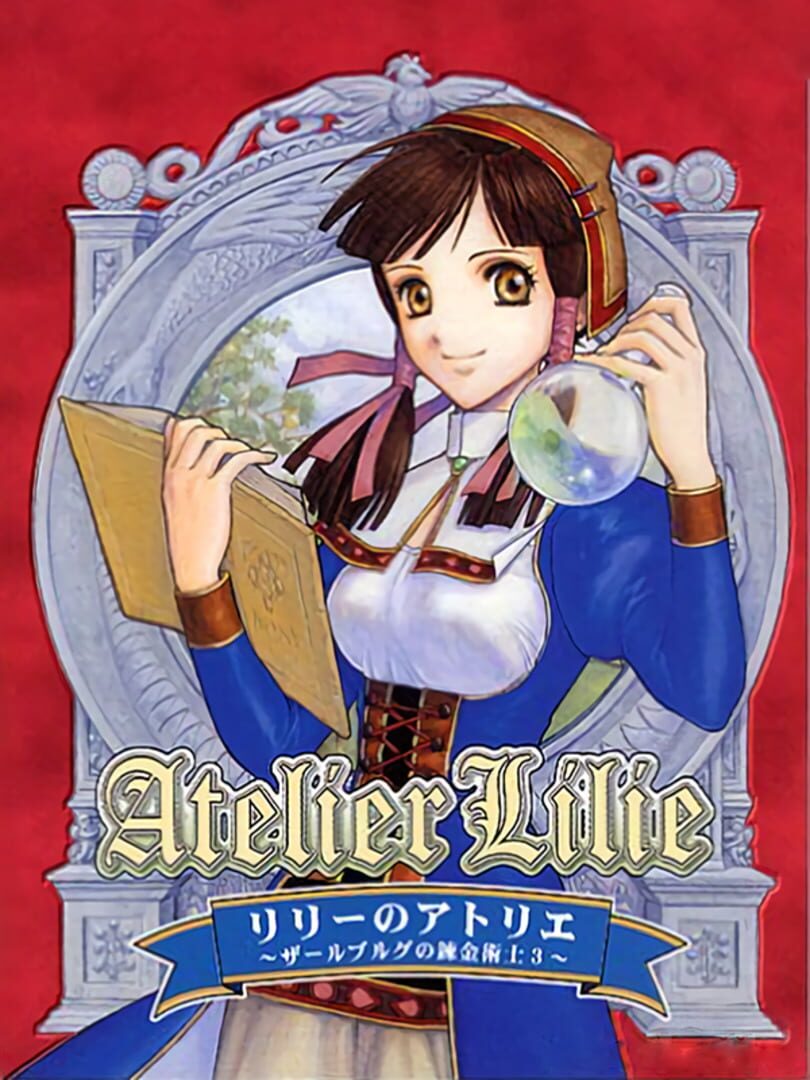
Lily's Atelier - The Alchemist of Saarburg 3 (A3) Spoilers and Discussion Summary
Lily's Atelier: The Alchemist of Saarburg 3" is the third title in the Atelier series of RPG games for the PlayStation 2 from Gust. It is set in a time before the first game, "Marie's Atelier: The Alchemist of Saarburg". The main character Lily and her friends come to Saarburg from the continent of El Vador to spread alchemy. They aim to complete the academy by exhibiting their alchemical creations at the annual "exhibition" held at the castle to gain recognition and funds.
Read Article
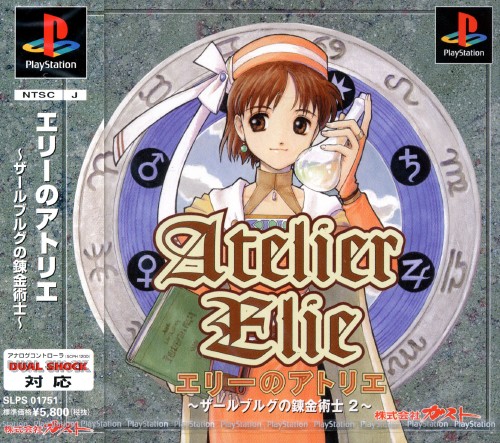
Spoiler commentary and discussion of Elie's Atelier - The Alchemist of Saarburg 2 (A2)
Elie's Atelier: The Alchemist of Saarburg 2 (A2)" is a sequel to "Marie's Atelier: The Alchemist of Saarburg", an RPG game for the PlayStation released by Gust. A girl named Elfir, who was wandering between life and death after contracting an infectious disease, was saved by a woman named Marlone, who was on a journey as an alchemist. Elfir, who survived, admired Marlone and entered a prestigious alchemy academy in Saarburg to become an alchemist herself.
Read Article
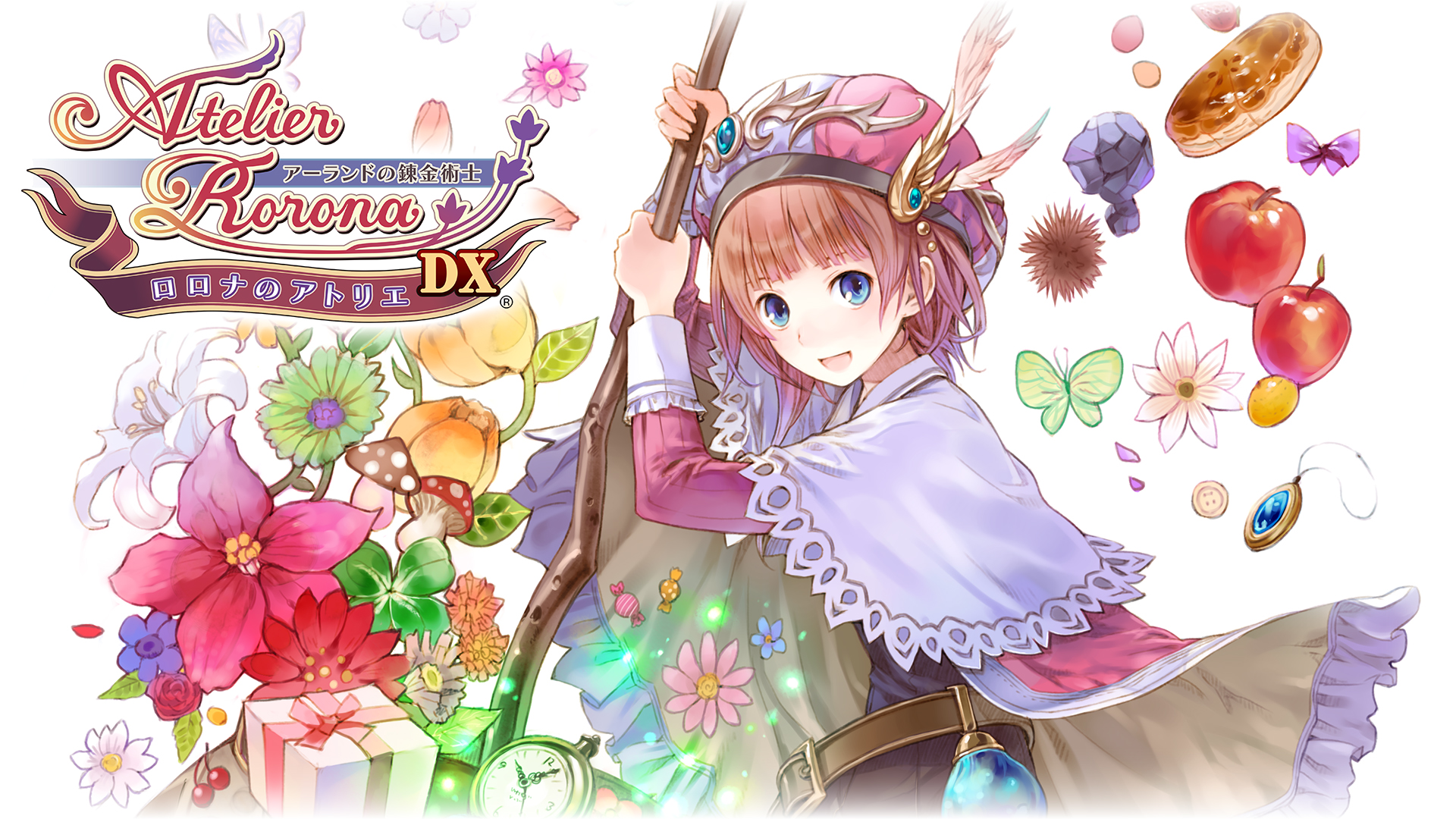
Spoiler commentary and discussion of Rorona's Atelier - The Alchemist of Arland (A11)
Rorona's Atelier: The Alchemist of Arland" is the 11th title in the Atelier series of RPG games for the PlayStation 3 from Gust. Later remakes were made and a DX version was released as a set with the sequel. A girl named Rorona lives with her master in the Atelier of Alchemy in a corner of the Kingdom of Arland. One day, a knight comes from the castle and tells her that if she does not continue to fulfill the tasks given by the castle for three years, the atelier will be torn down. Rorona becomes the owner of the atelier as a new alchemist and faces the three-year task to protect the atelier.
Read Article
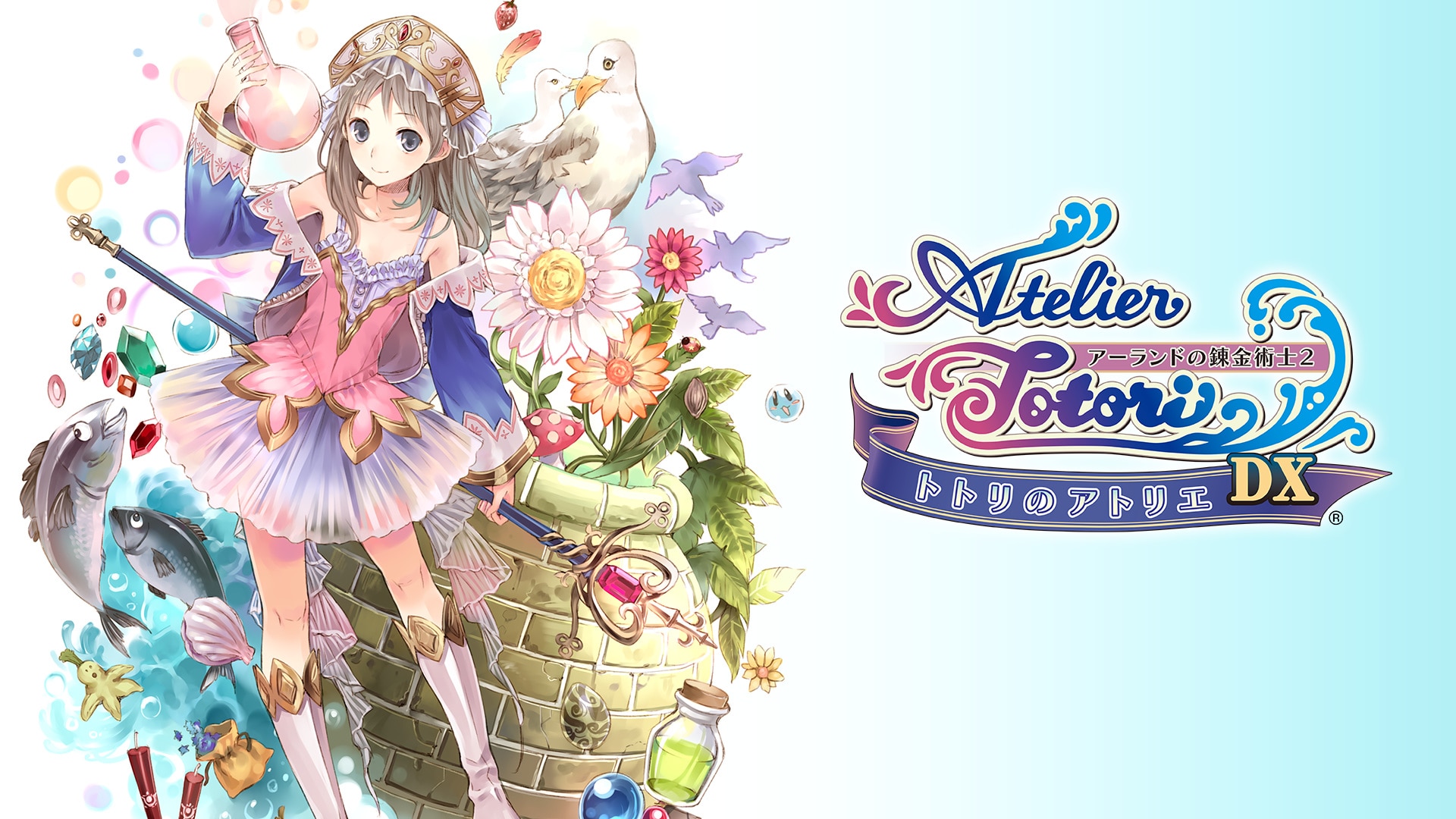
Spoiler commentary and discussion of Totori no Atelier - Alchemist of Arland 2 (A12)
Totori no Atelier -The Alchemist of Arland 2 (A12)" is a sequel to "Rorona no Atelier -The Alchemist of Arland", an RPG game for the PlayStation 3 released by Gust. In a small fishing village called Aranya in the Republic of Arland, there lives a girl named Totori, who is Rorona's apprentice. Totori decides to become an adventurer in order to follow in the footsteps of her mother, who went on an adventure when she was a child and has since disappeared. Totori's adventure begins as she dreams of being reunited with her mother.
Read Article
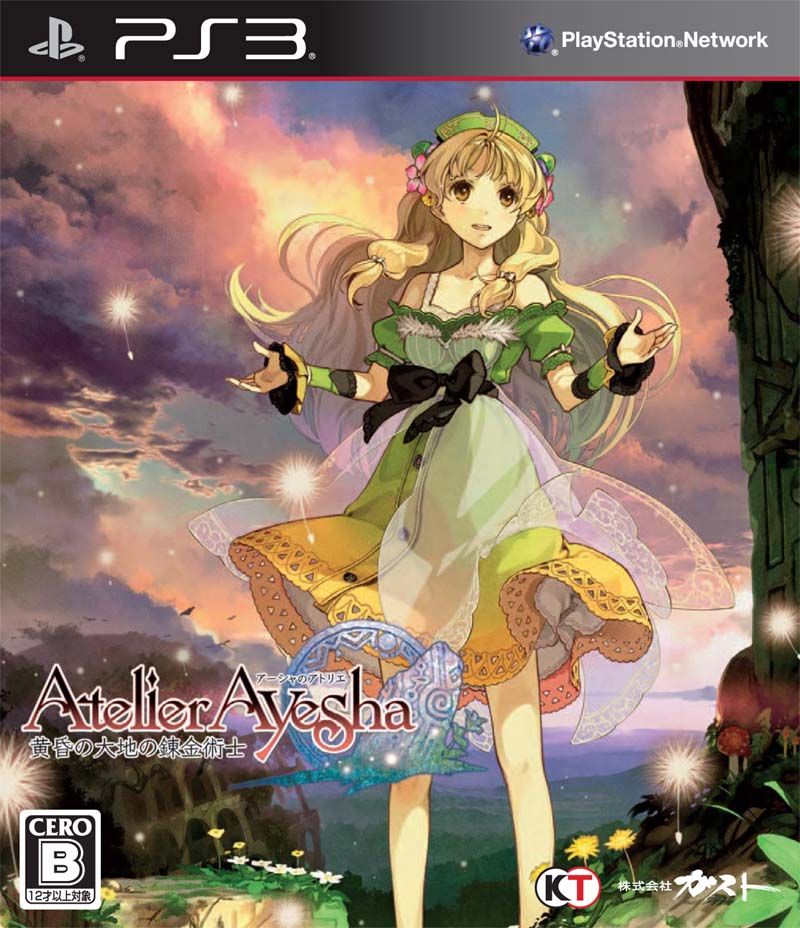
Asha's Atelier - The Alchemist of the Twilight Zone (A14) Spoilers and Discussion Summary
Asha's Atelier: The Alchemist of Dusk (A14)" is a PlayStation 3 software developed by Gust (now Koei Tecmo Games) and is the 14th title in the Atelier series of alchemy-themed RPGs. Like the previous titles in the series, the story is based on a cheerful style, but the story takes place in the twilight age, when alchemy, once a flourishing art, has fallen into disuse. The story is about Asha, a young pharmacist girl who learns alchemy and searches for her missing sister in a dying world.
Read Article
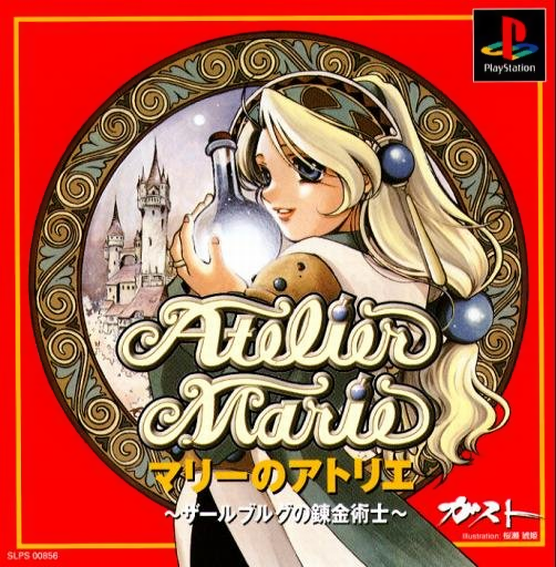
Marie's Atelier - The Alchemist of Saarburg (A1) Spoilers and Discussion Summary
Marie's Atelier: The Alchemist of Saarburg (A1)" is an RPG game for the PlayStation released by Gust. The game was later ported to various consoles, including the Sega Saturn version with additional events and endings. The main character, Marlone, was studying at an academy to become an alchemist, but his grades were not good enough to graduate. The academy then issued a graduation exam: "Run an alchemy store in town, create a high-level item, and submit it to the academy. Marlone is to take the 5-year graduation exam while running the store.
Read Article
Spoiler commentary and discussion of Shari's Atelier - The Alchemist of the Twilight Sea (A16)
Shari no Atelier: Alchemist of the Dusk Sea (A16) is the 16th title in the Atelier series of alchemy-themed RPGs developed by Gust. Gust was later known as Koei Tecmo Games. It is also the third and final installment of the "Twilight Series" and was released in 2014 for the PlayStation 3. The main characters in this work are the two Charlies "Charistella" and "Charlotte," and the story unfolds from different perspectives, as in the previous "Atelier of Esca and Logie."
Read Article
Spoiler commentary and discussion of Meruru's Atelier - Alchemist of Arland 3 (A13)
Meruru's Atelier: The Alchemist of Arland 3 (A13)" is a sequel to "Totori no Atelier: The Alchemist of Arland 2", an RPG game for the PlayStation 3 released by Gust. Meruru, the princess of the small frontier kingdom of Arles, apprentices herself to Totori, an alchemist sent from the Republic of Arland. Overcoming her parents' opposition, Merle learns alchemy and struggles to improve the kingdom's national interests and pioneering projects. This is the story of how the Earls grows up to be a great company by the time it fully merges with the Republic of Arland five years later.
Read Article
Spoiler commentary and discussion of Yudie's Atelier - The Alchemist of Gramnath (A4)
Released by Gust in 2002 for the PlayStation 2. It is the fourth title in the "Atelier series". It is set in the time line after the previous title "Lily's Atelier: The Alchemist of Saarburg 3," and there are several connections with the "Saarburg series. A remake with new elements was released later in 2010. Yudie, who flew to the future due to an alchemy failure, is on a quest in Gramnath to return to his original world.
Read Article
Spoiler commentary and discussion of Violato's Atelier - The Alchemist of Gramnath 2 (A5)
Released on June 26, 2003 by Gust Inc. for the PlayStation 2. This is the fifth title in the "Atelier series," an RPG in which players grow through the use of alchemy. The story takes place in "Gramnath", a world about 25 years after the previous title "Yudie's Atelier: The Alchemist of Gramnath". In order to be recognized by his parents, Violato uses alchemy to revitalize his village.
Read Article
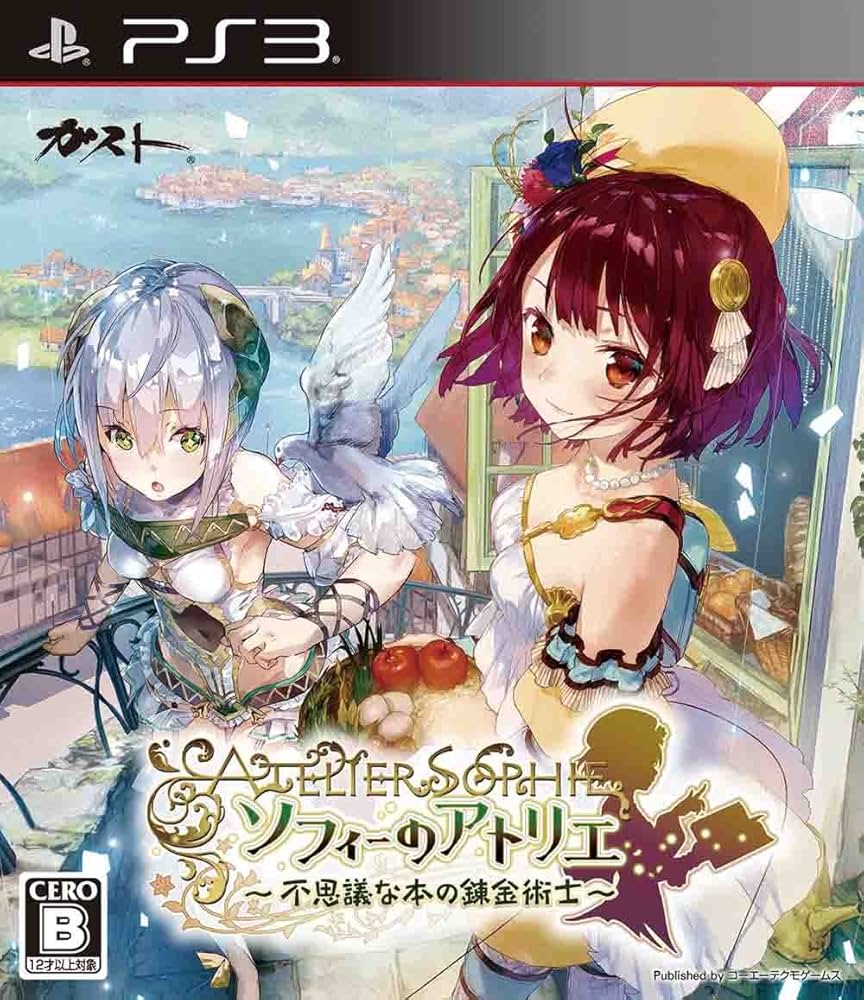
Sophie's Atelier" is a completely new Atelier series.
It has only been a short time since the release of Koei Tecmo's very popular "Sophie's Atelier," which has had its release postponed, but its content was a new series that was very different from the past Atelier series! While it inherited the elements unique to the previous Atelier series, such as alchemy and world map gathering, it was a legitimate evolution so that players could enjoy the Atelier series even more. In this article, we summarize the key points of the new series along with the key points of the new series. (Spoiler alert)
Read Article
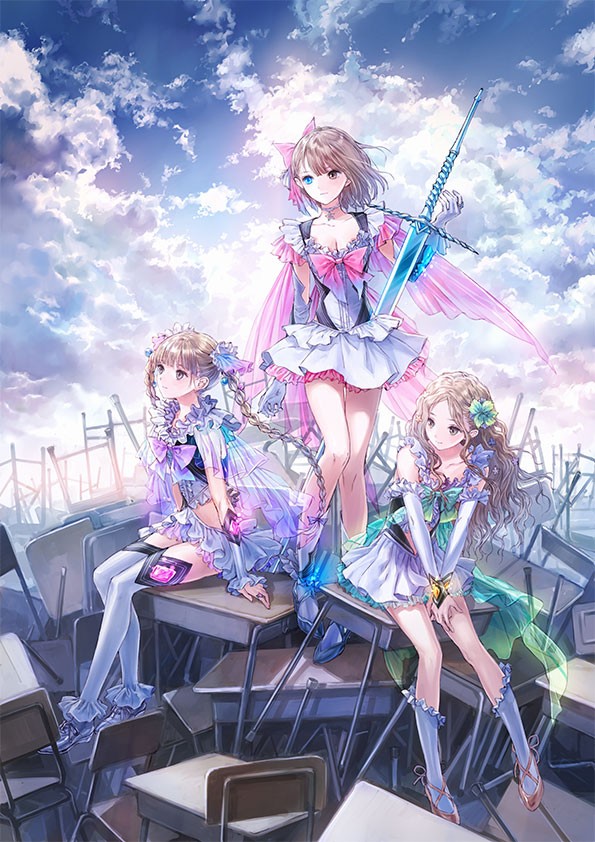
BLUE REFLECTION: The Sword of the Girl Who Dances in the Phantom (BLUE REFLECTION) Spoilers and Discussion Summary
BLUE REFLECTION: The Sword of the Girl Who Danced in the Phantom" is a heroic role-playing game developed by the Gust brand, an affiliate of Koei Tecmo Games, and was announced as the third game title in the "Gust Bishojo Festival" following "Phyllis atelier" and "Yorononokuni 2". It is set in modern Japan. Set in modern Japan, the main story is about friendship and battles between 15 girls in the real world and "Common," an alternate world created by human minds and emotions.
Read Article
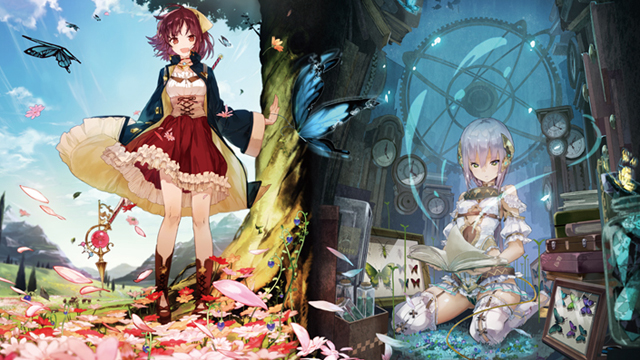
Summary of successive Atelier series
The Atelier series is a series of challenging mix-and-match RPGs released by Gust (now Koei Tecmo). The Atelier series has a different worldview for each of the two or three games, and each has its own unique characteristics. Here is a summary of the differences. There are now more than 20 games in the series as a whole, and some people may not know which one to start with. Please use this as a reference for those who are not sure which one to start with.
Read Article
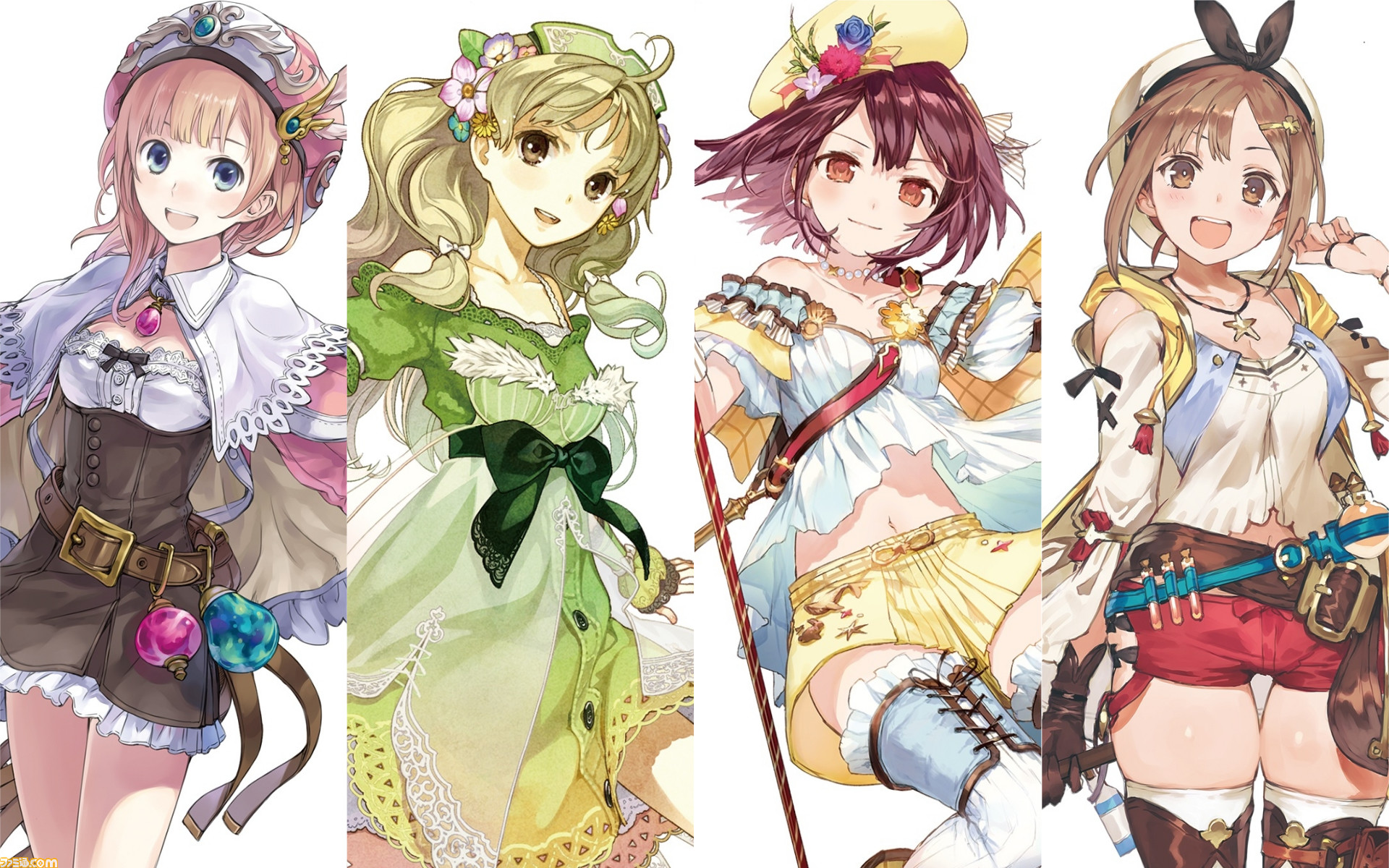
Atelier series strategy site summary
The "Atelier series" spins a variety of stories based on the theme of "alchemy. The "Atelier series" is further subdivided into several series due to differences in systems, styles, etc., and many people find it difficult to understand the series, but there is basically no story connection between the series, so it does not matter which series you start playing. Here we have compiled a list of strategy sites for each title in the Atelier series.
Read Article
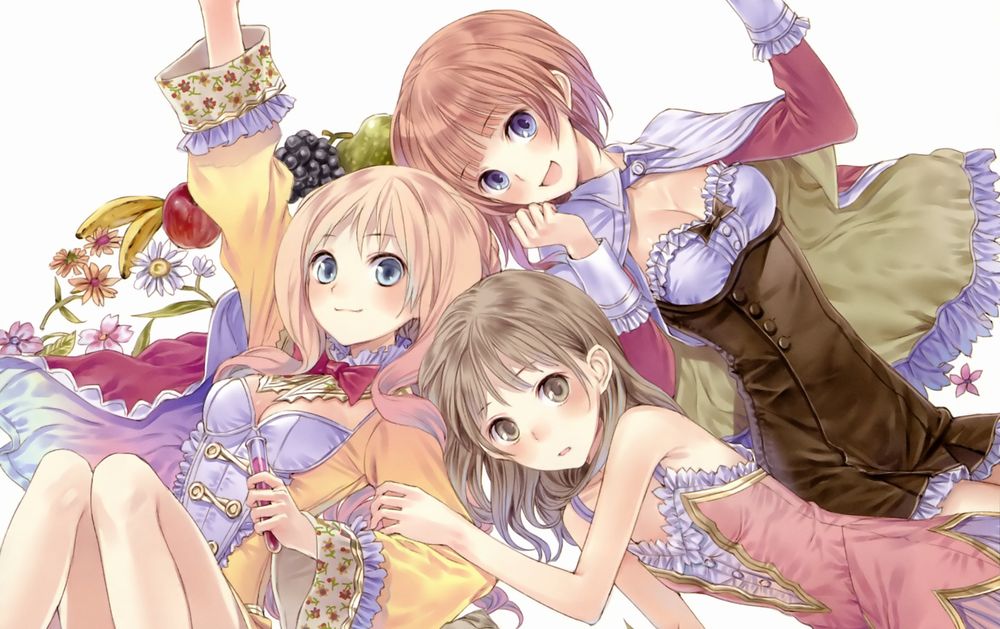
A compilation of illustrations of the Atelier series by Mel Kishida [Atelier of Rorona, Totori, and Meruru].
In the "Atelier series" of games, illustrator Mel Kishida is in charge of character design for the three games called the Arland series: "Rorona's Atelier: The Alchemist of Arland", "Totori's Atelier: The Alchemist of Arland 2", and "Meruru's Atelier: The Alchemist of Arland 3". Mel Kishida is in charge of character design. Here is a collection of illustrations of the "Atelier series" by Mel Kishida.
Read Article
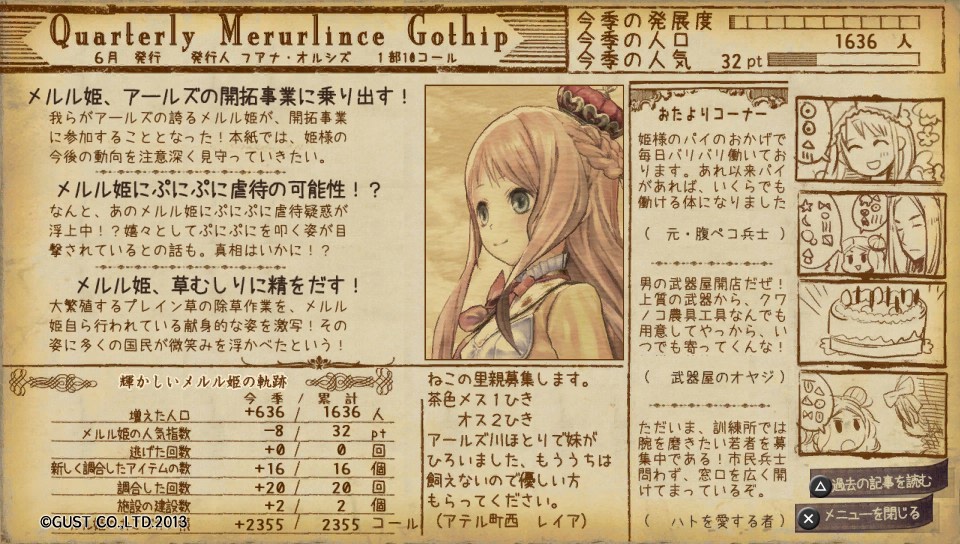
(1) Kawaraban (newspaper) of "Meruru no Atelier PLUS" is an interesting summary to look at.
In "Meruru's Atelier PLUS: Alchemist of Arland 3," there is a Kawaraban (newspaper) that Juana-san makes for us. Kawaraban is a kind of newspaper that mainly records the activities of the main heroine, Merle, and includes stories and columns, etc. The contents are very interesting to read. This time, we have compiled such Kawaraban. (All images are self-taken by the uploader.)
Read Article
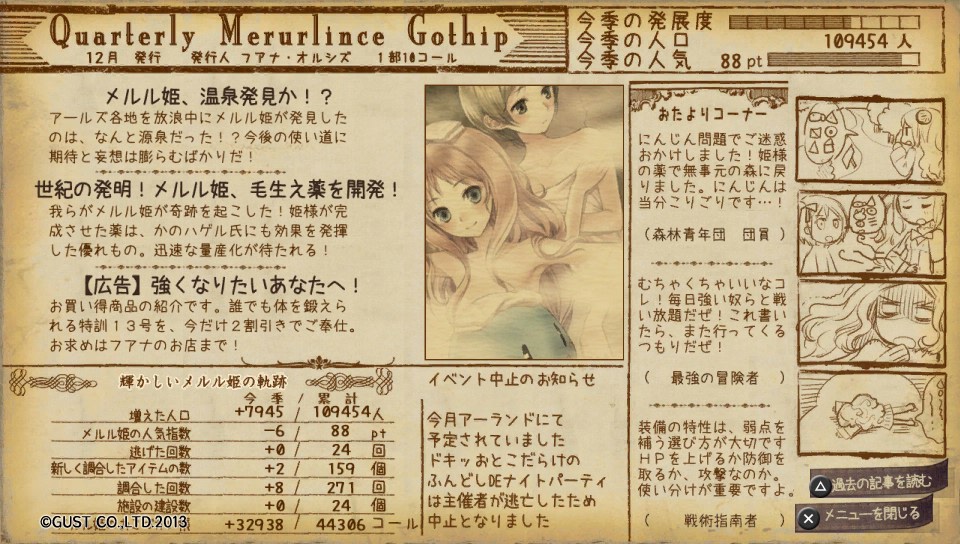
(2) Kawaraban (newspaper) of "Meruru no Atelier PLUS" is an interesting summary to look at.
This is a continuation of Kawaraban (Newspaper) (1) of "Merle's Atelier PLUS". There are a lot of things of interest in the articles, the four panels, and even the column below. There is a lot of crazy interesting content in this issue as well (laughs). If you are curious about how Kawaraban is created, please play the full version (PS3, PSVITA). (The image is a selfie of the uploader)
Read Article
Contents
- Outline of "Esca & Rosie: Alchemist of the Dusk Sky" (Japanese only)
- The story of "Esca & Rosie: Alchemist of the Dusk Sky
- Chapter 1: Eska and Rosie's Encounter
- Esca, ed.
- Rosie, ed.
- Chapter 2: Meeting Rafer and Slayer
- Chapter 3: Northern Village Relief
- Chapter 4 Investigation of Causes of Water Source Depletion
- Chapter 5: Turning Point for Reaching Unexplored Ruins
- Chapter 6: Lozi's Trauma
- Common to both the Eska and Logy editions
- Section 1: "Hachidhime no Daiboken1"
- Section 2 "Obtaining the Blessing of the Fire King" (common to both the Esca and Logie editions)
- Chapter 7: Concerns about Central Movements
- Common to both the Eska and Logy editions
- Section 1 "Defeating the Iron-Eating Dragon" (common to both the Esca and Logy editions)
- Section 2 "Hachidahime no Daiboken 2" (common to both the Esca and Logie editions)
- Chapter 8 Discovery of New Archaeological Sites
- Common to both the Eska and Logy editions
- Section I. "Ancient Documents about Unexplored Sites" (common to both the Esca and Logie sections)
- Section 2: Awin End Flag Event (common to both the Esca and Logie editions)
- Chapter 9: Immediate Preparation for Unexplored Site Investigations
- Common to both the Eska and Logy editions
- Section 1 "Completion of the Airship" (common to both the Esca and Logie editions)
- Section 2: Why Nio stays in Corsate
- Section 3: Crone's Past Story
- Section 4: Awin End Flag Event (common to both the Esca and Logie editions)
- Section 5: Lucille End Flag Event (common to both the Esca and Logie editions)
- Chapter 10 Reaching Unexplored Ruins
- Common to both the Eska and Logy editions
- Section 1: Slayer End Flag Event 1 (common to both the Esca and Logie editions)
- Chapter 11: Flameu and Krone's Past
- Common to both the Eska and Logy editions
- Section 1: Slayer End Flag Event 2 (common to both the Esca and Logie editions)
- Section 2: Rafer End Flag Event (common to all Esca and Logie editions)
- Chapter 12 Conclusion of "Hachidohime no Daiboken
- multi-ending
- true ending
- Awin End (common to Escalology)
- Sleia end (common in Escalology)
- Rafer End (common to Escalology)
- Lucille End (common to Escalology)
- Linker end (common to Escalology)
- Girls' Club End (Esca version only)
- Logie promotion end (Logie version only)
- Game System of "Esca & Rosie: Alchemist of the Dusk Sky
- mixing
- attribute value
- Attribute Bonus
- Compounding Skills
- special characteristic
- latent energy
- drilling
- disassembly
- battle
- file or ranks of troops
- Support
- Special Support
- double draw
- collecting
- exploratory study
- Number of days elapsed
- Chapter Related
- issue
- research
- request
- homunculus
- Items used
- operating expenses
- double hero
- Characters in "Esca & Rosie: Alchemist of the Dusk Sky
- protagonist
- Escha Malier
- Logy / Logix Ficsario
- party member
- Awin Sidelet
- Threia Hazelgrimm
- Reyfer Luckberry
- Lucille Ernella
- Linca
- Other characters, etc.
- Micie Sun Mussemburg
- Wilbell Voll Erslied
- Katla Larchica
- Solle Grumman
- Marion Quin
- Colland Grumman
- Duke Beriel
- Nio Altugle
- Clone
- Harry Olson
- Fire King
- Ayesha Altugle
- Flameu
- Items from "Esca & Rosie: Alchemist of the Dusk Sky
- Material Items
- fruit of the woodcock
- Flower of the Spirit of the Wind
- The flower of the spirit of the soil
- Water Spirit Flower
- Fire Spirit Flowers
- warped screw
- Rusty Gears
- ground scraps
- Dated stone
- scrap iron
- blended oil
- paper scraps
- The original stone of the box garden
- pendeloque
- liquid last time
- soul vine
- dark green soil
- Deep red soil
- landscape painting in black india ink
- Amber Soil
- Leontopodium japonicum (species of perennial closely related to edelweiss)
- pool of earth
- type of long, thin strips of daikon cooked in soy sauce, etc. and served with dipping sauce and sugar
- Ascending gases
- rough stone in the blazing sun
- unburnable spider silk
- lotus
- praying mantis blade
- fairy soul
- bubbling or gushing water
- Slug Antenna
- slug memory
- SlugHart.
- slug cable
- Piece of meat of ancient beast
- Rough disks
- malleable materia
- Shells of rotten snakes
- Wings of a Champion
- dragon fin
- dragon's blood crystal
- nucleus (of comets, galaxies, etc.)
- Dried grains of sand
- junk
- buried bomb
- Jet-black cube
- Fossil of the Sky Champion
- horseradish (Armoracia rusticana)
- Botrytis cinerea
- trunk of a heavenly tree
- wing plant
- jelly gem
- tap water
- moon milk
- empty core
- apple (fruit)
- green apple
- poison apple
- Golden apple
- thorny fruit
- blue thorn fruit (Saccharomyces cerevisiae)
- golden thorn (Saccharomyces cerevisiae)
- tone
- variation tone
- tripletone
- redtop (species of bent grass, Agrostis gigantea)
- redtop (species of bent grass, Agrostis gigantea)
- redtop (species of bent grass, Agrostis gigantea)
- taro (Colocasia esculenta)
- Catakomis japonica (species of taro)
- sweet potato (Ipomoea batatas)
- Salat
- fresh salat
- white salat
- Psilocybe argentipes (species of psychoactive mushroom)
- Psilocybe subcaerulipes (species of psychoactive mushroom)
- bitterleaf
- salt leaf (var. of ice plant)
- dry root
- Rich Roots
- Roots of Flame Soil
- Roots of the Earth
- animal flesh
- Fresh meat
- gold meat
- large bone
- black (ghastly) bone
- dragonbone
- Mountain Bird Eggs
- sea robin eggs
- Extinct bird eggs
- Pale clay
- living clay
- phlogiston
- aqualite
- wind core
- Stone of the Earth
- blue gem
- blue gemstone
- red gemstones (apart from diamond, e.g. ruby, sapphire, etc.)
- shining crystal
- topaz
- permanent crystal
- aurora borealis
- Luminous ore
- glass core
- Burning molten ore
- Vajra Stone Gemstone
- honeycomb
- Silver Nest
- Golden Nest
- bitter melon (Momordica charantia)
- Leibnitz daisy (Leibnitzia anandria)
- honey melon
- Sap of sugar tree
- milch bean
- Jewel Beans
- Milch soybeans
- red devil
- Blue Devil.
- Shibunoki Seed
- The Gastronomist's Fruit
- panicled hydrangea (Hydrangea paniculata)
- incense shavings
- Charcoal pieces
- wood chip for purification
- The Lady's Beard
- golden thread
- Mysterious Silk Hair
- Vintage round moss
- Cirsium dipsacolepis (perennial plant of the thistle family)
- feathers of a mountain bird
- Giant Eagle Feather
- Bird of paradise feather
- Word Stone, Star
- Word Stone, Moon
- Word Stone Yang
- Word Stone, Sea
- Word Stone People
- Lathyrus quinquenervius (species of vetchling)
- lucky clover
- Oblivion Clover
- honey poppy
- donckelheit
- white flower
- red flower
- purple flower
- water (esp. cool, fresh water, e.g. drinking water)
- clear (pure) water
- Spring water from the fountainhead
- Mineral liquid crystal
- water crystal
- eiche
- Riverwood
- moss-covered driftwood
- Ancient Tree Roots
- Thin Fruits
- mellow (ripe) fruit
- Ripe Fruits
- fluorite
- Lava pool stone
- dry fats
- cloth wrapped around a ghost's head
- Breath of the Spirit of Fire
- black spring water
- Slag Flame Stone
- Slag ice stone
- slag ball
- Slag ground ball
- hard claw
- extremely spicy form of chameleon
- Jaws of crystal
- soft fur
- fur of a phantom
- first-class fur
- silver pelt
- dragon's tail
- Alive tails.
- fairy-tale
- dragon scales
- dragon's fangs
- Tooth of the Great Beast
- black fang
- Magnetite of the Spirit
- flower guardians of the time
- Preservation Biscay
- Dried Potato Chips
- cloud financier
- Melting Jewel
- sweet stump
- Blessing of the Fire King
- Items used
- craft
- frum
- Lehane.
- donor stone
- Living Bullet Rock
- Rava Cube
- water jug in the sky
- Sylphy's Magic Eye
- The Giant's Hammer
- polyphony vial
- Slugfigure.
- Dimensional bomb (i.e. a dimensional bomb)
- dreambook
- The Book of Wisdom of the Four Poles Heaven
- Rothenblitz
- flava blitz
- Gruneblitz.
- Airtoblitz
- Tausend Blitz
- omega craft
- diaphragm
- Sneele Herne
- Blitz stone
- Recovery and Support Items
- healing salve
- Healing Floating Clouds
- lucid jelly
- place where one can hear the sound of vibrating water
- All medicines in bottles
- Healing Aroma
- pain relief band
- The Cup of Life
- elixir
- dragon's blood palm (Daemonorops draco)
- Inoculant
- magical painting
- hourglass pocket watch
- Slug Self-Defense Statue
- Shield of the Guardian Goddess
- eye drops
- Ring of the Golden Curse
- The Crucible of the Little Devil
- signalling chime
- drag bread
- Apple Tart
- Forbidden Drop
- heap pancake
- fruit ration
- Apple Tales from Around the World
- squash tea
- powder that avoids catching a cold
- veggie soup
- Refuel Ointment
- drug-induced bandage
- The Cup of Divine Water
- elixir source drug
- Essence of Slug
- angel powder
- Food for the Traveler
- fruit pie
- health ration
- traditional (popularly used) medicine
- Tonic powder
- thick potage
- Terms for "Esca & Rosie: Alchemist of the Dusk Sky
- antiquity
- alchemy
- historic ruins (remains, relics)
- unexplored site
- geosis
- Backstories, Trivia, Episodes, and Anecdotes of "Eska & Rosie: Alchemist of the Dusk Sky
- Comparison and differences with the animated version
- The original title naming is "Escatology".
- Lines about Taru
- Theme song and insert song for "Eska & Logy atelier -The Alchemist of the Dusk Sky
- OP (Opening): Chirinuluowaka "Milk Color Touge
- ED (Ending): "Sweet Reward" by Chirinuluowaka
- Theme song: Haruka Shimotsuki "Amechi no Kotowari" (Avant title)
- Insert Song: "Ringo no Negoto - Ring on one, go to..." by Huihua Tenotsu (Eska event theme)
- Insert song: Annabel "Sora no Sore" (Logy event theme)
- Insert song: Asako Minamisu "Migratory Fish Original Landscape" (World Travel Theme)
- Insert song: Haruka Shimotsuki "Worship, I am a divine demon" (event battle theme)
- Insert song: "Sky of Twilight" by Kanako Ito (Infinity Battle Theme)
- Insert song: "Colony Collapse Disorder" by Suginami Children's Chorus (final battle theme)
- Insert song: ACRYLICSTAB "Infinity Chronicle" battle finish theme
- Insert song: Rurutia "Pluie" (story end theme)