
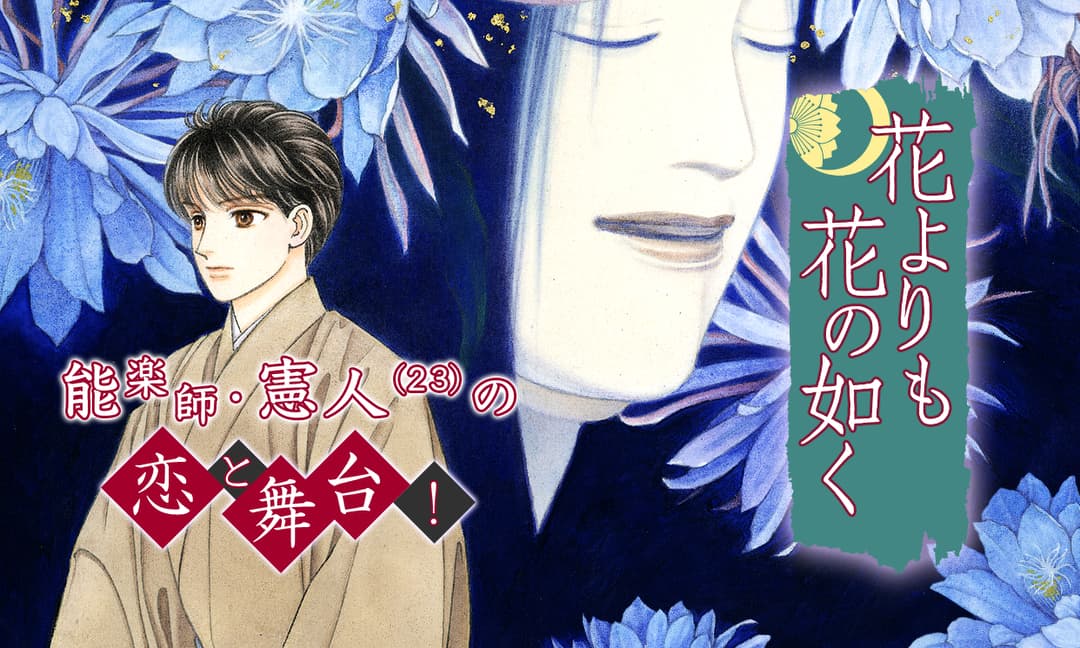
Hana Yori Hana no Yoku" is a manga by Narita Minako about the traditional Japanese performing art of Noh, which was serialized in Hakusensha's "Monthly Melody" magazine from 2001.
In 2006, the magazine was relaunched as the bimonthly "MELODY.
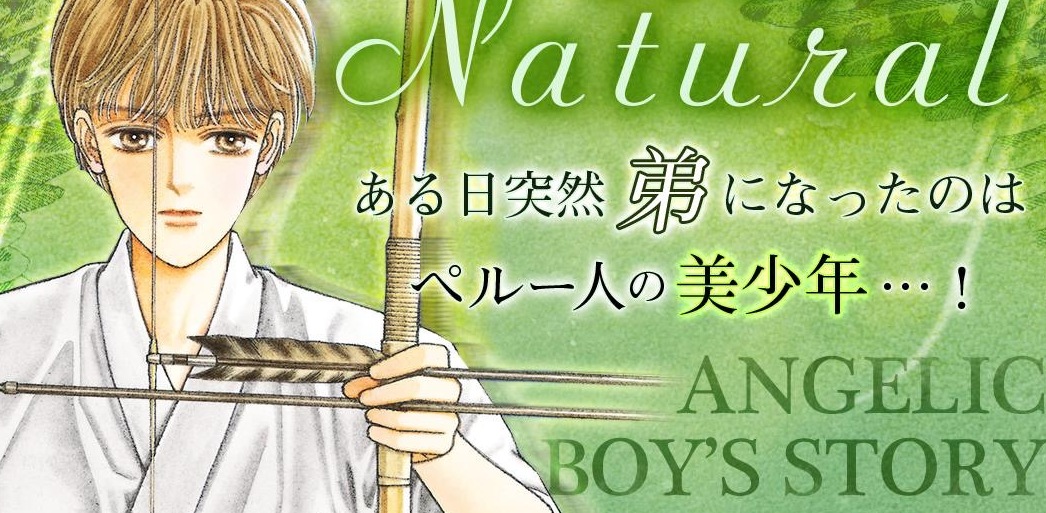
The work originally began as a spinoff read-off of the artist's serial "NATURAL" and became a serial.
Norito Sakakibara has been trained as a Noh performer by his grandfather since he was a child. Norito grows up while meeting various people.
kyogen performer
Performs various roles in Kyogen. Kyogen, like Noh, is a traditional art form that evolved from sarugaku, a form of gagaku, and is centered on laughter that has been refined from the comedic aspects of sarugaku.
side seating (to stage right in noh)
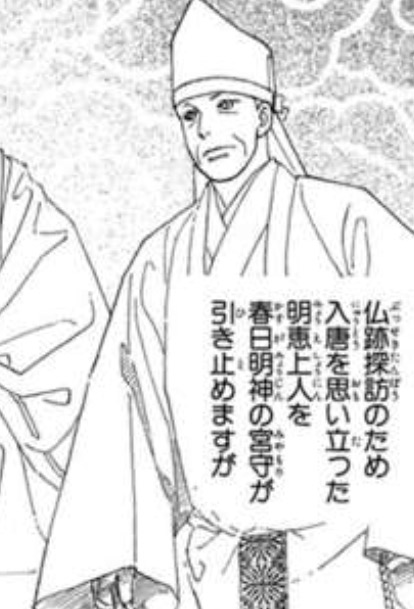
The waki-kata plays an important role in the performance of Noh together with the shite. The waki-kata are those who have received specialized training to play the role of waki.
The waki is responsible for listening to the heart of the shite, and because of this role, they are often monks.
Lian Shan (Xia period method of Chinese divination)
This is where the office and training hall of Sofukai, which is presided over by Norito's grandfather, Yorozaburo, is located.
The couple also live there, and their uchideshi (apprentices) Raku Morisawa and Naokaku Watakai also live in the same building.
There is also a warehouse where various costumes, props, masks, and other items necessary for Noh are stored, which are packed and brought here on overseas tours.
young woman
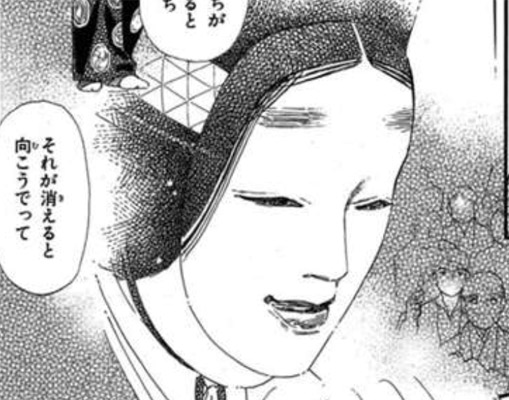
In the story, the mask was purchased by Norito at an antique store in Kyoto, where he was fascinated by it. In the story, Norito was fascinated by the mask and purchased it at an antique shop in Kyoto.
It is used when playing the role of a beautiful young woman, and is more often used in non-human roles than the famous ko-men.
face (i.e. the human face)
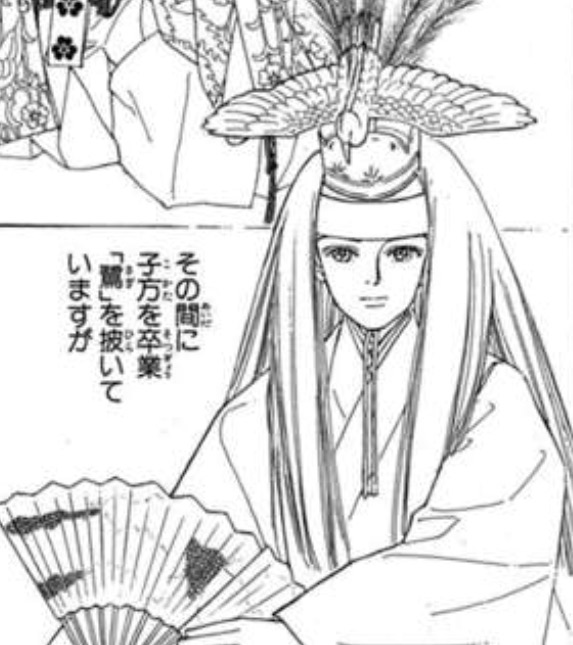
In Noh plays, the actors wear masks, but they perform without masks, leaving their faces as they are.
The word "mae-mae" is written as "hitamen.
The most famous role played with a mask is "Sagi" (a heron).
Dojoji temple
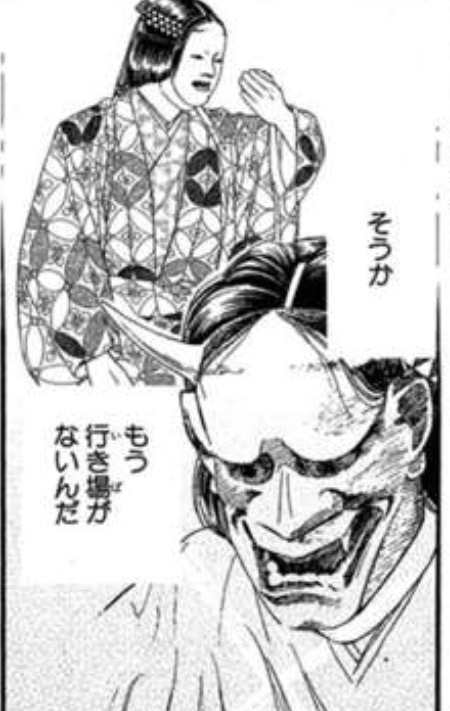
It is one of the most famous Noh plays and later became a famous Kabuki play as well.
It is based on a legend from Dojoji Temple in Wakayama Prefecture, but the story itself is based on the Chinese legend "Hakubenden" (Legend of the White Snake).
Because it is a difficult piece of music, it is also used as a milestone performance to show the skill of the shite actor.
Famous quotes, lines, scenes, and scenes from "More Flowers Than Flowers
I really didn't do it, so it's weird for me to say this, but whatever the outcome, I pray that there will always be people who believe in you and approve of you."
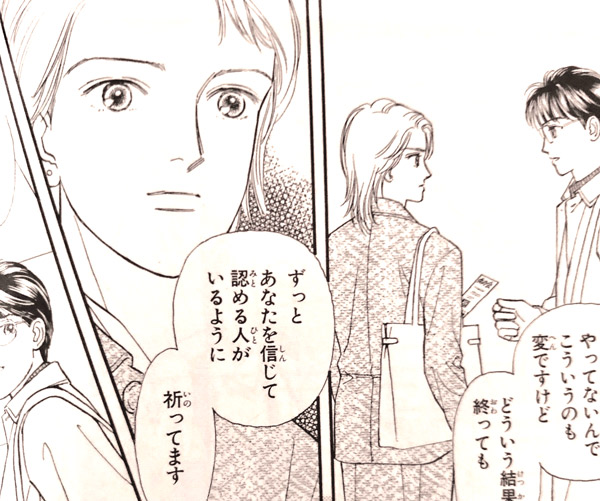
The words that Kenjin, falsely accused of molestation, said to a woman he met by chance on the subway, while handing her a ticket for his next performance.
The line reveals his basic kindness toward the other party.
I don't dye anymore.
This is a line Morisawa Raku said to express his determination when he returned to Sofukai again from Nara.
He originally had brown hair, which he dyed black as a child in order to learn Noh. However, this damaged his skin, and the truth was that he could not dye his hair for his body's sake, not because he could not dye it.
This shows Raku's belief in continuing to perform Noh even though he was misunderstood by those around him.
Once you try it, you'll be addicted. It feels so good!"
The words were spoken by Yoichi when he handed over to Norito the spider threads used by the Tsuchigumo in the play "Tsuchigumo" to keep them in their palms.
It sure feels good to spread out the threads quickly on the stage.

Contents
- Overview of "More Like Flowers Than Flowers"
- Synopsis and story of "More Like Flowers Than Flowers
- The World of Noh
- Encounter after encounter
- Unexpected new disciples
- Relationship with Hazuki
- Learning from Children's Caring
- Characters and Characters in "More Flowers Than Flowers
- Noh Players of the Aiba Family
- Norito Sakakibara
- Hiroto Aiba
- Takuto Aiba
- Noh performers belonging to Sofukai
- Raku Morisawa
- Kaito Aiba
- Naotsugu Watarai
- Naokaku Watarai
- Yoichi Igarashi
- Yasutaka Ishii
- Kuritaro Iwamura
- Other Noh Players
- Yoshitoshi Miyamoto
- Hiroya Sakamoto
- Ko Shiraishi
- Ichisuke Igarashi
- Ryusei Nakazawa
- Other characters
- Hazuki Miyamoto
- Rin Fujii
- Yoshinori Aso
- Nozomu Takeuchi
- Sakakibara Family
- Sakakibara Saimon
- Takanori Sakakibara
- Ayaki Sakakibara
- Takashi Sakakibara
- Saeko Sakakibara
- Suzune Sakakibara
- Terms for "More Like Flowers Than Flowers"
- function
- actor-in-training in kabuki
- noh chorus
- guardianship
- kyogen performer
- side seating (to stage right in noh)
- Lian Shan (Xia period method of Chinese divination)
- young woman
- face (i.e. the human face)
- Dojoji temple
- Famous quotes, lines, scenes, and scenes from "More Flowers Than Flowers
- I really didn't do it, so it's weird for me to say this, but whatever the outcome, I pray that there will always be people who believe in you and approve of you."
- I don't dye anymore.
- Once you try it, you'll be addicted. It feels so good!"
- 'How could I not have known him better? He was a 'natural enemy!
- I can hear the sounds of the musical instruments, the sky at dusk, the horizon, the stars are starting to come into view, and everything is just so perfect! I didn't want to stop! I didn't want to stop.
- Backstory, trivia, and small stories/episodes/anecdotes about "More Flowers Than Flowers".
- Volume 1 of the e-book version includes a spin-off
- There's a cartoon called "Wish Upon a Stone."