
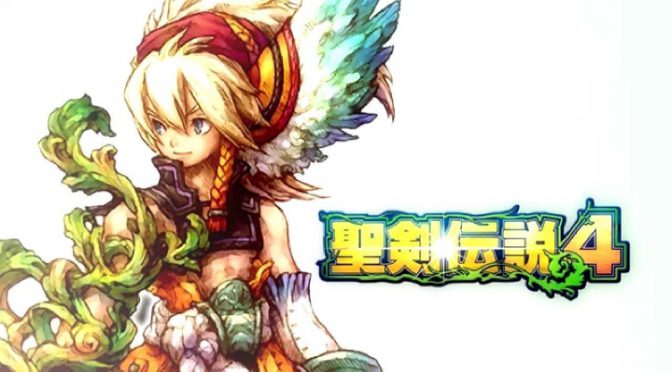
The fourth title in the "Seiken Densetsu" series. Released on PlayStation 2, this is the first 3D action adventure game in the series. The system has been completely redesigned from the previous titles in the series, and the game is now a stage-clearing type game. Under the theme of "going back to the roots," the game uses the names of the characters from the previous games in the series. The game depicts the birth of the "Goddess of Mana" and the "Holy Sword" through the main character Eldi, who was given the power by a sacred tree.
Emblems are items that can be equipped at the start of each chapter.
There are various types of emblems, some of which increase the value of abilities or have special effects when equipped.
Once an emblem is equipped, it cannot be changed until the end of that stage.
The number of emblems that can be equipped at one time is determined by the total number of HP medals, MP medals, and POW medals obtained from the overall result.
Each emblem has its own set of conditions for obtaining it, and most emblems can be obtained by obtaining an "S" rating in a specific item in the results, or by reaching a certain total result in the overall results.
Some emblems can also be obtained by clearing the final chapter of certain difficulty levels.
In addition to fulfilling the conditions for obtaining emblems from the results, emblems can also be purchased from the "store" in the Challenge Arena (see below).
Some emblems can be purchased from the beginning, while others can be found in the store by clearing the final chapter of a particular difficulty level, or by obtaining an S in the overall evaluation.
There are also emblems that can be obtained at a low rate by defeating rare monsters.
Obtaining all emblems is one of the most challenging elements of the game.
Challenge Arena
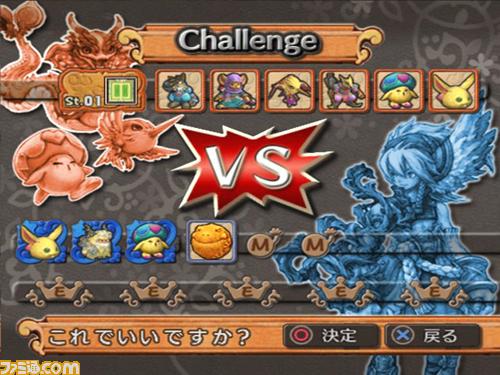
Challenge Arena is a battle mode that appears on the title screen after clearing Chapter 2, and is not directly related to the storyline, but only to the battle.
A total of 32 stages are available, and the number of stages increases as the conditions are cleared.
The background music for each stage of the Challenge Arena is arranged from songs in the "Seiken Densetsu" series.
In the Challenge Arena, the stage is cleared when all the monsters in the stage are killed within the time limit.
Eldi is defeated when his HP runs out or the time limit expires.
During battle, up to three pet monsters can be brought along to fight with the player.
Pet monsters are born from eggs called "pet eggs.
Pet eggs can be obtained by defeating enemies or by purchasing them at the store.
In the Challenge Arena store, players can purchase "pet eggs," emblems, and MONO by paying lux obtained in the main game and Challenge Arena.
Up to three MONOs can be placed on the stage.
Backstories, Trivia, Minor Stories/Episodes, Anecdotes from "The Legend of the Holy Sword 4
Reasons for low evaluation
One of the reasons why "Seiken Densetsu 4" has received remarkably poor reviews is that the "Action RPG" genre of the series has been changed to "Action Adventure".
The developer's intention was to emphasize that it is the player, not the game character, who plays the game, and to improve the player's skills.
This was a new challenge to the current situation in which many games can be completed by taking the time to develop the characters, even if the player's skill is low.
As a result, the game lost its RPG flavor and became a more action-oriented game.
There is no world map, which is usually provided in RPGs, and since the game is based on a stage system, players can only move around in a certain area.
The user interface was also quite unfriendly.
Fans of the "Seiken Densetsu" series could not accept the game's lack of growth for the main character, which is one of the most appealing features of RPGs. The fans of the "Legend of the Sword" series could not accept the game's lack of growth.
While one's strength is reset, the enemies get stronger as the stage progresses.
In other words, as the stage progressed, the enemies became stronger while the hero became weaker, and the high level of difficulty caused many players to quit the game midway through.
Players were also disappointed by the fact that only the main character, Eldi, could be moved, as his companions, a characteristic of the series, were not present in this title.
The storyline also lacked excitement and direction, with only events and narration between stages, and was unsatisfactory for a numbered title.
Masato Kato, who drafted the original scenario, later stated on his blog that it was "different from my own scenario," suggesting that a great deal of description may have been cut out during development in favor of the system.
Only the graphics and music are highly acclaimed, and the original soundtrack has become so expensive that it commands a premium, even fetching a higher price than the game itself.
Why no remakes or archives?
The "Seiken Densetsu" series up to 3 was released and distributed in various forms, including remakes, Nintendo Archives, and "Seiken Densetsu Collection," but only "Seiken Densetsu 4" has not been remade or ported at all, despite being a numbered title.
Nor has a low-priced "Ultimate Hits (BEST edition)" been released after the game's release, which has a lower price point.
This is because the game itself was under-appreciated and was thrown out in stores immediately after its release, resulting in price destruction.
At one point it was even on sale on amazon for ¥399, 94% off.
This makes no sense to release a low-priced version or archives.
The "Seiken Densetsu" franchise is so hated by fans that they even ridiculed it, saying that "Seiken Densetsu" ended with "3.

Related Articles
Seiken Densetsu - Final Fantasy Gaiden (FF Gaiden) Spoiler Commentary and Discussion Summary
The first title in the "Seiken Densetsu" series. Originally released as a derivative work of the "Final Fantasy (FF)" series, this action RPG features the familiar chocobos, airships, and magic of the FF series. The story is heavy with themes of life and death, encounters and partings, but it also has comical elements and puzzle-like puzzles to solve. A remake of the game, "The Legend of the Sword of the Holy Sword: New Testament," was made, and it was also fully remade in 3D.
Read Article
Seiken Densetsu: LEGEND OF MANA (LOM) Spoiler Commentary and Discussion Summary
A PlayStation game released by Square in 1999. This is the fourth game in the "Seiken Densetsu" series, but it is a unique world that is not connected to the previous games. It is a rare game in a time when 3D screens using polygons were beginning to become the mainstream, and it is a game that uses detailed and delicate 2D dot pictures. This is an RPG in which the player builds a world by placing towns and dungeons in an empty land, and by coming into contact with the people who live in the world, the player builds the world together with them.
Read Article
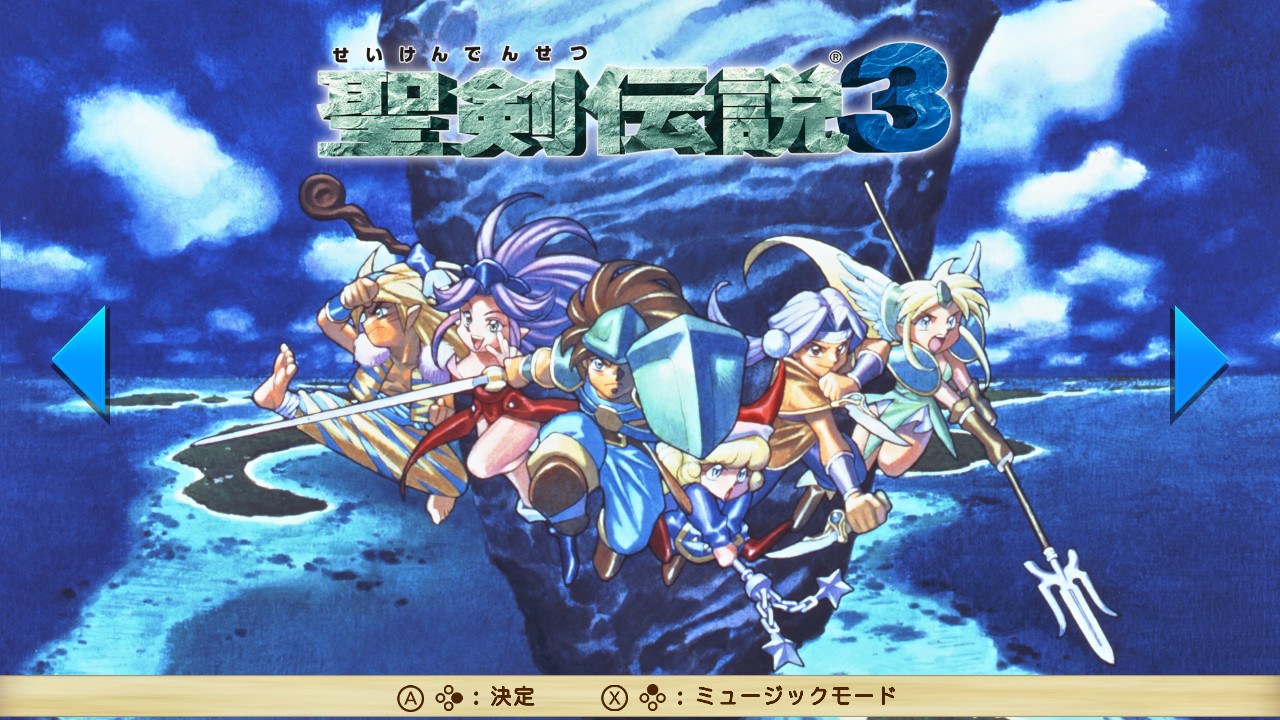
Spoiler commentary and discussion of Seiken Densetsu 3 (TRIALS of MANA)
Seiken Densetsu 3" is an action role-playing game released in 1995, and is the third title in the "Seiken Densetsu" series. It was the last in the series to be released for the Super Nintendo Entertainment System (SNES), and the player could choose three of the six characters to play as, which changed parts of the storyline and led to different final bosses. Six young men caught in the middle of a war fight to restore peace to the world, guided by the power of mana, despite their different circumstances.
Read Article
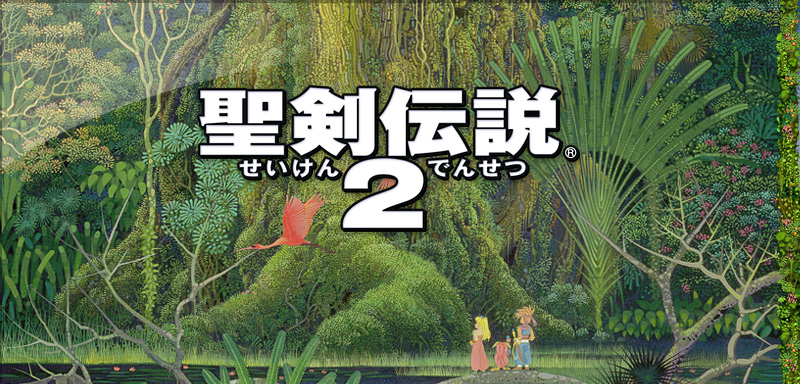
Seiken Densetsu 2 (SECRET of MANA) Spoiler Commentary and Discussion Summary
Seiken Densetsu 2" is an action RPG released in 1993 for the Super Nintendo Entertainment System. It was an ambitious work that introduced new systems such as "Motion Battle" and "Ring Command," and its music was also highly acclaimed, leading to the development of the series that followed. The main character, Randy, accidentally pulls out the holy sword and, together with his friends he meets on his journey, gets caught up in a war with the empire over the "mana" that sustains the world.
Read Article
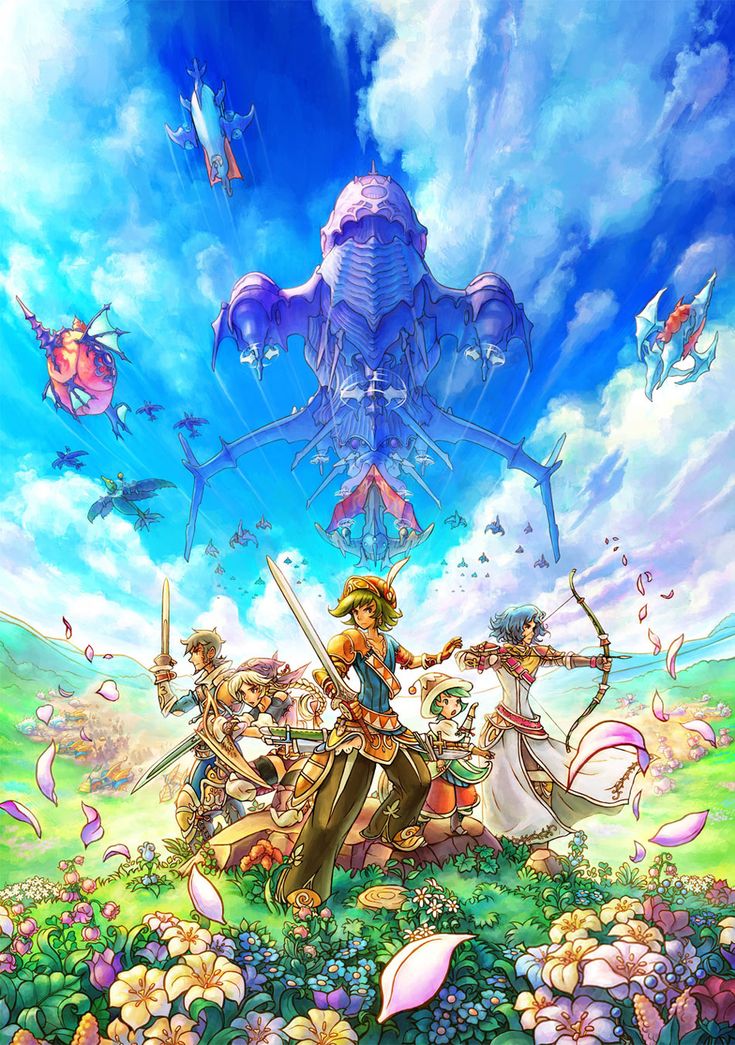
Seiken Densetsu: HEROES of MANA (HoM) Spoiler Commentary and Discussion Summary
Seiken Densetsu: HEROES of MANA" is an extravaganza in the "Seiken Densetsu" series released on March 8, 2007 on the Nintendo DS, set 19 years before "Seiken Densetsu 3". This is the first strategy RPG in the series to employ a real-time strategy system (RTS). It features a battle mode in which players battle each other via wireless communication. The setting is the world 19 years before "The Legend of the Sword 3," and the story of the "ancient city of Pedan," which appeared as a ruined country, is depicted through the main character Roger.
Read Article
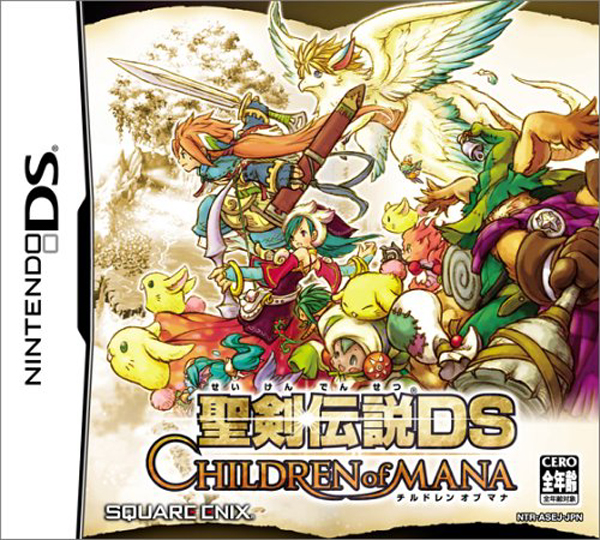
Seiken Densetsu DS CHILDREN of MANA (CoM) Spoilers and Discussion Summary
The first "Seiken Densetsu" series software for the Nintendo DS. Up to four players can now play multiplayer via DS wireless play. Chronologically, the story takes place 10 years after "Seiken Densetsu 4," making it an "outside-the-box" story. This action RPG adds a new system called "Gems" to the existing system of the series. Set in the world of Fadir, the story centers around four protagonists from different backgrounds and backgrounds, and centers on the soon-to-be-born Goddess of Mana and the Sacred Sword.
Read Article
Summary of works by genius programmer Nasha Zibelli [FF1~3] [Seiken Densetsu 2
Nasha Jibelli, a computer game programmer from Iran who is praised as a "genius programmer," was involved in the development of "Final Fantasy Series" and "Seiken Densetsu 2," two of Japan's most famous RPGs. We will introduce some of the works he worked on, which boasted of his legendary talent, including the fact that he called in the code to fix a serious bug.
Read Article
A compilation of recommended Super Nintendo Entertainment System (SNES) software classics.
We will compile a list of the most interesting and highly rated SFC classic software in the series by genre. The SNES is still colorful even if you play it now. Some of them have appeared on the Virtual Console.
Read Article
![A Masterpiece] I want to play it again before I die! Super NES Game 【Recommended】.](https://renote.net/files/blobs/proxy/eyJfcmFpbHMiOnsiZGF0YSI6MTgwNzkyLCJwdXIiOiJibG9iX2lkIn19--89a512c082c743fd6aa77efd98b378b2f9c670a1/z_5fb7b0d7ec722.jpg)
A Masterpiece] I want to play it again before I die! Super NES Game 【Recommended】.
I want to play it again before I die! This is a compilation of Super Nintendo Entertainment System (SNES) game titles. There are more than 1,000 Super Nintendo Entertainment System (SNES) game titles, so we took the time to compile this list. Generally, the further back you go, the older the release.
Read Article
Contents
- Outline of "Seiken Densetsu 4
- Terminology for Seiken Densetsu 4
- Sacred Island Ilja
- huge tree
- Tree Village
- holy sword
- echo of doom
- Evil Spirit Thanatos
- golem
- Lorimer, the land of ice
- ish, the land of fire
- Jad, Land of Sand
- Wendel, the Green Country
- Topple, Land of Water
- dragon's coat of arms
- The Story of "Seiken Densetsu 4" (The Legend of the Sword 4)
- Introduction: Two
- Chapter 1: Spirits and Priestesses
- Chapter 2: Lord of the Forest
- Chapter 3: Holy Beasts and the Face of the Earth
- Chapter 4: Lithia
- Chapter 5: With Friends in the Desert
- Chapter 6: The Fool and the Sword
- Chapter 7: Warriors of Hope
- Final Chapter: Big Trees
- Characters in Seiken Densetsu 4
- Eldy (CV: Tetsuya Kakihara)
- Lithia (CV: Jun Sagawa)
- Fee (CV: Yurika Ochiai)
- Stroud (CV: Takashi Kondo)
- Lexius (CV: Hiroki Ishihara)
- Masked Imam (CV: Toru Okawa)
- General Golem (CV: Toshitsugu Takashina)
- Trent (CV: Shoji Sato)
- Gaia (CV: Naoki Kusumi)
- flamie
- Village Chief Biloba (CV: Takashi Nagatsukara)
- chit
- Puk (South Korean dish of chicken, meat, eggs, etc.)
- Meister Watts (CV: Cho)
- Brother Moti
- Millionaire Nikita.
- Lady Lusa Luka.
- Anise (CV: Yuka Komatsu)
- Norm (CV: Kazuhiko Inoue)
- Undine (CV: Yoriko Nakayama)
- Salamander (CV: Akiyo Kaneda)
- Jin (CV: Tomoaki Takahashi)
- Driade (CV: Chihiro Aikawa)
- Luna (CV: Akiko Kawase)
- Wisp (CV: Aiko Ohno)
- Shade (CV: Tomofumi Taki)
- Game System of "Seiken Densetsu 4
- stage system
- result system
- MONO
- phi magic
- Panic Level
- medal
- emblem
- Challenge Arena
- Backstories, Trivia, Minor Stories/Episodes, Anecdotes from "The Legend of the Holy Sword 4
- Reasons for low evaluation
- Why no remakes or archives?