
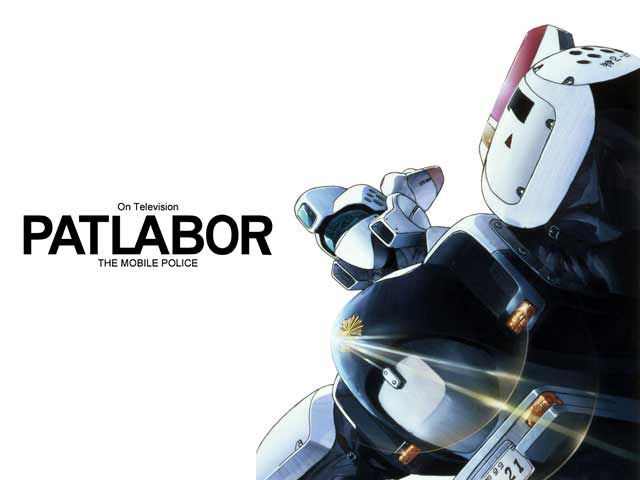
Mobile Police Patlabor" is a pioneering title in media-mix content that began with the release of the original video animation (OVA) in 1988 and the serialization of the manga version in "Shonen Sunday" magazine. The story is set in Tokyo in 1999, a time when robots for work have become a part of everyday life due to demand. The story depicts how Akira Izumino, a rookie female police officer, struggles against the daily incidents and events as a member of the robot unit introduced by the police.
Brocken
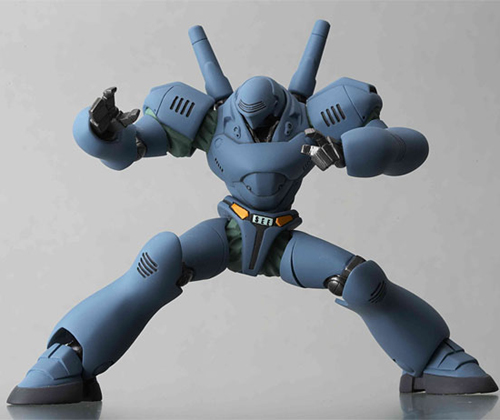
This is a military-grade ray bar from Shaft Enterprises.
Although it moves more slowly than Ingram, it boasts overwhelming power, and is able to perform body blows that lightly blow Ingram away.
Although it was originally designed to use firearms, it was operated in an unarmed state during the film.
It is modeled after the robot "Bacchus" from "Tetsujin 28.
phantom
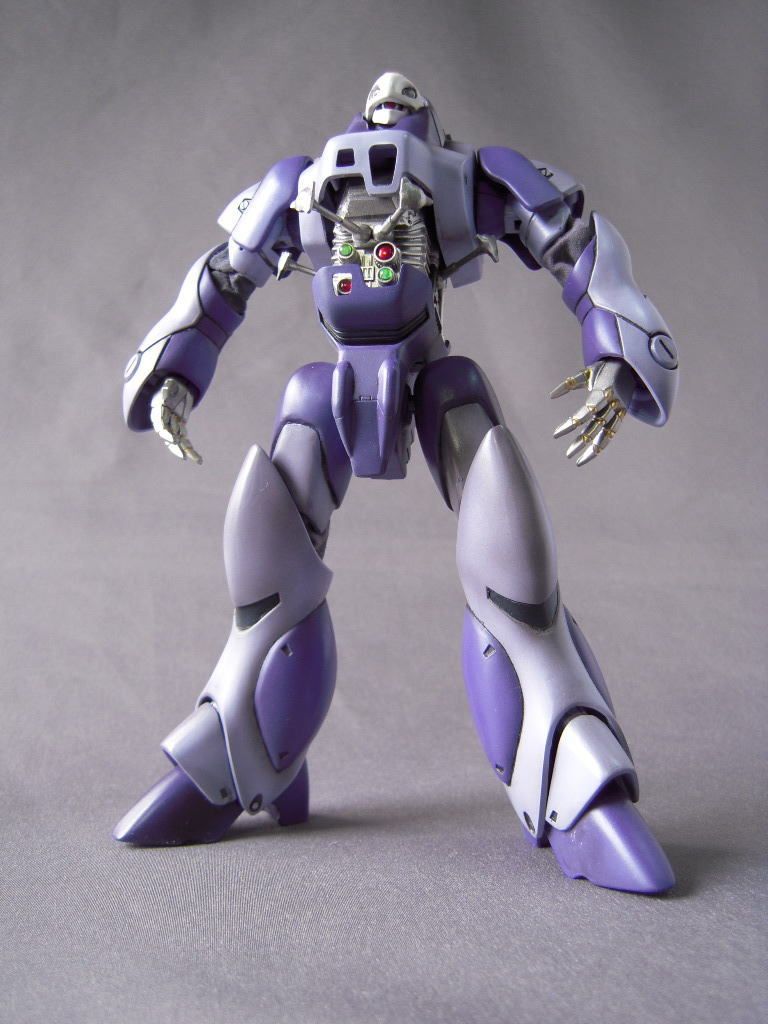
Military Reaver of Shaft Enterprises.
It is a bit out of place in the world of "Patlabor," and although it is extremely slow-moving, it is equipped with stealth capabilities and a high-powered laser cannon, making it a sci-fi setting.
griffon
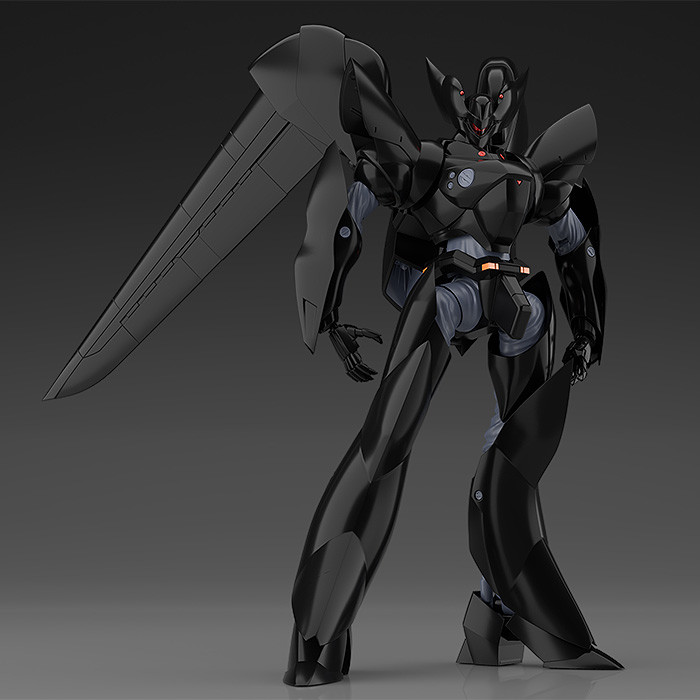
A fighting reaver produced by Shaft Enterprises.
It is commonly known as the "Black Reaver.
It boasts overwhelmingly high performance thanks to its "Ashura System," which enables it to move like a living creature and has a kinetic performance that surpasses all other Reavers in the series.
Utsumi created it under the guise of "selling manufacturing technology" as a means to achieve his goal of "fighting Ingram as a villain.
With its combat power, it continuously attacks the Special Vehicle Section 2 and becomes their sworn enemy, but is ultimately defeated by Nomei's Ingram Unit 1.
The model is "Black Ox," a robot that appears in Tetsujin 28.
Terminology for "Mobile Police Patlabor
labor
Its official name is "Multipedal Large Manipulator," and Reaver is its common name.
It is a large, ride-on robot that has become popular throughout the world as a replacement for heavy machinery and submersibles in the real world.
Its form varies depending on its application.
police raver
Also known as Patrol Reaver, or Patlabor for short.
This abbreviation is also the title of this film.
Generally speaking, it is a high-performance machine.
However, since the Reaver is a developing machine and the span of time between the appearance of its new models is short, it is often relatively obsolete at the frequency of equipment updates by the Japanese police.
Working lay bar (general-purpose lay bar)
The basic form of the Reaver.
Just as aircraft and vehicles were not originally designed for combat, the original form of the Reaver is a working machine.
Because of its enormous size, if it were to be used in a crime, the only way to stop it would be to hit the same Reaver with it (it could be destroyed by attacking it with weapons, but that would mean the whole city would become a battlefield, which is not realistic).
military raver
The Reaver is a weapon that utilizes mobility to support tanks and infantry.
Because of its large frontal projected area, it is mainly used for paratroop missions, as it is obliterated by tanks when bombarded by artillery.
The Gryphon beat even this military reaver by combat alone.
Computer system related
Hyper Operating System (HOS)
This is an ultra-high performance OS that far surpasses the OS installed in conventional ravers and is said to raise the performance of ravers by as much as 30%.
However, a Trojan horse is planted in it, and when placed in an environment with wind speeds of 40 mph, a large number of "BABEL" strings are drawn on the monitor, causing the system to run amok.
In the manga version, however, the setting is different, and the OS is depicted as an OS that improves operating efficiency by "standardizing" raver operation in a uniform manner, and is considered to be a sound OS with no Trojan horse installed.
However, because of its standardized operation, it was unpopular with veteran reaver pilots, who said that it did not work as they wanted it to, and that this made it less efficient.
ASURA SYSTEM
It is not an OS, but a computer system itself.
(However, PC/AT compatibility is an architecture, and this analogy is incorrect in the strict sense. ) The Assura system is more like the fundamental structure of a computer itself.
It is said that a reaver driven by this system can achieve biological behavior that is different in dimension from that of conventional reavers.
police force

Related Articles

Spoiler commentary and discussion of Pichi Pichi Pitch (Pitch)
Pichi Pichi Pitch" is a manga by Michiko Yokote (scenario by Michiko Yokote) and Pinku Hanamori (art by Pinku Hanamori), as well as a TV anime and game series based on the manga. Ruchia Nanami, a mermaid princess from the North Pacific, gives a pearl to a boy named Kaito Domoto in order to save him from falling into the sea. Seven years later, Ruchia needs the pearl to perform her coming-of-age ceremony, and in order to get it back from Kaito, she becomes a human girl and goes to land. The love of her friends and the sad love story are the charms of this work. Her nickname is "Pitch.
Read Article

April 2024 Spring Anime (First Semester Anime) Summary
This is an alphabetical list of spring anime that will start airing in April 2024.The April 2024 spring anime lineup includes many hot new anime and sequels to popular series. Information such as anime titles, broadcast information, cast voice actors and staffs are compiled in an easy-to-understand format.
Read Article

Pichi Pichi Pitch Quotes and Lines / Great Scenes and Scenes of Pichi Pichi Pitch
Pichi Pichi Pitch" is a girls' manga by Michiko Yokote and Pinku Hanamori, serialized in "Nakayoshi" magazine. The main character is Ruchia Nanami, a mermaid princess living on earth. The story centers on a battle between mermaids and a water monster that tries to threaten the peace of the sea, as well as love between mermaids and humans, and friendship among friends. Numerous lines that spoke of love and peace and expressed feelings for others attracted girls and women in the readership.
Read Article
Top 20 recommended anime from the 80's that are highly acclaimed even overseas!
Anime is a major culture that Japan is proud of. Japanese anime has a reputation for its detailed storylines and character settings, as well as its high level of drawing techniques, and is especially highly acclaimed in foreign countries. There are even cases where anime broadcast in Japan is newly produced in other countries. This article introduces 20 titles of 80s anime from Japan that were highly acclaimed overseas.
Read Article

Mobile Police Patlabor - Recommended for Adults! A compilation of masterpieces of anime [MAJOR].
When you hear the word "anime," you may have the image that it is something for children to watch. But in fact, there are many works that adults want to watch and should watch as well. In this article, we have compiled a list of great anime works for you, the adult. Some will make you cry, some will make you laugh, and some have great stories. Take a look!
Read Article
PSYCHO-PASS the Movie: Cunning Bite is back! The stage is set overseas, and the hot battle is about to begin!
A man who had done justice for himself became a murderer and disappeared. What is he thinking now, and what is he trying to accomplish? Akemi Tsunemori, who has grown up to be a full-fledged detective, steps into the "Sheen," where the new sibula system has been introduced. In the danger zone where bullets fly, he meets a man again.
Read Article

Mamoru Oshii takes a stab at "The Wind Rises"! Hayao Miyazaki's contradictions are pointed out!
Mamoru Oshii, an animation director who is also widely known for his abilities, gave a tongue-in-cheek review of "The Wind Rises" by world-renowned animation director Hayao Miyazaki. According to Oshii, this work "contains Hayao Miyazaki's 'contradictions,'" and his merciless critique was controversial. Here are some of the reactions at the time.
Read Article
Contents
- Outline of "Mobile Police Patlabor
- Mobile Police Patlabor" (former OVA), "Mobile Police Patlabor the Movie", "Mobile Police Patlabor 2 the Movie
- Mobile Police Patlabor ON TELEVISION" and "Mobile Police Patlabor NEW OVA
- WXIII PATLABOR THE MOVIE 3
- Minipatos."
- Mobile Police Patlabor" (manga version)
- Mobile Police Patlabor" (novel version)
- Mobile Police Patlabor The Next Generation" (live-action version)
- Synopsis and story of "Mobile Police Patlabor
- Mobile Police Patlabor" (former OVA)
- Mobile Police Patlabor the Movie
- Mobile Police Patlabor 2 the Movie
- WXIII PATLABOR THE MOVIE 3
- Minipatos."
- Mobile Police Patlabor ON TELEVISION" and "Mobile Police Patlabor NEW OVA
- Griffon version
- Omnibus Edition
- CLAT Edition
- Mobile Police Patlabor" (manga version)
- Mobile Police Patlabor" (novel version)
- Mobile Police Patlabor: 40 Meter Wind Speed
- Mobile Police Patlabor 2: Syntax Error
- Mobile Police Patlabor 3: Third Mission
- Mobile Police Patlabor 4: Blackjack (Part 1)" and "Mobile Police Patlabor 5: Blackjack (Part 2)
- TOKYO WAR - KIDS POLICE PATLABOR (Part 1), TOKYO WAR - KIDS POLICE PATLABOR (Part 2), TOKYO WAR MOBILE POLICE PATLABOR
- Keishicho Security Department, Special Vehicles Division 2
- The Man in the Back Seat.
- Mobile Police Patlabor The Next Generation
- Characters from "Mobile Police Patlabor
- 2nd Platoon, 2nd Special Vehicle Section
- Akira Izumi
- Kiichi Goto
- Yuma Shinohara, Asuma Shinohara
- Isao Ota
- Kanuka Clancy
- Takeo Kumagami
- Mikiyasu Shinshi
- Hiromi Yamazaki
- Special Vehicle Section 2, 1st Platoon
- Shinobu Nagumo
- Tsutomu Gomioka
- Isawa
- Special Vehicle Section 2 Maintenance Team
- Seitaro Sakaki
- Shiba, Shigeo
- Shaft Enterprises, Inc.
- Utsumi
- Kurosaki
- Badrinath Haruchand.
- criminal matter
- Takahiro Matsui
- Takeshi Kusumi
- Shinichiro Hata
- Mecha from "Mobile Police Patlabor
- Ingram
- zero expression
- python
- peacemaker
- Type 97 Reaver Command Vehicle
- Type 99 large special-purpose carrier
- Brocken
- phantom
- griffon
- Terminology for "Mobile Police Patlabor
- labor
- police raver
- Working lay bar (general-purpose lay bar)
- military raver
- Computer system related
- Hyper Operating System (HOS)
- ASURA SYSTEM
- police force
- Special Vehicle Section 2
- Investigation Division, Jonan Police Station
- business
- Shinohara Heavy Industries
- Shaft Enterprises, Inc.
- Hishii Industry Co.
- Mitsubishi Heavy Industries
- Kaisaki Heavy Industries
- purpose-built ship built by Oda Nobunaga, a daimyo in the Edo period
- Toyohata Auto
- Toto Institute of Biomedical Research
- business plan
- Babylon Project
- Izumo Project
- Famous quotes, lines, scenes, and scenes from "Mobile Police Patlabor
- Nomyoaki: "My alphans~!
- Ota: "Way to go!"
- Goto: "Let's all be happy together."
- Backstories, trivia, and small stories/episodes/anecdotes about "Mobile Police Patlabor".
- The original "Ultra Series" and its parodies
- A life-size Ingram was produced.
- Theme song and insert song for "Mobile Police Patlabor
- OP (Opening): Hiroko Kasahara "Mirai-ha Lovers" (Early OVA version 1 - 6)
- OP (Opening): Yuko Nito, "Be You As You Are" (TV version 1 - 34)
- OP (Opening): Kenji Kawai "Heavy Armor" (Mobile Police Patlabor the Movie)
- OP (Opening): Kenji Kawai "Theme of Patlabor 2" (Mobile Police Patlabor 2 the Movie)
- ED (Ending): Kenji Kawai "Revolution" (Early OVA version 6)
- ED (Ending): KISSME QUICK "MIDNIGHT BLUE" (TV version 1 - 34)
- ED (Ending): Kenji Kawai "Into the Morning Sun" (Mobile Police Patlabor the Movie)
- ED (Ending): Kenji Kawai "Hallucination" (Mobile Police Patlabor 2 the Movie)