
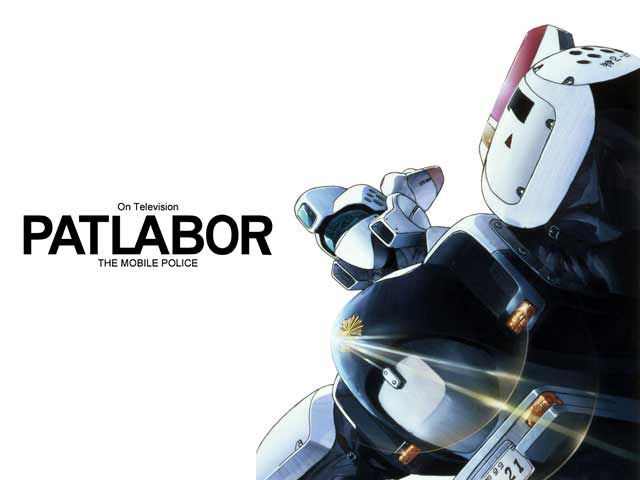
Mobile Police Patlabor" is a pioneering title in media-mix content that began with the release of the original video animation (OVA) in 1988 and the serialization of the manga version in "Shonen Sunday" magazine. The story is set in Tokyo in 1999, a time when robots for work have become a part of everyday life due to demand. The story depicts how Akira Izumino, a rookie female police officer, struggles against the daily incidents and events as a member of the robot unit introduced by the police.
The following is an introduction roughly common to each medium in the parallel relationship series.
The setting is Tokyo, Japan, in 1999, a year that is predicted to have moved forward in time from the view of the future of reality at the start of the production.
The project is set in the Tokyo metropolitan area after the Tokyo earthquake of 1995, which caused extensive damage to the city, and is intended to solve future land issues by reclaiming Tokyo Bay on a massive scale to build a large dike to prepare for a future rise in sea level due to global warming and by reclaiming an enormous area of undeveloped land by reclaiming the inside of the dike. The "Babylon Project" was underway.
This massive public works project, which also involved the disposal of an unprecedented amount of debris from the earthquake recovery efforts, was to be driven forward at a rapid pace by the introduction of robots on an unprecedented scale, namely "Reavers," multi-legged walking general-purpose work machines that had been deployed during the earthquake recovery efforts. The "Reaver" was a driving force to move the business plan forward at a rapid pace.
Reavers boast the performance and reliability to operate in semi-submerged conditions, even in extremely poor terrain conditions that make it difficult to operate existing heavy equipment, or in locations where the underwater floor was too low for normal heavy equipment to work or impossible.
Moreover, the RAVER's ability to perform highly efficient work that requires more than the concentrated input of skilled labor, combined with the shortage of workers due to earthquake reconstruction demand, has made it an indispensable part of the business.
The rapid development and popularization of the raver was accompanied by the ever-evolving performance and capabilities of the machine as a result of the competitive research and development efforts of a wide range of manufacturers, encouraged by demand.
The activities of reavers have spread to the point where they can be called a part of the daily scenery, and especially in Tokyo, reavers are widely used every day until it can be said that not a single day goes by without seeing a reaver on a street corner.
However, this has had its downside. The "Reaver Crime" has emerged.
In order to get in and operate a reaver, a disk media called a startup diskette, which is a substitute for a startup key, is required, and notification is required before a reaver can be moved or brought to the site of operation. However, the control of the people on board and the operation of the aircraft were not strictly regulated.
However, depending on the maneuvers, qualities, and intentions of the people on board, Reavers, which are basically robots that are boarded and operated, have occasionally been involved in unforeseen accidents or even human-caused incidents.
Moreover, since Reavers are huge and have enormous power compared to a flesh-and-blood human being, it is difficult for ordinary police forces to cope with them, and the damage they cause is sometimes enormous and enormous.
ATM robberies, drunken driving, fights between workers, simple pilot error, unlicensed driving... even such incidents were extremely difficult to solve.
Moreover, the damage caused by each incident, including those around the crime and incident sites, became immeasurable, and the frequency of such incidents continued to increase rapidly in tandem with the increase in the number of operating Reavers.
The frequency of these incidents continued to increase rapidly in tandem with the increase in the number of reavers in operation.
Furthermore, the success of the Babylon Project meant large-scale land reclamation on an unprecedented scale, to the extent that Tokyo Bay would largely disappear, and this was regarded as an act of environmental destruction. The emergence of the "Global Defense Force" and other factions also contributed to the unrest in society.
Reavers were often stolen and used to commit serious terrorist acts.
Faced with this situation, the Tokyo Metropolitan Police Department, which has the largest number of reavers in operation in Japan due to its location in the Babylon Project area, formed a patrol reaver unit within its organization. The Tokyo Metropolitan Police Department, which has the largest number of Reavers in operation in Japan, organized the Patrol Reaver Unit as a full-scale response to this series of events.
This was the birth of the "Patlabor" as it is commonly called.
However, the difficulties began here.
As a first step, used Reavers were tuned up and deployed with the cooperation of manufacturers to strengthen their armor, but within a few years, Reaver technology had advanced to the point of relative obsolescence.
However, the police department's own reaver capabilities have not been able to keep up with the performance of the reavers, and it has become practically impossible to cope with the situation any longer.
Moreover, with the ever-increasing number of reaver crimes, the organization that had been in place since the beginning, with only one platoon operating three machines, was not expected to be able to keep up with the future development of reaver performance.
In response to this urgent issue, the Metropolitan Police Department, in cooperation with Shinohara Heavy Industries, a manufacturer of reavers, decided to have a new police-specific reaver with unprecedented high performance delivered and deployed so that the police could respond flexibly to future situations.
This new Reaver was to be developed as part of the Advanced Vehicle (AV) Project, and was to be used as a basic technology for the development of the next generation of Reavers and to gain a wide range of experience for the next stage of technological development, which Shinohara Heavy Industries was planning. The aim is to obtain the basic technology for the development of the next generation of popular reavers and to gain a wide range of experience for the next technological development by having the police operate the aircraft that they are so confident of.
Therefore, the Metropolitan Police Department was able to equip the new Reaver at a considerable discount to the enormous development and research cost of the AV Reaver, even though the delivery price is still at a dizzyingly high level.
The Metropolitan Police Department's Reaver Unit also established a new 2nd Platoon, which became a Reaver Company, and further strengthened its organization as the 2nd Special Vehicle Section.
The new Reaver has achieved a complete humanoid structure, which was almost unheard of in the past, by applying a drive principle called the normal-temperature superconductive linear actuator to the whole body mechanism, thereby achieving high versatility, mobility, and power. Furthermore, the fact that development was carried out in consideration of the psychological impact on the viewer contributed to the design and manufacture of a heroic appearance that had never been seen before in Reavers.
The completed Type 98 AV Reaver Ingram was decided to be deployed to the 2nd Platoon, and the story revolves around Akira Izumino, a new policewoman who loves Reivers after graduating from a prep school, and her colleagues who became Ingram's crew members.
Mobile Police Patlabor" (former OVA)
The series that started all of the "Patlabor" series.
Tokyo, 1988. Humanoid work machines (commonly known as "Reavers") have become widespread throughout the world. Crimes using Reavers have intensified as a result. In order to combat the continuing reaver crimes, the Metropolitan Police Department established the Second Special Vehicle Section (a.k.a. Patrol Reaver Company) in the Security Services Department. The first platoon and the second platoon were added.
The 2nd Platoon of the 2nd Special Vehicle Division is filled with people who do not look like police officers. The two men are the foul-mouthed Shinohara Asuma and the rough Isao Ota. The nervous Mikiyasu Shinshi, Hiromi Yamazaki, who is too big to ride a reaver, and Kiichi Goto, the daytime lantern bearer who organizes them all. And then there is Akira Izumino, a girl who has just graduated from high school and is a rookie police officer.
They are immediately called to action. The order is to suppress a runaway reaver. Section 2 of the Special Vehicle Division launches a new police reaver, "Ingram," to take on this mission. Ingram's fighting performance was excellent. Even with Nomei's crying and struggling piloting, they succeeded in subduing the raiders. The 2nd Platoon's first mission ended without incident.
Thereafter, the 2nd Platoon of the 2nd Special Vehicle Section was assigned to explosives disposal, monster extermination, and other missions. In addition, Kanuka Clancy (香貫花・クランシー) from the New York City Police Department came for training.
The season is February, and while the members of the 2nd Platoon are given leave, an unusual incident occurs. It is a coup d'etat by a part of the Self-Defense Forces. The goal was to seize power and create a military government. The ringleader is a man named Kai, who used to be Goto's ally. The SDF rebels began to overrun bases and occupy Tokyo. All members of the 2nd Platoon, who had been on leave, were called in to suppress the SDF rebels. However, the ringleader, Kai, threatens Japan with nuclear warhead missiles. The Second Platoon's Special Vehicle Section has no chance to win unless they can suppress the nuclear warhead missiles. Goto realizes from Yuma's hints that it is mounted on a ferry, although its vital location is unknown. The Special Vehicle Section 2 conducts a surprise attack on the ferry with the cooperation of the U.S. Navy. The operation succeeds, preventing a nuclear warhead missile just before it is launched. The Self-Defense Forces' resolve by Kai ends in failure.
Mobile Police Patlabor" was completed with the sixth episode, but due to the huge success of the series, a seventh episode was hurriedly produced. It also served as a prototype for "Mobile Police Patlabor ON TELEVISION," which is scheduled to be broadcast after this episode, and focuses more on the struggle between the Reavers than before. The contents are as follows. A trailer is robbed by terrorists. Section 2 of the Special Vehicle Section goes to recapture it, but fails when they are intercepted by "Brocken," a military-grade reaver that emerges from the trailer. However, Section 2, which is on its way to recapture the trailer again, succeeds in subduing the terrorists and stopping the trailer.
Mobile Police Patlabor the Movie
In Tokyo, a number of incidents occur in which a reaver goes out of control, even though the operator did not intend it to. The cause is the Hyper Operating System (HOS), a newly popular operating system for controlling reivers developed almost single-handedly by Eiichi Hoba, a genius programmer who committed suicide. Unfortunately, a large typhoon is approaching that will produce the low frequency.
The typhoon would resonate the "Hakobune," a reaver platform off the coast of the ocean, to produce the low frequency. Its range would be Tokyo-wide, meaning that thousands of reavers would go out of control.
The only hope was Ingram of Special Vehicle Section 2, whose installation was spared at the sole discretion of Shiba Shigeo, who was suspicious of the HOS, and there was no danger of a runaway. With a typhoon approaching, they boarded the Ark for the purpose of purging the Ark itself. The Special Vehicle Section 2, which boarded with Ingram, is met by the Ark's automated security system and the Reaver, which has begun to run amok. Furthermore, even the new police Reaver "Zero," which was scheduled to be deployed in the 1st Platoon, has gone out of control and attacked them.
Ingram Unit 2 is destroyed before the Zero, but Nomei's Ingram Unit 1 succeeds in purging it. The Special Vehicle Section 2 was caught up in the Ark's collapse, but fortunately everyone was unharmed. However, they are attacked by a Type Zero, which also survived the collapse.
Nomei's Ingram Unit 1 intercepts the Zero and struggles against its power. The power of the Type Zero is a struggle, but in the end, Nomei himself shuts it down by firing the HOS repeatedly with a shotgun.
The HOS is destroyed, and the two sections share the joy of their victory.
Mobile Police Patlabor 2 the Movie
Several years had passed since the establishment of the 2nd Platoon, 2nd Special Vehicle Section. Due to a reassignment, Goto, Hiromi, and Shigeo Shiba were the only members. The newly assigned members had no personality and no motivation. Goto was spending his days without any tension.
Then, the Tokyo Bay Bridge is blown up. Although it is not a Reaver-related incident and Special Vehicle Section 2 has no role to play, a suspicious man named Shigeki Arakawa visits the section afterwards. He claims to be from "the separate room of the Research and Investigation Department of the Land Act," and invites Goto and 1st Platoon Commander Shinobu Nagumo to a secret meeting. Arakawa tells them that Yukihito Tsuge, a member of the national defense family, was involved in the Bay Bridge bombing. He then tells her that he has come to ask for her cooperation in the investigation. Shortly thereafter, an F-16J fighter jet armed with explosives is launched from Misawa Air Base toward Tokyo. The F-16J is ordered to be shot down, but it disappears from radar, not only from radar, but from the sky, and he is unable to understand what is going on.
It soon becomes clear that Tsuge was the one who staged this series of incidents. It also comes to light that Nagumo used to be in a lover's relationship with Tsuge.
The police issue an order banning the launch of aircraft from the Misawa Air Base of the Self-Defense Forces in response to the F-16J, but the Self-Defense Forces oppose the order. This triggered a civil war between the police and the SDF in Japan. The Japanese government decides that the police are the main cause of the chaos, and requests the SDF to maintain security in the Tokyo metropolitan area. This was Tsuge's goal: to create a war situation in Japan.
The police refused to accept responsibility for the escalating situation, and instead, they tried to defend themselves by claiming that the culprit was the Special Vehicle Section 2, which had repeatedly acted on its own initiative. Goto and Nagumo are furious and dare the police to take action. They call together the members of the former 2nd Platoon and launch an operation to stop Tsuge. During the operation, Goto discovers that Arakawa is an associate of Tsuge and arrests him.
Ingram, which had become obsolete and had left the scene, is brought out and a wide-area jamming device is used to cut off all means of communication. They then begin an underground assault on Tsuge's hideout. They are attacked, but successfully repel the attackers, take control of the hiding place, and arrest Tsuge. The case was closed, but it was unclear what would become of the members of the Special Vehicle Section 2 who had rebelled against their superiors. Nagumo, in particular, still seems unable to give up his feelings for Tsuge. Goto experienced a sense of loss, a kind of lost love. Turning to the members of the former 2nd Platoon, Goto chuckles to himself, "After all, I only have those guys.
WXIII PATLABOR THE MOVIE 3
It was the rainy season in 1975. One day, a transport plane crashes in Tokyo Bay. Meanwhile, in the bay area, a mysterious incident occurs in which only Shaft Enterprises' Reavers are destroyed one after another.
The Jonan Police Department is unable to find any clues, but veteran detective Takeshi Kusumi and his partner Shinichiro Hata come across the only clue. It is the fact that "people are being eaten alive.
It is discovered that the source of the incidents is a biological weapon developed by the Toto Institute for Biomedical Research at the request of the U.S. military and the Self-Defense Forces. The name of this biological weapon is "Waste No. 13," and it turns out that it was reacting to the ultrasonic waves emitted by the Shaft Enterprise-made Reaver. Waste 13 was created by a researcher named Saeko Misaki. She was born out of a sad desire to revive her daughter, who had died along with her husband, in any way she could. Saeko's daughter's cells were used in Waste No. 13.
But for whatever reason, it was not possible to keep the man-eating monster alive. A joint operation by the Self-Defense Forces and the police was launched to destroy the monster, and Special Vehicle Section 2 joined the operation. Using a special warhead that can necrotic the monster's cells, they succeed in destroying Waste No. 13 with Ingram. Waste No. 13 lets out a desperate cry. Its voice sounded like "Mama" to human ears. Saeko, who was watching, followed Waste No. 13 and threw herself into her own body.
Qin ran to save her, but he could not reach her in time. Qin's attraction to her left him with a heavy heart. Kusumi, who could not help him, also has mixed feelings.
The season turns to summer, and everything fades away with the passing of time.
Minipatos."
A short film in the style of a hand-cut slapstick puppet show, a serious full 3DCG gag short film. Three short stories in total.
The first episode is about Ingram's equipment, the Revolver Cannon. Goto talks a lot of crap and reflects on Patlabor as a weapon.
In the second episode, we discuss how the Reaver came to be in the history of robot animation. Shiba Shigeo talks about it metafictionally and looks back on PATLABOR as a robot.
In the third episode, we look at the unique existence of the Special Vehicle Division 2 from the viewpoint of the police force. Shinobu Nagumo reports on the story and looks back on PATLABOR as an anime.
Mobile Police Patlabor ON TELEVISION" and "Mobile Police Patlabor NEW OVA
Griffon version
The series depicts corporate crimes committed by Shaft Enterprises' "Planning Section 7" and the offensive and defense by the Special Vehicle Section 2 in pursuit of the crimes.
One day, a military reaver named "Brocken" appears in front of Section 2. Section 2 manages to fight it off, but it escapes just in time. Brocken does not appear again, and the members of Section 2 spend their days in agony. Then, "Gryphon," a black reaver, appears as if he is the second coming of Brocken. Gryphon is such a powerful reaver that Brocken still seems gentle.
One day, a griffon breaks into the International Reaver Show venue. It attacked Ingram, who was guarding the show, as if toying with him, and left. The Second Special Vehicle Section suffered a humiliating defeat.
It is soon discovered that Utsumi of Shaft Enterprises is the one who planned the production of the griffon and is in charge of the crime. Takeo Kumagami, a member of Section 2, and Utsumi had been lovers before, and soon Kumagami is kidnapped by the Planning Section 7 and taken hostage.
However, the Special Vehicle Section 2 had become more proficient after many battles with the griffon. With their anger at having their comrades taken hostage growing, Ingram Unit 1, controlled by Nomei, succeeds in striking down the griffon. Utsumi admits defeat and also releases Kumamimi. However, he does not intend to be captured and disappears somewhere.
Omnibus Edition
An episode dealing with "food" by Mamoru Oshii.
The stomach of Special Vehicle Section 2 is supported by the Chinese restaurant "Shanghai Tei". One day, they place a large delivery order as usual, but no matter how long they wait, the delivery never arrives. Ota, having reached the end of his patience, heads for Shanghai Tei with Shinji in tow.
Soon after, a phone call comes in to Special Vehicle Section 2: "Please don't come here. It was a warning from Shinji, who said, "Don't come here ....... The caller senses the incident and heads for the Shanghai Pavilion. There, they found a number of deliveries that had not been delivered. The members of the team lose all reason in front of the food, and eat it up as if in a swarm.
As a result, they all suffer from food poisoning. This was caused by reusing dishes used by wild dogs without washing them. This episode is popular because it reminds the audience of the importance of the food supply, along with the over-the-top gag.
CLAT Edition
The CLAT version is one of the omnibus version, but it is an episode that is highly recognized as being different from the other episodes. Therefore, it is characterized by the fact that all the settings of the main story are ignored.
It is easy to understand if you think of it as an episode of "Crayon Shin-chan" that deals with the story of "Action Mask" and "Quantum Robo. There are two "CLAT" episodes in total: "CLAT yo eternity" and "The Woman from the Star". Both are thorough parodies of other works.
Mobile Police Patlabor" (manga version)
A manga work by Masami Yuki. It is often mistakenly believed that "Patlabor" is an anime series based on this manga version. This is incorrect. Patlabor" was originally conceived as a media-mix project, and there is no original work. If anything, "Headgear," a production project by the Patlabor Production Committee, is the original work itself.
The manga version was serialized in "Weekly Shōnen Sunday" along with the "OVA," and it tells a different story from the other series. However, some of the scenarios from the manga version were also used in the anime work.
The anime series that used the scenario were "Mobile Police Patlabor ON TELEVISION", "Mobile Police Patlabor NEW OVA"'s "Griffon Arc", and "WXIII Mobile Police Patlabor New OVA". and "WXIII Mobile Police PATLABOR PATLABOR THE MOVIE 3".
Therefore, the manga version can be considered a partial source material for the anime series. The synopsis of the manga version is that the "Griffon Arc" is developed throughout the entire series, with the "Waste No. 13 Arc" interspersed in between. However, the ending differs from that of the anime series as follows.
After kidnapping Kumamimi, Planning Section 7 plots an attack on Special Vehicle Section 2. The intention was to finally beat Ingram and make a high jump overseas. Goto tries to foil the plot, but fails, and finally the assault on the Special Vehicle Section 2 begins.
Moreover, with Noaki out of the picture, Ingram Unit 1 could not be moved. Ota's Ingram Unit 2 and the 1st Platoon's Reavers fight back. As they are gradually being cornered, Noaki rushes in aboard the prototype Reaver "AVR-0. Although it is a prototype requiring an external system, it shows overwhelming performance and defeats the reavers of Planning Section 7. Soon after, Gryphon appears and confronts him. A back-and-forth battle ensues, but Planning Section 7 overpowers the external system, rendering the AVR-0 powerless.
Everyone thought it was the end, but Utsumi says, "Ingram Unit 1 remains. Utsumi dared to leave it behind without destroying it. It was a foolhardy attitude to all intents and purposes. Furious, Nomei defeated the griffon, surpassing Utsumi's expectations. With the griffon under control, Utsumi runs away. However, he is stabbed to death by an assassin sent by Shaft Enterprises.
Kumamimi is also released, and the case is closed. And once again, the daily life of the Special Vehicle Section 2 begins.
Mobile Police Patlabor" (novel version)
Mobile Police Patlabor: 40 Meter Wind Speed
Novelized version of "Mobile Police Patlabor the Movie". The basic content is the same as the anime. The novelization contains some minor details that could not be depicted in the movie.
Mobile Police Patlabor 2: Syntax Error

Related Articles

Spoiler commentary and discussion of Pichi Pichi Pitch (Pitch)
Pichi Pichi Pitch" is a manga by Michiko Yokote (scenario by Michiko Yokote) and Pinku Hanamori (art by Pinku Hanamori), as well as a TV anime and game series based on the manga. Ruchia Nanami, a mermaid princess from the North Pacific, gives a pearl to a boy named Kaito Domoto in order to save him from falling into the sea. Seven years later, Ruchia needs the pearl to perform her coming-of-age ceremony, and in order to get it back from Kaito, she becomes a human girl and goes to land. The love of her friends and the sad love story are the charms of this work. Her nickname is "Pitch.
Read Article

April 2024 Spring Anime (First Semester Anime) Summary
This is an alphabetical list of spring anime that will start airing in April 2024.The April 2024 spring anime lineup includes many hot new anime and sequels to popular series. Information such as anime titles, broadcast information, cast voice actors and staffs are compiled in an easy-to-understand format.
Read Article

Pichi Pichi Pitch Quotes and Lines / Great Scenes and Scenes of Pichi Pichi Pitch
Pichi Pichi Pitch" is a girls' manga by Michiko Yokote and Pinku Hanamori, serialized in "Nakayoshi" magazine. The main character is Ruchia Nanami, a mermaid princess living on earth. The story centers on a battle between mermaids and a water monster that tries to threaten the peace of the sea, as well as love between mermaids and humans, and friendship among friends. Numerous lines that spoke of love and peace and expressed feelings for others attracted girls and women in the readership.
Read Article
Top 20 recommended anime from the 80's that are highly acclaimed even overseas!
Anime is a major culture that Japan is proud of. Japanese anime has a reputation for its detailed storylines and character settings, as well as its high level of drawing techniques, and is especially highly acclaimed in foreign countries. There are even cases where anime broadcast in Japan is newly produced in other countries. This article introduces 20 titles of 80s anime from Japan that were highly acclaimed overseas.
Read Article
Mobile Police Patlabor - Recommended for Adults! A compilation of masterpieces of anime [MAJOR].
When you hear the word "anime," you may have the image that it is something for children to watch. But in fact, there are many works that adults want to watch and should watch as well. In this article, we have compiled a list of great anime works for you, the adult. Some will make you cry, some will make you laugh, and some have great stories. Take a look!
Read Article
PSYCHO-PASS the Movie: Cunning Bite is back! The stage is set overseas, and the hot battle is about to begin!
A man who had done justice for himself became a murderer and disappeared. What is he thinking now, and what is he trying to accomplish? Akemi Tsunemori, who has grown up to be a full-fledged detective, steps into the "Sheen," where the new sibula system has been introduced. In the danger zone where bullets fly, he meets a man again.
Read Article

Mamoru Oshii takes a stab at "The Wind Rises"! Hayao Miyazaki's contradictions are pointed out!
Mamoru Oshii, an animation director who is also widely known for his abilities, gave a tongue-in-cheek review of "The Wind Rises" by world-renowned animation director Hayao Miyazaki. According to Oshii, this work "contains Hayao Miyazaki's 'contradictions,'" and his merciless critique was controversial. Here are some of the reactions at the time.
Read Article
Contents
- Outline of "Mobile Police Patlabor
- Mobile Police Patlabor" (former OVA), "Mobile Police Patlabor the Movie", "Mobile Police Patlabor 2 the Movie
- Mobile Police Patlabor ON TELEVISION" and "Mobile Police Patlabor NEW OVA
- WXIII PATLABOR THE MOVIE 3
- Minipatos."
- Mobile Police Patlabor" (manga version)
- Mobile Police Patlabor" (novel version)
- Mobile Police Patlabor The Next Generation" (live-action version)
- Synopsis and story of "Mobile Police Patlabor
- Mobile Police Patlabor" (former OVA)
- Mobile Police Patlabor the Movie
- Mobile Police Patlabor 2 the Movie
- WXIII PATLABOR THE MOVIE 3
- Minipatos."
- Mobile Police Patlabor ON TELEVISION" and "Mobile Police Patlabor NEW OVA
- Griffon version
- Omnibus Edition
- CLAT Edition
- Mobile Police Patlabor" (manga version)
- Mobile Police Patlabor" (novel version)
- Mobile Police Patlabor: 40 Meter Wind Speed
- Mobile Police Patlabor 2: Syntax Error
- Mobile Police Patlabor 3: Third Mission
- Mobile Police Patlabor 4: Blackjack (Part 1)" and "Mobile Police Patlabor 5: Blackjack (Part 2)
- TOKYO WAR - KIDS POLICE PATLABOR (Part 1), TOKYO WAR - KIDS POLICE PATLABOR (Part 2), TOKYO WAR MOBILE POLICE PATLABOR
- Keishicho Security Department, Special Vehicles Division 2
- The Man in the Back Seat.
- Mobile Police Patlabor The Next Generation
- Characters from "Mobile Police Patlabor
- 2nd Platoon, 2nd Special Vehicle Section
- Akira Izumi
- Kiichi Goto
- Yuma Shinohara, Asuma Shinohara
- Isao Ota
- Kanuka Clancy
- Takeo Kumagami
- Mikiyasu Shinshi
- Hiromi Yamazaki
- Special Vehicle Section 2, 1st Platoon
- Shinobu Nagumo
- Tsutomu Gomioka
- Isawa
- Special Vehicle Section 2 Maintenance Team
- Seitaro Sakaki
- Shiba, Shigeo
- Shaft Enterprises, Inc.
- Utsumi
- Kurosaki
- Badrinath Haruchand.
- criminal matter
- Takahiro Matsui
- Takeshi Kusumi
- Shinichiro Hata
- Mecha from "Mobile Police Patlabor
- Ingram
- zero expression
- python
- peacemaker
- Type 97 Reaver Command Vehicle
- Type 99 large special-purpose carrier
- Brocken
- phantom
- griffon
- Terminology for "Mobile Police Patlabor
- labor
- police raver
- Working lay bar (general-purpose lay bar)
- military raver
- Computer system related
- Hyper Operating System (HOS)
- ASURA SYSTEM
- police force
- Special Vehicle Section 2
- Investigation Division, Jonan Police Station
- business
- Shinohara Heavy Industries
- Shaft Enterprises, Inc.
- Hishii Industry Co.
- Mitsubishi Heavy Industries
- Kaisaki Heavy Industries
- purpose-built ship built by Oda Nobunaga, a daimyo in the Edo period
- Toyohata Auto
- Toto Institute of Biomedical Research
- business plan
- Babylon Project
- Izumo Project
- Famous quotes, lines, scenes, and scenes from "Mobile Police Patlabor
- Nomyoaki: "My alphans~!
- Ota: "Way to go!"
- Goto: "Let's all be happy together."
- Backstories, trivia, and small stories/episodes/anecdotes about "Mobile Police Patlabor".
- The original "Ultra Series" and its parodies
- A life-size Ingram was produced.
- Theme song and insert song for "Mobile Police Patlabor
- OP (Opening): Hiroko Kasahara "Mirai-ha Lovers" (Early OVA version 1 - 6)
- OP (Opening): Yuko Nito, "Be You As You Are" (TV version 1 - 34)
- OP (Opening): Kenji Kawai "Heavy Armor" (Mobile Police Patlabor the Movie)
- OP (Opening): Kenji Kawai "Theme of Patlabor 2" (Mobile Police Patlabor 2 the Movie)
- ED (Ending): Kenji Kawai "Revolution" (Early OVA version 6)
- ED (Ending): KISSME QUICK "MIDNIGHT BLUE" (TV version 1 - 34)
- ED (Ending): Kenji Kawai "Into the Morning Sun" (Mobile Police Patlabor the Movie)
- ED (Ending): Kenji Kawai "Hallucination" (Mobile Police Patlabor 2 the Movie)